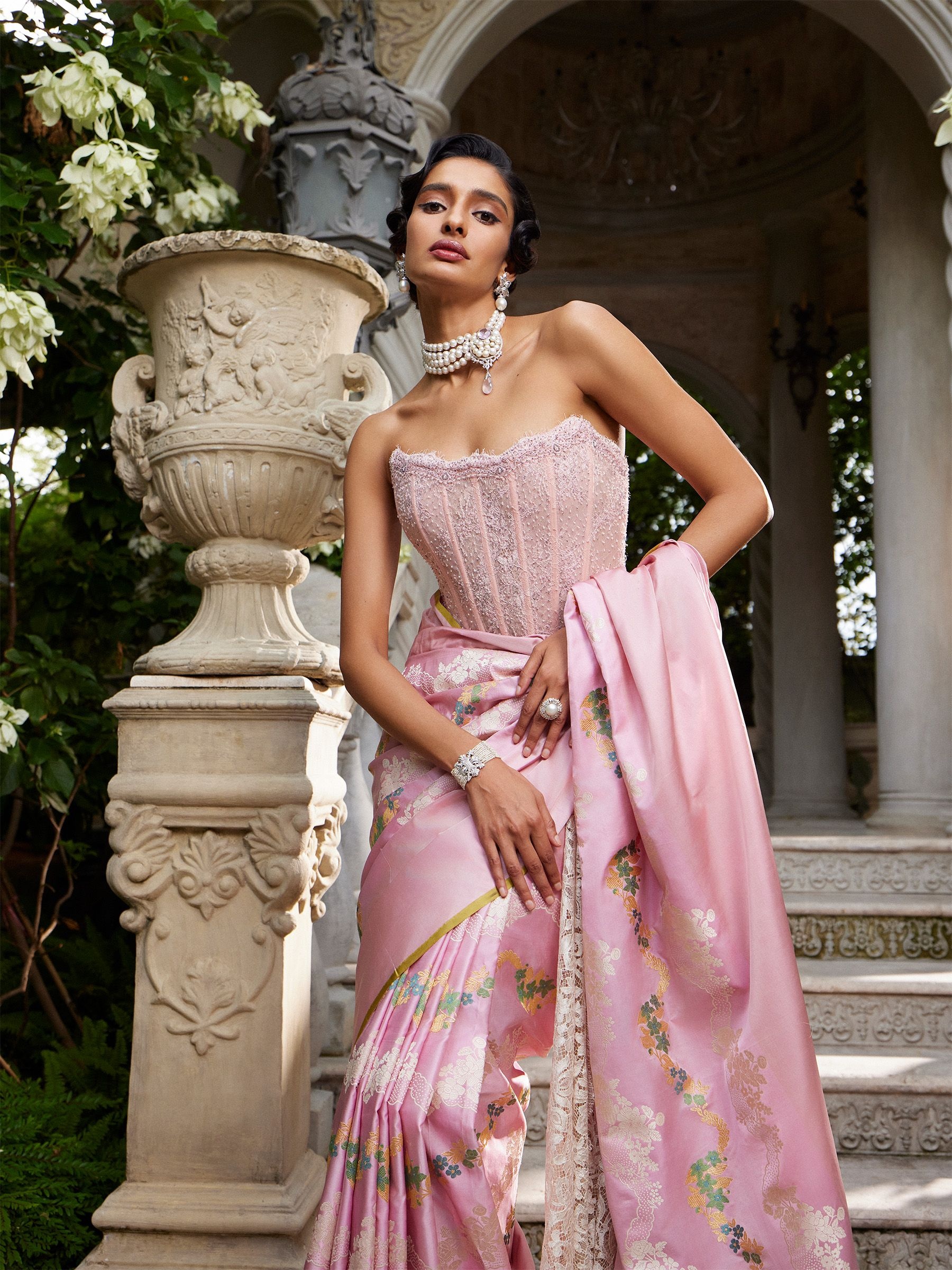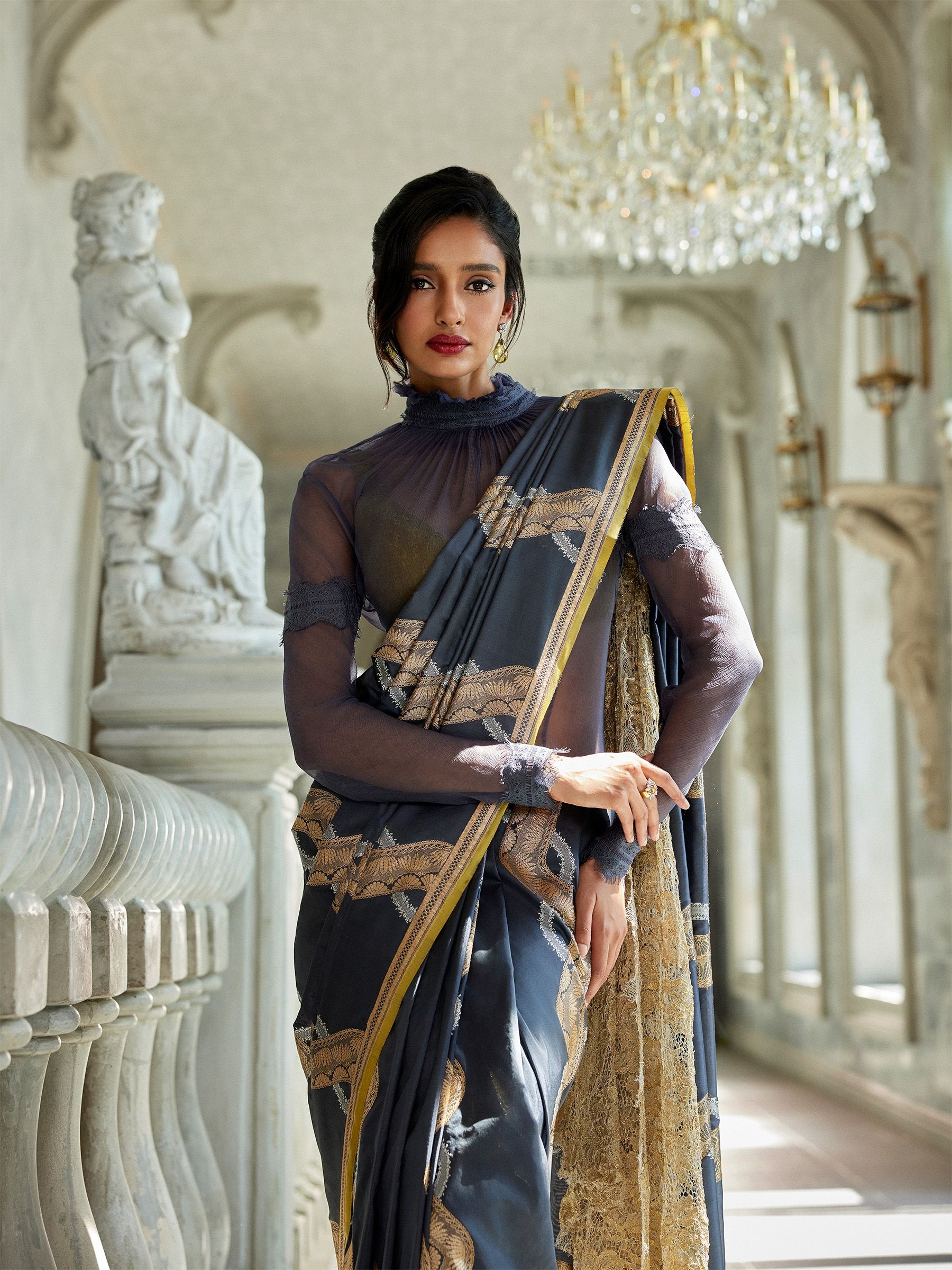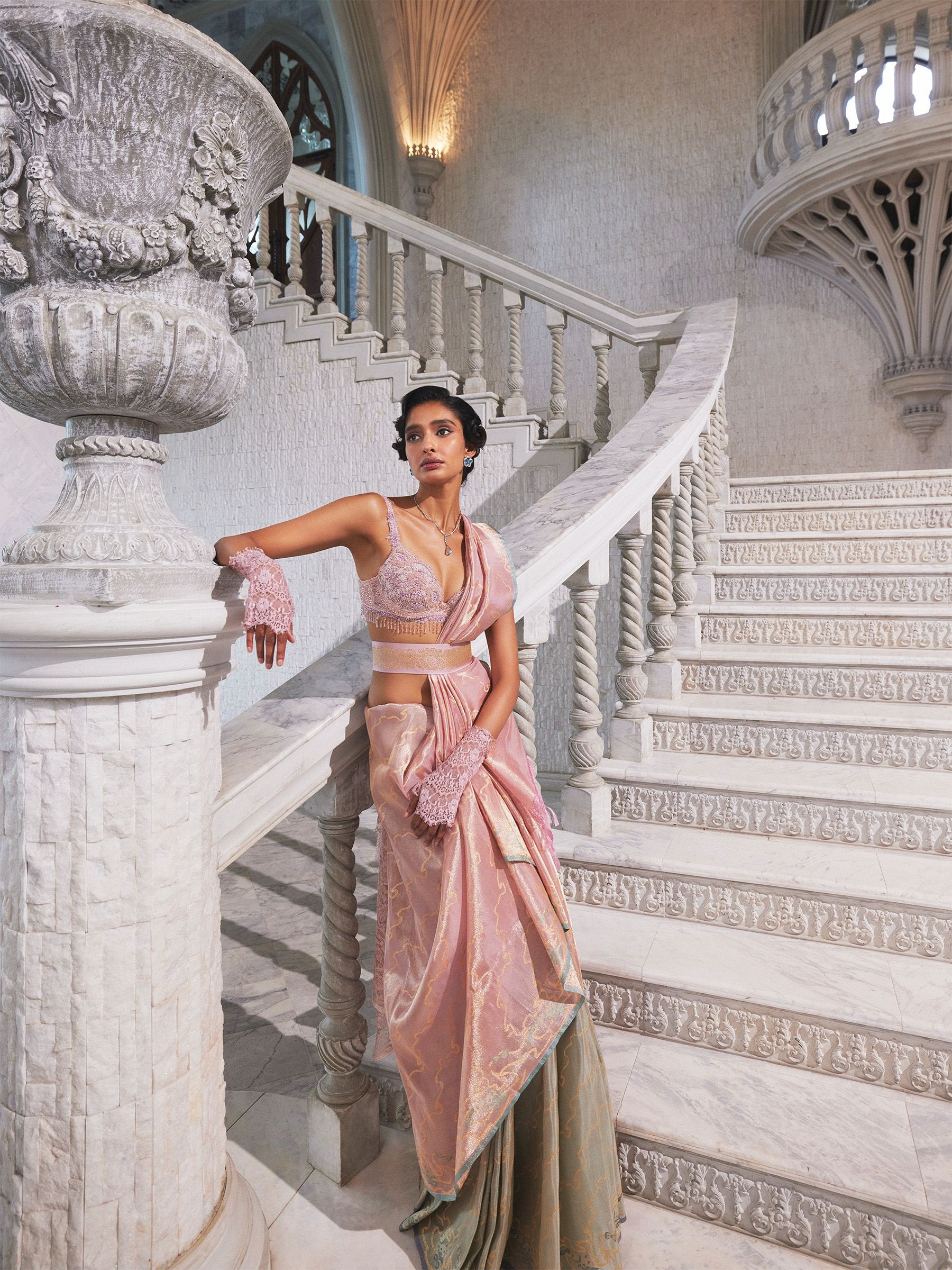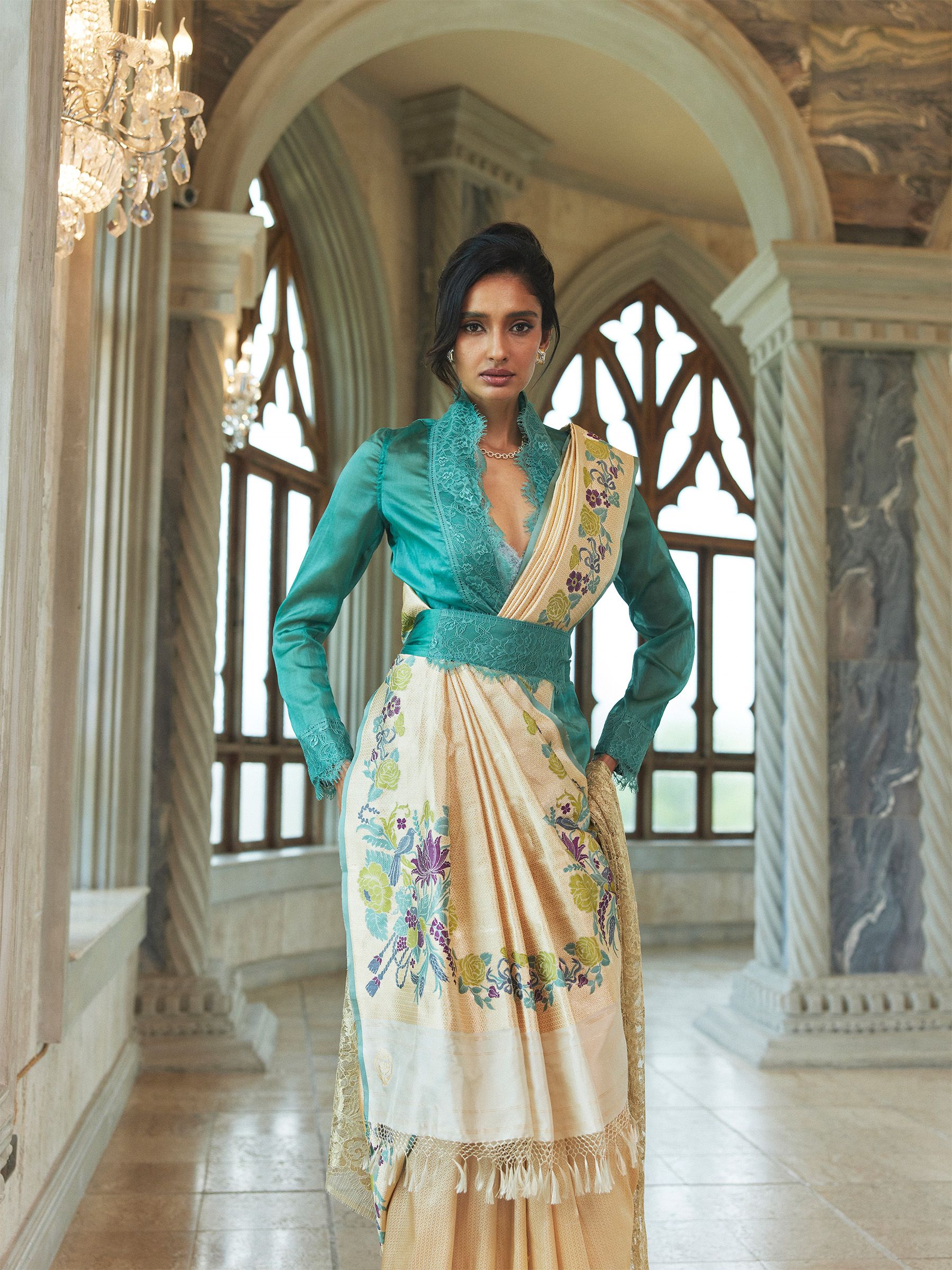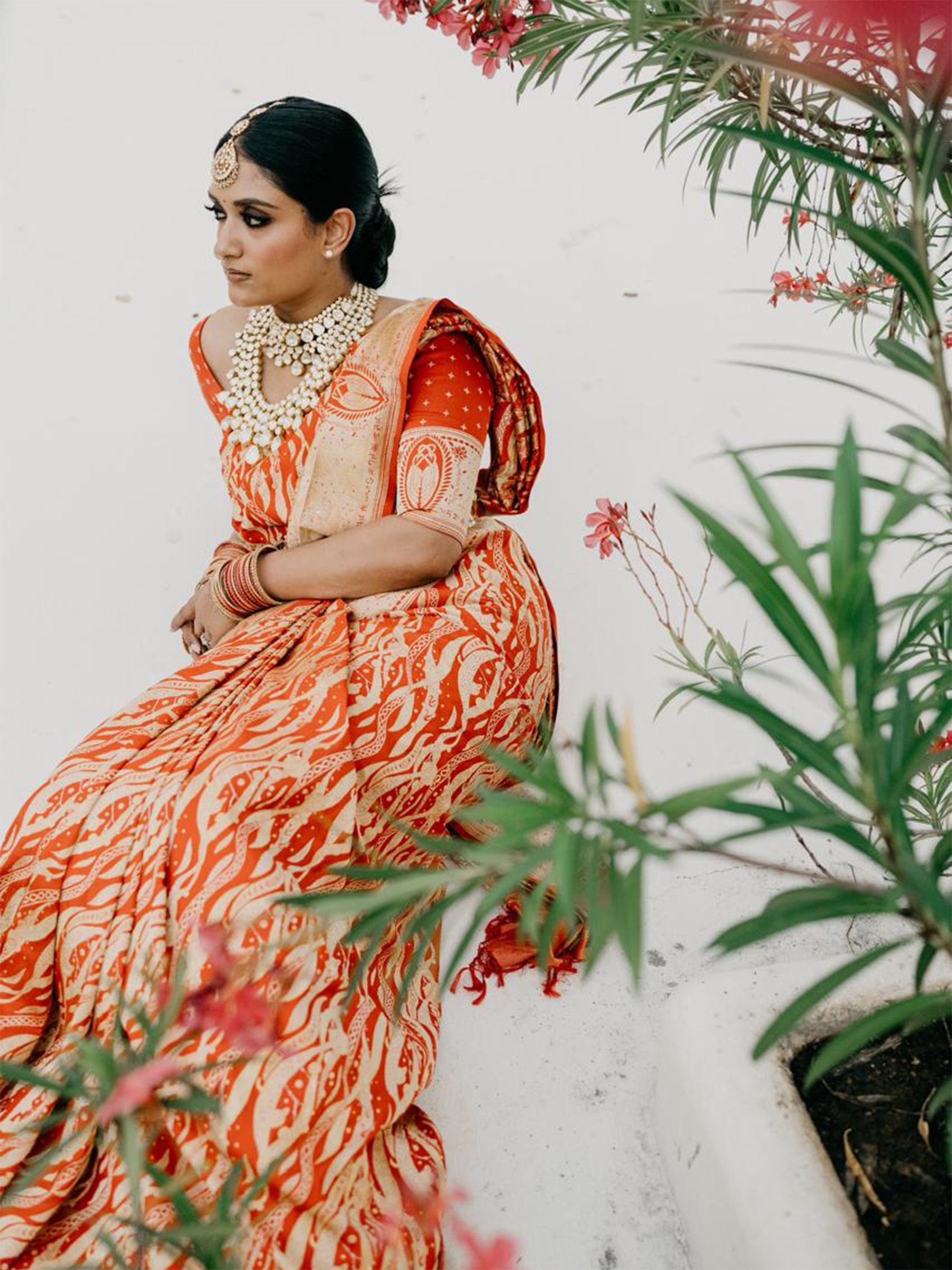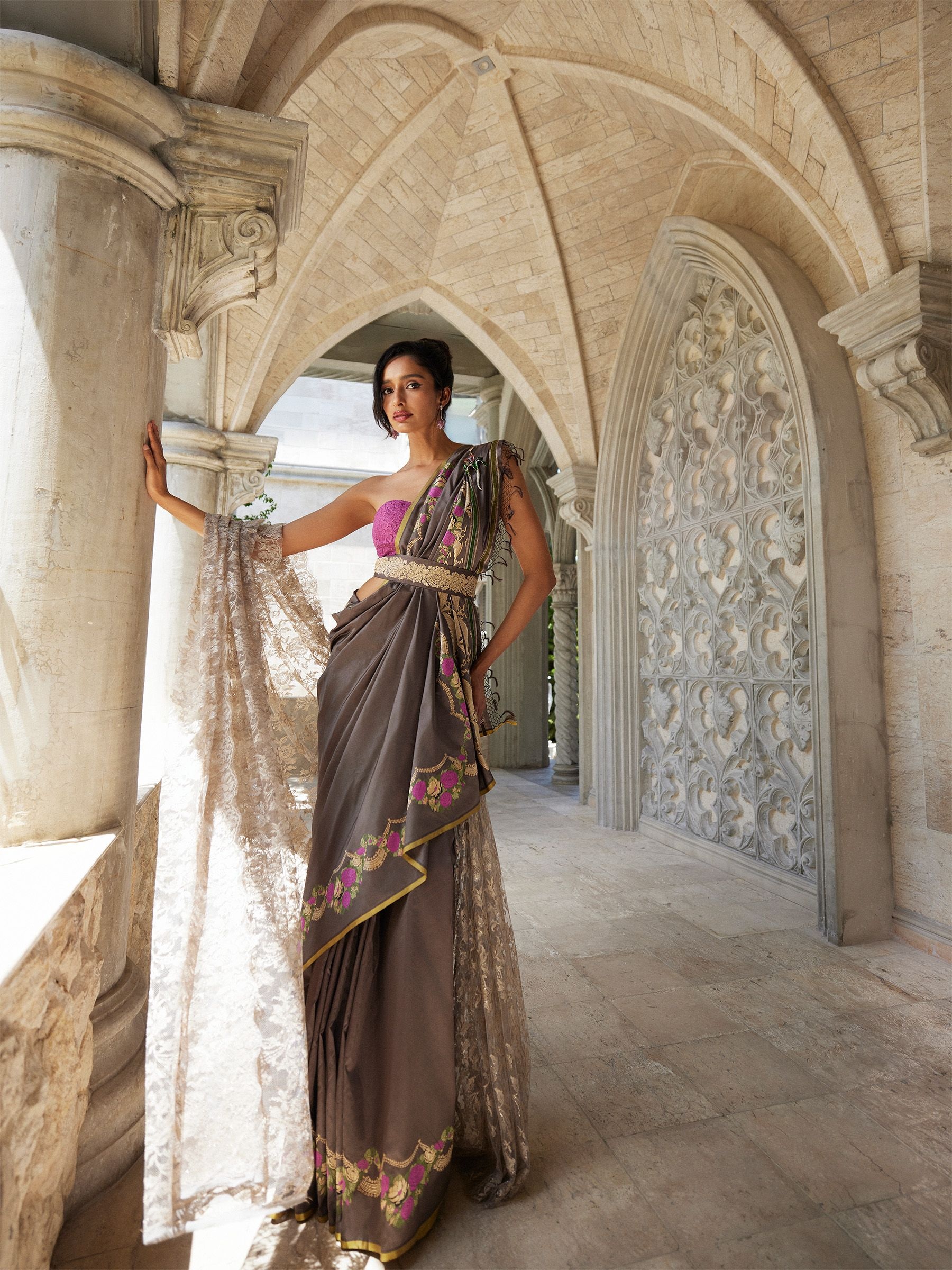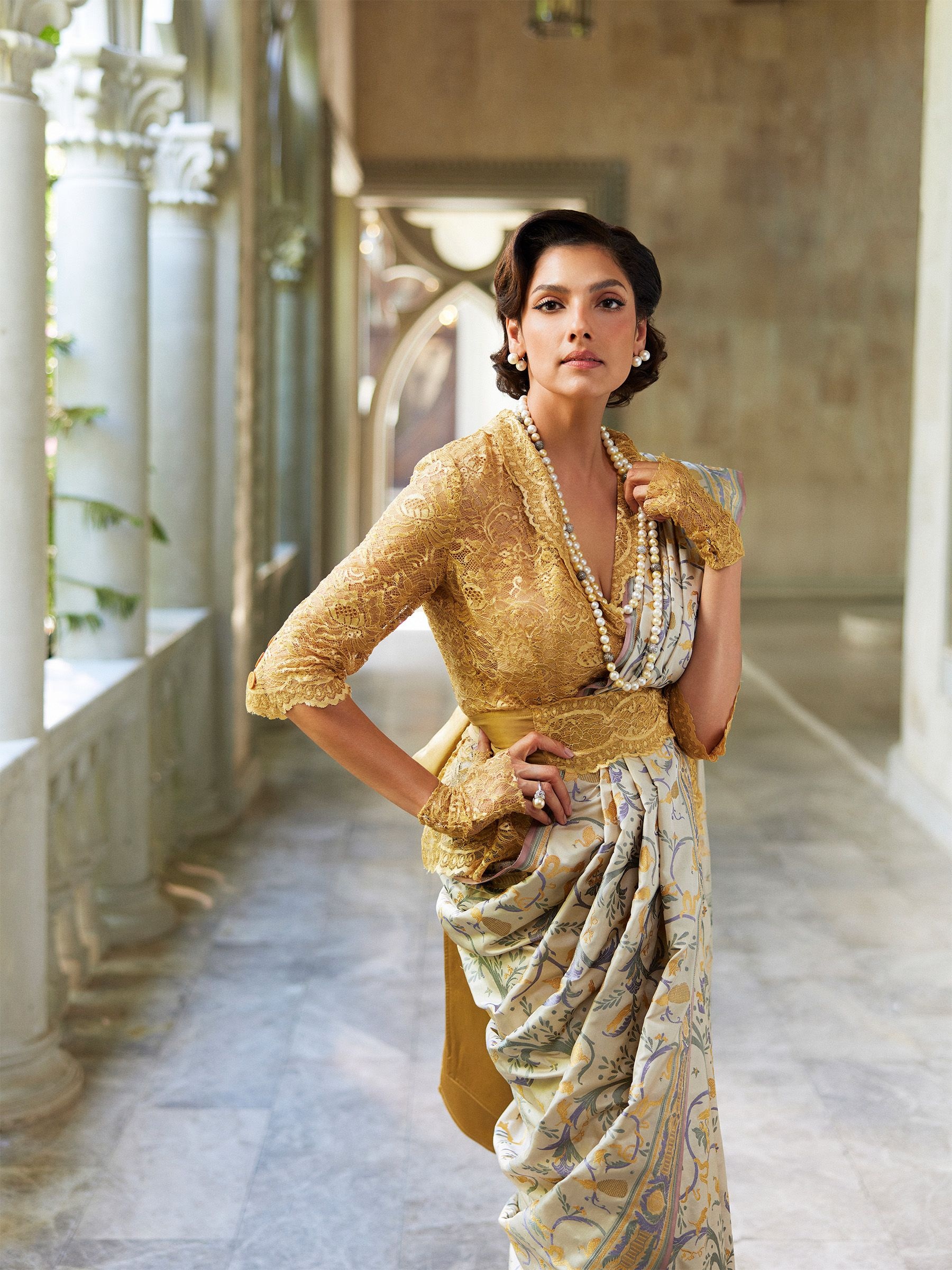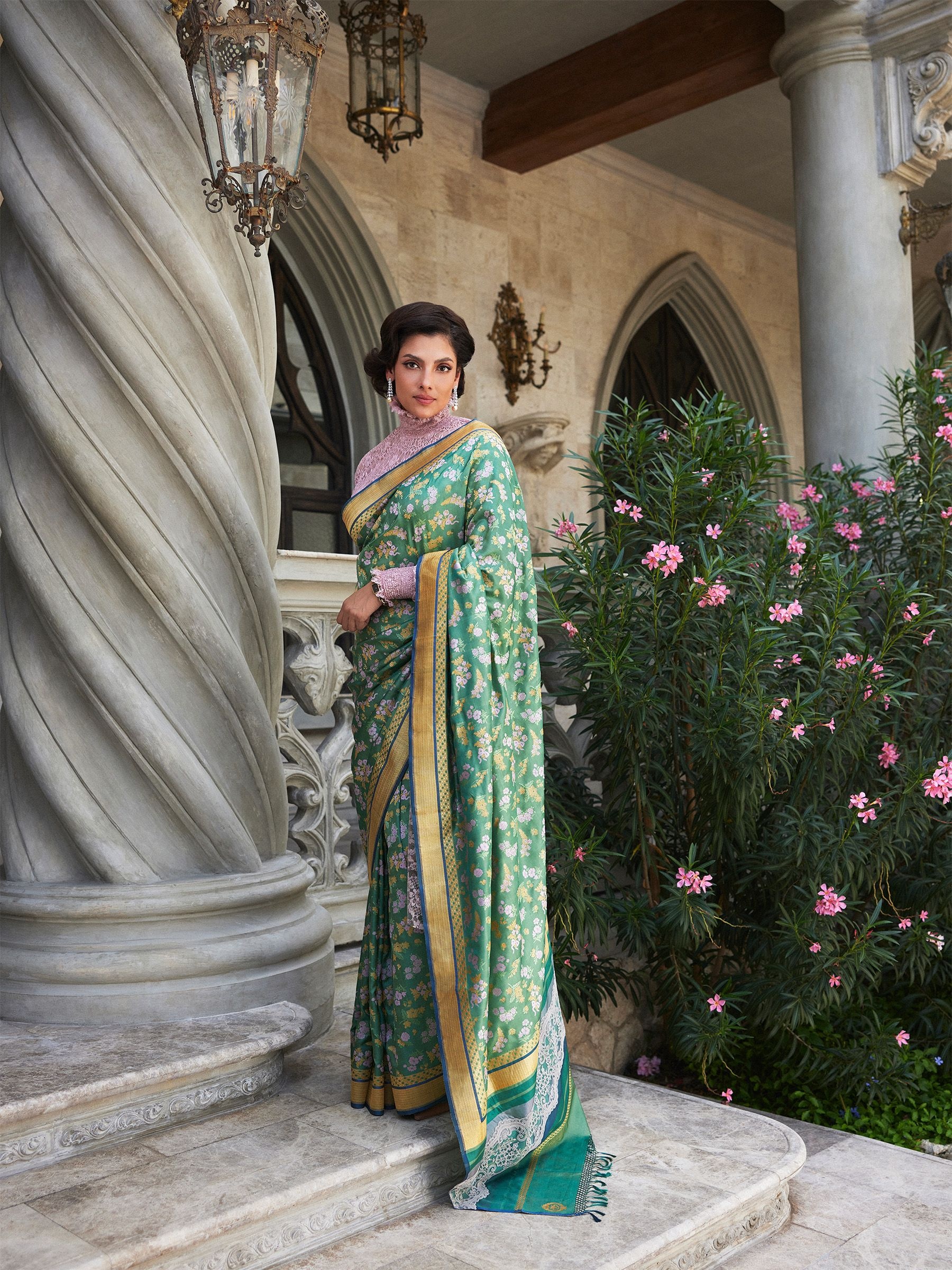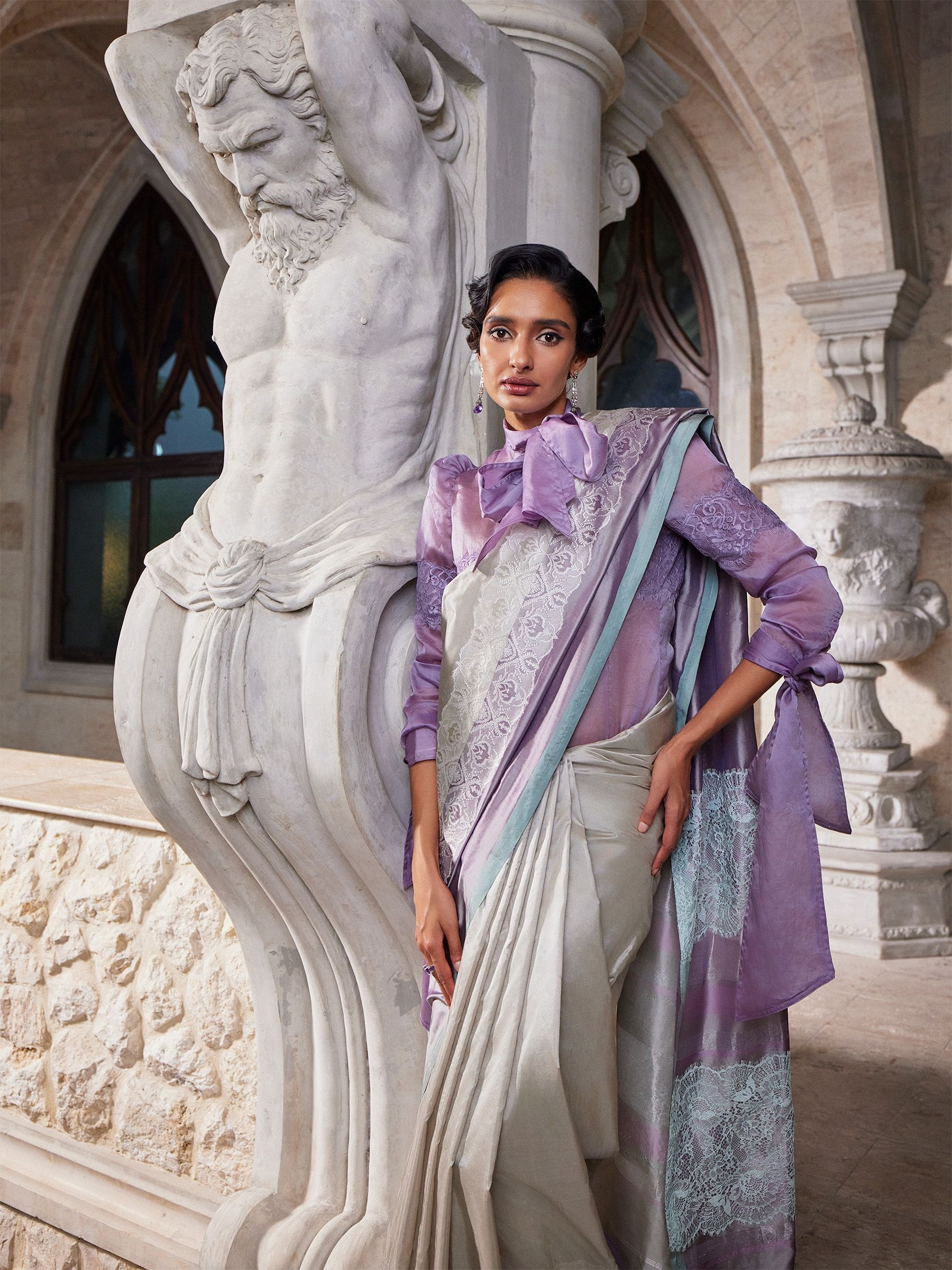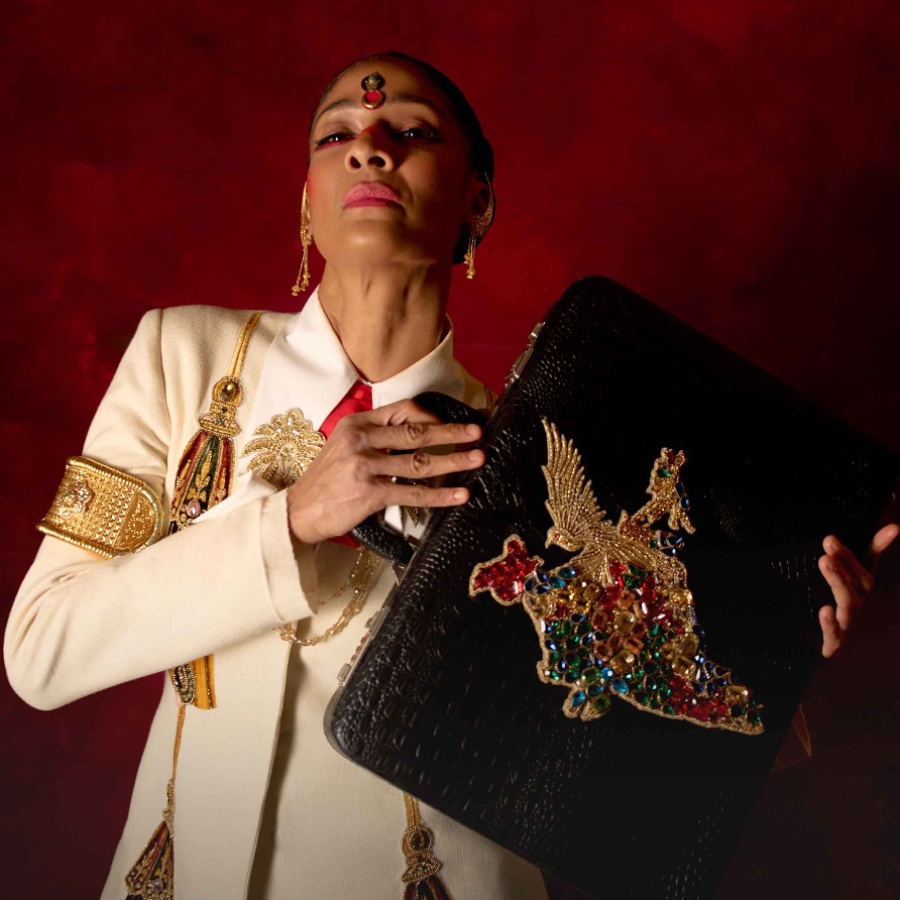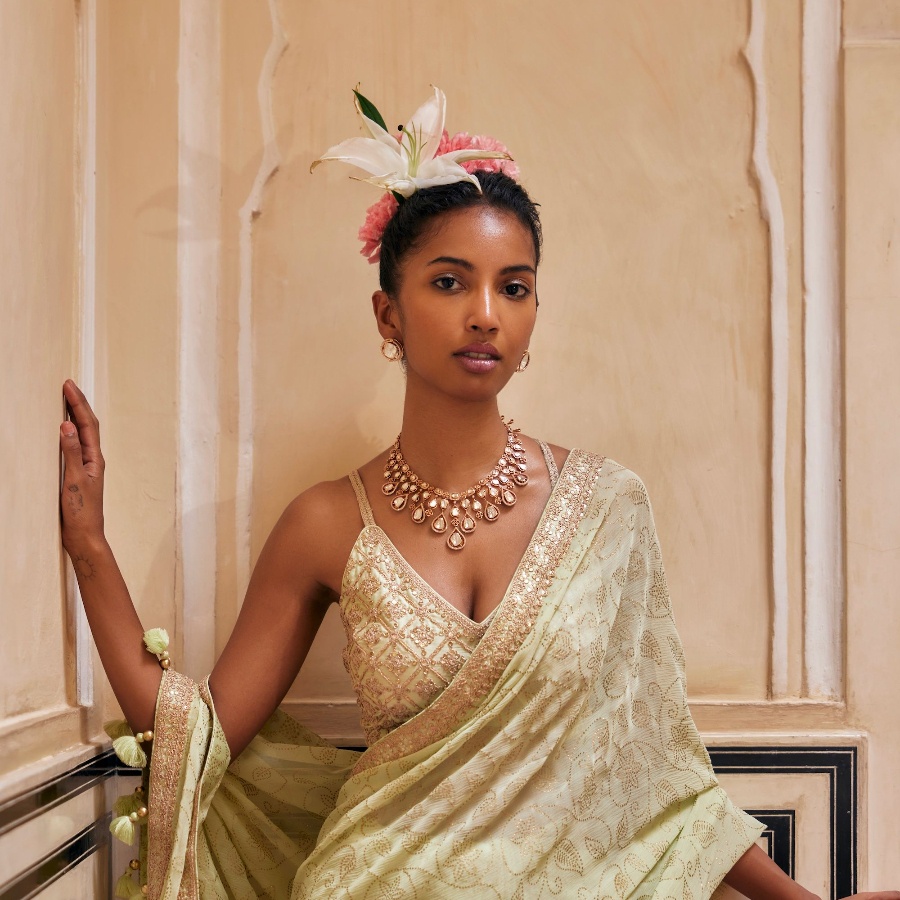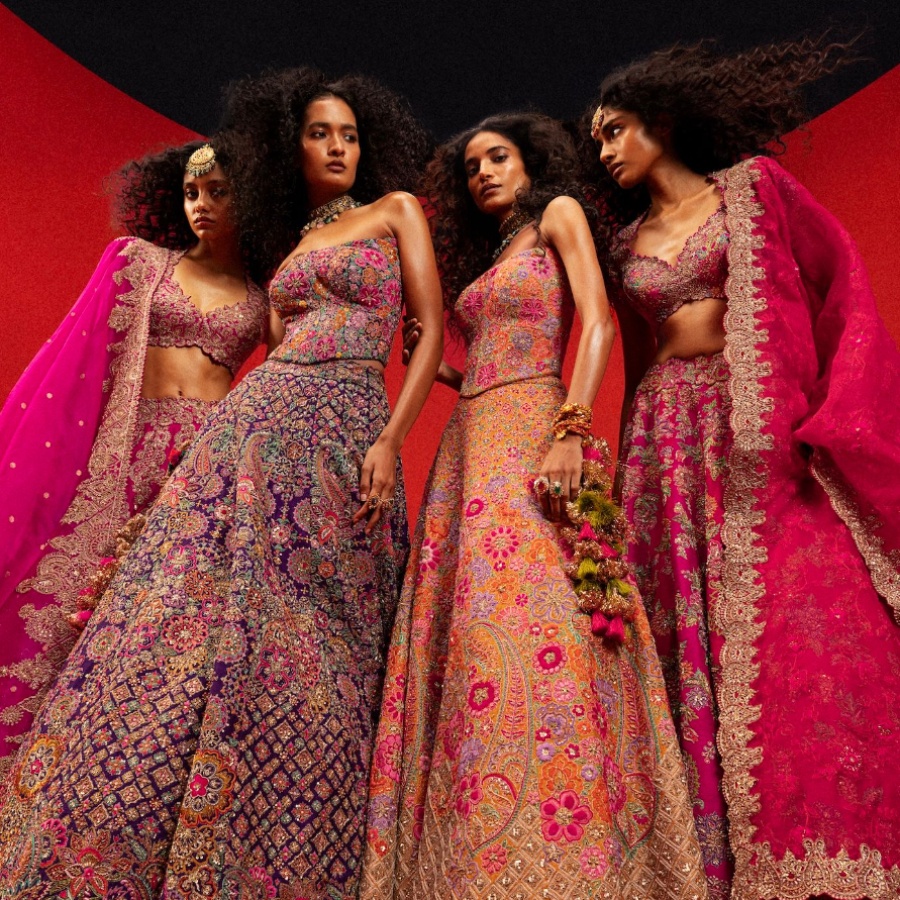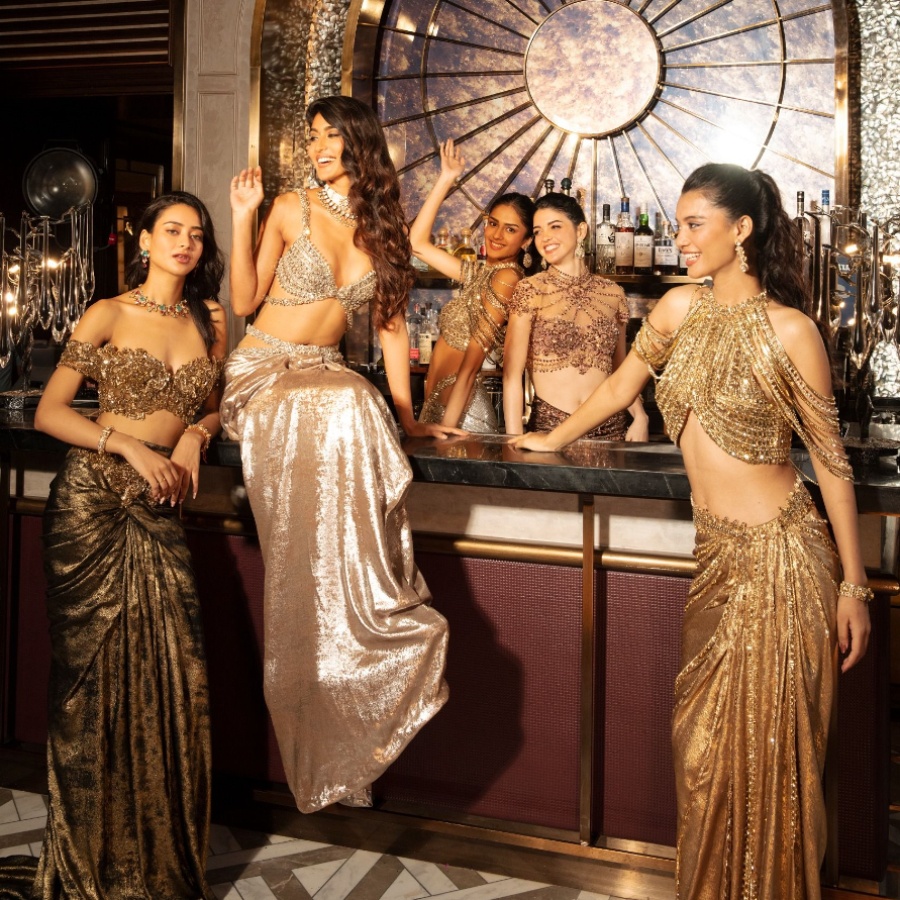


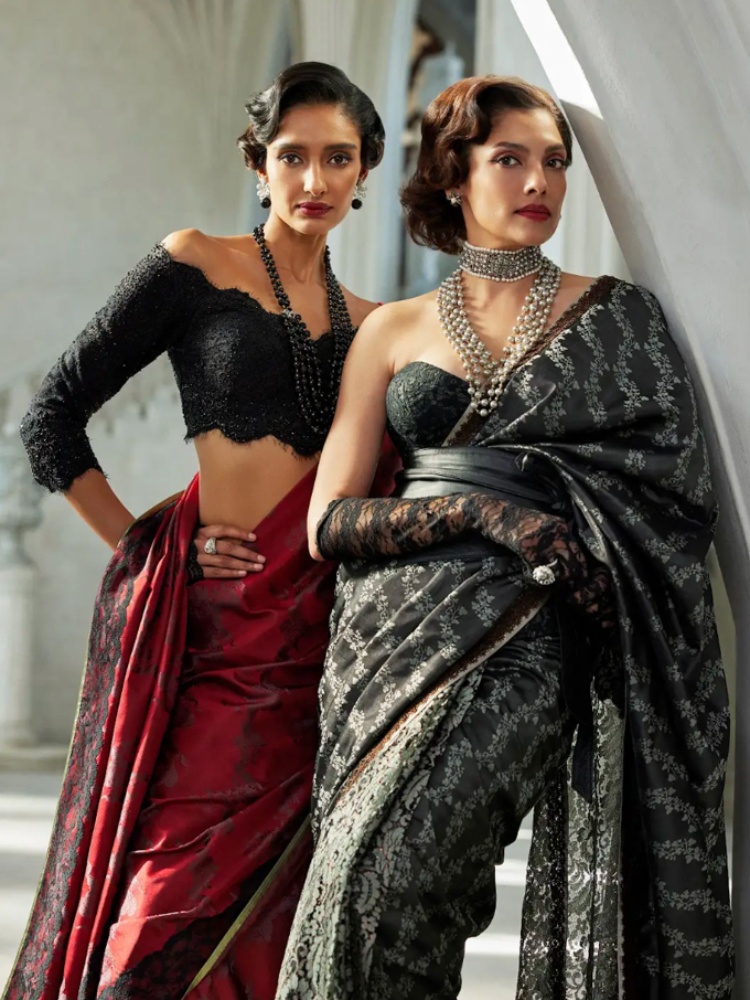

It isn't every day that a discarded fragment of Rococo fabric found in a Paris flea market bin ends up inspiring a single-edition Banarasi sari. But then there is nothing ordinary about Swati & Sunaina Gold's latest collection Varanasi to Versailles.
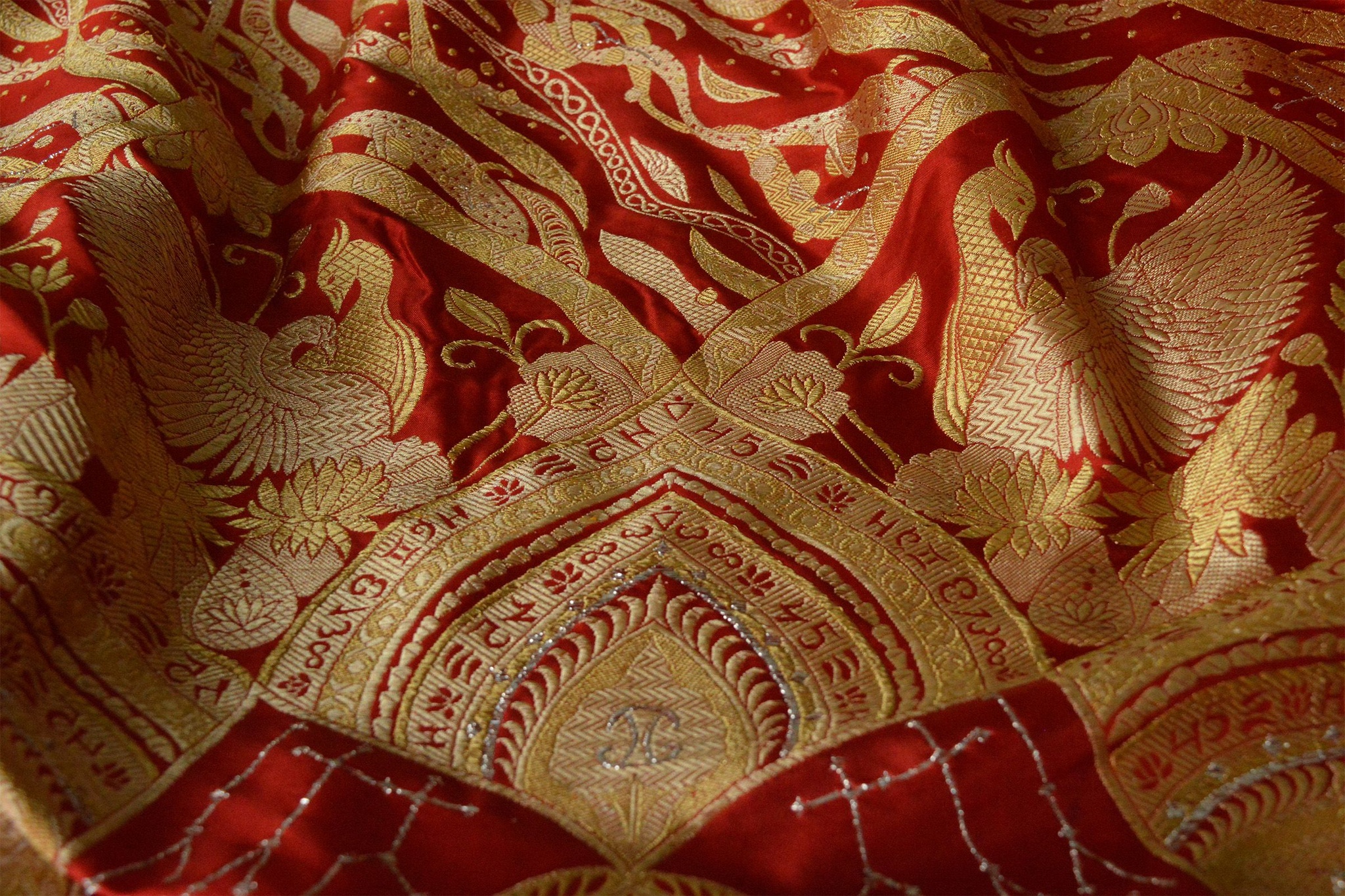
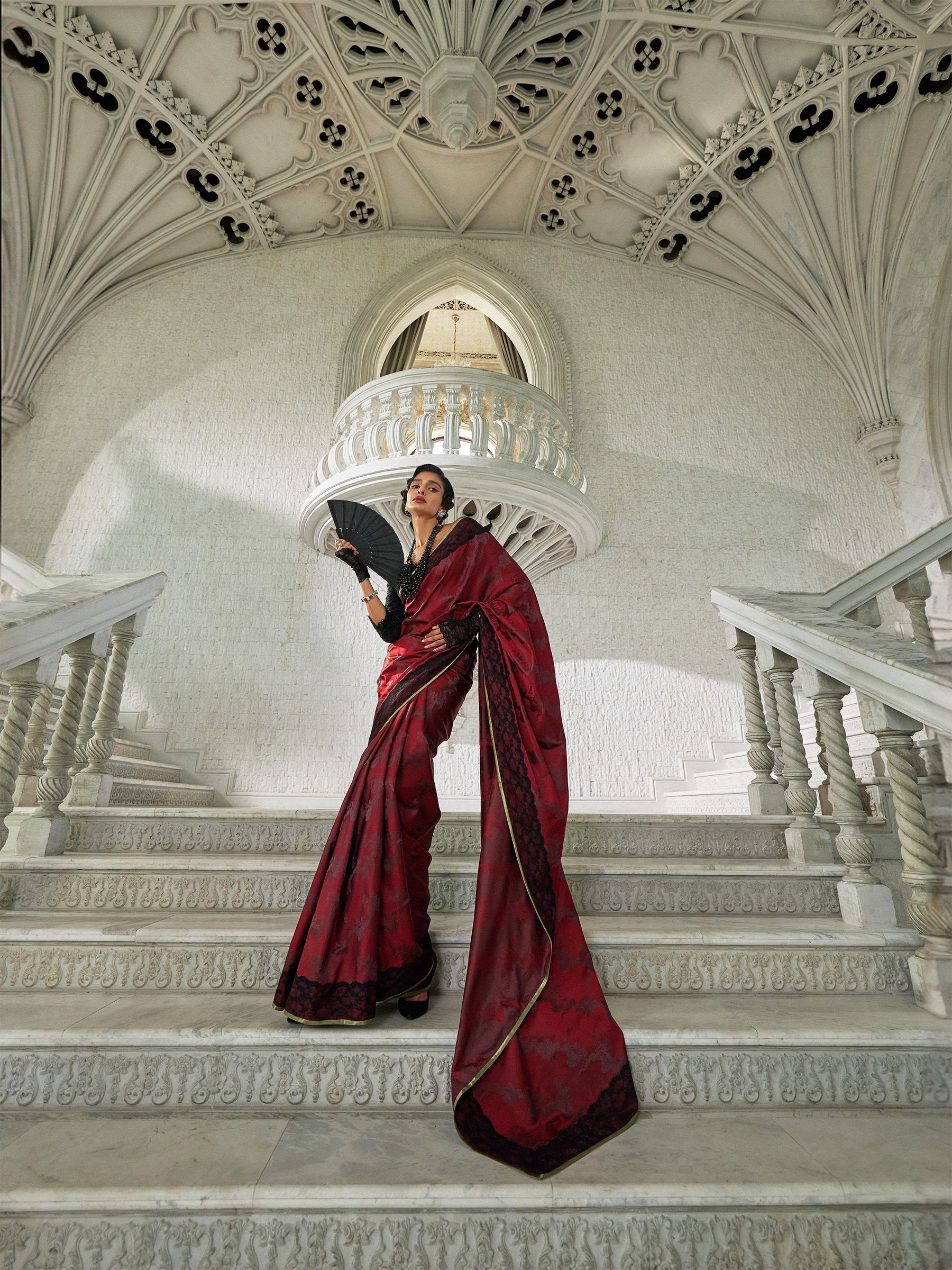
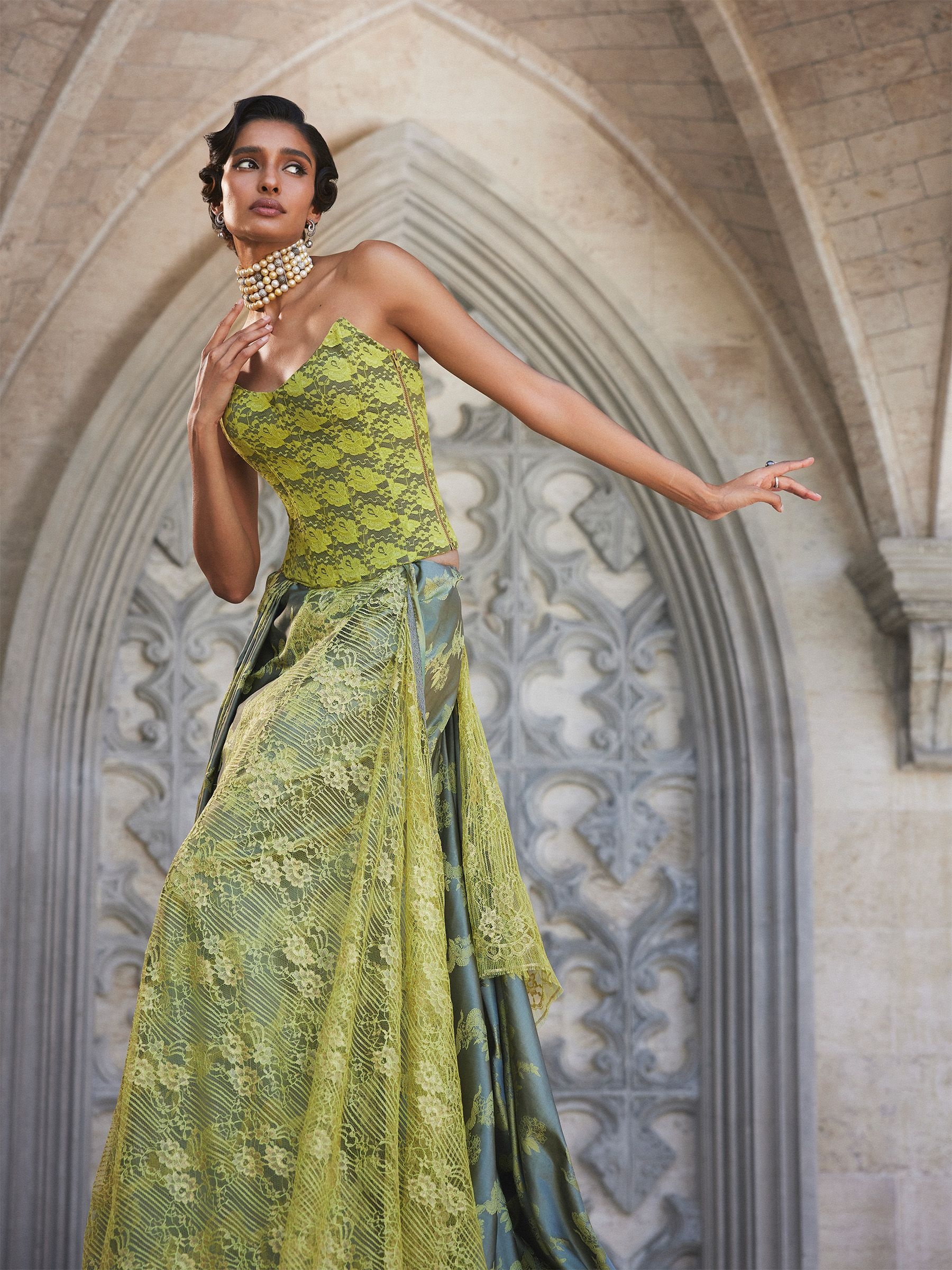
A six-year labour of love, the collection explores an unlikely dialogue between French and Indian decorative traditions reimagined through centuries-old Banarasi weaving techniques. Bringing together everything from Louis XIV's bedchamber brocades to the scallops from Queen Marie-Antoinette's gown—the result is a series of saris and lehengas (each with their own name, story and authenticity certificate) that feel at once historic yet strikingly beautiful and relevant.
These limited-edition saris are as wearable as they are worthy of collecting, it’s no surprise that each piece from this collection has found its way into a coffee-table book by the designers. The pieces here are made for anyone who values craftsmanship, storytelling and pieces designed to be cherished long after the wedding festivities are over. In conversation with co-founder and designer, Swati Agarwal, we discuss the research, artistry and serendipitous discoveries behind the collection and why modern brides are gravitating towards meaningful heirlooms over fleeting trends:
Why Varanasi to Versailles?
I have always been intrigued by old textile cultures from the Persians to the Parisiens. We wanted to explore something that wasn’t explored yet. We have dived deep into Indian textiles and for us the next natural step was to study and start a cross-cultural dialogue with another textile history, from another part of the world. 15 days before the pandemic locked us down, I made my first research trip to Paris. It's the most intensive collection we've made so far and the most ambitious, if you ask me. It’s been an almost six-year long process.
You draw from three centuries of French textiles and re-interpret that into Banarasi weaves. How did you keep the integrity of both intact?
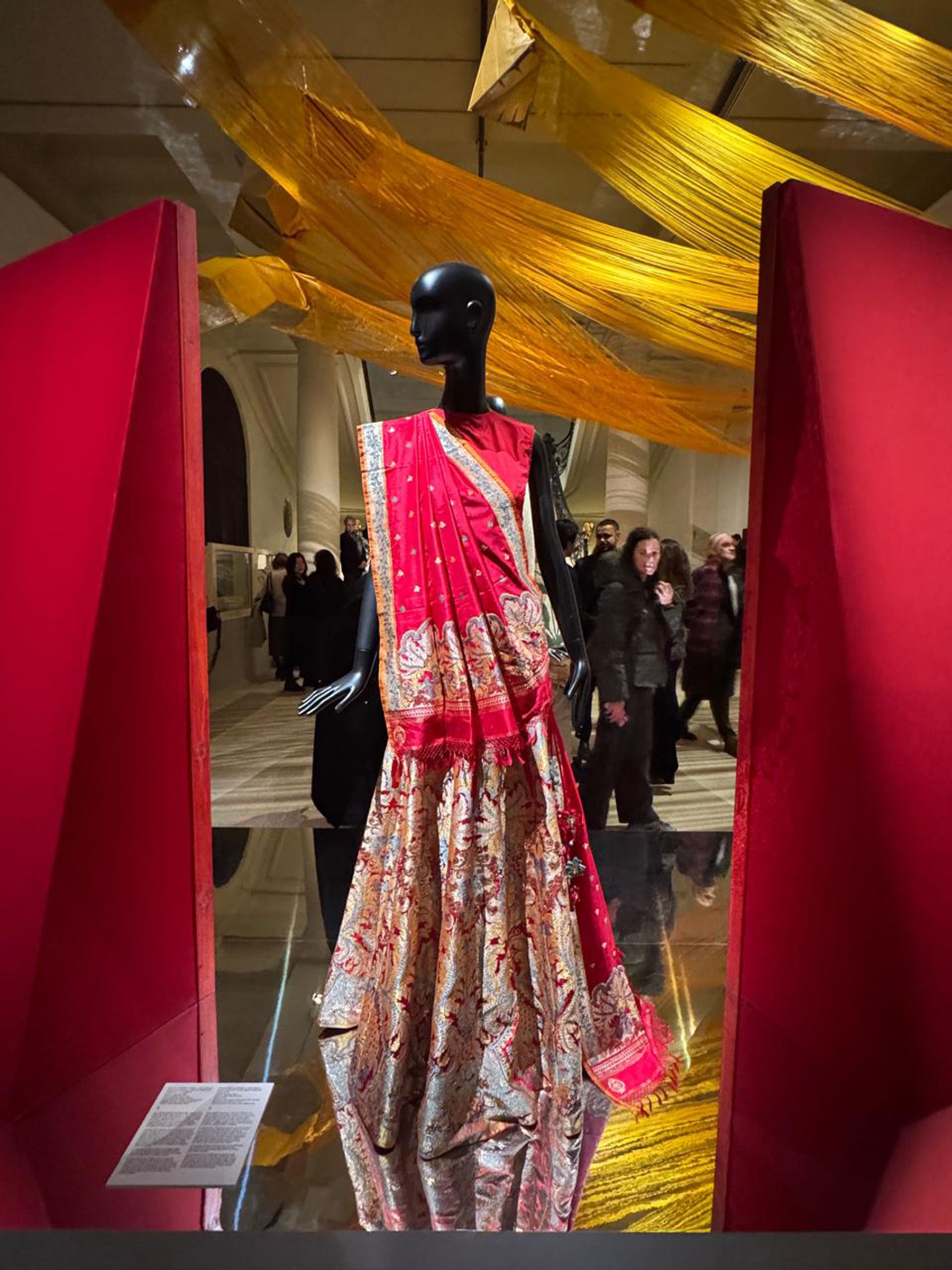
French textiles and crafts are a completely different design language from ours. Our research took us to museums, flea markets, libraries and into textile archives, over many trips and exchanges. But it was the Palace of Versailles that became our core inspiration. It was living heritage all in one place to see. In fact, the star of the collection, the Zeenat grand gold lehenga was inspired by the brocade from Louis XIV's chamber.
Through the collection we wanted to create a true dialogue between France and India. Take for instance, the Illusion and Moksha saris, these translate French lace into a zari woven format. In the sari, Rosette, we used tissue, but in a very delicate form so it looks like a roll of ribbons with little posies at the bottom. We’ve brought everything from French brocade-style called Bizarre and Chantilly lace to scallops and bows into Indian hand-weaving techniques such as Kadhuwa, Jamdaani, Rangkaat, Gyasar, Tanchoi and Dampach.