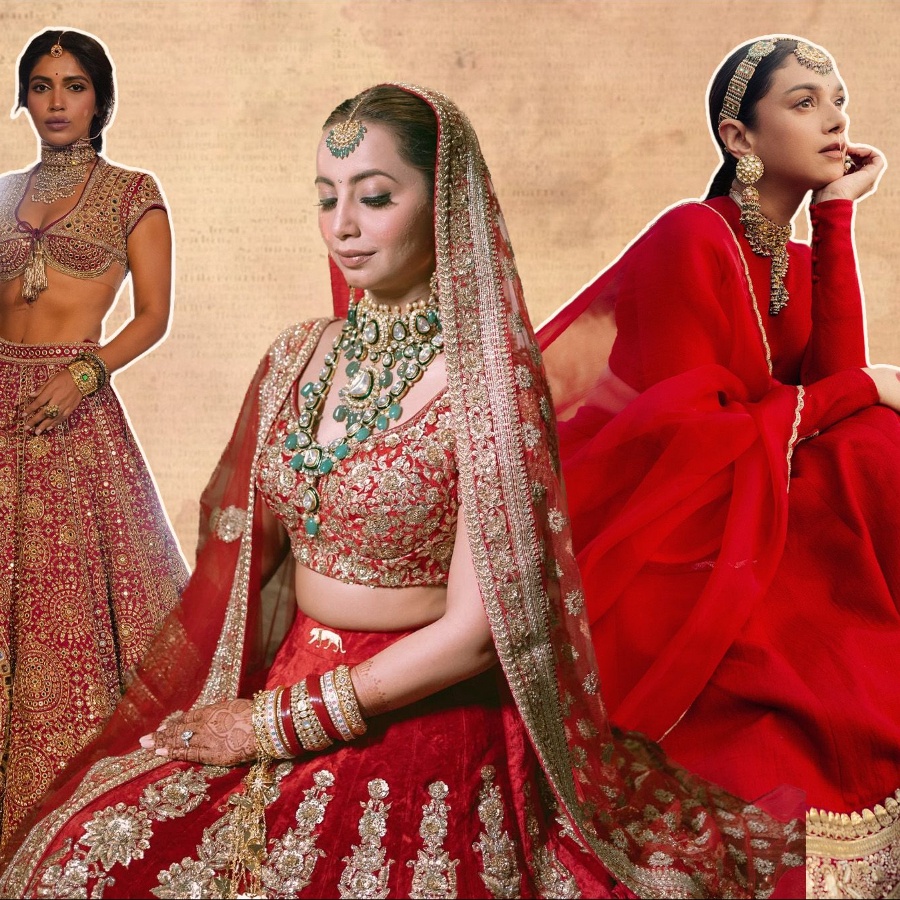
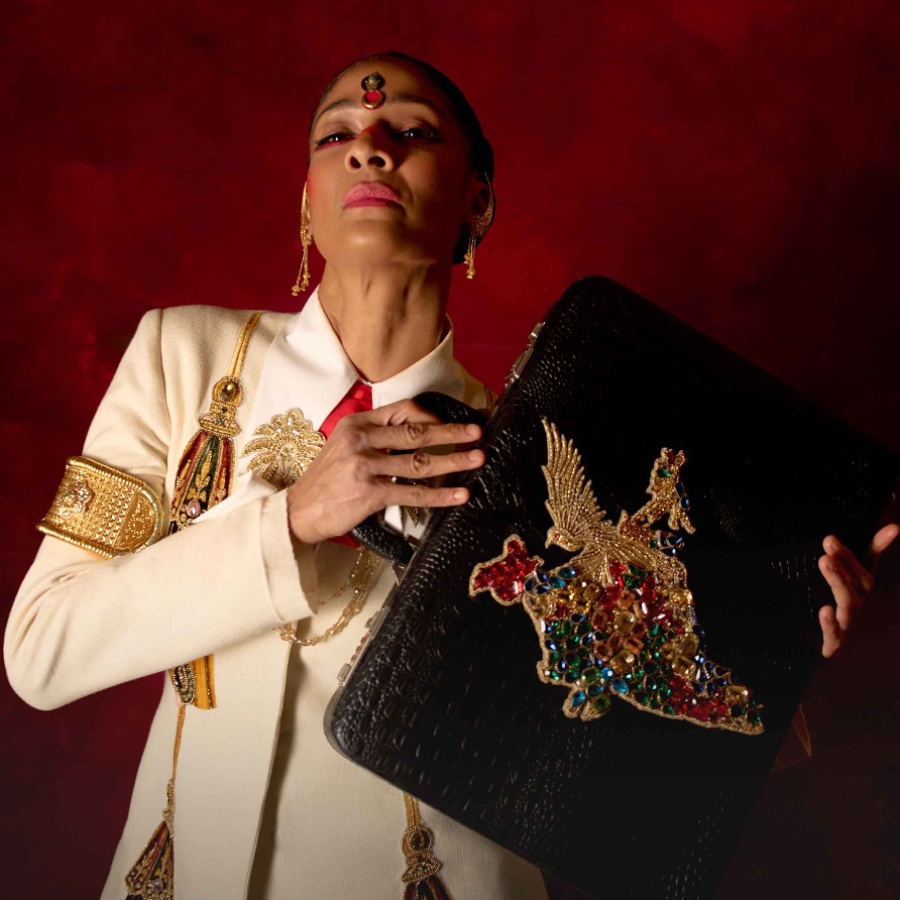
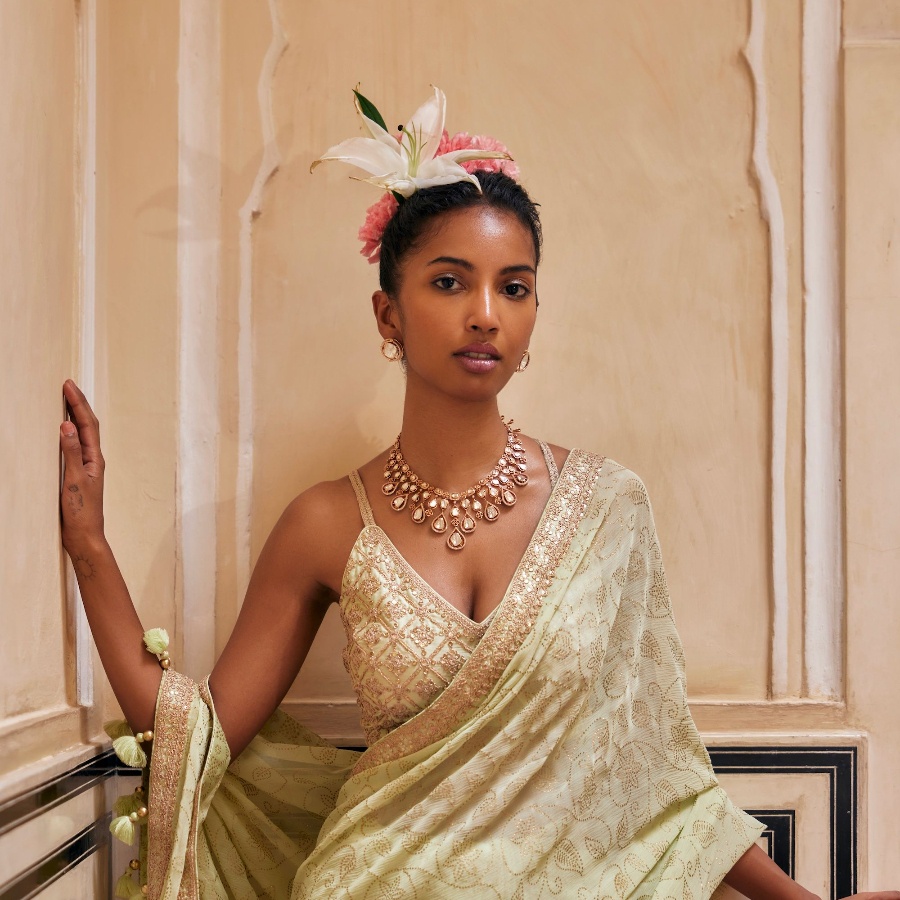
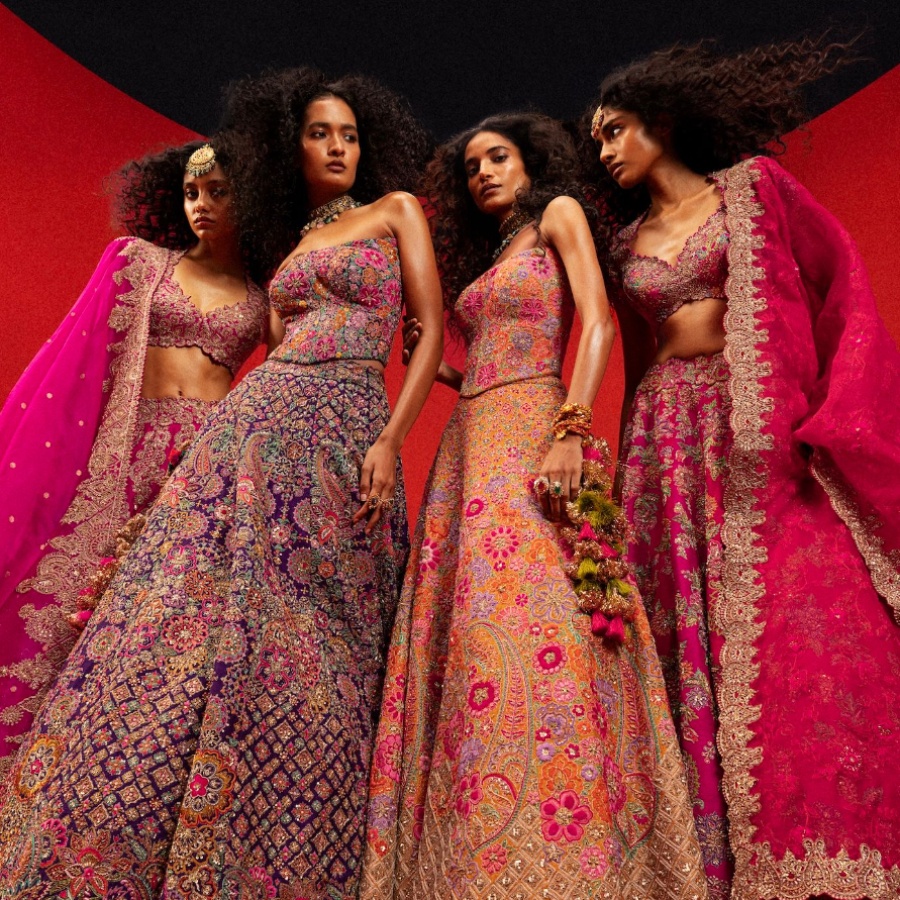
The veil is the undisputed 'it' bridal piece of the year. It moved from a traditional accessory to a pop culture mainstay this season, when Mia Goth’s character wore that viral crimson veil in Frankenstein. Even with Charli XCX’s wedding in the rearview, she kept the momentum going with a bridal-inspired white veil at the Wuthering Heights red carpet. This is the year of nostalgia. And since we are obsessing over embedding emotions into everything we own, it only makes sense to go the extra mile for your wedding day.



ADVERTISEMENT
How to customise your bridal veil into a one-of-its-kind moment
Designers Isha Jadojia of Roseroom and Yash Patil of That Antique Piece weigh in on nailing the year’s most coveted bridal accessory
Instagram.com/roseroom__official

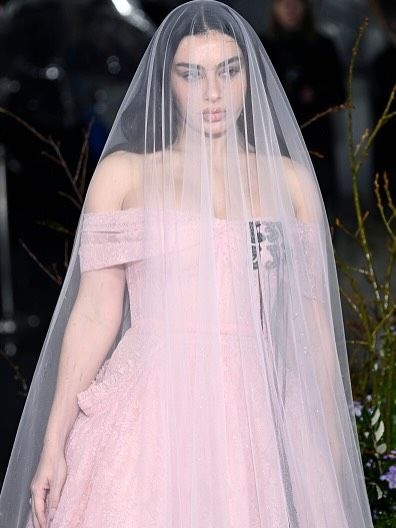
Charli XCX for the London premiere in custom Erdem
Instagram.com/chrishoran20

Margot Robbie on the set of Wuthering Heights
Courtsey Reddit
Be it a veil, a ghunghat, or a dupatta, our Bollywood brides have been at it since 2018. Each adds a meaningful secret message to their veils. Deepika Padukone, the quintessential Sabyasachi bride, wore a classic red and gold lehenga with a dupatta border bearing the incantation ‘Sada Saubhagyavati Bhava’ in Devanagari script. Soon after, Priyanka Chopra’s Jodhpur wedding featured a Ralph Lauren veil stitched with 'Nicholas Jerry Jonas', '1st December 2018', and the names of her parents, alongside words like 'Hope' and 'Compassion'. This streak of personalisation continued with Alia Bhatt, who had her wedding date, 'The fourteenth of April 2022', stitched in white across her ensemble.
So if you’re ready to start shopping for your bridal ensemble, the question isn’t if you should customise your veil, but how and where.
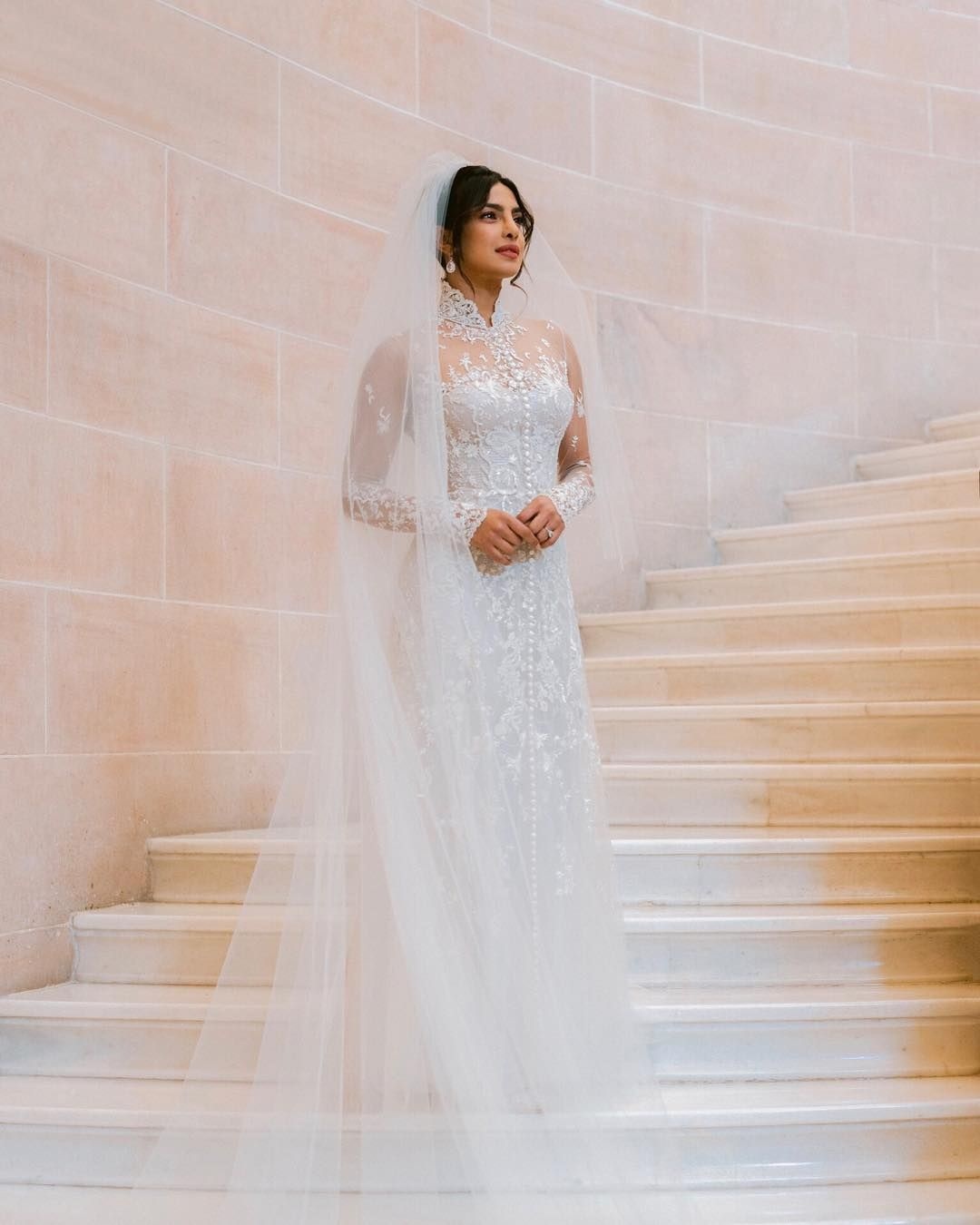
Priyanka Chopra’s one-of-a-kind Ralph Lauren ensemble
Instagram.com/ralphlauren
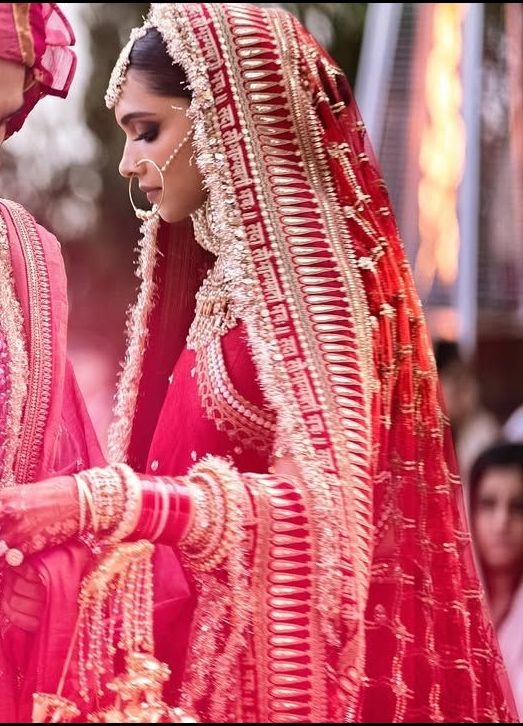
Deepika Padukone in her Sabyasachi dupatta border bearing a Devnagri incantation
Instagram.com/errikosandreouphoto
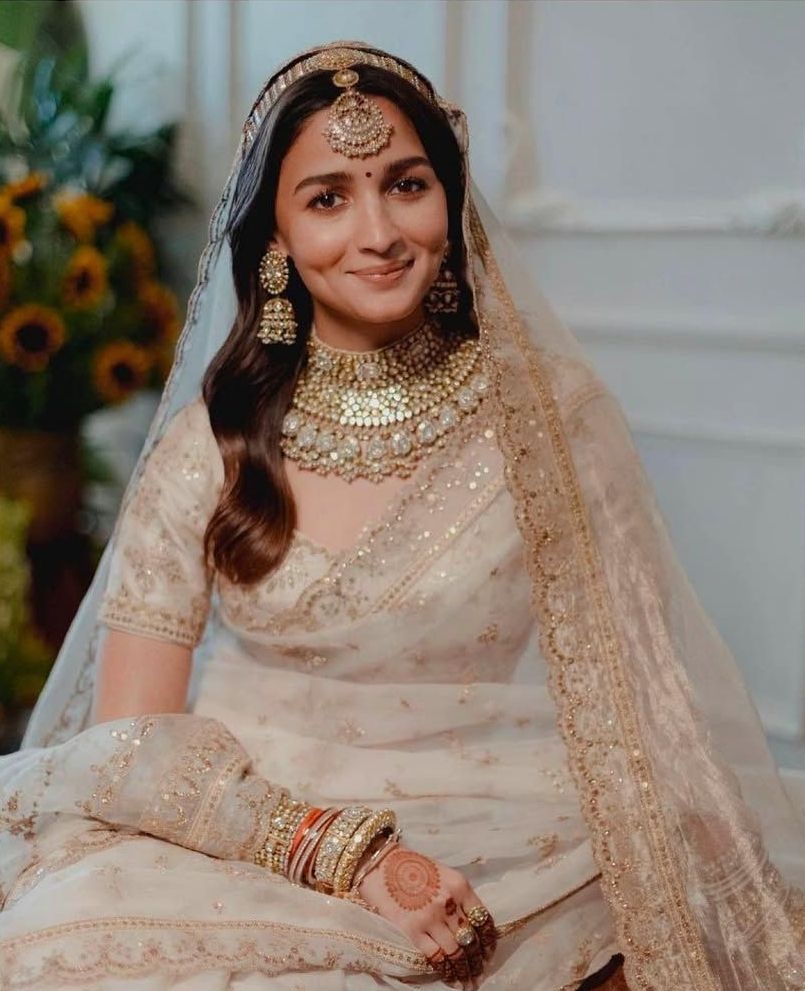
Alia Bhatt in an embroidered handwoven tissue veil for her wedding
Instagram.com/bridesofsabyasachi
Make it intimate, minimal and tone-on-tone
If the last decade was defined by bold, high-contrast lettering legible from the back of the banquet hall, 2026 is opting for a whisper. Isha Jadojia of Roseroom notes a definitive pivot toward "quiet luxury", where the details are for the bride and those close enough to see them. “There is a strong shift toward tonal embroidery and layered whites—details that reveal themselves up close rather than from a distance," she explains. So move over gold on red, the aesthetic is rooted in white-on-white or red-on-red work and if you’re opting for contrast go with antique metallics. It is all about precision over loudness.
Yash Patil of That Antique Piece agrees that the objective is a delicate equilibrium. To ensure that heavy quotes or 3D appliqués don't kill the "float" of a veil, he focuses on the specific weight of materials and strategic spacing. For lightweight tulle, he recommends silk organza appliqués: "They add dimension without adding weight. Think hand-cut three-dimensional florals with the lightest of pearls." It is about being playful without looking like you’re dragging a heavy-duty tapestry.
If you want to go BIG, do it differently
If you are still leaning toward an over-the-top customisation, Jadojia warns against sheer density. "Drama should come from construction and presence—think veil length or an architectural element like a cape instead of a surface embellishment." For the romantics, Chantilly lace remains a staple, though its application has evolved. Jadojia notes that brides no longer want it as a simple overlay. Instead, it is being integrated into the "construction language" of the garment—layered under structured silhouettes or used in corsetry to provide depth without the bulk.
How to make it your 'It' piece
Customisation is no longer just a surface-level aesthetic choice. Jadojia reveals that "modular bridal construction" is the newest request—brides want elements that detach post-ceremony to create a second look without a full outfit change. "It reflects how today’s bride thinks practically while still wanting impact," Jadojia says.
When it comes to the dupatta, the fabric choice dictates the success of the customisation. Jadojia advises matching the textile to the silhouette: soft organza or net for sculpted lehengas and more structured fabrics for fluid silhouettes to add balance. Rather than repeating every motif from the garment—which can look like a copy-paste job—she suggests highlighting one technique, like hand zardosi or lace borders, to maintain harmony.
Finally, wear your heart on your veil
The most impactful customisations are the ones that serve as an intimate diary that you can preserve forever. Patil recently executed a black silk organza veil—an homage to a bride's late sister. The design featured moons and stars in gold and silver metal sequins, with a quote about the night sky edging the border. For an overseas bride, Patil engineered a veil inspired by an opera coat, featuring sleeves in handwoven silver zari silk tissue. The challenge was balancing pearls and silk embroidery into a result that remained subtle. "The final result had to be something very subtle and not over the top," he notes.
Just remember that even the most poetic details require some very unpoetic logistics. Commit to your vision early to avoid the technical pitfalls of a rush job—like fabric collapses under heavy threadwork or loose stitches that won't hold through the night. Ultimately, if it’s your wedding day, the rulebook on customisation is essentially non-existent. Whether it’s your veil, your dupatta, or even a detachable cape, there is no reason to stick to the standard script if you have a more creative idea in mind. In a season of nostalgia-maxxing, there’s no reason not to write yourself into the fabric.
ADVERTISEMENT