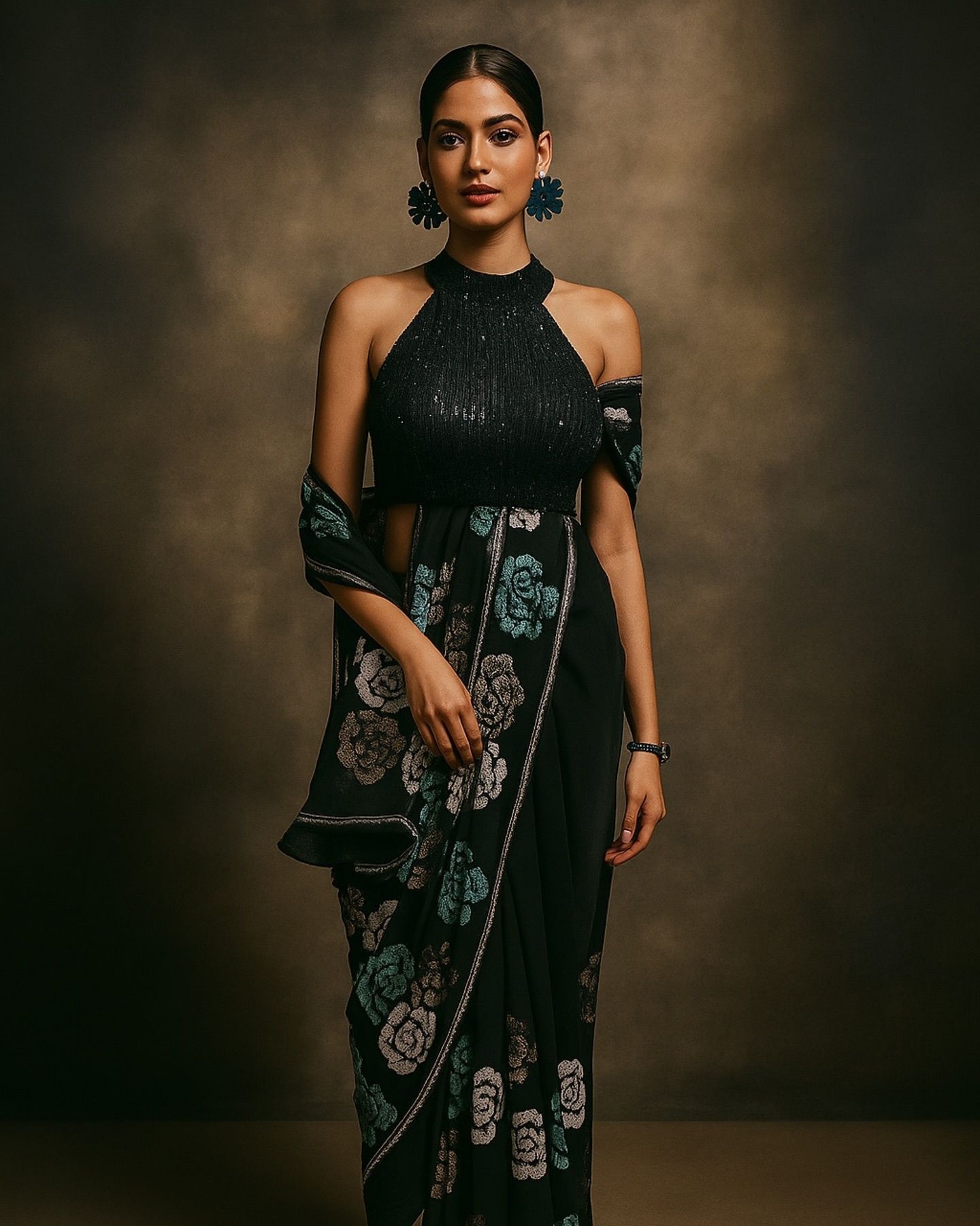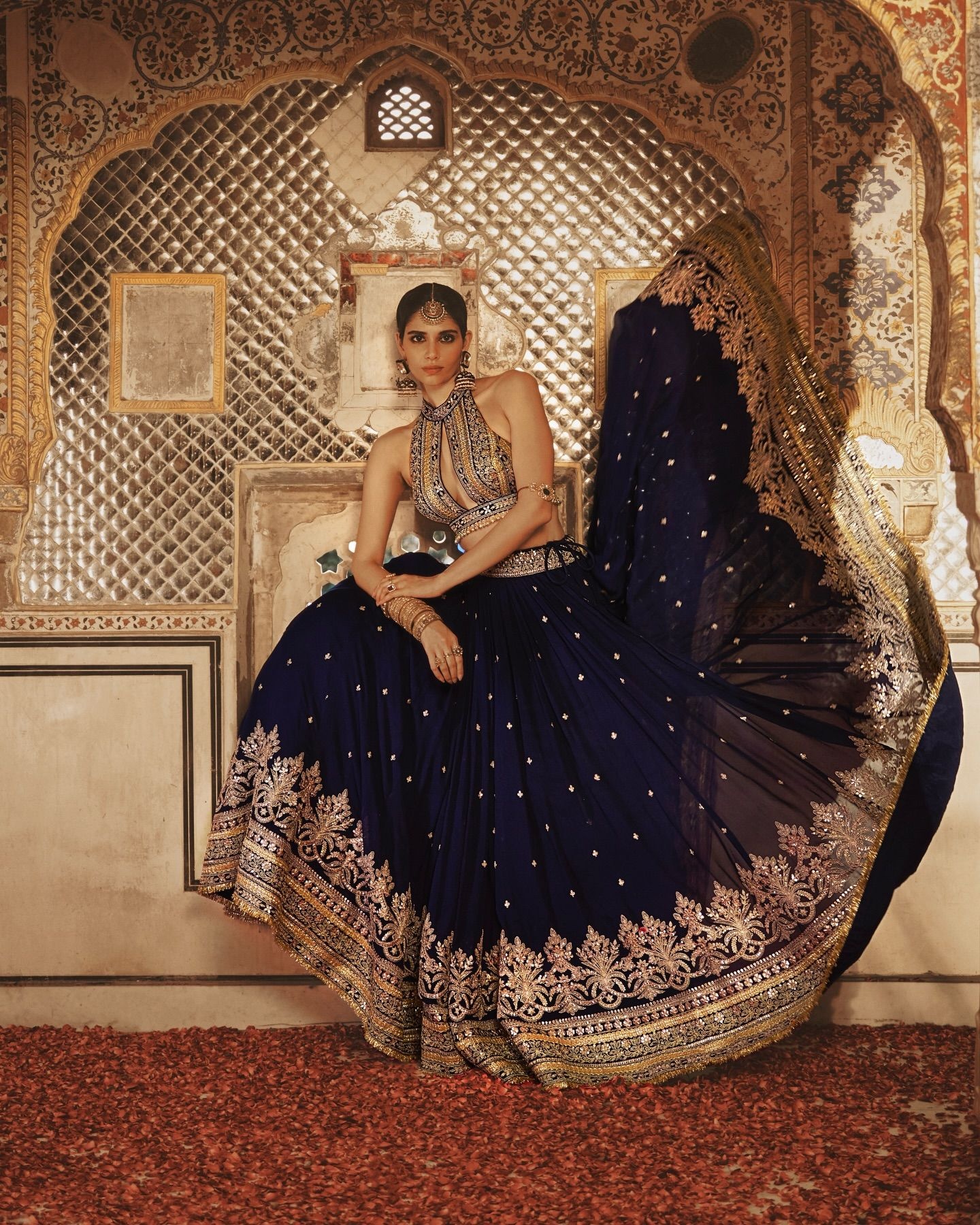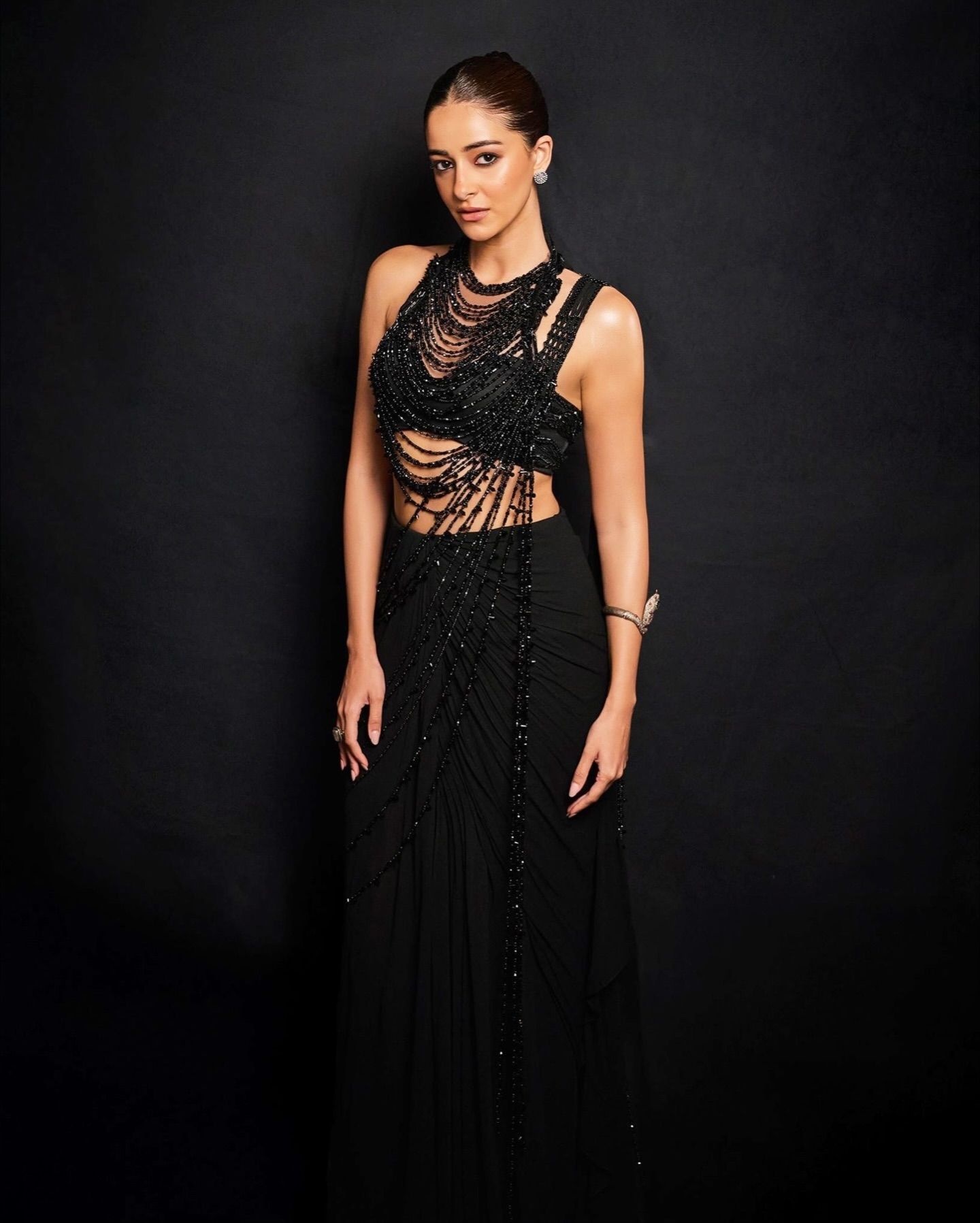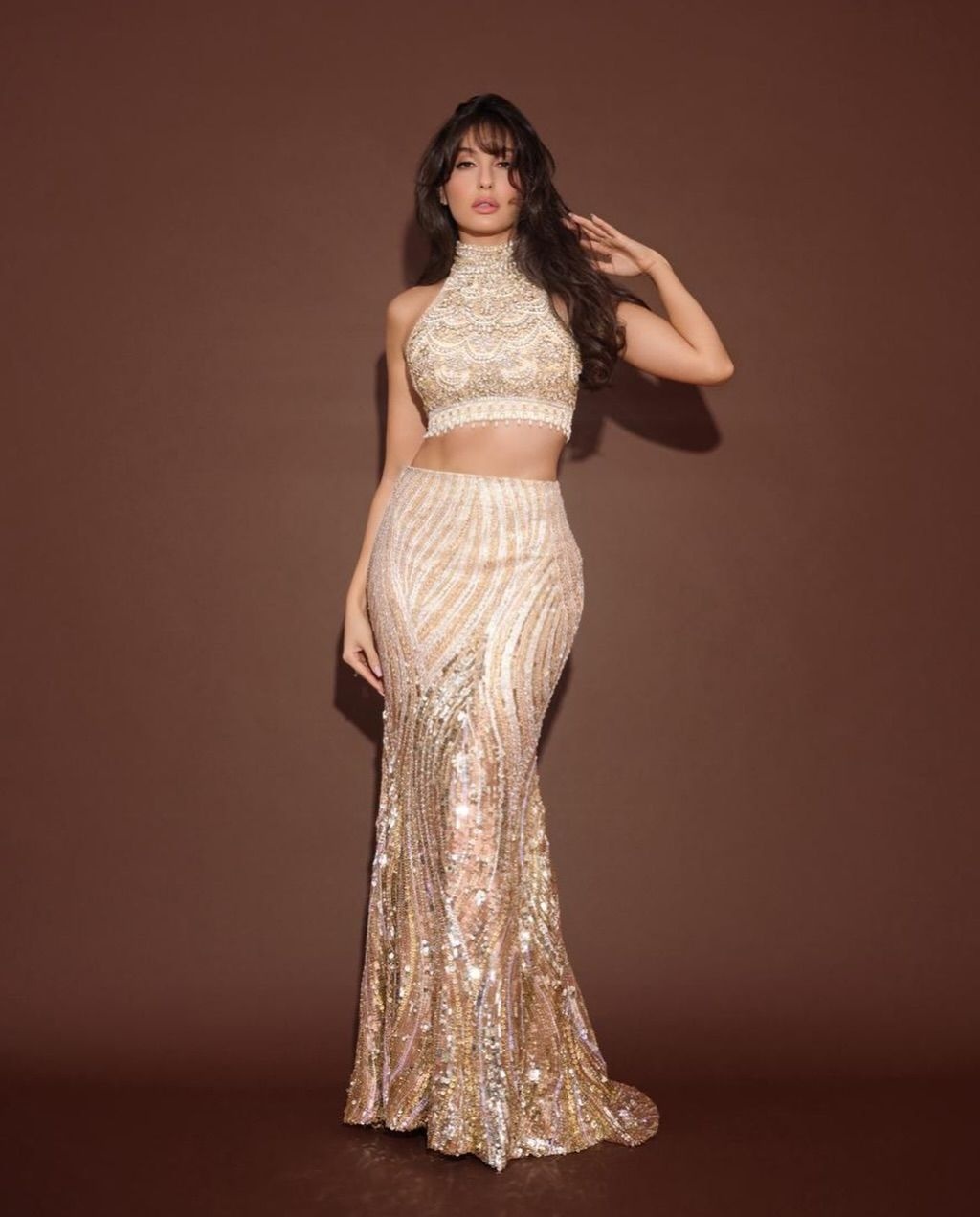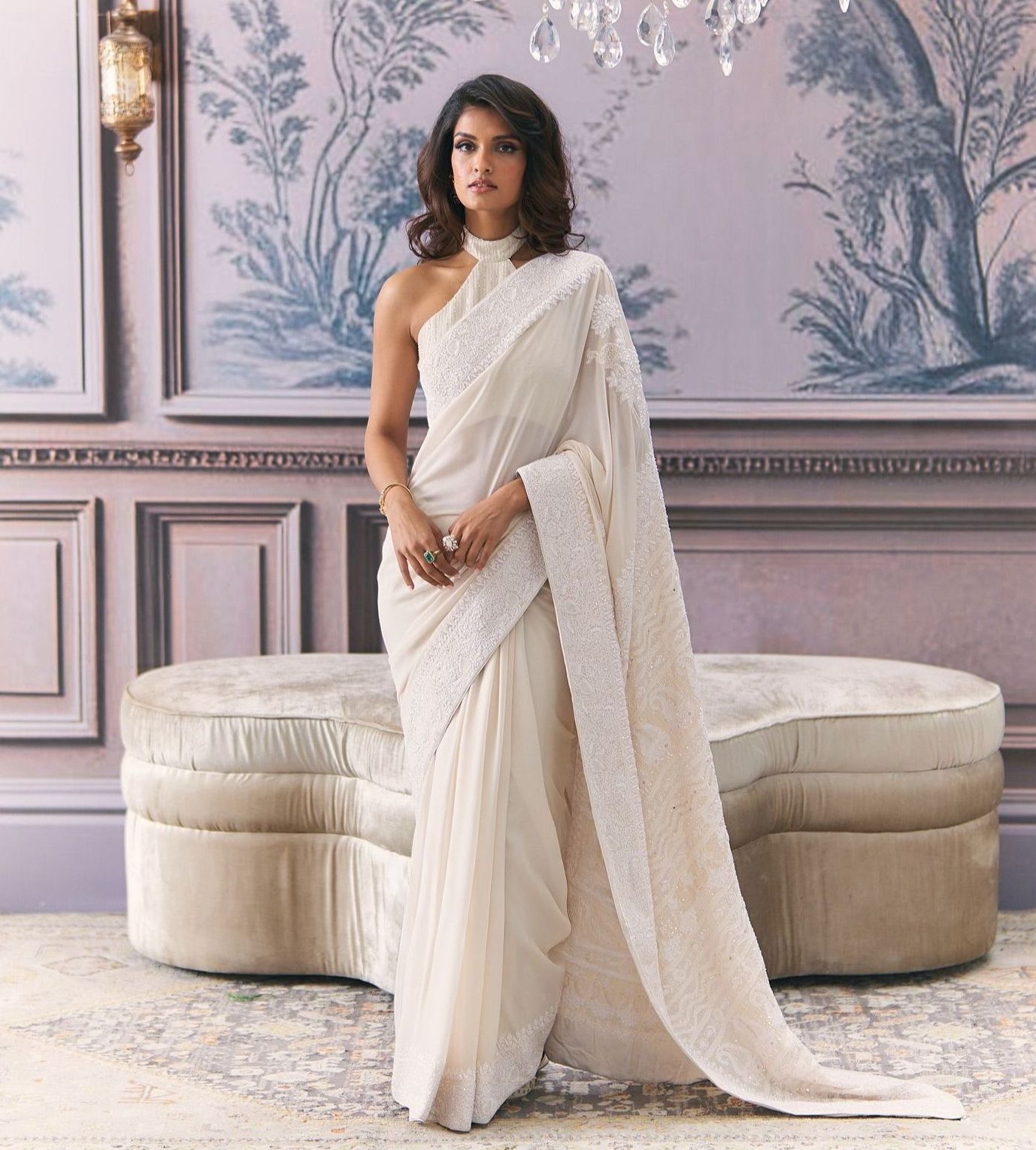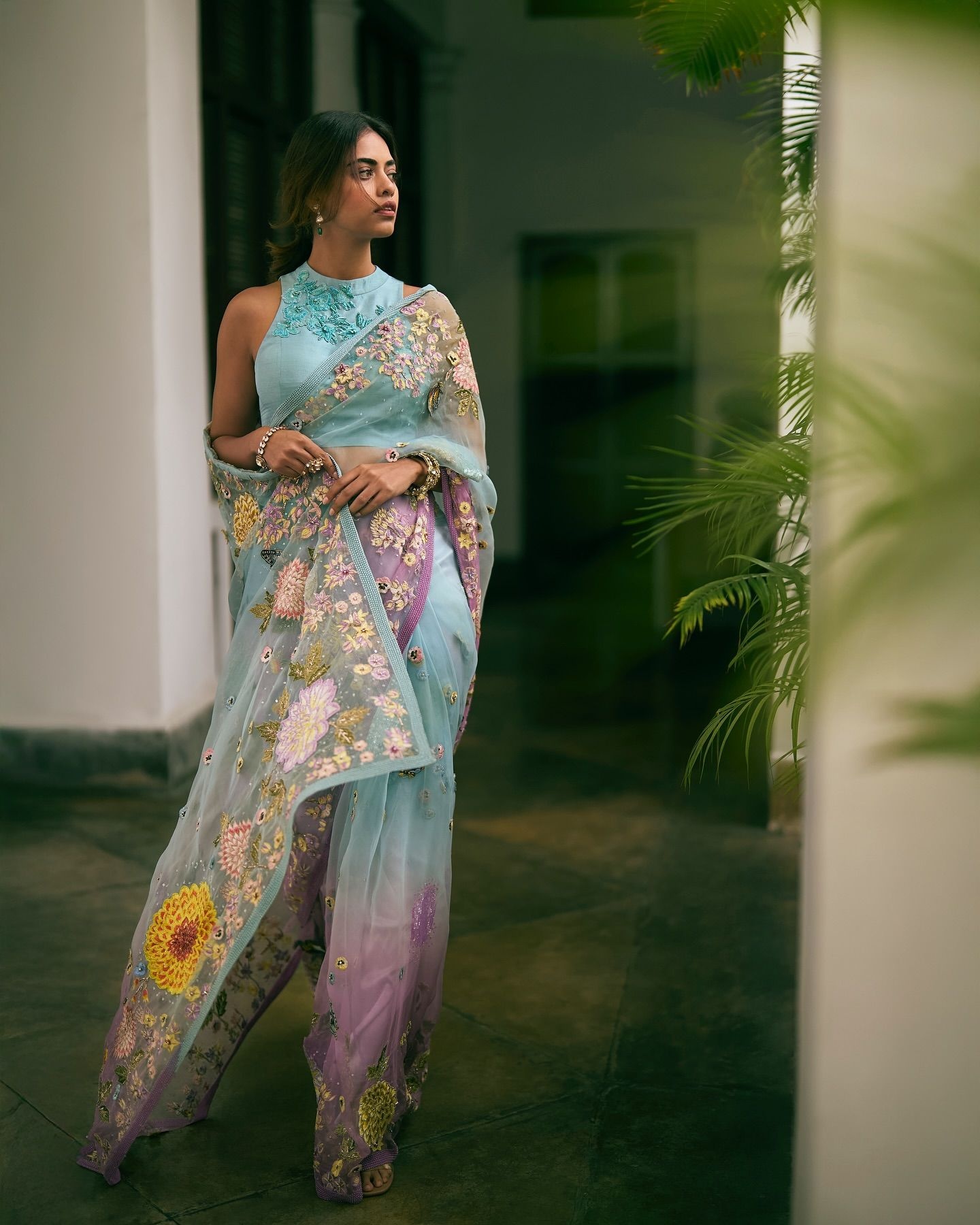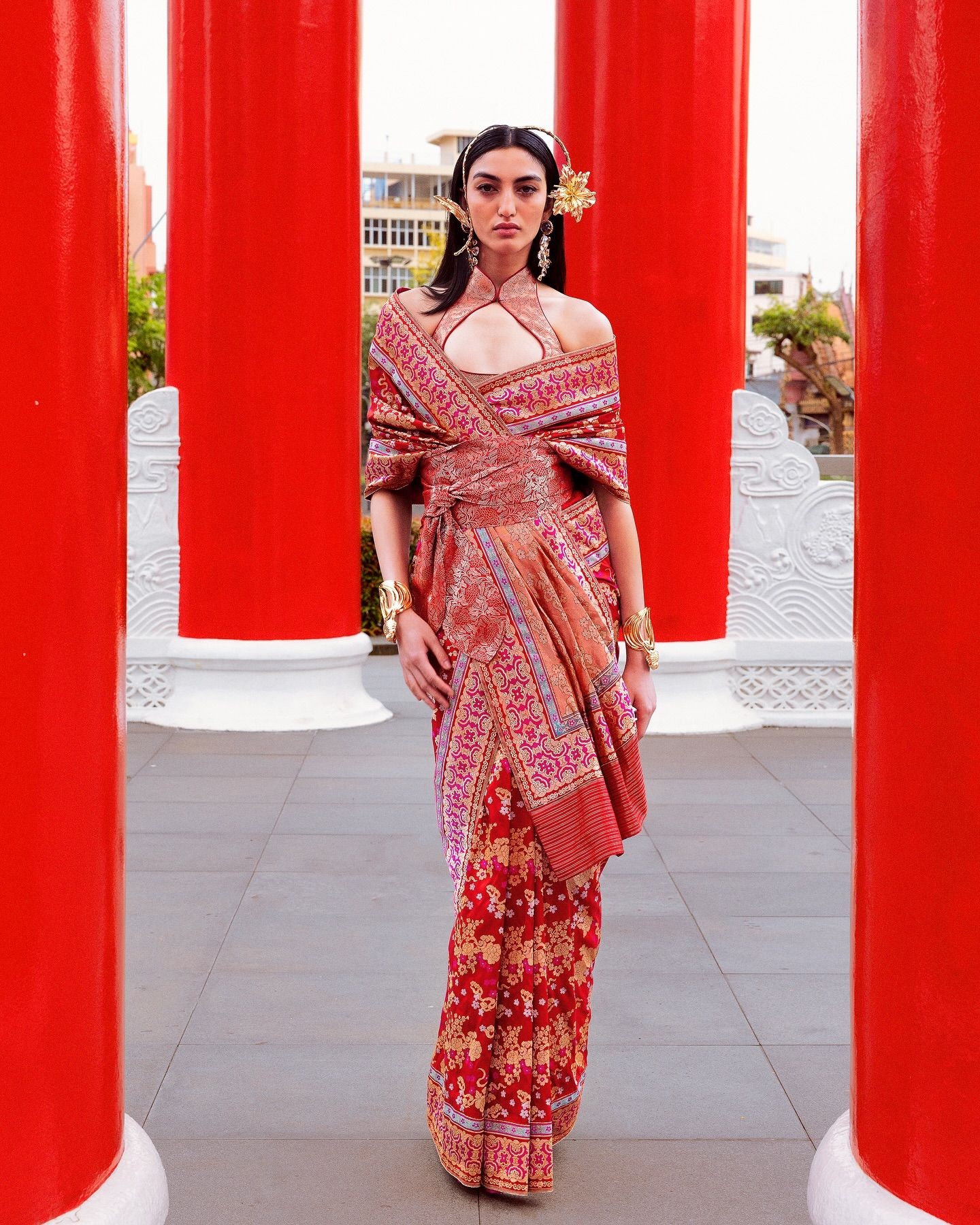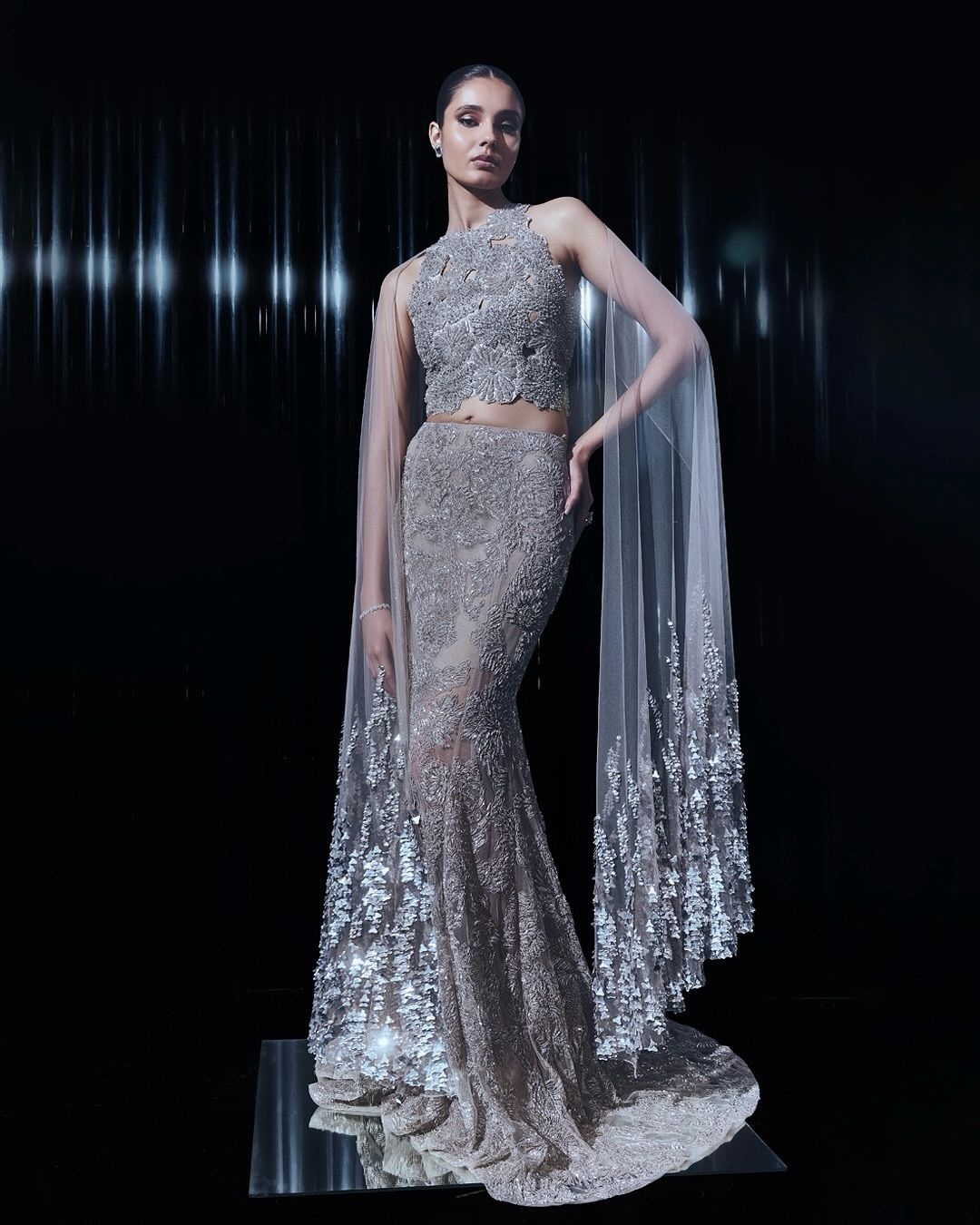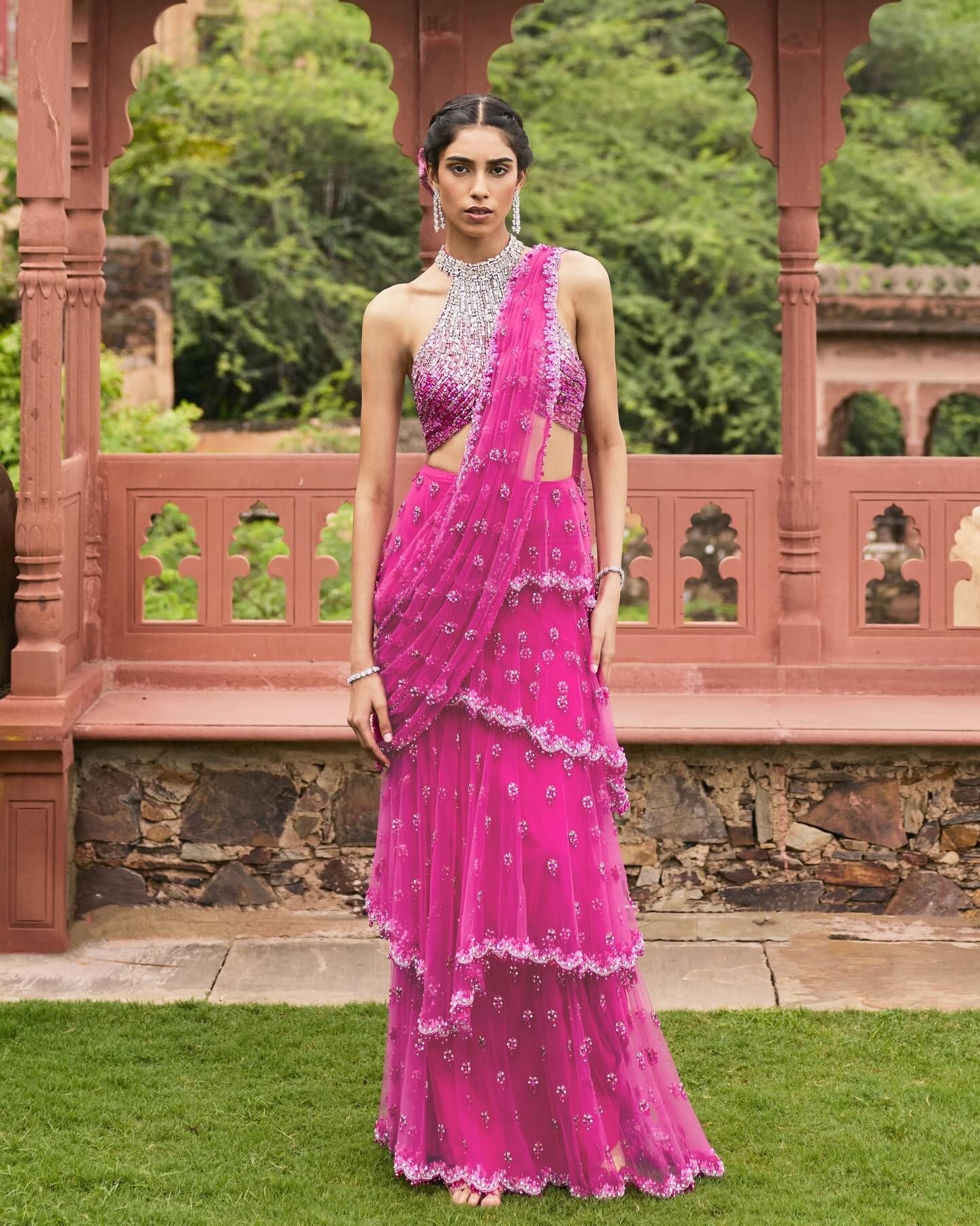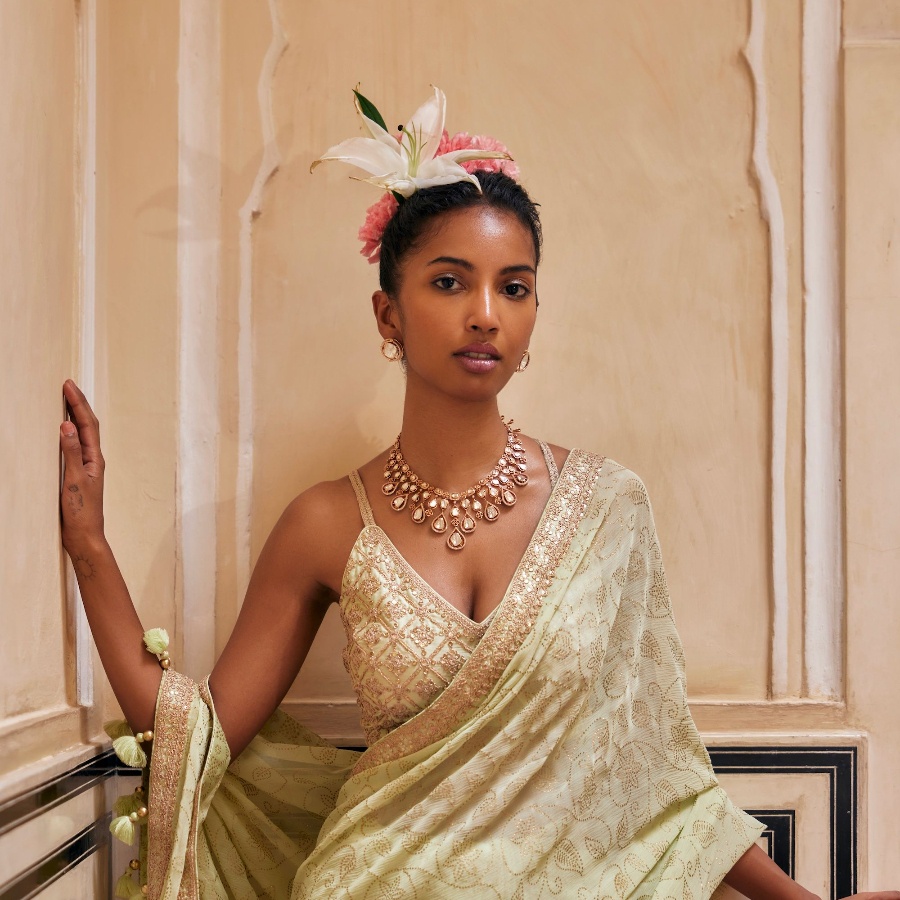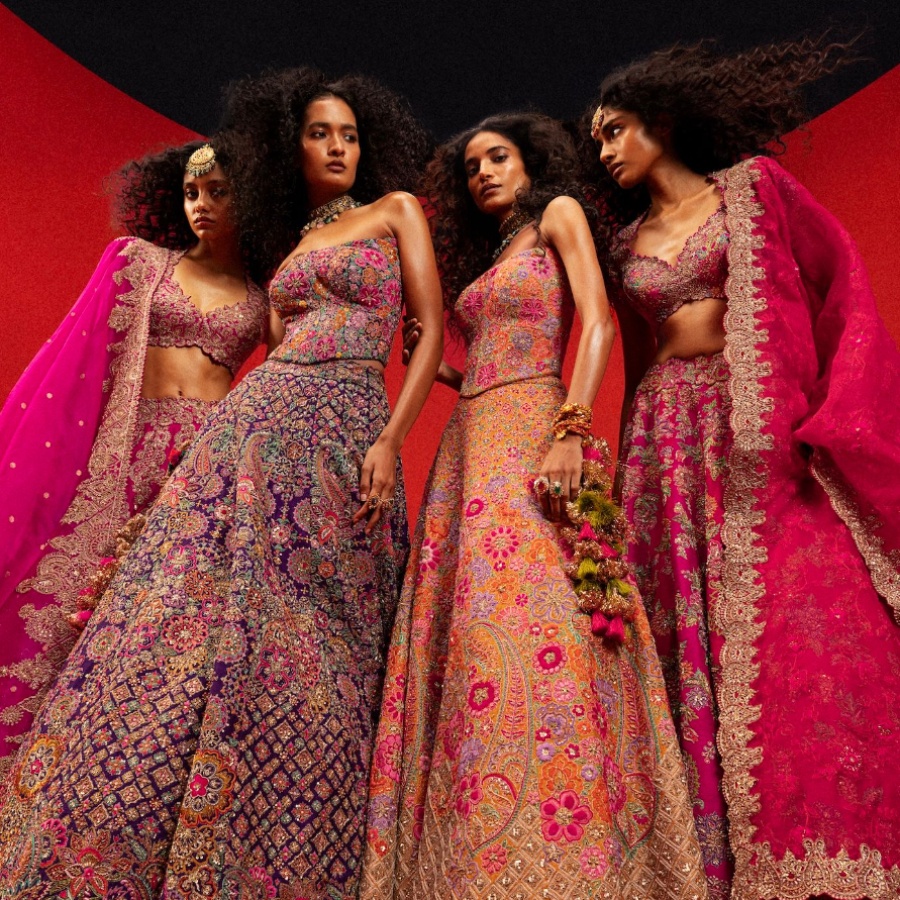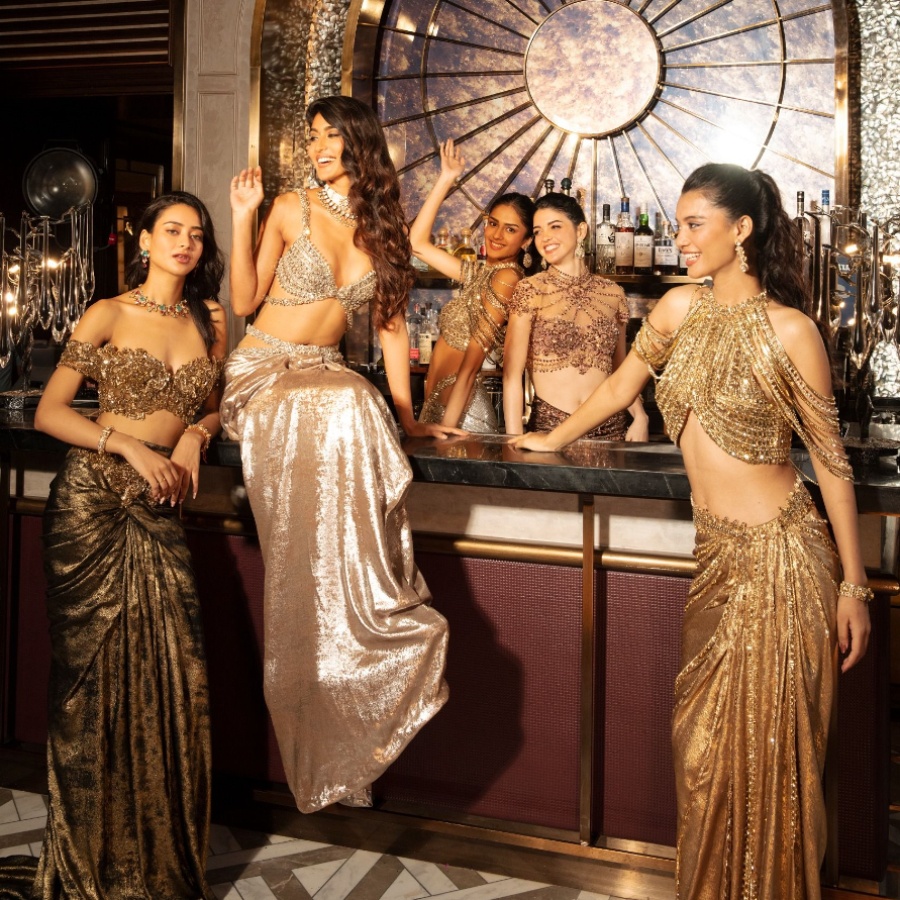


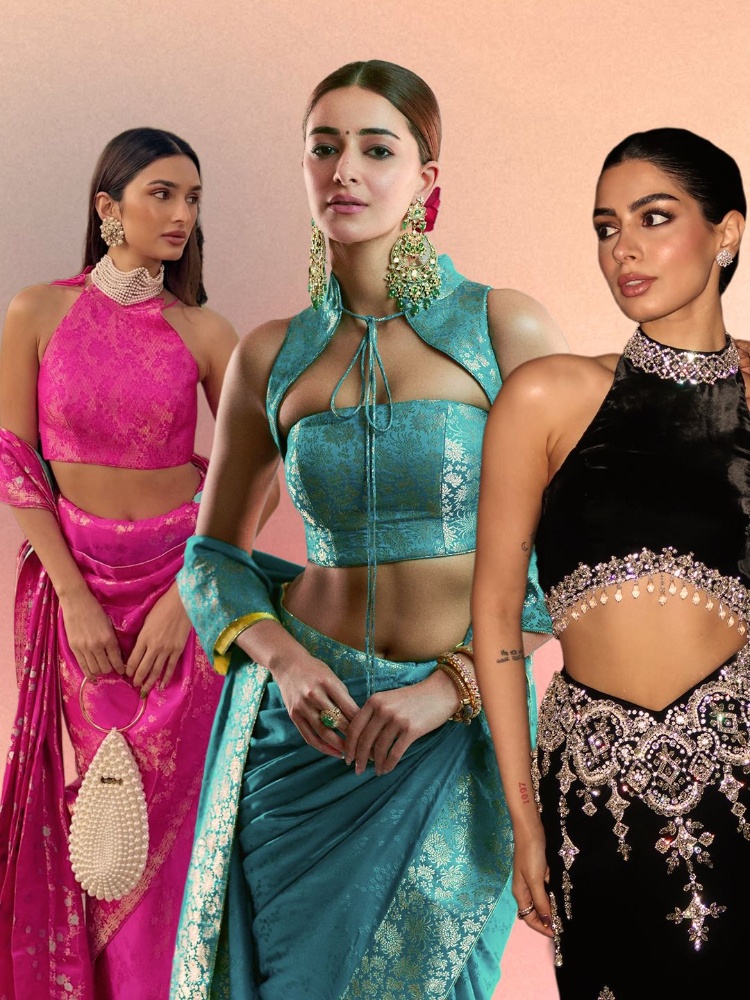

They were hot in the ‘70s, then made a Y2K comeback, but this time the halter is eyeing the big fat Indian wedding. Brides, get ready to pivot to the halter-neck blouses for a functional advantage: it creates a clean canvas and a designated frame for high-impact jewellery. When the blouse does the heavy lifting, the rest of the look falls into place.
This shift prioritises practicality over drama. While sweetheart and plunge cuts often require compromise once a necklace is added, the halter is decisive. It allows for heavy chokers, structured collars, and heirloom pieces to sit flush against the neck without crowding the frame. The result is an assured, uncluttered aesthetic that eliminates the need for constant adjustment. Besides, if you’ve spent this much time on Pilates to secure the Miley Cyrus arms, you deserve a silhouette that actually shows them off.
If you still need convincing, recent celebrity sightings confirm it. Ananya Panday’s Ekaya Banaras halter reframed the mandarin collar into a sharp silhouette that carried the weight of silk without requiring a necklace. Alaviaa Jaaferi has championed incut halters, relying on tonal sarees and clean lines where jewellery is optional. Khushi Kapoor’s Manish Malhotra look took it further: a velvet halter encrusted with pearls and silver that functioned as both garment and jewellery, proving that a well-cut neckline can stand alone.
A case for shoulder blades
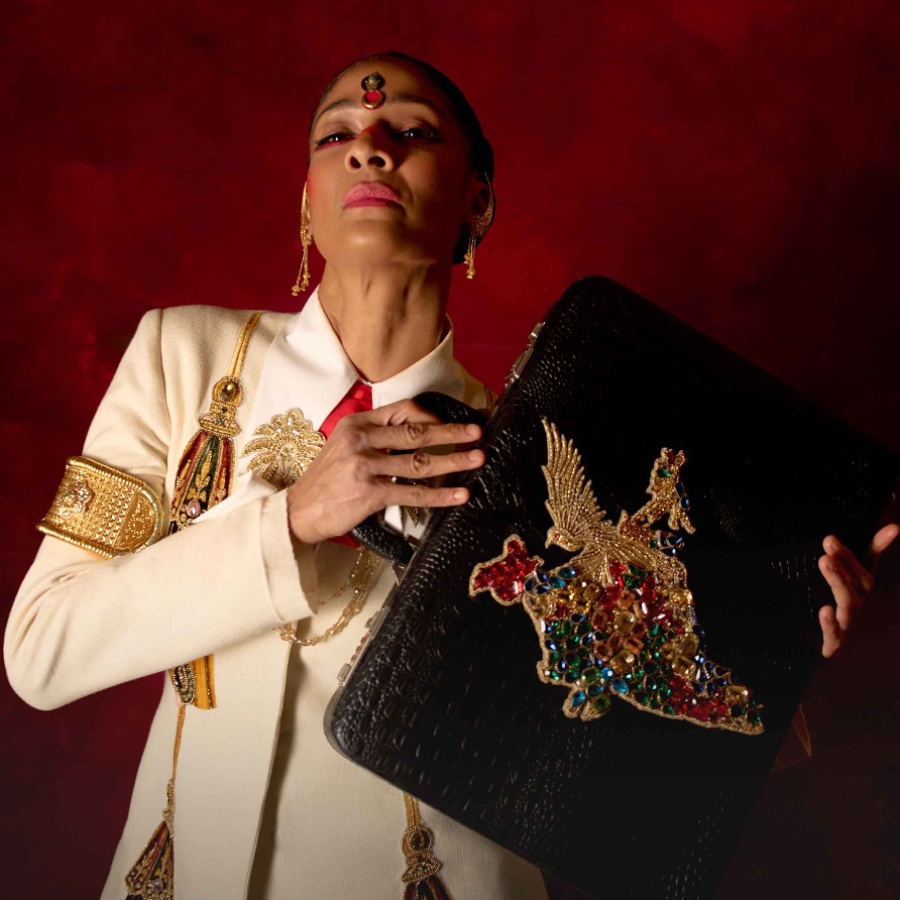
Black and gold halter blouses are the definitive power pairing for 2026. These looks lean into structure, using contrast and weight to frame the shoulders. Sangeeta Kilachand uses heritage marodi embroidery on halters that sit flush against the neck and torso. The result is a high-coverage, sleeveless cut that feels formal but lacks the visual weight of a traditional sleeve. Gopi Vaid offers a kinetic alternative; her racer-style halters narrow aggressively at the neck, utilising mirror work and gota patti to maintain a controlled line. Taking the silhouette to its technical limit, Gaurav Gupta treats the monochrome halter as a sculpture. Using internal boning and moulded, looping structures, Gupta allows geometry to replace surface decoration entirely.