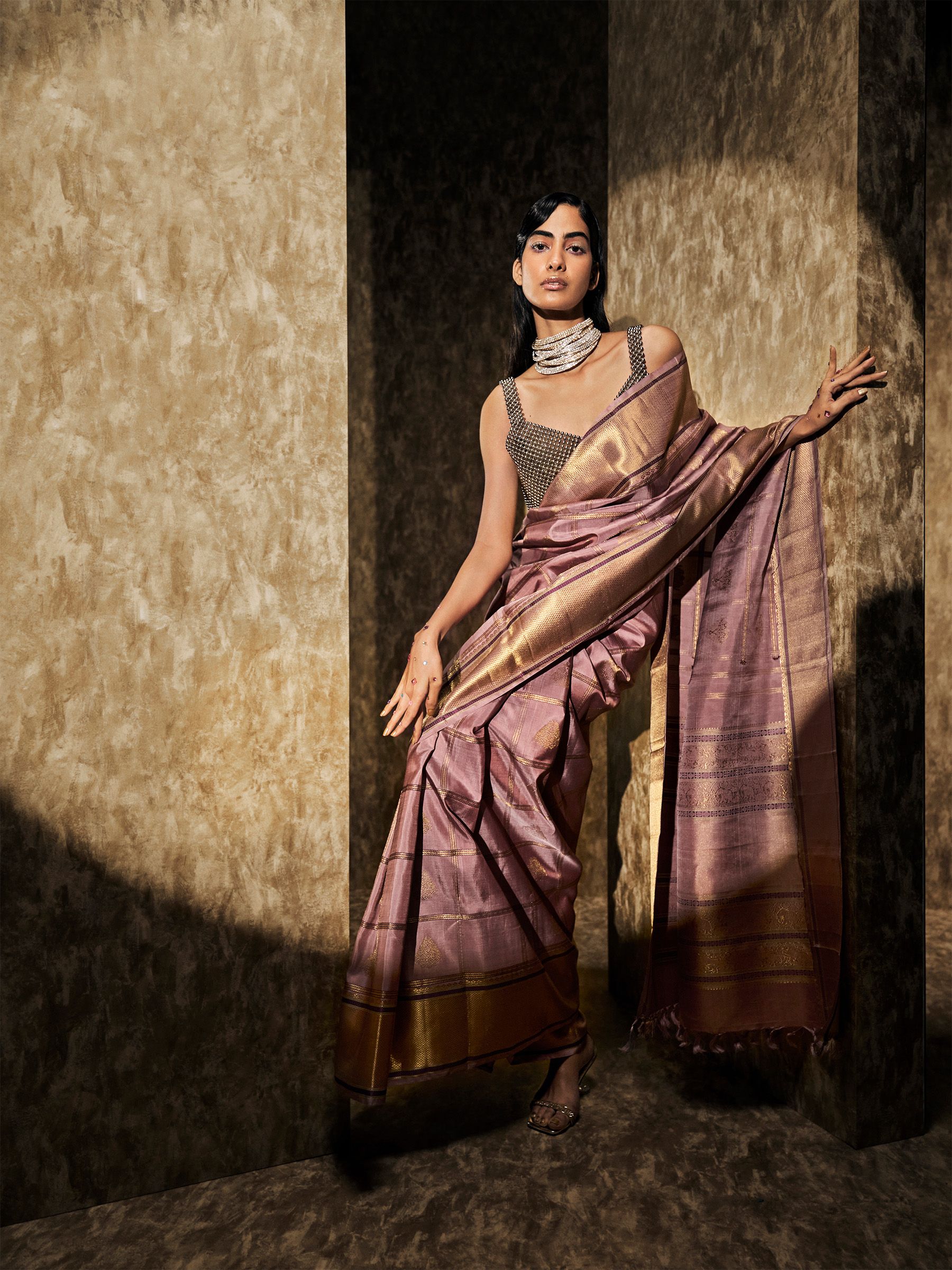



For many brides, especially in South India, a Kanjivaram is less an outfit and more an inheritance in the making—bought for the big day but expected to live on for decades. It is the sari that enters family albums, gets carefully rolled into a muslin cloth, and is spoken of years later by colour, border, or motif. But buying one can also be intimidating, especially if you’re doing it on your own. There’s the vocabulary of zari, korvai, petni, buttas and more; ornamentation can be misleading, and two saris that look identical to the untrained eye can vary wildly in cost.
What exactly separates a basic Kanjivaram from a bridal one? Is heavier always better? Should a bridal Kanjivaram be covered in zari? Ahead of Season 3 of The Wedding Collective, we asked Ahalya S, founder of Chennai-based label Kanakavalli that is dedicated to the Kanjivaram, to break it down for us.
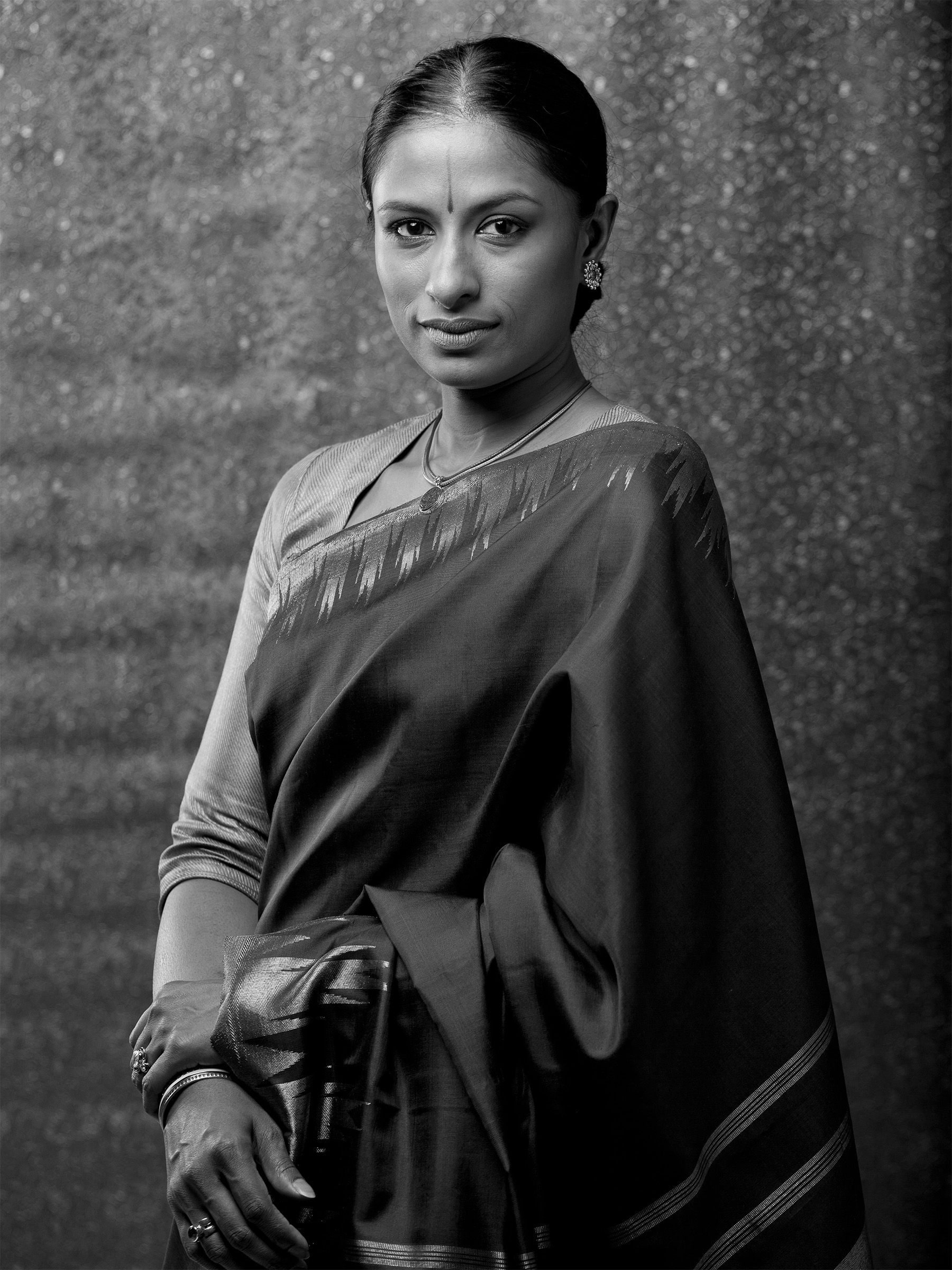
Look beyond the shine
It’s easy to be seduced by the most decorative sari in the room, especially while shopping for a wedding. But according to Ahalya, ornamentation alone isn’t the best measure of quality. “Perhaps even more than colour, motif or quantity of zari, it is the complexity of the weaving that reveal the quality of a sari,” she says.
While it can be tempting to choose the loudest sari, you might also be compromising on the quality of the fabric and the weave. Her advice is simple: start with the fabric first. “This translates directly into comfort, and it is important to be comfortable at your wedding,” she says. Look closely at quality of the weaving, ask about the handloom techniques employed and the intricacy of the embellishment. “The ornamentation of the Kanjivaram can be immediately visible, but craftsmanship is what ultimately gives a sari its value.”
The three signs of an exceptional Kanjivaram
For a first-time buyer, the easiest way to begin is to learn what to look for. Ahalya points to the three signs that make an exceptional sari: Korvai borders, handwoven buttas, and quality of silk. “I would say that exceptional Kanjivarams are those that employ the traditional techniques of the craft and showcase its finest embellishments.”
Korvai borders are among the most prized features of the craft, the painstakingly handwoven borders attached to the body of the sari that require immense technical and artisanal skill. Then, there are the handwoven motifs or buttas, which also demand a high level of precision. Finally, there is the fabric—the feel and fall of the Kanjivaram silk. “Together, these elements speak to the extraordinary skill that goes into the making of a Kanjivaram.”