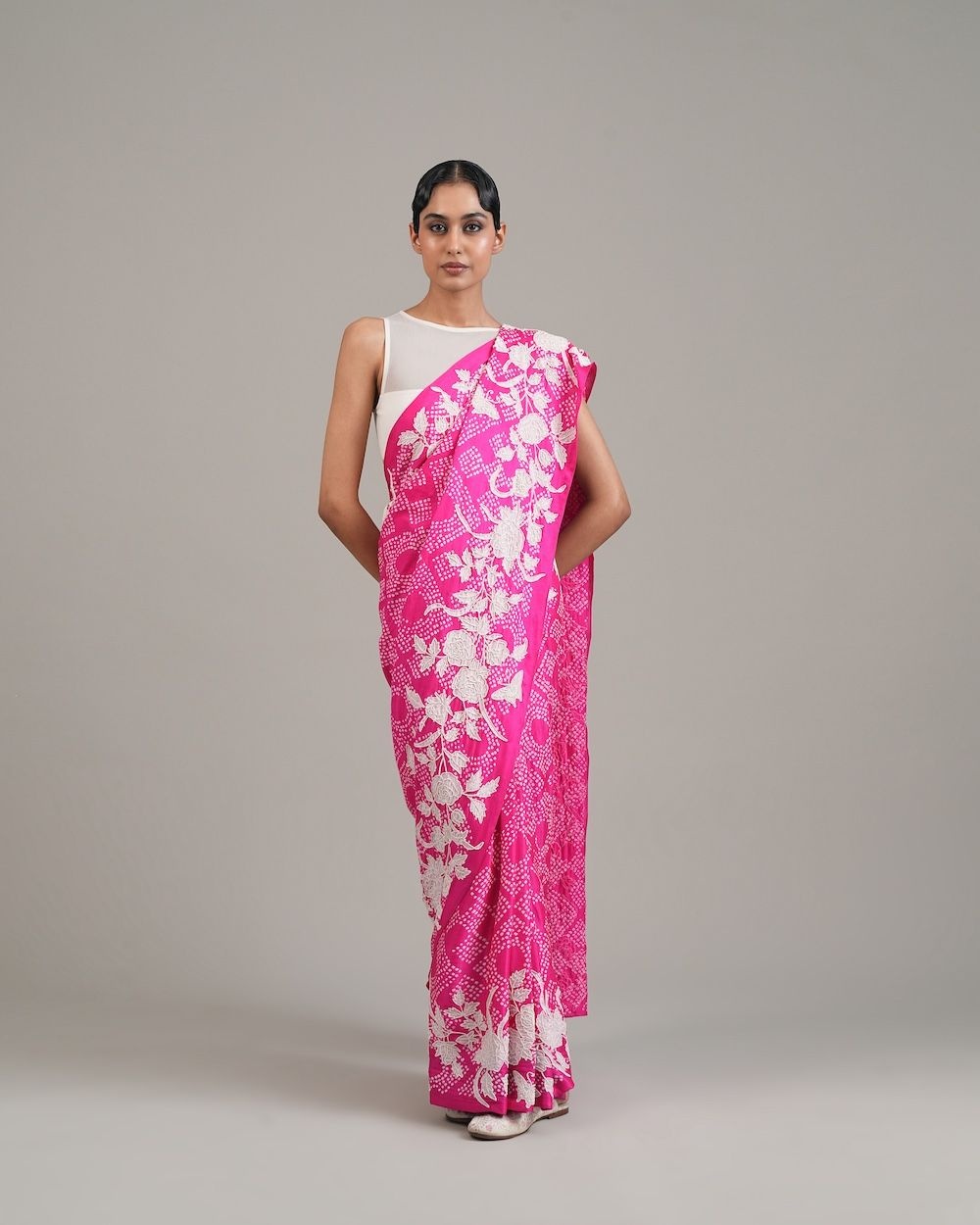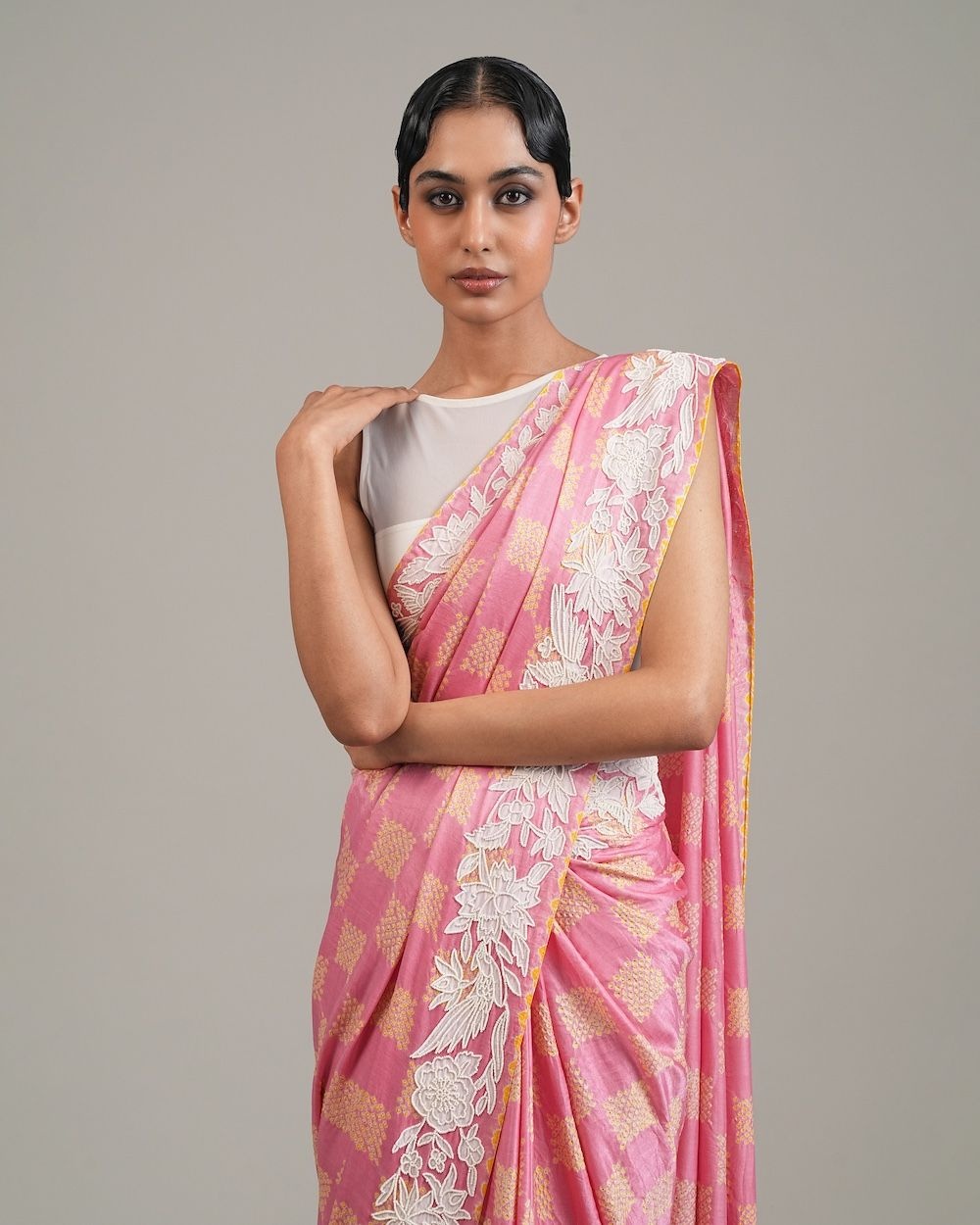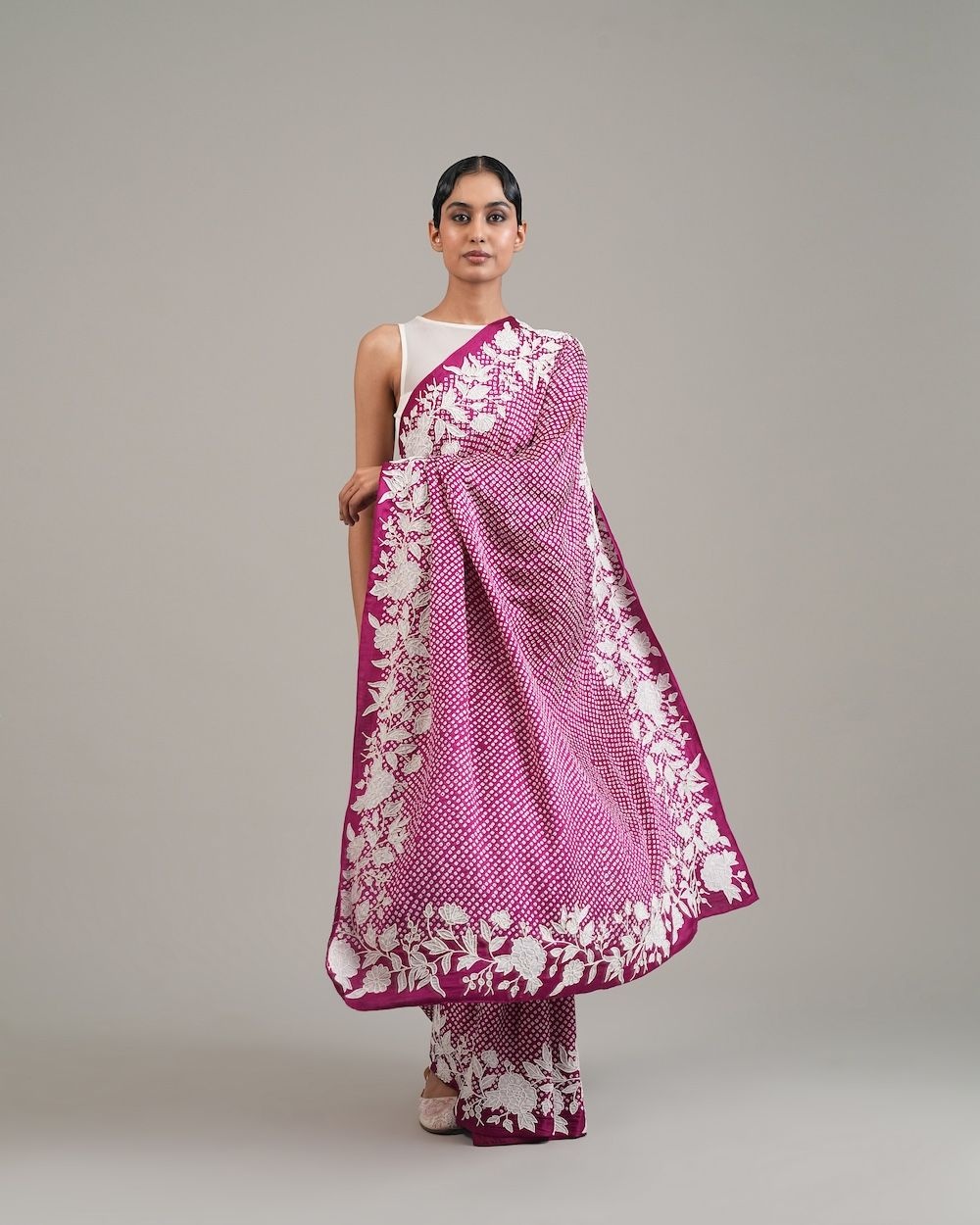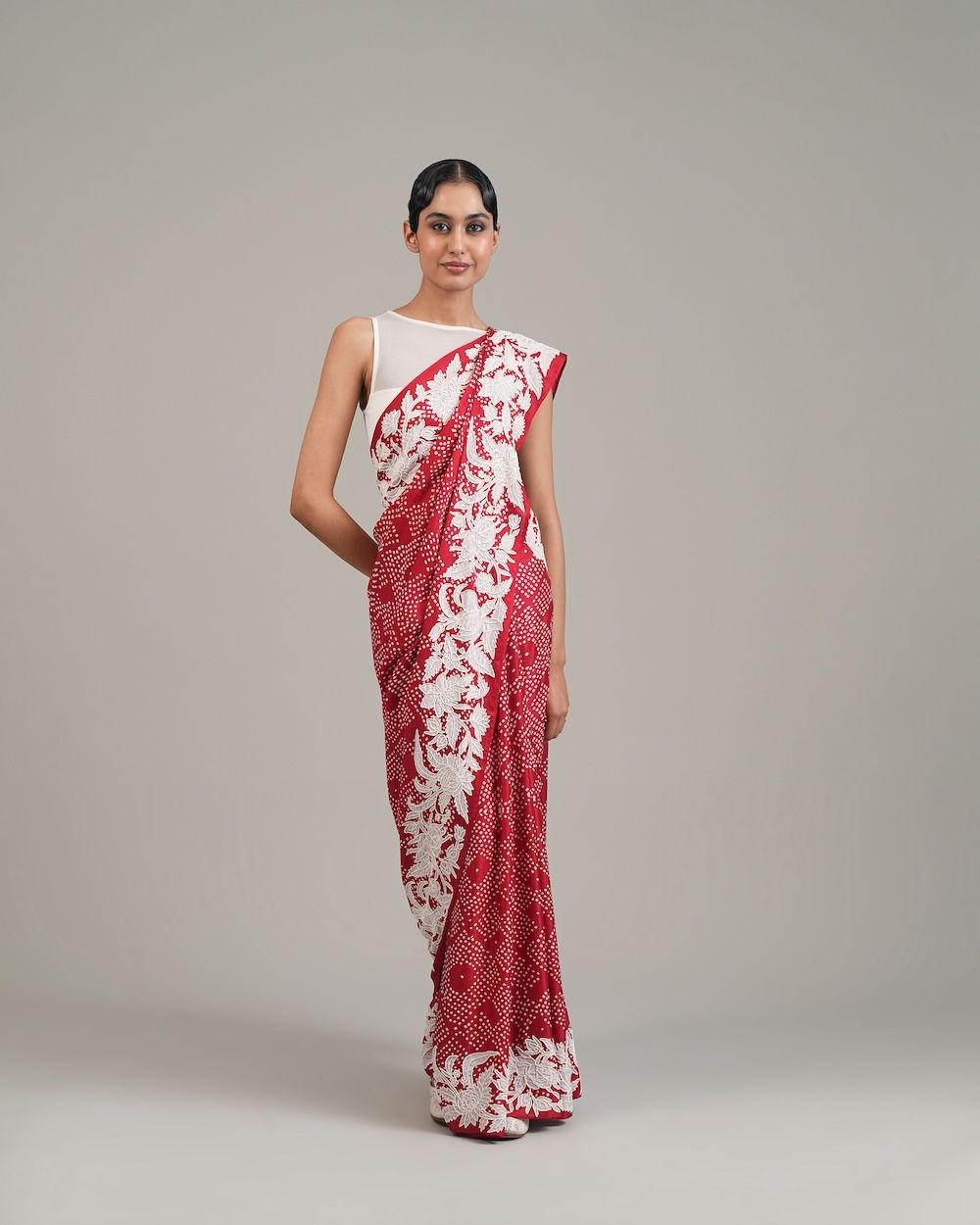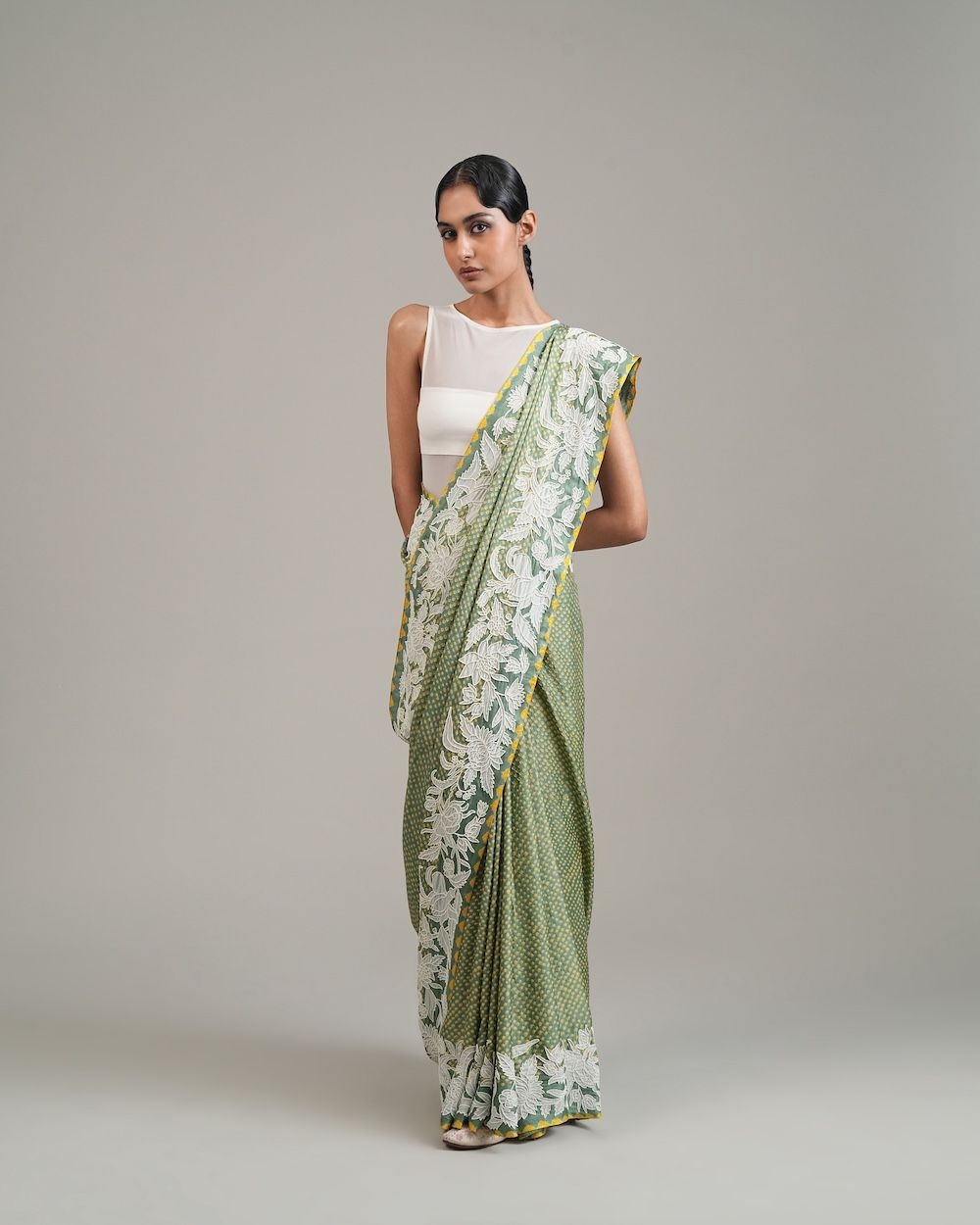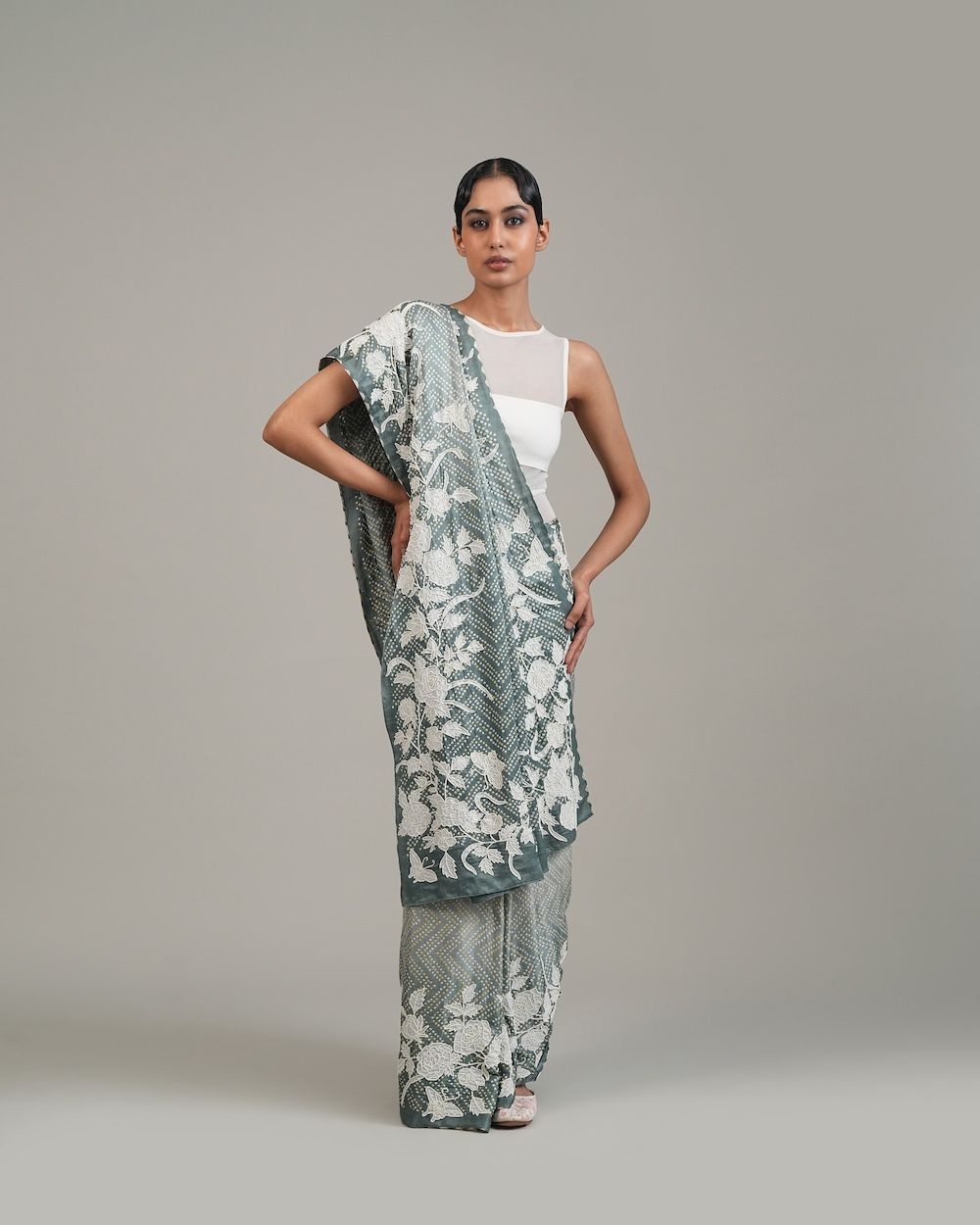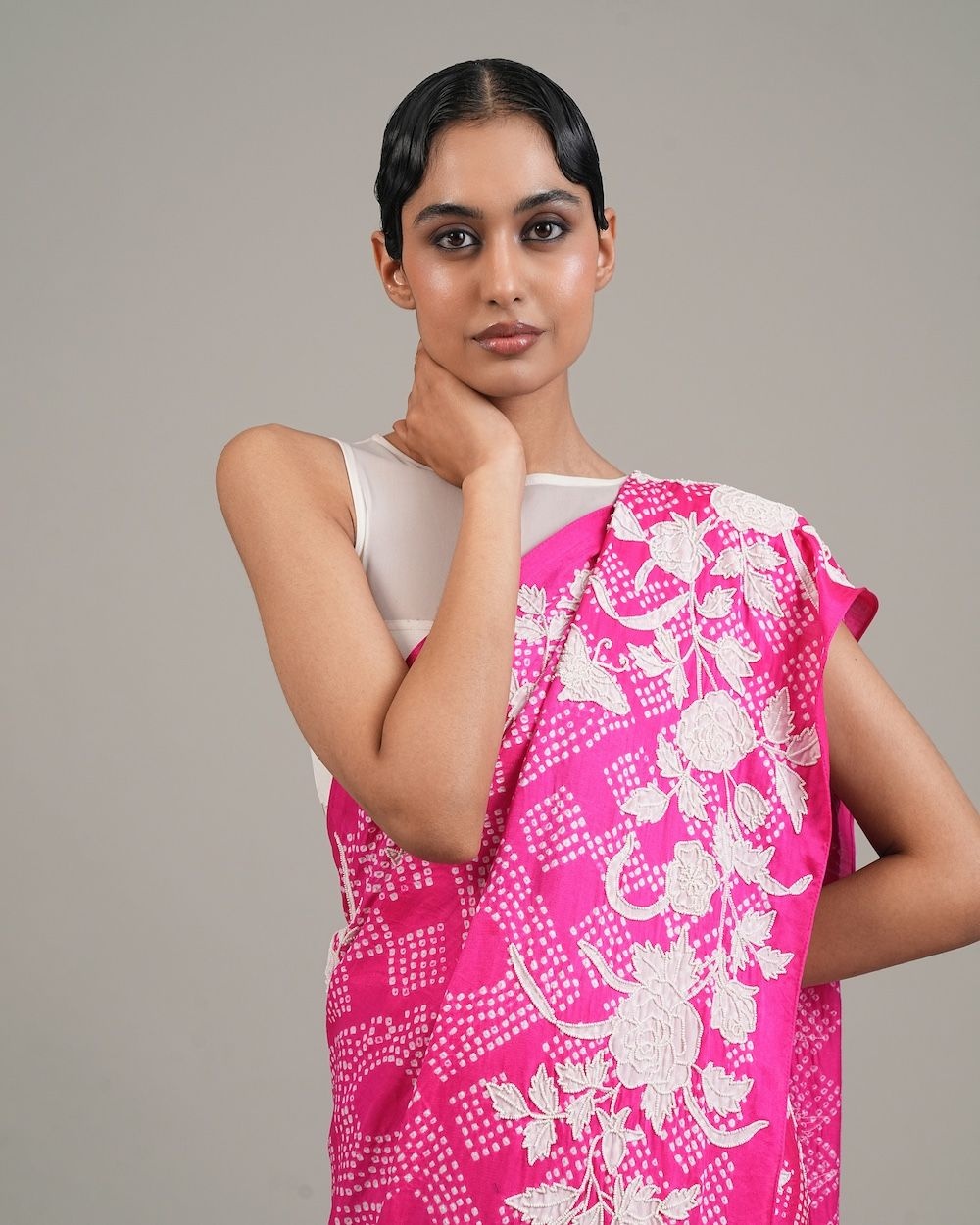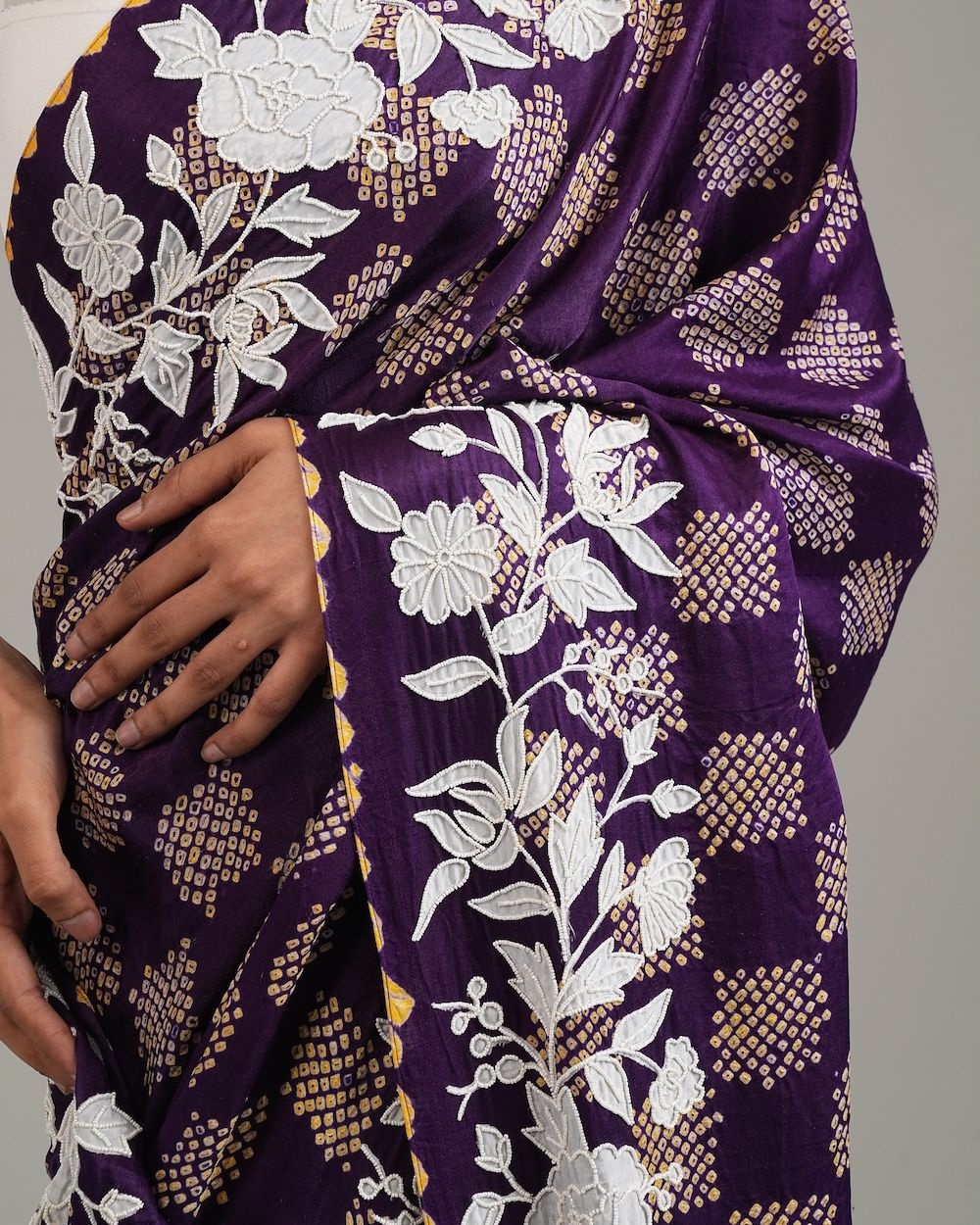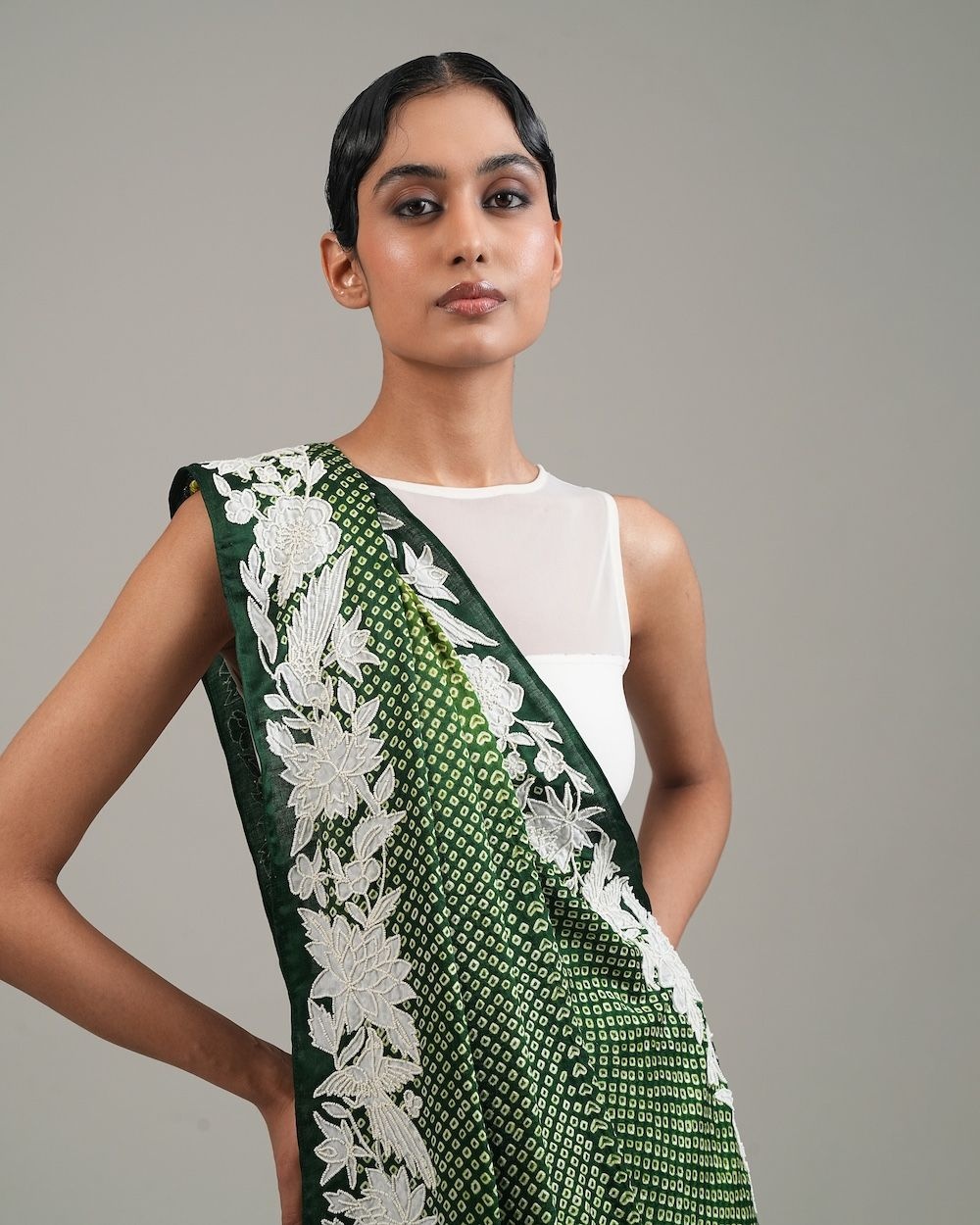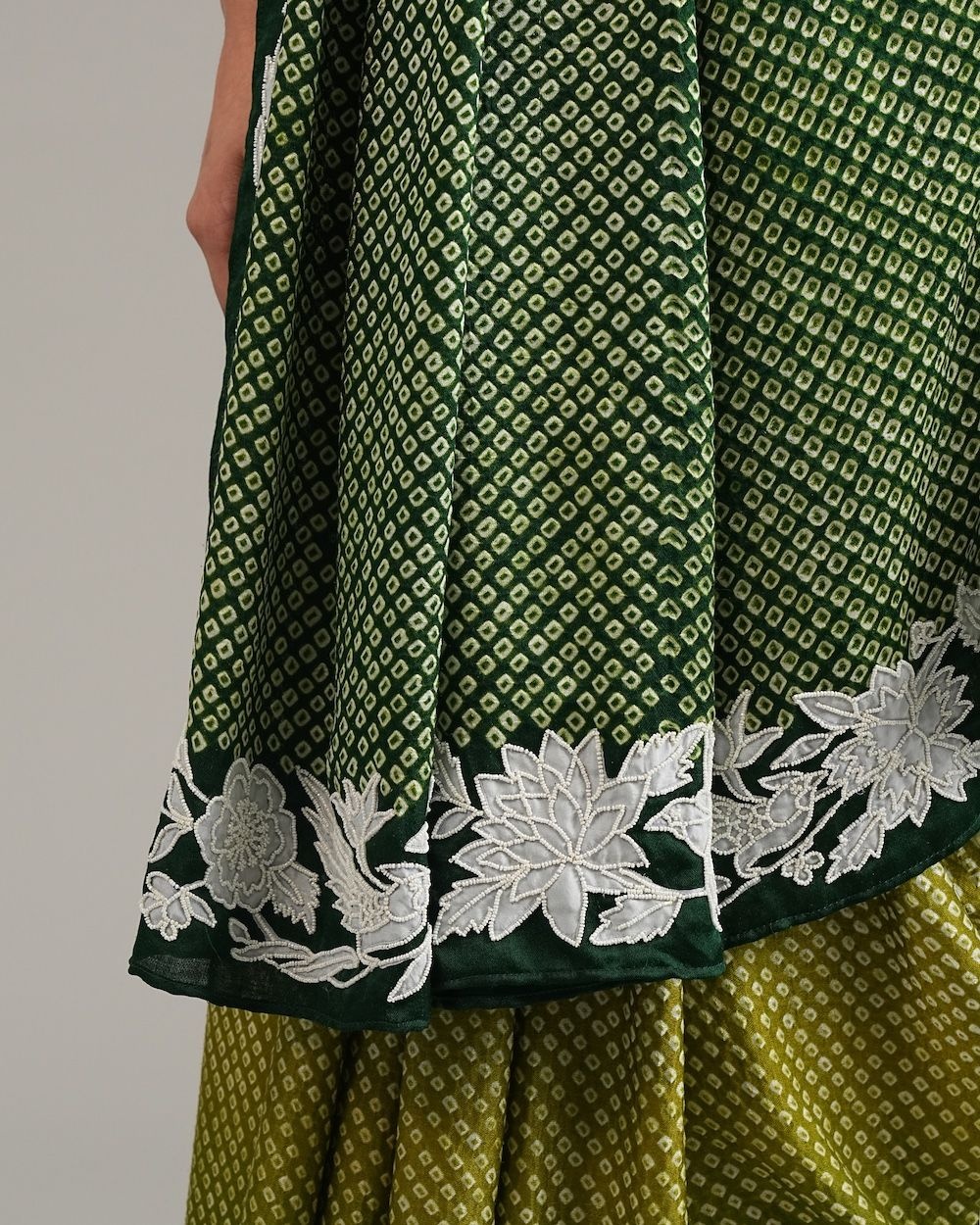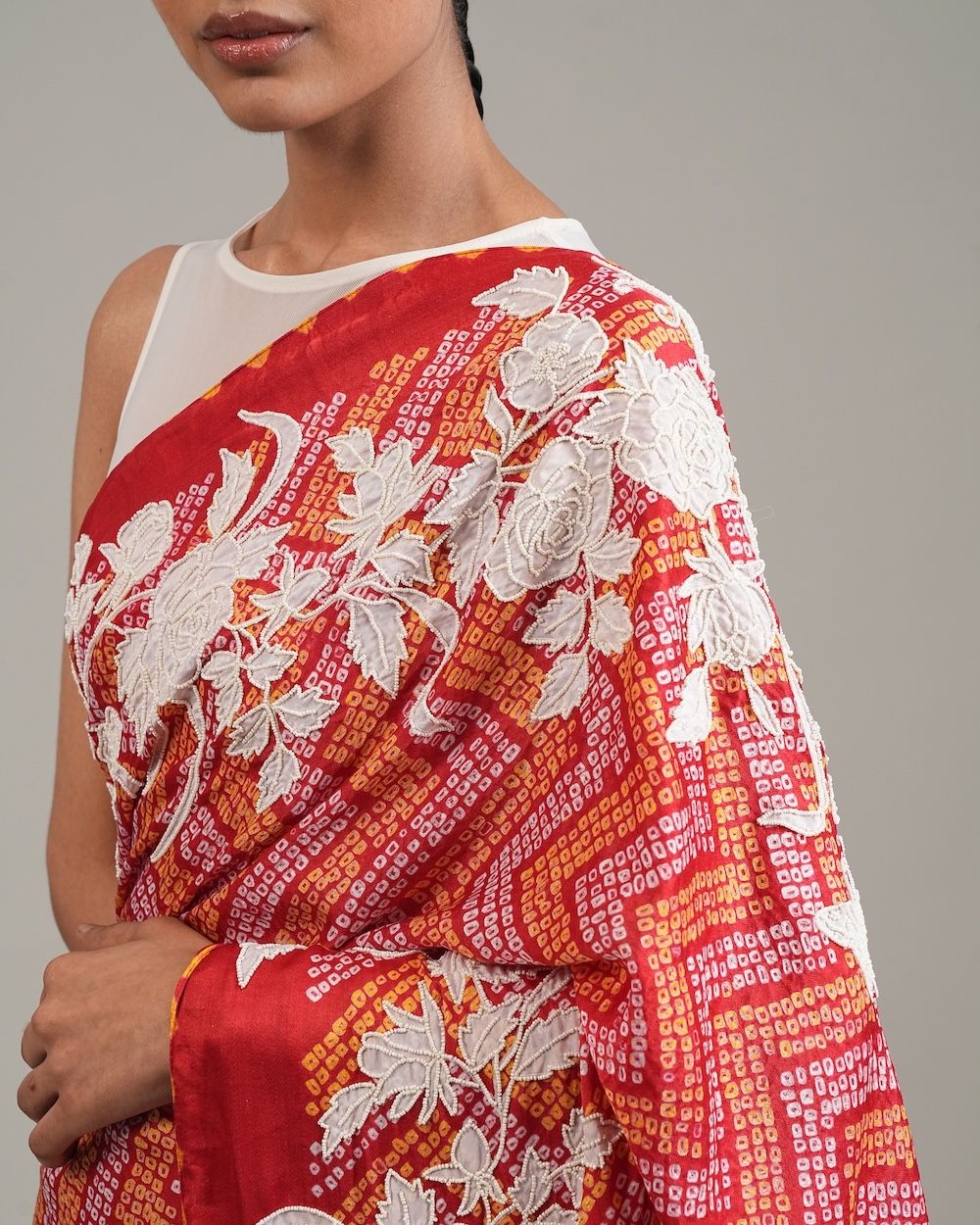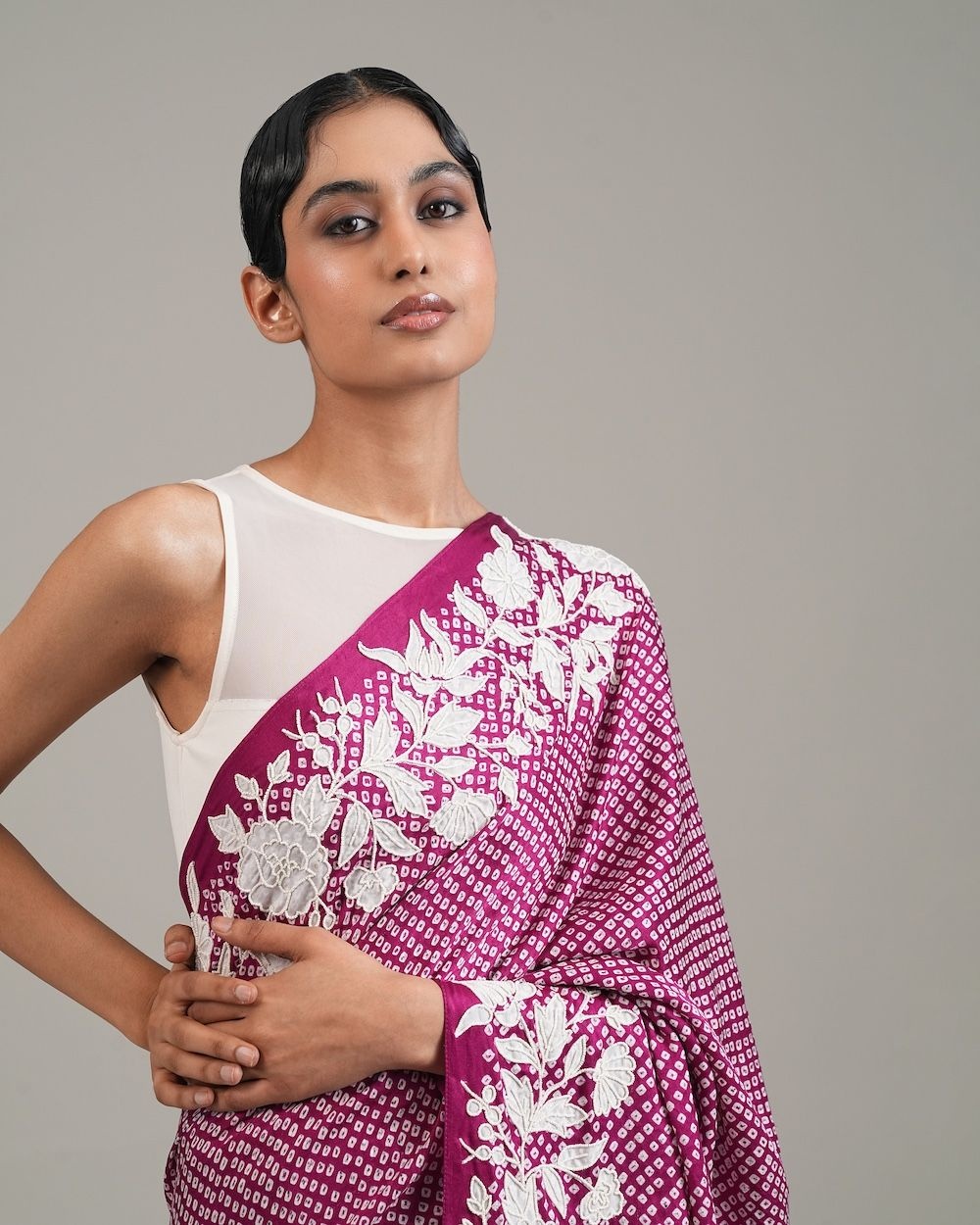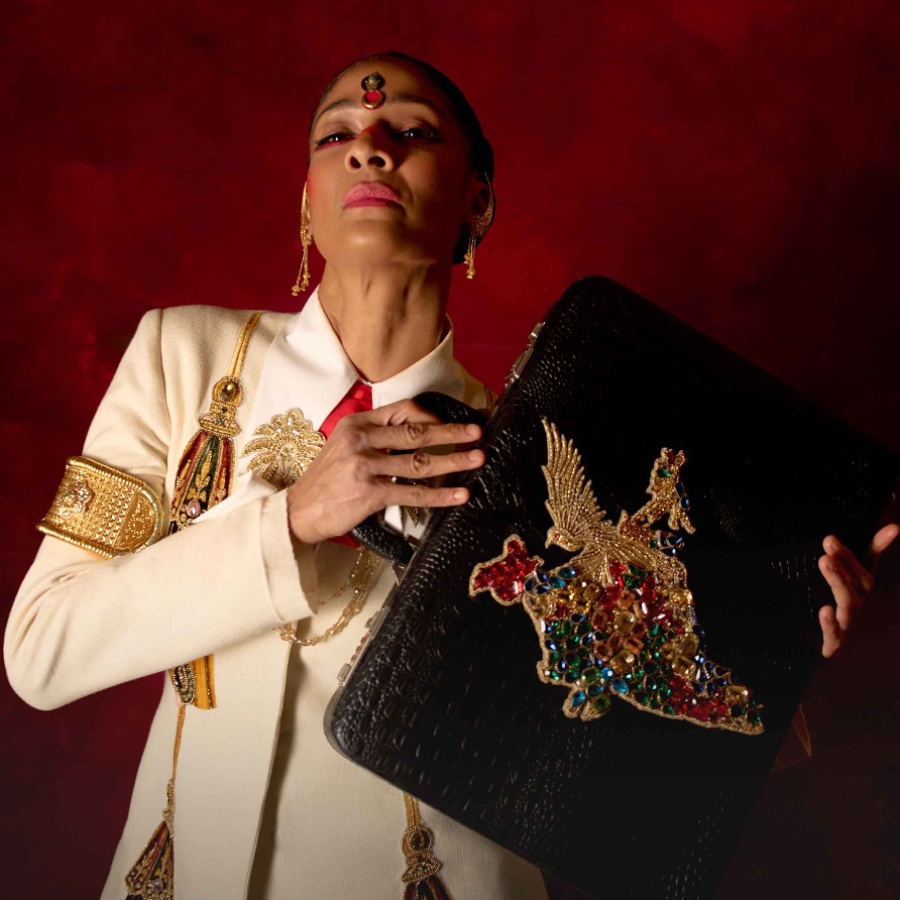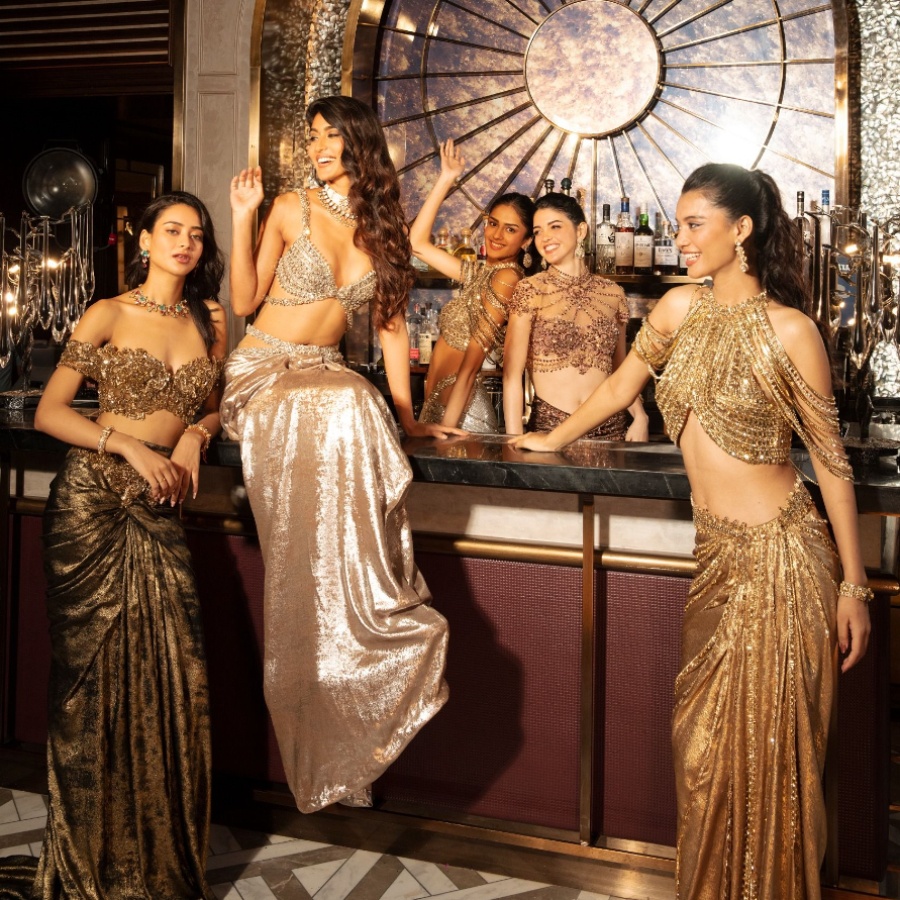


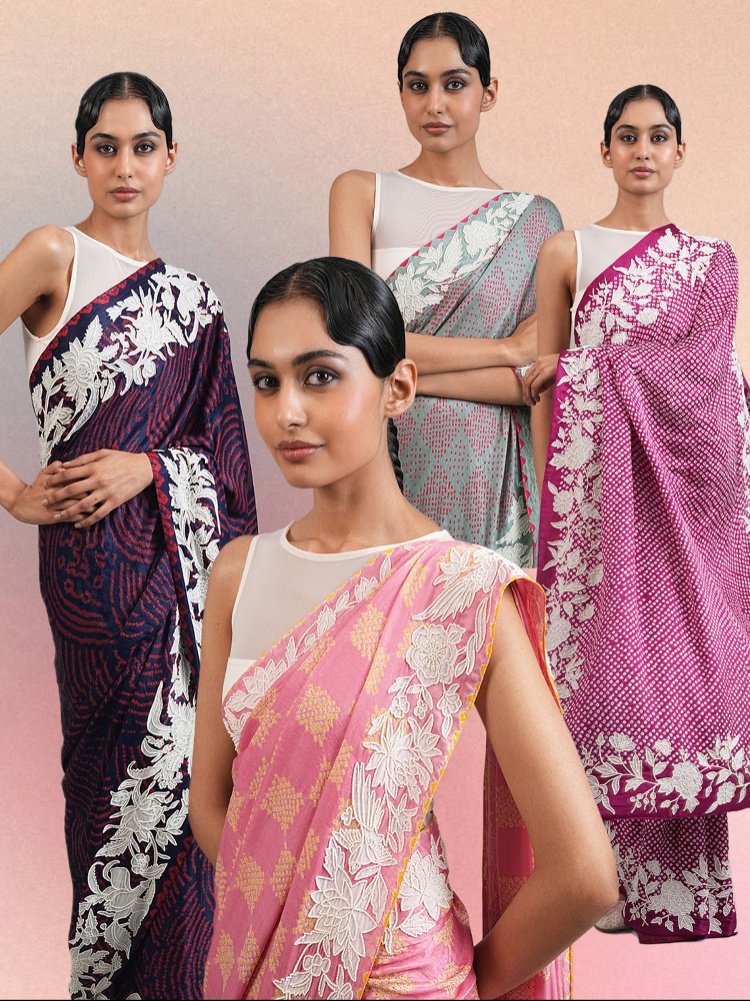

If we’ve learned anything about the way we dress for weddings lately, it’s that the era of the one-hit-wonder outfit is officially over. We’re all looking for those rare and unique pieces that tell a story and that we can wear again and again. This is exactly where Ashdeen Lilaowala lives. He has spent years taking the Parsi Gara, a craft that could easily have been relegated to heirloom trunks, and has made it something you want to wear to everything from a sundowner roka to a friend’s engagement and that office cocktail party. His work has always been about that sweet spot between serious craft and effortless style.
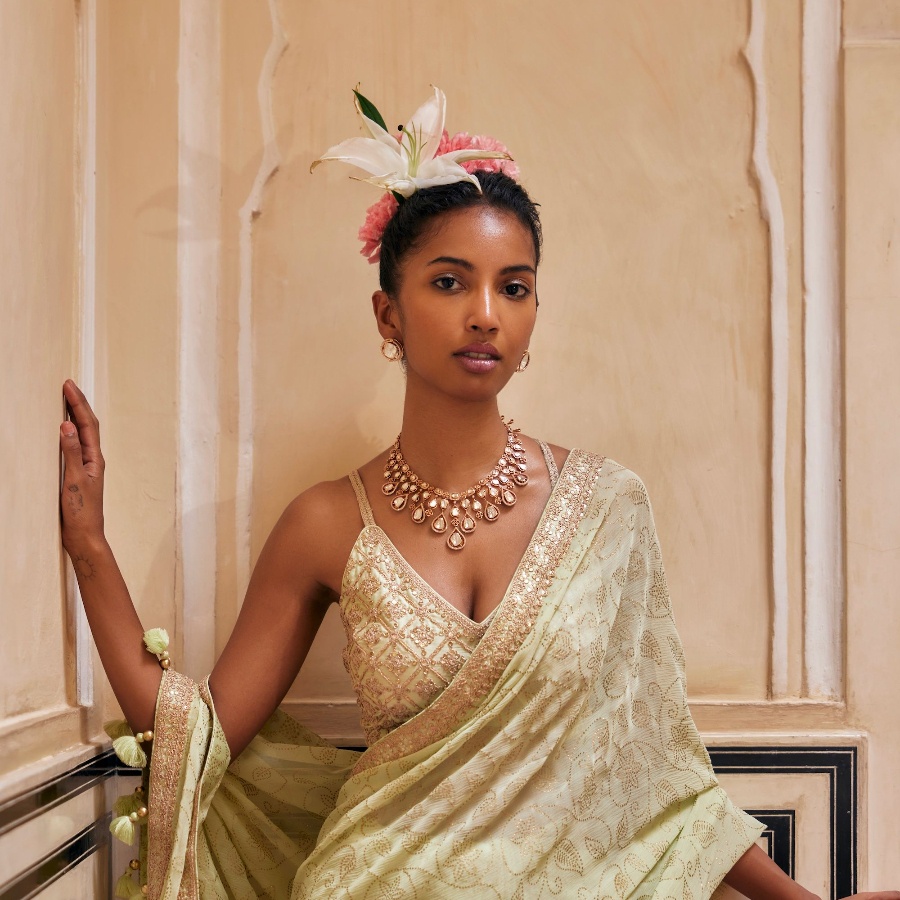
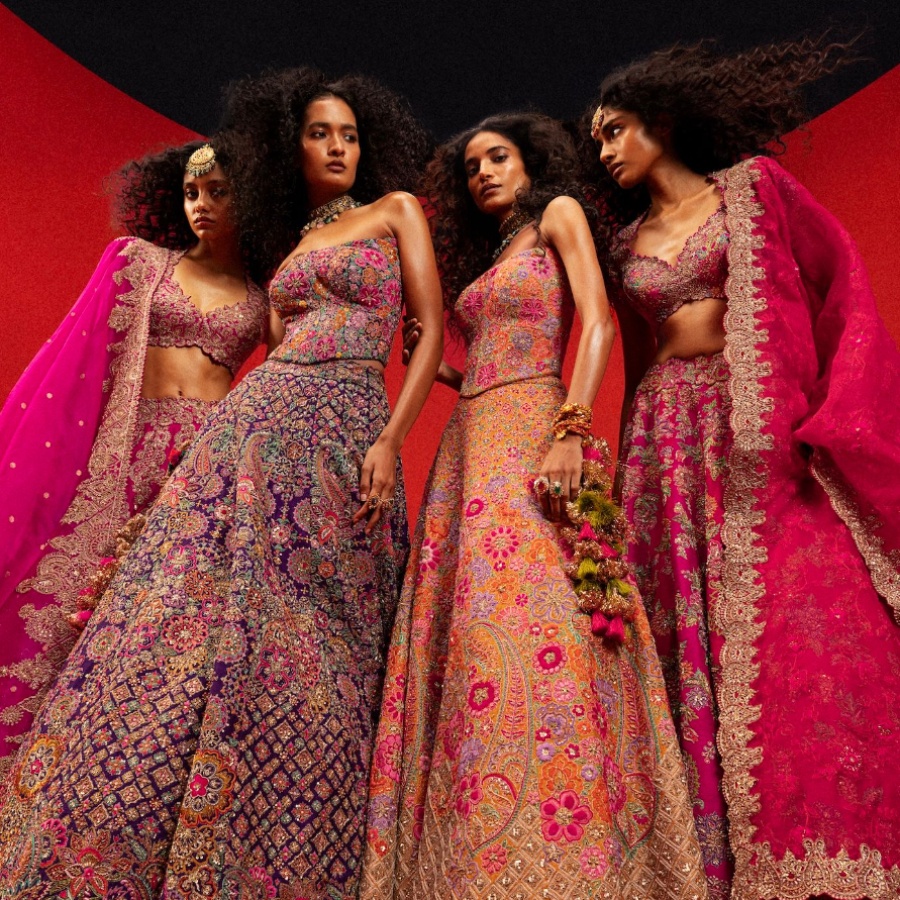
His new collection, Tarana, feels like a natural evolution of that aesthetic. He’s played matchmaker between the two very different worlds of the sharp, rhythmic essence of hand-tied Bandhani and the soft, romantic narratives of Gara embroidery, before. He returns to this, this time, by layering delicate silk appliqué over the geometric energy of Bandhani, creating a texture that genuinely feels and looks bespoke. It’s subtle enough to be sophisticated but interesting enough to make people stop and ask where you got it.
For a bride building her trousseau in 2026, or even the bridesmaid looking for something that won't just sit in the back of her closet, Tarana hits all the right notes. These are saris meant for the Mehendis, the family brunches, and the intimate dinners where you want to look polished but feel like yourself. Think of them as modern heirlooms in the truest sense, designed for women who want their trousseau to have character, craft, a bit of a soul and a lot of rewear.
We sat down with the founder ahead of the launch and dived into the thought behind this textile experiment, the art of keeping heritage crafts alive, and why their saris, at the end of the day, are designed keeping the heirloom-factor in mind.
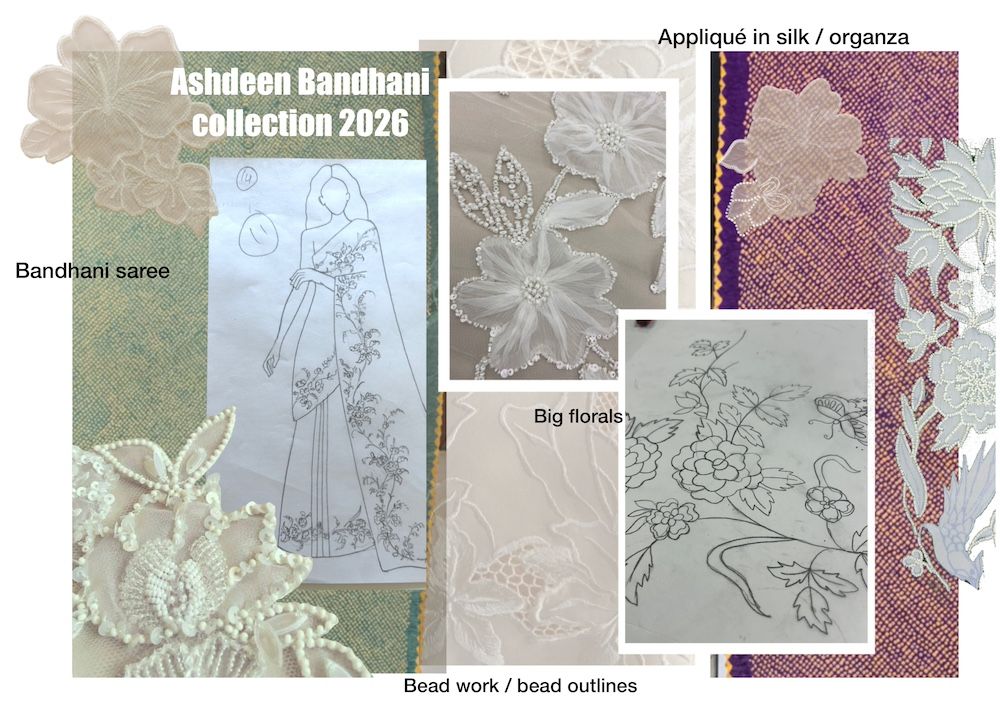
Tarana brings together Bandhani with the Parsi Gara, two traditions with incredibly distinct visual languages. What did you want this dialogue to evoke?
“At Ashdeen it’s always been our endeavour to push the possibilities of the Parsi Gara tradition in new directions while retaining its soul of handcrafted luxury. We’re also textile designers at heart, curious about what happens when you start a conversation between two distinct traditions. We have been experimenting with Bandhani—an art form we’ve always loved. Tarana is the third collection where we combined Parsi Gara hand-embroidery with the art of hand-tied Bandhani. From an audience’s perspective we wanted this coming together to evoke a similar curiosity about the two distinct craft forms, their provenance and how enriching such a collaboration of crafts could be when done with respect and an understanding of textiles.”