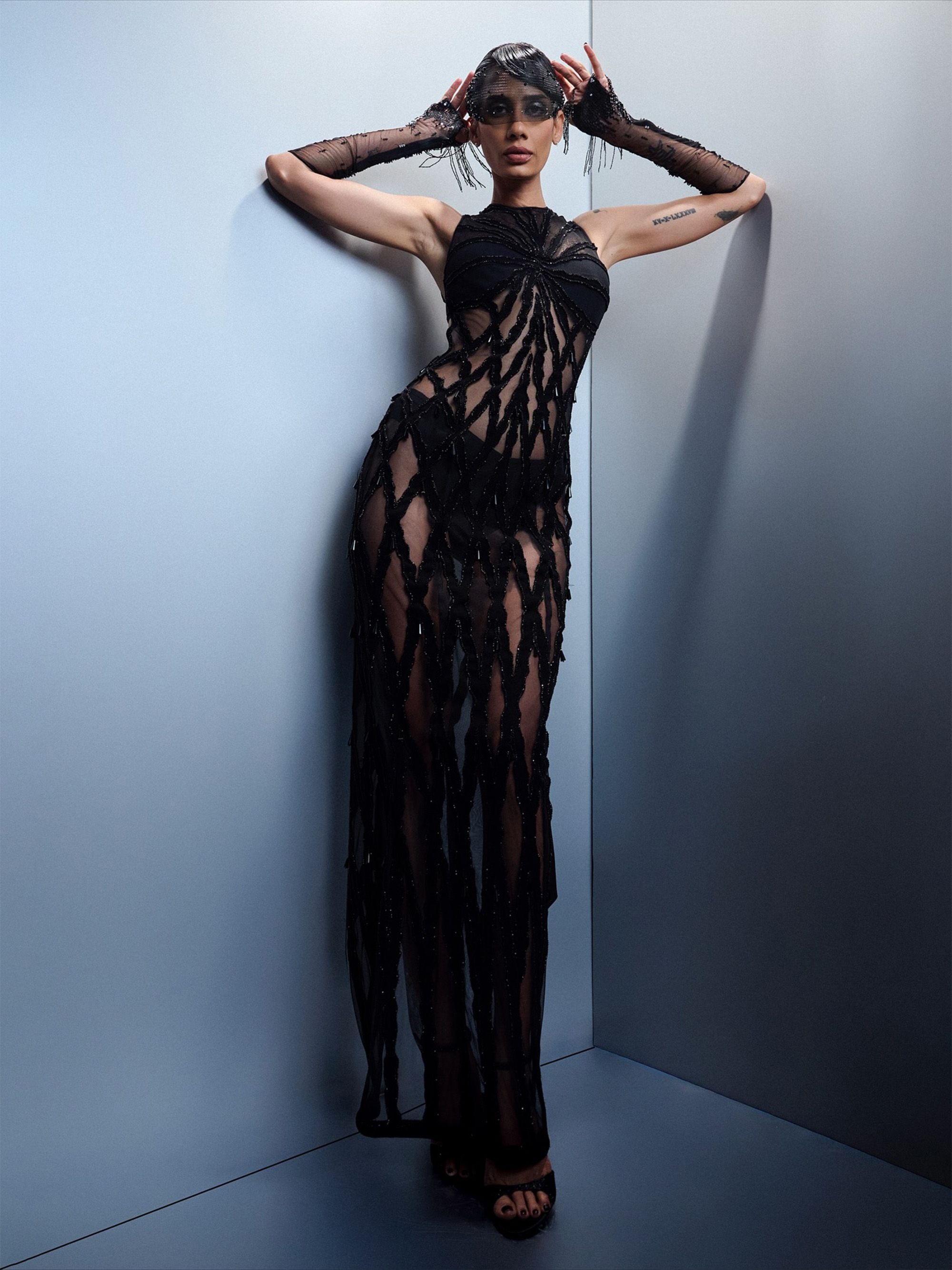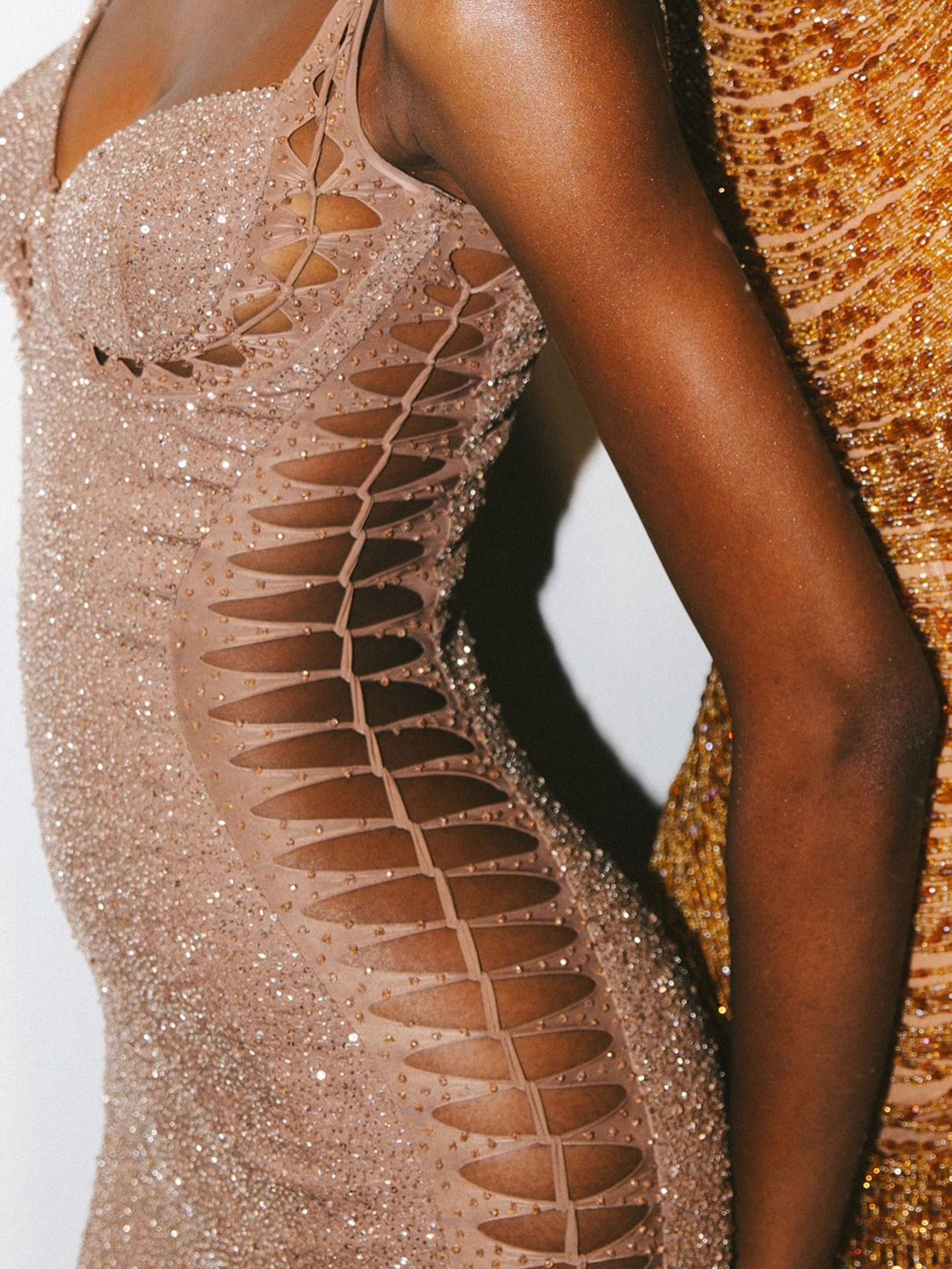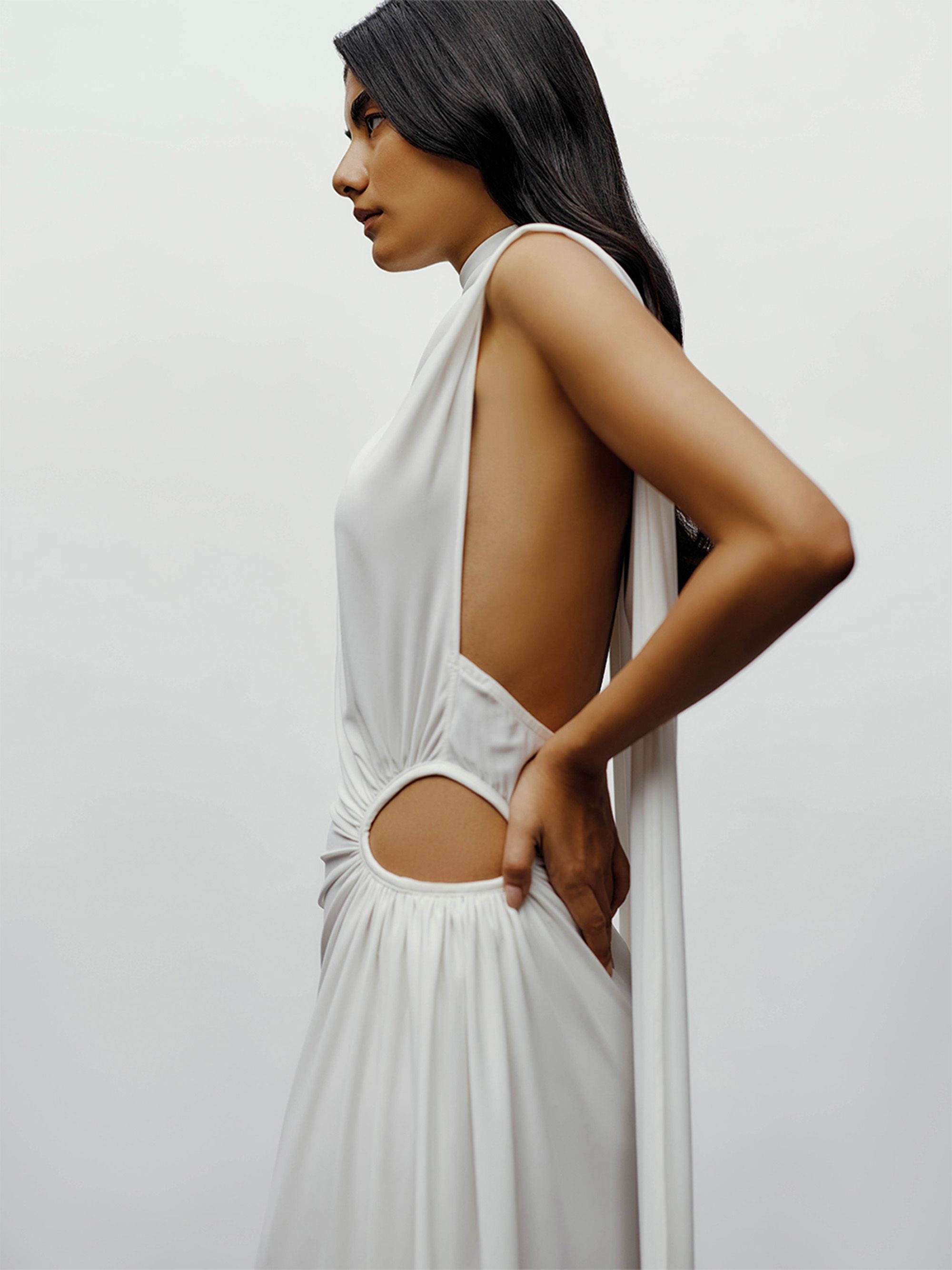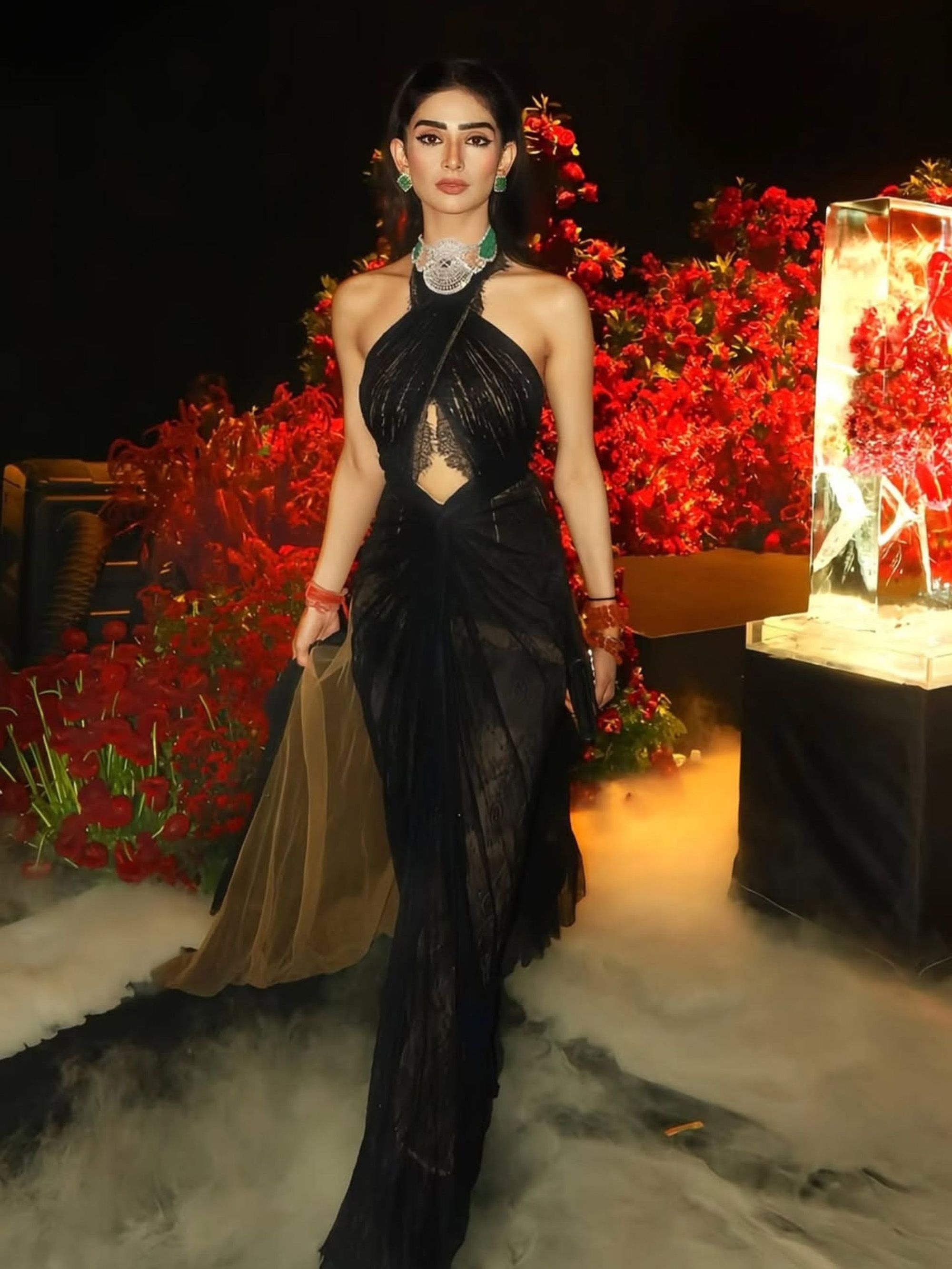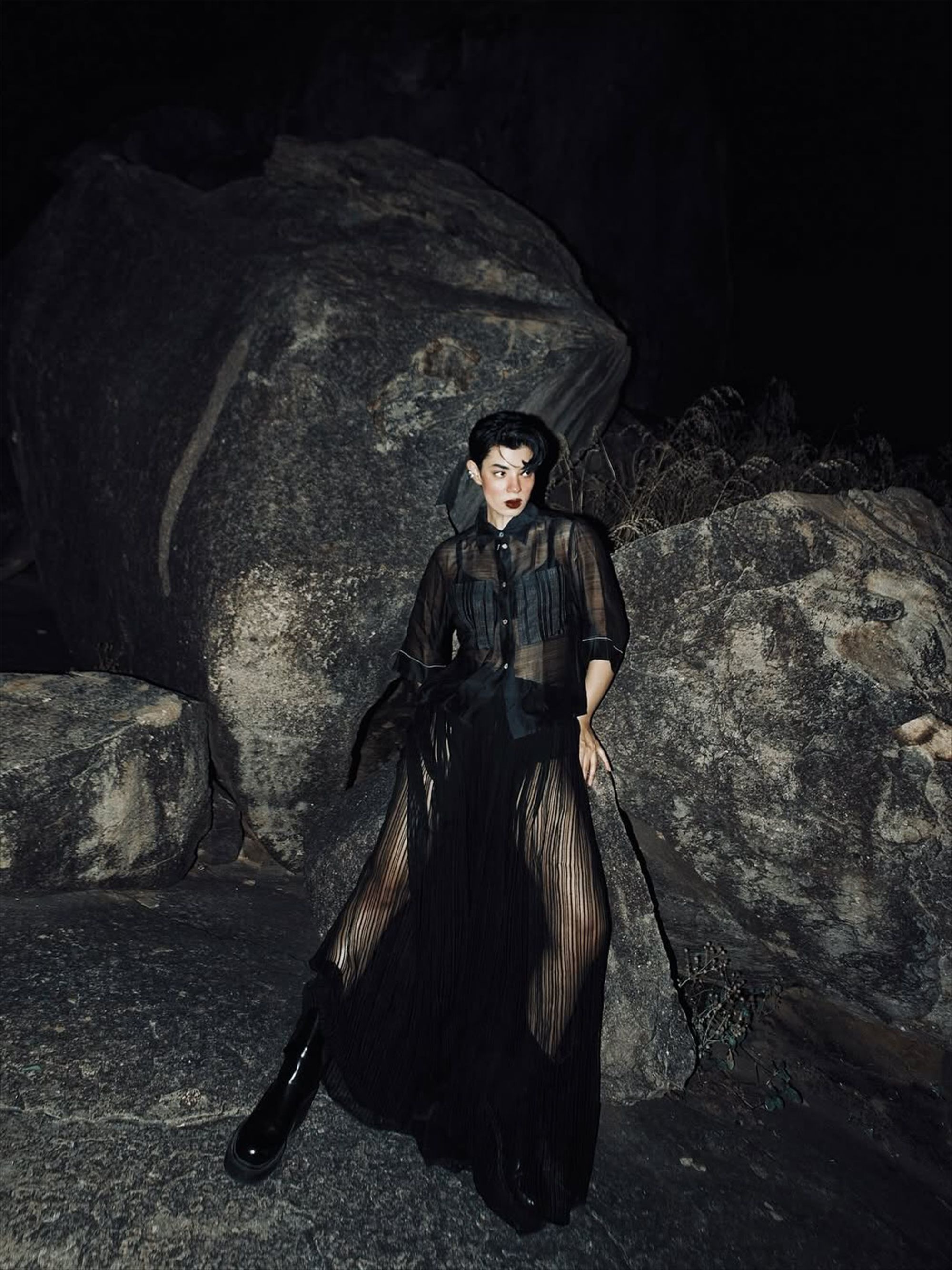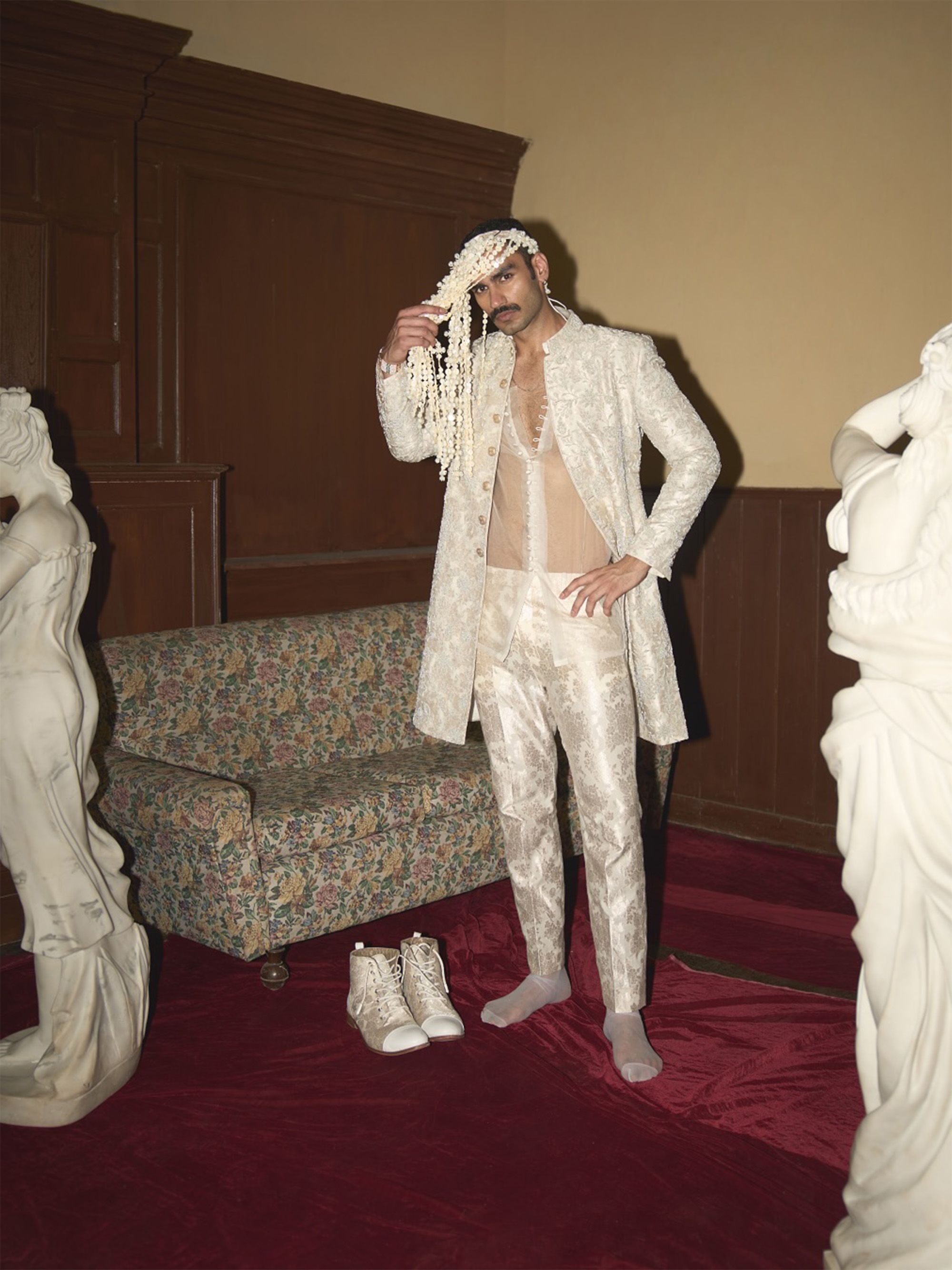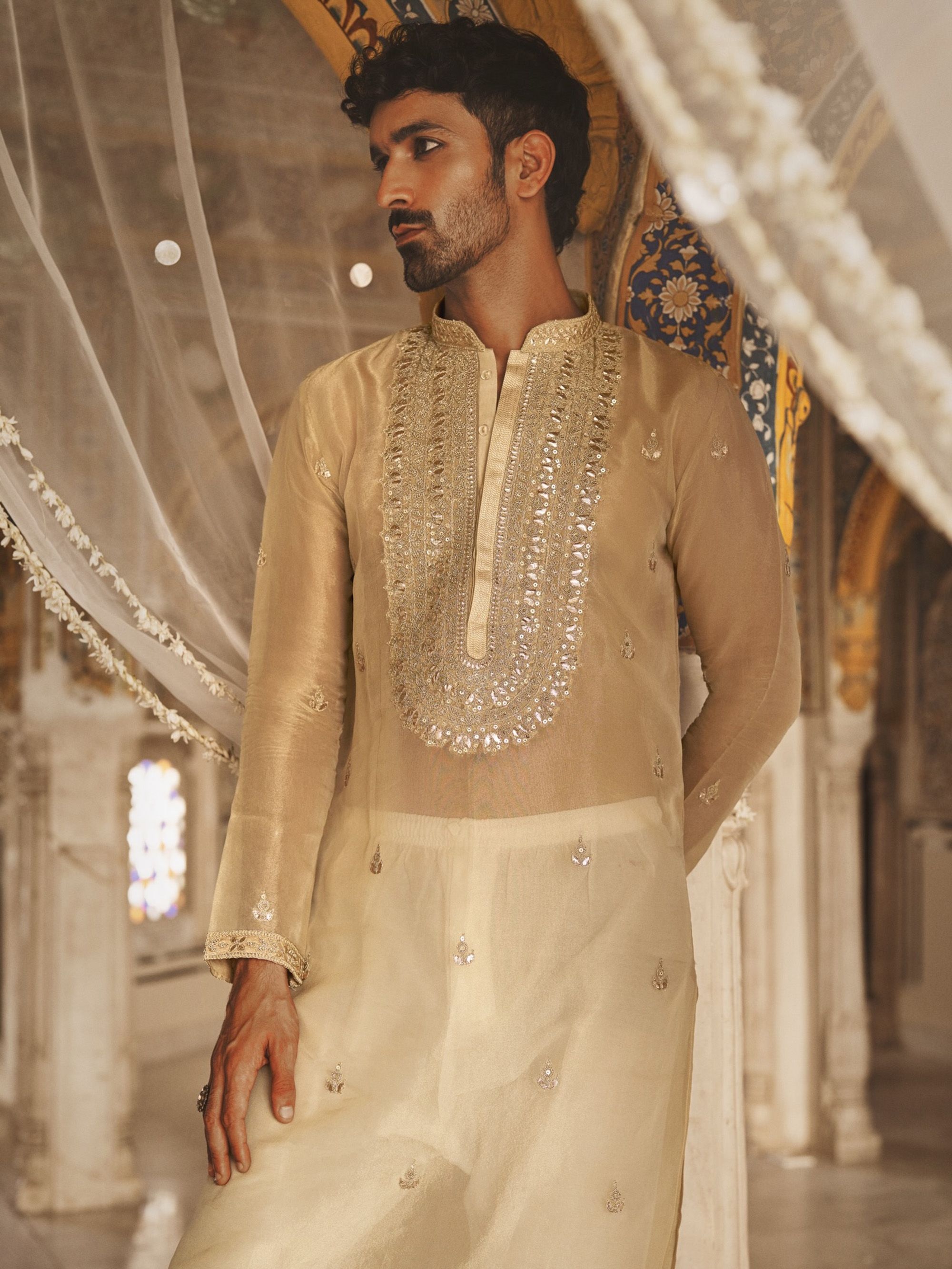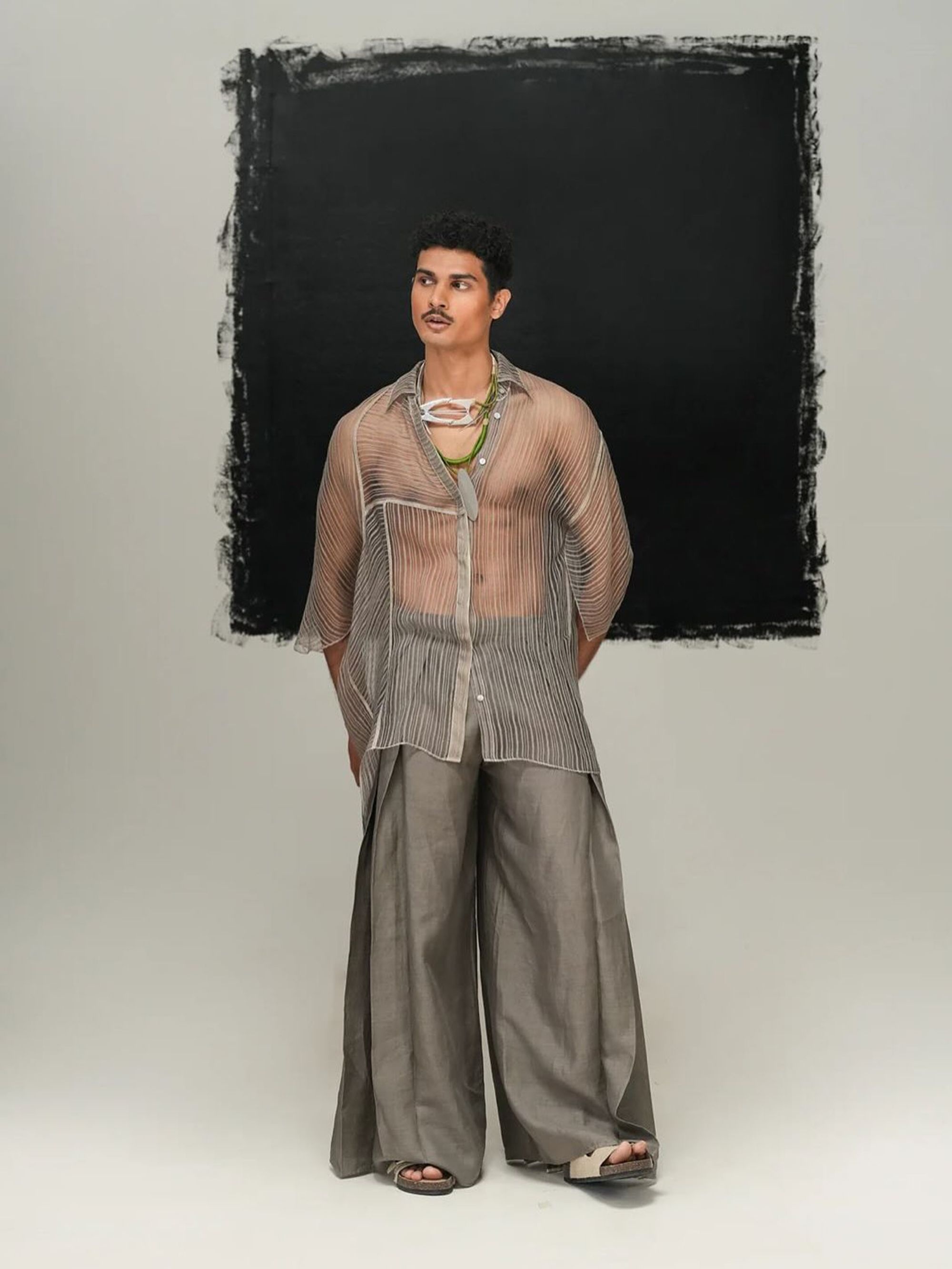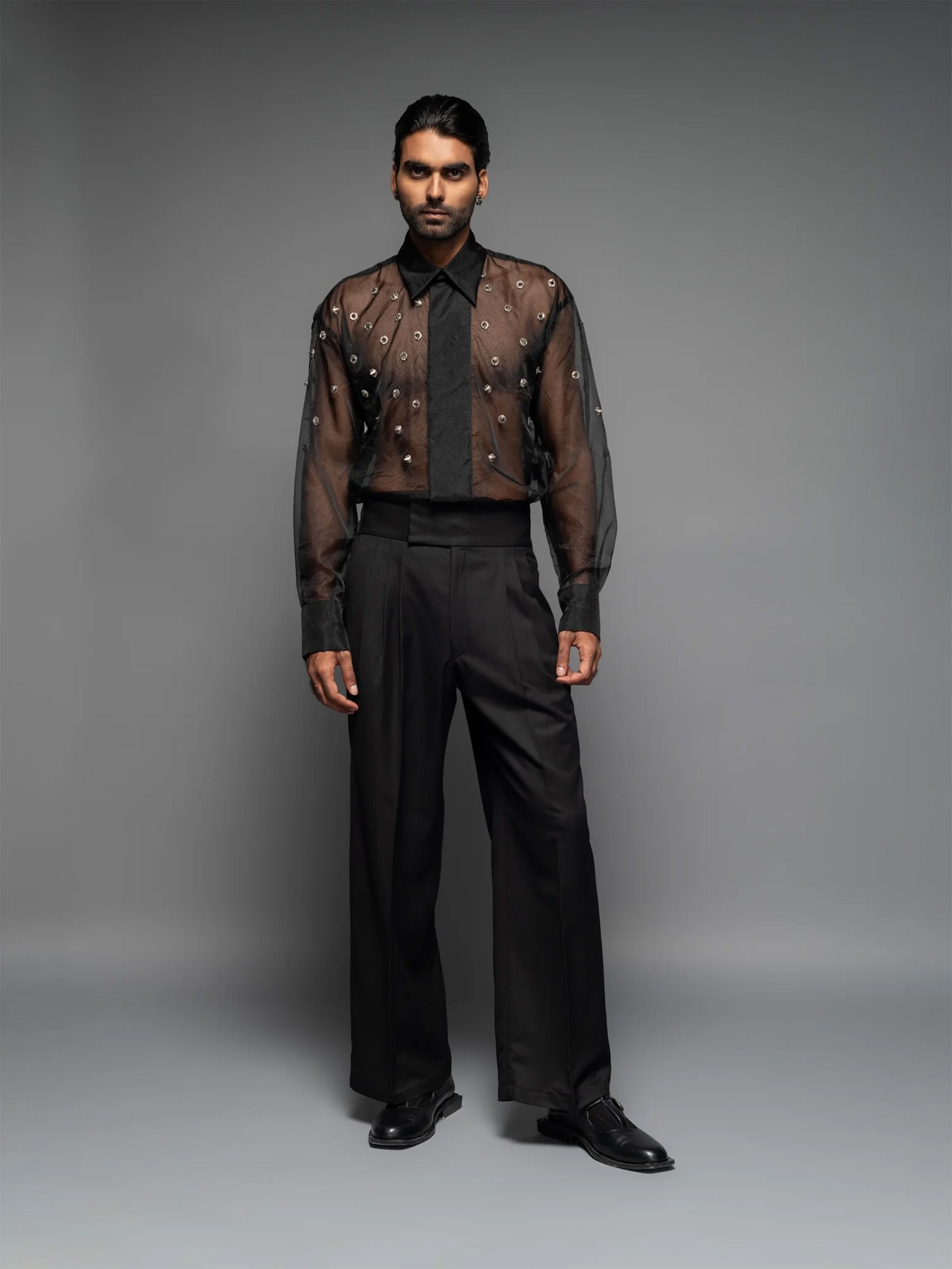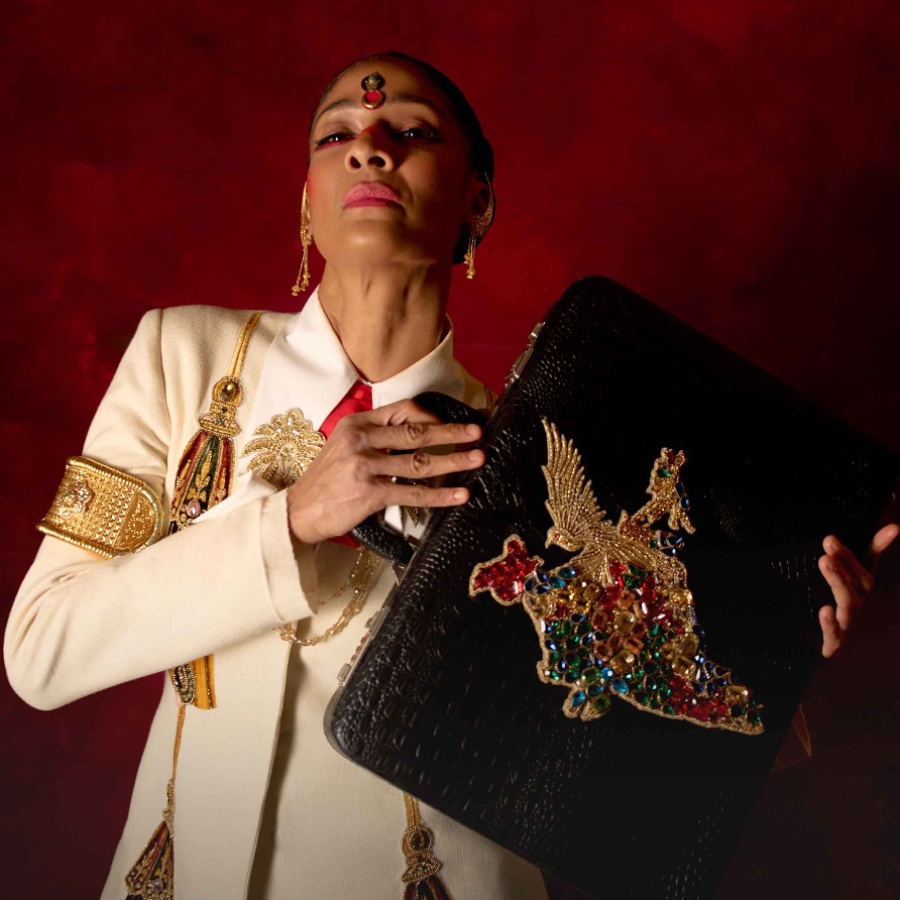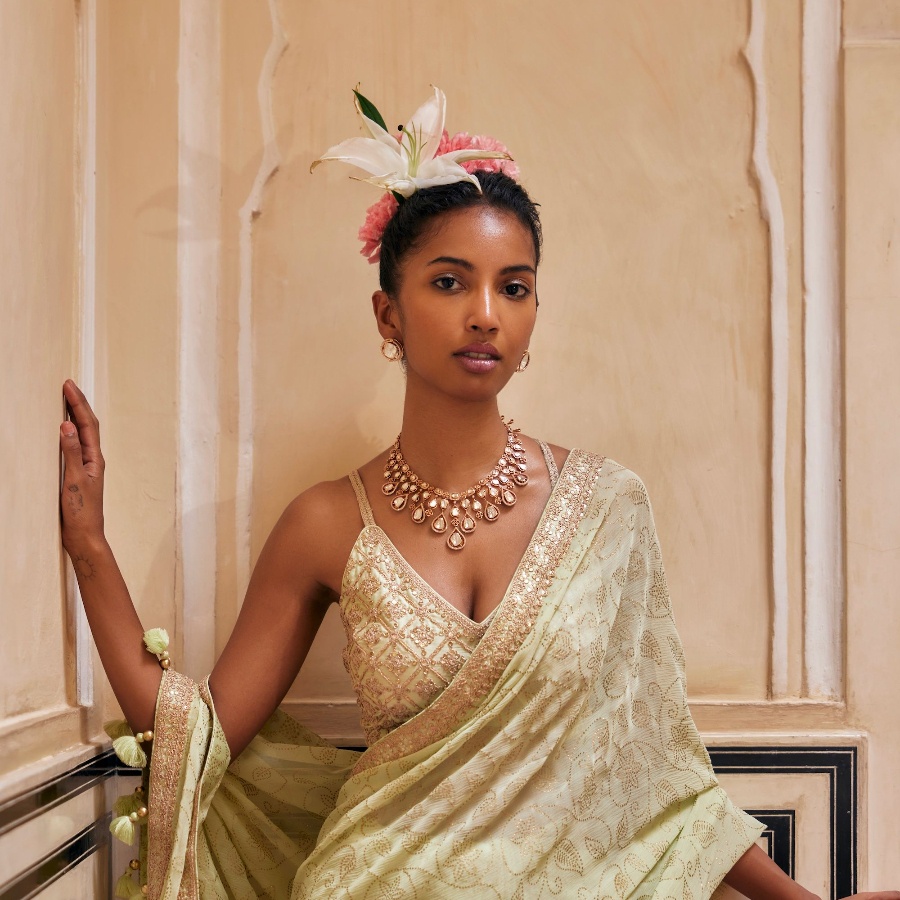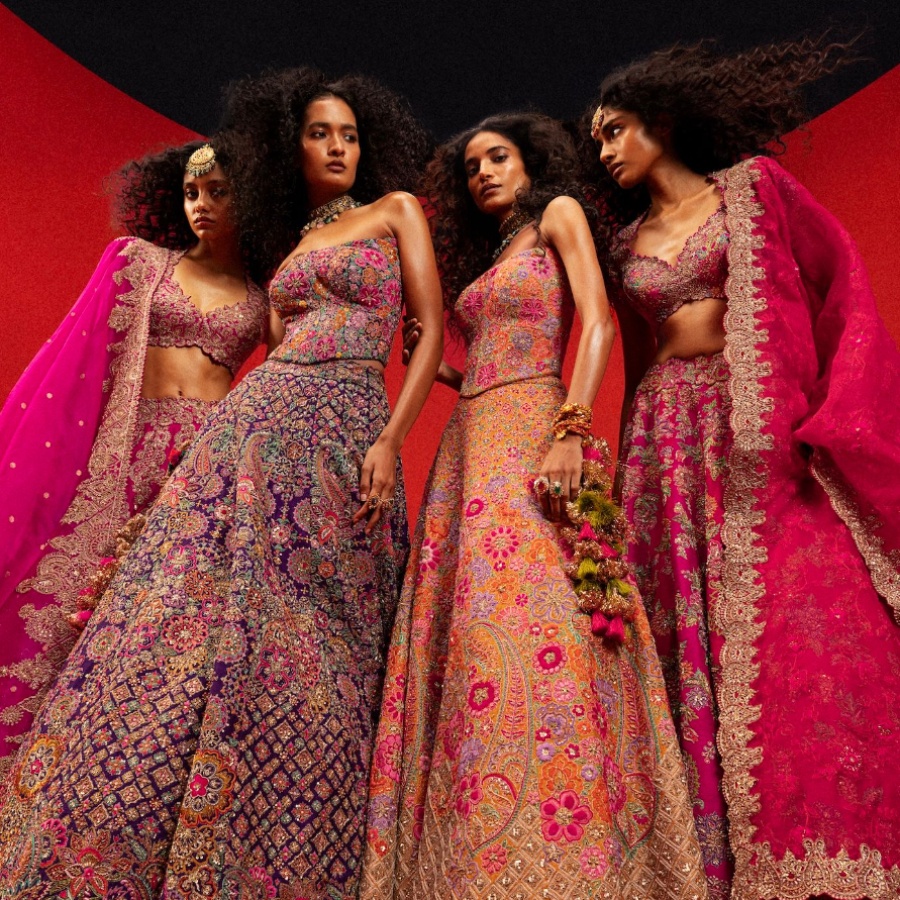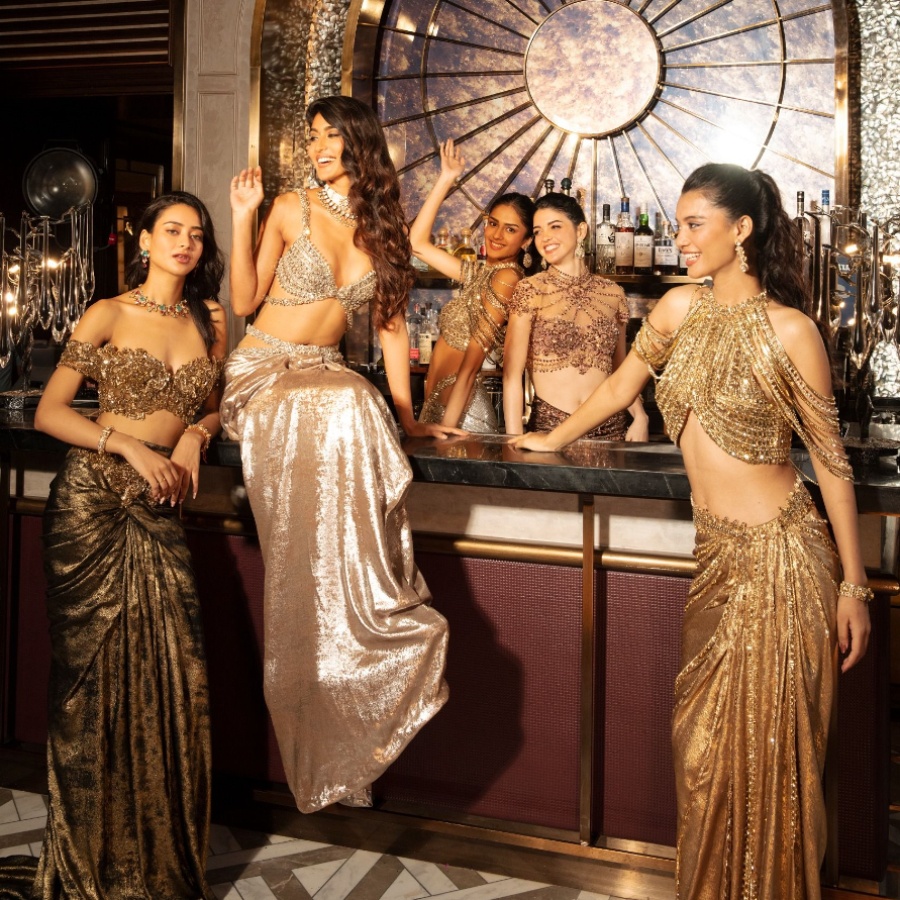


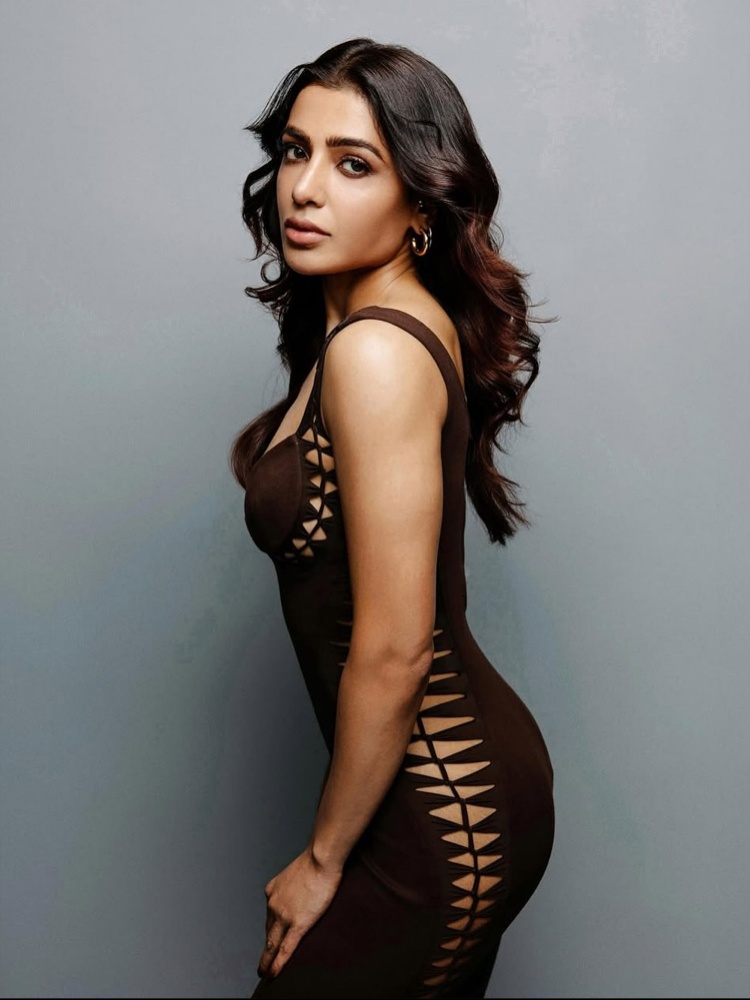

From the runways of Lakmé Fashion Week to international red carpets: naked dressing has officially entered the bridal chat. Sheer, skin-skimming silhouettes have already done the rounds globally, from John Galliano to Sabrina Carpenter in rhinestone-heavy Mirror Palais and Chappell Roan’s Mugler moment—but watching the trend translated through the lens of Indian couture feels like a genuine pivot.
The real change is a move away from the “covered” norm. Designers are working with skin while still holding on to the elements brides expect. Amit Aggarwal’s take on the Banarasi sari is a clear example. Traditionally one of the heaviest pieces in a trousseau, it now appears lighter, more fluid, and, at times, translucent. It sculpts rather than swaddles. A darker palette, especially black and metallics, riots against typical pastel bridal fatigue. It’s a sophisticated middle ground where heritage meets a very risque sense of exposure.
Of course, the idea of "naked" in a wedding context still triggers the occasional pearl-clutching aunty. Back in 2023, a particularly cheeky episode of Say Yes to the Dress went viral when a bride demanded a gown so sheer with only strategically placed crystals and flowers guarding the essentials. That’s blasphemy for the most part, still. But fast-forward to now, and that friction has softened into a more measured take. If you grew up with the "skinny" chiffon dupattas of the Y2K era, you already have the reference point—2026 has simply refined the transparency.
Women, less is always more
For the romantic who finds the architectural “void” a bit too cold, Roseroom by Isha Jajodia offers a Victorian-leaning alternative. Fluid silhouettes with tone-on-tone sheer elements and lace inserts keep things soft while still revealing. The transparency is diffused rather than direct, making it an easier entry point into naked dressing for the bride who still wants a sense of tradition. Rohit Gandhi and Rahul Khanna take a sharper, more cocktail-driven route. Their use of sheer bases layered with dense beadwork and crystal trails creates a controlled reveal, where the body is visible but mediated through embellishment. Urvashi Kaur strips the idea back entirely, removing it from overt bridal codes. Her sheer, unstructured layers sit lightly on the body, often worn over minimal or no base, paired with relaxed silhouettes. The result feels more matter-of-fact, pushing naked dressing toward a more personal, less performative space within the wedding circuit.