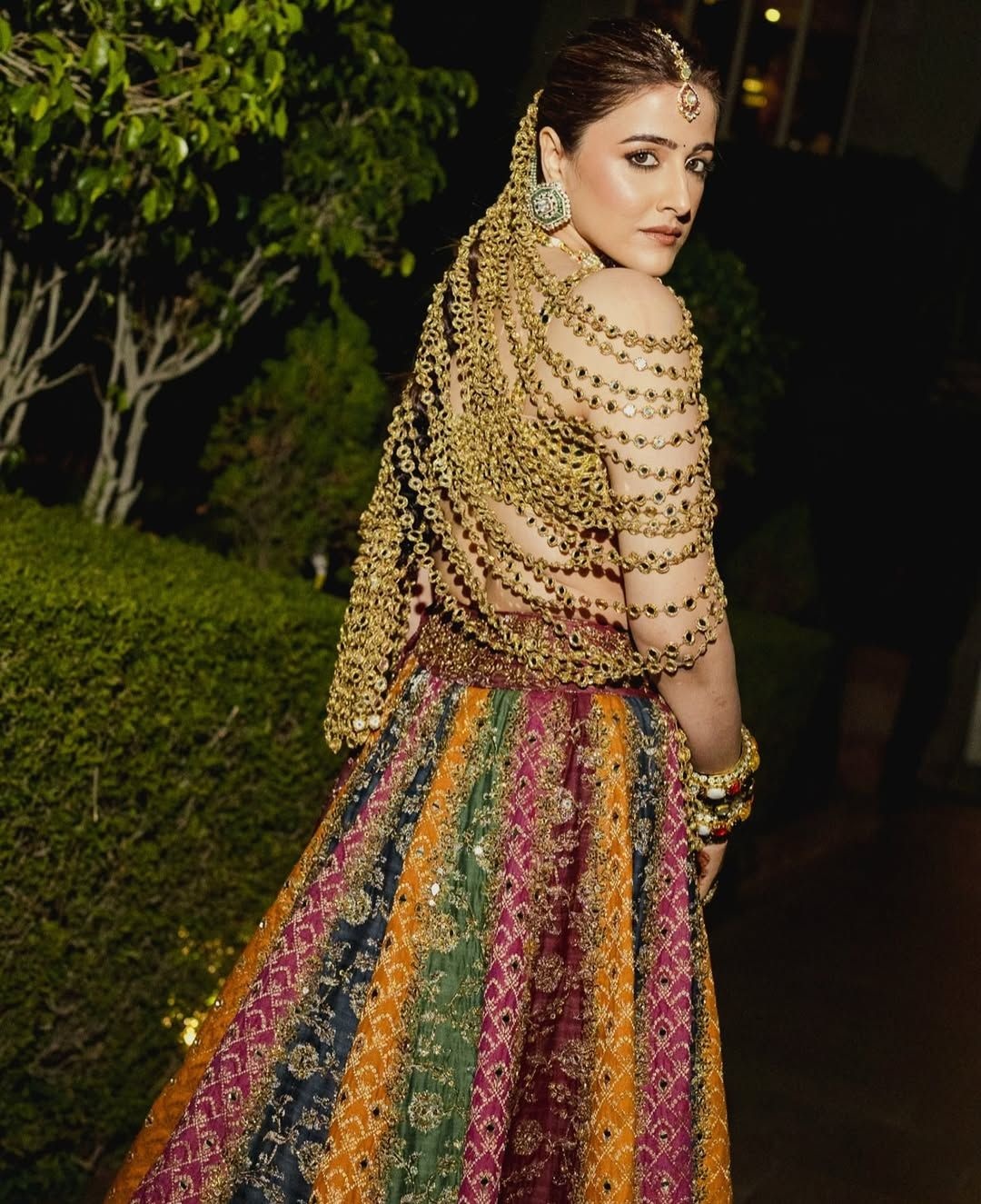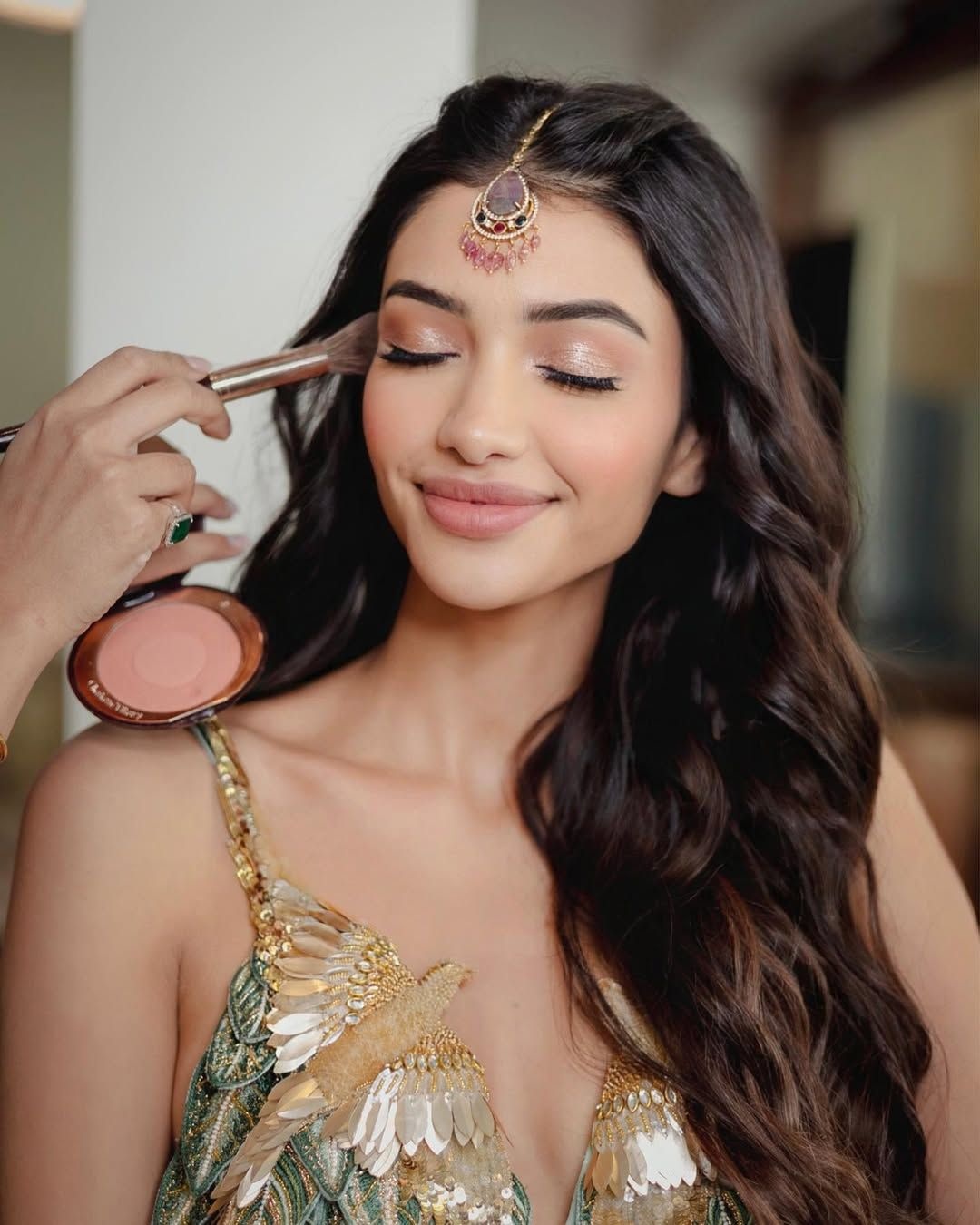




There's a very specific kind of bridal makeup panic that happens around 4 hours in. The pheras are done, the family photos are wrapped, and sometime just before the celebrations get into full swing, someone has pulled out a ring light and a full makeup-kit—and the bride is sitting in a chair getting redone from scratch. It's treated as a given. It shouldn't be.
The idea that bridal makeup requires a complete reset between a single function is less a beauty truth and more a failure of planning and expertise. The alternative isn't touching up over patchy foundation or hoping the lipstick held, it's building a base that was always designed to go the distance. Mumbai-based celebrity makeup artist Shradha Luthra shares her insider knowhow on how this is done and perfected.
Skin first, everything else second
Luthra's approach starts before a single product is opened. "A skin-first base starts much before foundation," she says. "It begins with understanding the bride's skin condition (hydration, texture, sensitivity) and what works for her." That means proper cleansing, moisturising, and sometimes, a light facial massage to get circulation going. The skin needs to be balanced and settled before anything goes on top of it.
What strikes me about this is how often it gets skipped or rushed. But the logic is simple: makeup applied over unprepared skin is makeup that will fail in a few hours. And there's a counterintuitive truth in how Luthra thinks about coverage. Heavy foundation, she explains, is not the same as long-lasting foundation. "It usually leads to cracking, patchiness and discomfort." And it comes from how thin and thought-through the layers are, not how much product is used. "Longevity comes from preparation and technique, not just product quantity."
It’s all about the base
Once the skin is prepped, the brief shifts to building a base that holds the entire day and night, for that matter. Luthra works with lightweight formulas layered gradually, primer only where it's needed, and sets selectively—T-zone, under the eyes, around the mouth—rather than powdering the full face. The goal is makeup that stays flexible, not makeup so aggressively set that it starts cracking the moment you smile.