


"You're the type of girl who is home." Luqman Ebrahim, tennis pro turned tech entrepreneur, said the first time they met. Arissa Khan, model turned fashion entrepreneur, laughed it off. But she admits now, she understood exactly what he meant. That was their Covid meet-cute. What Luqman and Arissa found between the many months of lockdown and working from home, was each other.
They relied on hours and hours of conversation about family, spirituality, culture and the lives they hoped to build. And this steady stream of words slowly turned into something much larger than either of them had anticipated. They weren't just filling the hours but falling for each other and for the worlds they each came from—his Awadhi roots and her Afghani heritage. That emotional overlap wasn’t lost on them. And it eventually became the soul of their wedding.
Roots not trends
When Arissa talks about what she wanted the wedding to feel like, the word she keeps returning to is home. Not a venue. Like memory and culture and love existing together in one space. "I never wanted our wedding to feel trend-driven or disconnected from who we are," she says.
Capturing their idea of home shaped everything from the music to the materials and even the way guests were welcomed. She found herself drawn to Sufi music, candlelit spaces, heirloom jewellery, handcrafted textiles and the particular softness of tehzeeb—that old-world Urdu sensibility around grace, warmth and hospitality. Nothing staged. Nothing performative. "We wanted people to walk into our wedding and feel something," she says. "Like they had stepped into a living memory rather than simply attended an event."
The wedding within the wedding
Mumbai was never a question. It's where their story began, and while the celebrations themselves were large, the emotional motif was always intimate. Venues that carried warmth and old-world texture. Spaces that could transform into entirely different emotional worlds while still feeling cohesive, chapter to chapter, night to night.
The final guest count, around 1,800, was admittedly, more than they had imagined. But Arissa doesn't say it with regret. She says it like someone who knows the difference between scale and spectacle. They weren't the same thing at her wedding.
Chapter by chapter
Every function was approached almost like a different chapter in one larger story with the aesthetic shifting, the mood evolving, but the emotional thread remaining unbroken throughout.
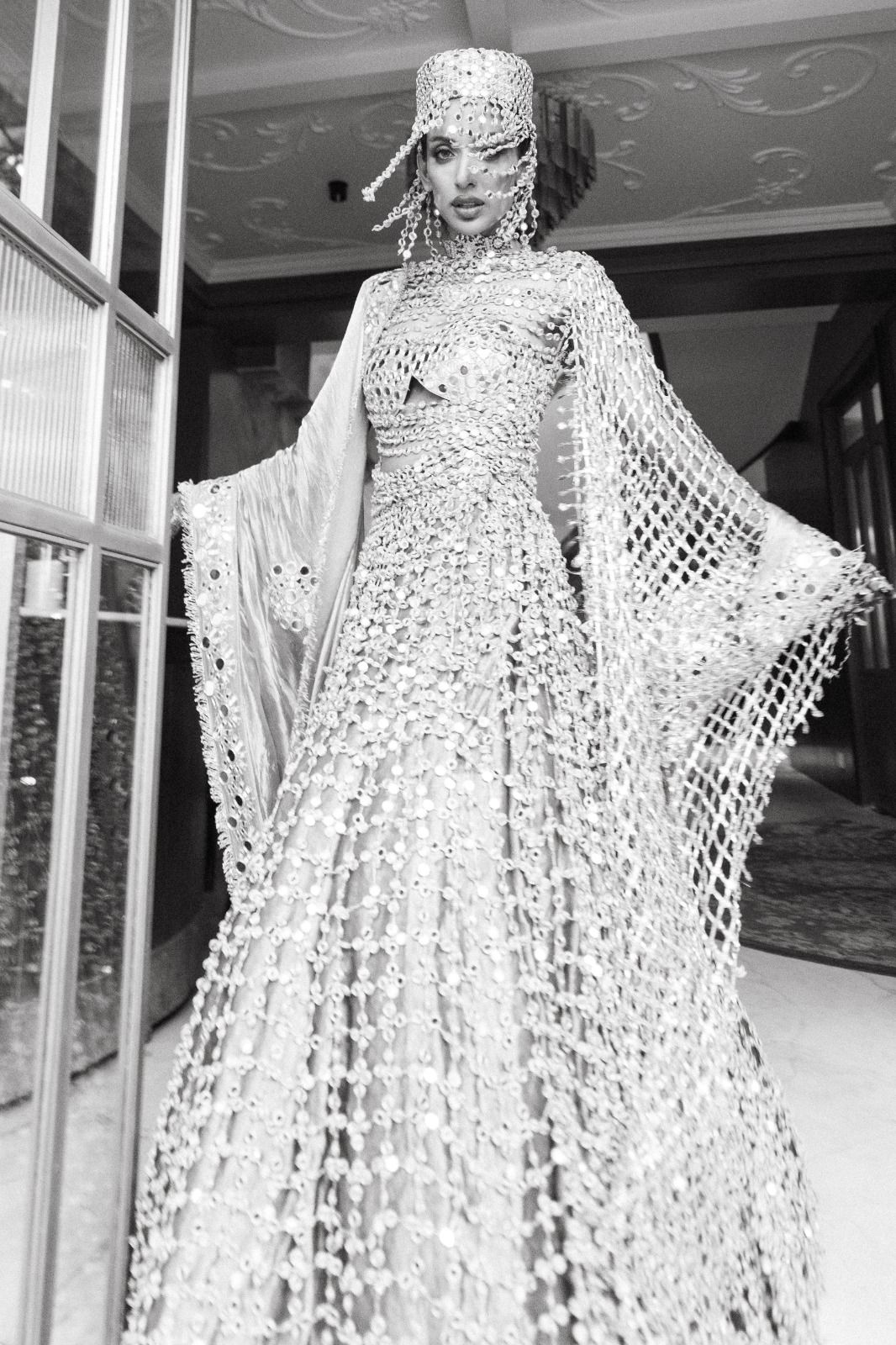
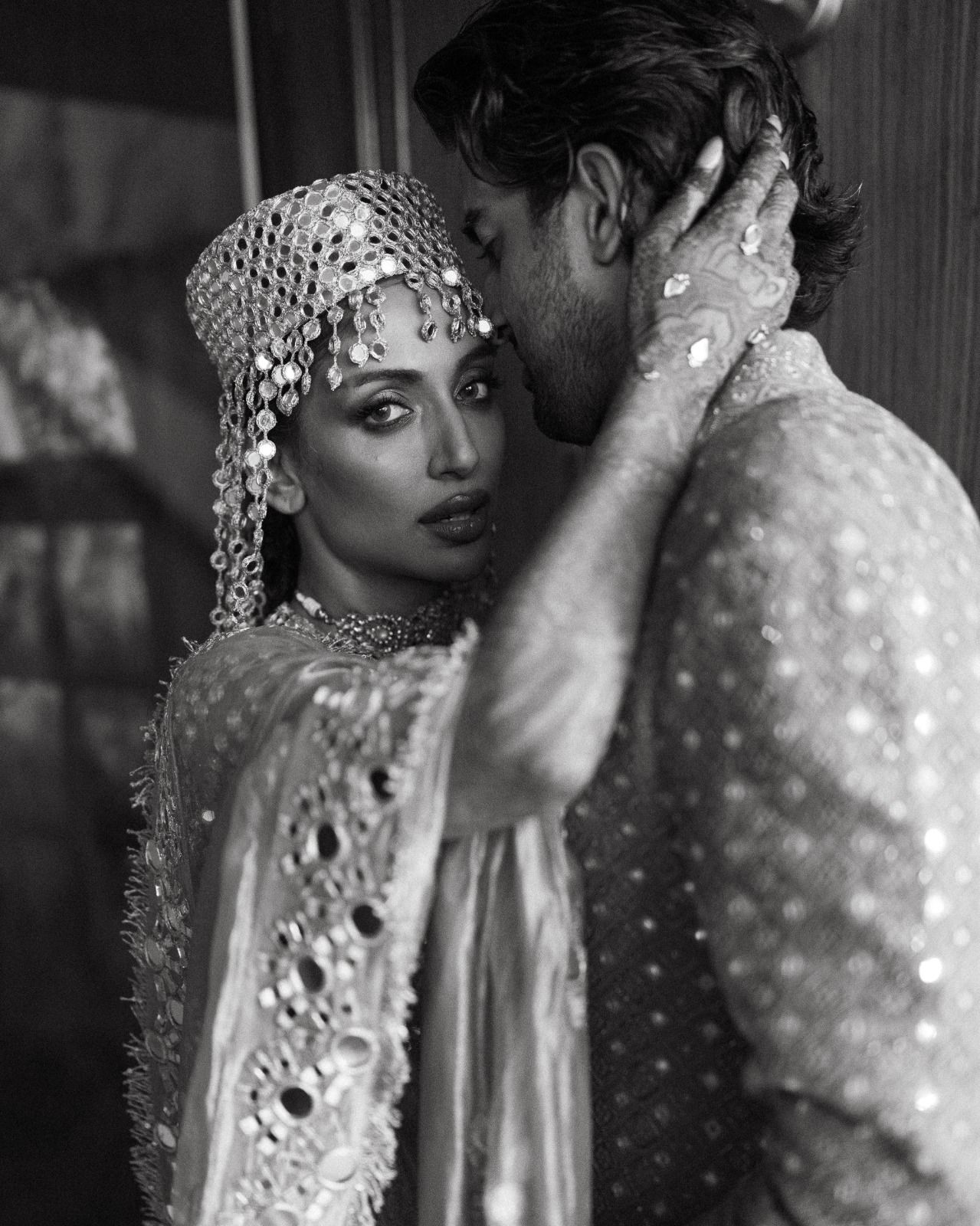
The Mehendi was imagined as "The Garden of Becoming." Playful, feminine and full of colour with olive greens, salmon pink drapes, mirror work, floral fountains and carved watermelons creating a whimsical dreamscape that still felt warm and rooted. Movement, joy and nostalgia all at once.
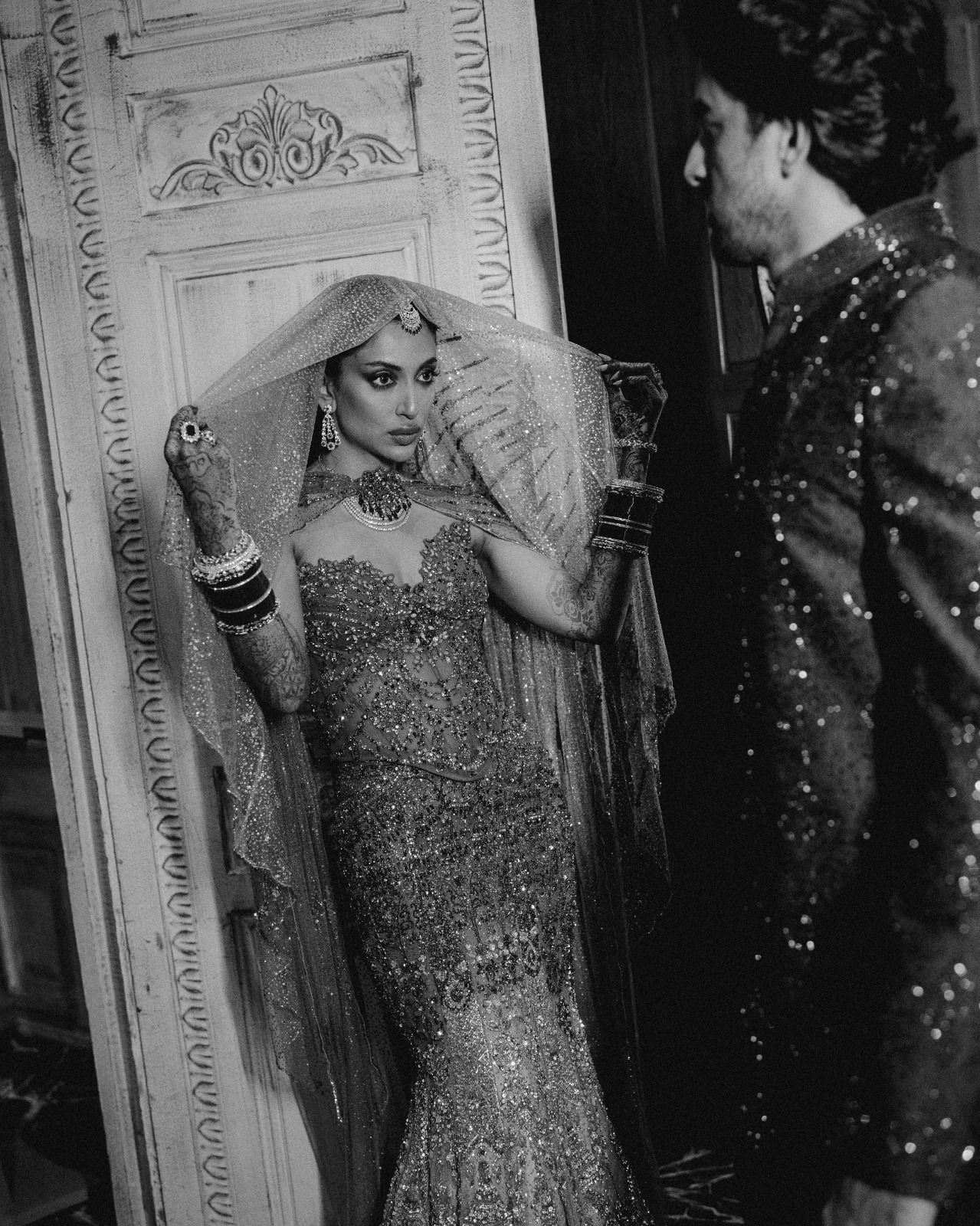
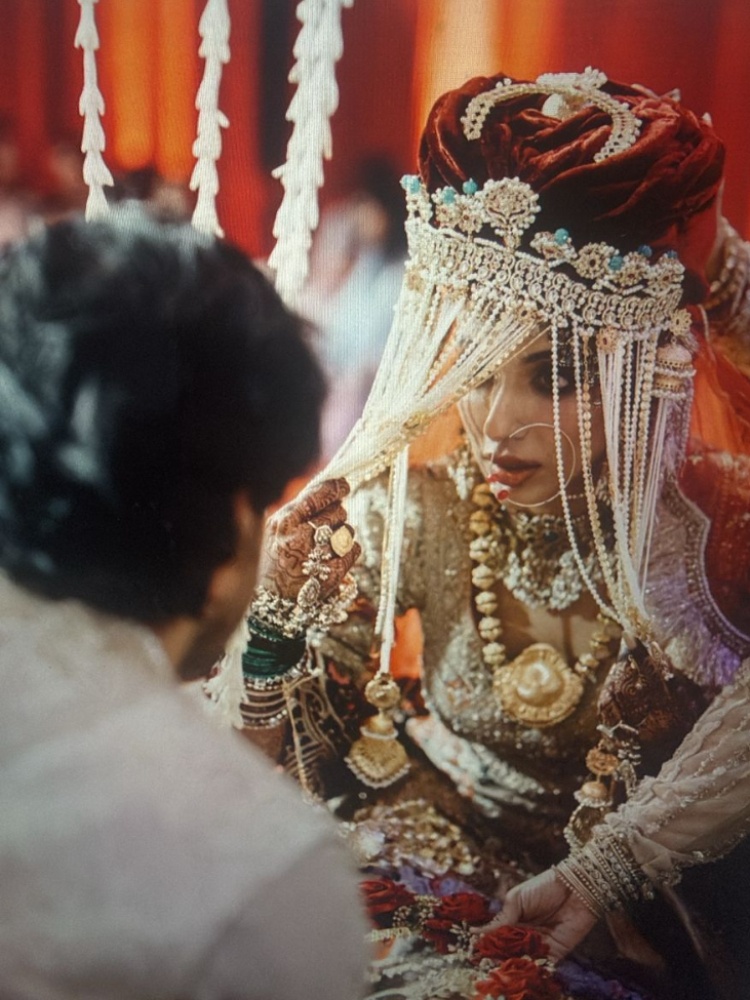
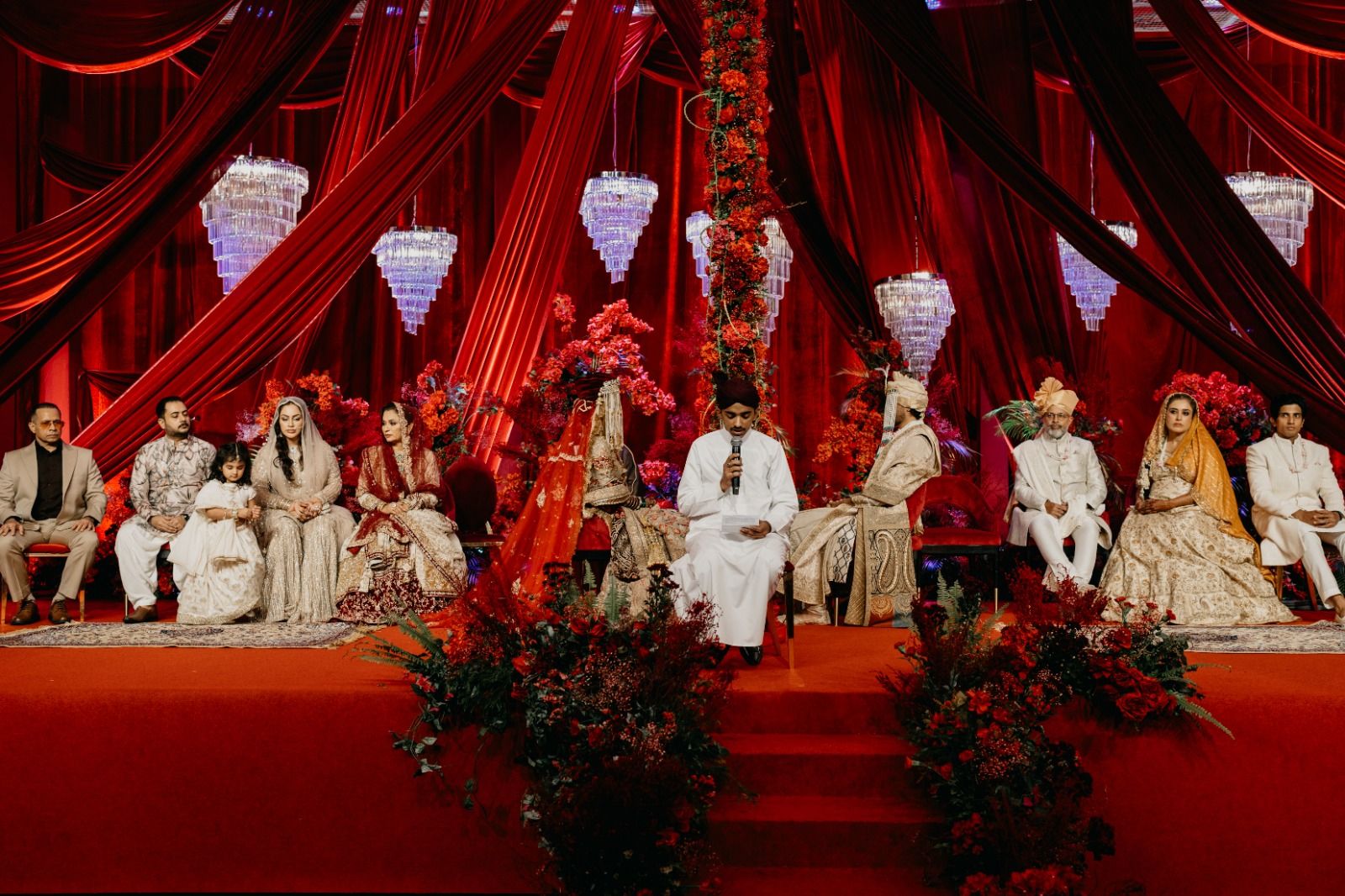
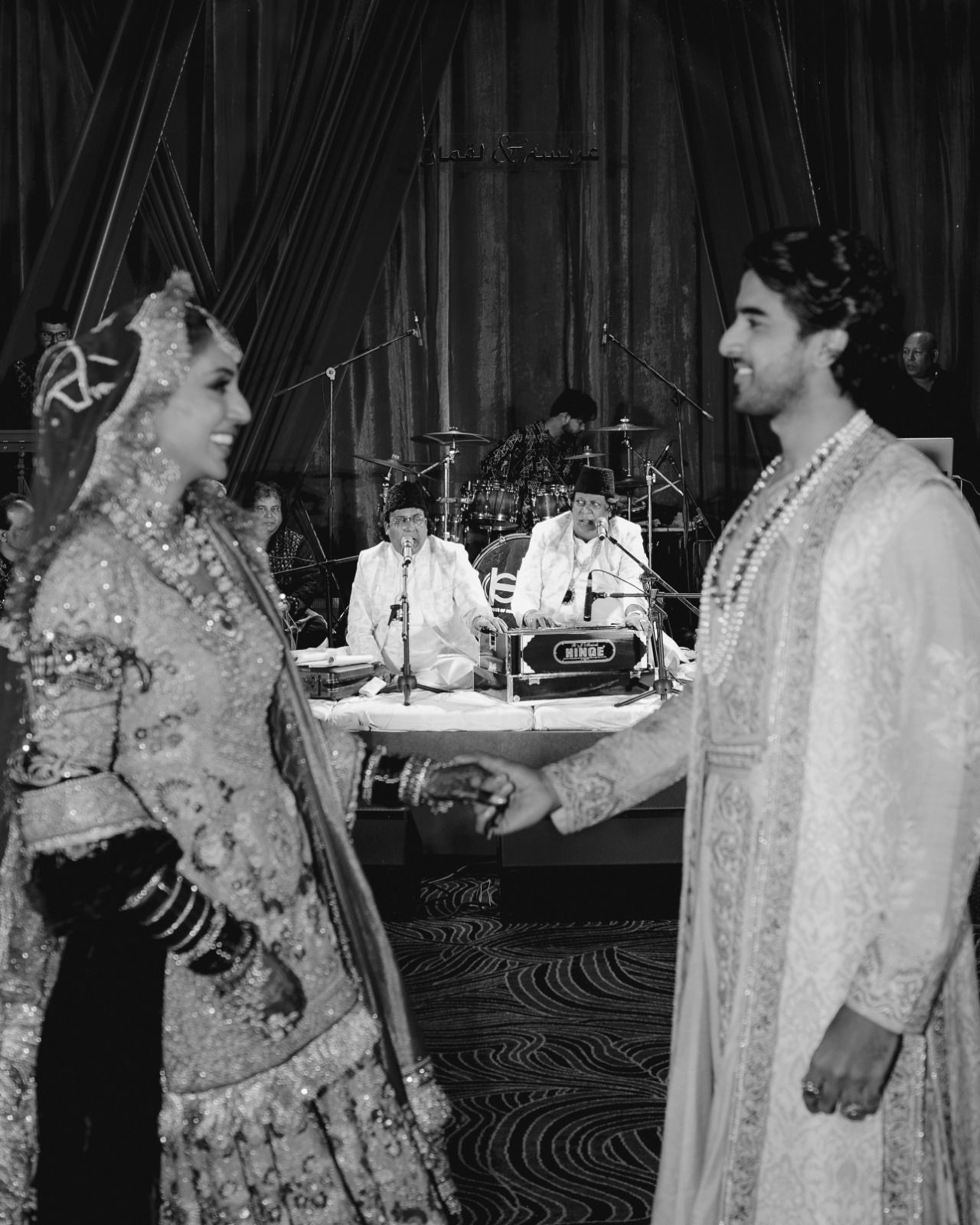
The Nikkah became the emotional centrepiece. Here, Arissa and Luqman consciously turned to their roots—an Afghani bride, an Awadhi groom. Deep red drapes, candlelight, handcrafted textures and the weight of something ancestral in the air. And then: live qawwalis by the Sabri Brothers alongside Sufi dancers. "At one point," she says, "guests spontaneously began singing along. And suddenly it no longer felt like an event. It felt spiritual. Collective."
The Walima arrived softer with midnight blues, candles, stars and music held gently in the air. Regal and intimate, "almost like the final love letter of the wedding," she adds.
The look was never about looking good
Arissa approached the wardrobe the way she approached the wedding itself: collaboratively, intentionally, with zero interest in wearing something simply because it was expected of a bride. "It had to feel authentic to my personality, my story and the emotional world we were creating," she says. "I wanted to wear designers I already felt deeply connected to — their artistry, their storytelling."
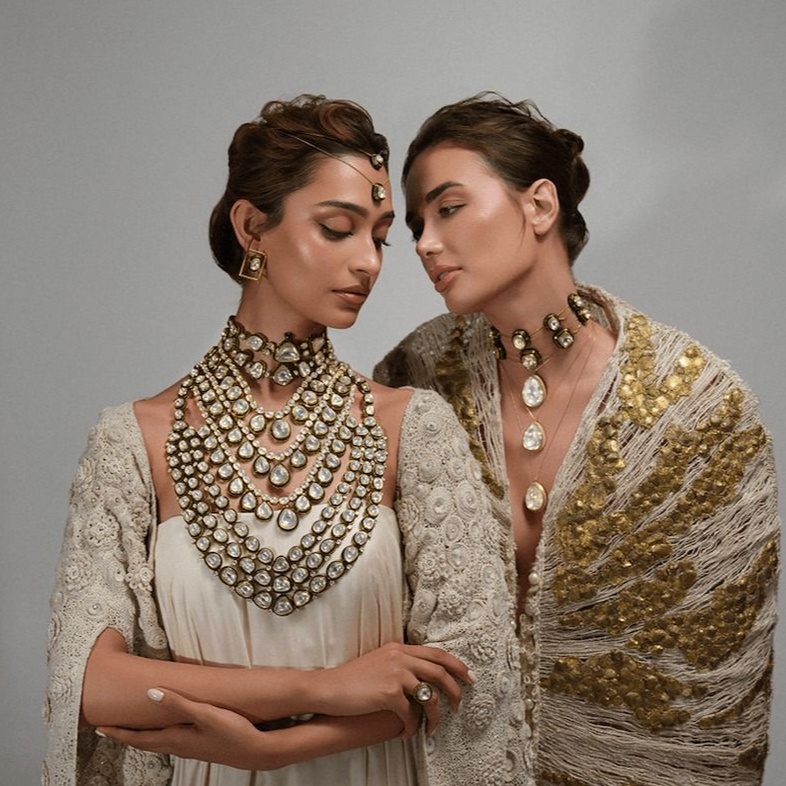
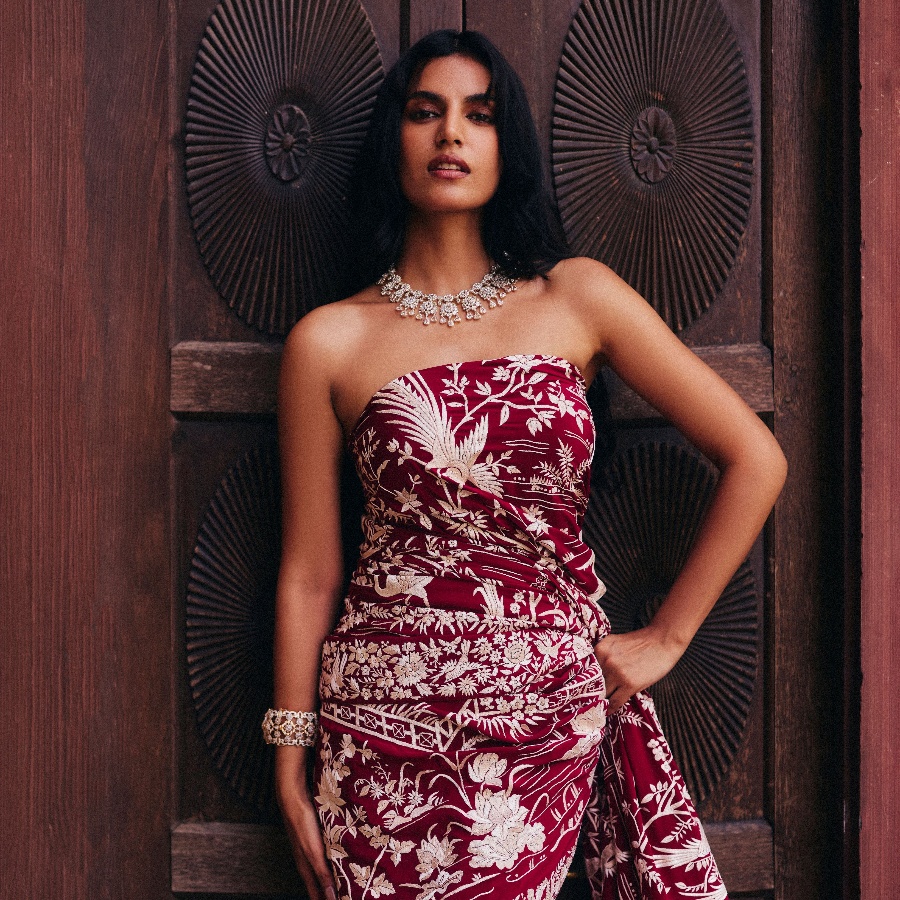
For the Mehendi, she worked with Itrh alongside Mohit Rai and Ridhi on a playful mirror-work ensemble that balanced joy with craftsmanship. For the Nikkah, Rimple & Harpreet brought the archival vision to life with ensembles that felt inherited rather than designed. "Timeless," she says. "Almost as though they belonged to another era." The most emotional layer? An heirloom necklace from Luqman's family, dating back to the 1800s. "Once everything came together," she says quietly, "it stopped feeling like styling. It began feeling like legacy."
For the after-party, Rahul Mishra created a couture midnight look that was full glamour and full fantasy. "Growing up playing with Barbie dolls, I always imagined becoming a version of her when I found my Ken," she says, and laughs. "So that look felt playful and deeply personal." And for the Walima, Dolly J designed the midnight-blue couture—delicate sparkle scattered across it like constellations. Celestial and quietly dramatic in equal measure.
Luqman, for his part, was equally involved. "We discussed references, moods, textures and the emotional feeling of each function together," she says. Less about matching, more about speaking the same cultural language. Which they already did.