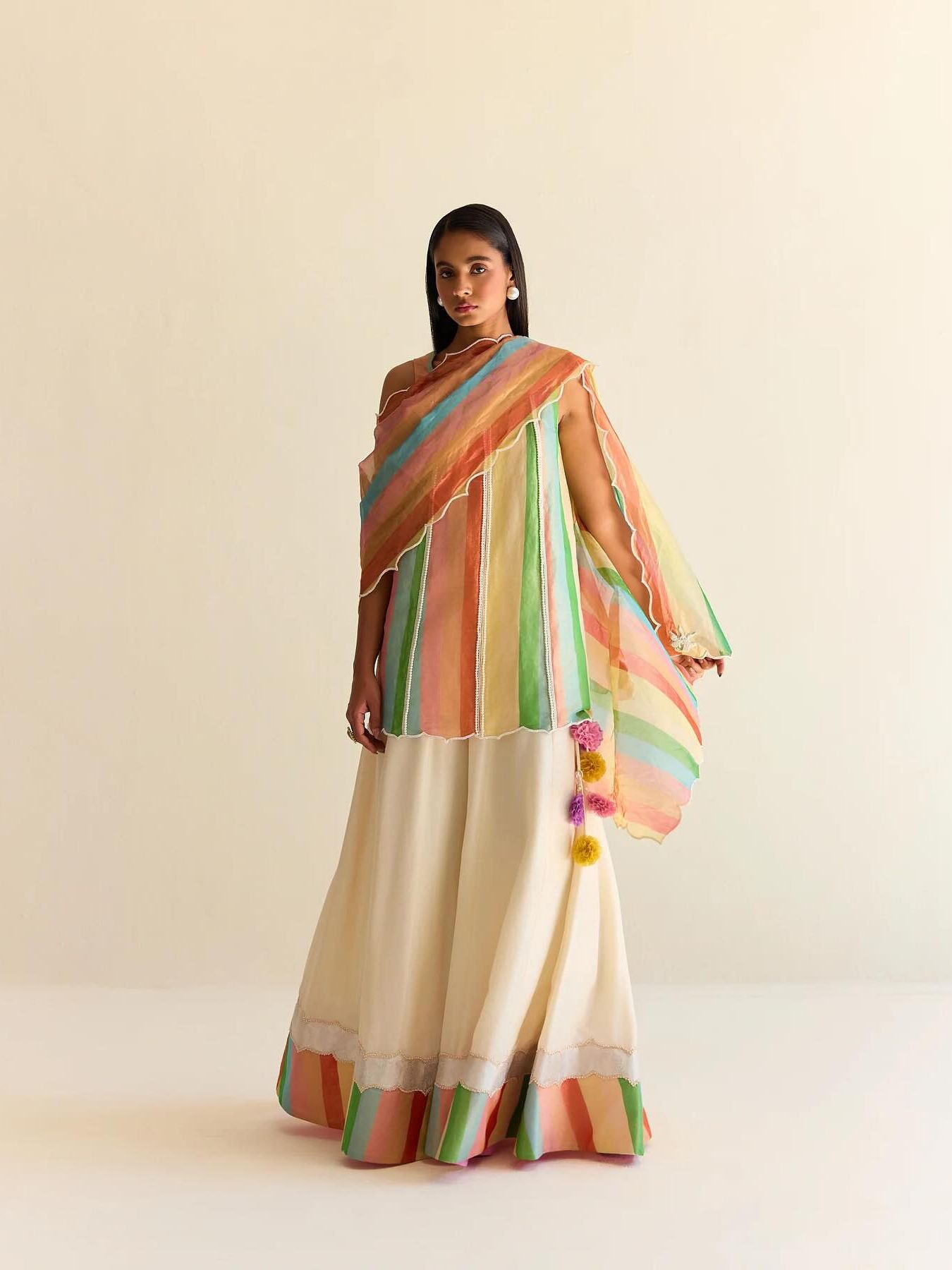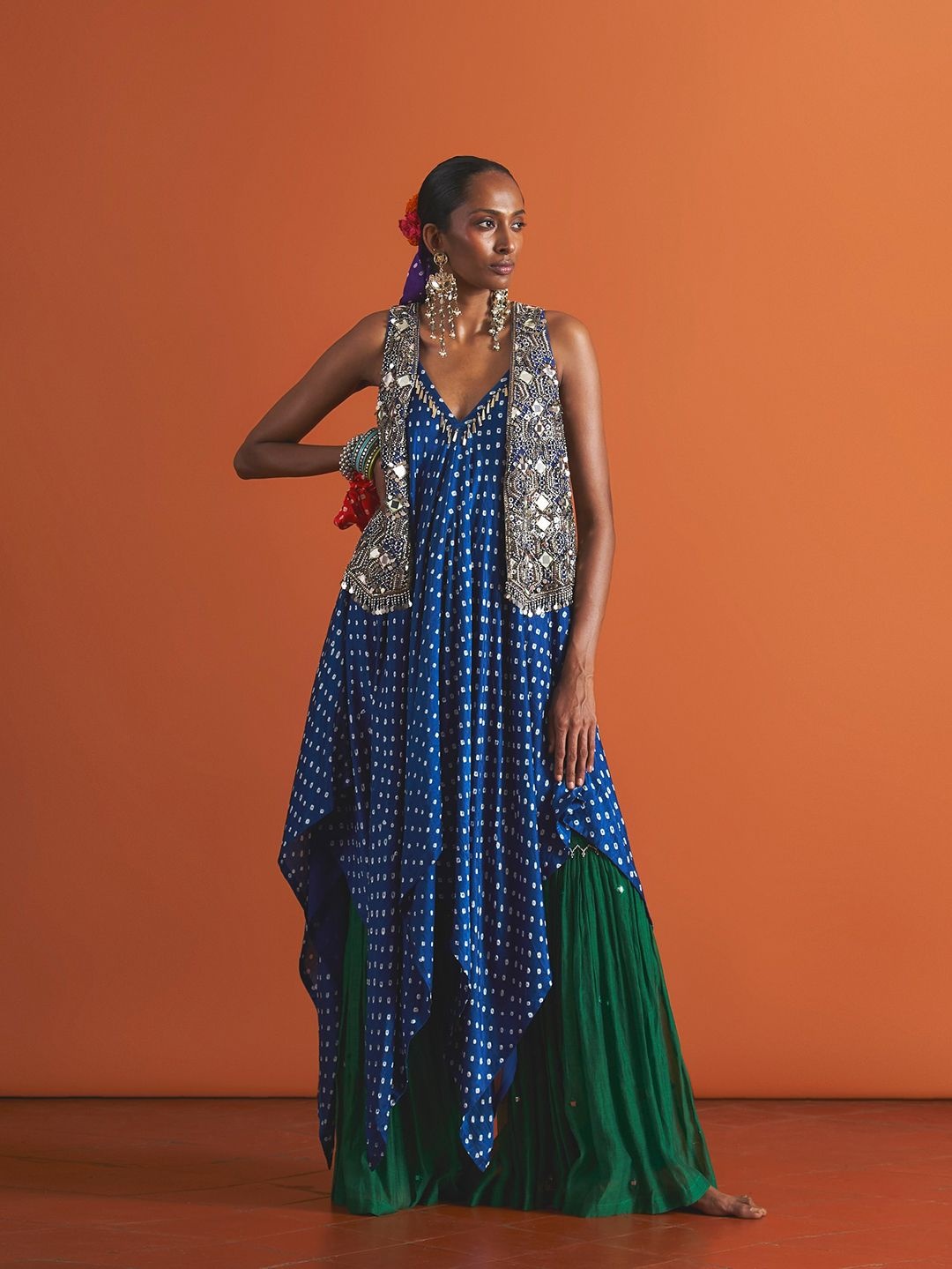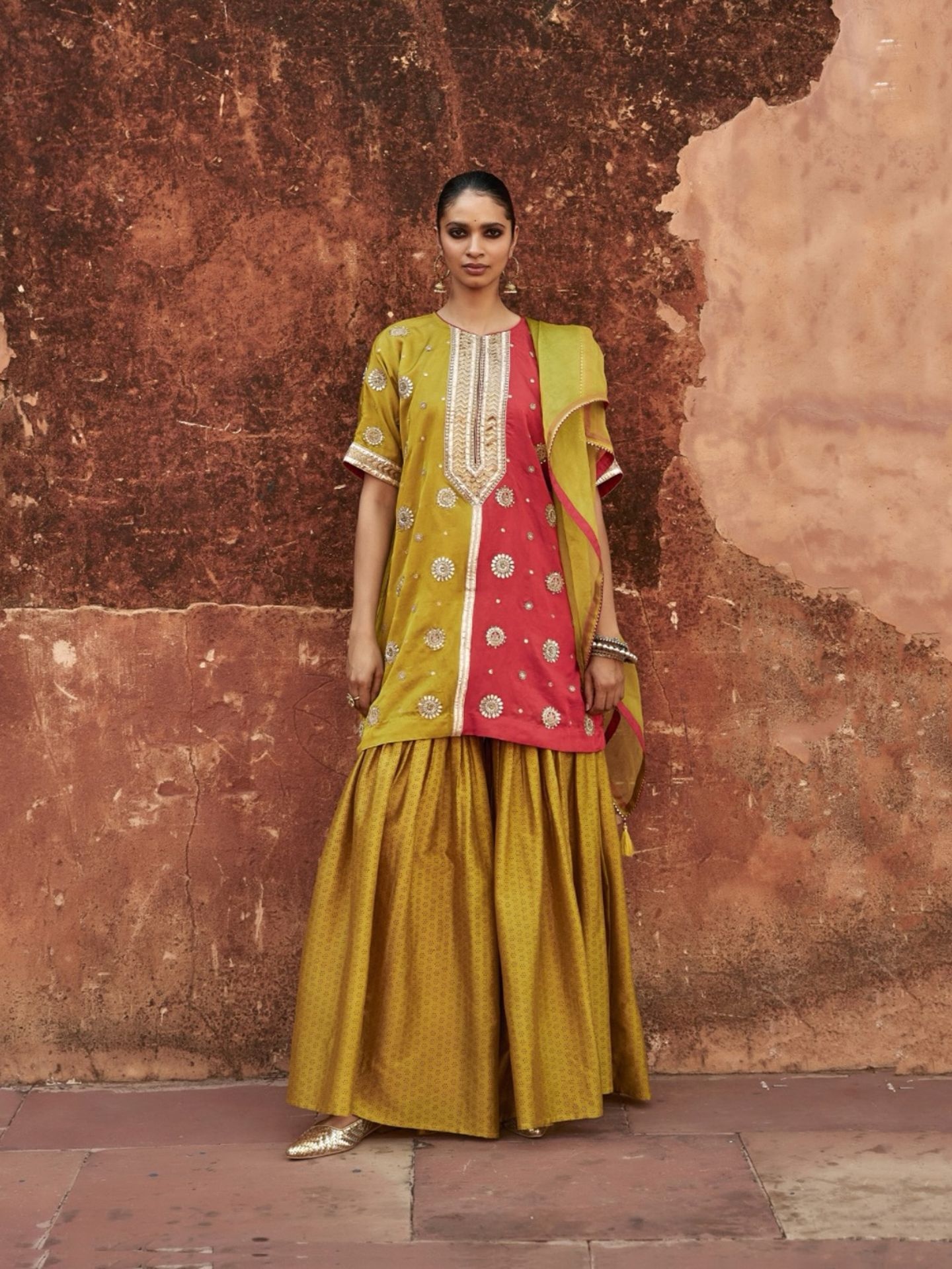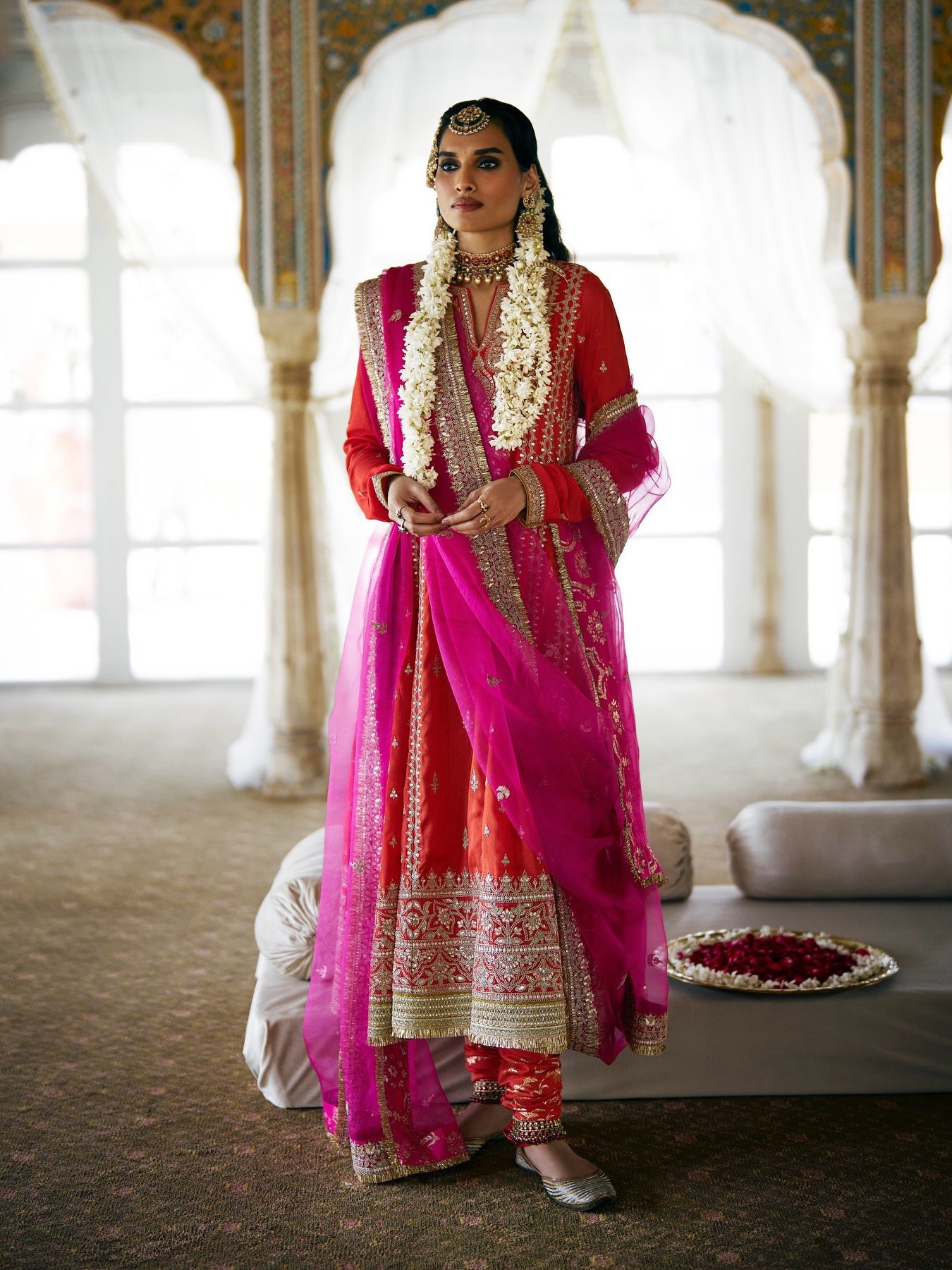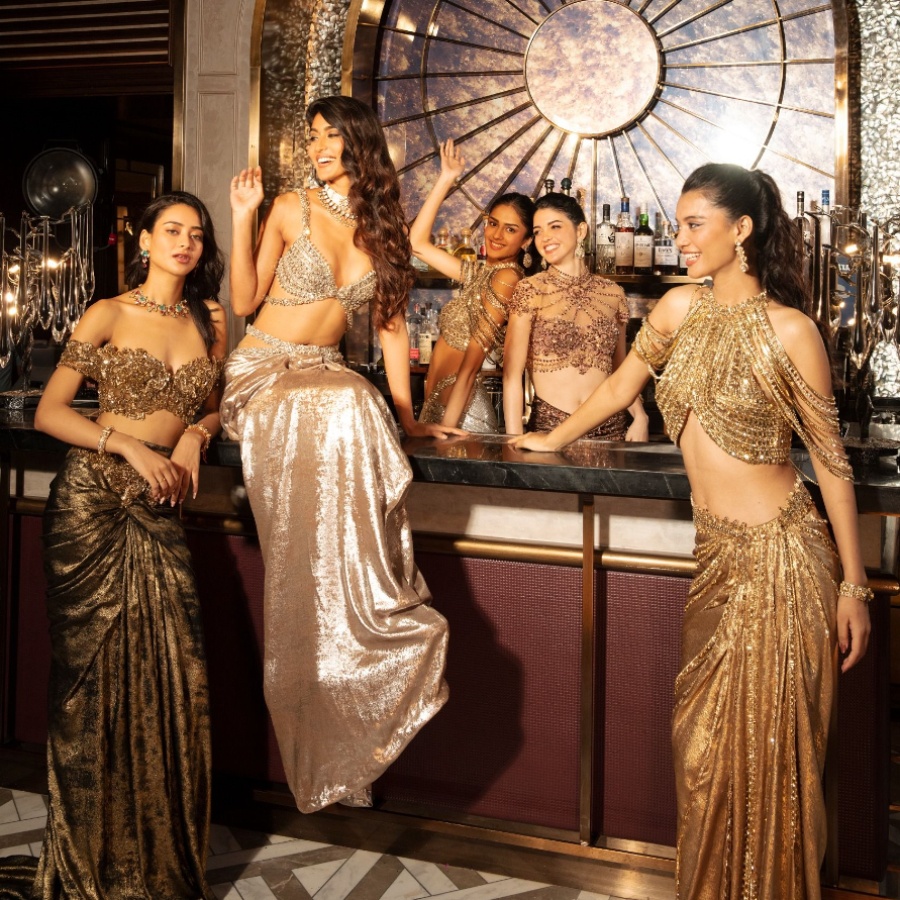


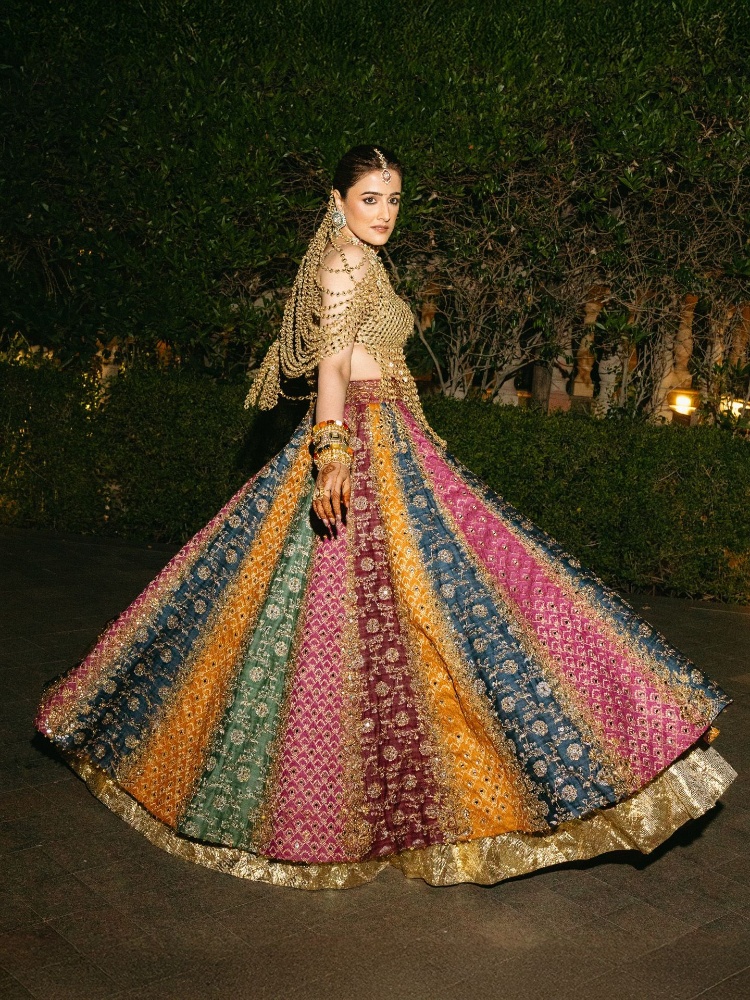

Colour blocking is back, and this time it’s made its way to the mandap. But this isn’t a reworked Mondrian, instead Gen Z and millennial brides are moving away from bold blocks and instead layering and customising colour to suit their vibe. Nupur Sanon’s wedding captured this shift perfectly. What stood out was not just that she used colour blocking, but that she explored its range. For her mehendi, she chose ITRH and embraced multi-colour panelling layered with dense surface work. For her wedding, she turned to Manish Malhotra for a dual-toned ombré lehenga built on solid colour placement and tonal restraint. Same framework, two outcomes. Instead of repeating a single palette across functions, her wardrobe used colour to create clear visual shifts. It’s a smarter way to build variety without looking like you’re changing personalities every few hours.
In a bridal landscape rich with embroidery, shimmer and surface detail, the subtle colour blocking is playing with structure and shading in the funnest way. And brides get to use colour without every outfit tipping into full maximalism. We unpack the latest trend, so you don’t have to. Find your colour block vibe below:
Many colours, one plan
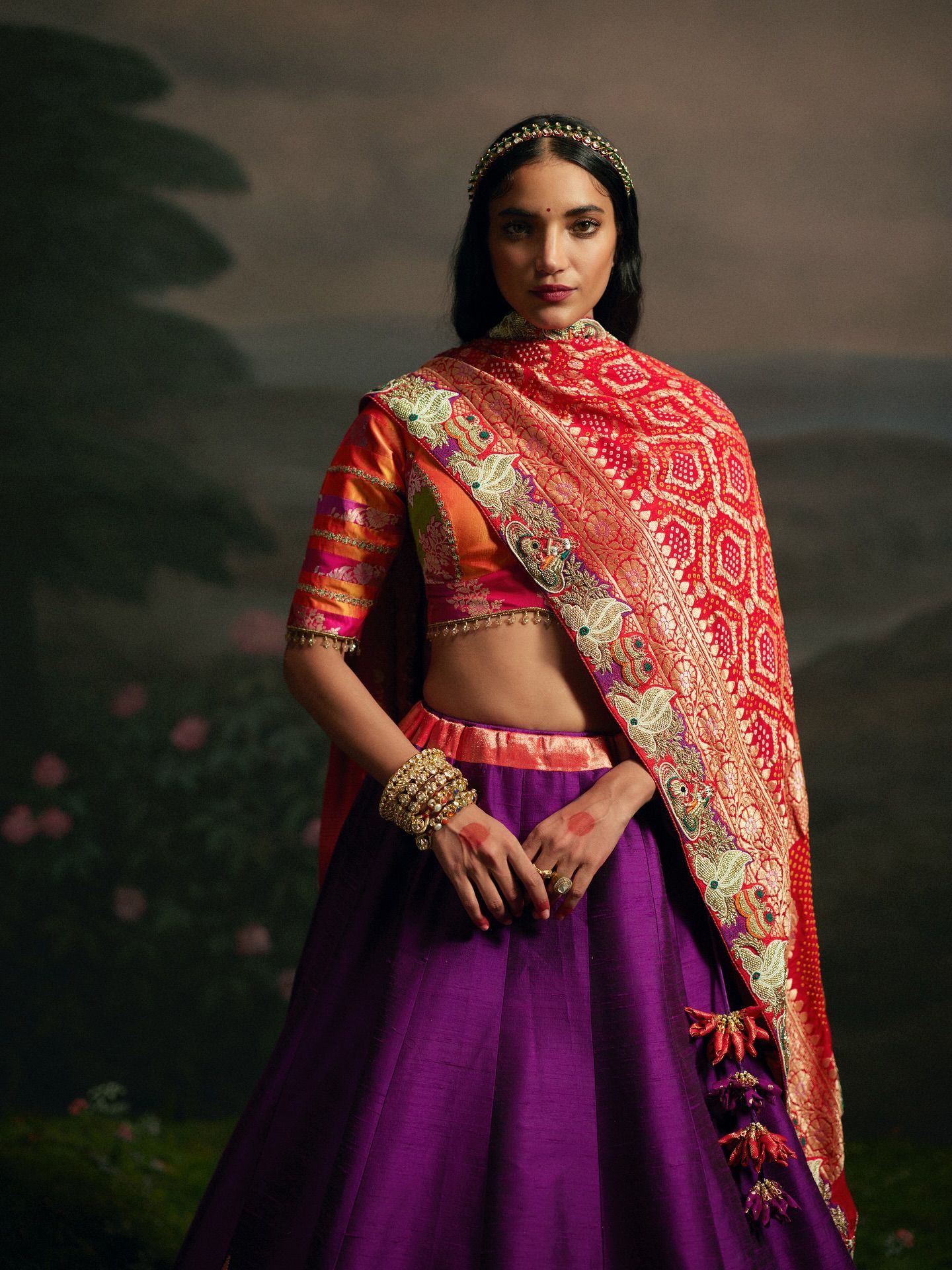
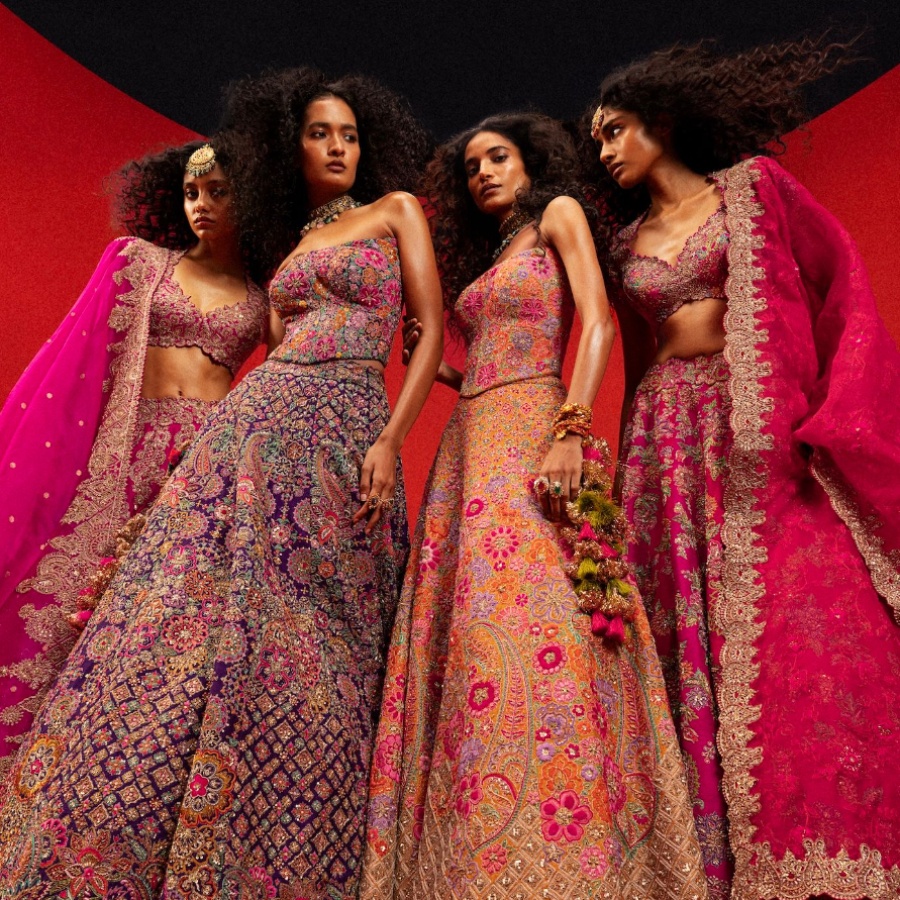
This is colour blocking at its busiest, and it only succeeds when there is order. Multiple hues exist in one outfit, but each is given a defined role. Panels, embroidery zones and borders act as visual boundaries. Sanon’s lehenga shows this clearly. Tapered colour sections, heavy embroidery and a layout that feels structured rather than ornamental. It is detailed but not scattered.
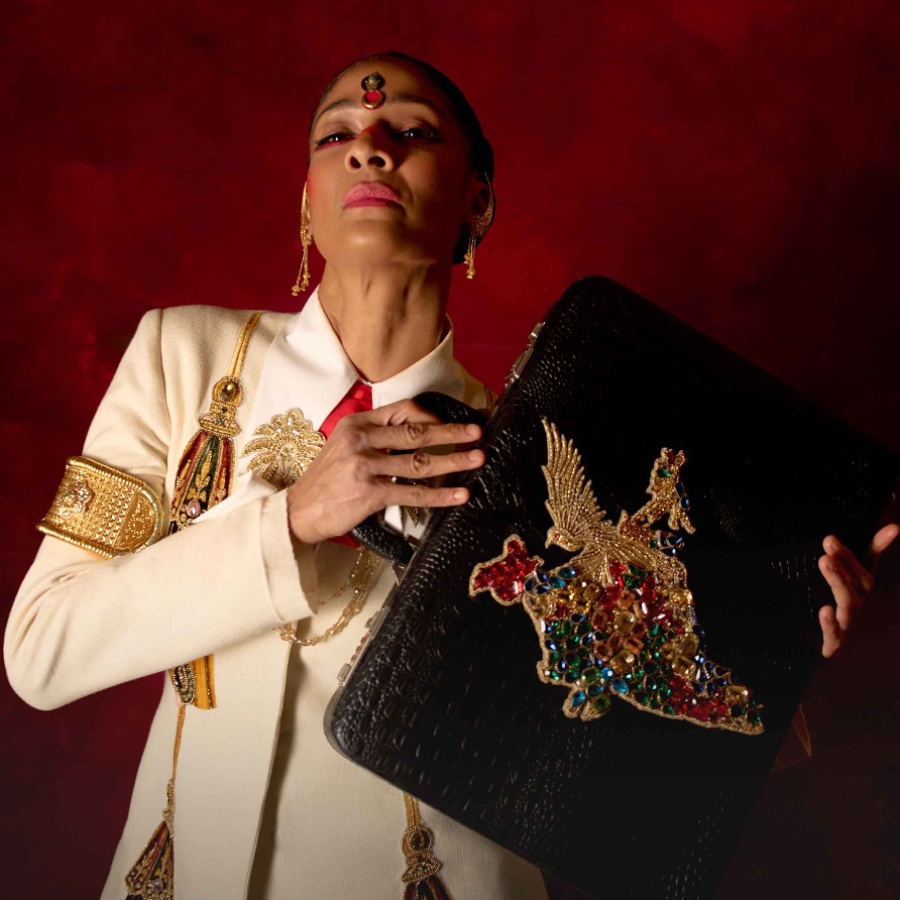
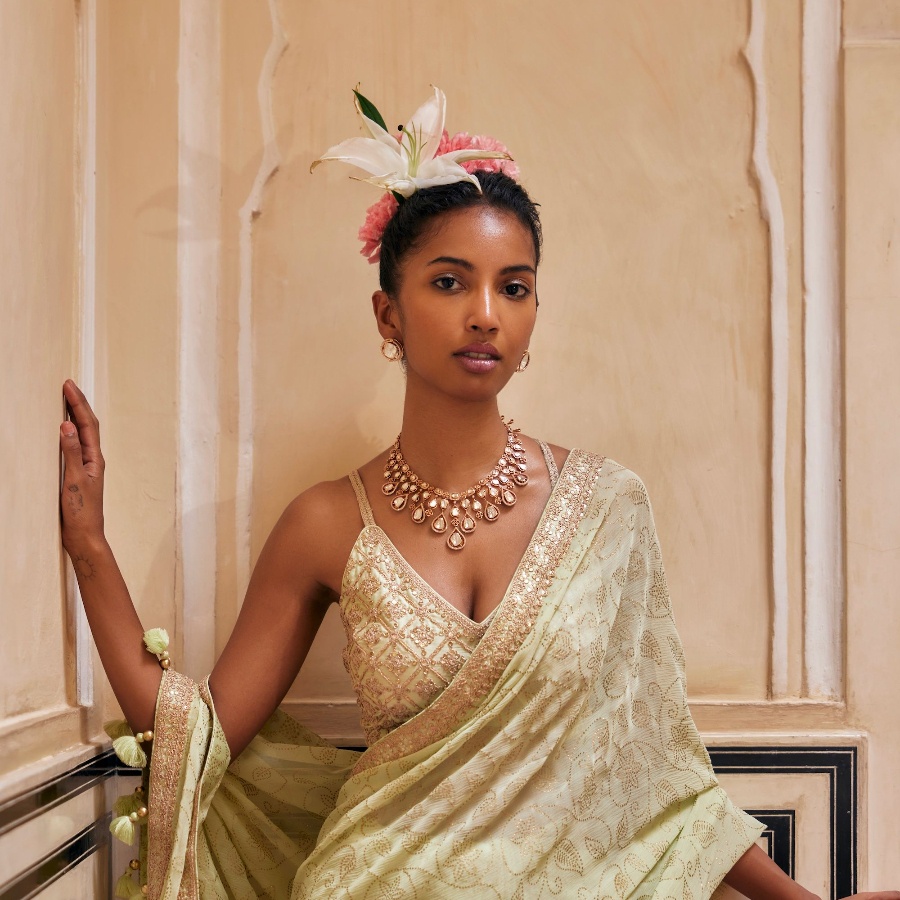
Ohfab By Aanchal & Akshita approaches it through textile engineering, using pachranga silk where colour is built directly into the weave. Surily G keeps the base quieter and allows colour to appear through embroidery and dupattas. Anushka Khanna sharpens the concept through layering, using structured separates where blue, green and metallics are held in place by silhouette. In every version, hierarchy matters. One colour anchors the outfit. The rest support it. Without that, multi-colour blocking loses discipline very quickly.