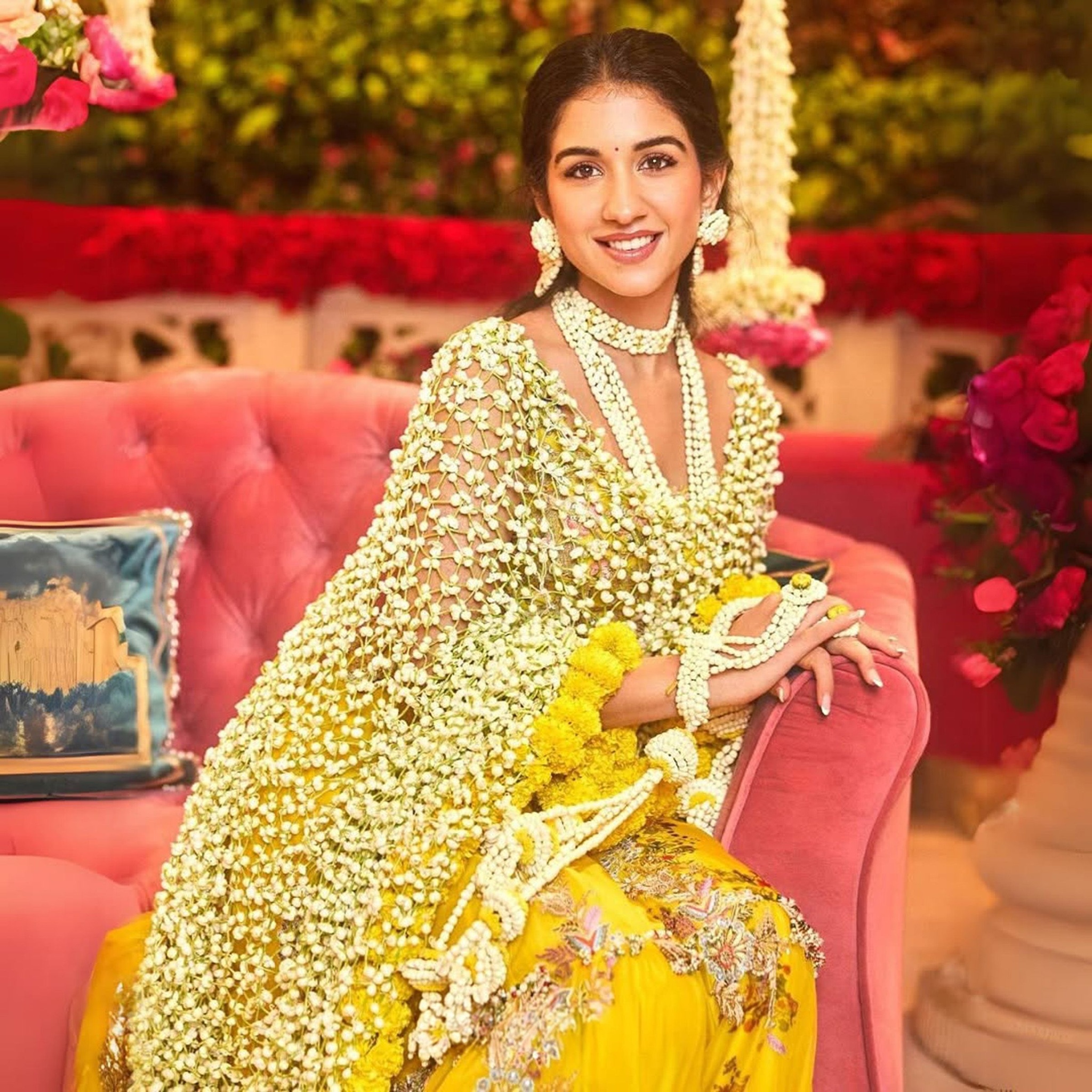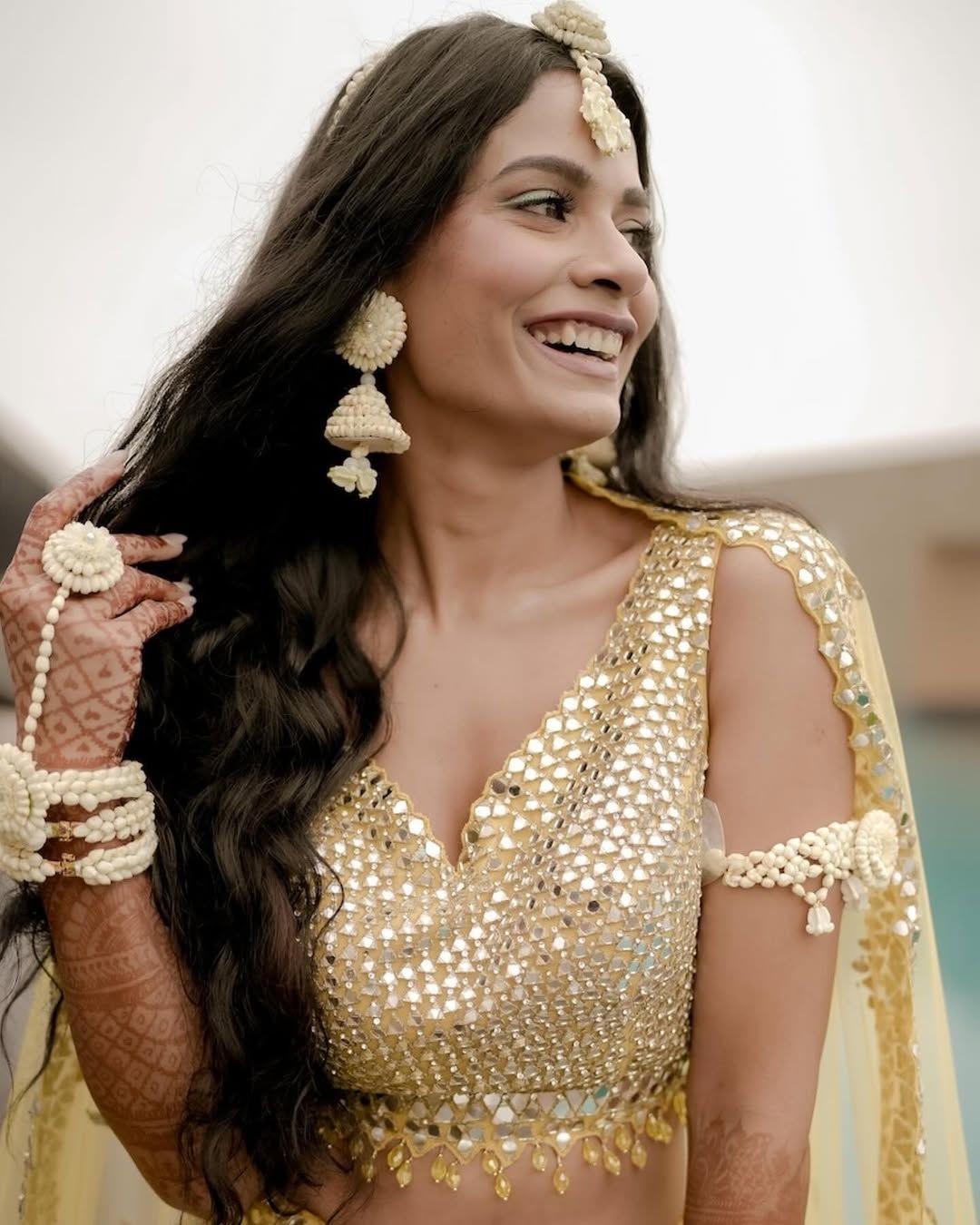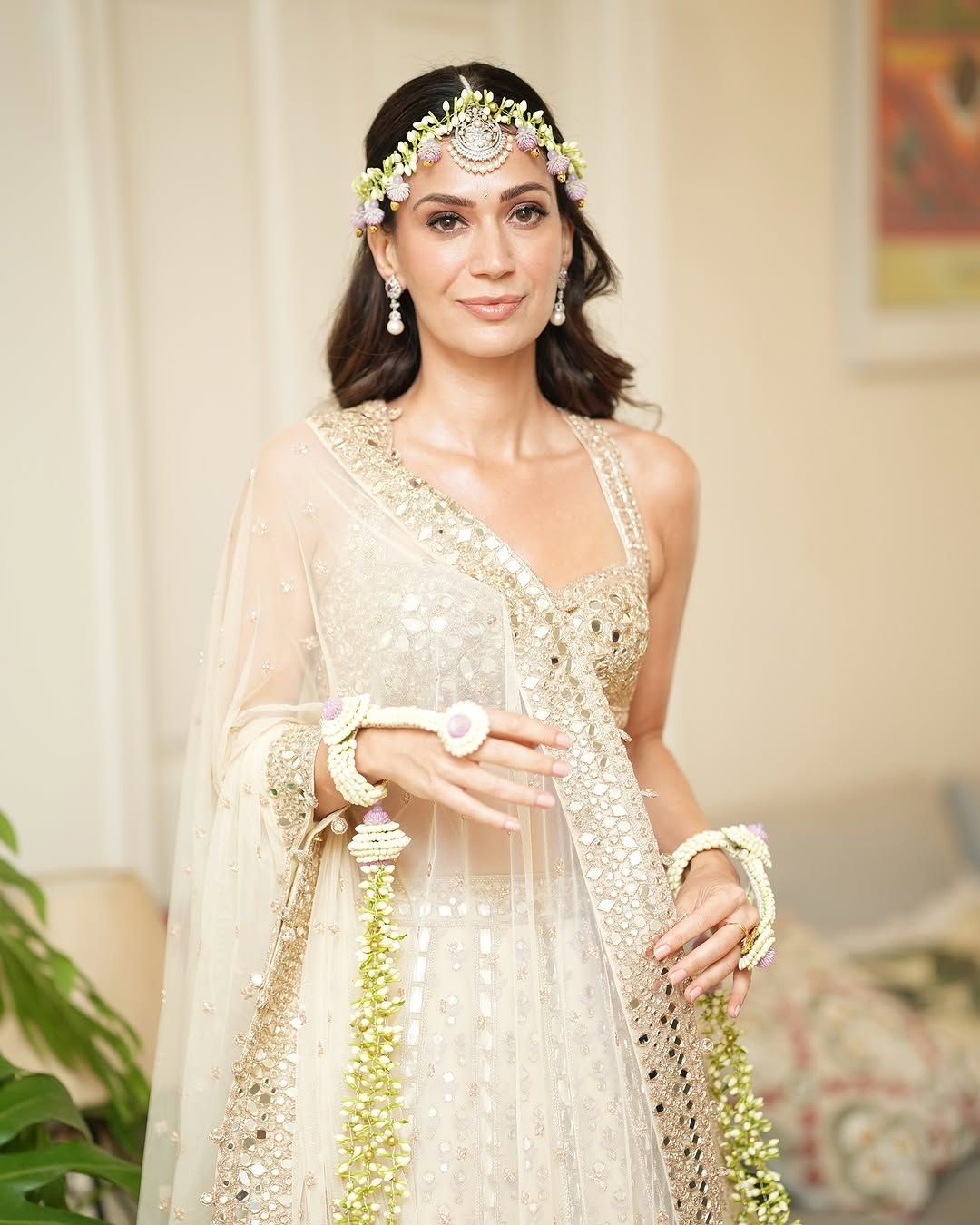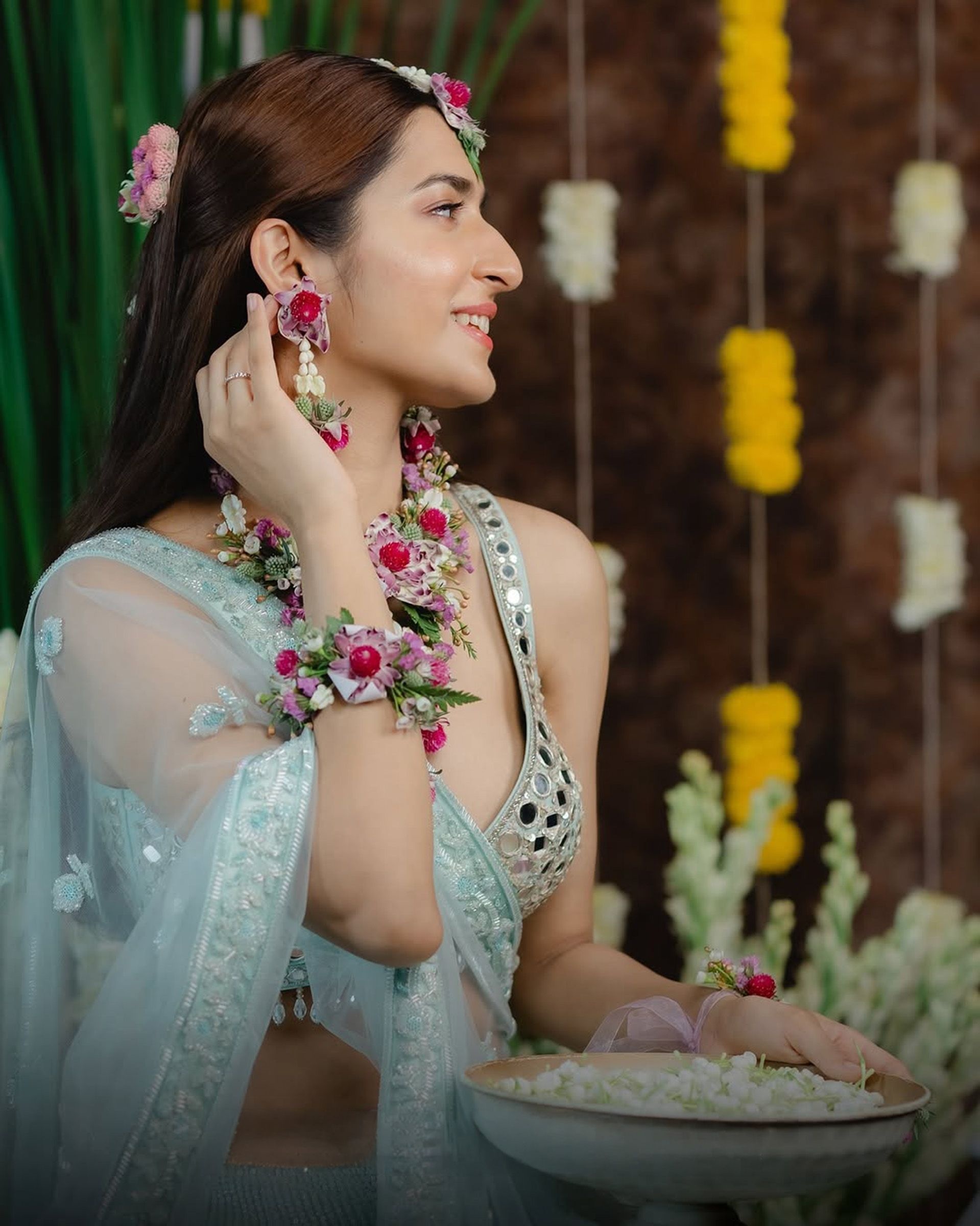


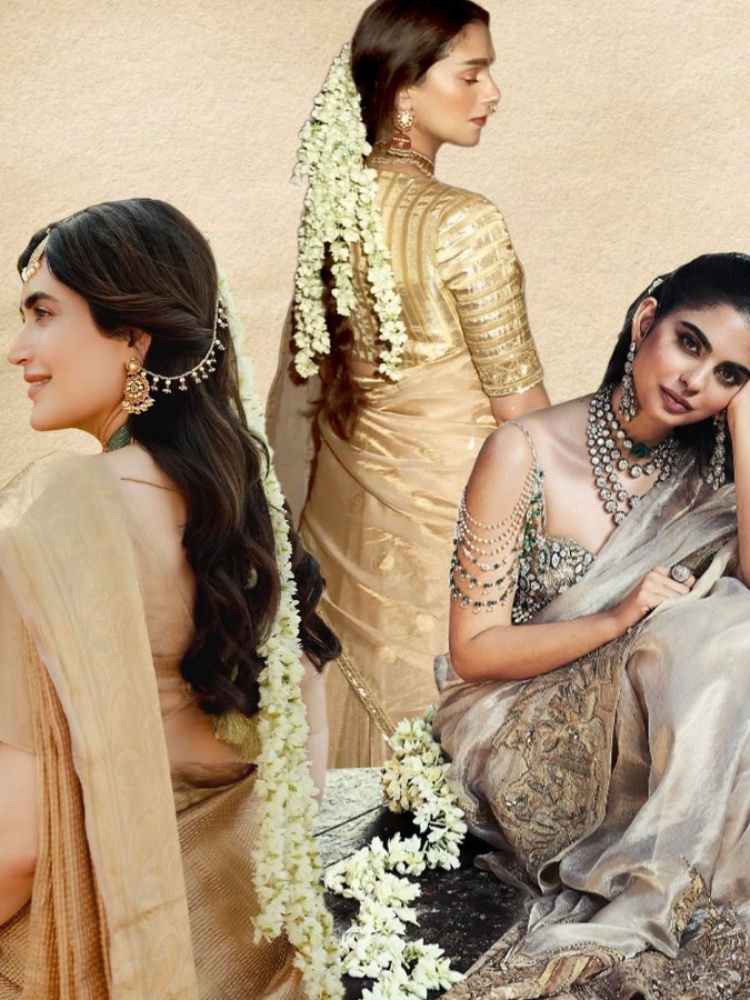

There is a particular kind of bridal accessory that gets relegated to the section of your mother's wedding album that everyone flips past. Somewhere between polki-and-kundan maximalism and the rise of the statement maang tikka, the humble gajra has been present but ignored for a while now.
But this resilient floral heritage accessory has had a bit of a glow up. From Radhika Merchant's statement lotus buds to Aditi Rao Hydari's effortless, cascading jasmine, the once forgotten accessory is rebuilding an identity of its own. The gajra has also fully outgrown its one-occasion brief and the 2026 Met Gala proved it in the most spectacular way possible. Isha Ambani stepped onto fashion's most photographed carpet in a Gaurav Gupta gold sari, heirloom jewellery, and pinned to her hair, a jasmine gajra trail. Even more recently, Karishma Tanna wore a fresh jasmine gajra in her hair for her Tulu-style godh bharai, styled into a middle-parted half-up look that sat lightly against a gold and cream sari.
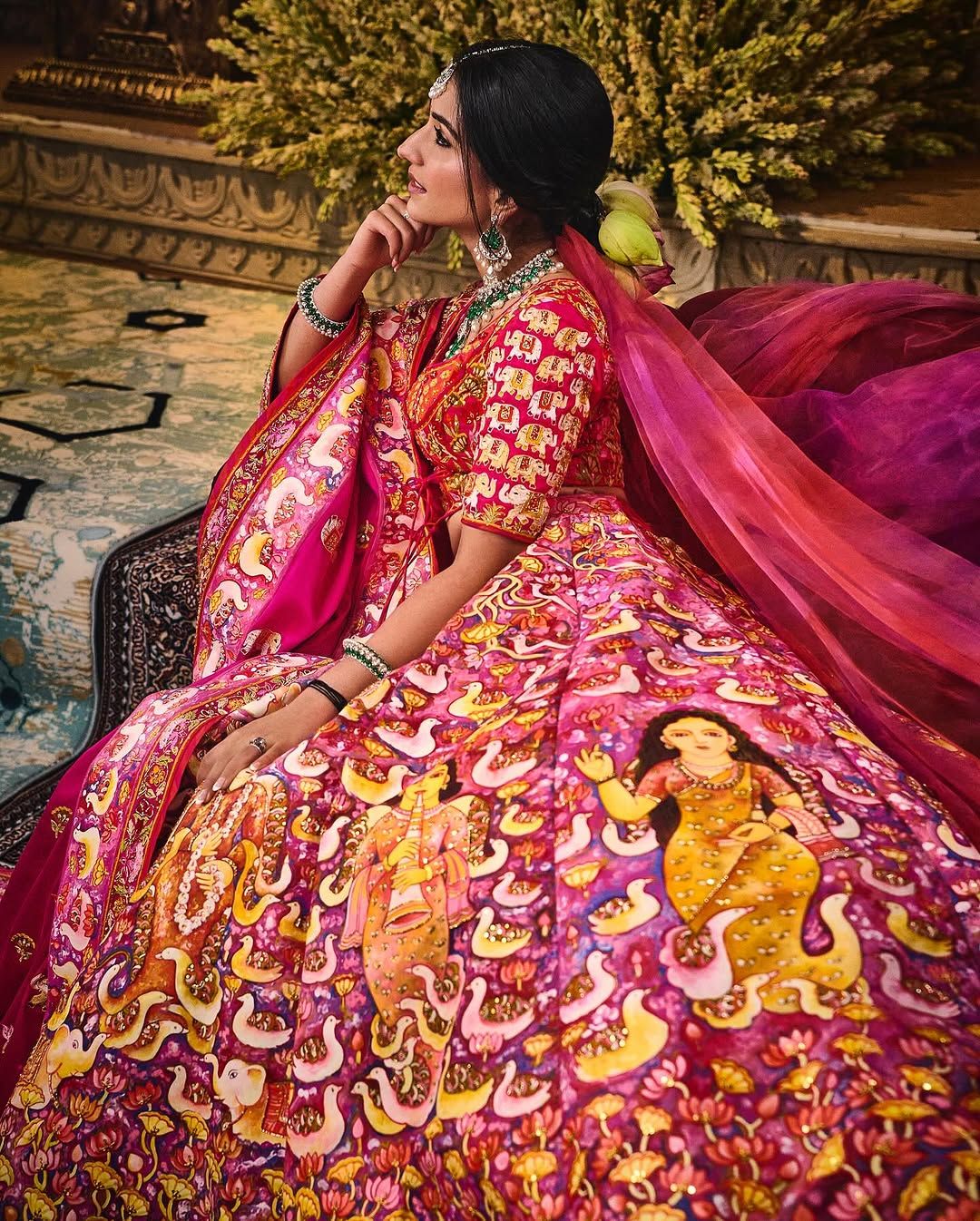
Not all gajras are made equal, and in 2026, brides, bridesmaids and wedding guests know it. The difference between a gajra that photographs beautifully and one that wilts by the pheras is craft, not coincidence. Floral Art by Srishti is a Mumbai-based studio that works entirely to order, making fresh floral pieces, gajras, venis, buns and combs, alongside a dried botanical range for every function imaginable. No two arrangements are the same. And no piece leaves the studio without a specific brief behind it. Which is, when you think about it, exactly how the most personal accessory of your wedding day should be made. The gajra is now serving personality like never before, and this is how we’re doing it this wedding season:
Heirloom energy
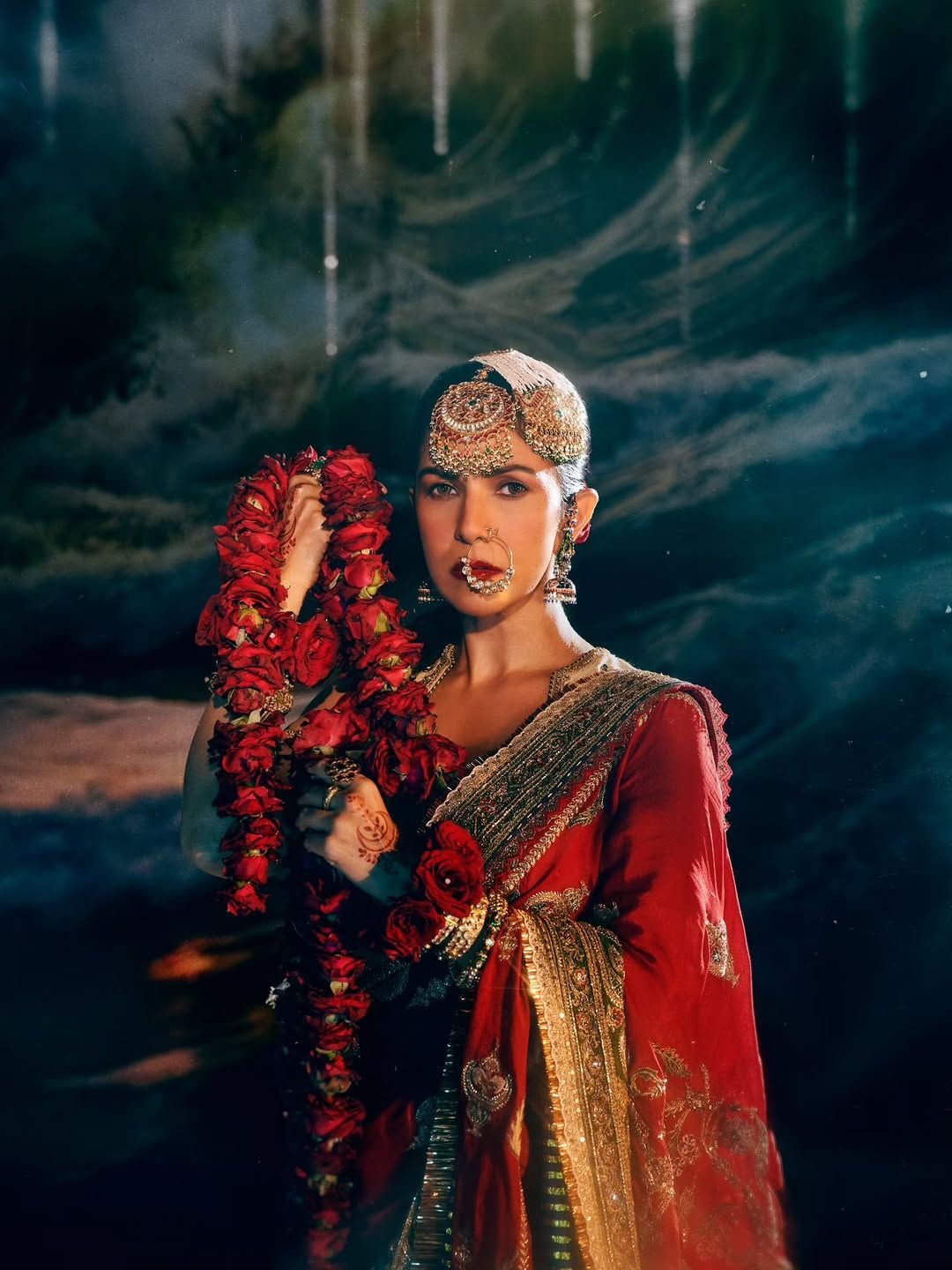
The gajra in its most classic form is not going anywhere, there is a reason it has survived centuries of bridal fashion. A long jasmine veni wound through a braid, a fresh mogra gajra circling a low bun, a single strand at the base of an updo, all of them work because they bring something no metal piece can: movement, fragrance, and a quality of light that photographs with extraordinary softness. The more traditional the look, the more the classic floral string earns its place. Paired with a handwoven Kanjivaram or an embroidered bridal lehenga, fresh flowers do not compete, they breathe.
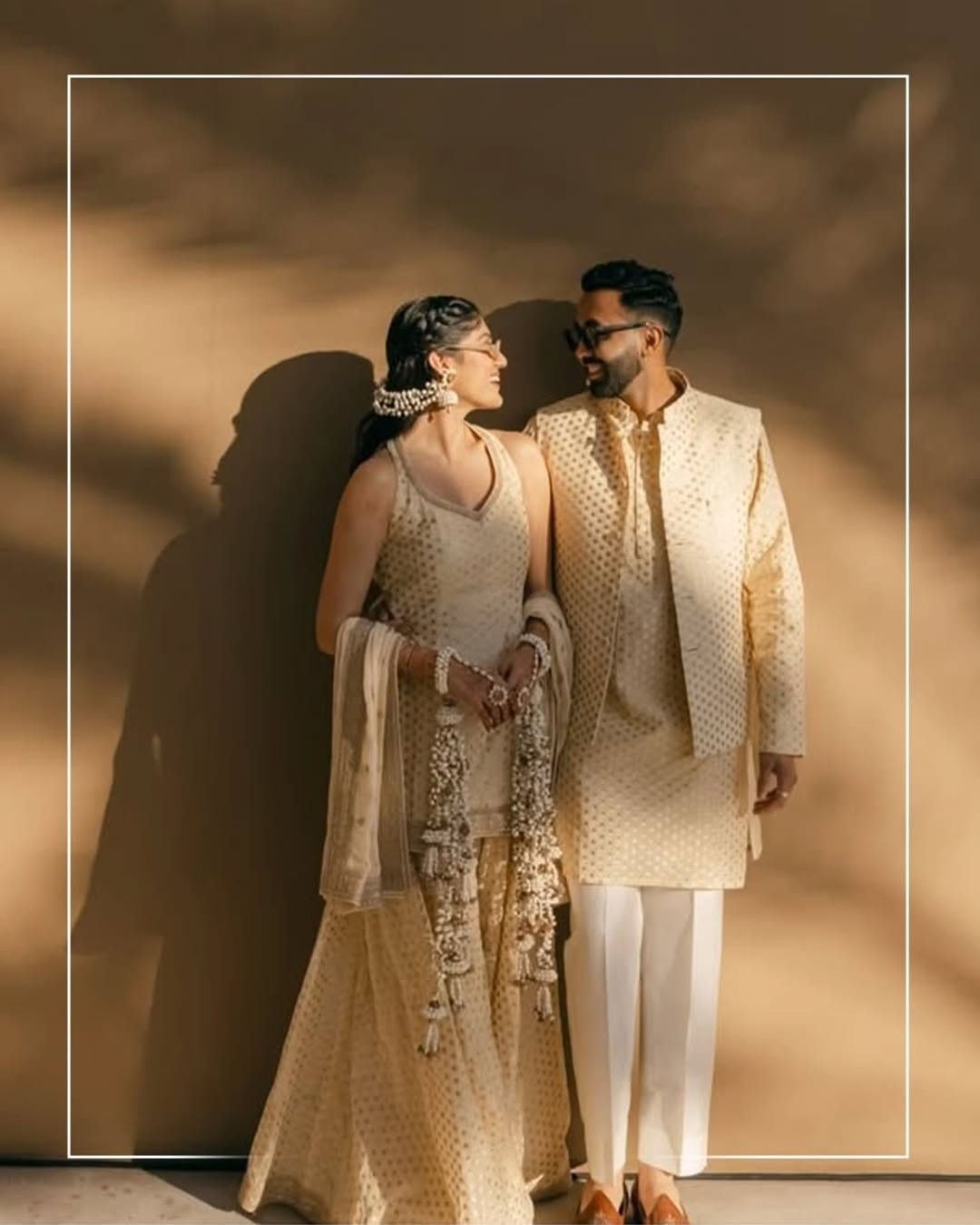
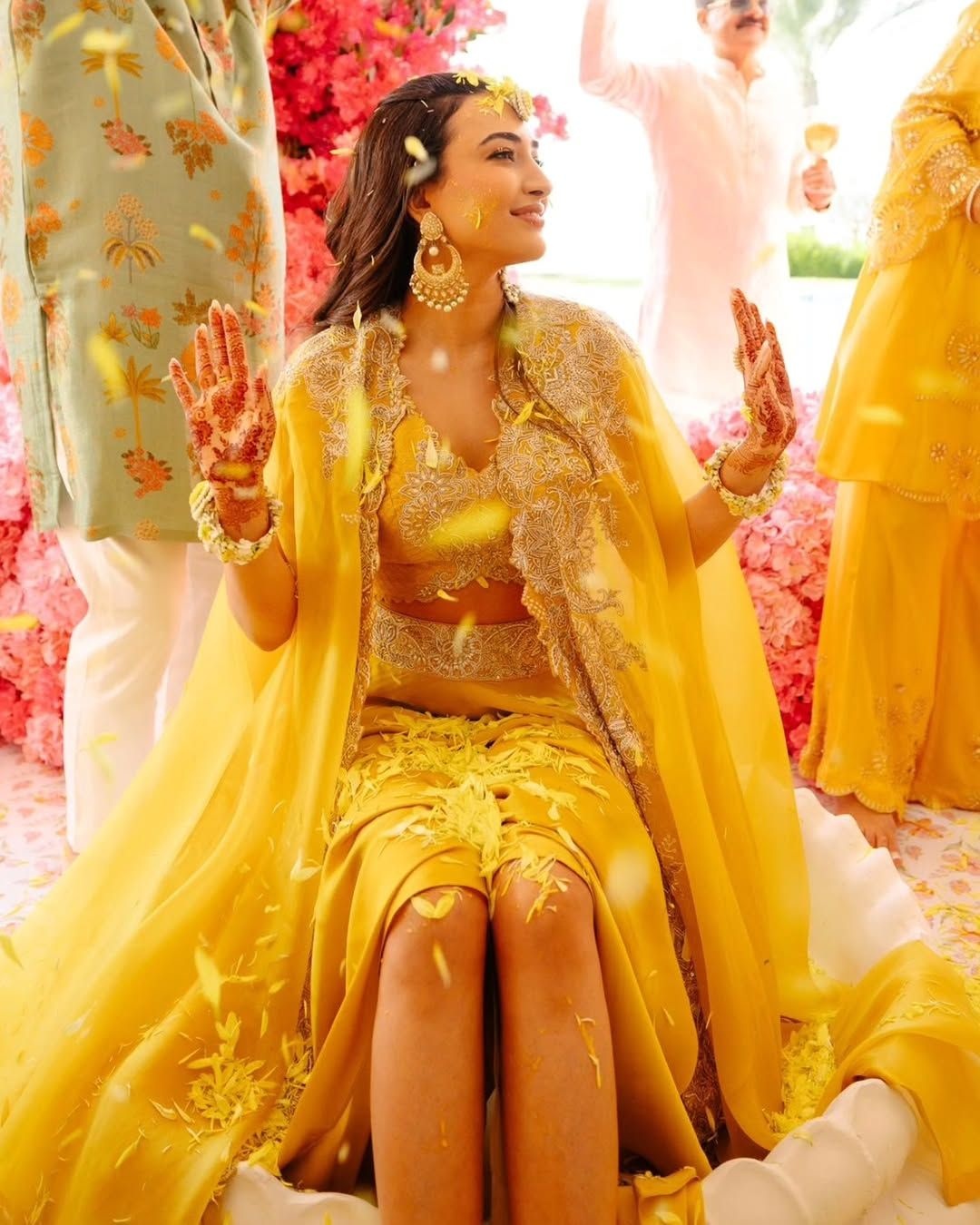
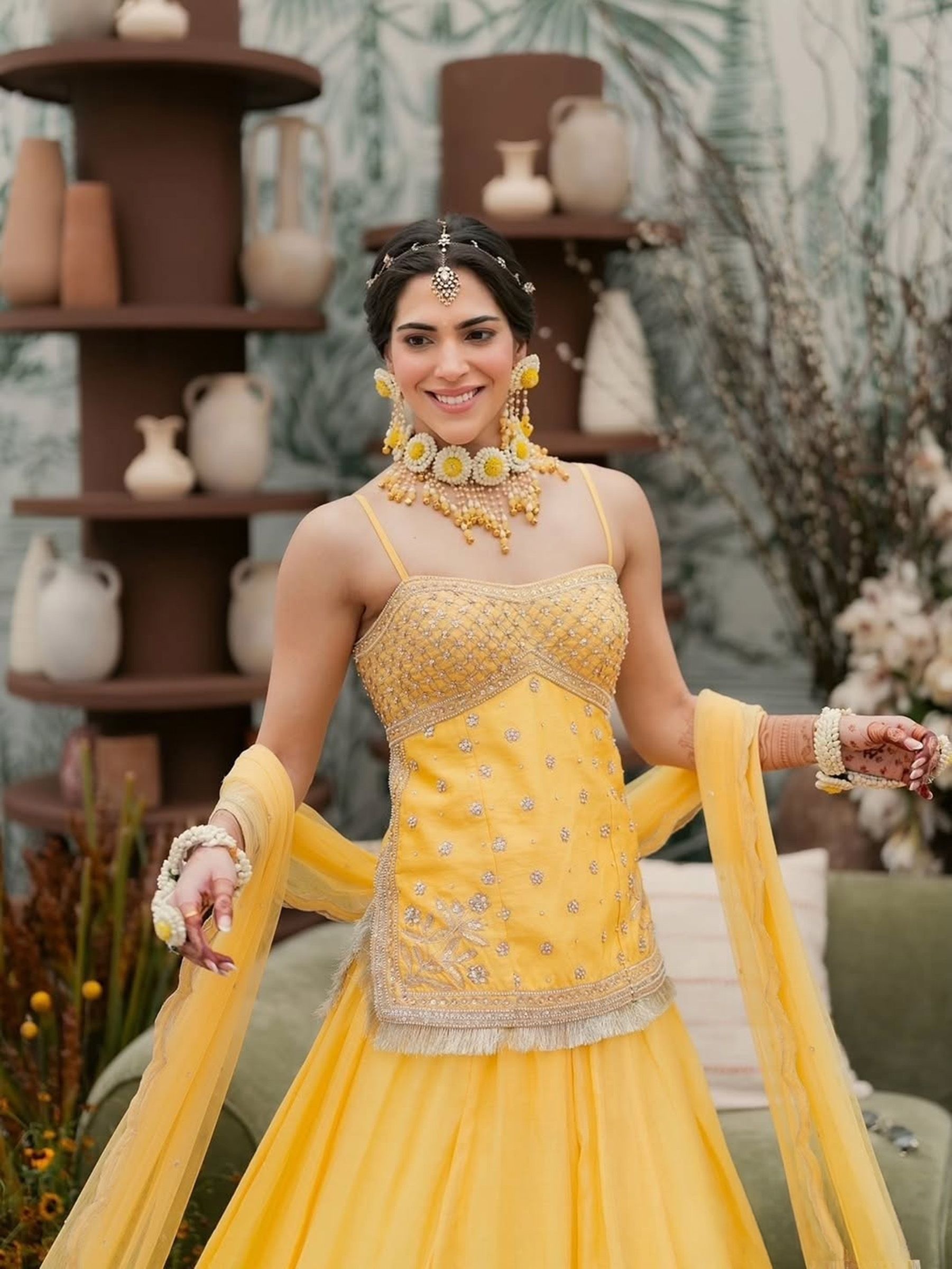
The other traditional with a twist add-on are the floral kaleeras that serve as beautiful alternatives to the traditional gold, for mehendi and haldis. Lighter, softer, and extraordinarily photogenic in close-up, they bring the same tactile, living quality to the wrist that a jasmine veni brings to the hair.