
Fashion13 Jul 20262 MIN

Find your perfect drape at The Sari Studio, only at The Wedding Collective

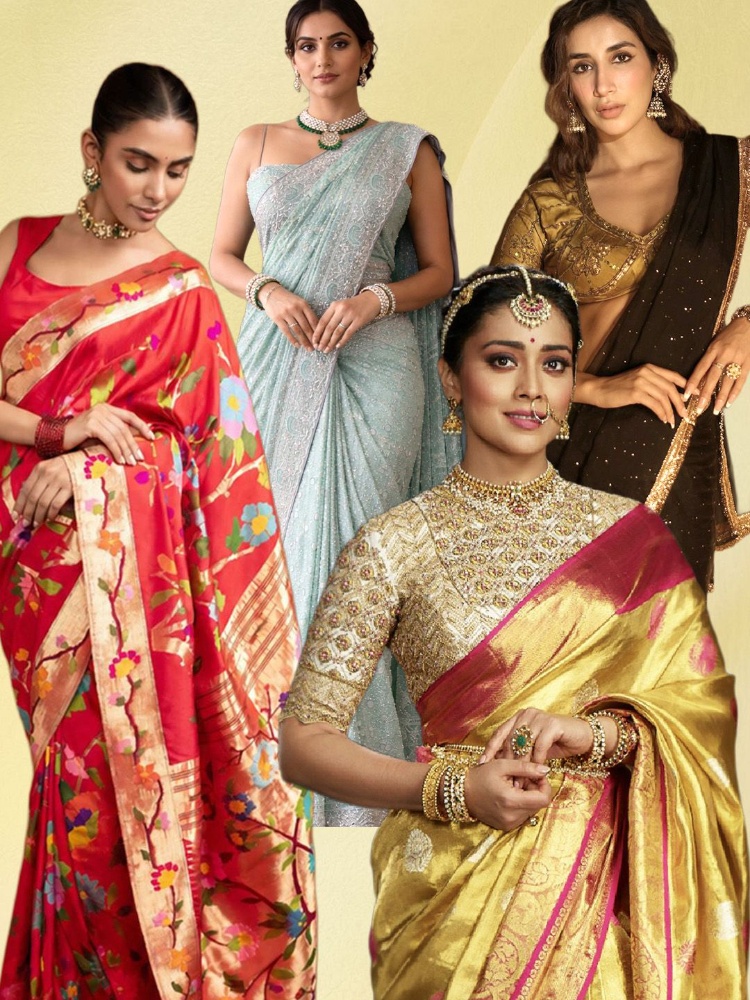
Six yards, four curated edits—find the perfect look for every special moment, from the bride to the bridal party

Image

If there's one thing the bridal sari has mastered, it's the art of reinvention. Season after season, it evolves with the modern bride–adapting to changing aesthetics while never losing sight of its heritage. Today, a sari can be as maximalist or as minimal as you want it to be, styled with everything from corsets and capes to heirloom jewellery and sneakers.

No two brides wear one the same way, and that's exactly what makes it so enduring. Whether you're chasing timeless Kanjivarams, contemporary handlooms, delicate embroideries or unexpected colour stories, there's a drape for every personality, every ceremony and every kind of celebration.

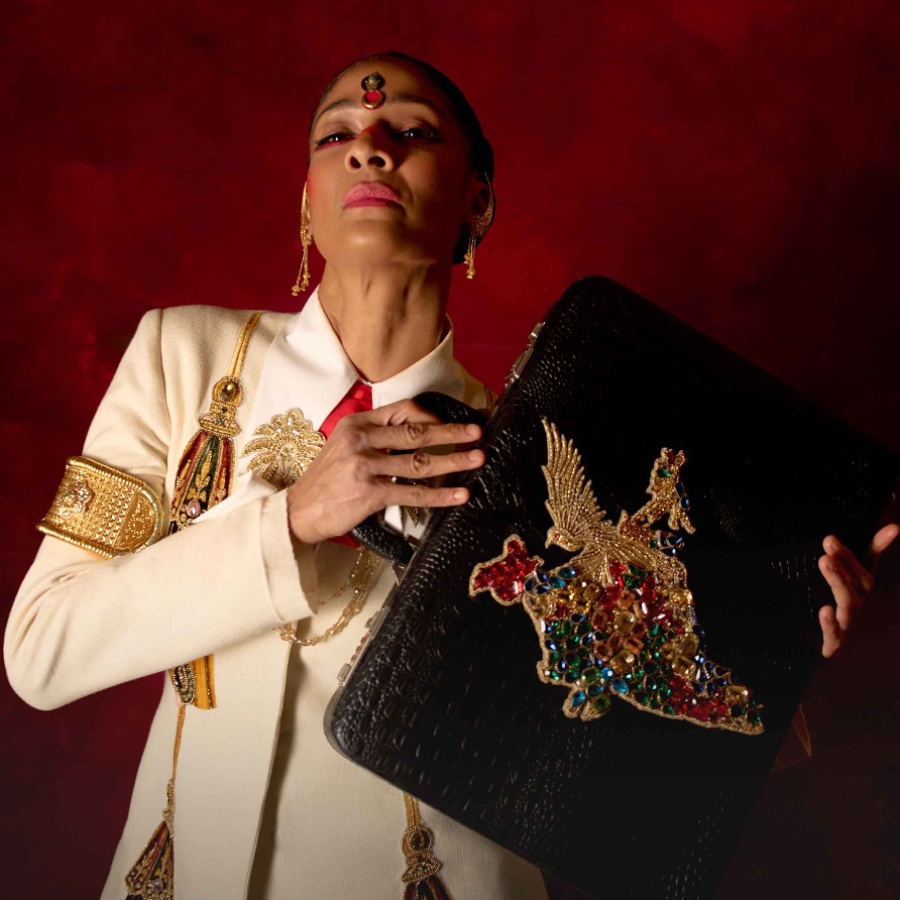
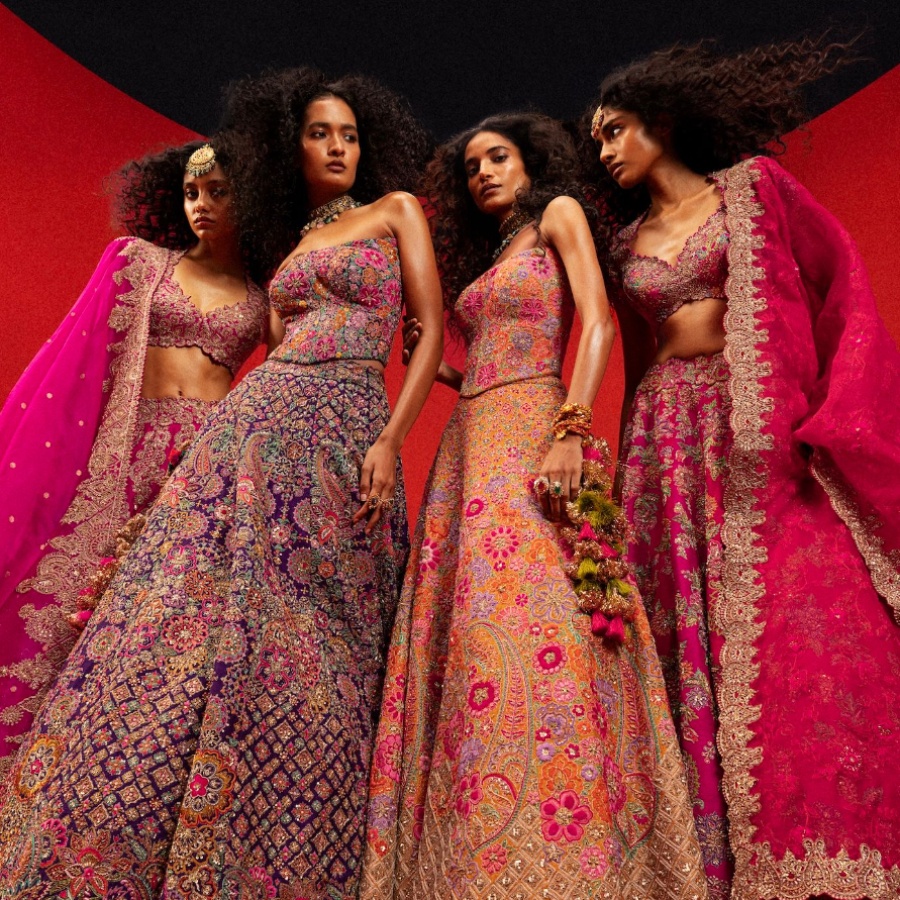
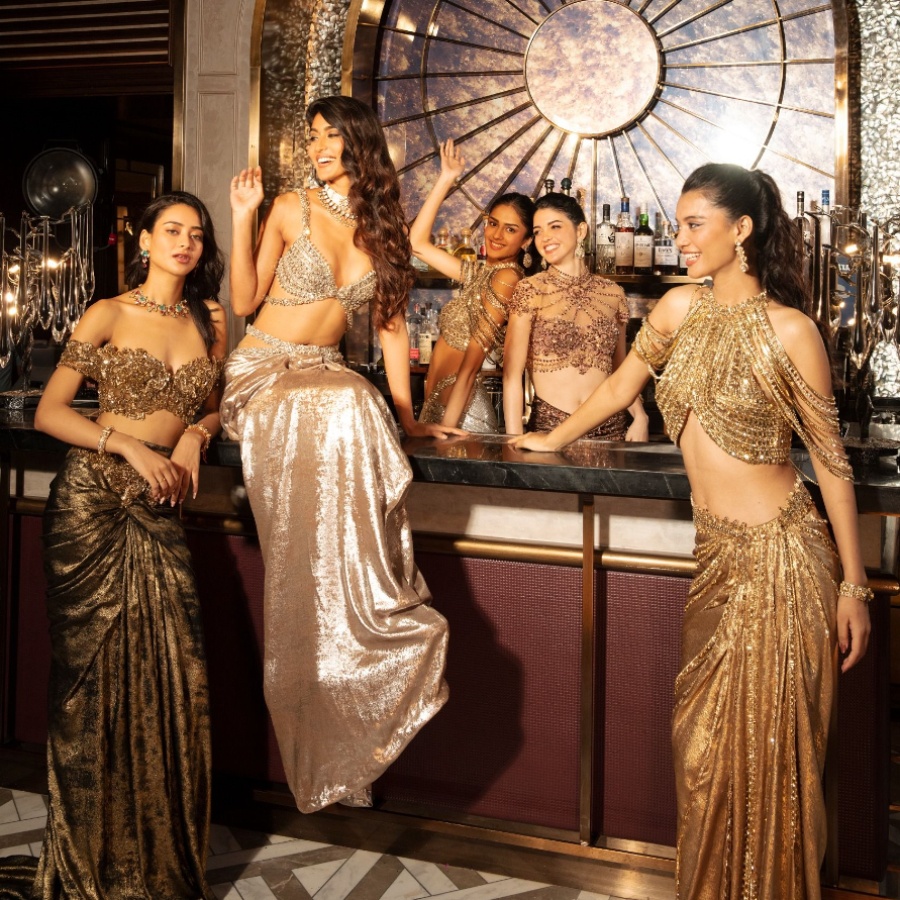
The Sari Studio at The Wedding Collective 2026 brings together four labels, each representing a distinct corner of India's textile tradition. If your bridal mood board starts and ends with a sari, you've come to the right place. Here is your personal guide on things worth bookmarking:

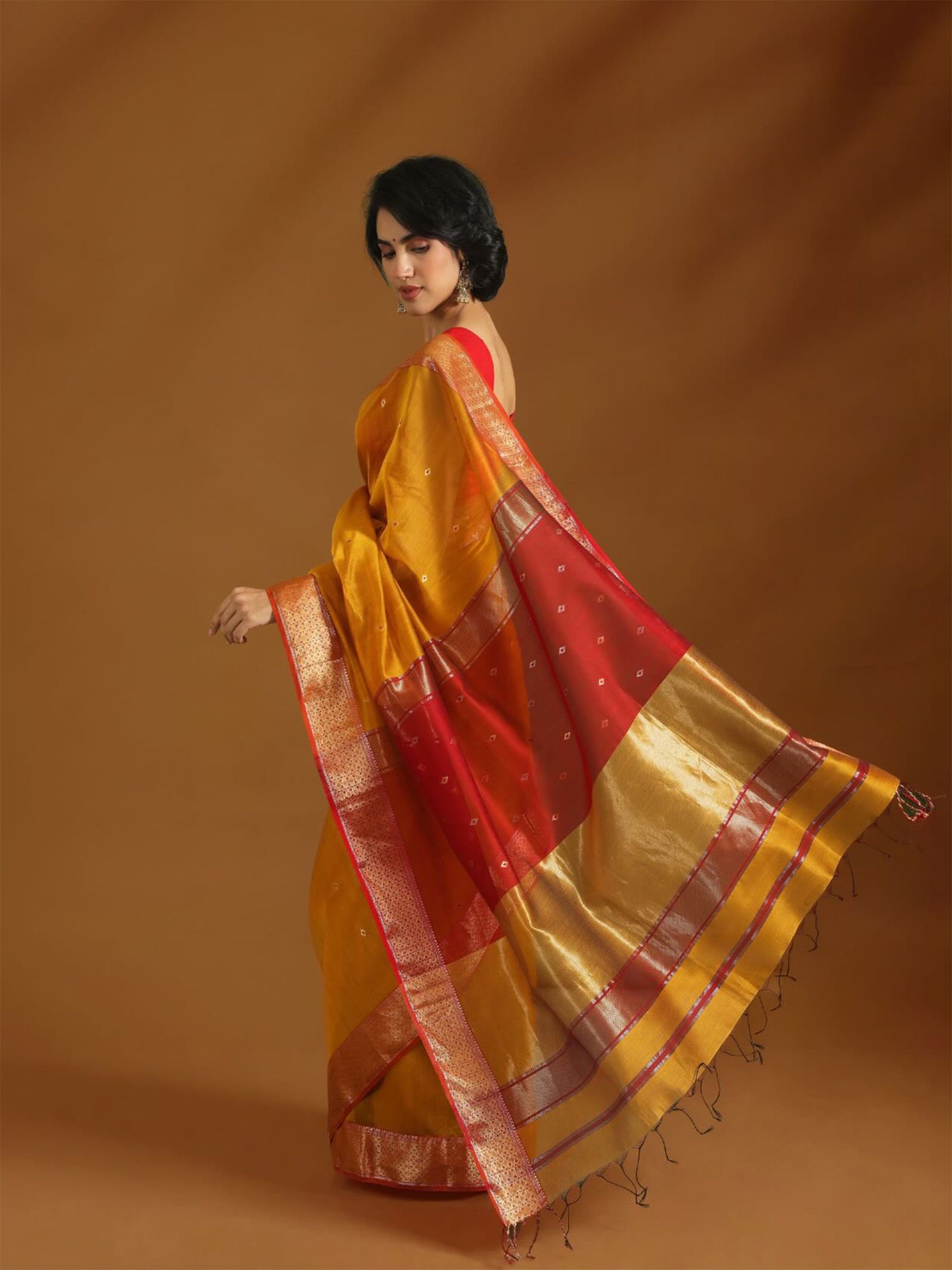
Aangiwali

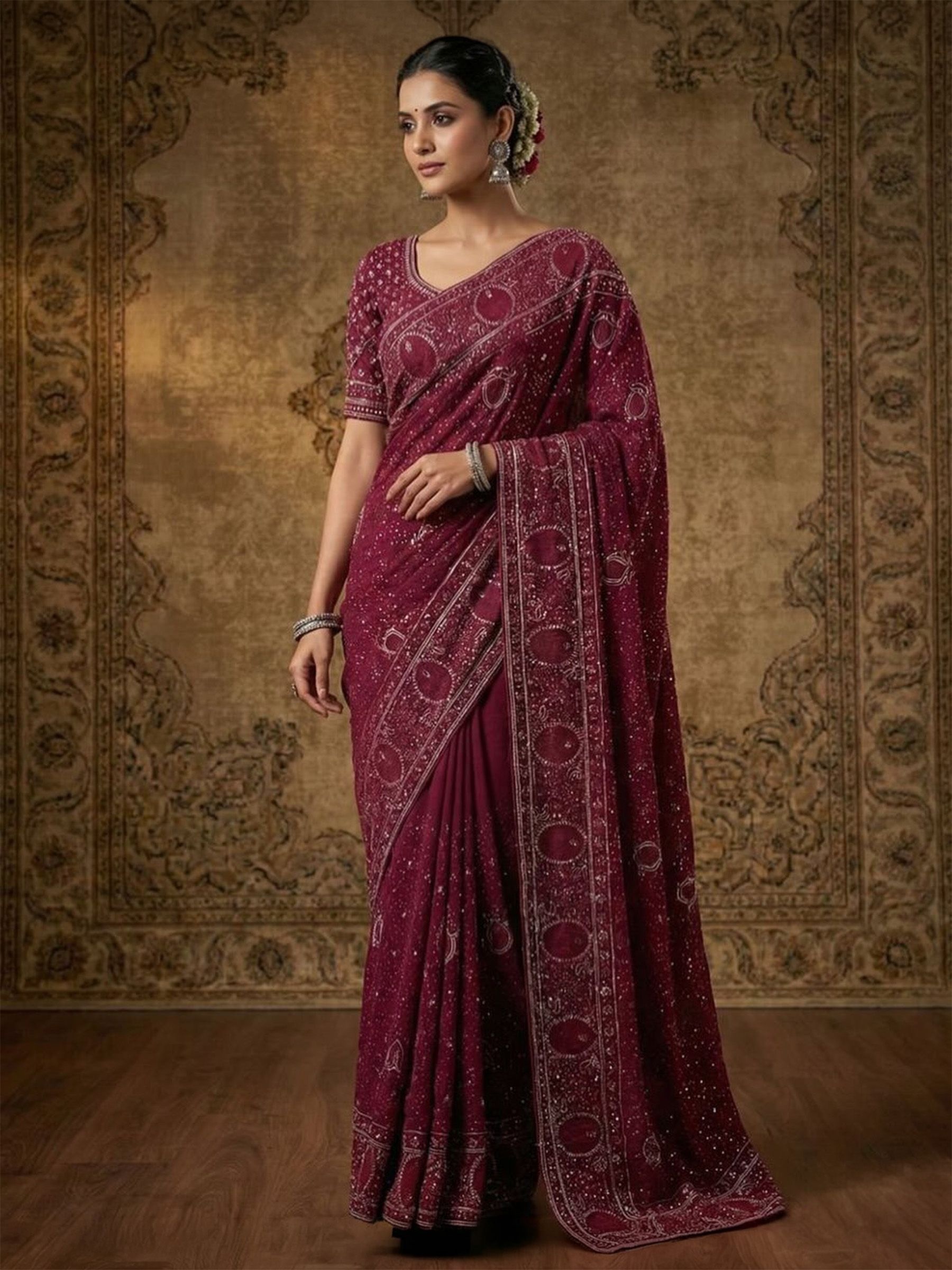
Soft launch... but make it bridal. Handmade in Shekhawati, Rajasthan by mother-daughter duo Indro Bai and Dr Kanchan Sangwan, Aangiwali exists to keep a regional craft tradition alive, and to put it on brides who understand why that matters. Every piece is hand embroidered, quietly toned and entirely unhurried.
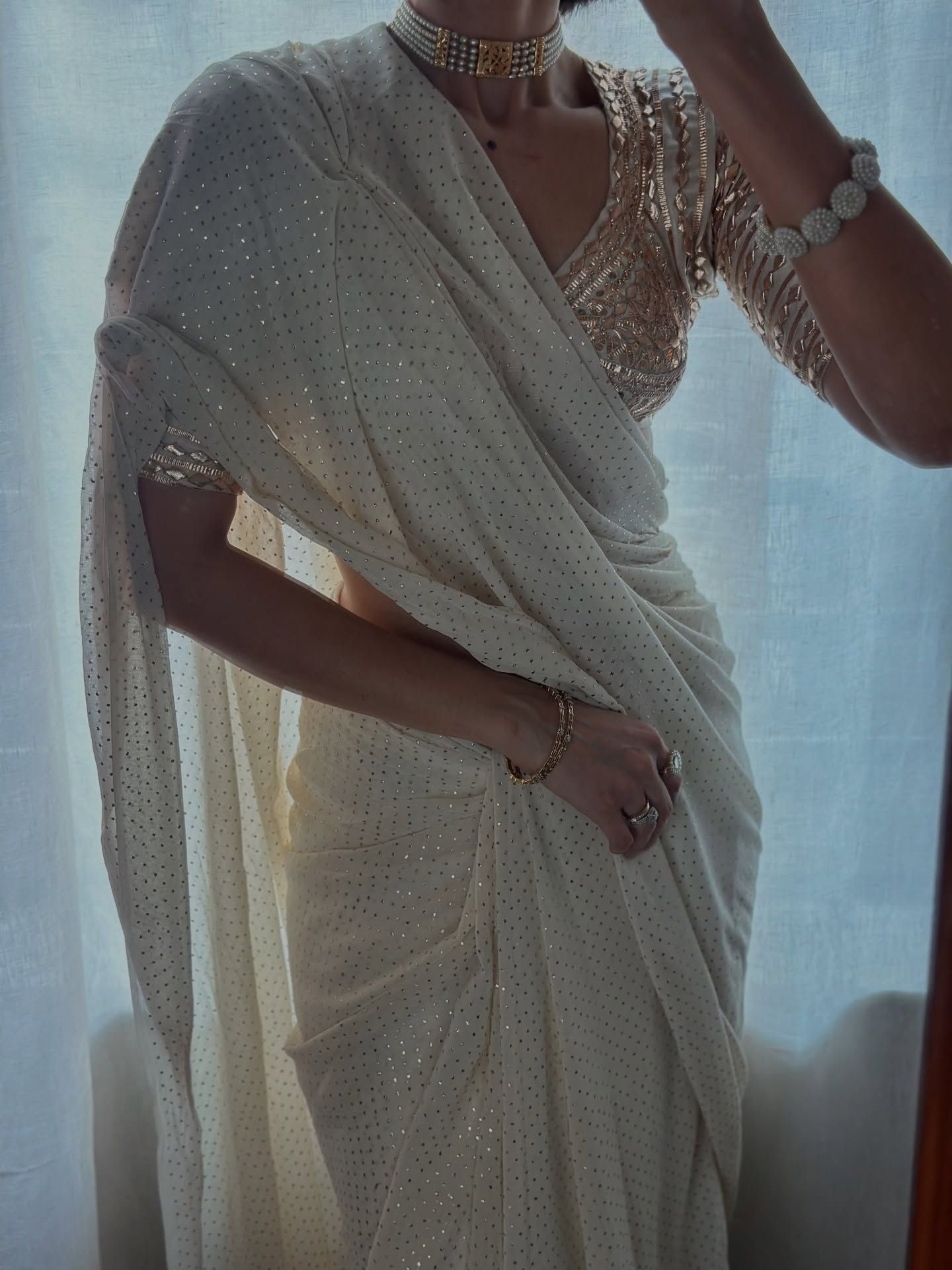
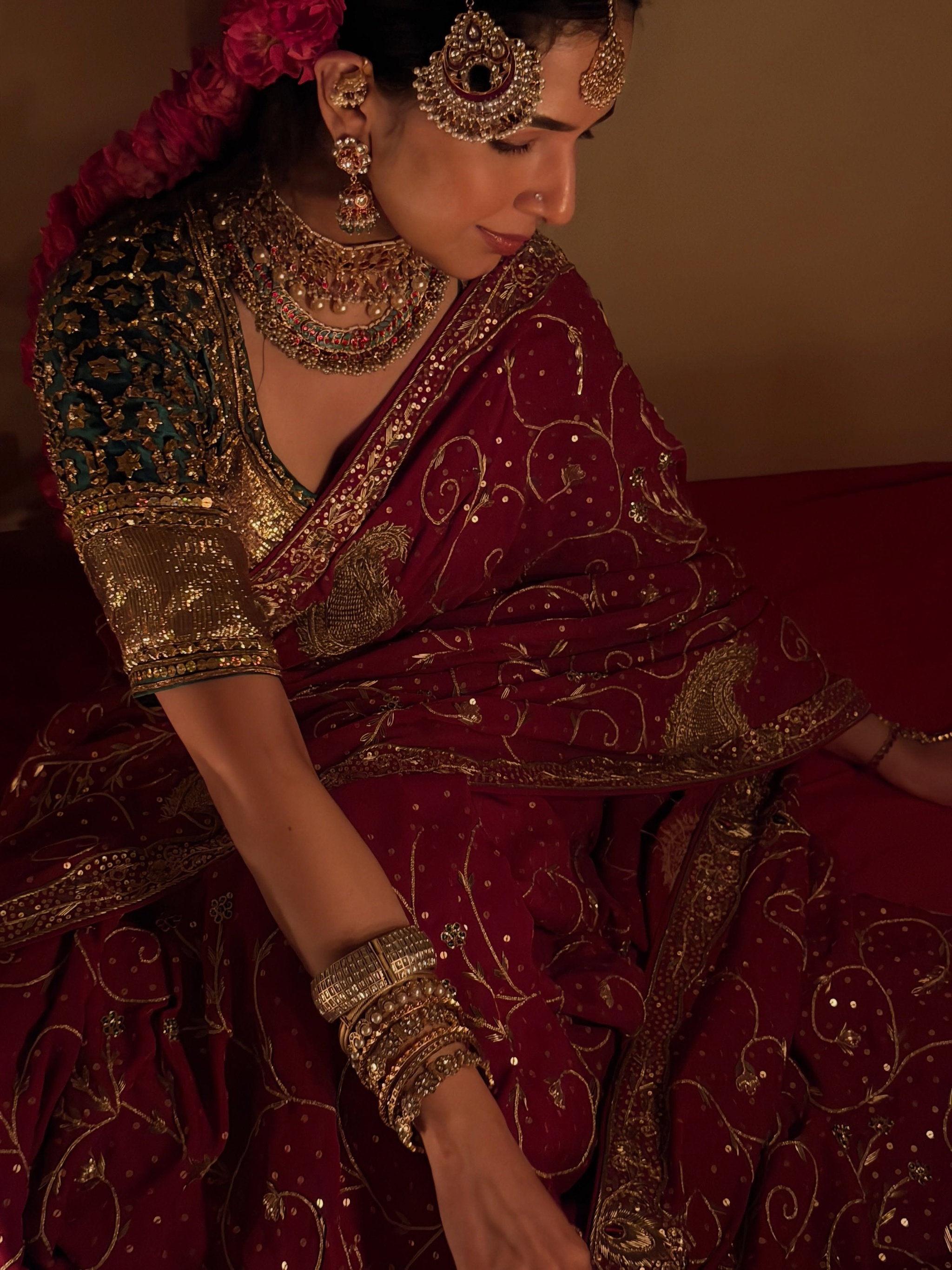
Best for: The statement bride, rooted in something real.

Wear it to: Haldi, mehendi, or a daytime ceremony where you want the craft to do the talking.

Why it's a trousseau keeper: You cannot replicate a piece made by the same hands that have made this craft for generations. That's not a marketing line. It's just the truth.

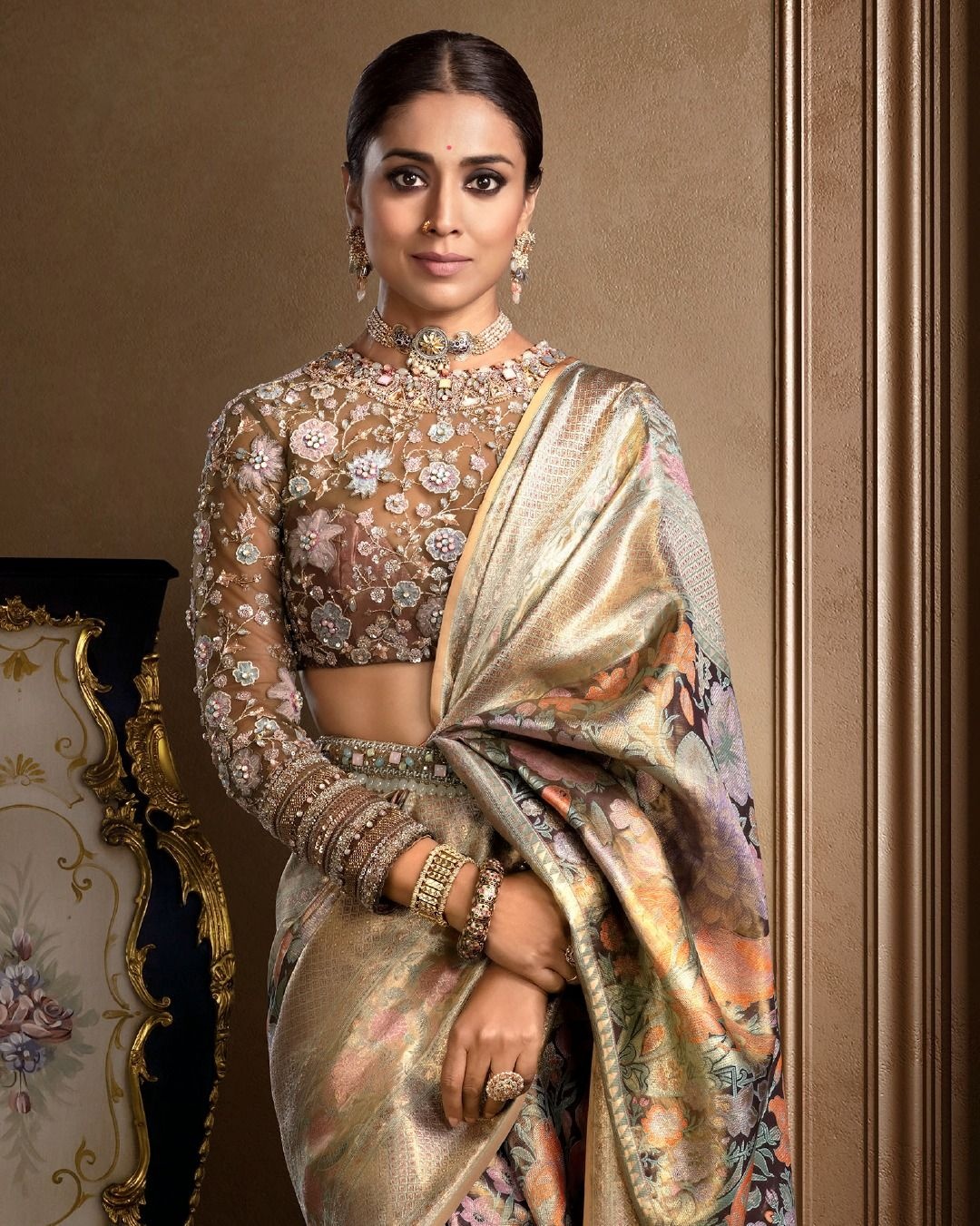
Anshikaa Jain

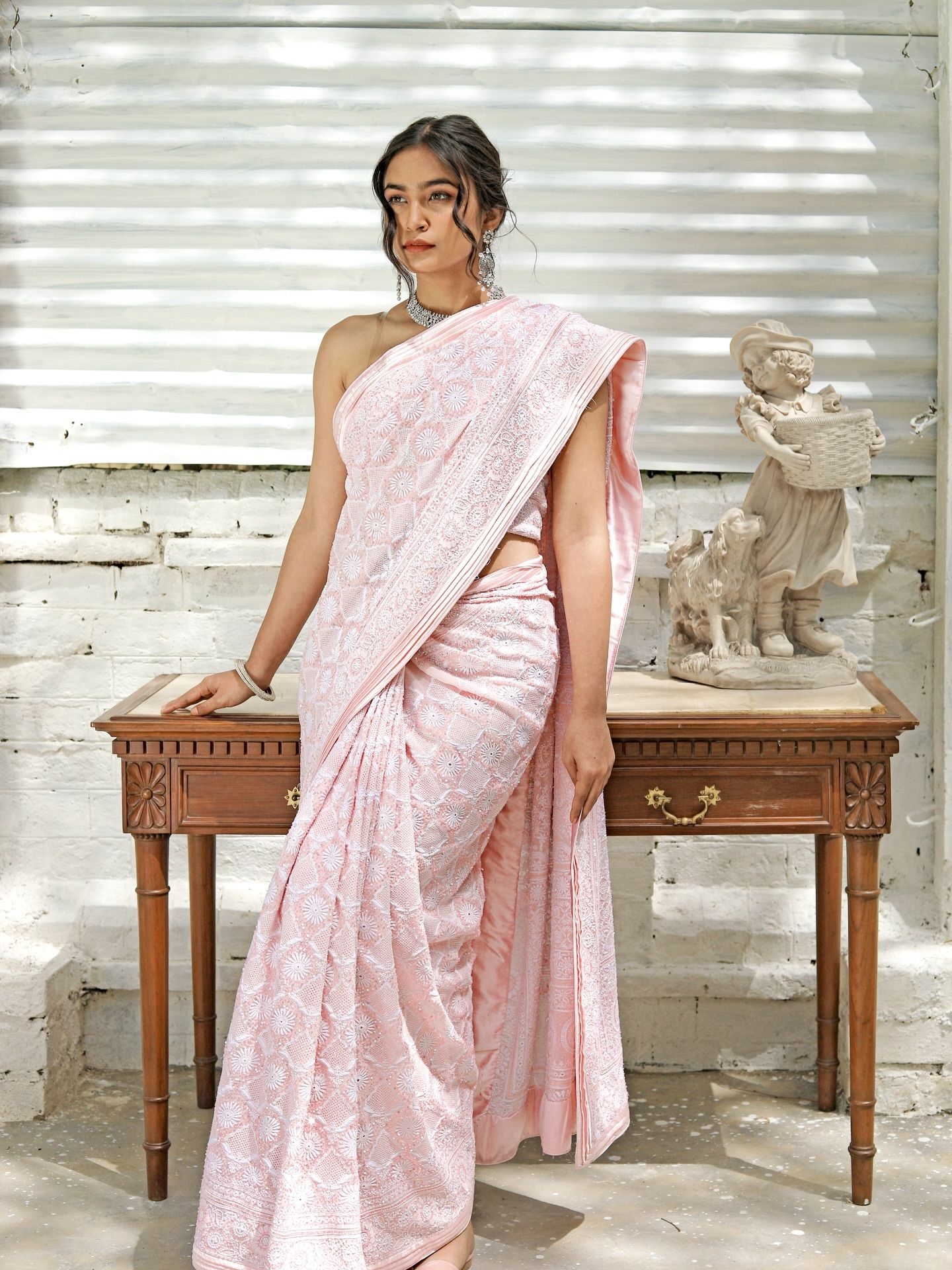
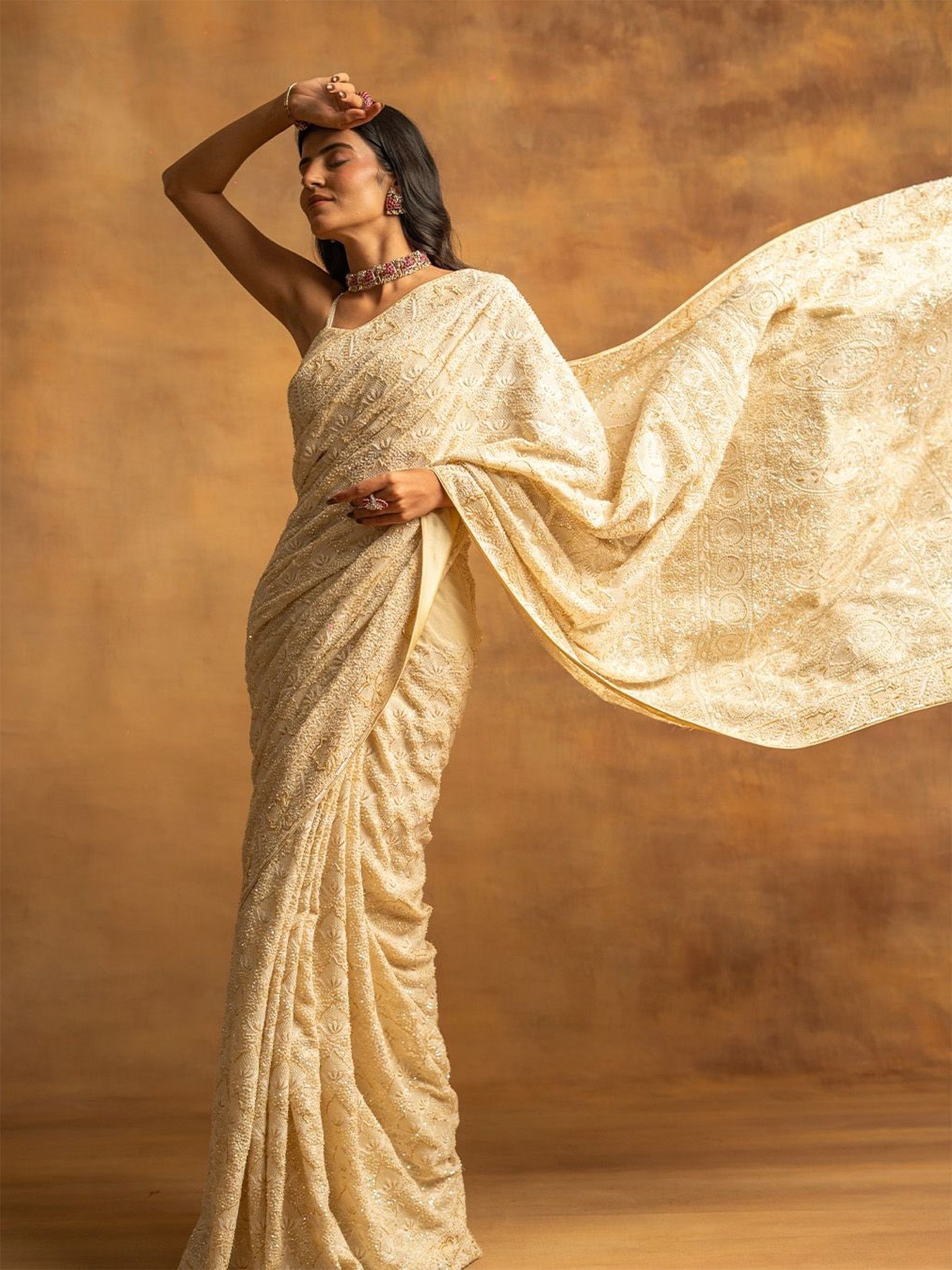
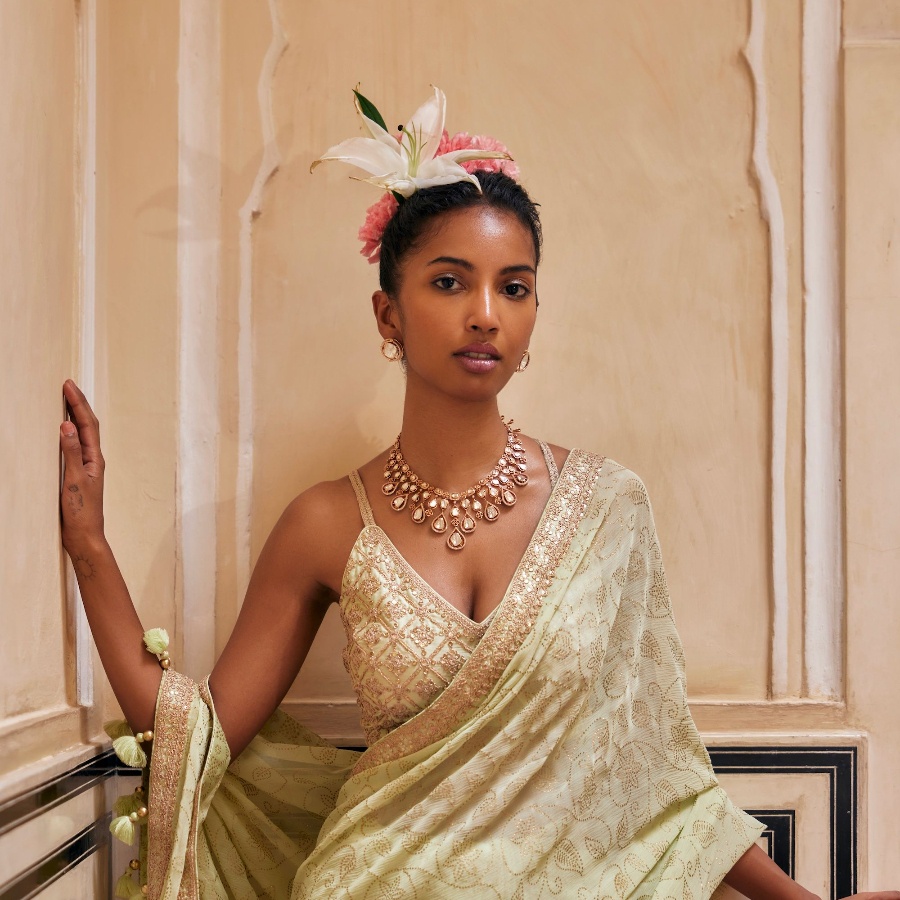
Ever seen a sari do all the talking? Anshikaa Jain builds her saris around traditional Indian embroidery; chikankari, mukaish and zardozi, draped across pure georgettes, organzas and tissue silks, so the surface work is the reason you bought it, not just a finishing detail. Rich but never heavy, intricate but never overwhelming. The kind of piece that photographs as well in year five as it did on the day.

Best for: The quiet-luxury bride.

Wear it to: Sangeet, reception, or any evening function that deserves a close-up.

Why it's a trousseau keeper: Chikankari does not age. It just becomes more yours.

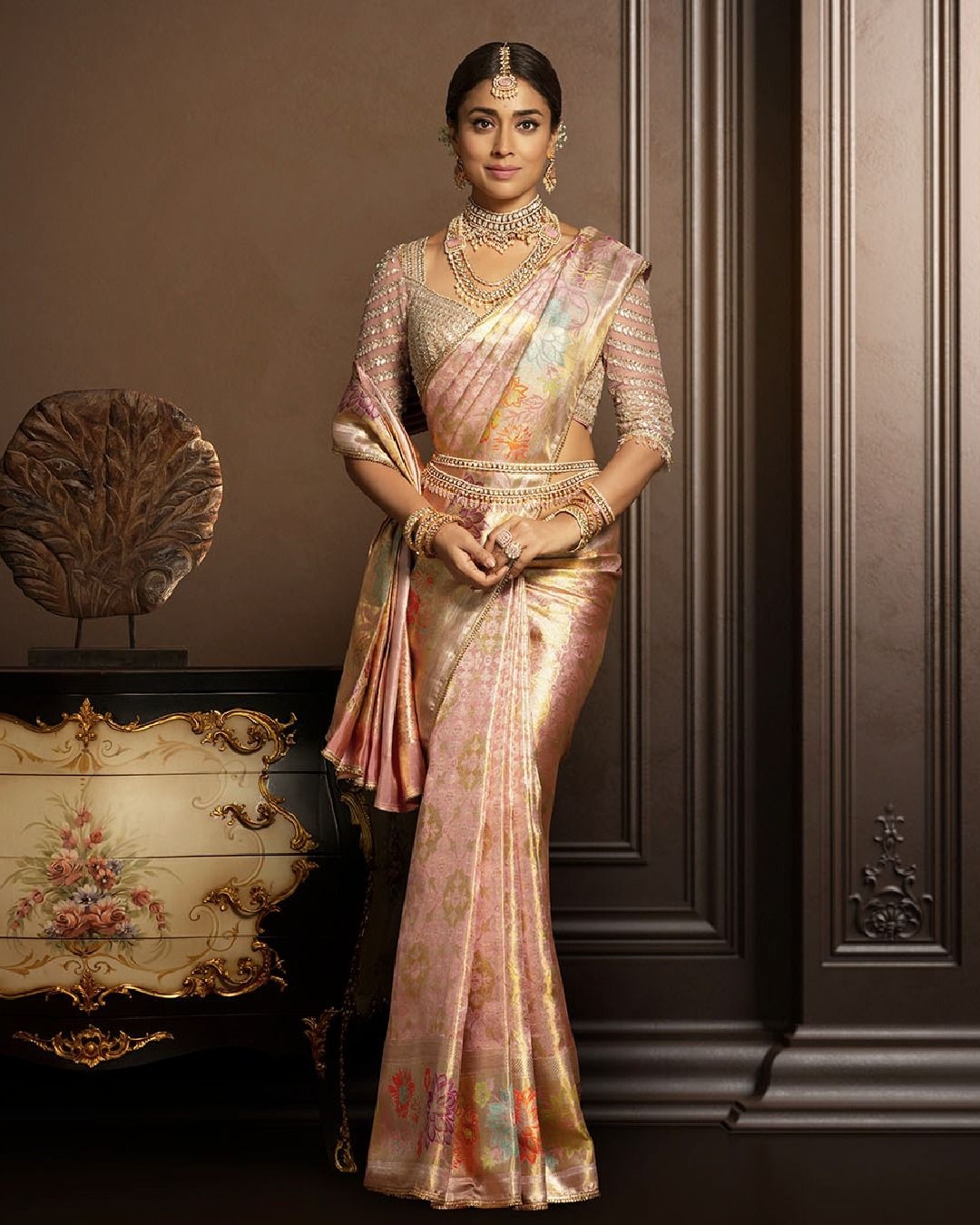
Kisseh by Dolly Jain

Looking for the one? (No, the other one.) Curated by Dolly Jain, world record-holding sari draper and the woman behind some of the most iconic celebrity wedding looks of the last decade, Kisseh brings together seven of India's finest handloom traditions, sourced from 3,500 artisan families and zero mass-produced pieces. Every sari is chosen for how it drapes, how it ages, and what it means.

Best for: The heirloom bride.

Wear it to: Every function on the calendar (they have a specific edit for each one)!

Why it's a trousseau keeper: A sari built by 3,500 artisan hands in a tradition that predates every trend on your mood board is a piece that outlasts the wedding by decades.

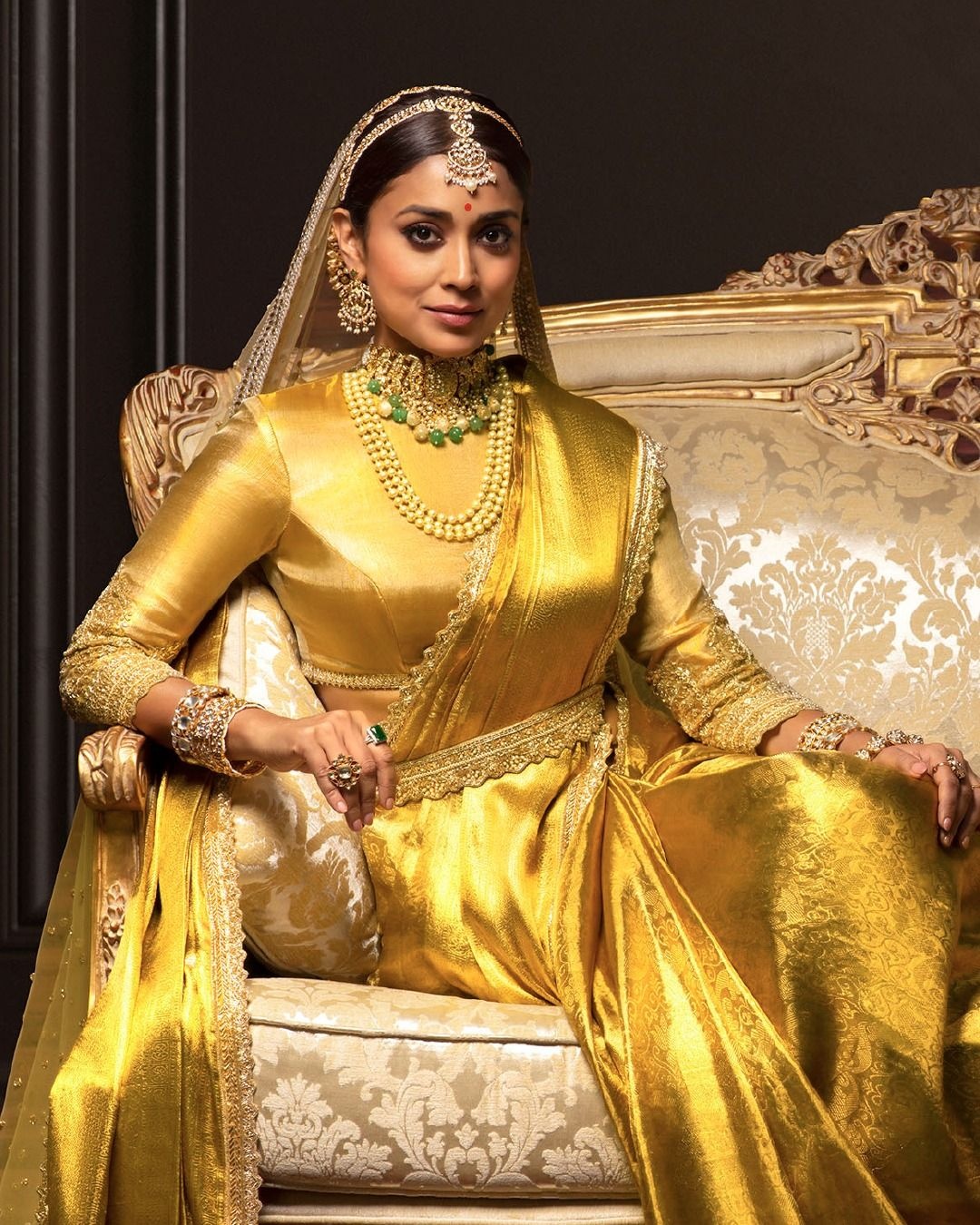
VRK Heritage

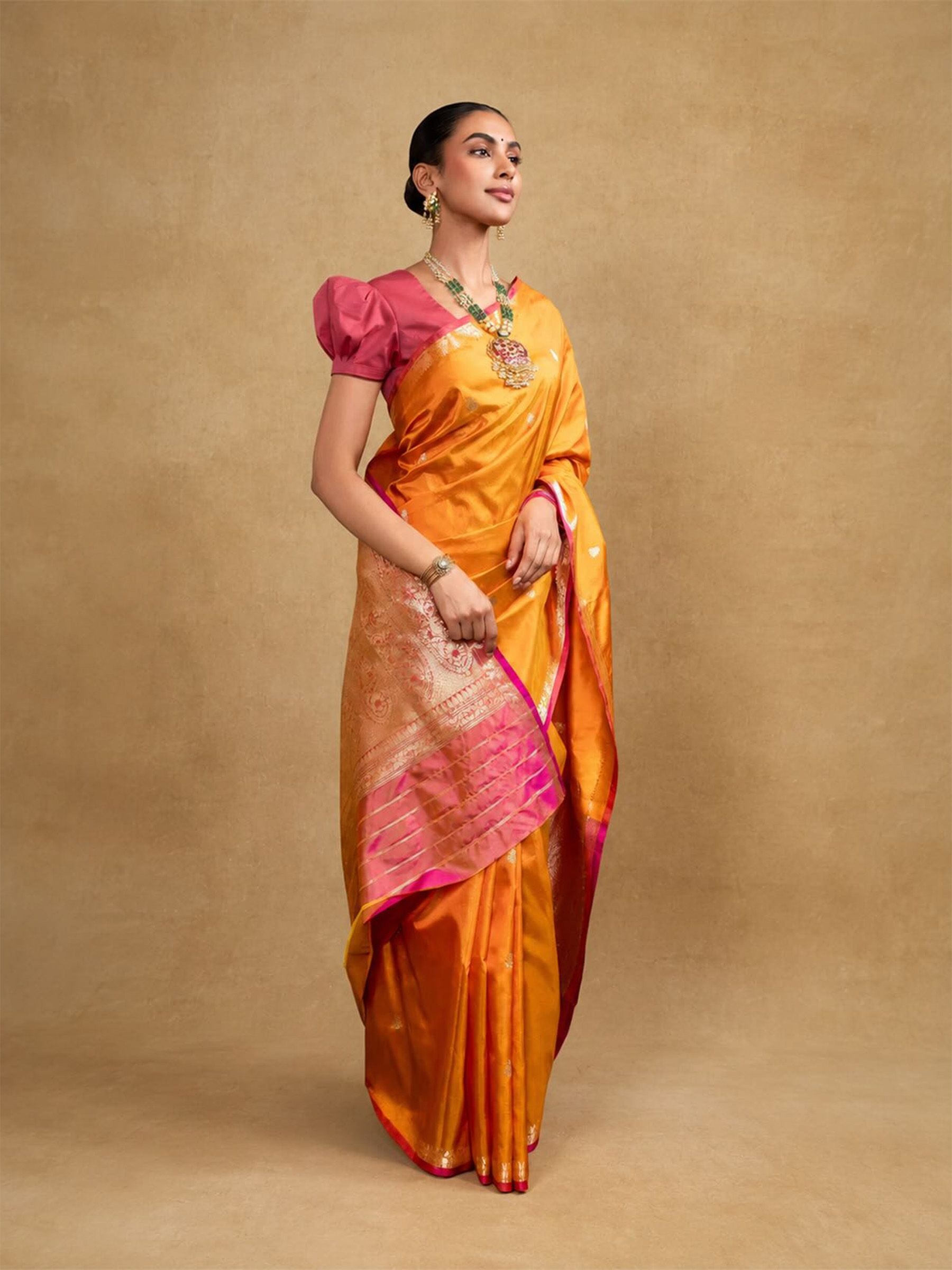
Did somebody say Kanjivaram? A Kanjivaram does not ask to be styled– it arrives fully formed, with broad contrast borders, temple-inspired motifs and zari that catches the light of a mandap from across the room. VRK Heritage brings decades of South Indian silk expertise and a Temple Folklore aesthetic rooted in genuine bridal tradition.

Best for: The Kanjivaram-obsessed bride.

Wear it to: The wedding ceremony, a pre-wedding pooja, or any occasion that calls for something permanent.

Why it's a trousseau keeper: A Kanjivaram from an established South Indian silk house is not a purchase. It is an acquisition that carries its own relevance across generations, no styling required.

The Nod Newsletter

We're making your inbox interesting. Enter your email to get our best reads and exclusive insights from our editors delivered directly to you.