




The first instalment of Bridgerton’s fourth season has left us with some burning questions: Does Sophie accept Benedict’s ungentlemanly offer? Has Lady Araminta Gun lied to Sophie about what was really in Lord Penwood’s will? Will Varley turn a spy for her new household? And does poor Francesca finally figure out what a pinnacle is and reach it?
All these questions will be answered on February 26, once part two of the swoon-worthy series returns to screens. To keep you going until then, we sat down with costume designers John Glaser, George Sayer, and Dougie Hawkes—yes, the Emmy-winning costume design team of the show—to tell us a bit more about the clothes this season.
The masquerade ball alone had 170-plus costumes
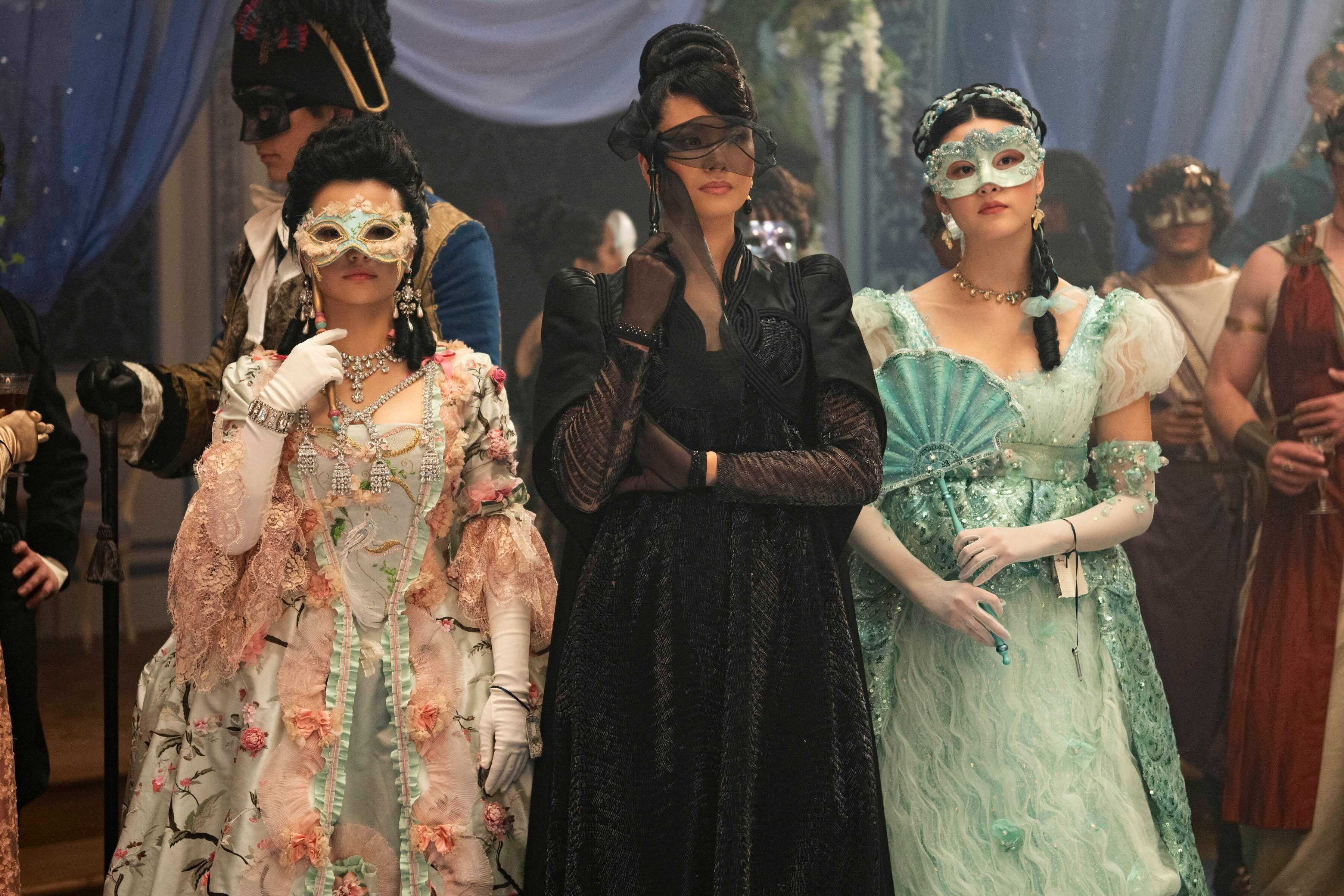
Obviously, as evidenced by the past three and a half seasons, the costume budget for Bridgerton is unhinged. But learning that just episode one’s masquerade ball had 172 costumes makes the scale feel even more jaw-dropping. The sequence was essentially a production within a production, requiring hundreds of historical references, a dozen character-specific disguises, and a bespoke Jimmy Choo moment for Sophie.
Because masquerades were historically theatrical spaces, the team approached the costumes as high fantasy filtered through Regency wealth. As the show’s men’s associate costume designer Dougie Hawkes explains, the characters would have commissioned or hired their disguises from elite costumers of the time, meaning nothing could look remotely pedestrian. “L&H Nathan was around then, so they would have gone somewhere very special to hire these costumes or have them made,” he says, which is why everything was executed in the richest, most top-quality fabrics.
Every costume takes 4 to 6 weeks to create—and that’s the fast version
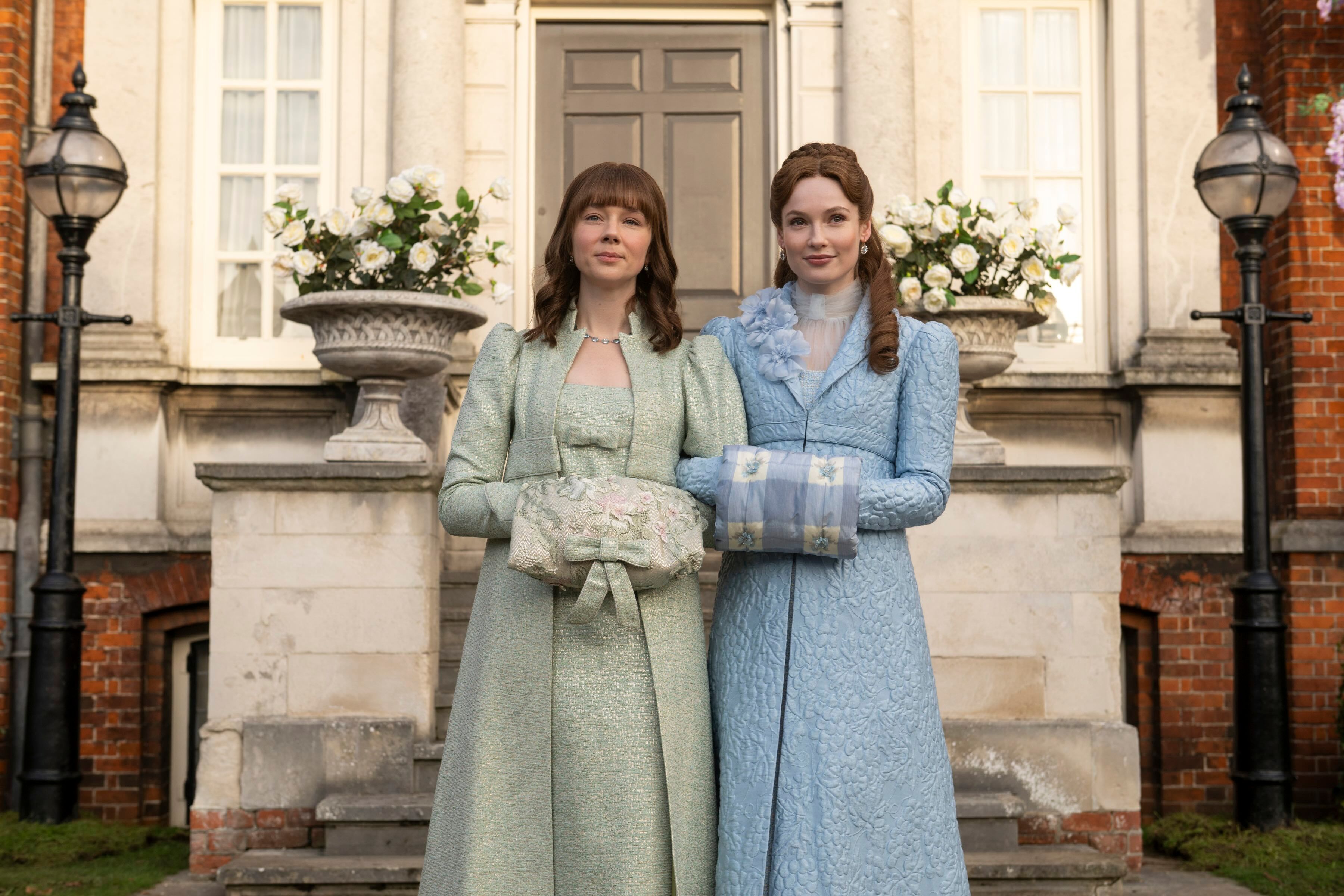
The timeline goes far beyond dressmaking. The process begins long before a needle hits fabric. “It starts with reading the script, then talking with the director and actor, and doing research,” says Glaser. From there, sketches are developed by Hawkes and Sayer, fabrics are sourced, and garments are constructed—before moving into dyeing, embellishment, fittings, and finishing.
Even then, nothing is locked. Sometimes, pieces are reworked once they’re tested on screen. “It’s never finished until we see it on camera,” Glaser explains, noting that tweaks continue right up to the final days of filming. In other words: the Regency glamour you see on screen is built like a start-up: fast, iterative, and relentless. “Through the whole filming schedule, you’re still building costumes right to the end,” laughs Hawkes. It’s only possible because of the scale of the team behind the scenes—an “army” of makers, dyers, and embellishers who operate, in Sayer’s words, “like one big family”.
Sophie’s silver masquerade gown isn’t really about Cinderella
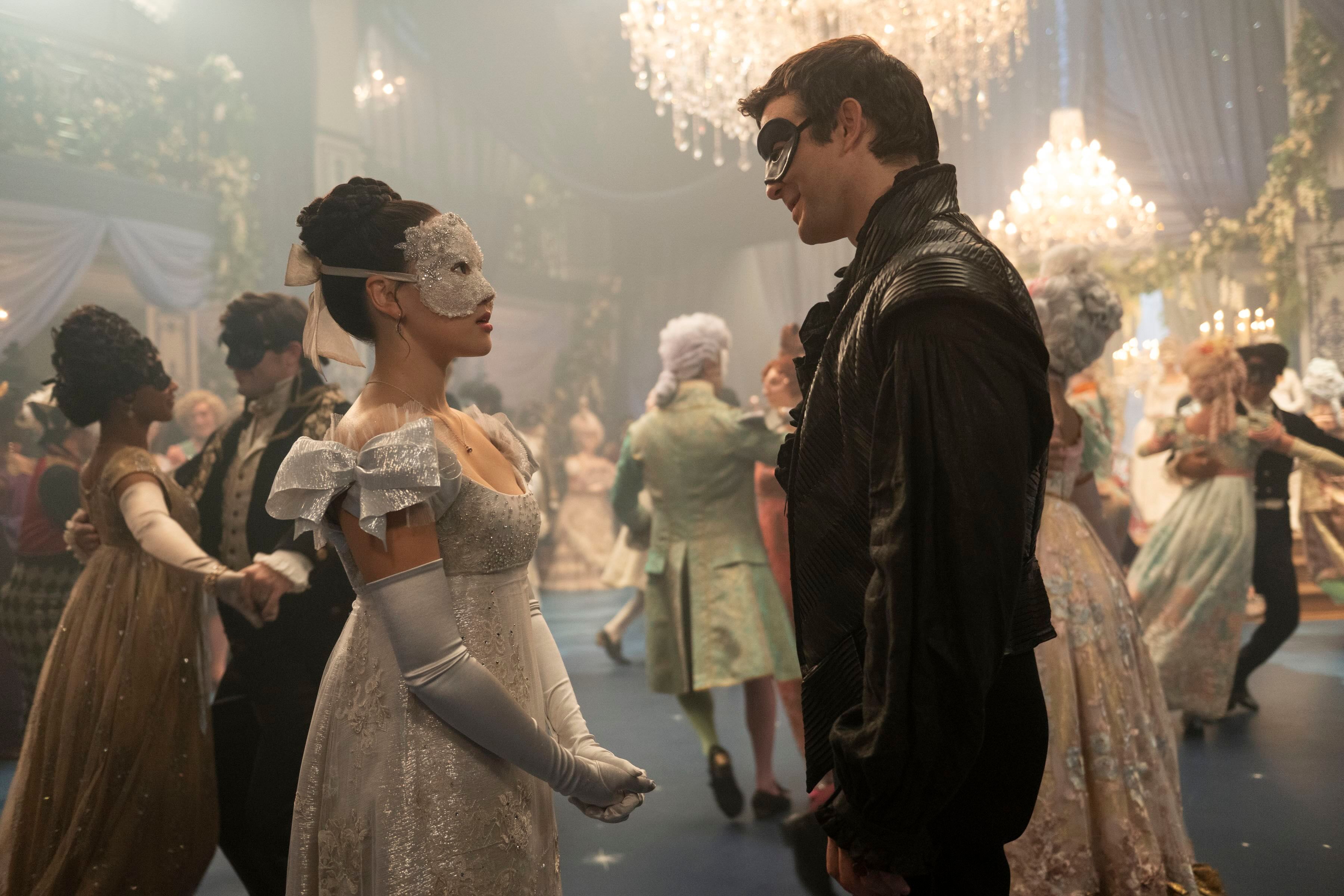
The plot this season may scream Cinderella to viewers, but that wasn’t the designers’ starting point for Sophie’s dress. “For us it wasn’t a Cinderella story; it was a Bridgerton story,” says Glaser. The brief—silver—came straight from the script. Instead of a voluminous, princess-coded ballgown, Sophie’s dress was cut closer to an early Regency shape. “We deliberately wanted to change the shape of the dress,” Sayer explains, grounding the fantasy moment more firmly in the show’s period world.
Placed opposite her is Benedict in head-to-toe black—a way of signalling his reluctance to even be there—a choice also guided by the scriptwriters and showrunner. As Hawkes puts it, Benedict “wants to live in his debauched world, so he goes out of duress. We can presume he’s given the outfit by his valet and was just another character from history” rather than a look he was invested in himself.
Hawkes also threaded in a cinematic reference point. He looked to Joseph Fiennes in Shakespeare in Love to mirror Benedict’s artistic and poetic sensibility. Together, the palette contrast becomes visual shorthand. “It’s like, as worlds collide, you’ve got silver and black. If he had been in a light-coloured costume, you would have thought he was Prince Valiant, and it wouldn’t have worked,” adds Glaser. “He had to be more of a real person—and a sexy one.” And sexy he was.
Miss Eloise Bridgerton remains the hardest character to dress
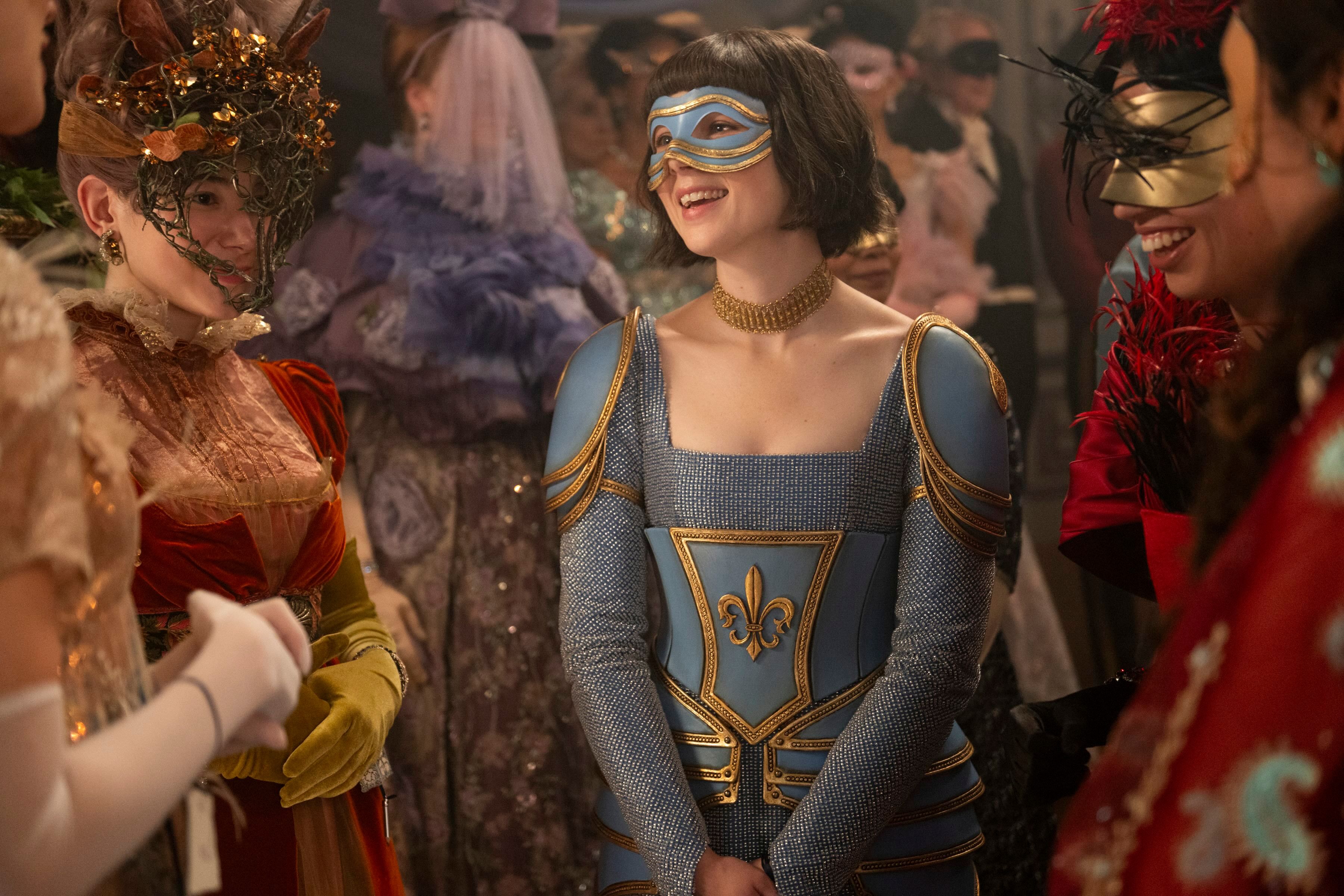
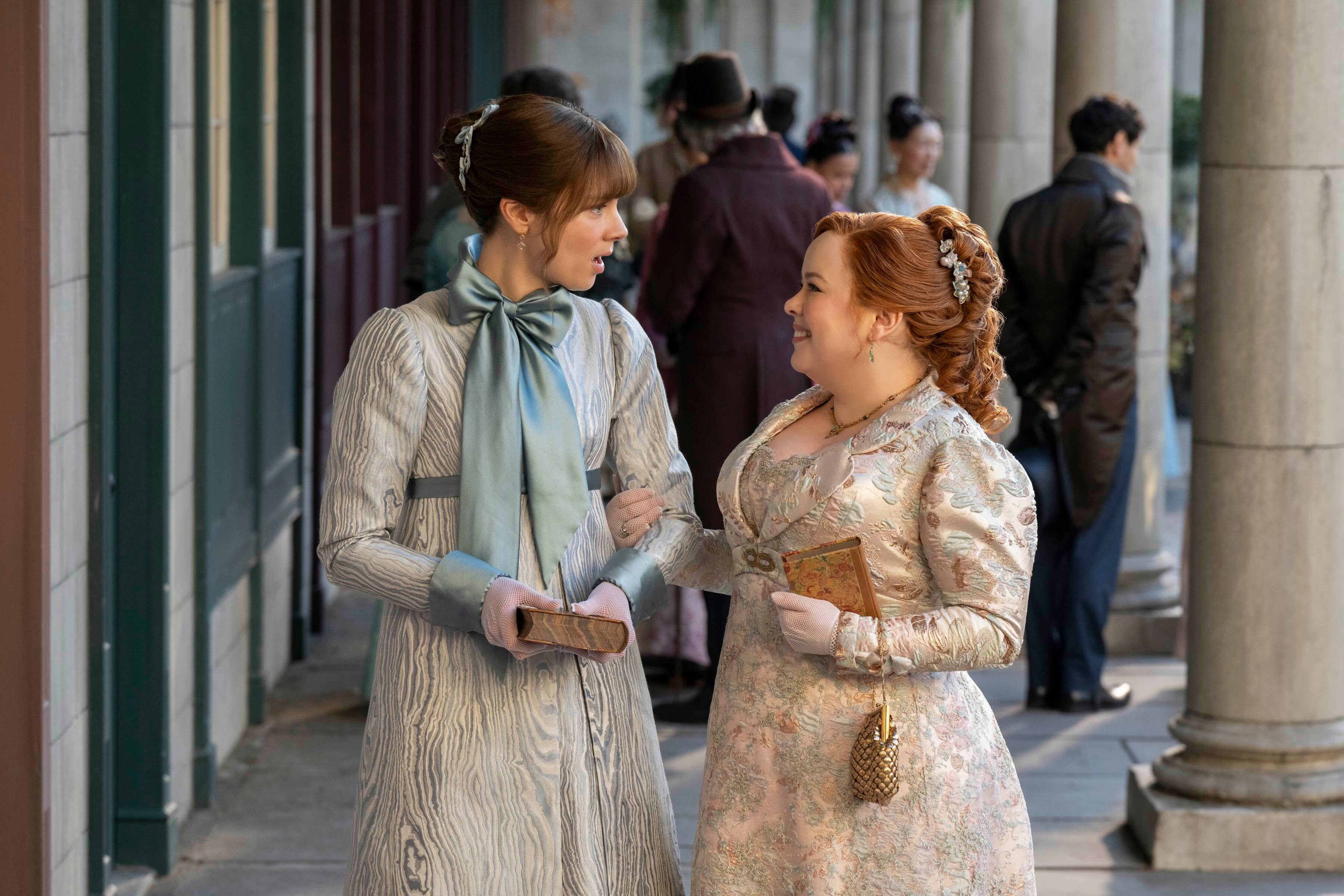
Four seasons in, Eloise remains the hardest character to pin down sartorially. Unlike her siblings—whose visual identities are more clearly codified—Eloise exists in a constant state of tension. “She’s kind of a rebel… We’re not really sure where her storyline’s going,” admits Glaser, explaining that every design decision becomes a balancing act between softness and structure, femininity and tailoring. “We’re always walking on the tightrope with her, back and forth, hoping not to fall off.” It’s a challenge the team clearly relishes—even if it keeps them on edge.