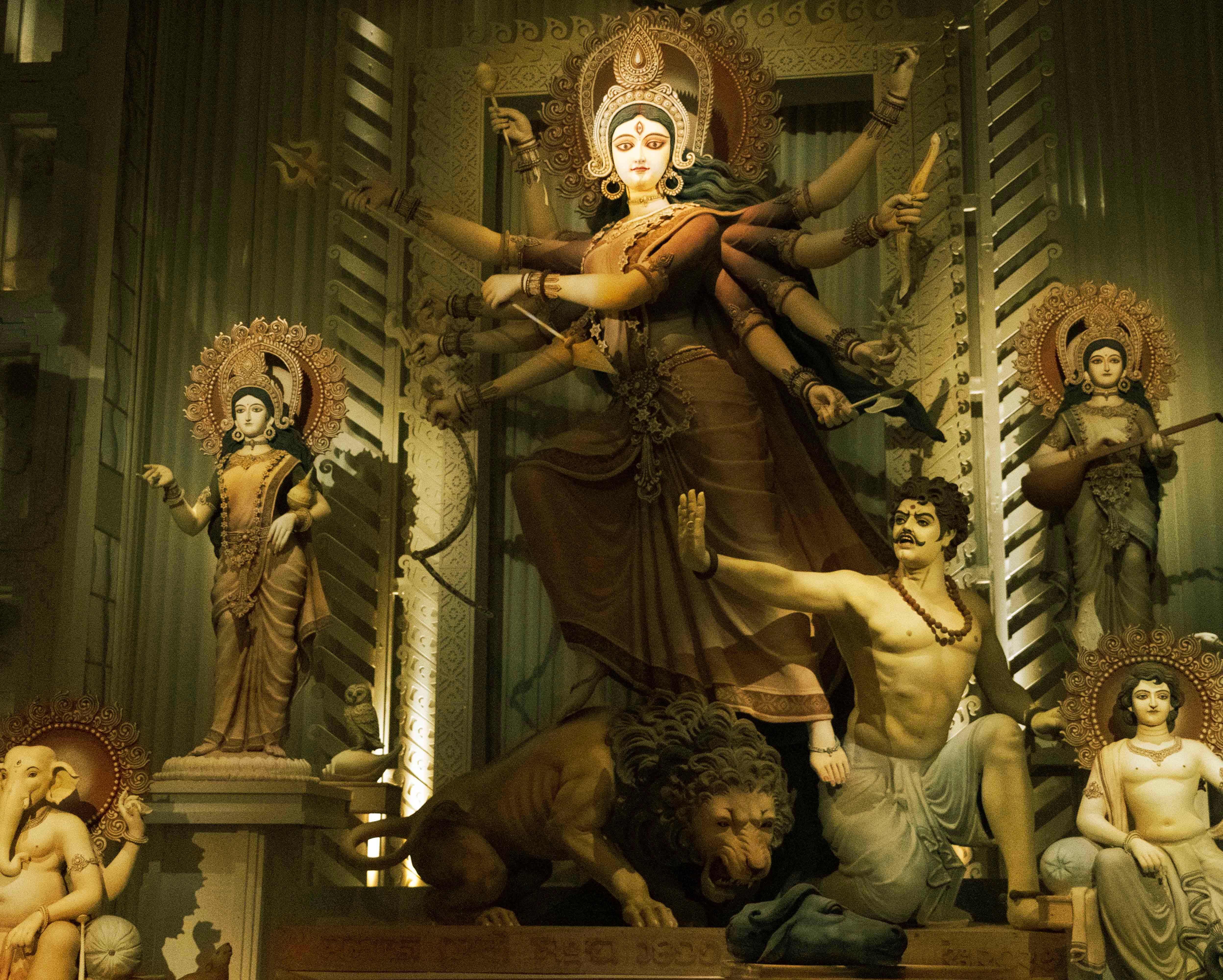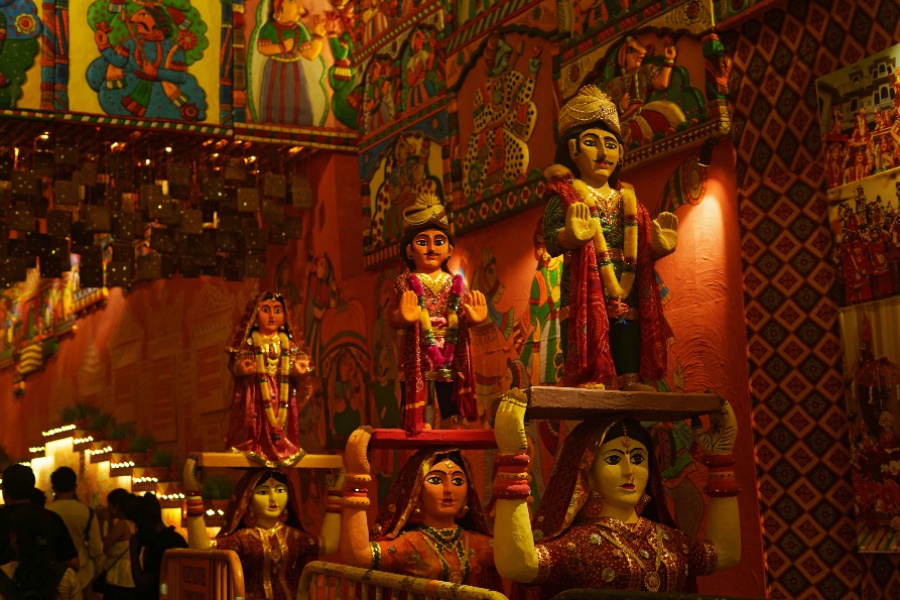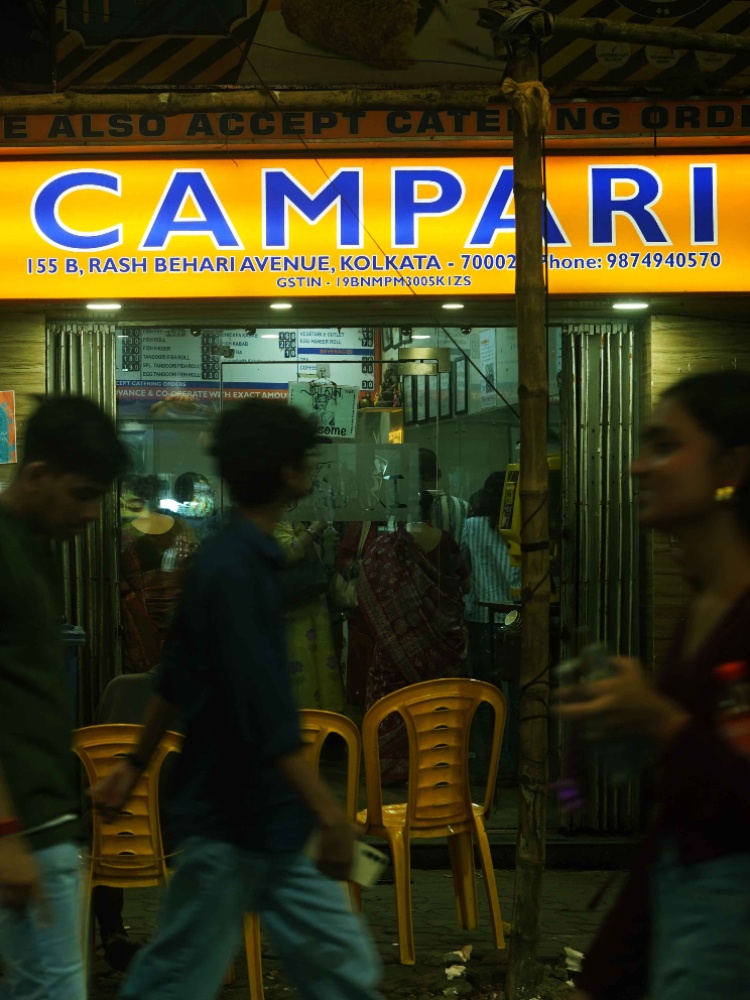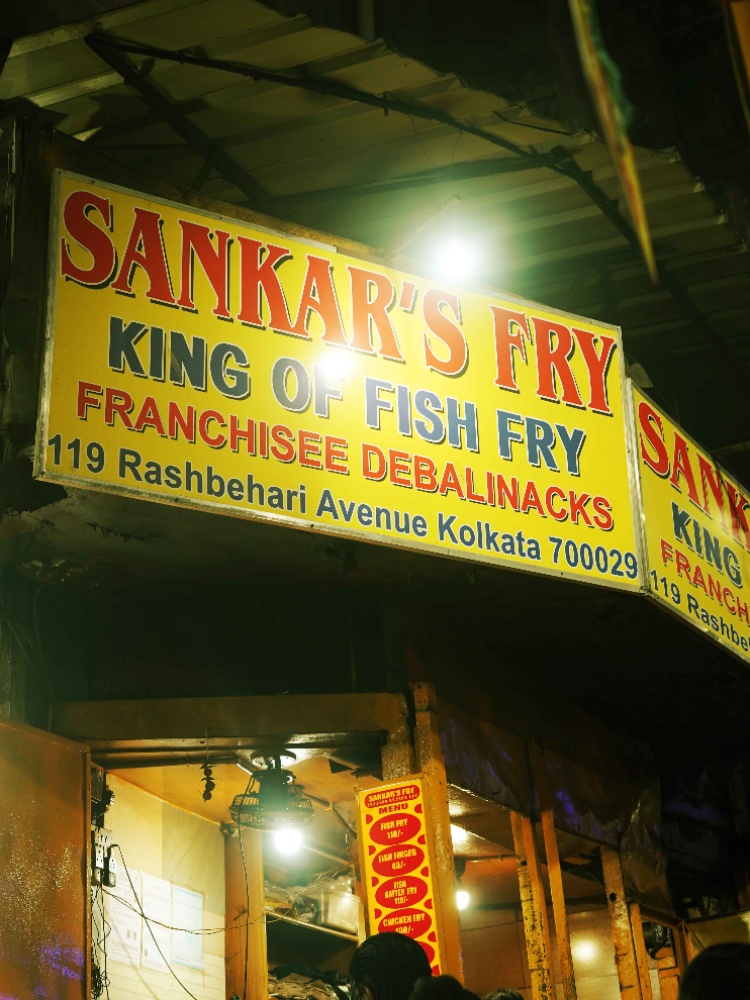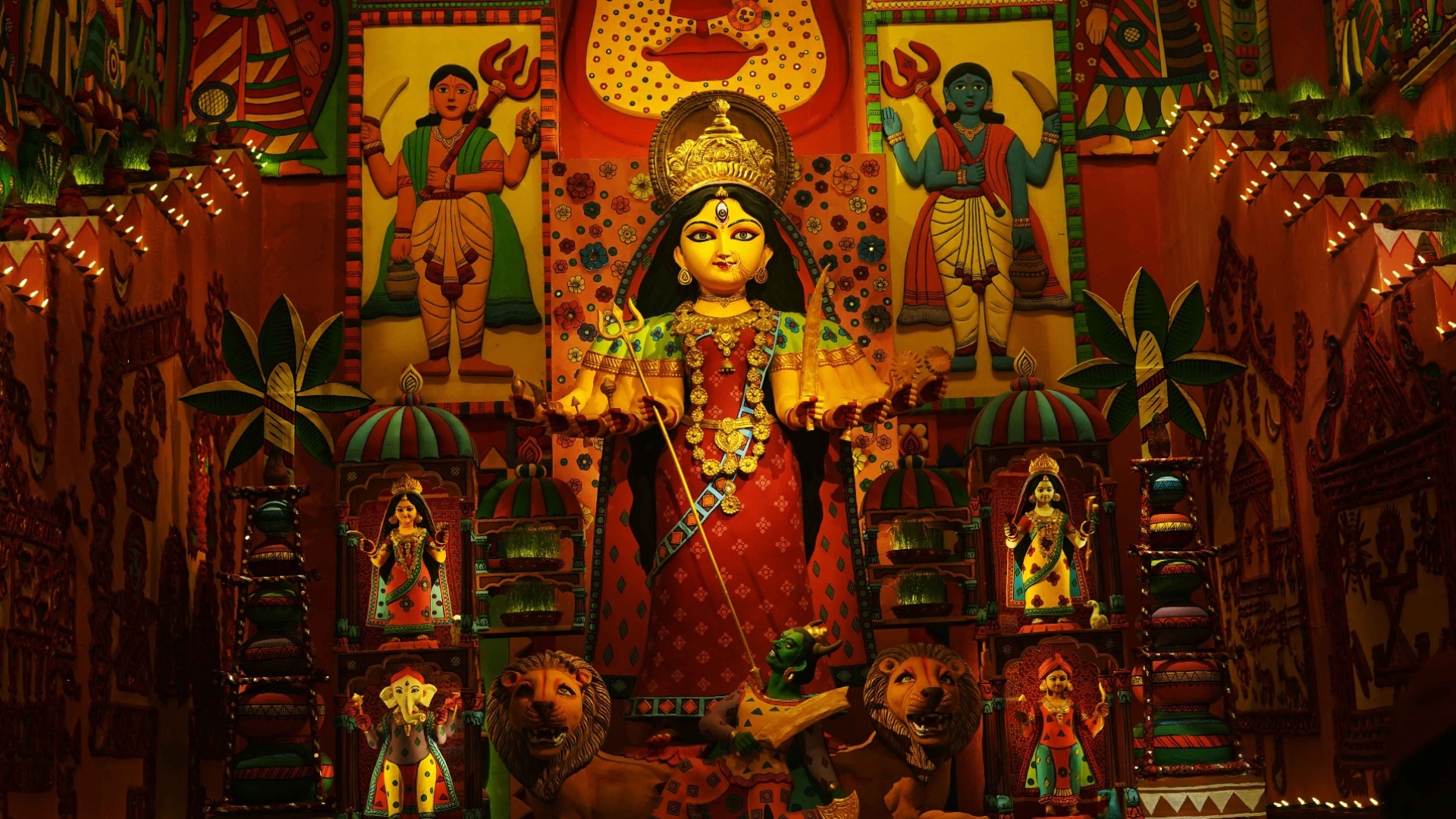

It’s that time of the year when Kolkata turns into one big open-air art festival. The city is decked out with stunning themed pandals, people step out in their festive best—shaada te laal paar saris and the works—and there’s a promise of tele bhajas and bhog at every corner. There’s devotion, there’s celebration, and joy that’s hard to put into words, earning Durga Puja in Kolkata its place on UNESCO’s Representative List of the Intangible Cultural Heritage of Humanity in 2021.
The city is divided in the way it celebrates the homecoming of Durga and her four children: Ganesha, Saraswati, Lakshmi, and Karthik. In north Kolkata, most pujos are held inside bonedi baris where people congregate in courtyards. Then, there are also a few contemporary-themed pujos—usually observed as “sarbojanin” pujos (organised by everybody for everybody)—thrown in.
South Kolkata’s pujo, on the other hand, has been synonymous with elaborate and often socially relevant themes—women’s safety, inclusivity, climate change, among others. The idols and celebrations here stray slightly away from the traditional forms.
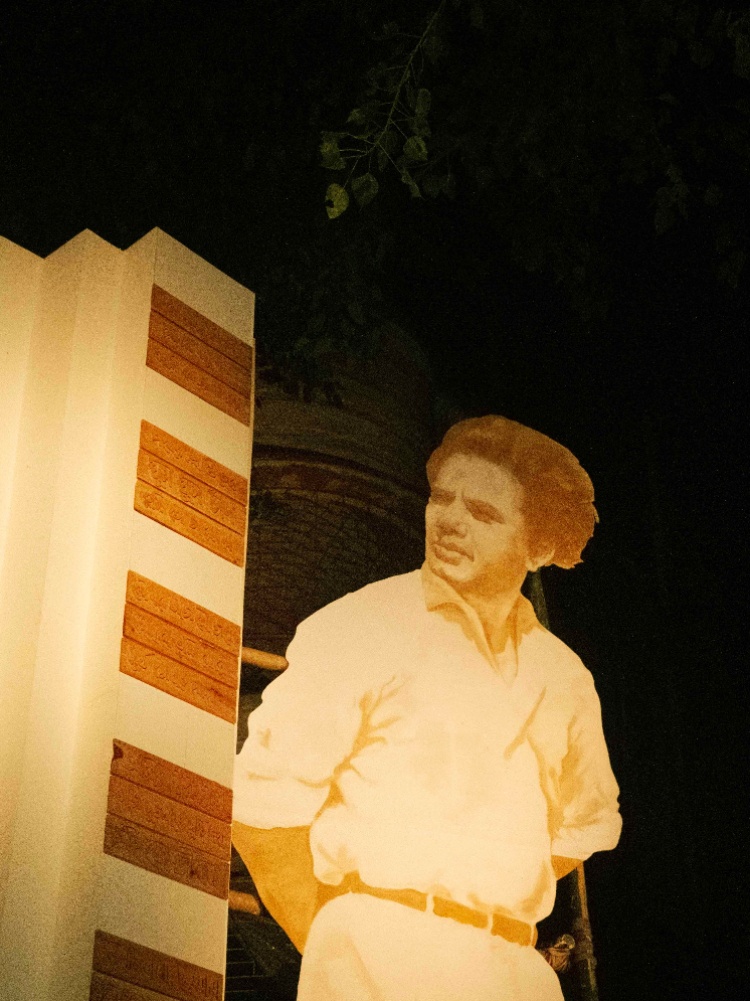
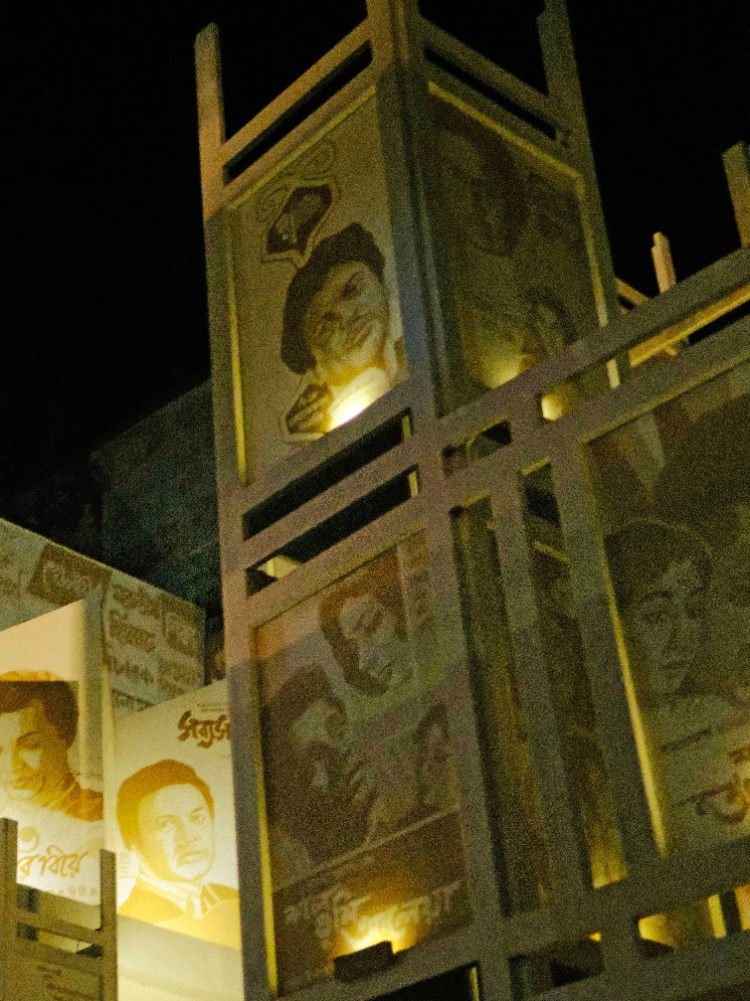
Ready for my annual ritual, I step out at 6 pm in my kurta and the most comfortable pair of walking shoes to go pandal hopping in south Kolkata. This year, the city observes the birth centenary of the legendary actor Uttam Kumar, and some of the pandals on the line-up put his work front and centre.
6pm: Deshapriya Park, Tridhara Sammilani, and a tea break
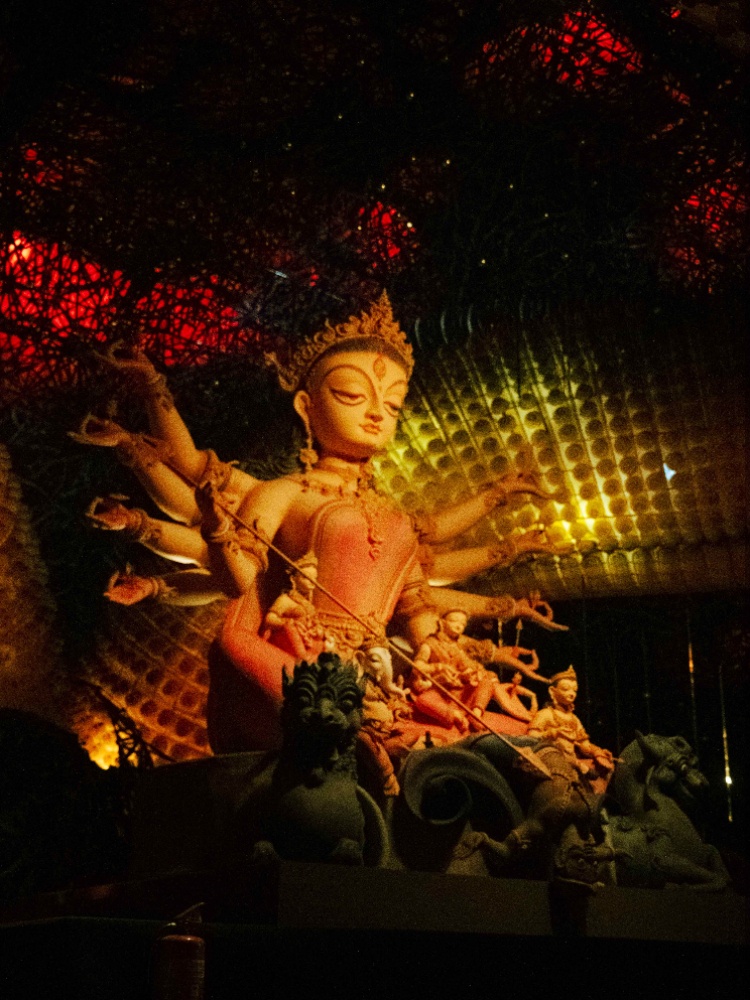
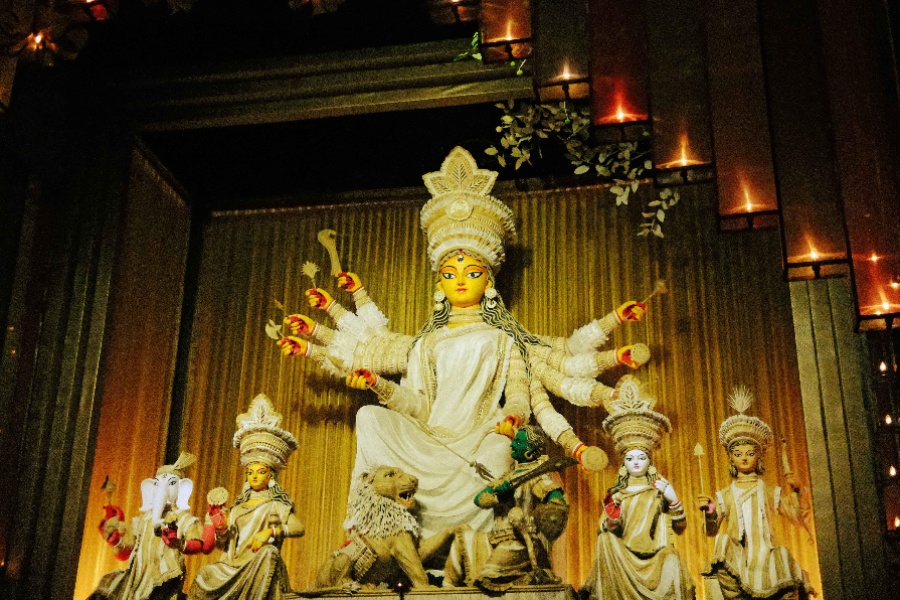
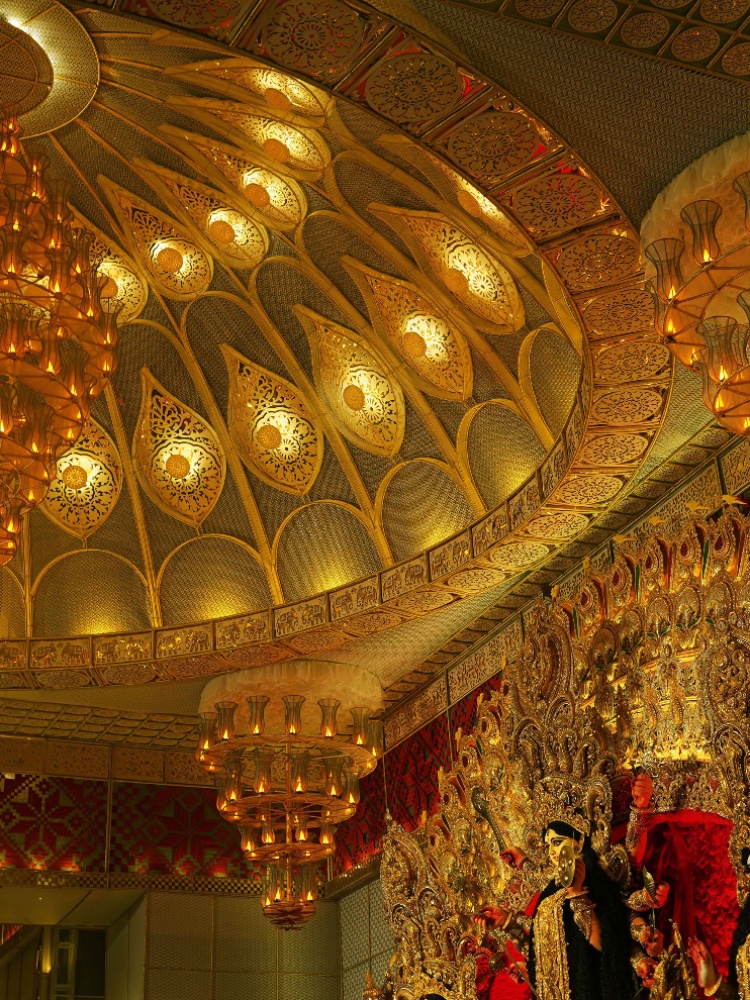
I started my ambitious pandal hop with the iconic one inside Deshapriya Park, where the festival has been observed and celebrated for 89 years. The pandal—inspired by an ornate fictional temple—was gleaming in bright red and golden. The idols, by Padmashri awardee Sanatan Rudra Pal, were ethereal and taller than most statues I would encounter later in the evening.
It’s fair to say that I kicked off my evening with one of the more challenging venues; it took me nearly 40 minutes just to get into the park.
The next pandal, Tridhara Sammilani, though, just about 200 metres away, tested and rewarded my patience in equal measure.
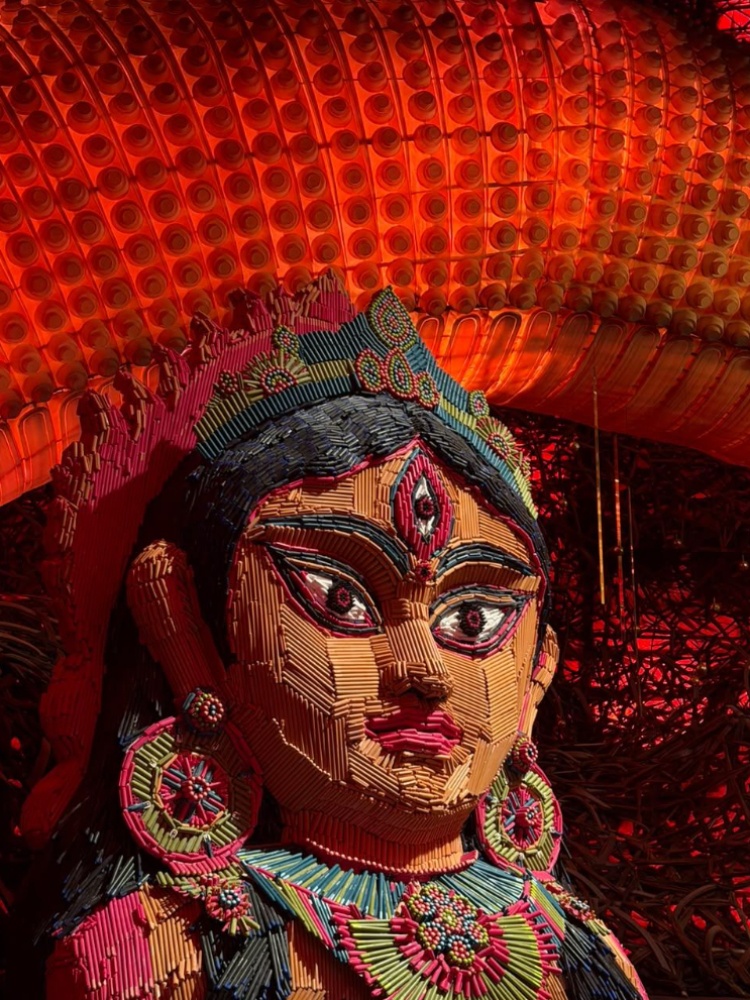
At the entrance, I was greeted by three open-mouthed dragon heads, their bodies shaped like tubes wrapped around each other and covering the ceiling with what looked like red hot lava. The structure was made using scrap like bamboo sticks and Velcro. Themed ‘Sur-Asura’, the aim was to depict gods and monsters sharing the same space. Alongside the main idol, thousands of Pentonic pens were repurposed to create a standalone sculpture of Durga’s face.
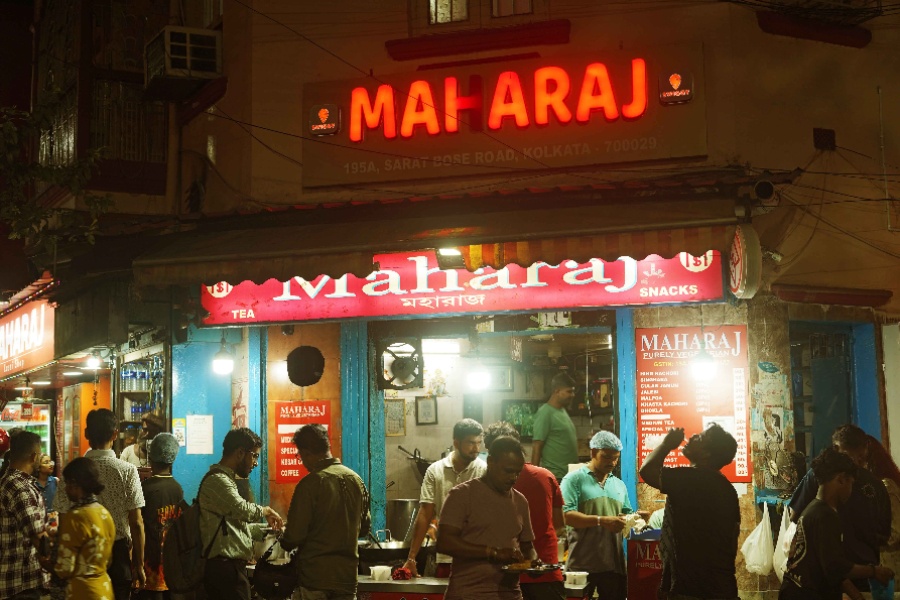
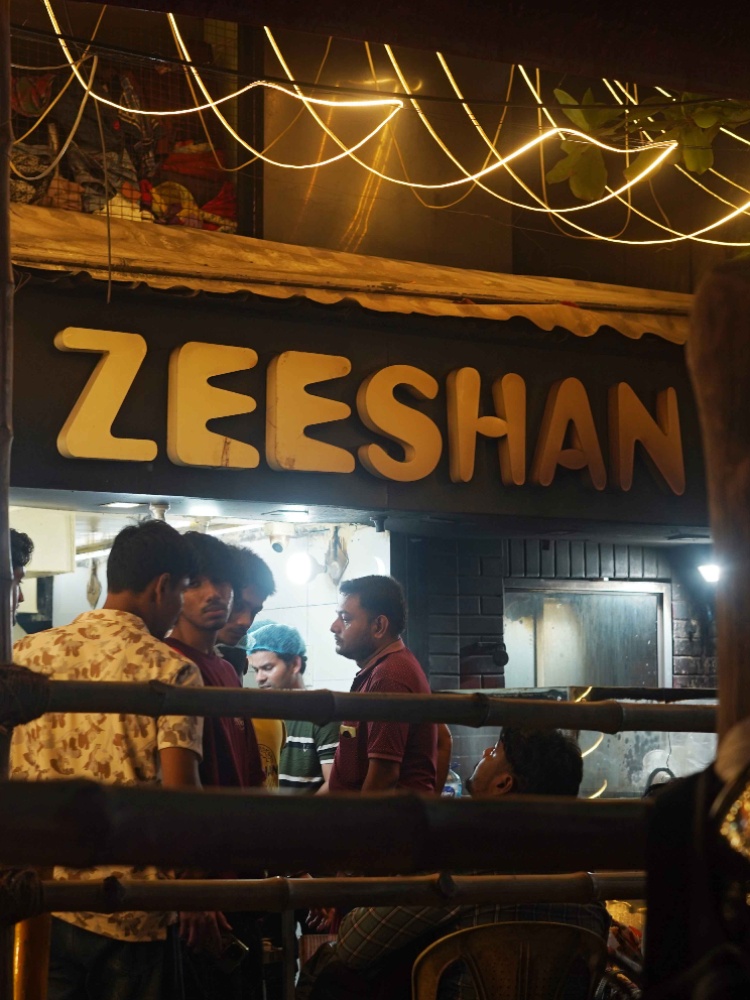
After being pushed out of the pandal at Tridhara like how one gets off the train at Dadar station, I made my way to the iconic Maharani tea stall on Sarat Bose Road for a hot chai while others around me ordered generous helpings of shingara, kochuri, and roshbhora. Not too far away, Maharaj, another iconic tea stall, was also doing brisk business. On the other side, Zeeshan was struggling to keep up with the incoming orders of egg and egg-chicken rolls. I reserved my appetite for the next stop.