



Weddings24 Sep 20265 MIN

In an Amsterdam canal house, a wedding by friends with friends

Brought to life by a close-knit circle of artist and designer friends and collaborators, Lebanese filmmaker Aya Saleh and engineer Nicolas Akl’s nuptials were a celebration of community and creative partnerships

Image

Photographs by Rebeca Valls

Aya Saleh, a filmmaker and consummate creative, and her partner, sustainable energy engineer Nicolas Akl, met four and a half years ago, all thanks to a cancelled train. Saleh, who was teaching at a design university in the Netherlands while living in Paris, found herself stranded in Belgium with her best friend. They arranged to crash at a mutual friend’s home, unaware that Akl was staying there as well. “We avoided him all day—we were like, ‘We don’t want to hang out with a boy,’” Saleh laughs, recalling the meet-cute over a call. “By late afternoon, we realised it was rude, so we went to grab coffee.”

The connection was pretty immediate for the two, who had many friends in common and yet hadn’t crossed paths. The coffee escalated into a night out with hours of dancing. Later, in the chaos, as Saleh’s shoelace came undone, Akl dropped to one knee, tied her loose laces, and looked up at her. “I remember thinking, ‘Oh no, I think I like this guy,’” she laughs.

Funnily enough, it was only years later, after Saleh was perfectly sure that they’d honoured the old French adage l’amour dure trois ans (“love lasts three years”) that the couple decided to get engaged. “It’s a French expression, but also my dad always told me, ‘Wait three years.’ So, I had this notion: just give it time, wait for the honeymoon phase to end.”
When Akl did propose four years in (the extra year just to keep Saleh guessing!), he chose a January night at a guest house in Lebanon. Knowing Saleh’s obsession with the tradition of galette des rois—a celebration of Epiphany in France, where people eat a decadent almond cake with a hidden charm inside at gatherings all through January—Akl presented her with an almond cake every day. “I cut into it and started chomping on it like a pizza,” Saleh recalls. Terrified she would swallow the hidden ceramic fève, Akl nervously started digging into the cake himself before she unearthed the ring. With the ring finally in hand, Saleh recalls, “He got down on his knees and I started crying. I couldn’t even hear what he was saying. We were both blubbering,” she laughs.

“Initially, the civil ceremony [in March] was just supposed to be a very simple signing, because we were planning the big traditional Lebanese wedding in Lebanon for September,” the bride explains. “But then the war erupted and we were very hesitant…” After a lot of deliberation, the couple, who live in Rotteramn, decided to expand their Amsterdam celebration to more than just a signing ceremony, involving more of their near and dear ones. In some ways, Saleh says, it became a defiant act of choosing joy, love, and human connection when everything outside felt so profoundly unstable.

And so, the planning began. For Saleh, whose artistic practice revolves around multidisciplinary world-building and collaborative storytelling, the civil ceremony was an extension of this approach. It unfolded, as she describes it, as an effortless gathering crafted by a global network of her creative peers.

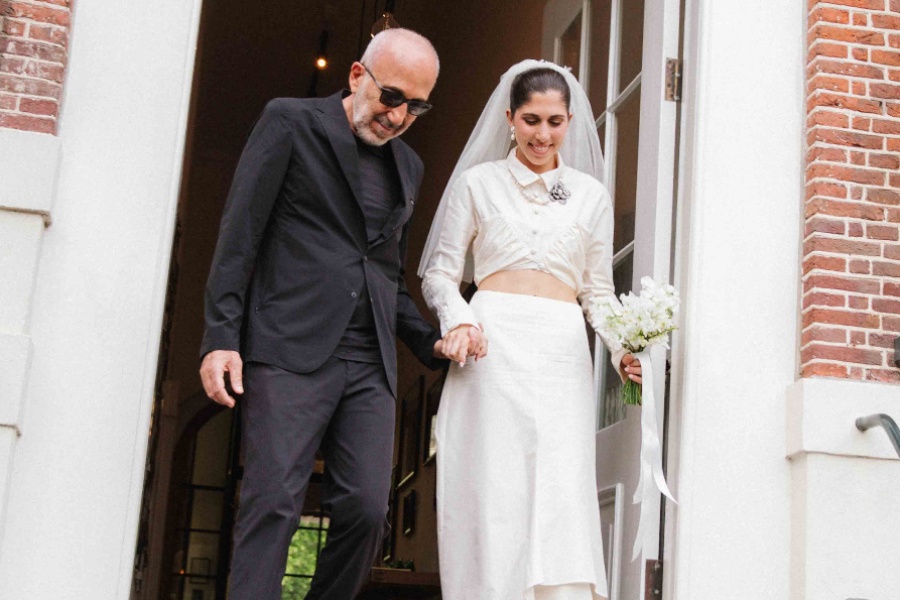
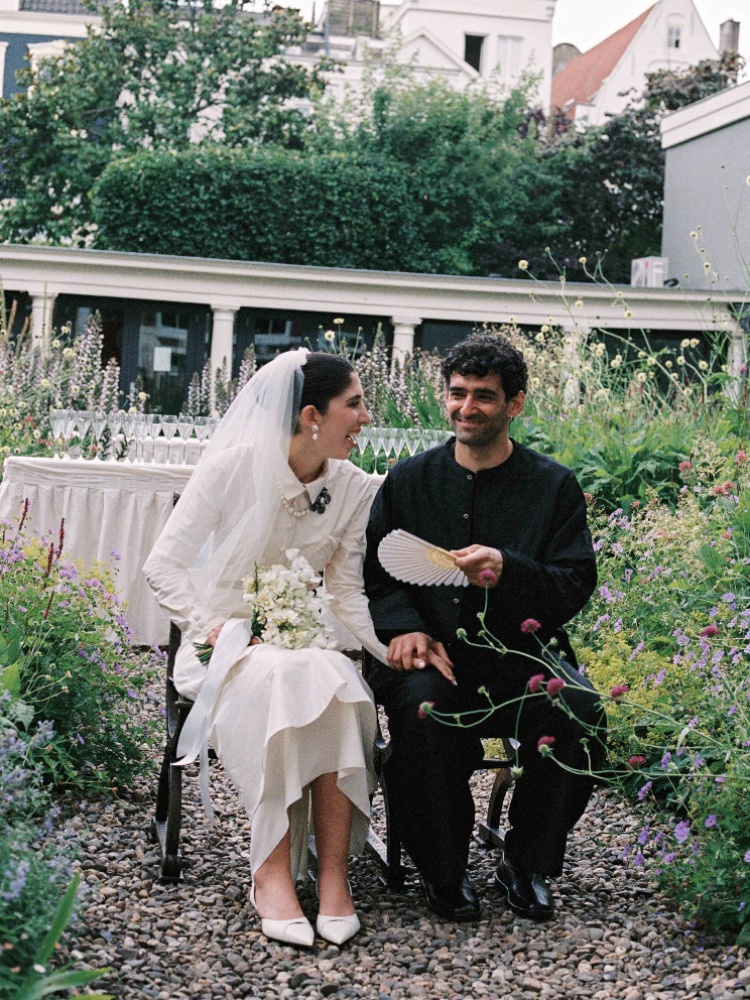
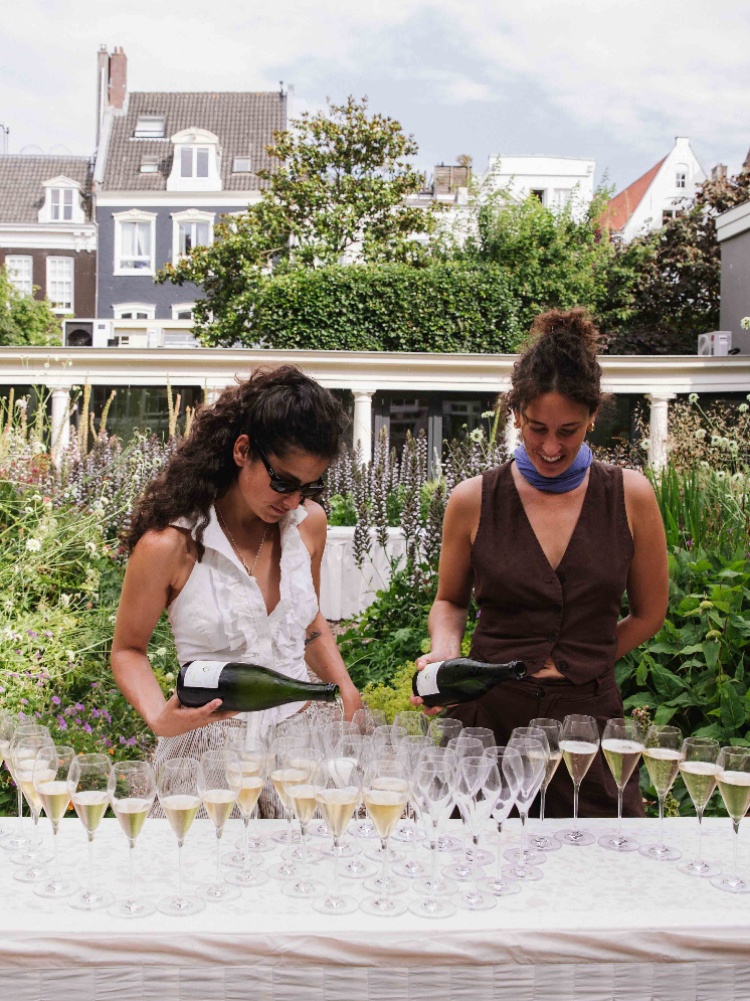
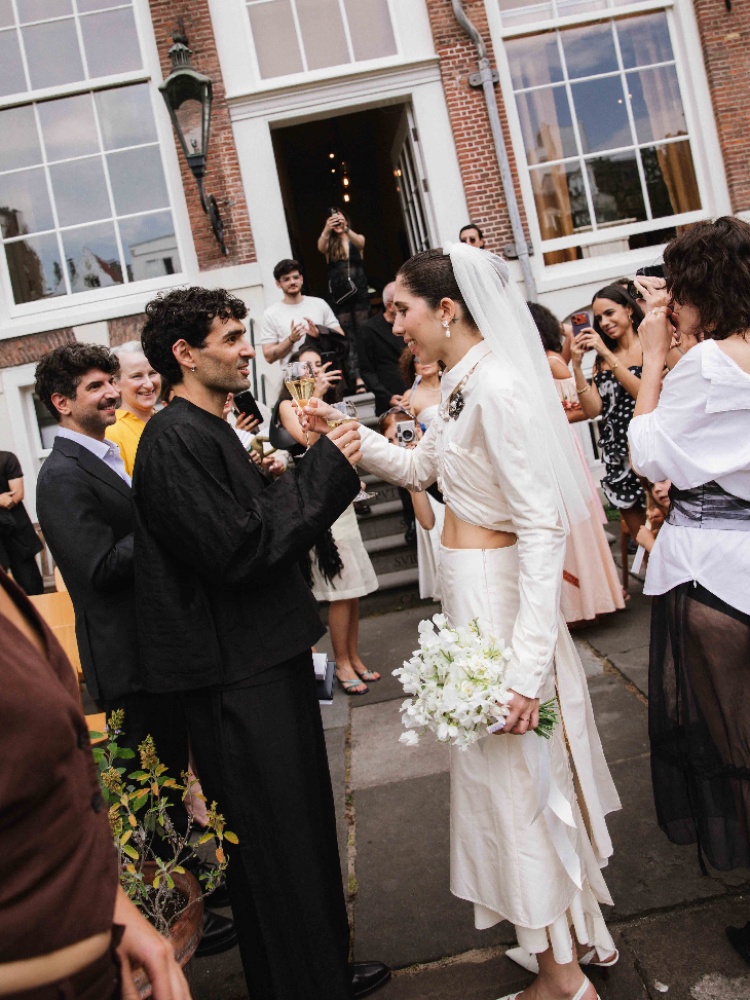
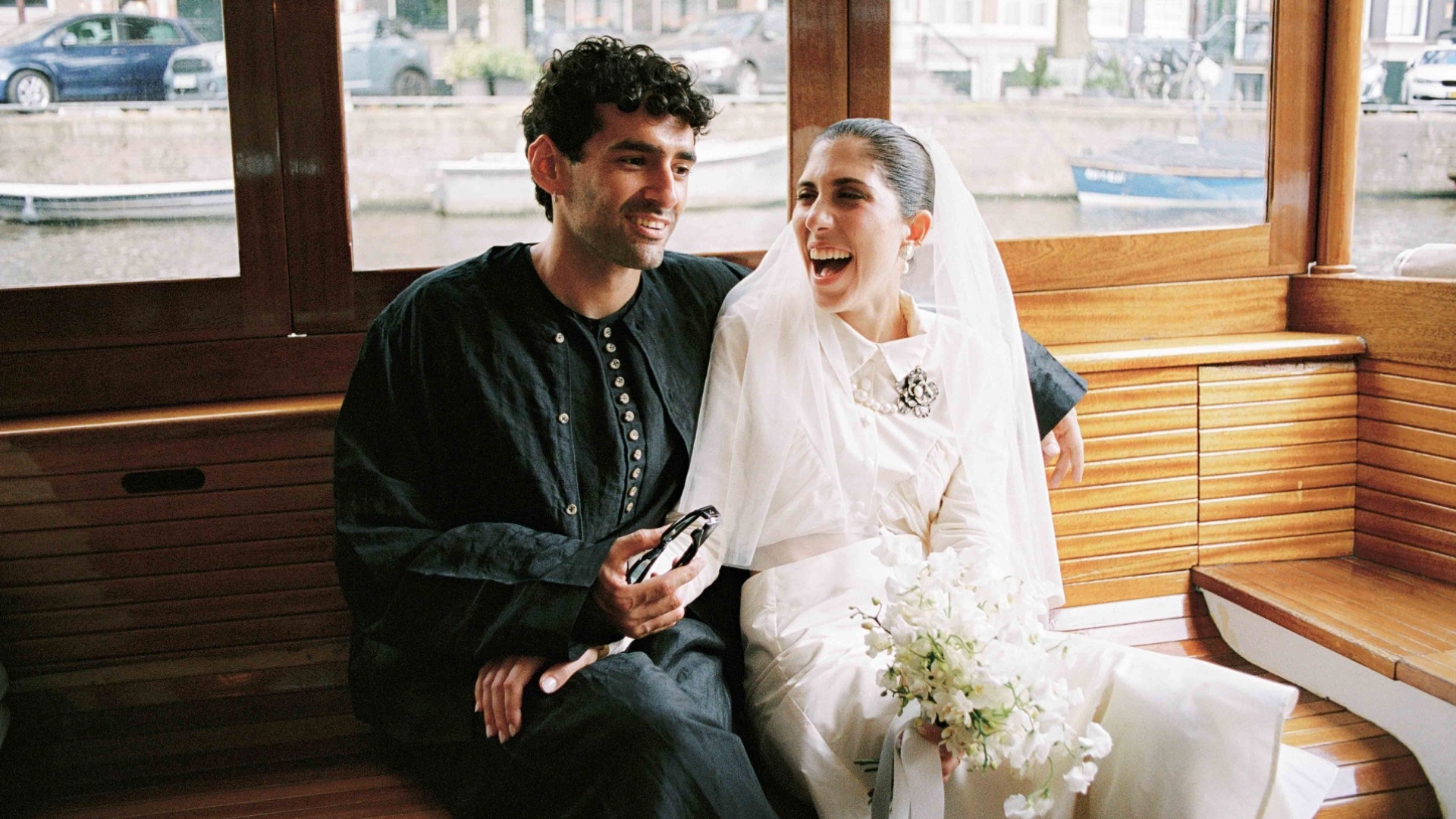
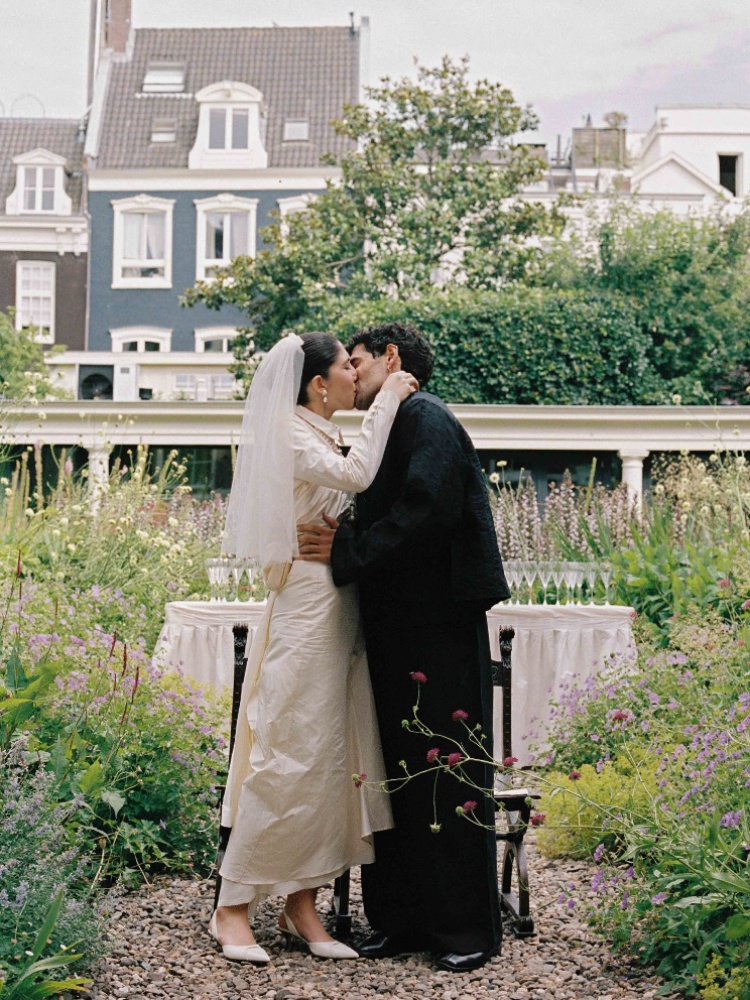
In the leafy courtyard of the Embassy of the Free Mind—a 17th-century Amsterdam canal house filled with rare manuscripts and philosophical archives—Saleh and Akl became husband and wife. They were surrounded by 55 of their closest friends and family, nearly two-thirds of whom had travelled across borders to be there.

“It really felt like a wedding made by friends, with friends,” Saleh reflects.

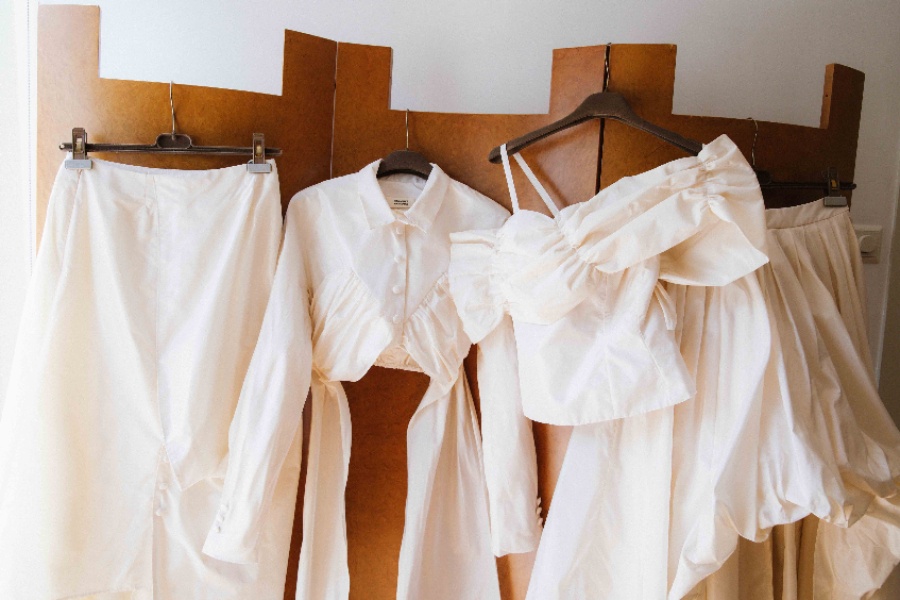
When it came to choosing her all-too-important wedding dress, Saleh turned to her close friend and frequent collaborator Cynthia Merhej, a two-time LVMH Prize semi-finalist and founder of Paris-based label Renaissance Renaissance. The two had been informally mapping out theoretical wedding looks for years. “Cynthia and Nicolas are really good friends, and it became this ongoing joke where she and I were designing an imaginary bridal line based off our wedding that hadn’t even happened yet!” Saleh had previously modelled for Merhej and shot campaign imagery for the brand, so a shared visual language and working relationship was the perfect gateway to a collaboration in another sphere of the bride-to-be’s life.

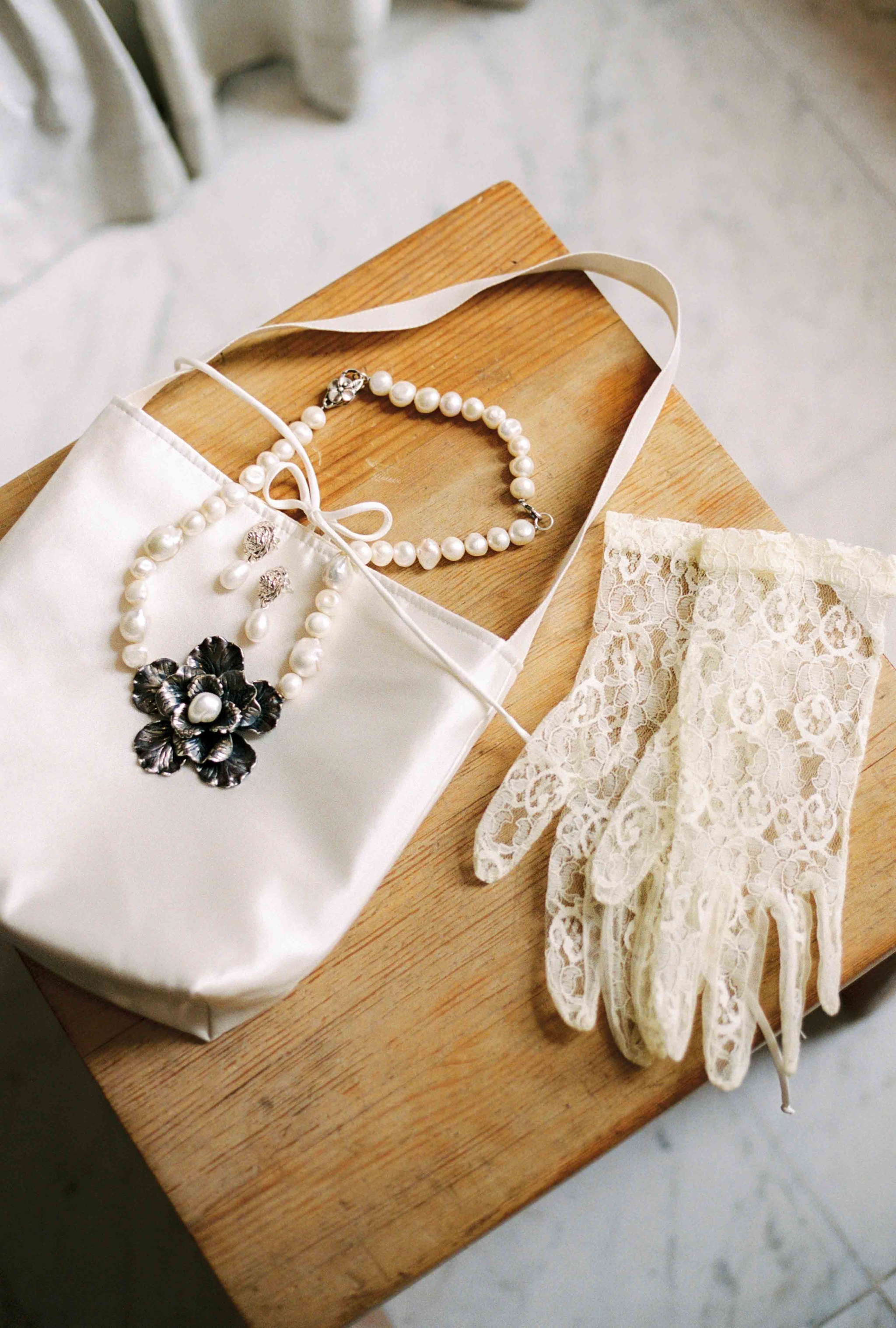
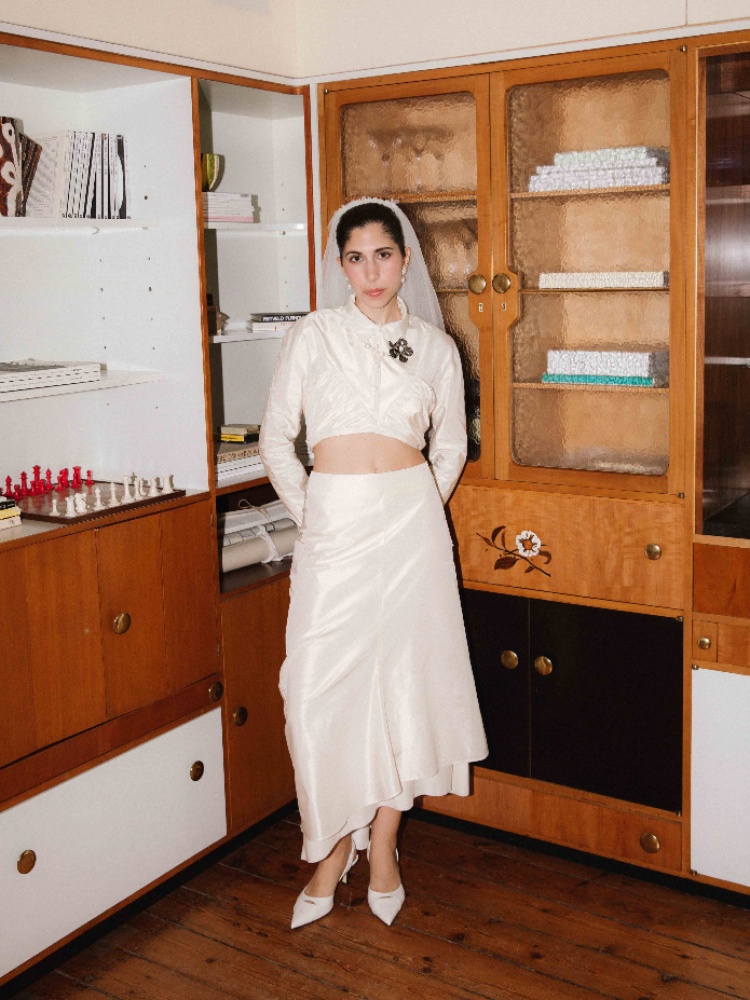
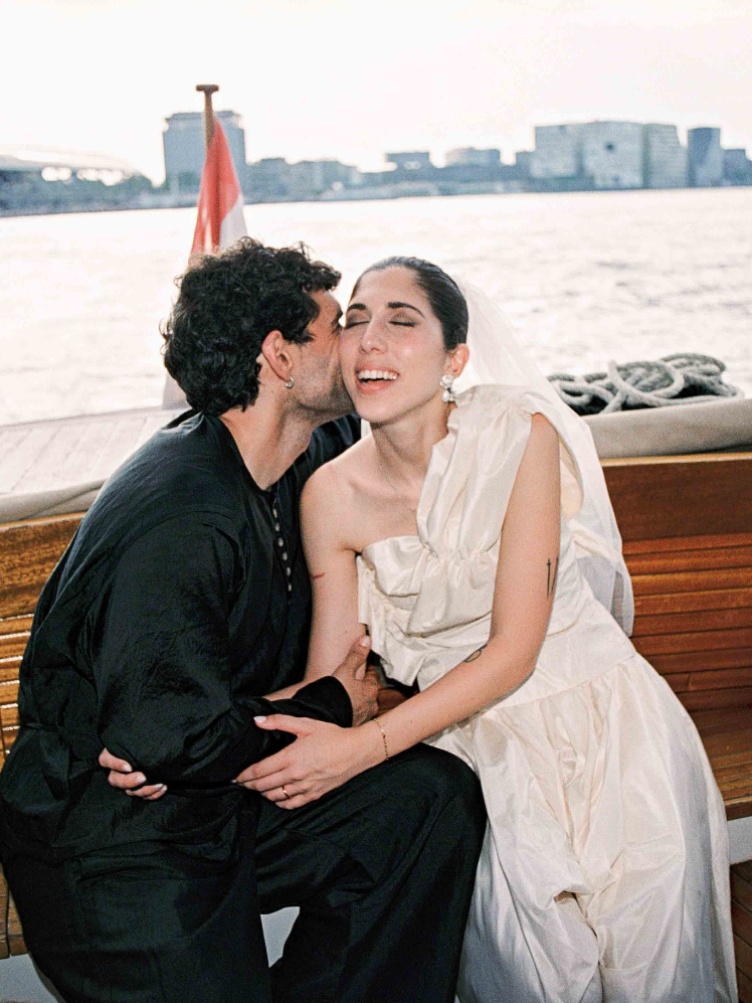
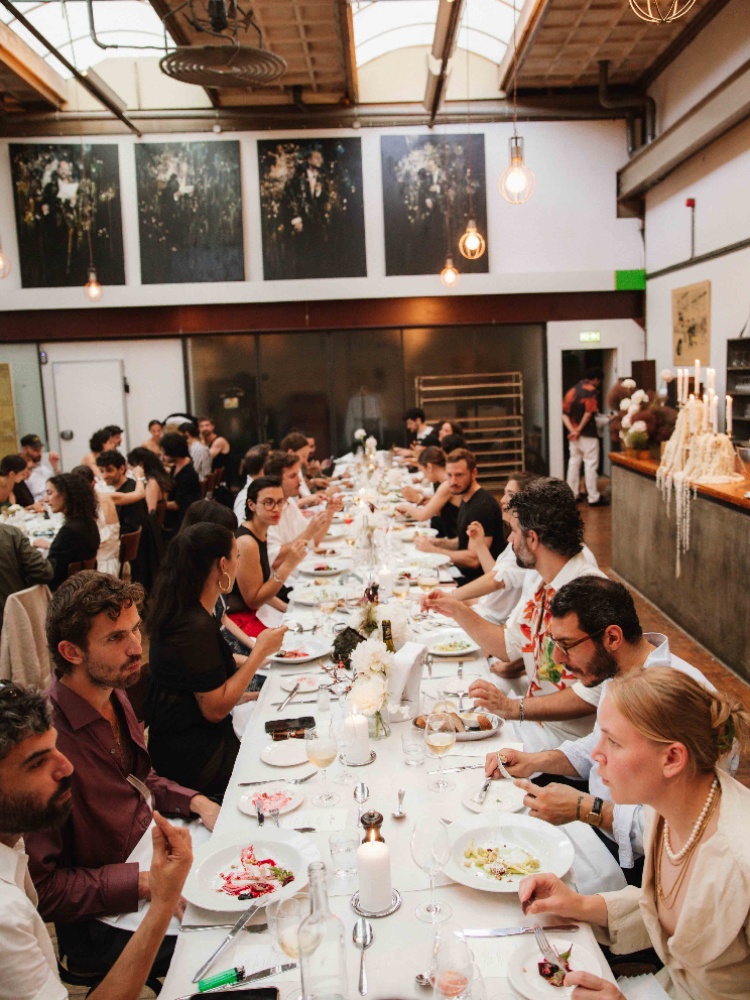
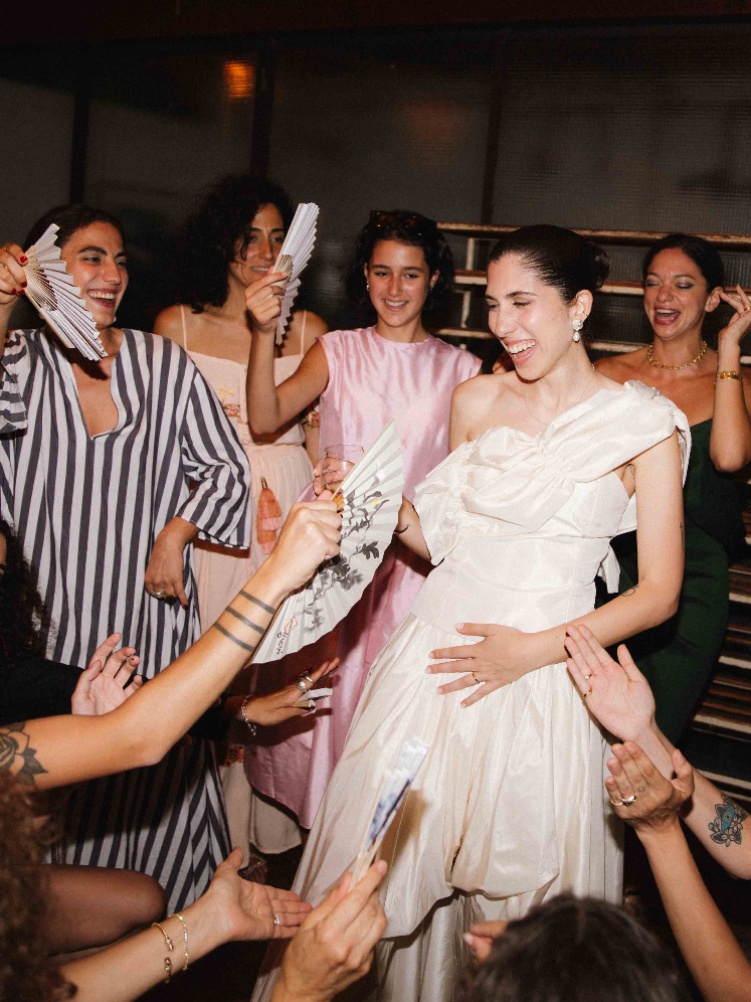
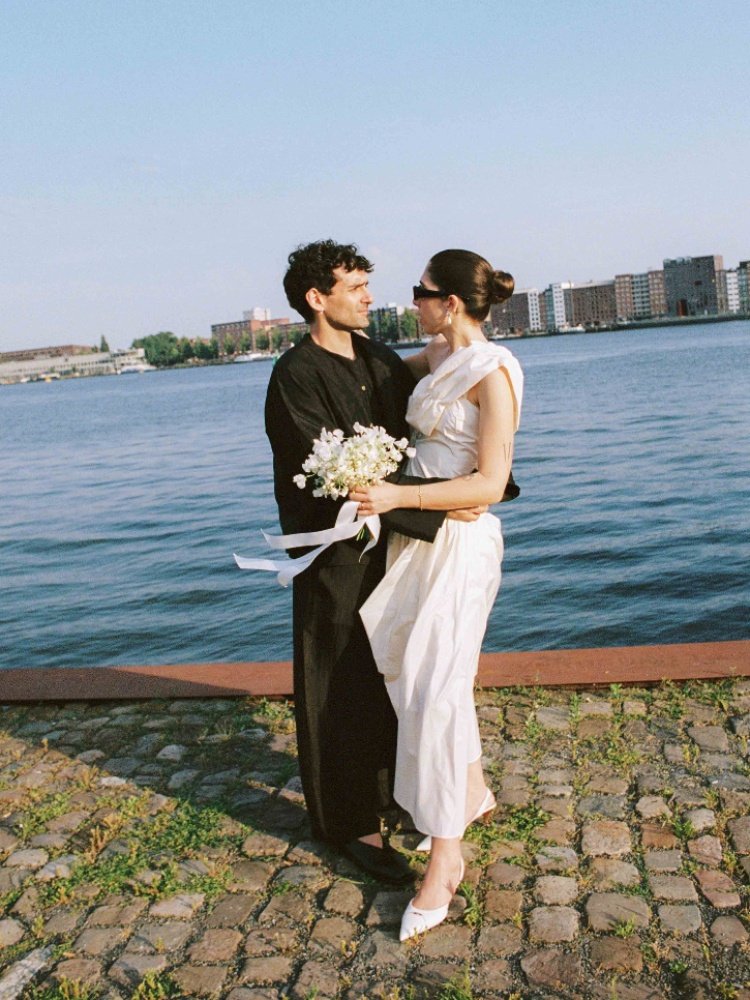
“Aya is truly a muse to me,” Merhej tells me over a call. For the celebrations, Merhej crafted two distinct silk taffeta looks. The ceremony ensemble paid homage to Saleh’s grandmother through a structured, reworked jacket paired with a floor-length cream skirt featuring subtle back draping. For the evening reception at Hotel de Goudfazant, Saleh changed into an off-the-shoulder fluid top paired with a pair of voluminous cream sherwal—traditional Lebanese pleated trousers cleverly disguised as a signature Renaissance Renaissance bubble skirt, finished with delicate ribbon ties. “Aya had actually worn this set to another wedding in black, and she was like, ‘I want this for my wedding!’”

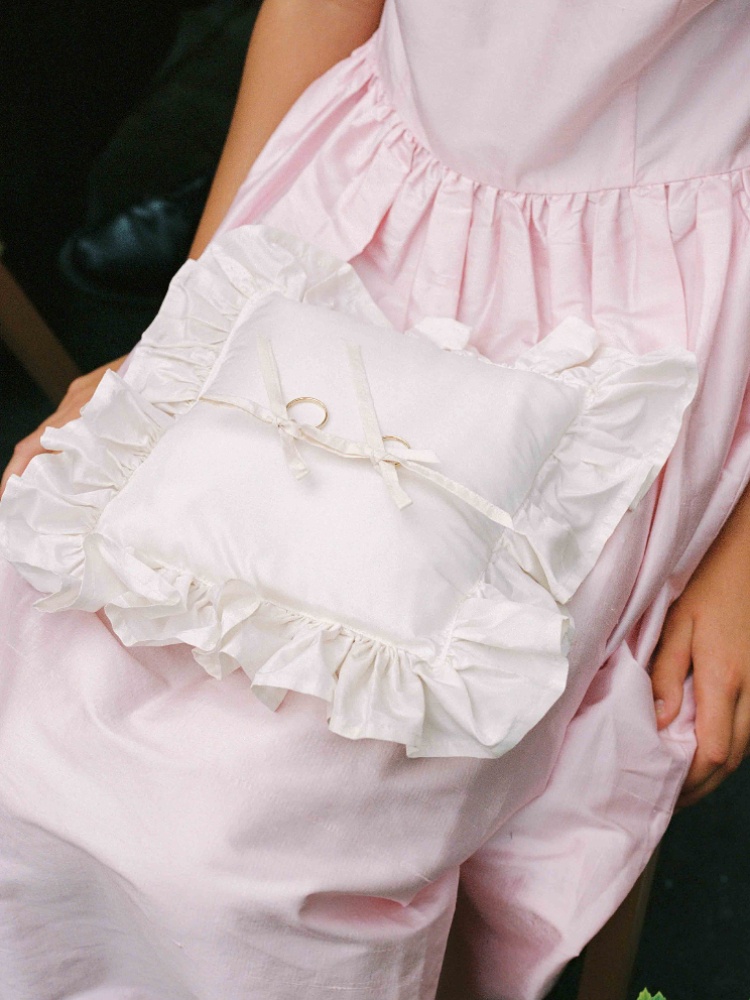
The ribbons were an important addition. “I love the idea of tying and untying,” Saleh says of the flourish on her dress. “In French, there’s this idea of défaire—to undo. There is something so delicate yet strong about it. It’s also like an infinity loop. Cynthia and Micheline [Nahra, who made the cake for the wedding] made me fall in love with ribbons.”

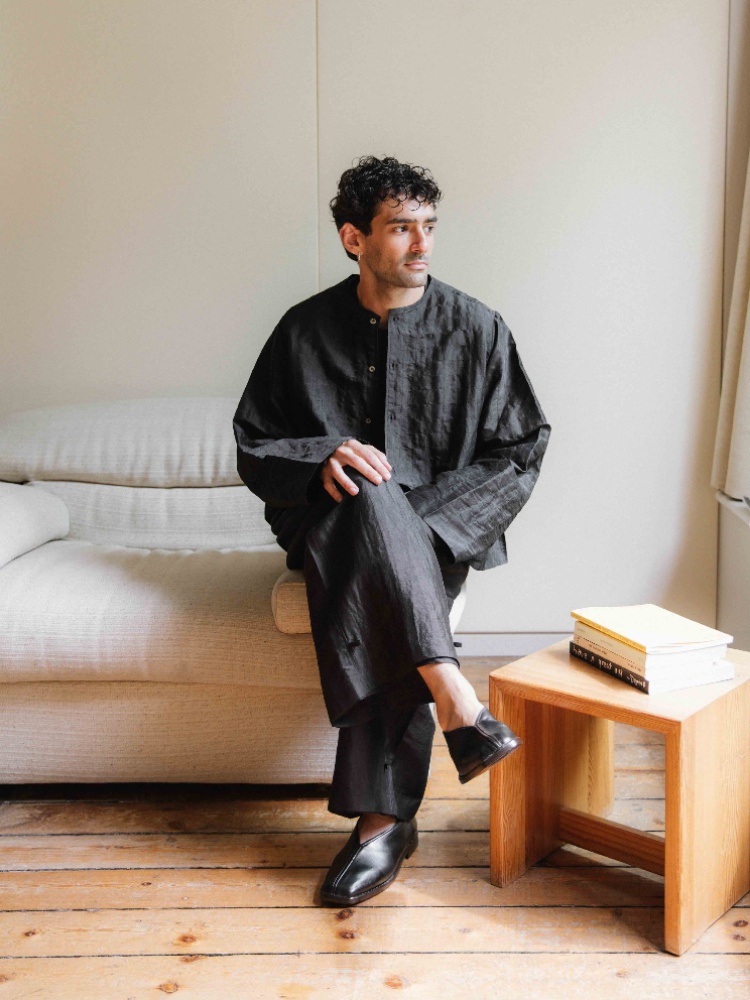
Merhej also connected Akl with designer Zain Ali, who crafted a bespoke, minimalist ZN ALI suit in fluid silk accented with delicate button details and a quilted blazer. “Nicolas is refined and gentle,” Merhej notes. “His outfit had this quiet elegance that matched Aya’s cream silk taffeta so naturally. You would have thought one person designed everything.”

That same spirit of shared creation flowed through every facet of the couple’s wedding weekend. Guests were hosted at Carmen, a bed-and-breakfast owned by the couple’s friends Carmen and Joren, which served as the informal base camp. “It felt like a Lebanese open house. Everyone was coming and going, sharing coffee, hanging out,” Saleh recalls.

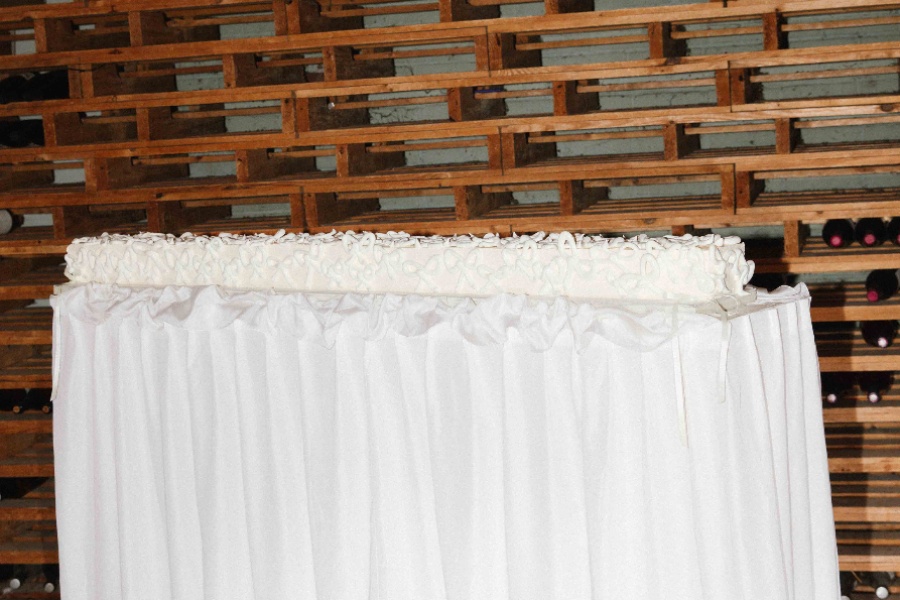
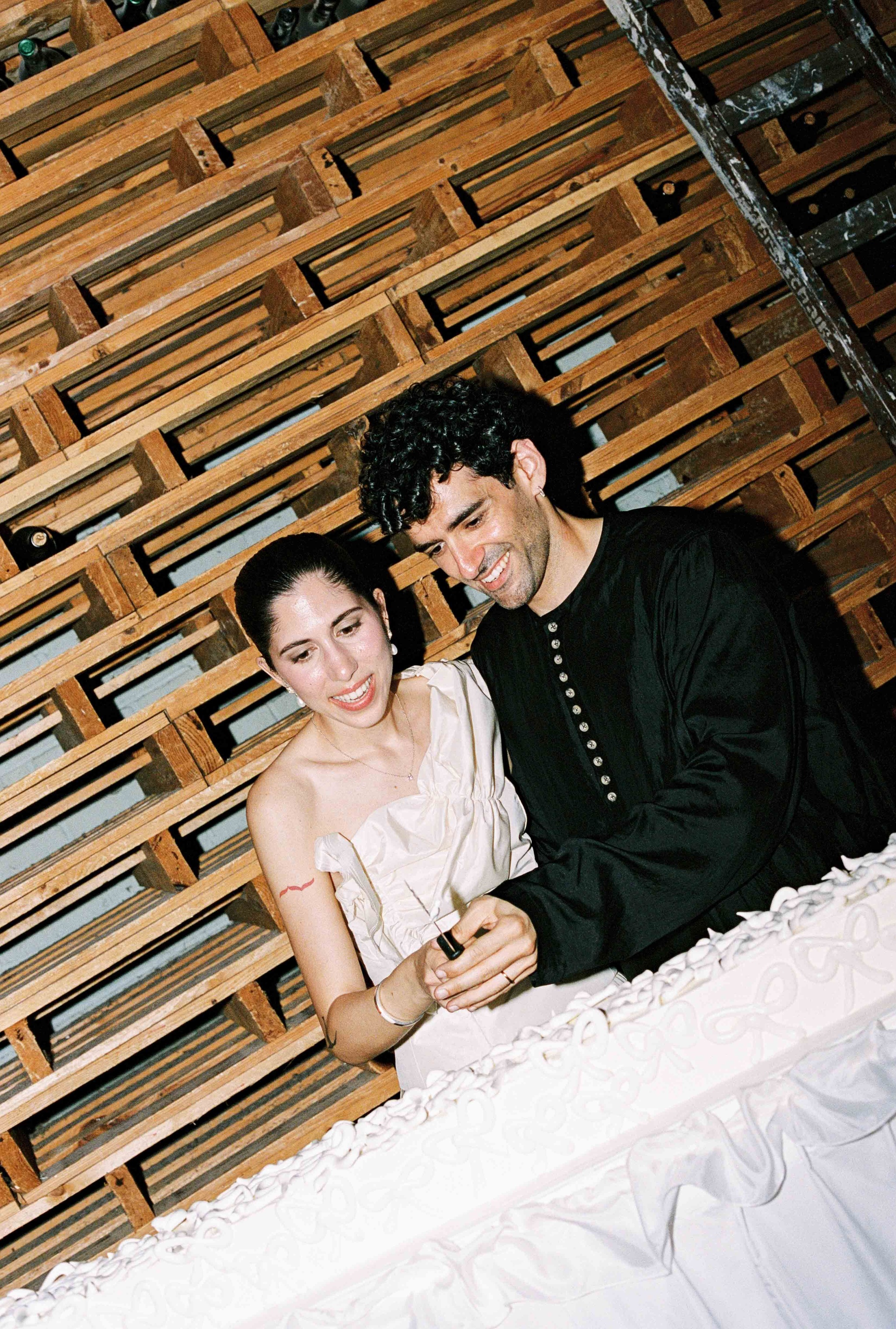
The culinary and visual details were equally personal. Micheline Nahra, a Lebanese food designer based in Rotterdam and close friend, crafted the wedding cake. After a cake tasting with both of their mothers, they unanimously selected a single long, rectangular lemon tier cake adorned with delicate silk ribbons. “Cake tastings are so much fun, I almost want to do it again,” she says. For the tableware and drinks tables, Rotterdam-based Studio Nani custom-made everything, while Oori Apparel, a Korean origami artist based in Amsterdam created miniature sculptures out of paper napkins as a finishing touch.

Loose, lush floral arrangements were created by Ariella Ray of Rae Blooms, a close friend of Spanish photographer Rebeca Valls, who captured the day in warm, documentary-style frames. Welcome drinks and bites were provided by Copain, and when film grant deadlines overlapped with the wedding prep three weeks prior, wedding planners Se Marier stepped in to execute Saleh’s vision effortlessly.

Saleh’s directorial approach to her professional life—treating filmmaking not as a rigid hierarchy, but as a collaborative shepherd guiding a team where everyone feels seen—became the guiding philosophy for her wedding day. “In film, people think you have to be this stern leader,” Saleh says. “I think of it more like a collective movement. Approaching life, relationships, and a wedding like a true collaboration means everyone puts their heart into it. It was simply a room full of young, creative friends bringing something beautiful to life together.”

The Nod Newsletter

We're making your inbox interesting. Enter your email to get our best reads and exclusive insights from our editors delivered directly to you.