



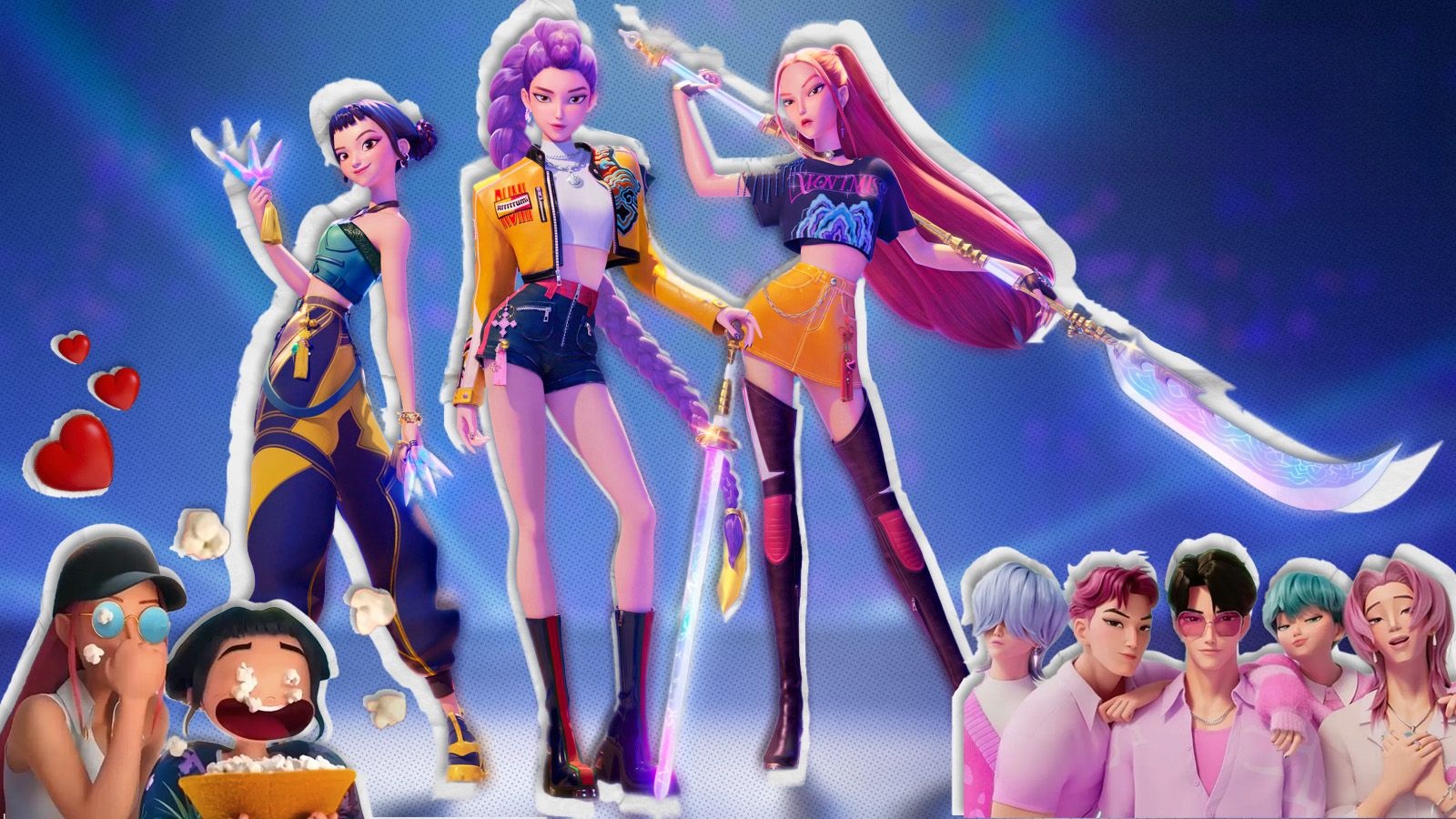

When K-Pop Demon Hunters hit Netflix in June, it looked like a high-gloss animated caper for K-pop fans. The protagonists—Rumi, Mira, and Zoey—are part of a popular idol group called HUNTR/X. As the film’s title suggests, they’re also tasked with the responsibility of protecting the earth from demons with their secret superpowers, which are derived from their fans’ high-pitched screams during their concerts.
Demon king Gwi-Ma lets his demon underling Jinu form a boy band, Saja Boys, to counter HUNTR/X’s influence and hit them where it hurts—their fans. There are neon swords, ramyeon dinners, glitter bombs, an enemies-to-maybe-lovers subplot, a cutesy feline that reminds you of a certain bus from My Neighbour Totoro, and killer choreography.
The premise guaranteed a hit, at least with the younger Blackpink-merch-toting K-pop fandom.
But something strange happened. Everyone started watching.
People who had never heard of EXO or BTS were streaming it, humming its songs, even cosplaying the characters. The numbers racked up. The soundtrack shot up global charts the week it released, with ‘Golden’ sitting in the Top 20 on multiple Billboard categories for almost a month and outlasting several heavily hyped pop albums. TikTok and Instagram reel trends around ‘Soda Pop’ and ‘This is What It Sounds Like’ kept the tracks looping everywhere, from gym playlists to graduation reels.
It was not just the most popular animated film on Netflix, it was also the most popular film on the streaming platform, with 236 million views (and counting). Within weeks, Netflix was capitalising on the buzz in USA, Canada, and Australia with singalong screenings that looked more like concert nights, running packed with glowstick-toting crowds of all ages. Even critics who usually roll their eyes at idol-centric content admitted they couldn’t shake the soundtrack—a peppy K-pop-inspired album of earworms that combined English and Korean lyrics.
Suddenly, K-Pop Demon Hunters wasn’t just a film, it had also become a cultural ripple. Was it the music? The visuals? Maybe. But there was also something unexpectedly raw—a story about identity, pressure, and the quiet terror of not being enough. Somewhere between glitter and scares, K-Pop Demon Hunters stopped being fantasy and started feeling like a mirror.
Idols by day, demon hunters by night (and the weight in between)
It’s a story for the ages: stars balancing fame with real lives, always split between the person they show and the one they hide. Rumi, the group’s leader, has a dark secret—she’s part demon and terrified the others will reject her if they find out that she’s literally the thing they’re fighting against. Mira, the perfectionist dancer, is consumed by insecurity no amount of practice can silence. Zoey, the lyricist and people-pleaser, keeps performing likability until she forgets what she actually feels.
What begins as a typical battle of heroes versus villains becomes a bigger metaphor. It’s not really about killing demons. It’s about facing the versions of yourself you’ve kept in the dark.
Riya Choudhary, 25, a special educator from Delhi and a long-time K-pop enthusiast, says she was in it for the characters: “Rumi, Mira, and Zoey lived in fear of their secret being exposed, of losing everything they had worked for. Rumi’s need for self-acceptance, Mira’s family pressure, and Zoey’s fear of not being enough felt real. But what stayed with me was what came after the fighting,” she says. “Even in fear, they chose to protect one another. The weight of being a protector, of showing up for others while breaking inside, hit hard. It made me think about how we all carry hidden battles, and how, sometimes, the only way we get through them is together.”
The film rings true because it understands how we all perform in our lives. The characters smile through exhaustion, rehearse confidence, and hide the cracks until they start to split.
The demon-hunting is only a metaphor. What it’s really about is pressure: the pull of family, work, love, and belonging, the constant act of performing normalcy. When the mask finally slips, it’s not failure, it’s honesty.
Yash Mishra, 32, an illustrator from Odisha, says the movie made him finally see just how much he needed a well-deserved break, “Watching them push through exhaustion and still say they’re fine felt too real. It’s exactly how burnout looks,” he says. “The movie captures that pressure so well—the constant need to keep performing even when you just want to stop. It made me realise how tired I actually am.”
The songs that won everyone over
If the visuals pulled people in, the music made them stay. Each song says what the characters cannot. The lyrics circle around masks, mirrors, and the cost of perfection, echoing everything the characters can’t say. Long after the credits roll, the music lingers: part battle cry, part confession, impossible to shake off.
For Mehak Sharma, 26, a Delhi-based advocate, the resounding message was the value of community, “The songs showed how each character was unique on their own but stronger together. We all feel out of place sometimes, but the right people will always have your back. That’s why the line ‘I’m shining like I’m born to be!’ hits so hard!”
When Rumi, Mira, and Zoey finally face their demons, it’s not to destroy them but to accept them. It’s not perfection that saves them. It’s vulnerability and coming clean about their struggles.
As the last track ends and the movie stops, the realisation dawns: the plot has been talking about you all along. For a movie about idols and monsters, K-Pop Demon Hunters sure knows how to look us in the eye.