



The Real Deal25 Feb 20265 MIN

One diamond, many stories

Kalyani Chawla and Tahira Tara on emotion over extravagance, and why some natural diamonds are meant to be lived in

Image

Natural diamonds have always meant more than sparkle. Long before they became shorthand for celebration, they were markers of memory—quiet witnesses to lives lived, milestones crossed, and women finding their way through the world. When a diamond is passed down, it stops being an object altogether. It becomes a story. Or rather, many stories one layered on top of the other.

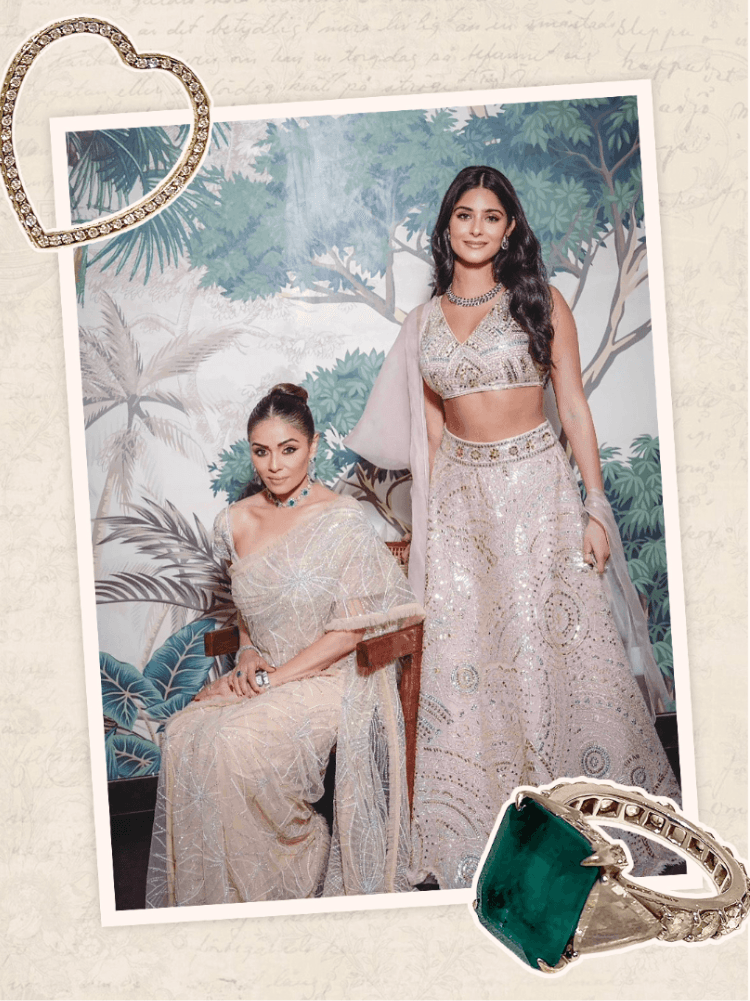
For Kalyani Chawla and her daughter Tahira Tara, that story centres around a diamond Repossi ring—bought in Paris, worn across cities, and slowly, almost casually, woven into the fabric of everyday life.

Kalyani, a serial entrepreneur now based in New Delhi (though Kolkata will always feel like home), has spent her life pivoting across industries. “When I look back,” she says, “each experience has enriched the next. It all tied together beautifully.” Her relationship with jewellery follows the same philosophy—less about accumulation, more about intention.

She has always been drawn to natural diamonds. Growing up, she watched her grandmother—Thakurma—gravitate instinctively towards them, even in a culture that prized ornate gold and intricate meenakari. Diamonds were her grandmother’s weakness. Childhood visits to the jeweller meant trays of real diamonds laid out while Kalyani was happily distracted with chocolates. It was indulgent, yes, but it was also intimate, habitual, and deeply formative.

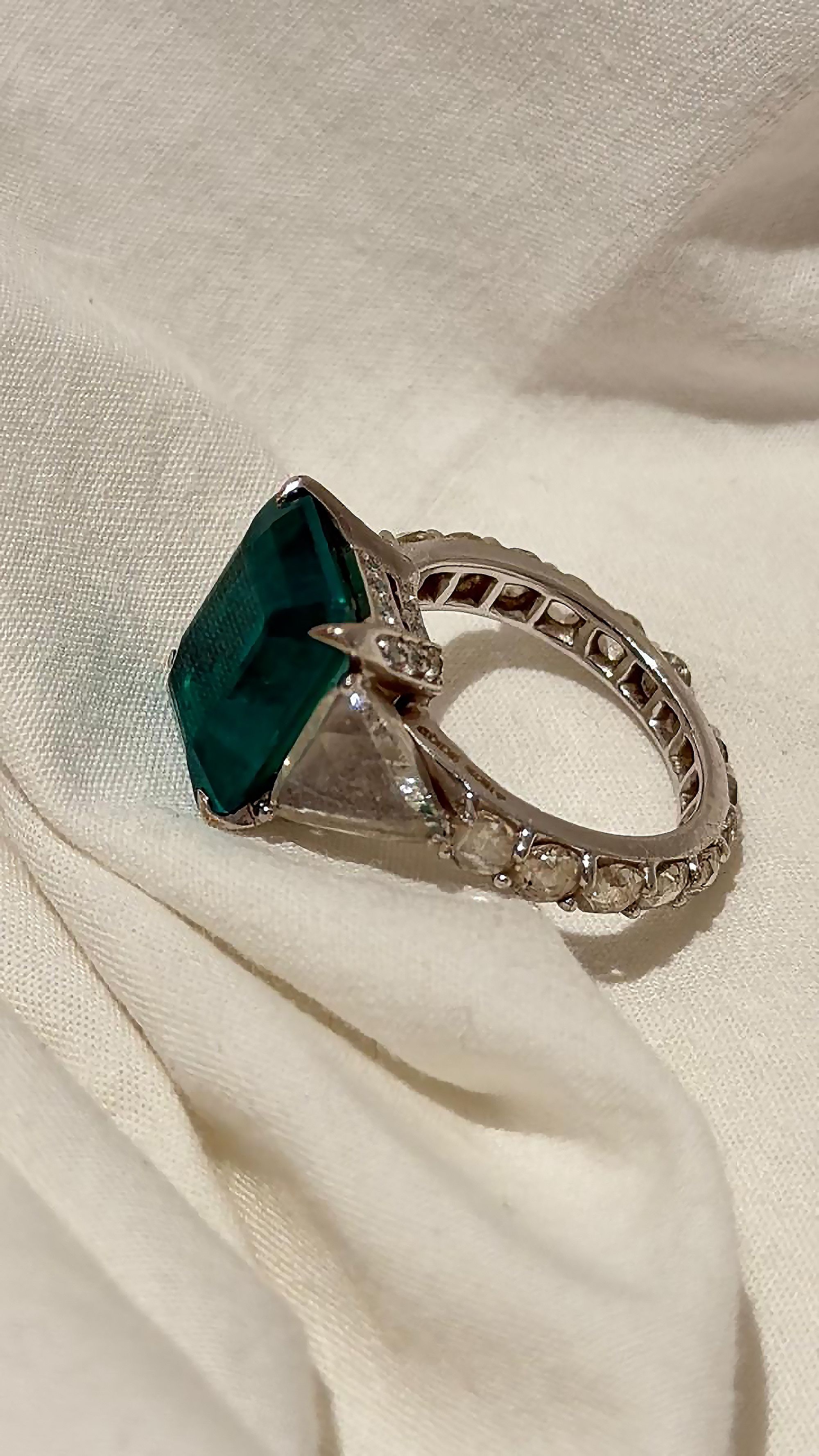
That emotional lineage lives on in the pieces Kalyani still wears today. One of her most treasured rings features a Colombian emerald, framed and elevated by exquisitely cut real diamonds. 
239d4358-0936-4e27-91dd-24528f7faf57.JPG

The diamonds, she says, are what give the piece its presence and power. Gifted by her grandmother for a birthday, it’s a ring she wears often—less for what it is, more for what it holds. Tahira, she jokes, will have to wait her turn for that one.

The Repossi ring, though, belongs to a different chapter entirely

It was the early days of Repossi’s relaunch. Kalyani had long admired the brand’s founder, Gaia Repossi—her quiet confidence, her front-row presence, the way she wore delicate jewellery without trying to prove a point. “Coming from India, where bigger is always better,” Kalyani laughs, “this felt like a revelation.”

She found the ring in Paris, at Montaigne Market, one of her favourite boutiques and, in her words, one of the best-curated stores she’s ever experienced. The ring itself was love at first sight: a heart-shaped diamond, fine and subtle, almost shy. “The eternal romantic in me couldn’t resist,” she admits. It wasn’t loud. It wasn’t showy. It was tiny, precise, and beautifully restrained.

That restraint mattered. Kalyani has always believed that jewellery should be worn, not locked away. “If I buy something, I want to live in it,” she says. Inspired by designers like Victoire de Castellane, who once told her that true luxury doesn’t need to be seen, the ring became exactly that—luxury for oneself. Sometimes worn on her finger, sometimes slipped onto a gold chain and worn as a locket, it became part of her everyday uniform.

She bought it knowing she probably shouldn’t have. “I honestly couldn’t afford it,” she laughs. “But I’ve always believed in quality over quantity. One good thing each season. I was definitely broke after, but it was worth it.”

It’s also the ring Tahira keeps trying to steal.

Tahira, an art dealer based in London, works at Saatchi Yates in St James’s, where contemporary art and modern luxury intersect daily. Her taste reflects that world—pared back, intentional, instinctive. She doesn’t wear many rings, save for a Cartier gold band she hasn’t taken off in over a decade. Which is exactly why the Repossi ring fascinates her.

“I was obsessed with its simplicity and beauty,” she admits. She wears it whenever she’s home, drawn to how effortlessly it fits into life. For her, the ring isn’t tied to a specific milestone. It’s a reminder of beauty in the everyday. Something that works with everything, that adapts, that doesn’t demand attention.

That adaptability is the point. The same diamond means different things to each of them—and yet something remains constant. For Kalyani, jewellery is emotion first. Almost everything she owns is inherited or tied to a moment, a person, a phase of life. “It’s more about emotion than carats,” she says. “Each piece has a story. And Tahira will inherit them all.”

Tahira agrees. What matters most isn’t where a diamond came from, but what it carries with it. The stories make it personal. Irreplaceable. “That’s what makes it yours,” she says. “That’s what no other diamond can have.”

If the Repossi ring is passed on again someday, Tahira hopes it teaches something simple but essential—to see beauty in restraint. In a culture that thrives on excess, there’s power in choosing simplicity. In knowing when less is, quietly, more.

And that’s where this story lands. Not with spectacle but with meaning. A Paris-bought natural diamond ring. A family shaped by real diamonds. A daughter eyeing her inheritance with affection and mischief. Proof that natural diamonds endure not because they shout but because they adapt—holding space for every woman who wears them, exactly as she is.

The Nod Newsletter

We're making your inbox interesting. Enter your email to get our best reads and exclusive insights from our editors delivered directly to you.