Design28 Oct 20263 MIN

At Madwater Brewery, the gargoyles come before the beer goggles

In Dadar’s new 10,000 sq ft microbrewery, historic drinking fountains, train-station gargoyles, and coastal tetrapods find themselves in rather unexpected company

Madwater Brewery Mumbai

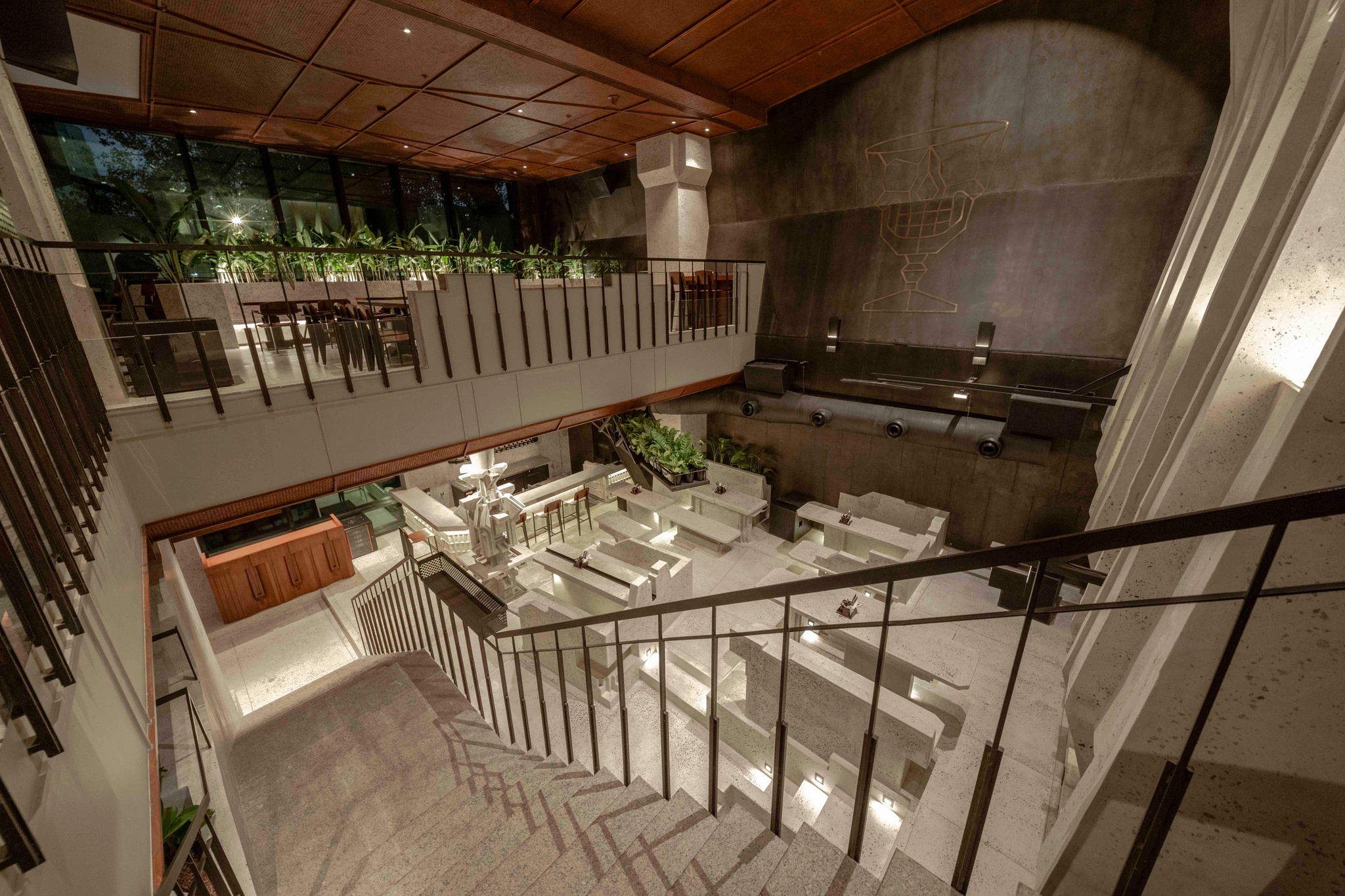
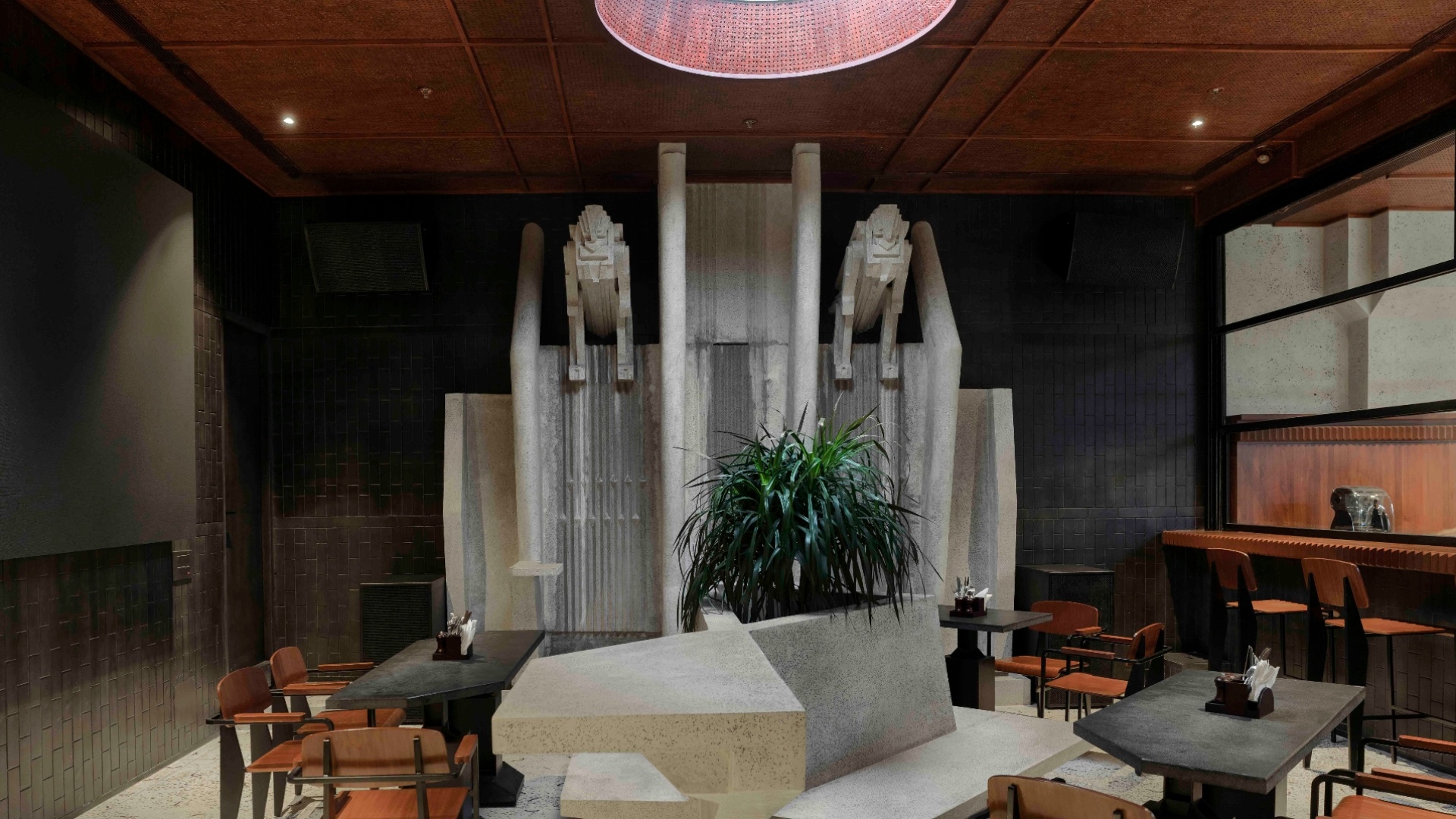
Madwater’s two levels offer distinct experiences, from the cathedral-like scale and bustling atmosphere of the ground-floor beer hall to the warmer tones and more intimate seating arrangements of the upper level

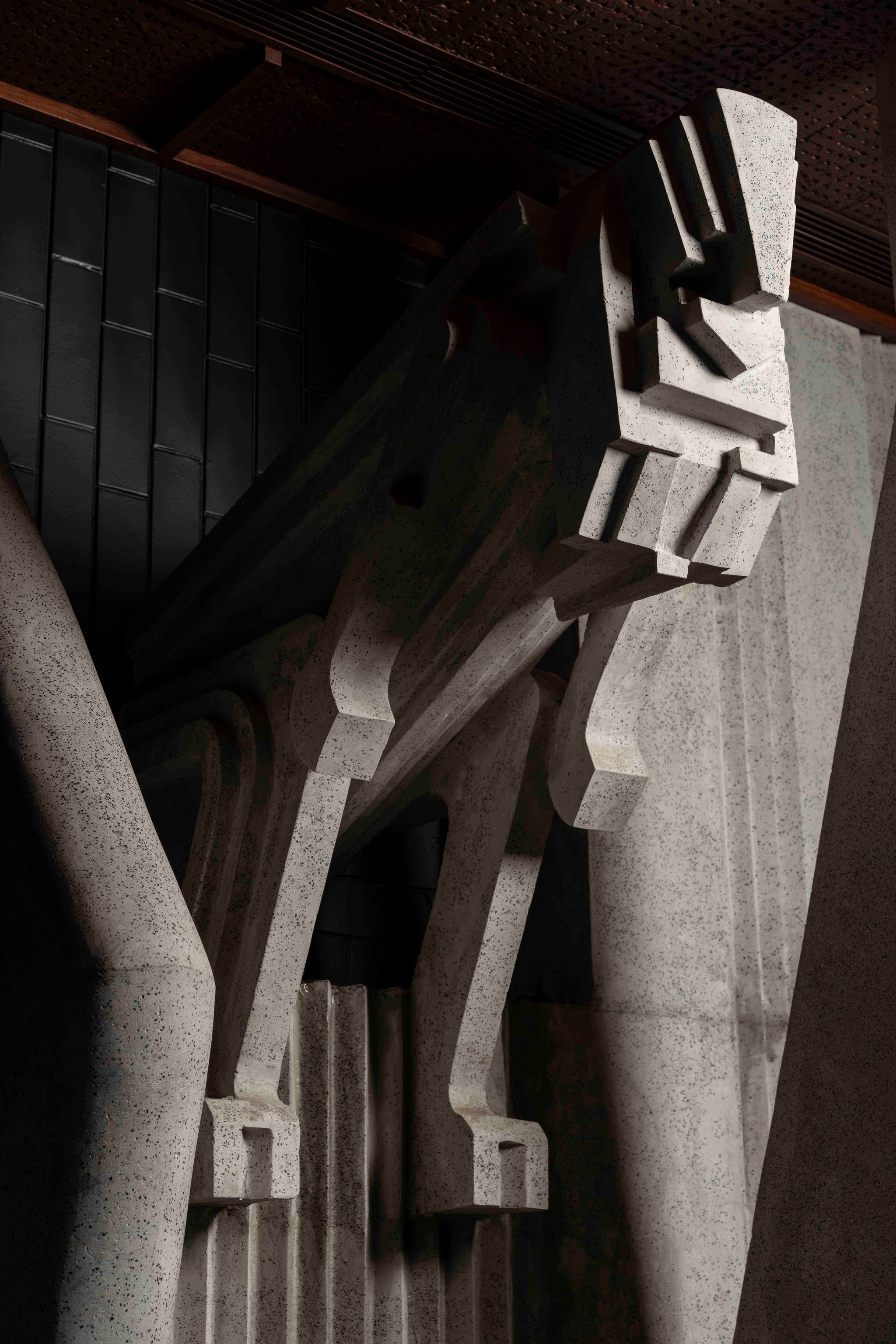
There’s something rather cheeky about borrowing from Mumbai’s historic public drinking-water fountains (especially in times like these) to create a place where people can stand around drinking beer. At Madwater Brewery, which opened about a fortnight ago, old pyaavs have inspired sculptural forms, coastal tetrapods have found their way indoors, and gargoyles inspired by those at Chhatrapati Shivaji Maharaj Terminus watch over the proceedings.

It’s an unusual assortment for a contemporary watering hole, but Madwater has little interest in being ordinary. Founders Raj Rai and Abhijit Rao, along with architect Zameer Basrai, co-founder of The Busride Design Studio, have brought their different instincts together to create a place with plenty of personality.

For Rai and Rao, the idea was always to go big. Rai, who heads Madwater Brewery’s microbreweries and taprooms business, and Rao, who leads brewing and retail, wanted the industrial appeal of Mumbai’s old textile mills with the practicality of a contemporary building that could accommodate a working brewery. They found it at Ruby Tower in Dadar: a raw concrete shell with 32-foot ceilings, enormous steel brackets, and cantilevers. “It was basically a parking lot of a structure,” Rai recalls. “We had no water or electricity running anywhere. We had to do everything from scratch.” A rather ambitious starting point for a 10,000 sq ft brewery.

Meanwhile, Rao, with this space, would rather challenge people’s expectations of beer than cater to them. “Why can’t we drink what the whole world drinks?” he asks, questioning the tendency to adapt international styles to what brewers assume Indian drinkers prefer. It’s a confidence that runs through Madwater, from the beers on tap to an interior that happily leaves its concrete bones exposed.
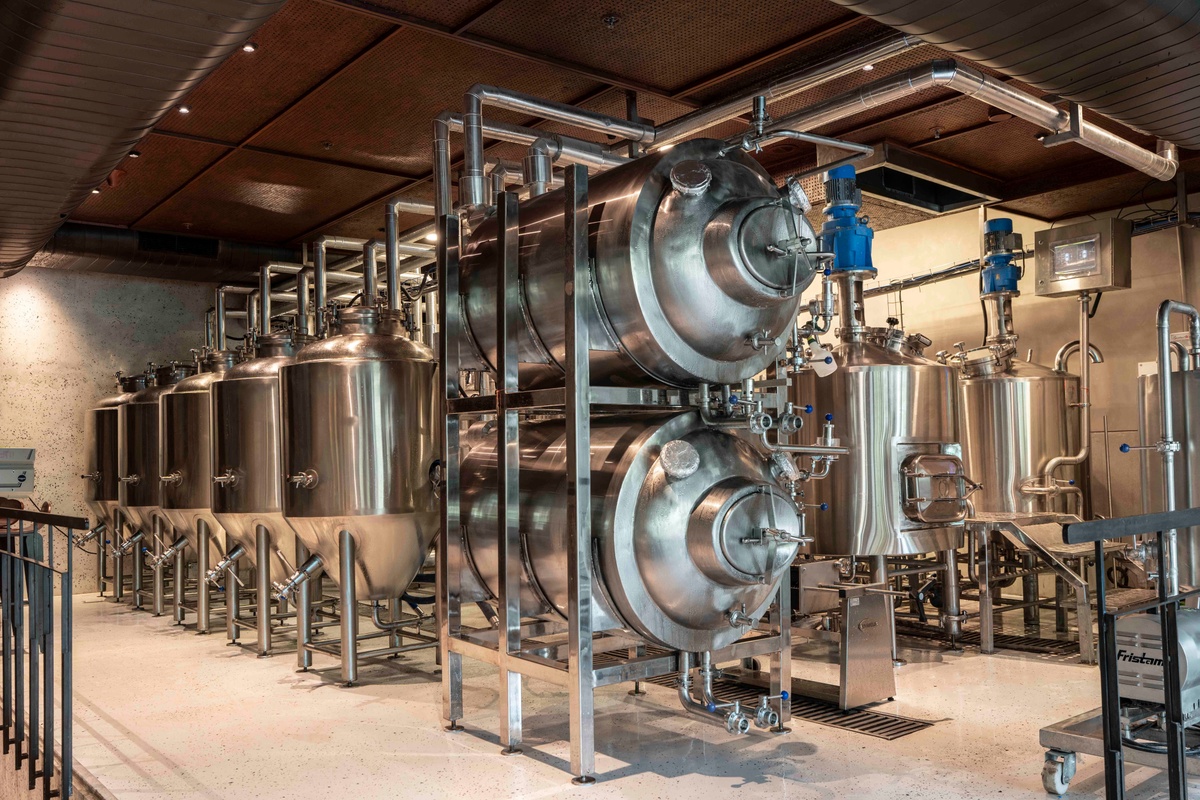
Downstairs, the double-height beer hall has something of a cathedral-like atmosphere, with substantial concrete tables and an amphitheatre-like seating arrangement facing the working brewery. The brewing tanks are part of the scenery, allowing visitors a glimpse of what goes into their pint. Upstairs, timber brings warmth to the concrete, with intimate seating, platforms to perch on, niches to rest a glass, and quieter corners for those who’d prefer to sit out the bustle. “Beer is such a format breaker,” Basrai says, describing everything from boisterous groups to couples seeking a corner, or someone popping in alone for a pint. “What we’ve tried to do is provide formats for every possible person to enjoy beer.” The possibility of chance encounters, he believes, is part of the pleasure.

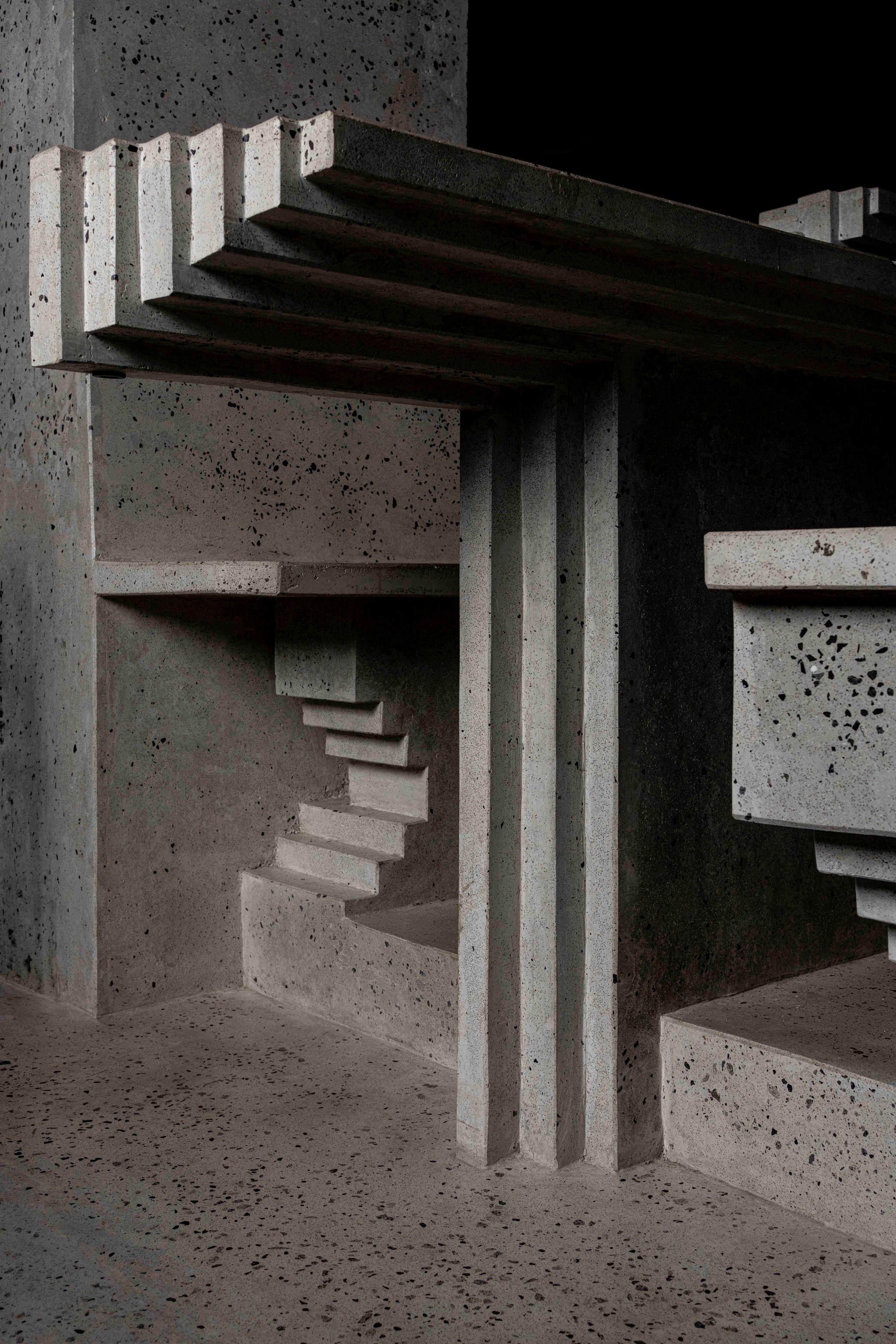
There’s another reason Madwater rewards a little wandering. Mumbai is everywhere, although rarely in ways one might immediately recognise. Its old water tanks, drinking fountains, and coastal structures helped shape what the collaborators dubbed D(eco) Brutalism, bringing together the city’s Art Deco heritage, ecology, and the raw character of the building. “The brand has always been contemporary. It’s not a nostalgia-driven brand at all,” Basrai explains. He recalls studying and measuring historical structures, then abstracting their forms for a new setting. The pyaavs, built by philanthropic merchants, with drinking troughs at different heights for people and animals, inspired tiered features and standing totems. One beside the ground-floor bar is topped with a tetrapod, like those lining Mumbai’s coastline. Inverted stepwell forms in the washrooms recall historic tanks such as Banganga and Gowalia.

Madwater hasn’t just borrowed from Mumbai’s architectural history. It’s made use of discarded building materials, too. Broken tiles, granite, aerated concrete blocks, and concrete cores recovered from construction work around the site were crushed, graded, and mixed with concrete to create debris-crete. Cast into sculptural, terrazzo-like forms, the material changes appearance depending on what went into the mix.

One of its more unexpected appearances is in the ground-floor women’s washroom, where a sweeping curved terrazzo modesty wall conceals the facilities beyond. Visitors might briefly wonder whether they’ve walked into the right room. Working with the material on this scale was no small undertaking, and Basrai is quick to credit contractor Hukmaram Suthar for helping realise their ideas. “I don’t think it could have been done by anyone else,” he says.

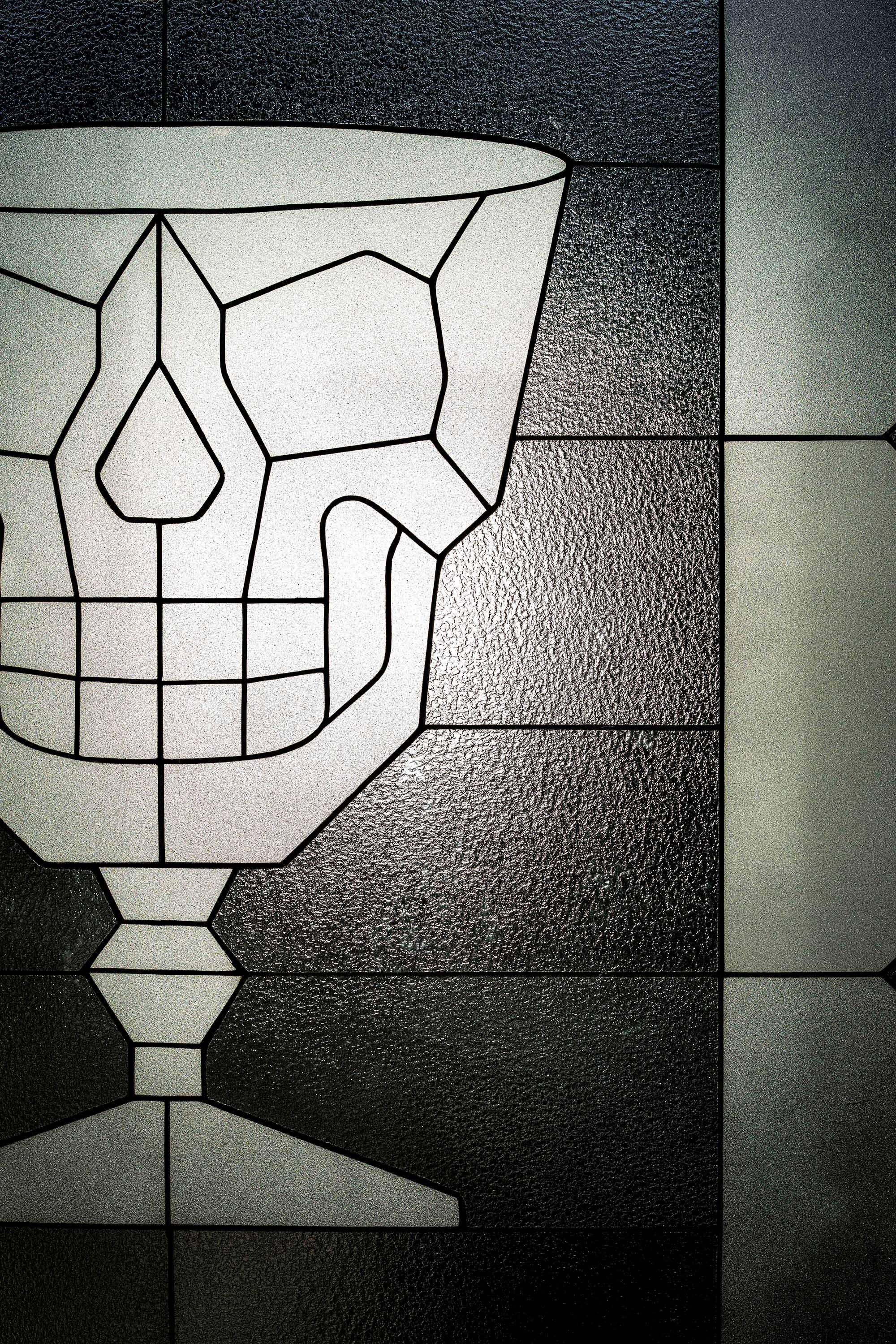
For all its architectural heft, Madwater has a decidedly mischievous streak. Its skull-shaped chalice emblem, developed with Studio Bigfat, carries the words “ESTD NOW”. Across the tabletops, abstract figures inspired by Henri Matisse’s ‘La Danse’ appear in brass inlays. For Rao, they express freedom and individuality within a community rather than simply offering another opportunity to repeat the logo.

As the branding took on an edgier personality and the founders became clearer about their ambitions for the food and beer, the interiors evolved alongside them. Basrai remembers revisiting material samples during this period. “That was the richest moment in the whole process,” he recalls. “That’s when the product, the branding, and the space start to sing a similar tune.”

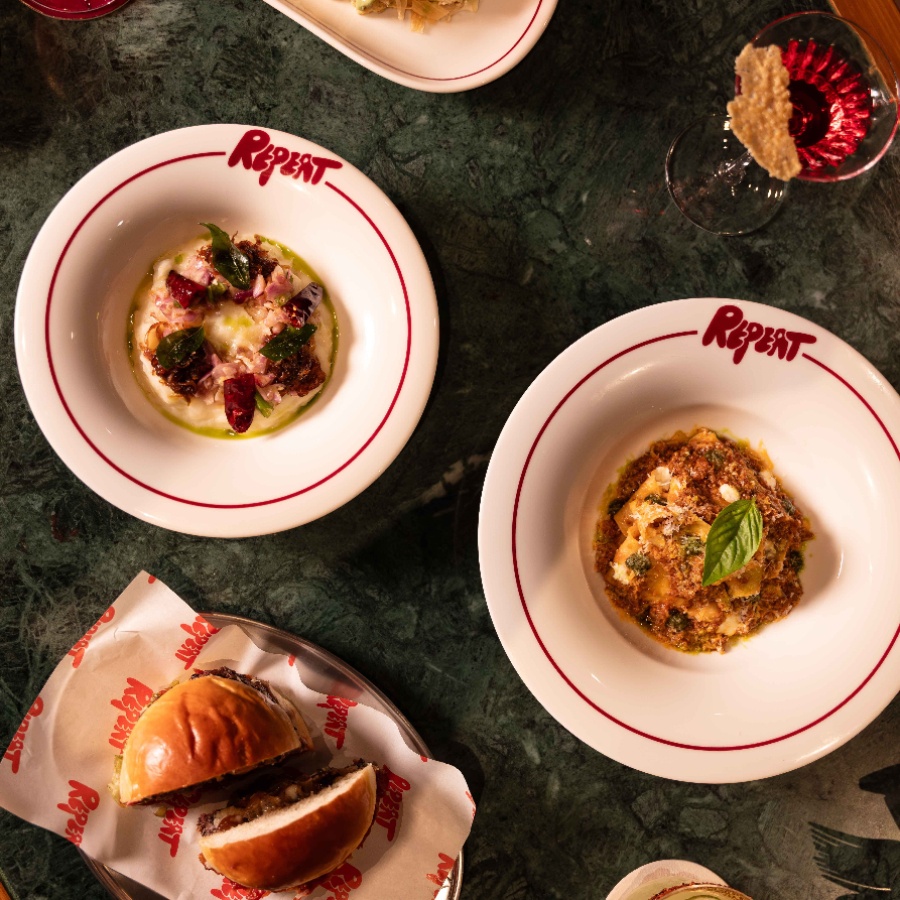
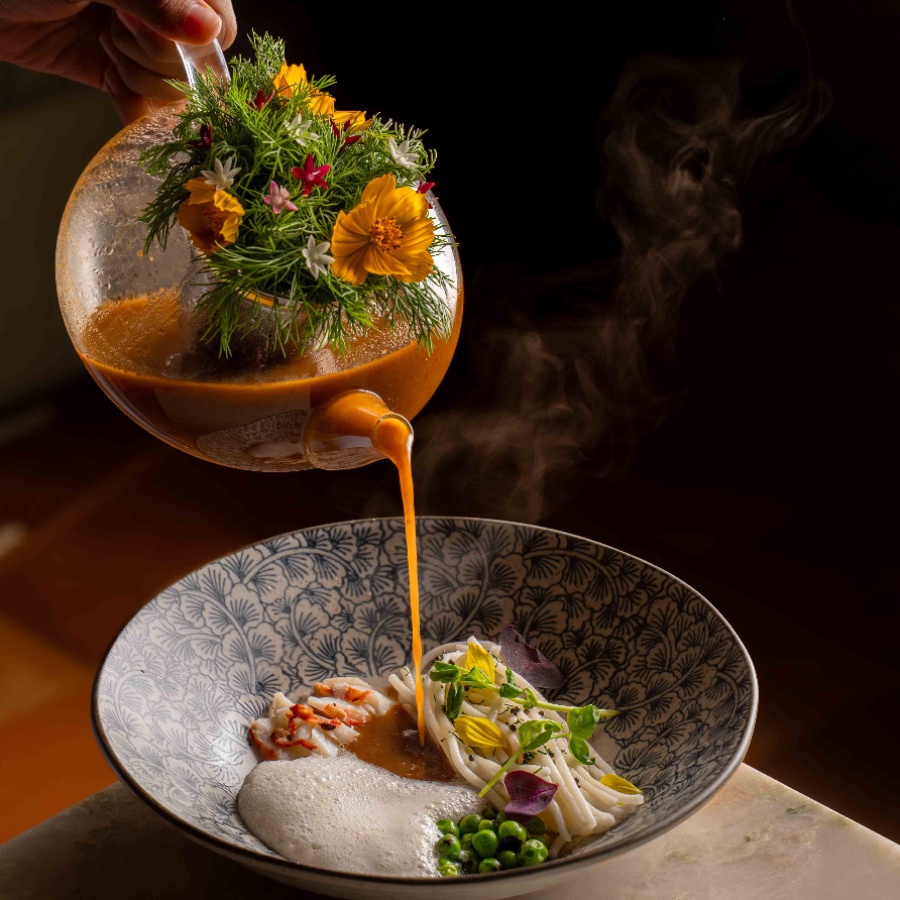
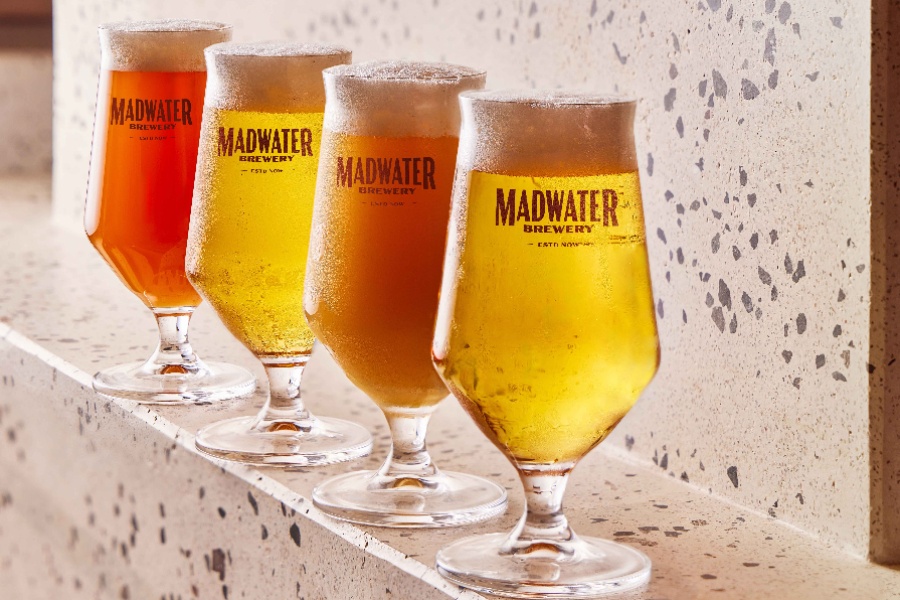
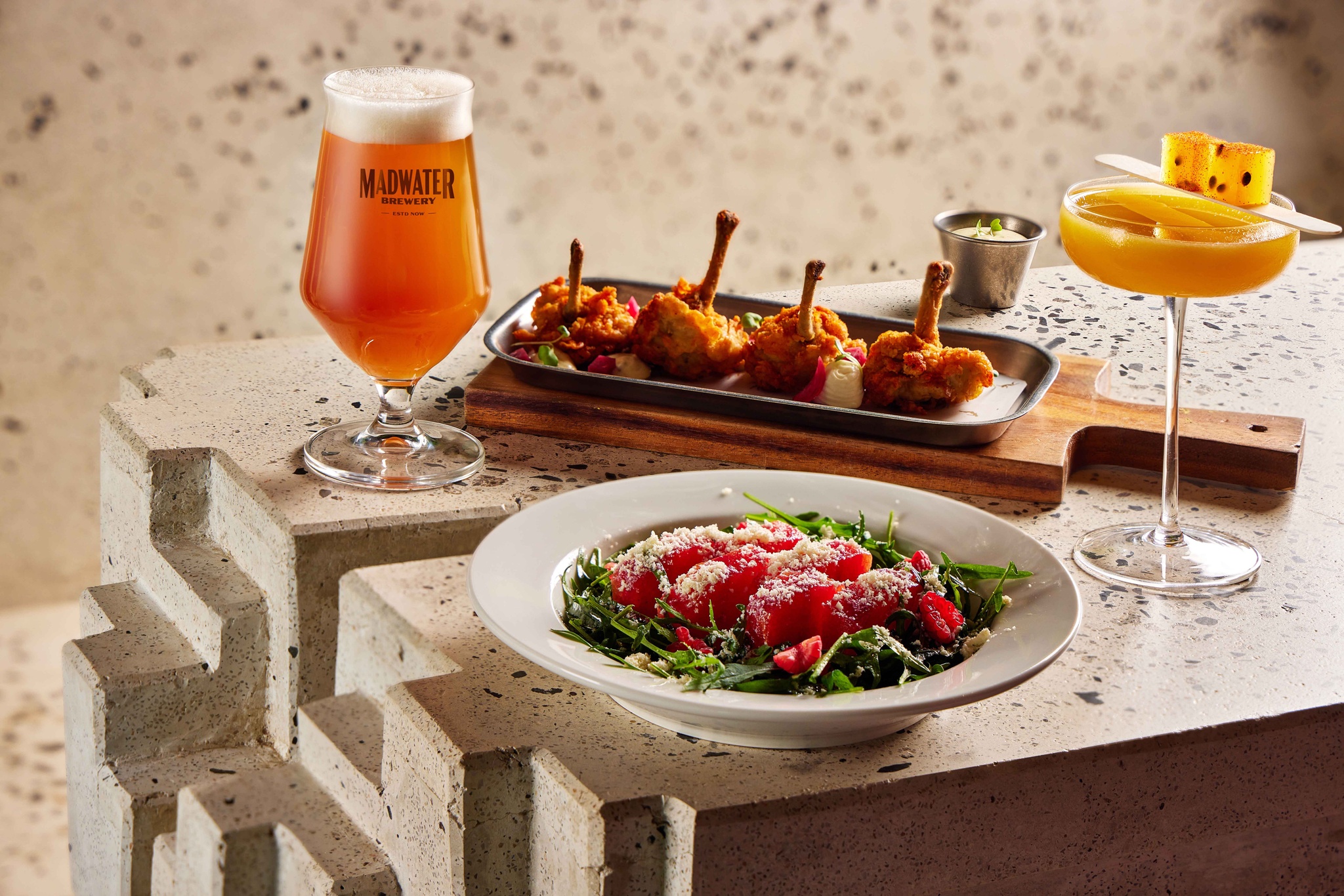
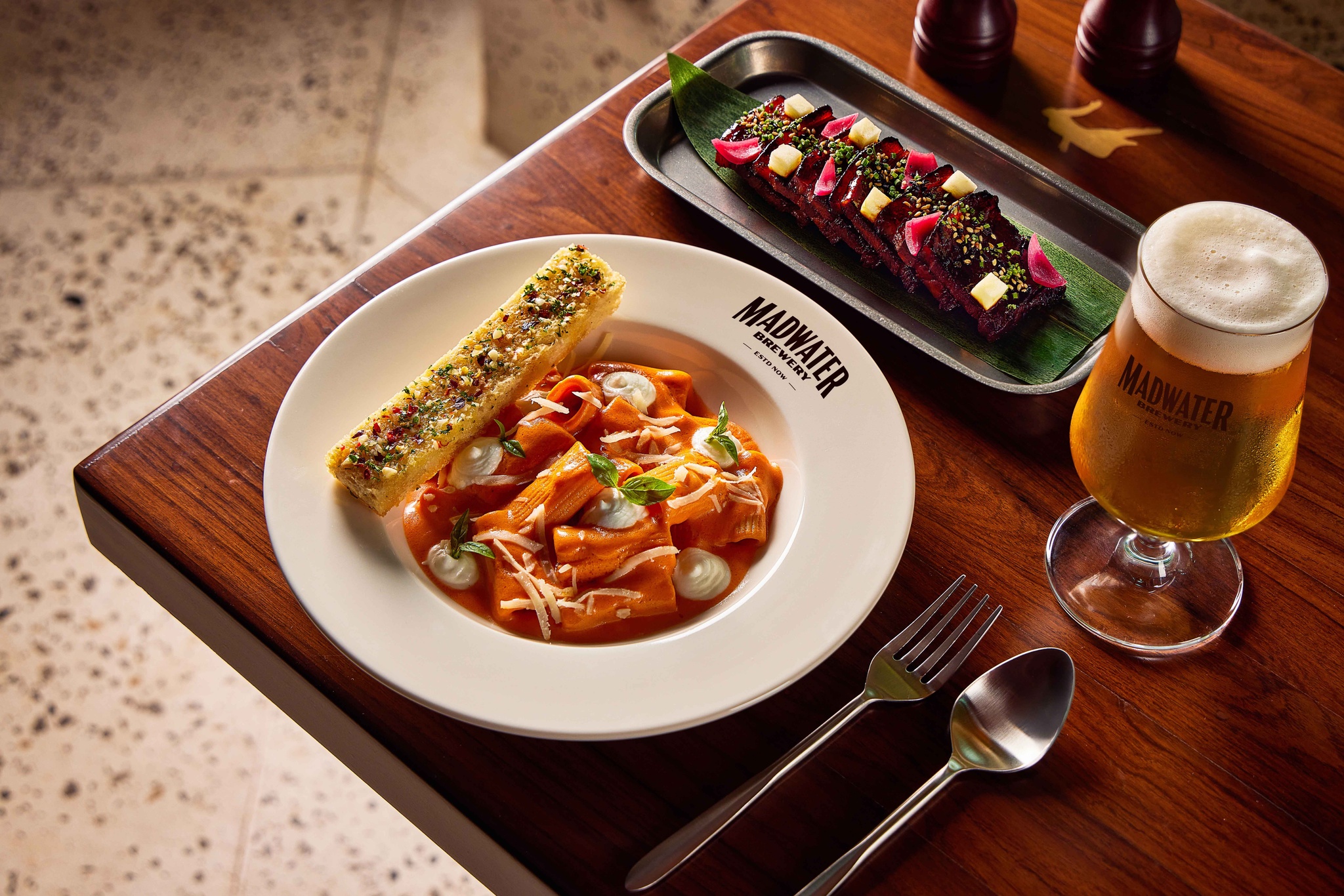
And there’s plenty happening beyond the architecture. Technical director Sven Kerstens brings Belgian brewing expertise to a line-up that stays faithful to traditional styles, including Smoke Break, a beechwood-smoked ale, Dark Ritual stout, and Cask No 9, a whisky-forward ale. In the kitchen, executive chef Gurudatt Sawant takes a similarly enthusiastic approach. His “Caviar to the Multitude” philosophy brings classical technique and a playful spirit to dishes such as tare-glazed Tokyo Tap Yakitori and a buttermilk fried chicken burger with gochujang mayo. The menu makes room for different appetites and occasions, with the food given as much consideration as the beer. Rai recalls rejecting nine versions of the tiramisu before the tenth finally made the cut.

Ask the three men where they’d most like to spend an evening here and their answers are delightfully different. Rao would settle beneath the gargoyles on the upper level, beer in hand. Rai favours the DJ corner, where he can watch guests across both floors. Basrai would happily stand beside the tetrapod-topped totem, admiring the bar’s concrete textures. “I still get goosebumps when I go there,” he admits.

For now, Rao is happy with how things are going and the one small design omission that probably made it happen: guests seem happy to stay for hours, forgetting the time. “I think we just forgot to put a clock,” he jokes. For a place called Madwater, losing track of time seems rather fitting.

Meal for two: ₹3,500

Timings: Open every day from 12 noon to 1 am 

Address: The Ruby Tower, Senapati Bapat Marg, Dadar West, Mumbai

Call: +91 81694 66699

The Nod Newsletter

We're making your inbox interesting. Enter your email to get our best reads and exclusive insights from our editors delivered directly to you.