
My relationship with hay goes back a long way. Growing up in Assam, dried hay, straw, bamboo and thatch were familiar sights. Every January around the winter harvest festival of Magh Bihu, bhelaghars –temporary huts made of hay and bamboo–would spring up in our neighbourhoods for Uruka, the eve of the festival, when communities gather for a grand feast and an evening of merrymaking.
As a child, I remember sitting inside these cosy makeshift hay huts, running my fingers over their rough, familiar texture or even hugging a stray bundle of hay for warmth. So, you can imagine my amusement when, in my late twenties, I found myself being introduced to hay as a luxury wellness treatment during a trip to Transylvania, a region in Romania.
Hay, hay, all the way!
After days of driving around Transylvania, from the dizzying heights of the 2,042 metre Transfăgărășan Highway to the capital, Bucharest, my best friend and I eventually made our way to Brașov, one of the region’s most charming old towns. But as beautiful as the forested hillsides and flower-filled meadows looked in autumn, our aching backs, stiff necks and sore joints were beginning to protest the hours on the road. Thankfully, Brașov and its surroundings had no shortage of spa centres offering conventional massages, but when the elderly lady who ran our old, wooden apartment hotel asked if we would like to try something called hay bathing, we figured, why not? A traditional Alpine ritual dating back centuries, hay bathing uses the natural warmth generated by fermenting meadow grasses to help soothe tired muscles and aching joints. We signed up for a 30-minute session at a local massage centre called Ragaz Masaj to see if something as humble as hay would do our aching backs any good.
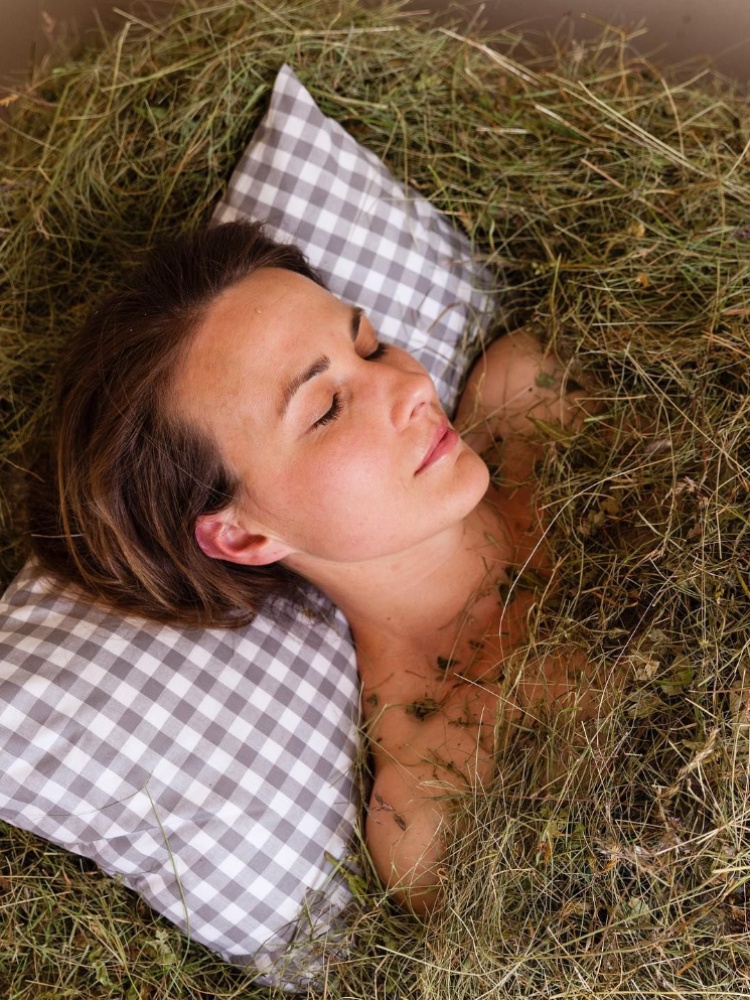
After entering a quiet room, I was asked to lie down on a waterbed and for the first few minutes, I lay there rather bewildered as a heavy muslin sack filled with freshly steamed hay, with an unexpectedly lovely floral and grassy scent, was piled over me. I was enveloped in warmth—looking a little like a grass-covered, human cocoon. After a bit of fidgeting, I eventually settled, letting my body sink in.
The woody fragrance of the hay and the gentle sloshing of the waterbed lulled me into a dreamy, almost sleepy state, and I could feel the tension in my aching back easing up. Somewhere between the familiar grassy scent and the warmth of the hay, my mind wandered back to childhood memories of sitting inside bhelaghars. Funny how a wellness ritual in the mountains of Romania could bring me right back home.
Not just for the cows
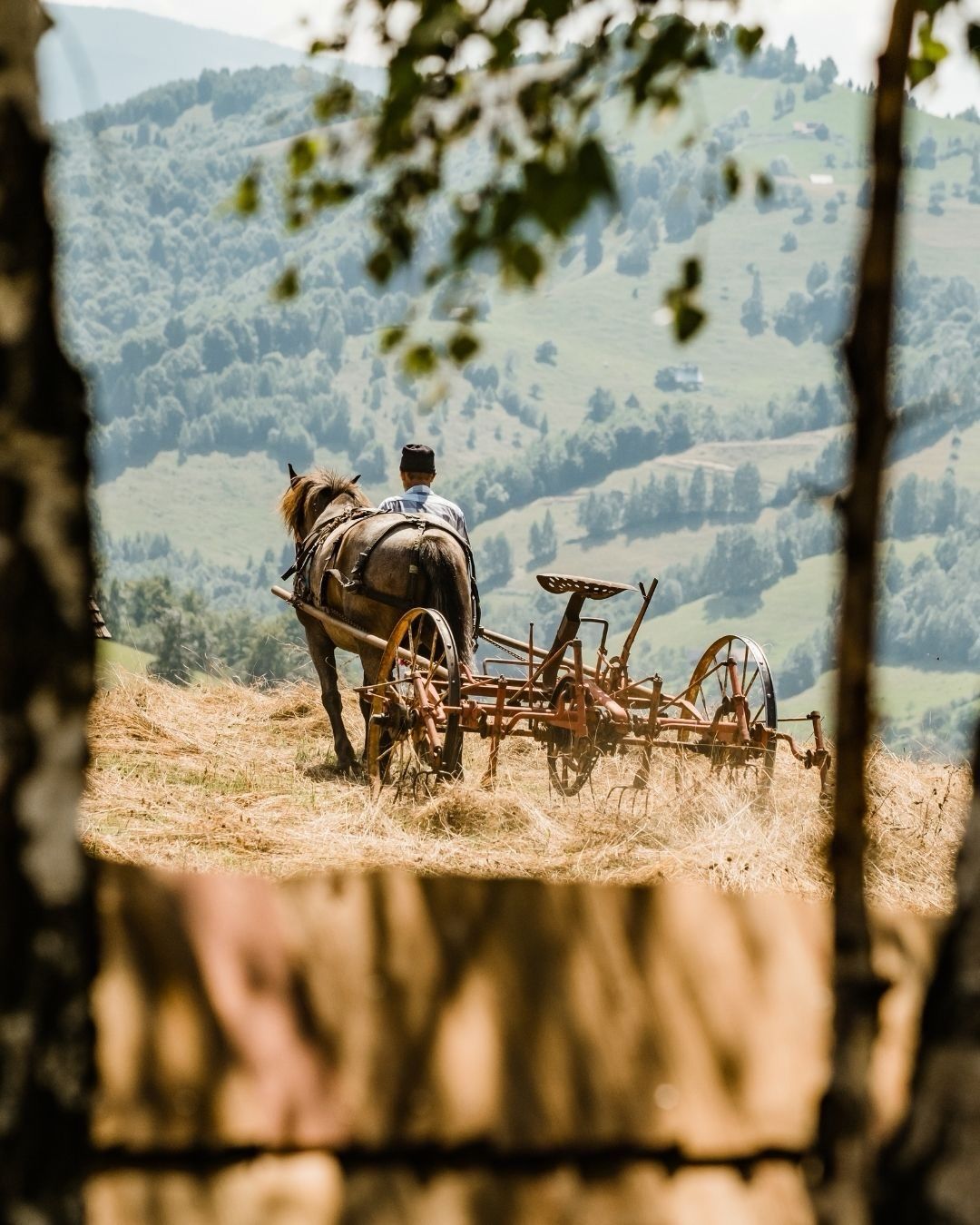
As it turns out, hay bathing or ‘heubad’ originated among farmers in the Dolomites, particularly around Seiser Alm (Alpe di Siusi) in South Tyrol, Italy. Horse-drawn carts piled high with hay were once a familiar sight along the region’s village roads as the practice found its way into Austria and Eastern Europe.
“Hay has always been central to rural life in Transylvania, harvested in summer and stored to feed livestock through winter. Warm hay baths were also traditionally used to unwind after long, physically demanding days, helping soothe tired muscles and encourage relaxation. The meadow herbs and grasses also give hay its characteristic, beautiful fragrance,” shares Ioana Dăncăneț, a Romanian local and manager at Relais & Châteaux Matca Hotel, Brasov. “Today, I think there is real value in bringing these old traditions into modern wellness, even if we now approach them more as restorative experiences than medical treatments,” he says.
The practice has also found its way into medical spas and longevity resorts. Austria’s Lanserhof Group, for instance, incorporates warm, moist hay compresses into its treatments, including the Hay-Liver Wrap and Natural Detox Hay Pack, to stimulate circulation and support liver metabolism. “The heat can improve peripheral circulation, relax muscles and help modulate pain. Some clinical studies, particularly involving patients with osteoarthritis, have also reported reduced pain and a lower need for anti-inflammatory medication following treatment. However, the overall scientific evidence remains limited,” explains Dr Jan Stritzke, medical director at Lanserhof Sylt, a medical resort along the North Sea.
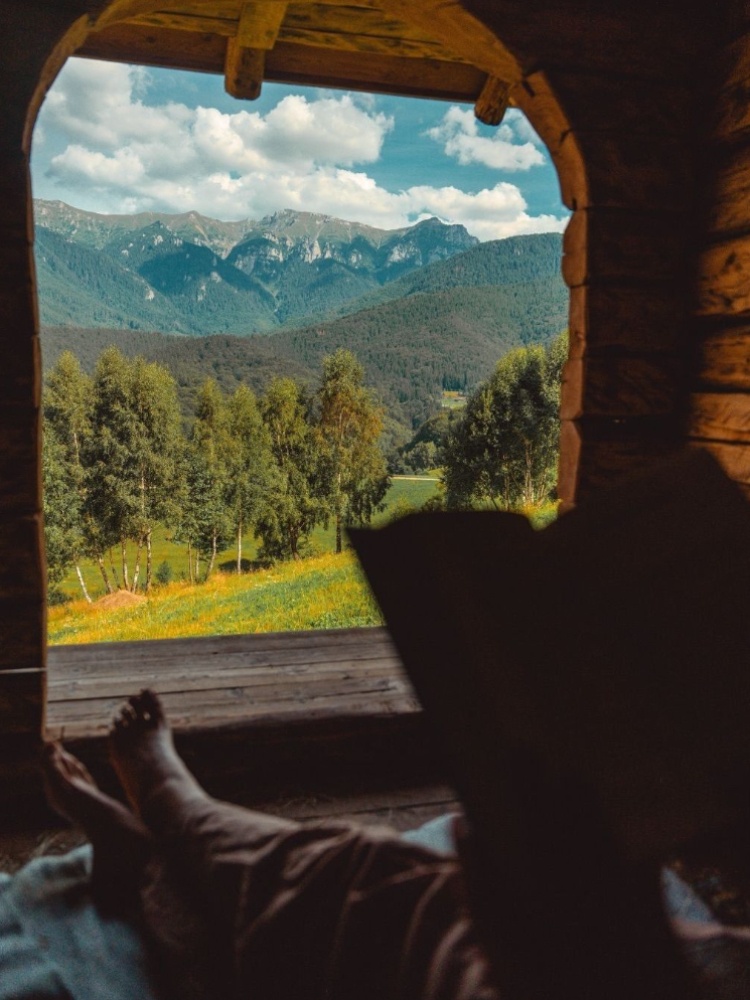
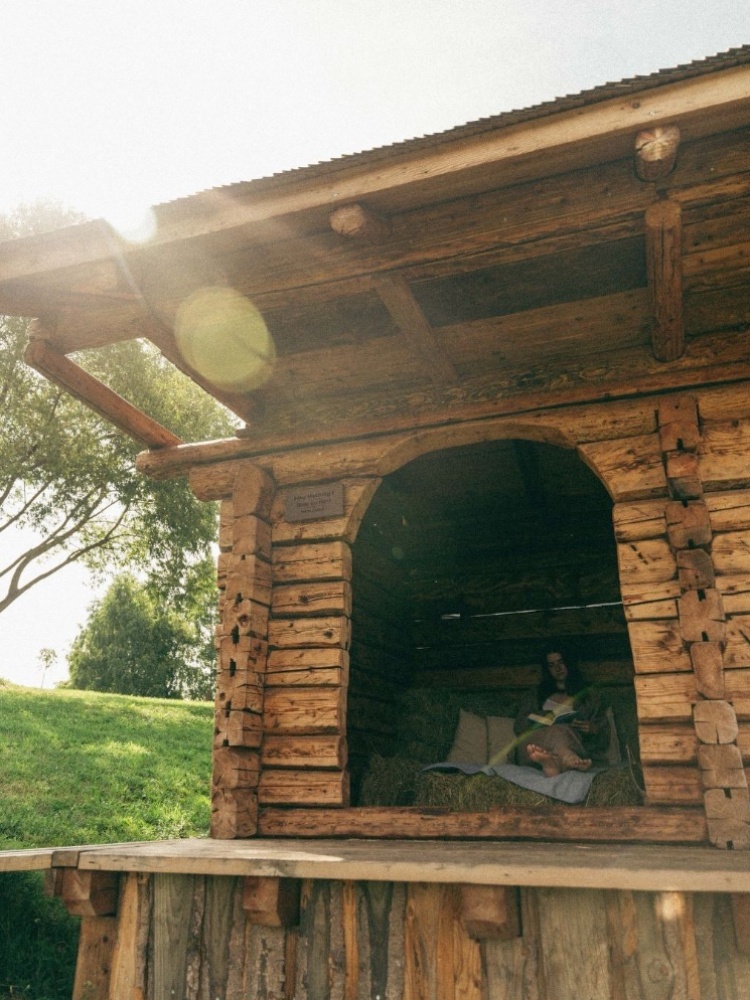
To the casual observer, bathing in hay might seem unhinged, but some boutique hotels are finding creative ways to bring this rural tradition into modern hospitality. At Matca Hotel, traditional hay barns, reminiscent of those in our grandparents’ villages, have been turned into cosy retreats, complete with little mounds of hay, a reading corner and views of the beautiful Bucegi Mountains. “It is a sensory experience inspired by countryside traditions. The fragrance, natural texture and peaceful surroundings create a sense of comfort and relaxation, while connecting guests with a lesser-known part of Romanian heritage,” adds Dăncăneț.