



Places28 Aug 20265 MIN

Will travel for padel

As the sport evolves from a post-pandemic hobby to a wider global phenomenon, the hospitality industry is going all out to attract the “padel traveller”

Image

Last week WhatsApp groups that usually buzz to trade court timings and doubles requests were instead filled with screenshots of an announcement. Agustín Tapia and Arturo Coello—the Messi and Ronaldo of padel, who have alternated at World No 1 since 2023—would be making their India debut at an exhibition match at the SVP Stadium in Worli, Mumbai, on August 29.

India’s padel story so far has largely been a grassroots one—community courts, imported enthusiasm from Barcelona, matches organised over group chats rather than ticketed events. Two of the sport’s most recognisable names choosing to stop here is significant. Tapia, 27, from Catamarca, Argentina, plays with instinct, flair, and just enough cheek to earn the nickname El Mozart de Catamarca. Coello, the Spaniard from Valladolid, is his counterweight at the net.

Their India stop, brief as it is, tells its own story—that padel’s pull now extends to the world of global sport tourism. Early this year, at Krishan Anand’s The Secret Charter, the itineraries for an invite-only group in Gulmarg and Seychelles included food, wellness, and hospitality’s favourite new word: active leisure. Read: A skiing and pickleball gathering in Kashmir, and a padel retreat in Seychelles.

In 2022, as the world cautiously reopened after Covid-19, pickleball, with its low barrier to entry and forgiving pace, quickly became a cross-generational obsession. Its appeal was immediate. Easy rules, compact courts, and a doubles-first format made athletic prowess less of a requirement. But as energy levels returned and calorie counting crept back into everyday life, the faster, more kinetic alternative—padel—began to take hold. The rallies were quick, the courts compact. Still accessible but more demanding. It offered players a greater physical payoff while retaining the community appeal that made pickleball irresistible.

In India, this momentum began to travel wider. Large sporting complexes with multiple courts and clubhouses, including newer private clubs like Bay Club in Mumbai, quickly took note of rising court bookings for both padel and pickleball. Structural adjustments followed almost instinctively. Tennis courts were reimagined and new padel courts were added. Appetite far outpaced supply. WhatsApp groups formed rapidly among players, matches organised through peer networks, and before long the six degrees of separation engineered one of the world’s fastest-growing sporting communities.

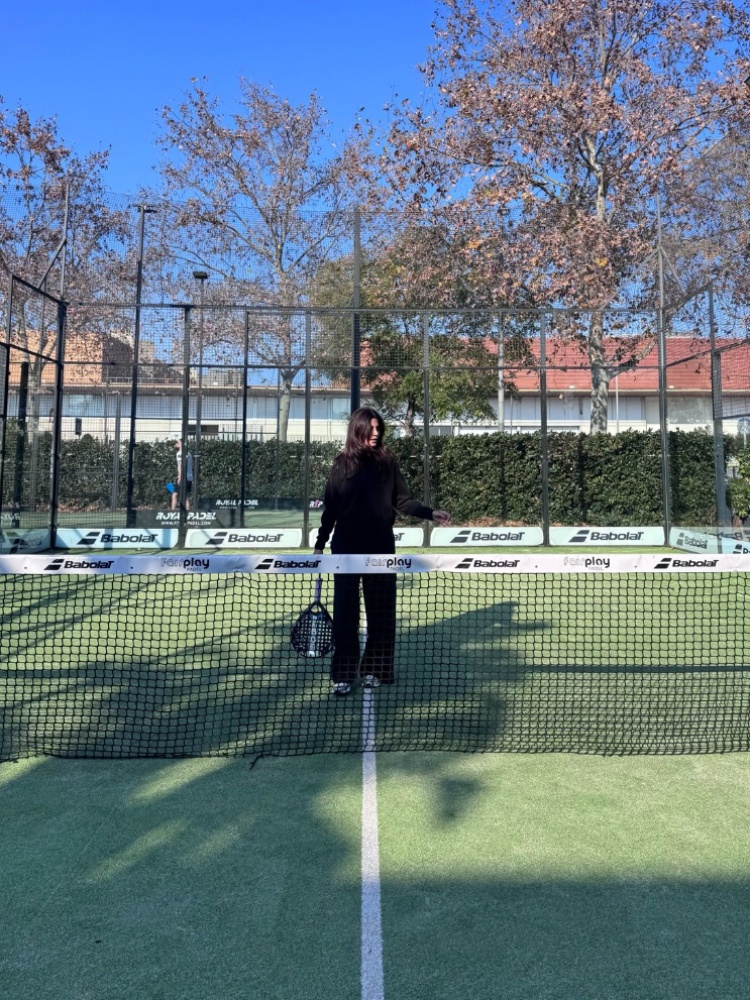
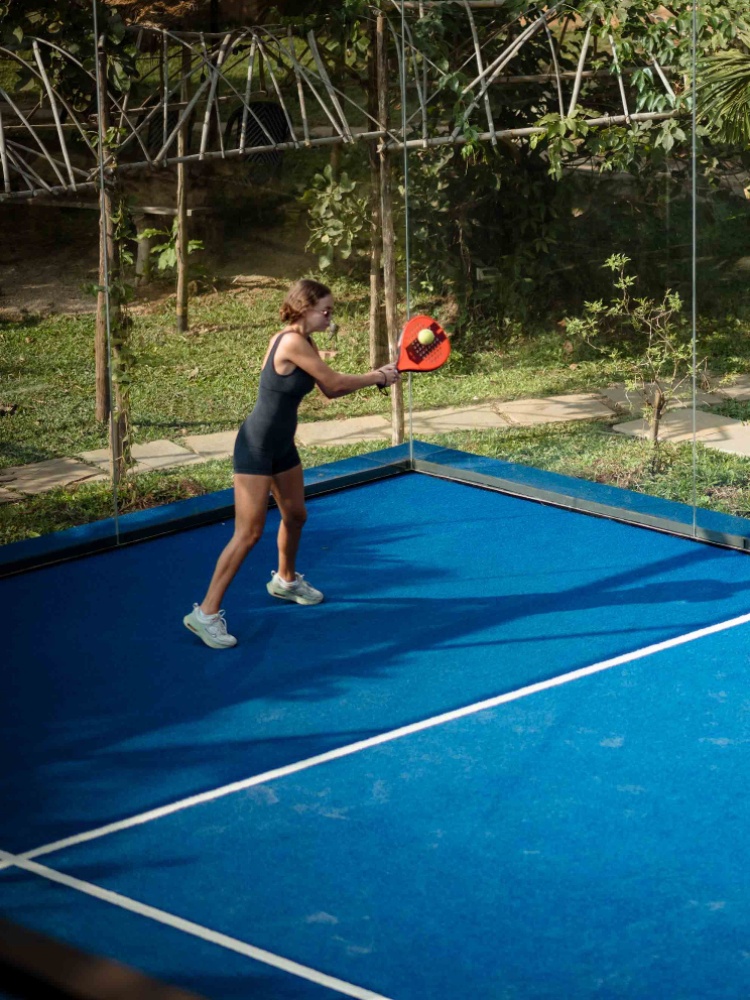
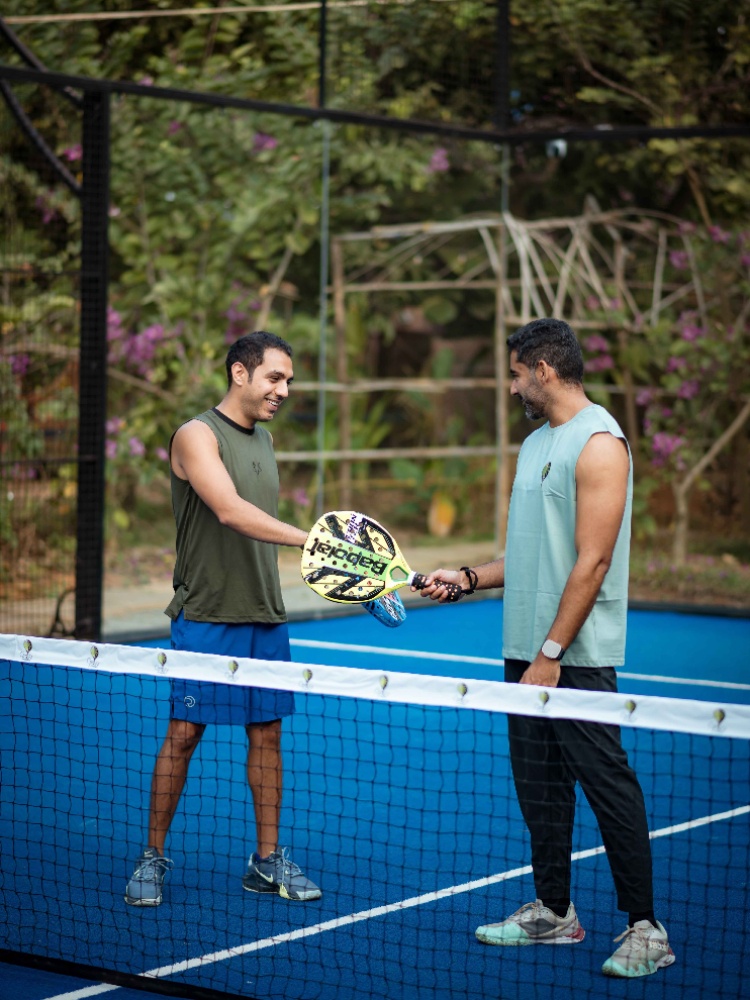
Today, padel has crossed over from urban clubs into the realm of luxury hospitality. The sport is now shaping holidays—embedded into resorts, villas, and hotels, where a morning match precedes breakfast spreads, and evenings end courtside rather than at the bar (fine, just before the bar). Padel, in some contexts, has slowly become a reason to book the stay.

Rohit Raj, a Mumbai-based entrepreneur and founder of Done Deal, is a genuine padel enthusiast whose travels have begun to include the sport almost instinctively. He has played at a padel-equipped stay in the Philippines and is on the lookout for four people who will travel to play with him. “A villa with a court would be a definite draw, while a resort offering games or coaching is an even bigger plus,” he says.
Coco Padel at Circle Anjuna began as Goa’s first commercial padel court but has organically evolved into a social hub. Founders Vishnu Malani and Kashish Malkani describe it simply: you come for a game but stay for the energy and community. The rise of what they call the “padel traveller” is telling—urban professionals between 22 and 45, flying in from Mumbai, Delhi, Bengaluru, even Dubai and London, booking sessions in advance and travelling specifically to play. For many, padel is now part of how they experience Goa.

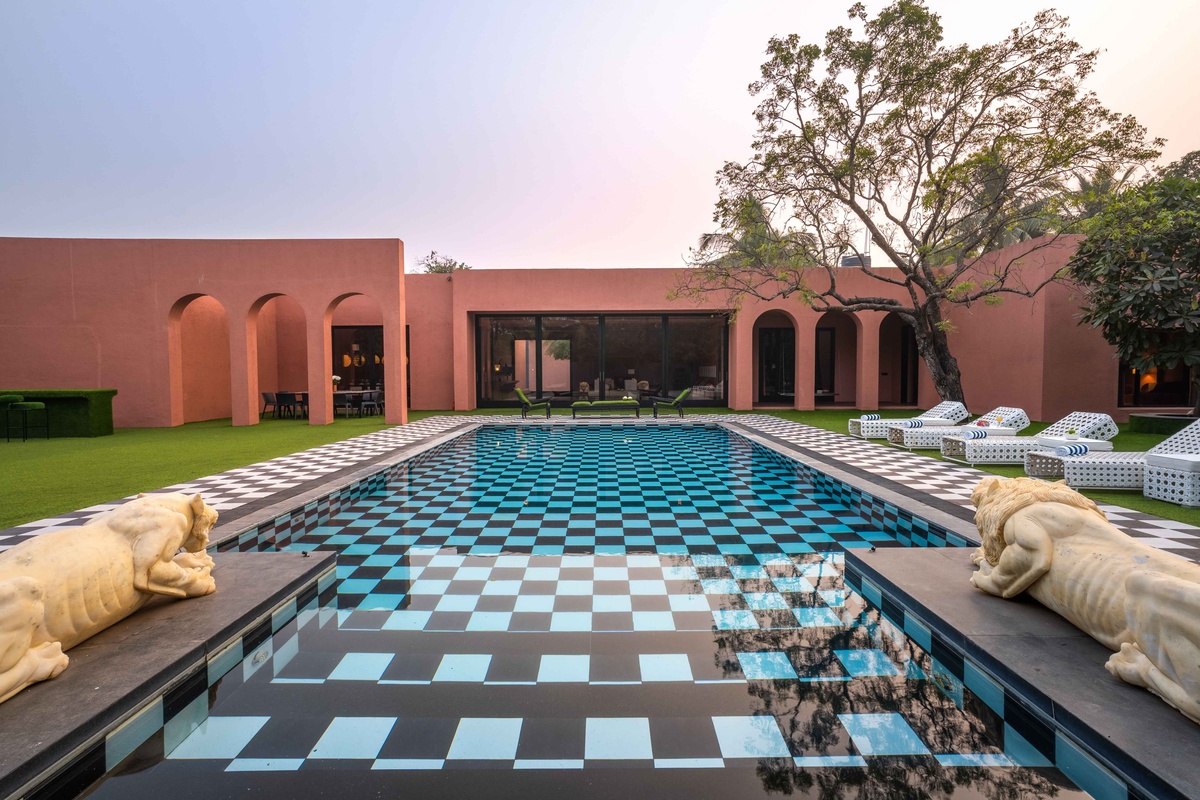
Holiday rentals, too, have seen an uptick in racquet sports. Lohono Stays, the hospitality arm of Isprava Group known for its ultra-luxury villas, recognised the shift early, adding padel and pickleball courts to select properties as far back as 2019. Today, at their properties in Alibaug and Lonavala, courts have become central to booking decisions. Managing director and co-CEO Nibhrant Shah believes a private court “genuinely tilts the decision in its favour”, particularly for larger families and groups of friends. He affirms, “It gives guests something active to do without leaving the estate and often becomes the social centre of the stay.”

Luxury stays are not far behind. Newer properties with generous land banks have caught on swiftly. At Fairmont Udaipur, which hosts everything from large-scale weddings to leisure travellers keen to remain within its expansive grounds, padel has emerged as a veritable upgrade to traditional recreation. Professional coaching led by dedicated instructors, including an in-house coach, elevates the offering further. Much like a butler refines a stay, the padel coach perfects the game.

For Mumbai-based luxury fashion and lifestyle creator Krishna Talesera, the court has become a waypoint on the global itinerary. She has played in Bali, Barcelona, and Sydney. Padel is now part of how she travels: find a court, find your people, and let the rallies do the rest. “It’s addictive in the best way,” she says, “Two hours of no phone, burning calories, and meeting new people—it’s honestly my favourite kind of dopamine hit.”

While a person’s home city will bear the familiarity of similar group overlaps, meeting new people with similar interests is a draw when one is away.

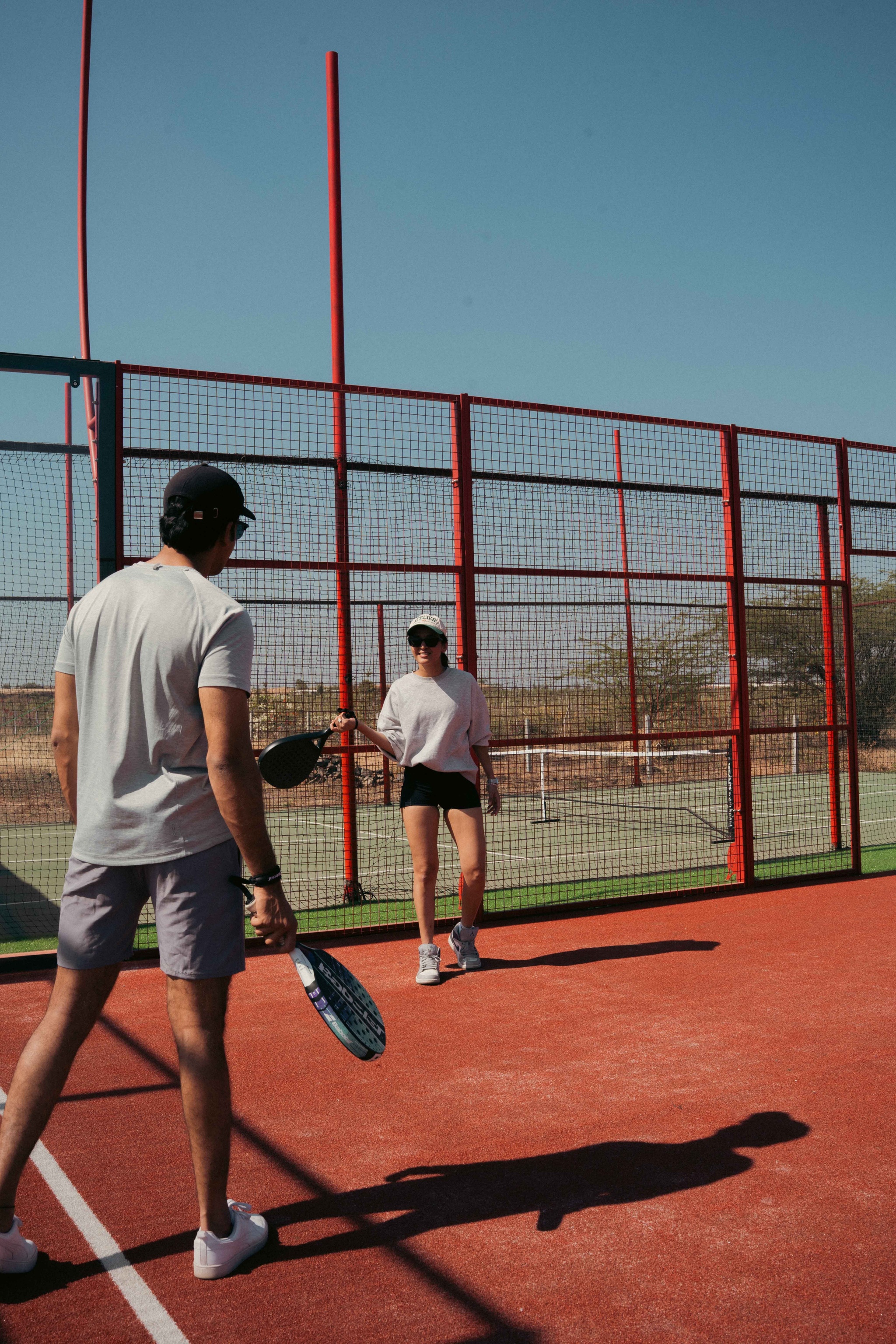
Hotel Irada in Pune, which is set across a 66-acre working winery surrounded by 4,000 acres of reserve forest, treats its racquet club as a social commons. A terracotta padel court framed in signature red steel sits beside a pickleball court overlooking vineyard skies. Between rallies, estate wines are poured, beer buckets arrive, and picnic benches become conversation posts. There is even a racquet-club pizza-making experience with chefs from Rosso.

This week, Goa's padel community is excited to train with two international coaches Nacho Porto from Finland and Hana Bowers from Bali. The duo are visiting the sunny state as part of The Shoreline Club, a newly launched community that plans to host unique workshops and training sessions for padel folks with a side of travel and adventure. 

What emerges across these spaces is not simply the physical payoff but its emotional return: belonging in an unfamiliar setting, ease of conversation without forced networking, and the comfort of a continued routine in a transient world.

The Nod Newsletter

We're making your inbox interesting. Enter your email to get our best reads and exclusive insights from our editors delivered directly to you.