



Fashion02 Dec 20258 MIN

Ritwik Khanna never stopped redesigning his school uniform

For Mayo’s 150th, Rkive City turned tent fabric into tailoring and old trousers into pleated culottes, and most likely cast your retired Chemistry teacher

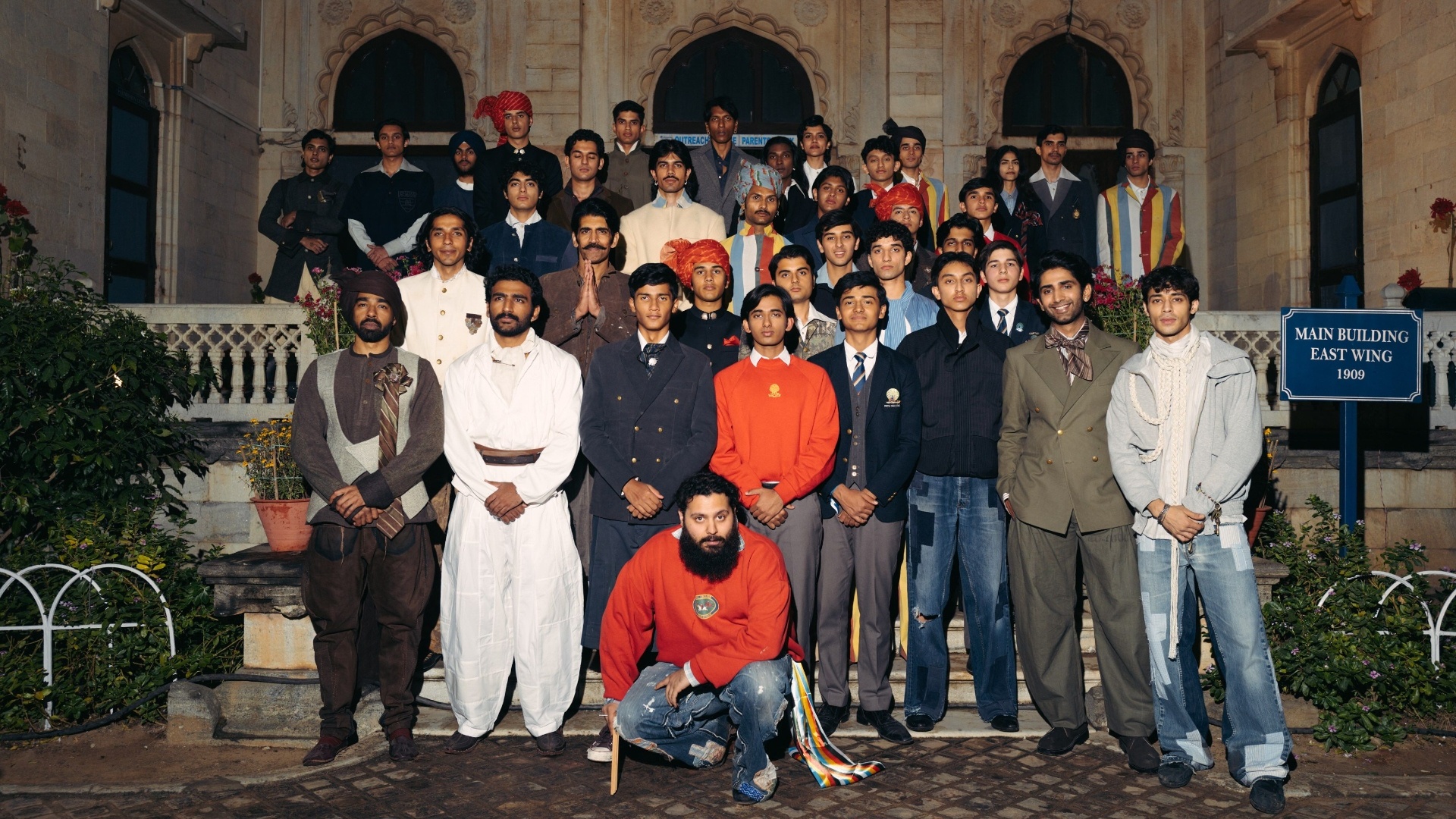
Ritwik Khanna, founder of Rkive City, with the show cast at Mayo College

Courtesy Rkive City

On a nippy November evening in Ajmer, minutes after an unexpected drizzle left Mayo College’s Mughal Gardens smelling sweetly of wet mud, Rkive City, the post-consumer design and research house founded by Mayo alums (and brothers) Ritwik and Aarav Khanna, staged a show that was equal parts fashion moment and homecoming. The school’s main building—where generations of boys have gathered for classes and morning assemblies—loomed in the background as alumni, friends, and collaborators trickled into their seats.

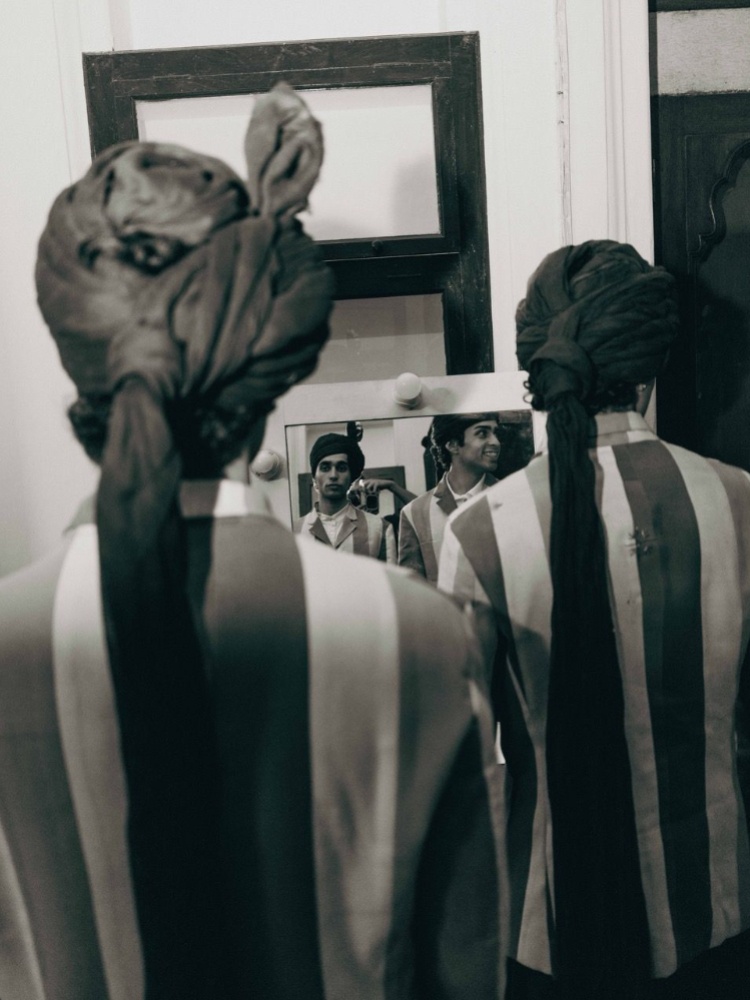
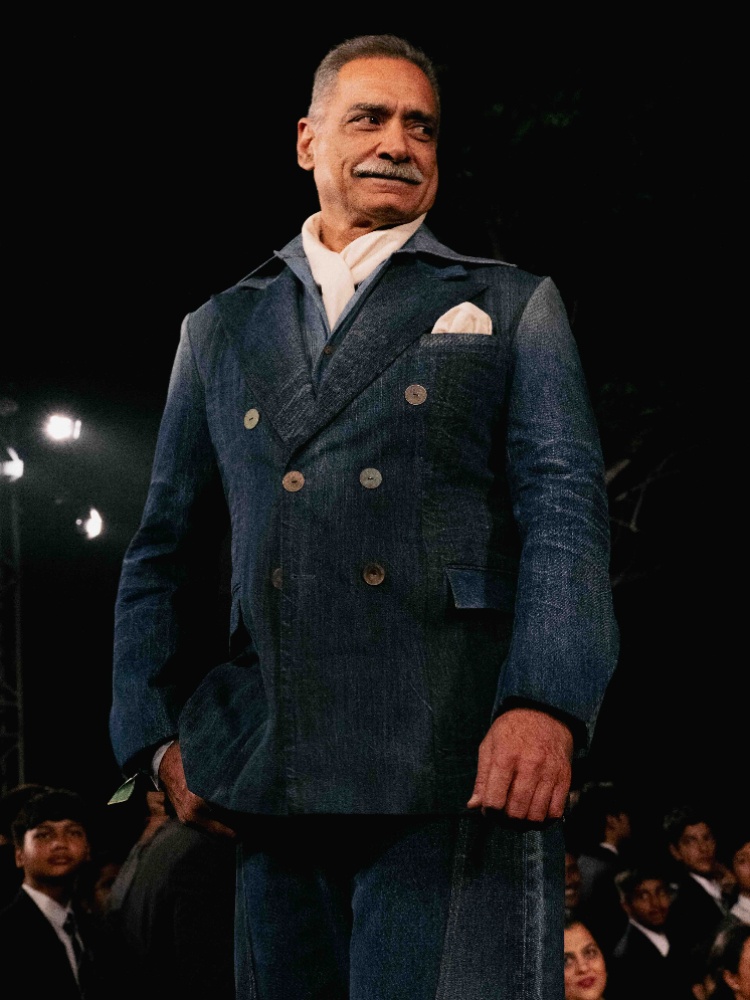
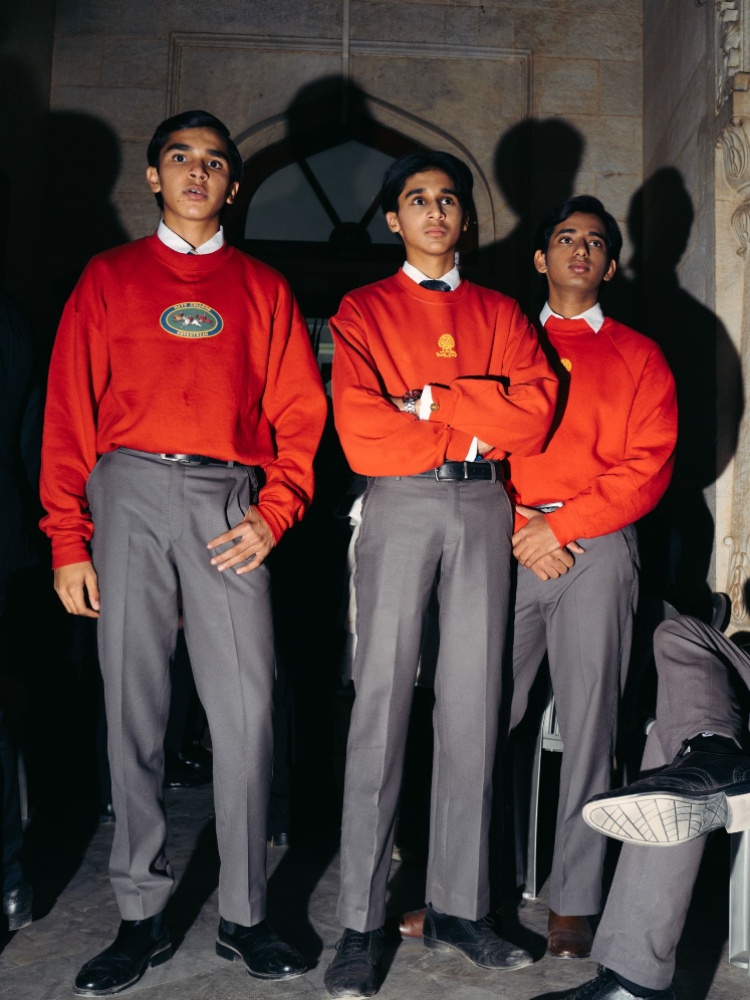
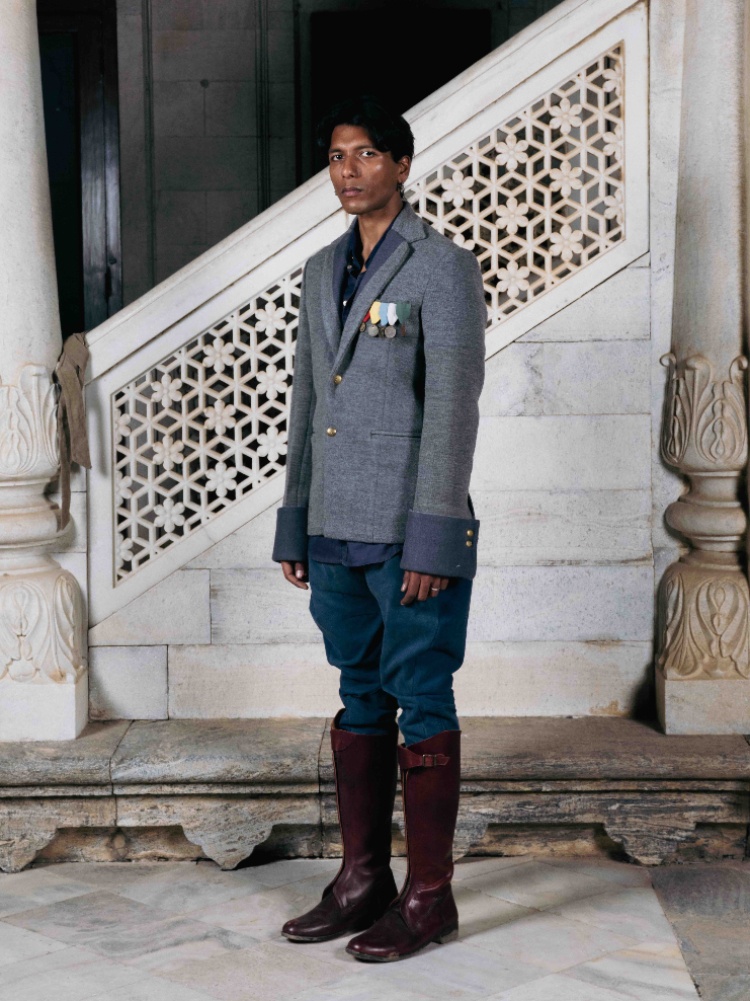
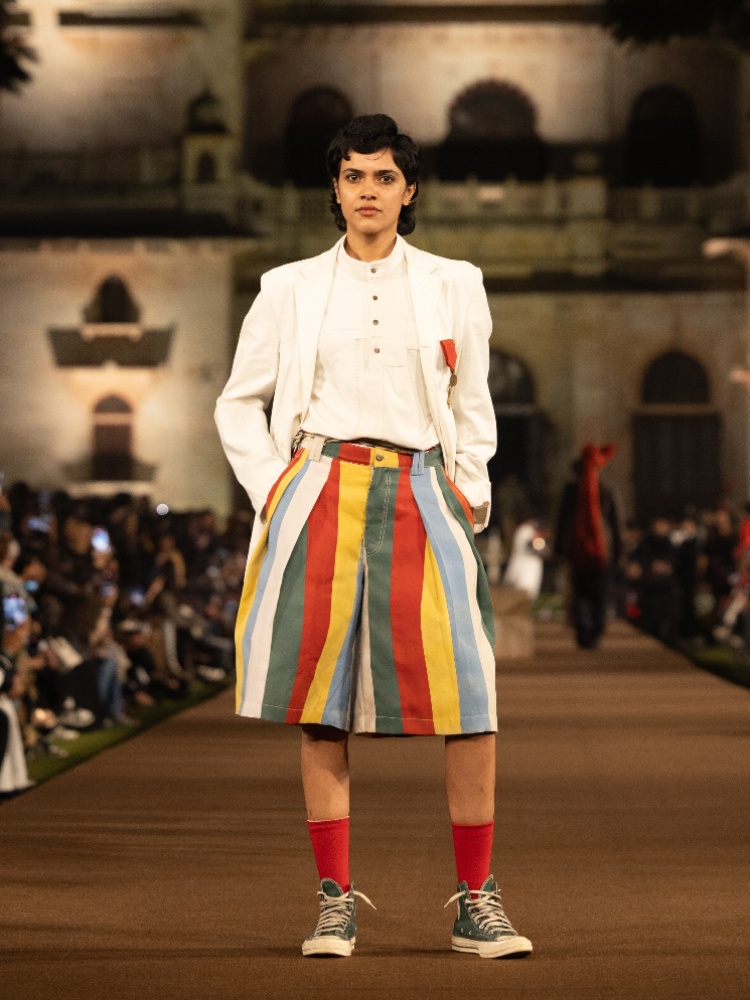
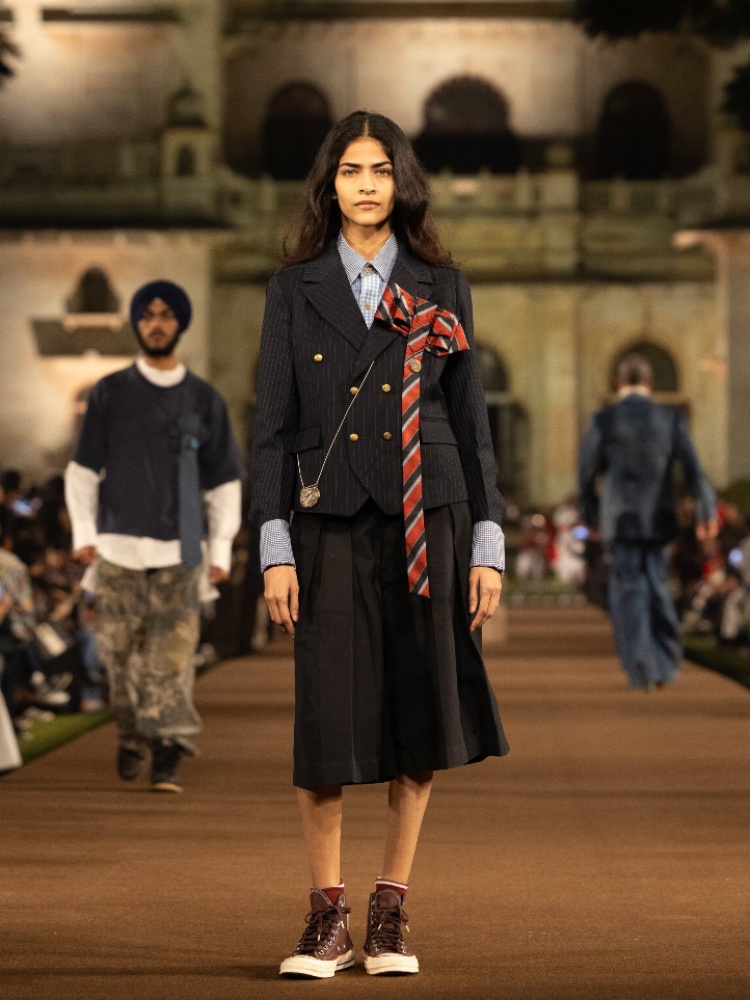
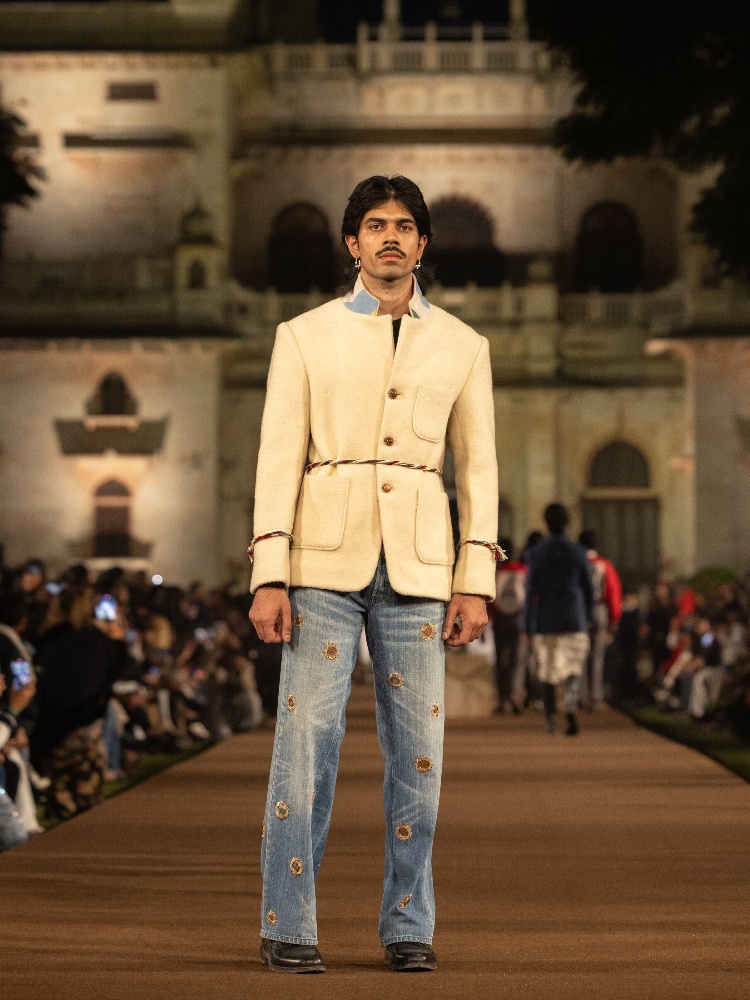
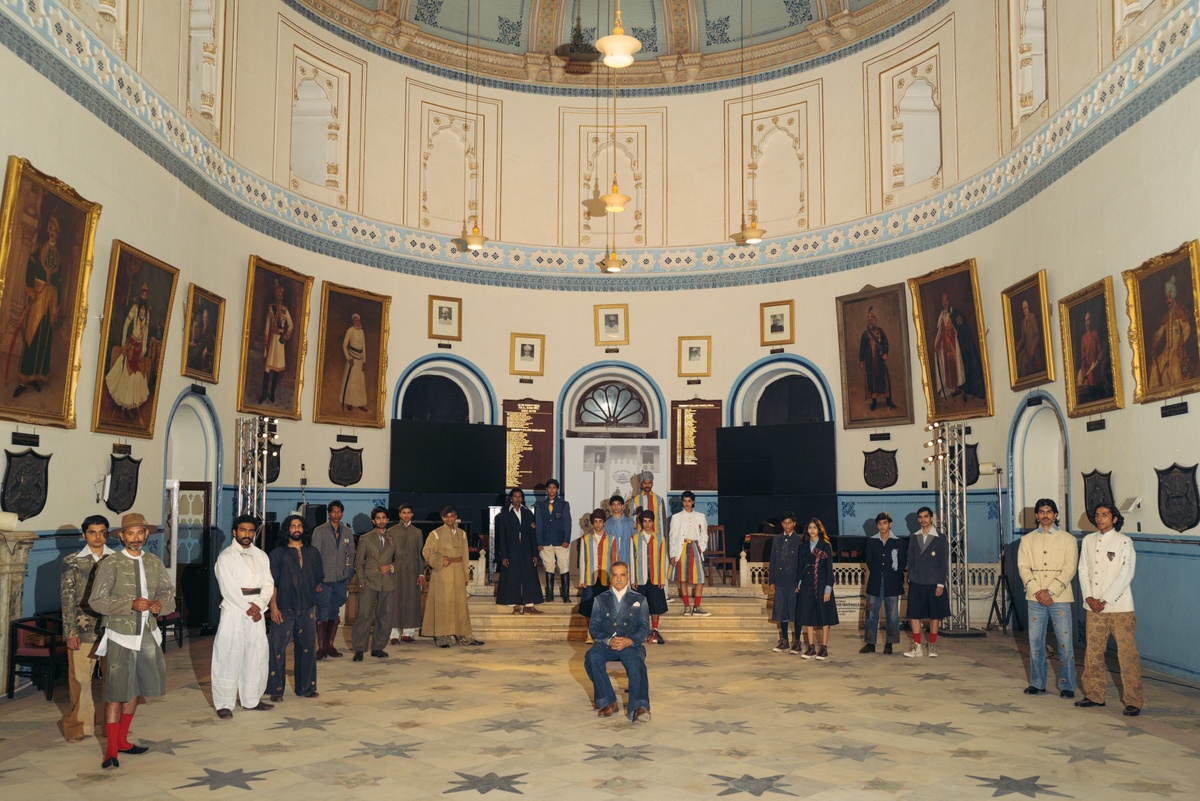
Rkive City has built its reputation on an almost stubborn commitment to working with only post-consumer textiles, repairing, reviving, and reimagining garments that already exist. But this collection, created entirely from discarded uniforms, decades-old tents and curtains, and whatever the campus linen room had quietly hoarded for years, was its most personal yet. It was a presentation stitched equally from memory and material: exaggerated, upturned cuffs inspired by archival photos of past students, carpenter trousers cut from old grey uniform fabric, blazers reimagined in corduroy instead of polyester, and sharp ceremonial wear that wouldn’t look out of place at even a wedding. The runway cast included models, students, alumni, and even retired teachers—a living timeline of the school itself.

But what made the whole scene even sweeter was the quiet full-circle moment unfolding behind it: years before founding Rkive City, Ritwik was the kid secretly selling screen-printed custom Mayo merch out of his dorm room. Now, eight years later, he’s back on the same campus staging a full-blown fashion show, this time with the faculty’s blessing—and a traditional brass band scoring the entire thing.
We caught up with Ritwik after the show for a conversation on reclaiming a school’s visual history, the emotional weight of uniforms, and why post-consumer revival made perfect sense at an institution where children outgrow their clothes faster than anyone can keep track.

When were you at Mayo?

I spent about seven years there—2011 to 2017. I grew up in Amritsar. My dad, cousins, everybody in my family went to boarding school. When you see Mayo in its natural form—without all these stages and a million people on campus—you’ll find that it’s really peaceful and different from anywhere else. Massive open spaces, peacocks on balconies, stables, squash and badminton courts. When you’re here as a student, you don’t realise the value of space or having a favourite tree that you like to sit under that you can just walk to. It comes to you much later, when you look back and reflect on how special it is.

I hear you used to sell custom Mayo merch while at school. What were those pieces like?

I had a brand called Memory Minter. I started it in ninth or 10th grade. I think the faculty was kinda aware of it, or they weren’t, but it wasn’t something you’d want to shout. It was lowkey. I made T-shirts for the graduating classes printed with things like their coat of arms, batch numbers, and everyone’s names. Having their names was a sure-shot way of making sure everyone was buying them.

How did the collaboration come about?

The school reached out saying it’s the 150th anniversary and they’d like to put together some programming for it. I think this film we shot last season at Ramathra Fort caught their eye. It was about the natural preservation of this forest land and how this family of Mayoites, whom I know from going to Mayo, are reviving the flora and fauna around the area, campaigning against poachers, and educating people about that kind of stuff.

I’ve always been inspired by Mayo. I had done some research at the Mayo Museum about two years ago—the kind of history and recordkeeping there is absolutely insane. I’m obsessed with its identity and how it affects the people who went there. And since I’m a visual person, it was very interesting to see an institution through the lens of style and fashion. How the school evolved from an institution for maharajas to what it is today. I think of it as a reclaimed identity: you can either say “this is colonial, let’s discard it” or you own it and layer an Indian identity onto it. For me, that blend is far more interesting. Otherwise, every time you want to disassociate with something, you will just keep breaking down infrastructure.

For the collection, how did you decide which parts of the uniform you wanted to keep or subvert?

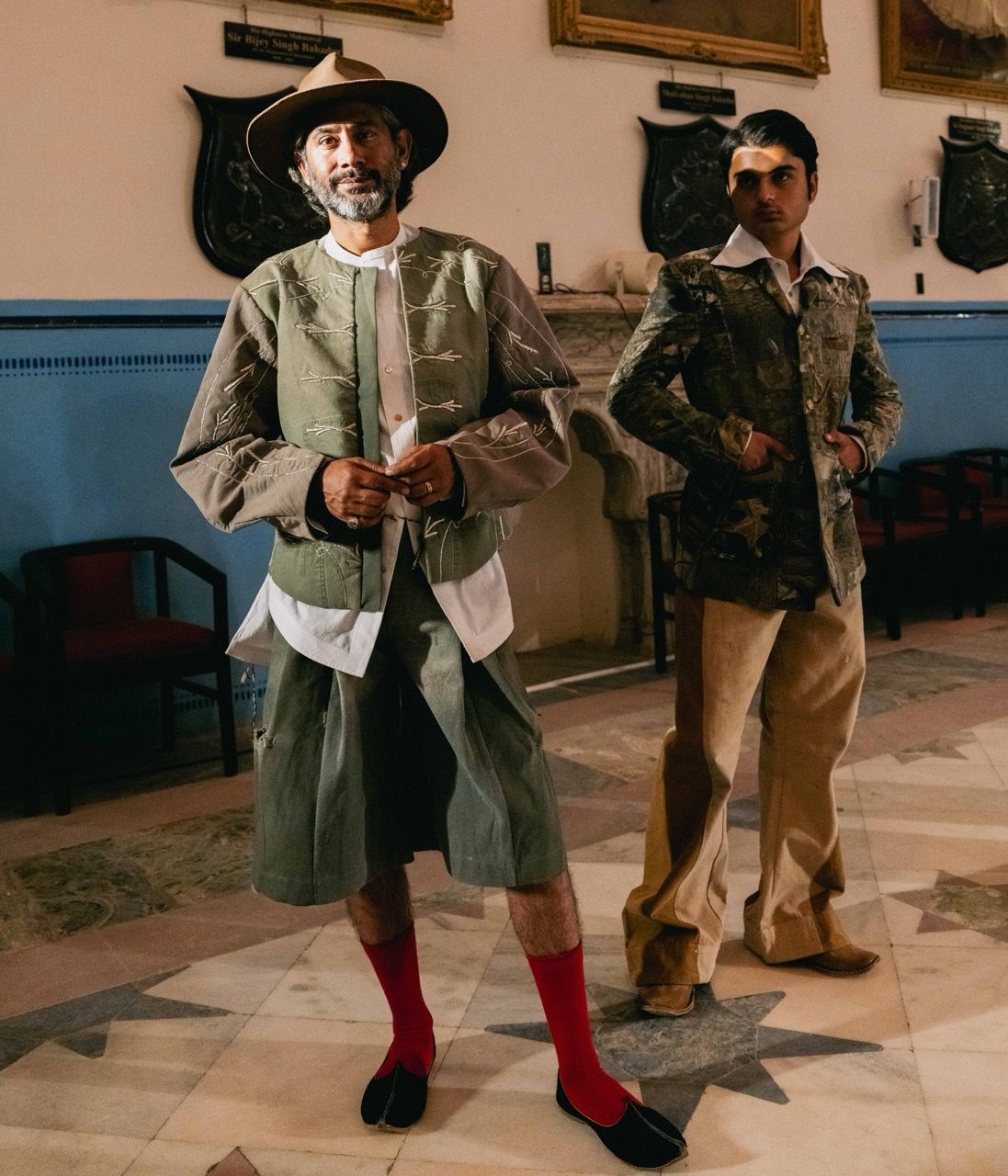
When we did our photo research, we saw that fashion has always evolved at Mayo. Now, the shirts are being made in a certain way because there’s a contractor and it’s the current style. But back in the ’50s, ’60s and ’70s, people went to their own tailors; they didn’t have one vendor making everything. So, there were codes: a white shirt, grey pants, and blue blazers. But, for instance, the lapel on my lapel will be a bit bigger because I like it that way. So, we borrowed from the uniform—archival and current—and followed the codes. We made the Pachranga and navy blazer in corduroy instead of polyester, trousers in this beautiful carpenter silhouette and grey denim, a black bandhgala in canvas and another corduroy with different collars. A lot of the details were very personal. Everything that you see is a reference to what people were wearing at Mayo at some point. The big cuffs came from an archival photo of someone who wore a long jacket and had rolled theirs up in this very specific way. Kids used to have their cupboard keys hanging from their necks, so we put keys on a bow tie.

The audience I had ranged from an eight- or 12-year-old kid all the way to an 85-year-old man, all shaped by the same experience. We incorporated things that we know about Mayo and that people could relate to a bit indirectly. This was possibly one of my toughest undertakings.

What about the red socks and red pullovers? They weren’t part of the uniform.

They’re not. It was about breaking the rules. Teachers hated red socks. But when you wanted to piss off your housemaster, or when you were going to a fete or a social where you’d be meeting the girls’ school, you’d wear it to catch their attention. Those were the narratives from old accounts by Mayoites that we sort of played on.

A lot of the models wore Converse on the runway. Was that a partnership?

Yes, Converse sent us a bunch of shoes and they were like, let’s do something together. I was like, “Dude, you’re sending me new shoes.” It didn’t make sense for our post-consumer revival agenda. I remember it was a big discussion at our table, where we were, like, okay, this is a good company to collaborate with, but how does it fit in? And so, we found a solution and ran with it. We did a drive where we gave everybody a new pair in exchange for their old Converse shoes, which we repaired and put on the runway. I’m glad we got to keep it authentic. We also added ties to a few pairs as laces to add those elements of fun. I think the styling was brilliant this time; we had a really good team helping us out with that. It was a lot of fun and breaking rules while still staying on the edge of what people know and relate to.

You also used these old Pachranga tents, linens, curtains, and ropes from the school…

We have this thing called the linen room at the school where your things arrive. Kids outgrow their uniforms, and there’s no concept of hand-me-downs at Mayo. Like, you wouldn’t wear your senior’s old clothes. Even a small stain gets you sent back to change. Which also comes back to why this makes so much sense, because kids grow so fast, and the minute you outgrow something it’s waste. So, I went diving into the linen rooms and storerooms asking “What are you discarding?”. We found cool stuff like old coins, rings, safas, and ties, which we made into buttons and badges.

Did it get too emotional at some point?

One hundred per cent. I think I was so overwhelmed; I still am. It’s one of those moments where you get to revisit such a key part of your life, your alma mater, represent it, and set a standard. I remember alumni coming to speak to us here when I was a student—and how those conversations shaped me. At Mayo, uniforms signalled excellence. For instance, the Pachranga blazer was given to the best sportsman, while the rest would get white blazers. Every pin and badge would mean something. Clothing had an entire language.

Is this collection going to be available to shop?

Yes, because kids are growing out of their old grey sweaters every day at Mayo and there’s a constant supply of these things. The show was a starting point of something that could become a great partnership of being able to reuse their waste. This is actually going to be the collection that we’re going to present for autumn/winter 2026 in Paris in January.

So, this continues?

Correct. Nothing we do is like a gimmick or a one-off conversation just for buzz.

What’s next?

The campaign that we’ve shot is insane. We shot on a Super 8 mm film camera; there was medium format being shot, and there were wet plate collodion prints. I had possibly the sickest lineup of photographers who all personally wanted to come and be on this project, because they knew how much this meant to me. We’re also making a book. It’s gonna be lots of fun. I have zero doubts about that.

I also heard that you finally found a spot in Bombay.

The store was actually supposed to be open by now but got pushed a bit with this project. The work’s already started and it’s on Perry Cross Road in Bandra. It’s a repair shop plus retail concept. We’re hoping to open by mid-December.

The Nod Newsletter

We're making your inbox interesting. Enter your email to get our best reads and exclusive insights from our editors delivered directly to you.