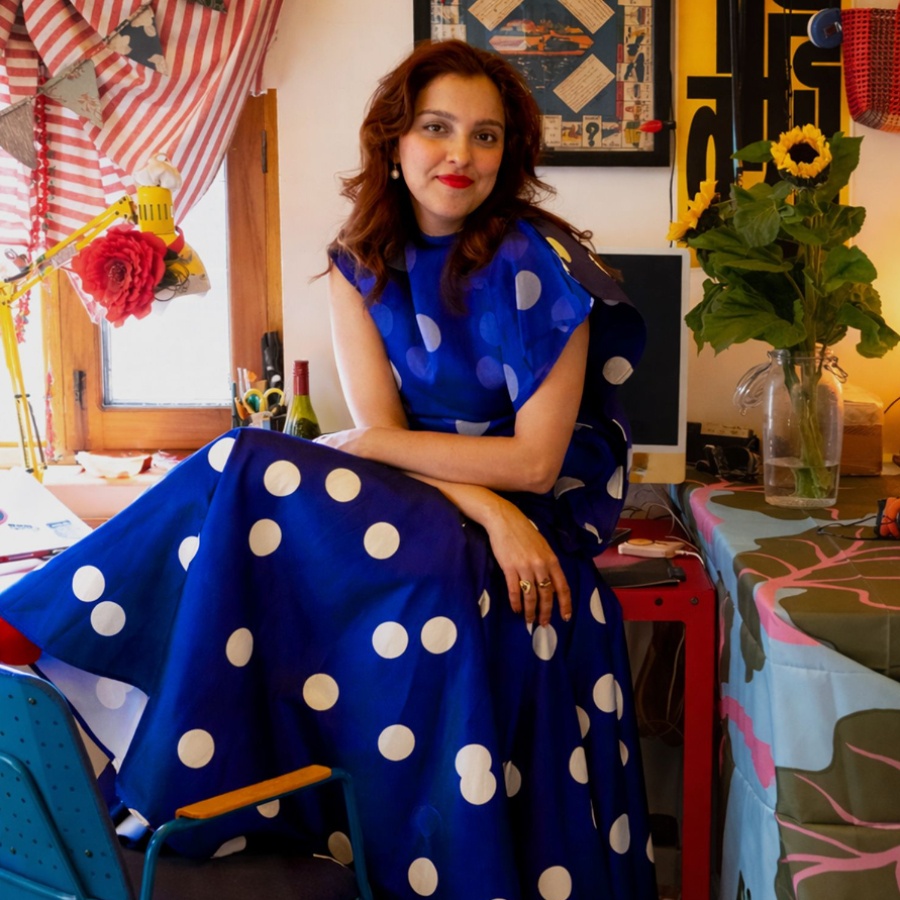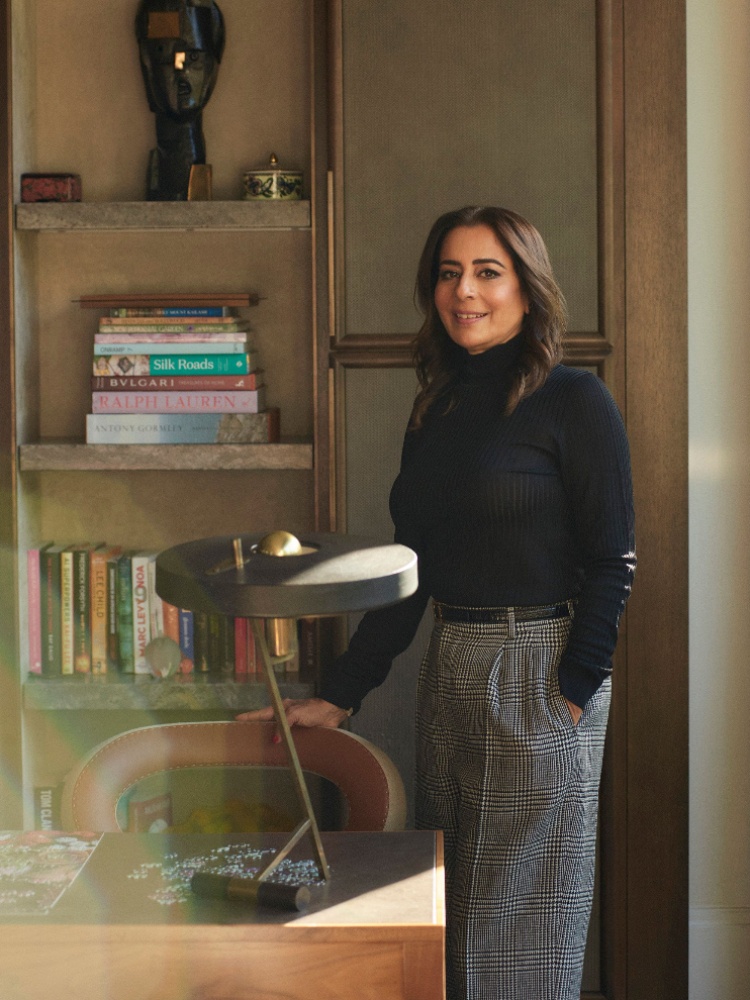

“It’s all about bringing the warmth. It’s why I never go for whites and silvers. Instead, I love a candle-lit sit-down filled with colour, artisanal detailing, and a low-lying centrepiece with plants over florals. I want my guests to be in conversation with each other, over and across the table,” says award-winning interior designer Shalini Misra.
Whether she’s practising chakra meditation everyday, strolling on her built-in walking path with seven moon gates based on Vedic philosophy at her sprawling Delhi farmhouse, or proudly stating that “well-being” is at the core of her practice, Misra is all about the vibes. But not in a performative woo-woo girl or WitchTok way; she’s serious about the philosophical moorings anchoring her design practice.
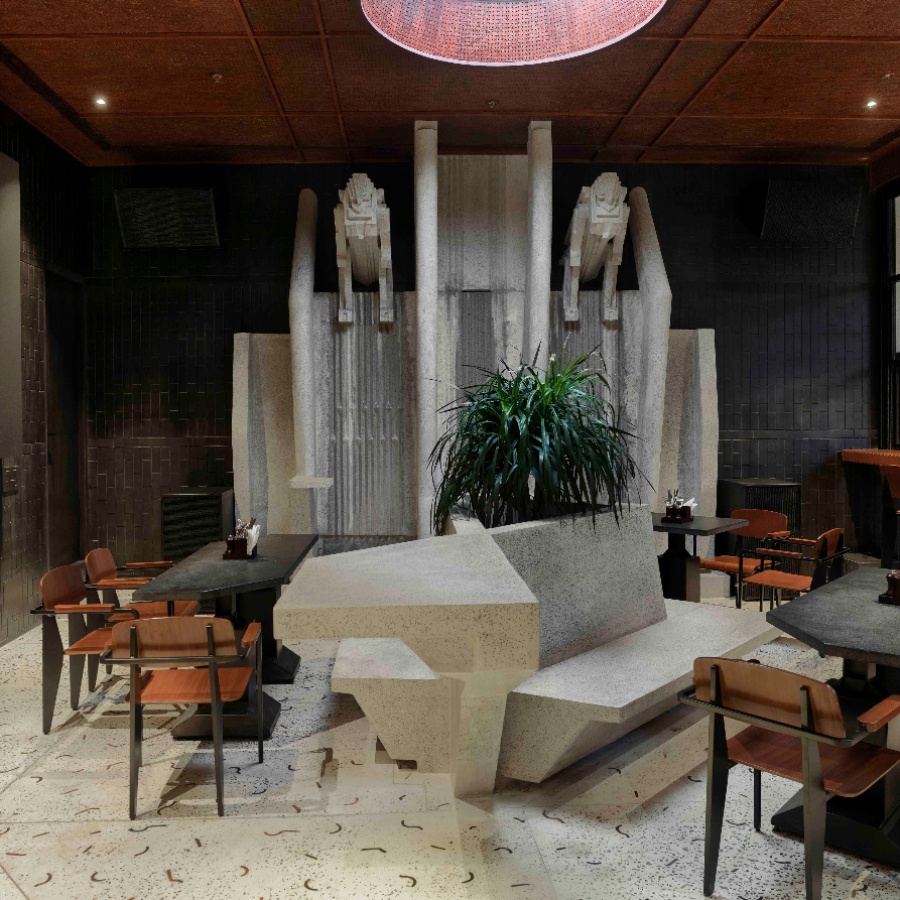
Encompassing meditative pathways and high-altitude luxury, Misra’s global practice spans London, New York, and Dubai. Her portfolio boasts everything from transforming a Bombardier Global XRS into a 14-seat private jet to reimagining an expansive 1850s Victorian villa with an art collection that includes Marina Abramovich, Tracey Emin, and David Hockney and designing a pied-à-terre in Manhattan inspired by the city’s iconic skyline.
Earlier this week, she launched a special Diwali-themed collaboration with de Gournay, unveiling the Chhint thali that brings together the Indian decorative tradition and Chinese porcelain artistry. “I love thali meals; I think they generate great conversations and collaborative ideas,” she says. At the heart of her practice, much like her stellar reputation for hosting (she’s known as ‘Diwali Aunty’ in London for a couple of decades now, with people jostling to get on her very discerning invite list), is the concept of “bringing the warmth”, or, in common parlance, “being vibey”.
“You know, early on in my career I had clients who would come to me and say, ‘Can you add some warmth and character to our home?’ These are two very basic words, but it’s come to define my practice,” Misra adds. Her secret to adding both is simple—integrating the artisanal and handmade into her design repertoire. “What my country can make, no one else can. But the world of craft needs to be dynamic,” she says.
We’re seated in her library, suitably cosy and packed with books that range from the collected works of Goethe to Claude Debussy’s biography. As wide-ranging as her reading is the philosophy that runs through her work, applying to the spaces she creates as well as the creative community she hopes to build around them.