Design07 Nov 20264 MIN

This Mumbai flat has more art that it can hold

Family heirlooms that survived Partition, centuries-old curiosities, and an ever-growing collection of Buddhas—at Bollywood costume designer Sheetal Iqbal Sharma’s home, everything comes with a story

Image

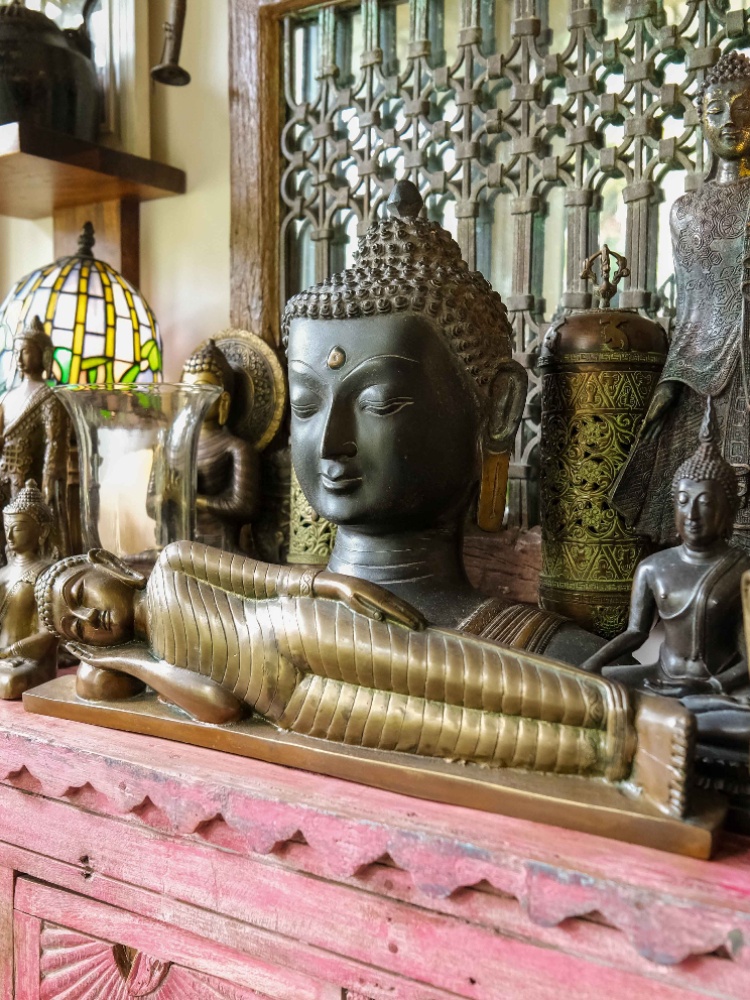
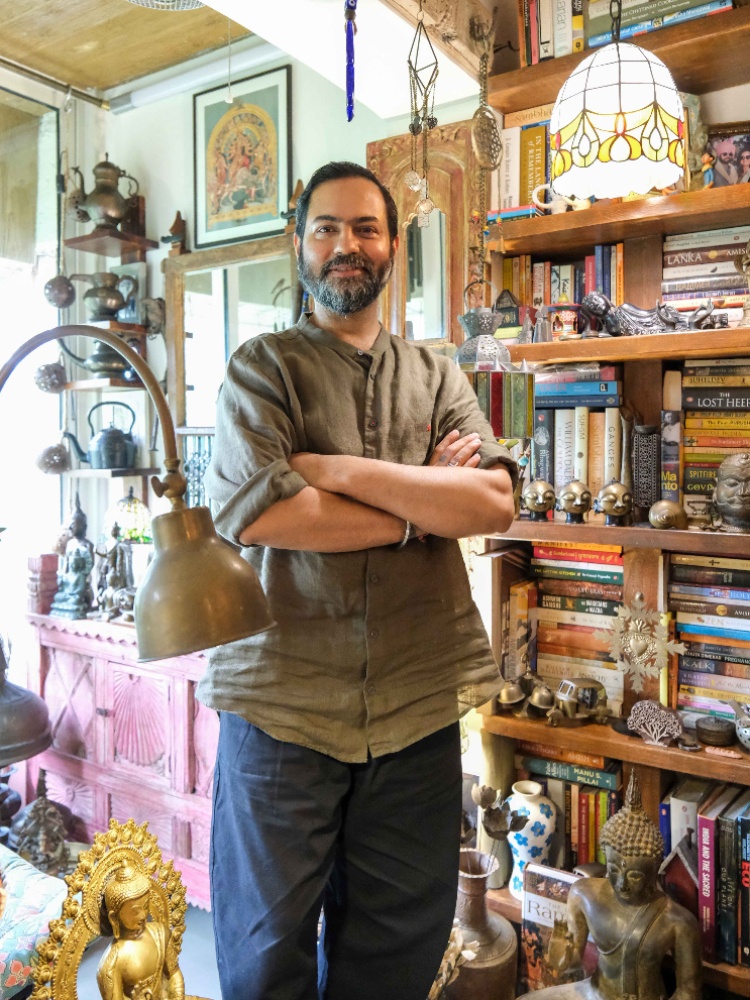
Costume designer Sheetal Iqbal Sharma stands against his collection of Buddhas and kettles from across India

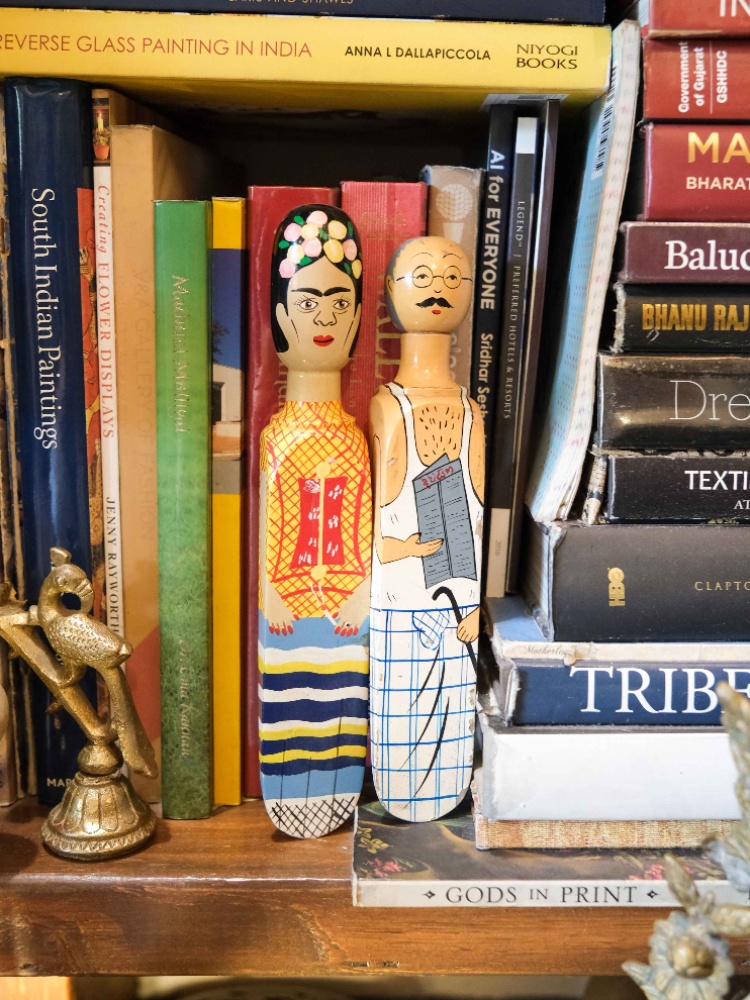
If minimalism has spent the last two decades telling us to pare down, declutter, and make room for less, cluttercore seems to have arrived with a rather irreverent response: but why? Think of a cabinet of curiosities, only without the cabinet. Books piled high, paintings jostling for wall space, old brass vessels rubbing shoulders with flea-market finds, family heirlooms sharing shelves with things picked up from around the world. Costume designer Sheetal Iqbal Sharma’s Mumbai home could happily be a poster child for this exuberant rebellion, except he has been collecting for over 20 years, long before anyone gave it a name.

Tucked inside an inner lane of Santacruz West, the old residential building gives little away about what awaits upstairs. But swing open the lift’s metal gate, and there’s no mistaking Sharma’s apartment for anyone else’s. The bright blue door is a giveaway, as are the matching hanging bell, framed artwork and deity that welcome visitors. Inside, carved wooden dwarapalakas associated with Vishnu’s Dashavatara occupy a wall near the entrance; elsewhere, a Banarasi silk sari border has been framed as art.

Born in Mumbai, Sharma has always called the city home, even as his father’s Army postings took the family elsewhere. He has worked in costume design since 2010, with credits including Raees (2017), Manto (2018), Gangubai Kathiawadi (2022), Amar Singh Chamkila (2024), and Saiyaara (2025). He shares the 2 BHK with his wife Misha, an architect, and their eight-year-old son, Saadat. It’s the quintessential Mumbai two-bedroom apartment, approximately 900 square feet, although the collection has certainly made the most of its dimensions. Natural light streams through the windows overlooking the surrounding treetops, while greenery fills the balconies. Paintings, textiles, and curiosities turn up practically everywhere, some acquired across continents, others from Chor Bazaar, and a few inherited from generations past.

Four years ago, the apartment was a commercial kitchen, with freezers, ovens, soot, and seepage. Misha transformed it into a home, adding timber details and connecting doors, as well as an art collection that was already influencing their plans. “When people discuss a new home, they talk about where the bedroom should be or where to put a window. We were discussing where the pichwai or the Saraswati murti should go,” Sharma recalls.
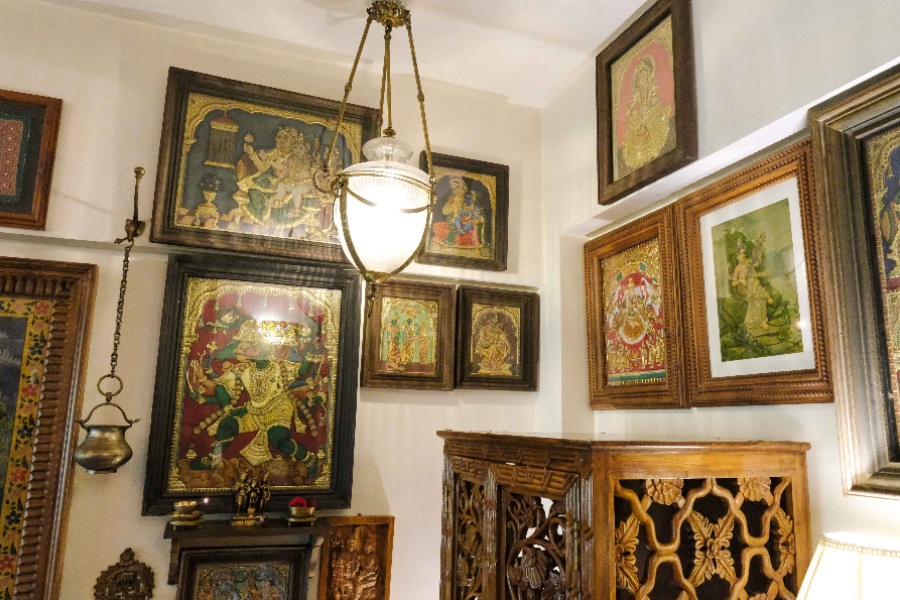
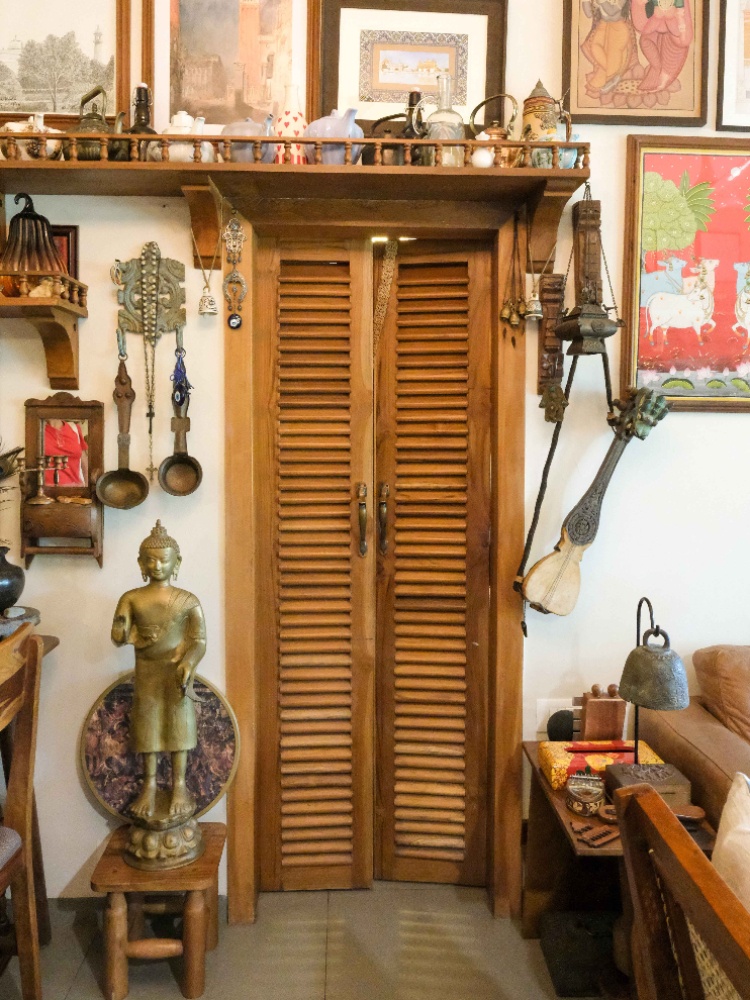
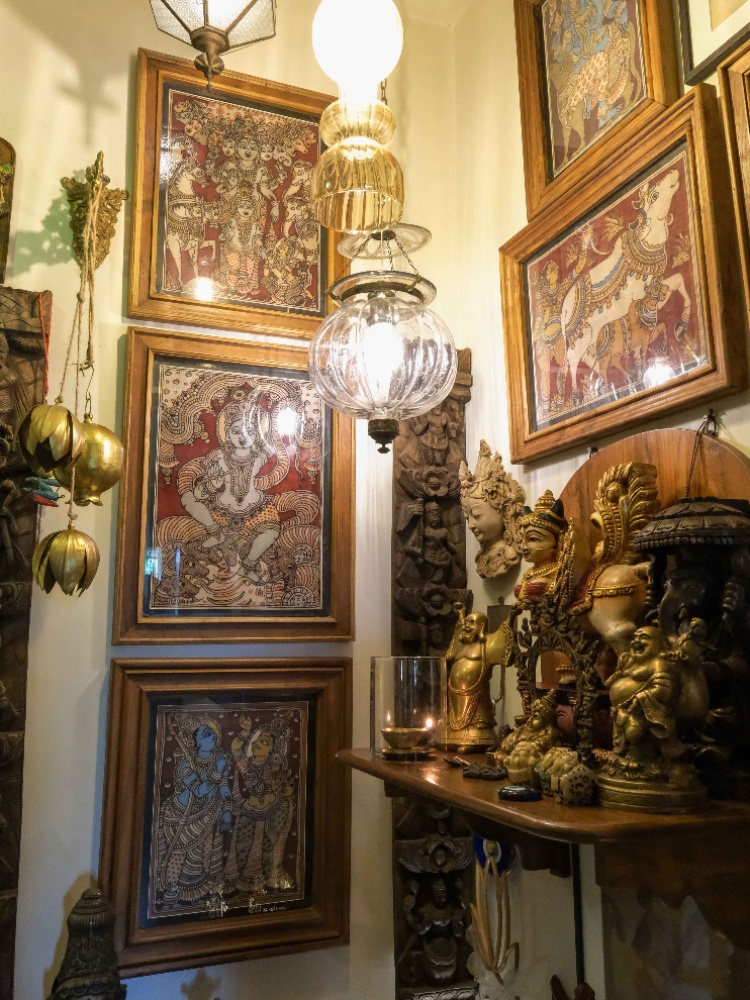
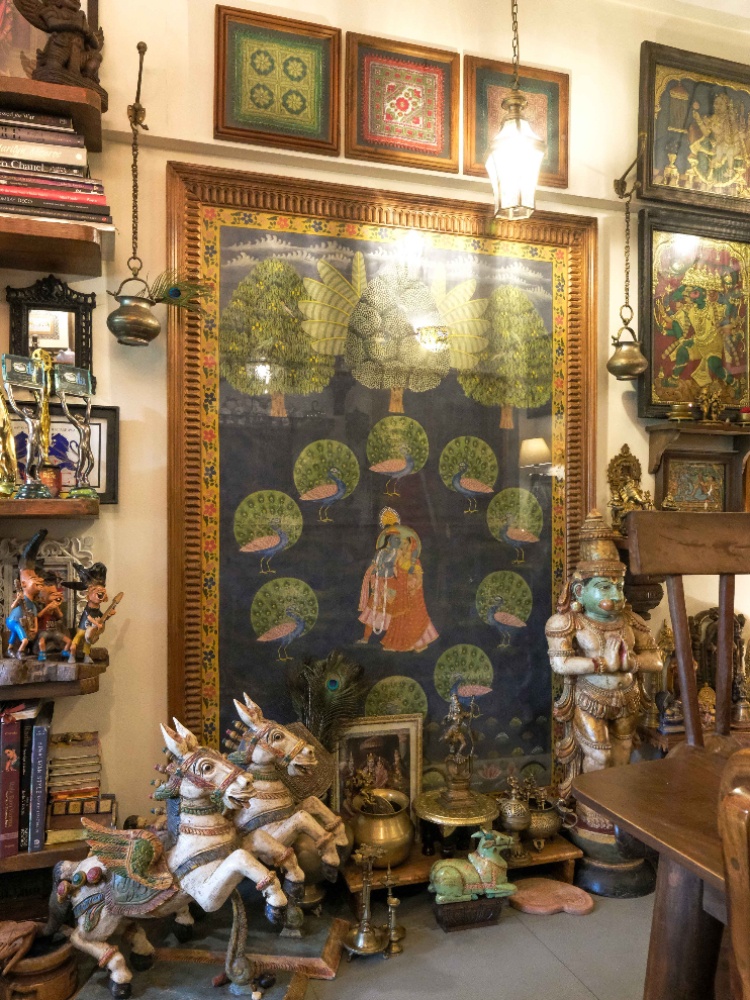
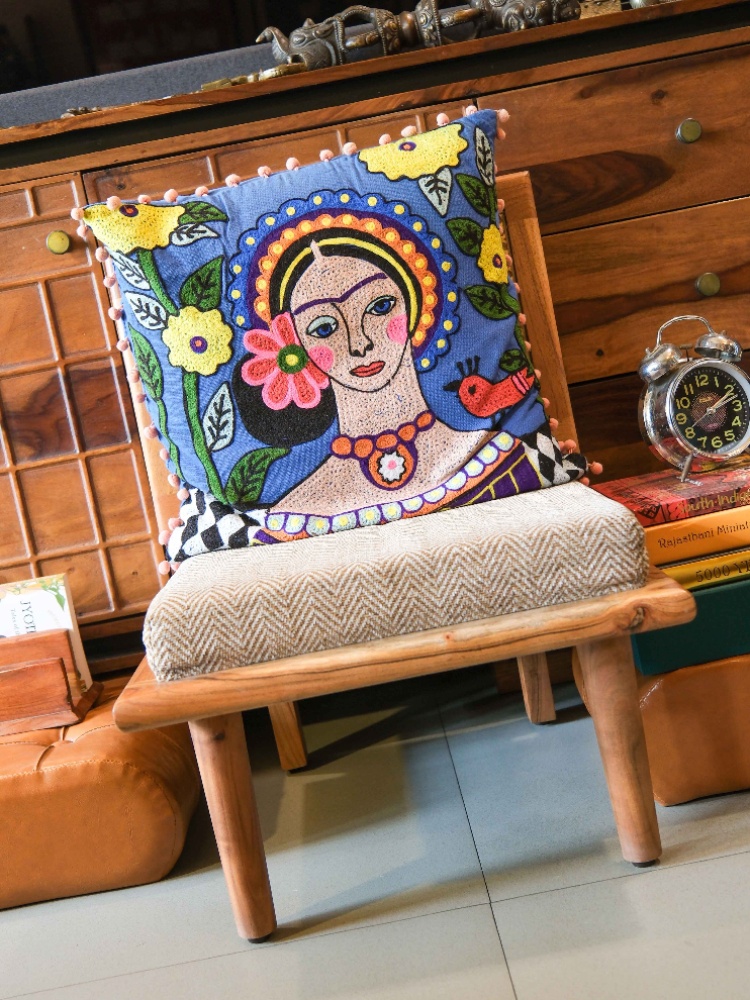
Tanjore paintings share a living-room wall with an elaborately carved wooden mandir custom-made in Mumbai. Opposite, a pichwai that Sharma bought in Kutch and dates to around 130 years ago hangs beneath framed mirror-work cushion covers. He backed the fragile painting with fabric but chose to leave its worn appearance intact. An enclosed balcony houses Buddhas of various sizes. The walls and flooring remain largely plain, letting the art command attention.

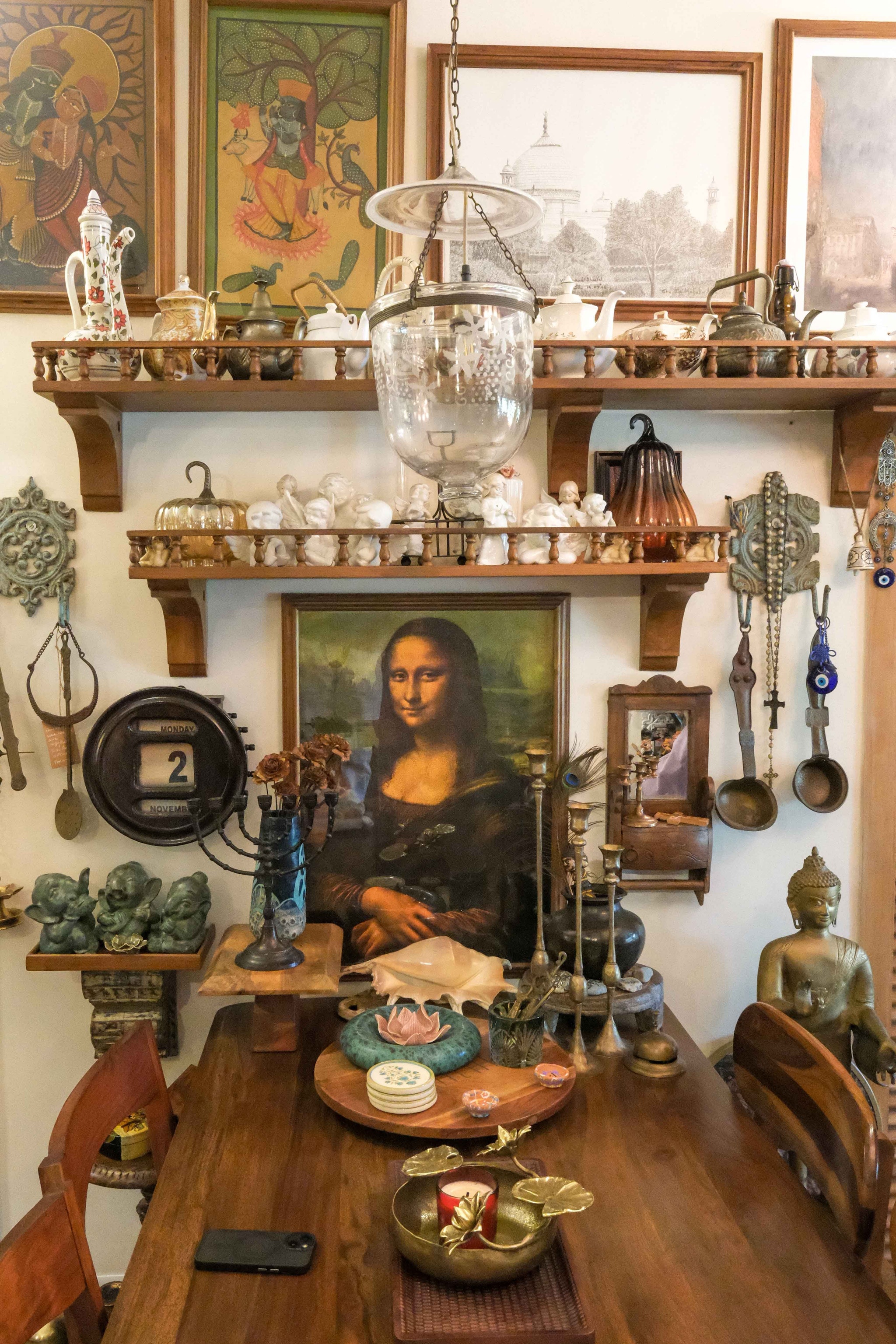
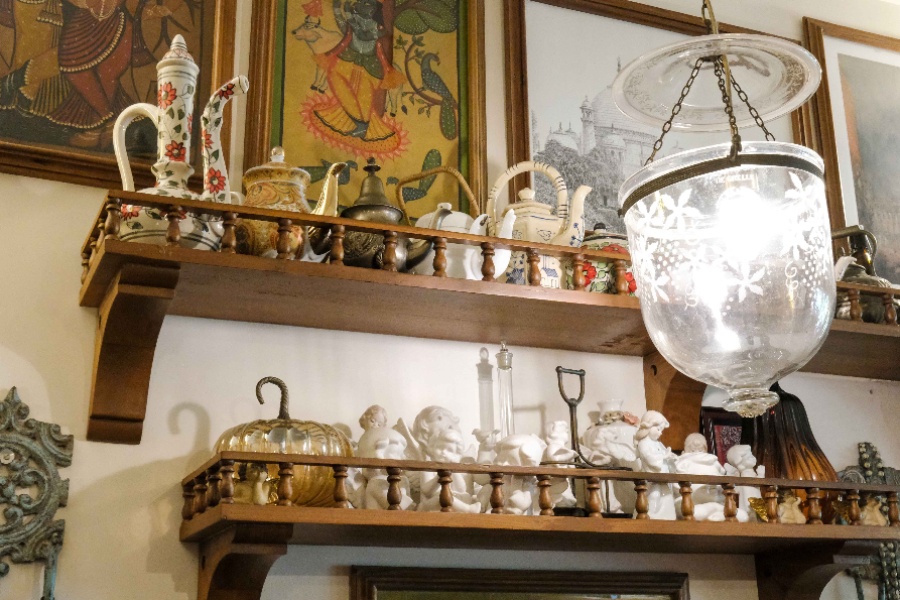
The dining area offers a particularly entertaining glimpse into his tastes. Porcelain kettles, including one bearing the date 1792, sit above a shelf featuring little ceramic angels. Between candlesticks, a menorah, and a hand-operated calendar hangs a framed Mona Lisa poster bought outside Andheri railway station. Sharma liked it, bought it, and had it framed. It now keeps company among things that have survived generations. An object’s pedigree, evidently, is no guarantee of affection.

Sharma isn’t really an impulsive shopper. “Sometimes I’ll see something, walk away, and come back two or three times. If it’s still in my head after four or five days, I know I have to pick it up,” he explains. Shoots and sourcing trips take him through markets around the world; closer to home, he regularly visits Chor Bazaar. He loves the irregularities of handmade things, from dhokra metalwork to the expressive faces in Bengal patachitra. “I don’t like anything too pristine,” he says. “There should be something that shows it was done by hand.”

His fondness for things with previous lives has a history of its own. Growing up, Sharma listened to both sets of grandparents recount their experiences of Partition, the homes abandoned and belongings left behind when families crossed the border believing they would soon return. “They thought they would come back after six or seven months, when things became better,” he remembers. He still has his grandmother’s surmadani, carried from Rawalpindi to Amritsar and passed down through his mother. There is also a collection of old brass matkas, one bearing his grandfather Kalyan Das’s name in Urdu. Even the smaller vessels are surprisingly heavy, their surfaces darkened with age. Sometimes a purchase simply reminds him of something from childhood that was lost or discarded.

At Berliner Trödelmarkt, which is a flea market in Berlin, Sharma found a black purse dating to the 1940s, accompanied by a note about its former owner. It eventually became part of Alia Bhatt’s wardrobe in Gangubai Kathiawadi, appearing throughout the film, most notably in the scene where she steps out of a car. Even her black sunglasses were a flea-market find, sourced in Paris and dating to the 1950s. “A lot of my stuff makes it into the movies,” he says. His costume work involves imagining a character’s life before deciding how to dress them. It’s easy to see why things with a past interest him.

Not every acquisition has an extraordinary history, although getting it home can be an adventure. The first wooden Buddha, bought in Koh Samui 16 years ago, is affectionately called the “granddad of all the Buddhas”. Another, weighing around 30 kilograms, required a new suitcase. Then there are the airport officials who have questioned whether their purchases were antiques requiring paperwork. Near the Buddhas, four kettles from Kashmir, Ladakh, Kerala, and Darjeeling form a separate display from the porcelain ones at the dining table.

“Nothing is pre-decided,” Sharma says. “Something comes home and we make space for it. If it fits, that’s where it goes.” A lamp moves, a table gets pressed into service, and another object finds its place. Days off involve cleaning, oiling or drilling to rearrange a corner. Whatever won’t fit waits in rented storage. Friends ask whether he’d notice if something disappeared. He assures them he would.

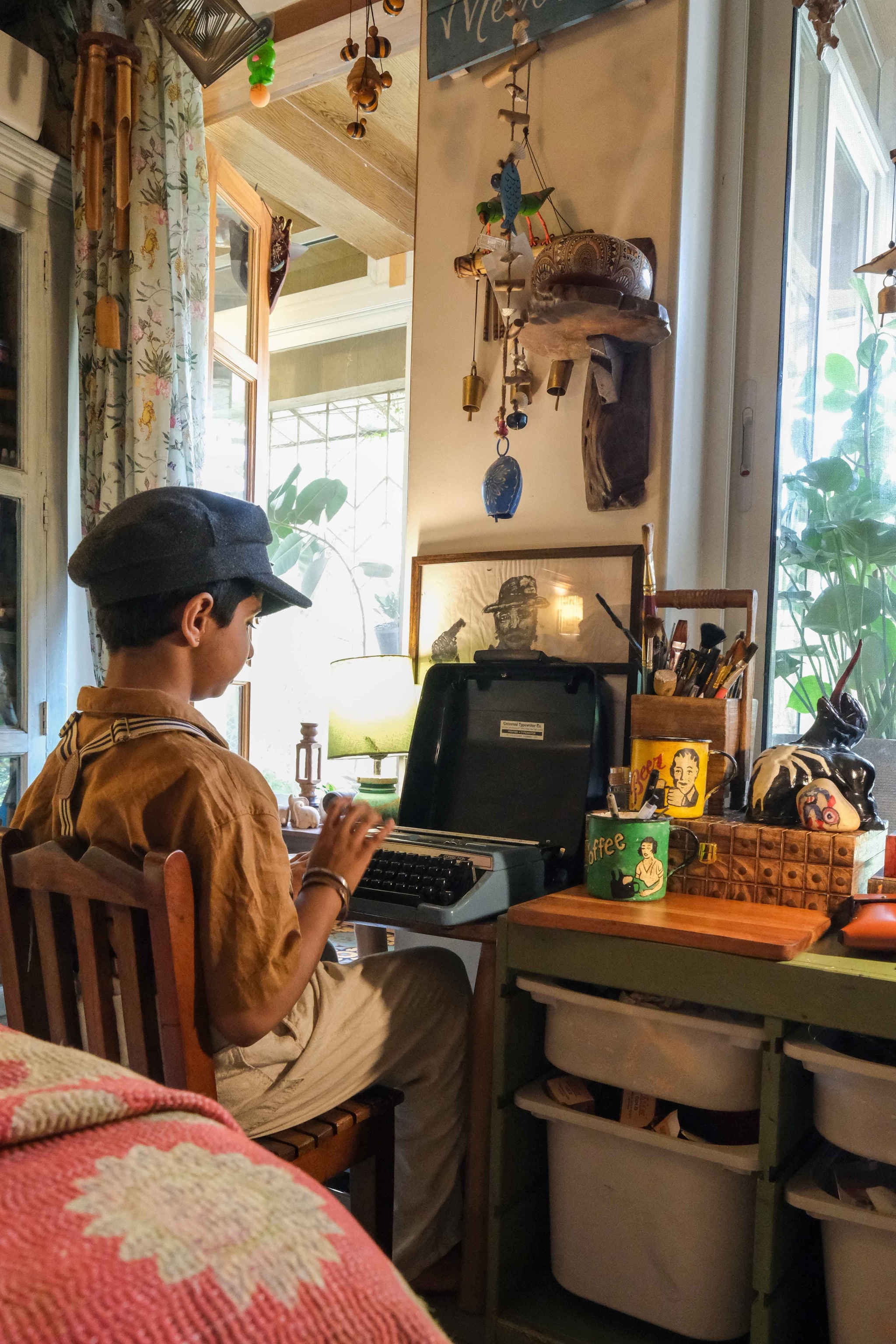
His wife Misha has shared this world with him since their teens, when they helped each other with creative projects. She brings her architectural eye to the challenge of living with a maximalist, sometimes encouraging a purchase, sometimes suggesting they might have enough already. Their son Saadat is developing quite an eye himself. During my visit, he appeared in suspenders and a newsboy-style cap, as though he’d wandered in from another decade. His room holds Warli art, books, an old, working typewriter, and folders of architectural sketches he drew himself, sometimes on paper napkins. He likes unusual finds too, including a tungna, a stringed instrument acquired in Dharamshala. He also wants to visit the family’s ancestral home in Lahore.

It’s a lovely thought, that a boy growing up surrounded by so many things should be curious about the ones his family once had to leave behind. For Sharma, collecting has always been tangled up with these histories, although he’s just as happy bringing home something amusing from a flea market as finding a rare antique. And while the shelves are already rather full, one suspects there will always be room for another object, even if it means finding somewhere entirely new to put it.

The Nod Newsletter

We're making your inbox interesting. Enter your email to get our best reads and exclusive insights from our editors delivered directly to you.