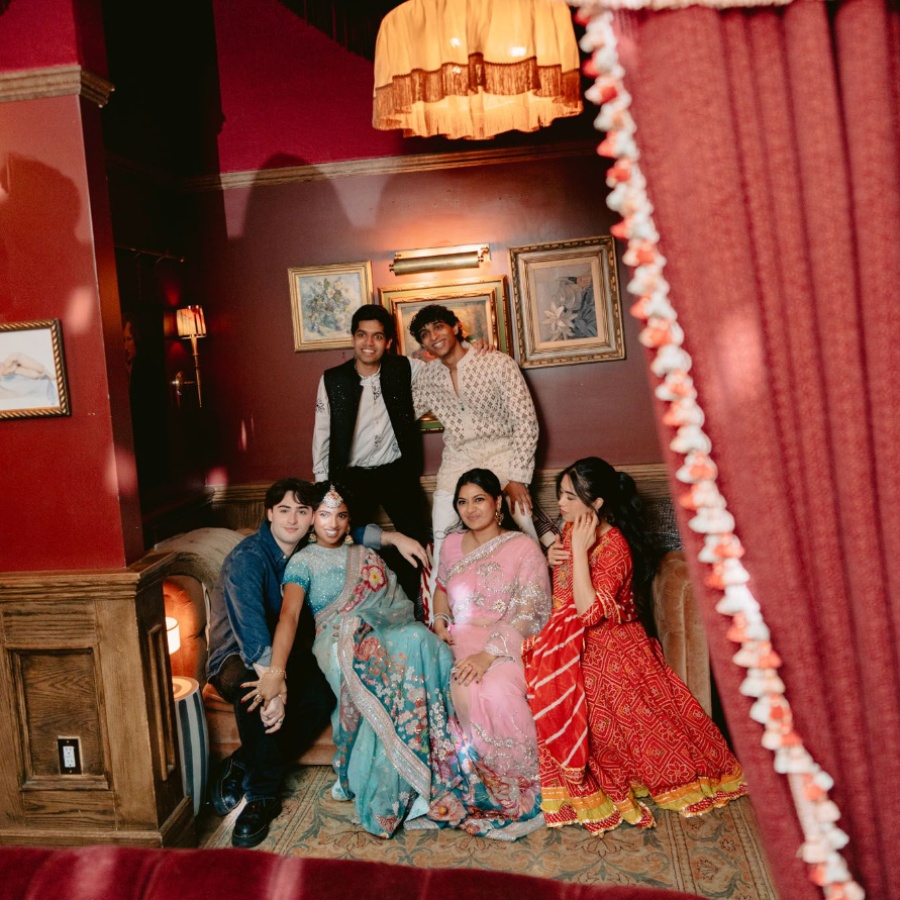





From Singapore, I flew to Delhi, where the air was thick with nostalgia and smog, and the ghosts of my past lurked in every corner. My mother had organised a celebration—a gathering of family and friends in the home where I had grown up. The house was alive with warmth, with the laughter of cousins, like Amrita Bhardwaj, who teased me about my age and my ever-expanding waistline. ‘You’re forty now,’ she declared. ‘But don’t forget to moisturise. Those wrinkles won’t hide themselves.’
Her words were lighthearted, but inside I felt anything but light. My family saw a man who had conquered the world, but I saw a boy who had never fully healed. Delhi wasn’t just a city to me; it was a battlefield, a place where I had learnt to survive but never truly live.
As a teenager, I had faced the world as ‘the other’, a boy who didn’t fit, who couldn’t let anyone see who he truly was. I remembered the love I had found in secret—the three-year relationship with a schoolmate that had been my lifeline. He had been my first kiss, my first embrace, my first taste of what it meant to be seen and cherished. But that love had ended abruptly, painfully. He had disappeared just before our final exams, leaving me with nothing but questions and a heart that ached in silence.
That pain followed me into adulthood, shaping the way I loved and the way I let myself be loved. It whispered that I wasn’t enough, that I didn’t deserve joy, that every happiness was borrowed and could be taken away without warning. As I sat in my childhood home, surrounded by family who celebrated me, those whispers grew louder. They reminded me of the beatings I had endured, the tongue-lashings that left invisible scars, the moments when I believed I deserved every ounce of pain that came my way. They reminded me of the betrayals I had accepted in silence, the betrayals I had inflicted on others, the love I had received but failed to return.
From Delhi, I returned to Hebron, where the snow-covered fields of the farm stood in stark contrast to the chaos within me. Charlie greeted me with his usual warmth, his embrace a balm for wounds I hadn’t yet learnt to name. He had planned a quiet celebration, just the two of us, and when he unveiled his gift, I was left speechless.