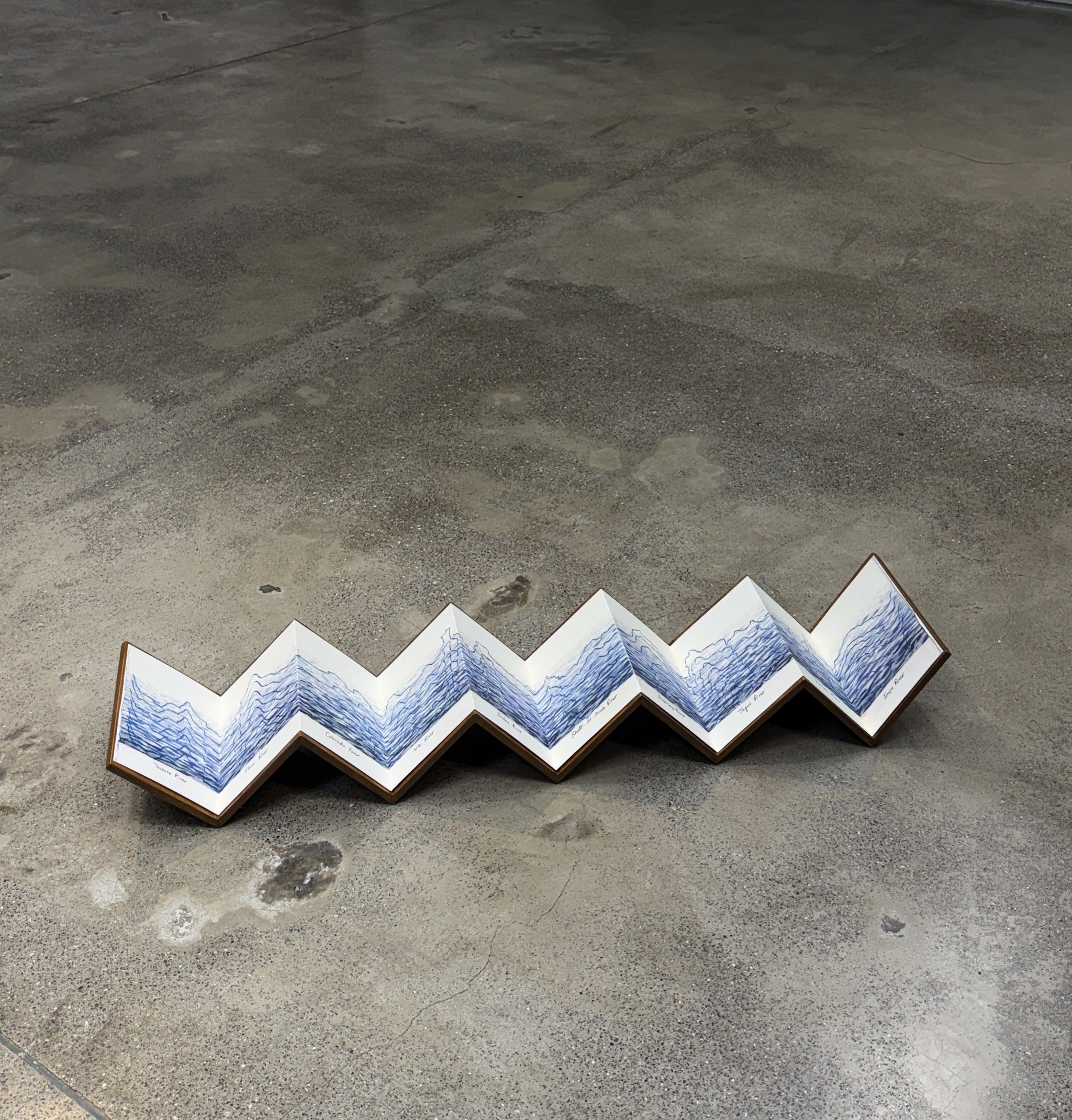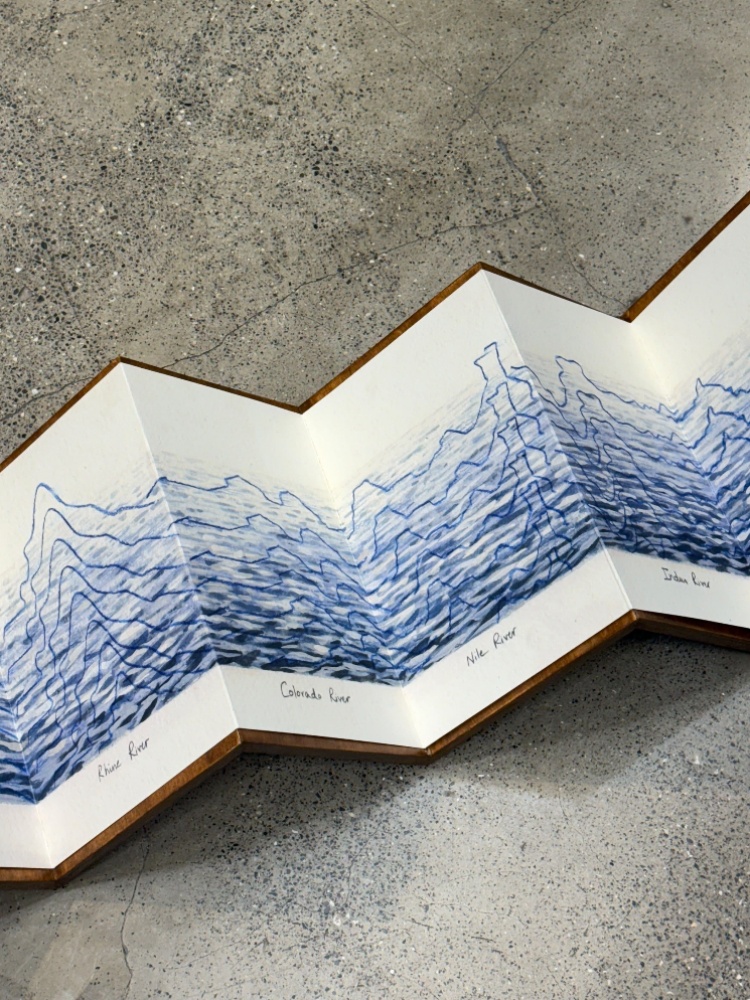

Reena Saini Kallat’s Water Book is a collection of river drawings that unfolds (quite literally) as a 10-page accordion-fold book. Open it out, and it reveals a zigzagging landscape of layered blue lines, tracing waterways such as the Rhine, Colorado, Nile, Indus, Shatt al-Arab, and Tagus. Their names are handwritten along the bottom of the pages, while political borders weave through the illustrations, intersecting the natural course of the rivers. Look closely and these dividing lines begin to resemble ripples, seismic waves, and currents.
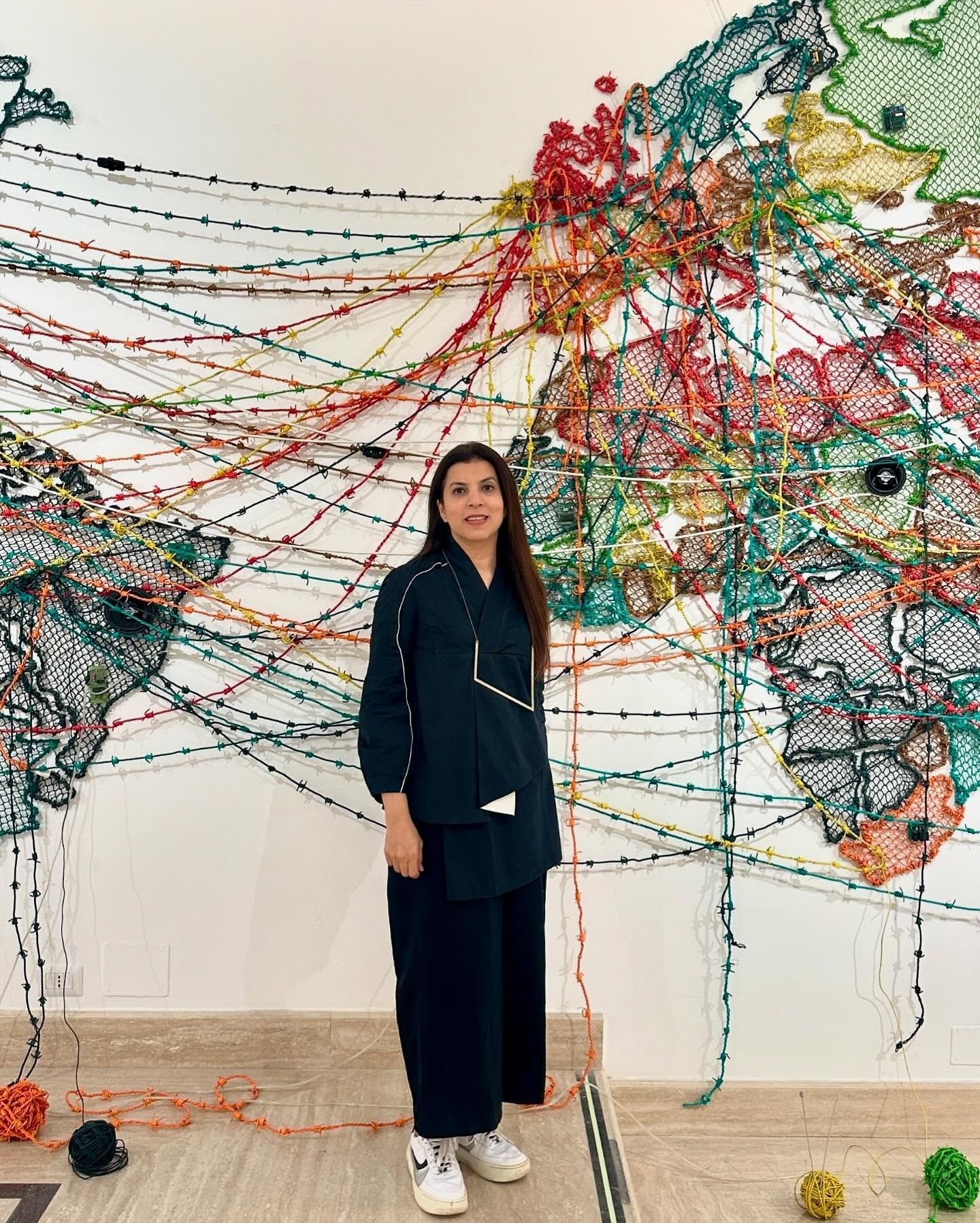
The work explores the complicated relationship between rivers and the countries they flow through. Kallat, a visual artist whose practice frequently examines borders, migration, and ecological divisions, sees an opportunity to rethink how countries approach these shared resources. “Water is a shared heritage. Instead of becoming a source of conflict between countries, our shared dependence on rivers should enable us to find new ways of transboundary cooperation,” she says.
Currently on display at Art Mumbai, open through November 15, Water Book is a limited edition of 50 signed copies presented by Nature Morte in collaboration with The Cycle, a non-profit. A percentage of proceeds from sales will support the organisation’s water body restoration work in Tamil Nadu, undertaken with its sister organisation Sanitation First.