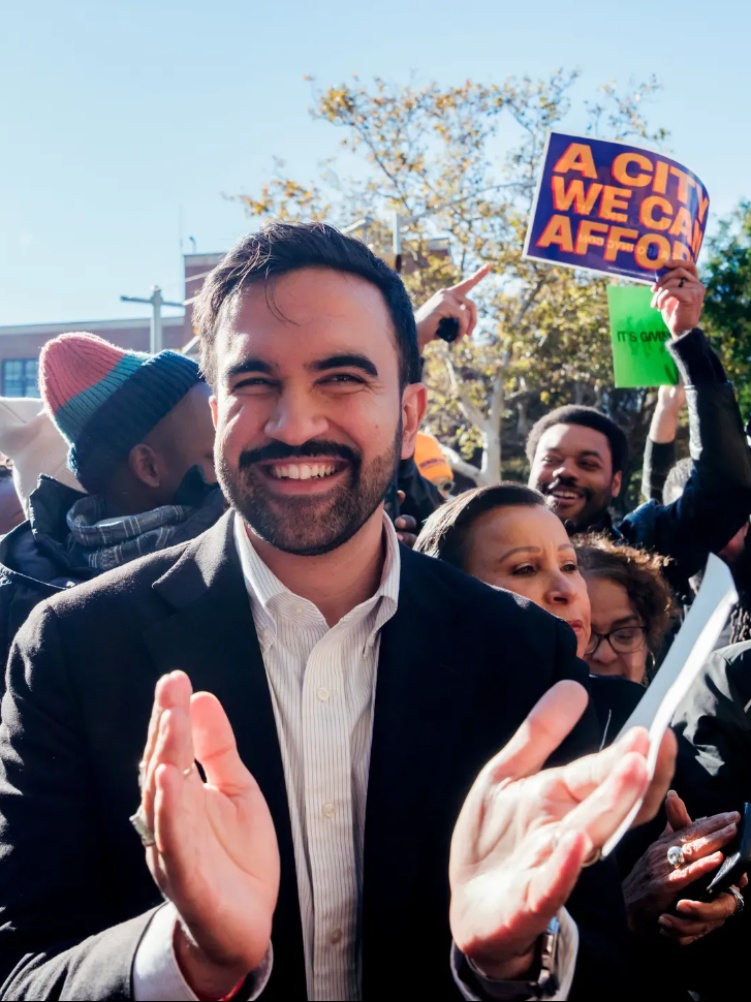




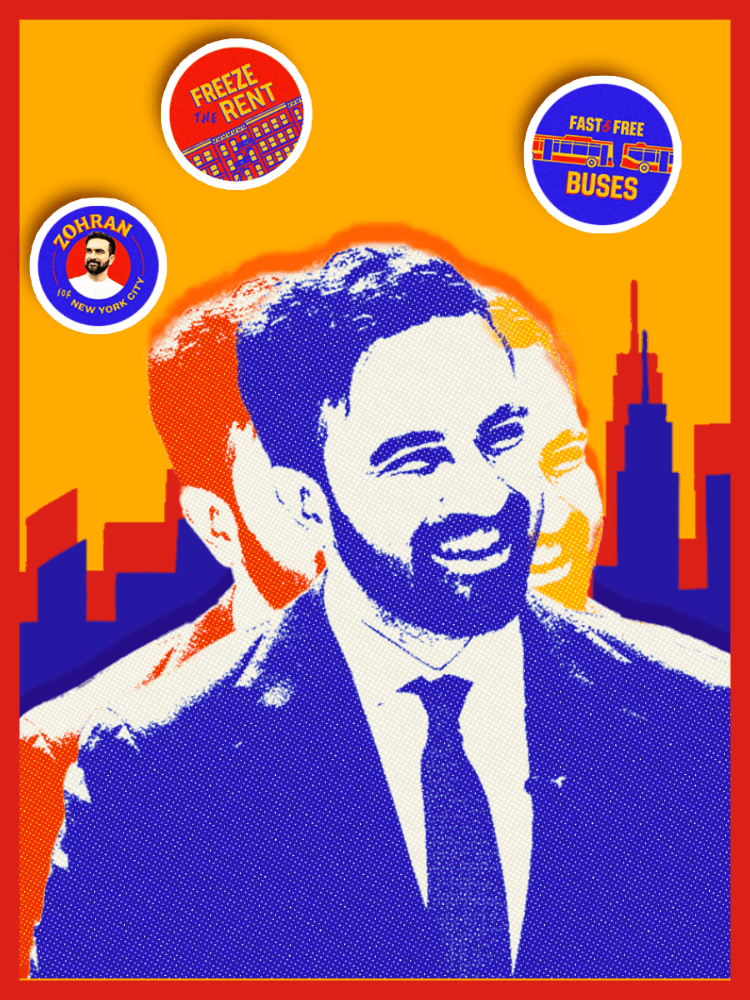

2025 gave New York its new people’s prince: Zohran Mamdani. On November 4, the 34-year-old Queens assemblyman became not only the youngest successful mayoral candidate (since 1892) but also the city’s first-ever Muslim and South Asian mayor. Born in Kampala, Uganda, to Mahmood Mamdani, an acclaimed academic, and Oscar-nominated director Mira Nair, with an adolescence spent between Morningside Heights and the Bronx and an early adulthood that includes an unforgettable turn as rapper Mr Cardamom, Mamdani met New York’s first Gen Z First Lady (artist Rama Duwaji) on Hinge in 2021 and has the kind of résumé that might feel more at home on prestige television than in the political arena.
His headline-making win is backed by political figures like Bernie Sanders and Congresswoman Alexandria Ocasio-Cortez, celebrities like Emily Ratajkowski, Ramy Youssef, and Kareem Rahma as well as a young, impassioned fanbase of woke voters who are pro-immigrants, pro-trans and anti-status-quo. A big driver of Mamdani’s appeal are his policies on housing and public transportation, which sound like they come from someone who actually rode the bus that morning. His ability to charmingly flit between English, Urdu, Arabic, and Spanish literally speaks to New Yorkers, and his campaign’s decision to centre joy as the propellant of their mission has turned the usual doom and gloom of politics into something akin to a block party backed by a solid policy agenda.
Even sitting in faraway India, you can’t deny there’s something about Mamdani that makes him a people’s politician. On our most-hearted posts last year were images of him eating biryani with graveyard-shift taxi drivers, videos of a late-night Halloween gay bar crawl that included a pit-stop at Brooklyn’s Papi Juice, listening to a victory speech soundtracked by ‘Dhoom Machale’, and the remarkably ease way with which he charmed the pants off Trump.
At the heart of his NYC win are the young South Asians who have watched his ascent with a mix of pride and ownership, finding kinship in his ability to be neither fully outsider nor insider.
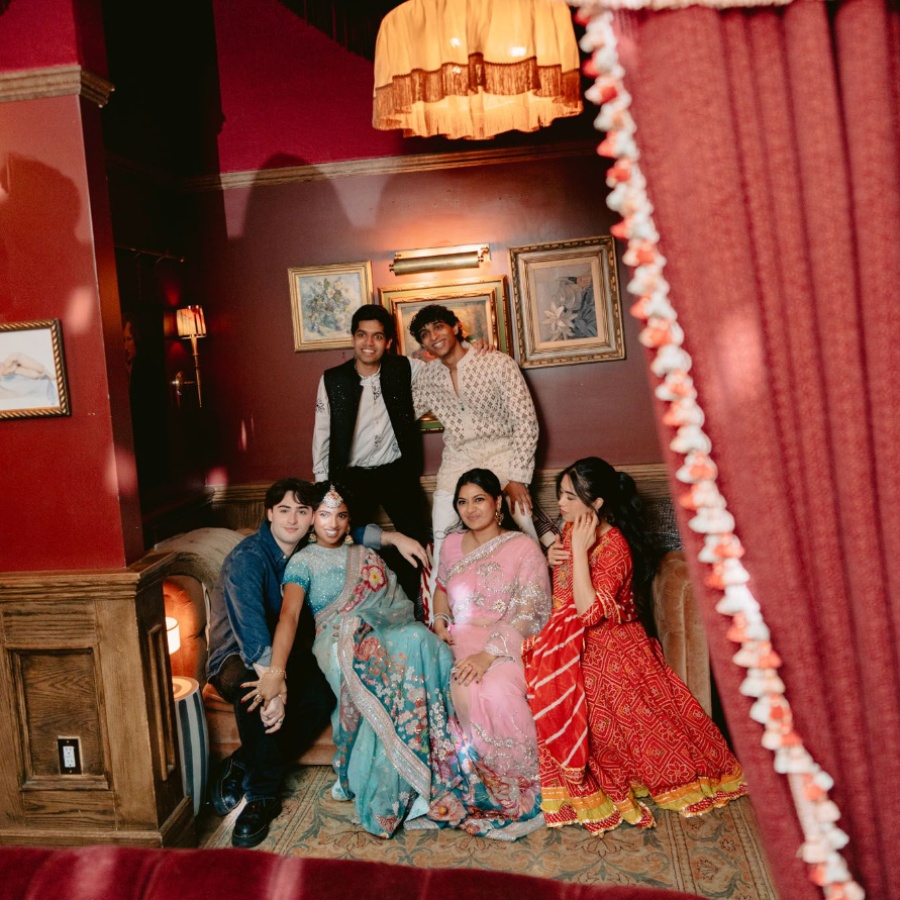
The Nod reaches out to nine South Asian New Yorkers—students, young professionals, the newly political, and the terminally online—to find out what it is about Zohran Mamdani that inspired them to root for him.
Mehr Singh, 30, writer
“I first heard of Zohran Mamdani in 2021, when I was a graduate student at Columbia, through his 15-day hunger strike protesting the crushing debt imposed on taxi drivers by predatory lending. Around the same time, the Student Workers of Columbia-UAW, which I was also a member of, went on strike for fair labour contracts on campus, and Mamdani showed up to stand with student workers. It was clear early on that he wasn’t a single-issue politician and that he understood his base to be equally complex. His politics felt grounded in proximity and care rather than distance or abstraction.”
Salil Gulati, 26, healthcare worker
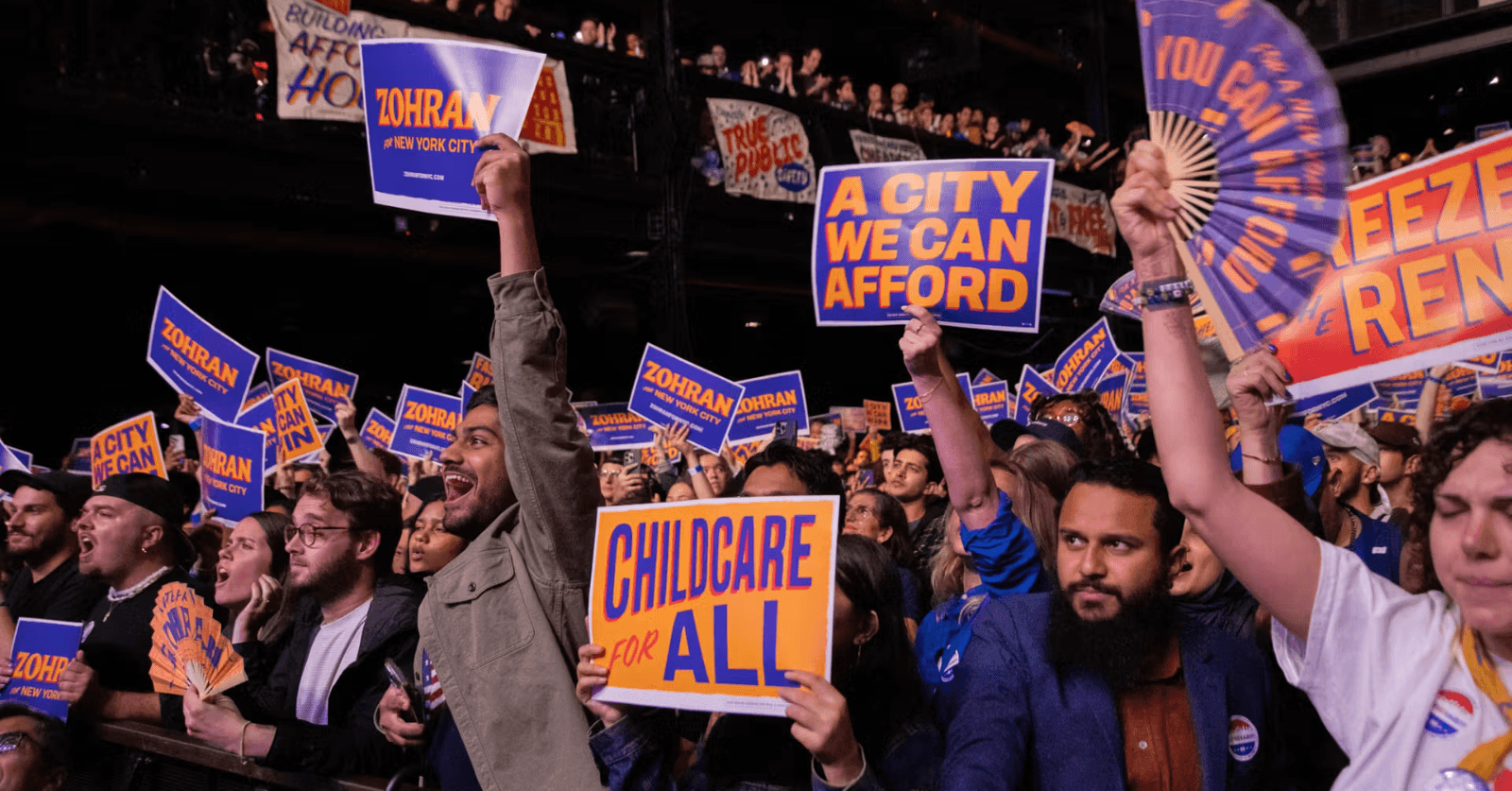
“I attended the ‘Get Out the Vote’ rally at Forest Hills with Bernie Sanders and AOC in October. The place was packed and people were chanting “Fast and free buses!” and “Rent!”. There was definitely camaraderie in that crowd and it felt great to be surrounded by working-class folks—nurses, teachers, students, young and old. I went with my roommates, and although we’re all very different people in so many ways, one of the few things we all agree on is that Zohran is the first politician we’ve seen who has really taken on affordability as an issue in a real way. We’re all people who feel tentative about planning futures and families in New York, because the city’s rising cost of living has been treated as an unchangeable fact rather than a solvable problem. I think Zohran might be able to change that, and I’m excited to have a mayor in New York City who has a positive vision of the future. That’s something we could all use a lot more of right now.”
Puja Nayar, 19, student
“My friends and I hosted a viewing party the night of the mayoral election in my dorm room—we all brought our favourite drinks and snacks and crowded around my laptop as the results rolled in. After the last [national] election, it felt almost illegal to allow yourself to experience hope, because there’s always a chance that things aren’t going to go the way you want them to. But as soon as the first news network called the election in favour of Zohran, you could hear cheers throughout our floor. There were fireworks going off in the distance and people shouting with their heads out of windows. It was a really joyful, celebratory night. I’ve lived in the US since I was in elementary school, but I only got my citizenship recently, and it makes me feel safer to know that I live in a city with a mayor who is committed to protecting immigrants and ensuring that they are treated with dignity and respect. I really look up to the way Zohran stands up for the values that he believes in, despite bigoted attacks against him. I think he’s a great role model for those of us who are young and thinking about a future in politics.”
Srushti Hebbar, 33, creative director
“What first drew me to Zohran was his social media strategy. A year before he became a household name, my feed was full of TikToks of this quick-witted guy doing street interviews—an approach that rarely sets politicians up for success, whether staged or spontaneous. We’re used to seeing politicians lead with seriousness and have a specific online persona, but his strategy felt reversed. We met a goofy, extremely relatable, articulate guy in a suit who biked around the city, took the subway, could name the top three lesbian bars in the city, and wasn’t afraid to spoof himself. Only after he’d earned people’s attention did the policy come in—safer streets and subways, rent stabilisation, and other things New Yorkers have been asking for. He slowly hooked his audience, then broke down ideas that might otherwise be dismissed as radical or “too socialist”.