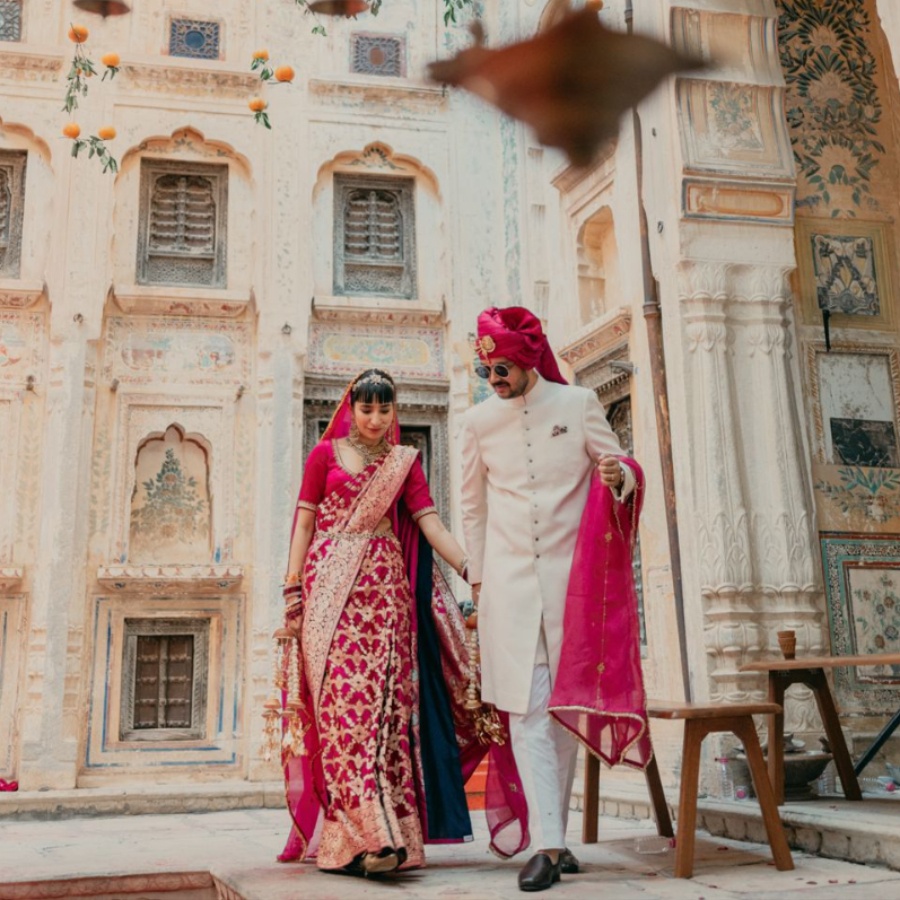
When you think about bridalwear in the context of the Big Fat Indian wedding, it’s clothing that’s designed to be endured. It’s ostentatious, heavy, deeply symbolic, and almost always red. The logic is familiar: it’s your one big day, so everything must be maximal. But 431-88’s first-ever bridalwear collection takes a different approach. It is light, fluid, largely white, and pointedly uninterested in spectacle for the sake of spectacle.
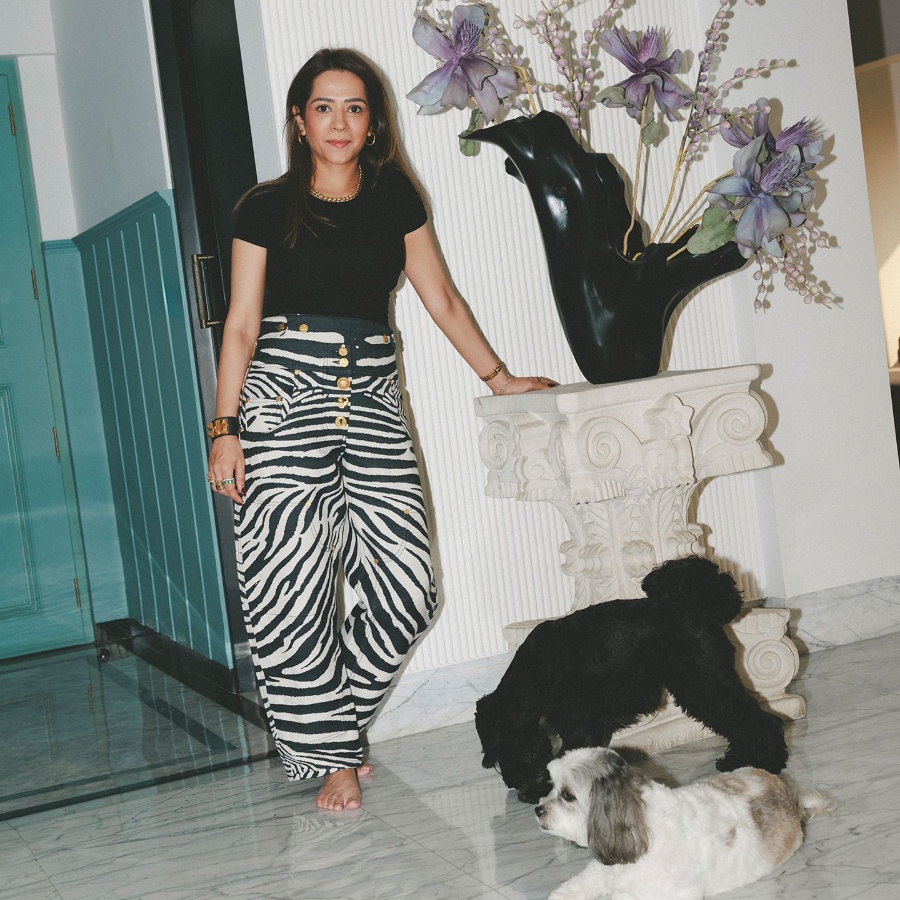
“Red is so overdone in the bridal space,” says Shweta Kapur, founder and creative director of the Delhi-based label known for its easy, tailored silhouettes and pre-draped saris that have become a cool-girl festive favourite. “There are so many beautiful pieces that exist already. But for someone to even pick 431-88 as their bridal choice, their thought process is very different—they’re definitely not part of the usual crowd. So, if they’re not going down that route, then why give them red?”
ADVERTISEMENT
The Kate set
The Sheen set
431-88’s foray into bridalwear didn’t begin as a market experiment as much as a personal one. Kapur founded the label in 2012. While most designers in India think about weddingwear almost immediately—it’s where the money is—Kapur was firm about building the brand’s personality first. “The lifestyle aspect of the brand has always mattered more to me,” says Kapur. Over the years, the label has evolved. The earliest ideas for the new line came from the clothes Kapur made for herself when she got married last year. “I wanted to wear white and have some metallic sheen, so I went with silver.” That visual language became the starting point for the collection, particularly because, as she puts it, “the first collection is always very special”.
The designer in a 431-88 bridal look from her wedding reception
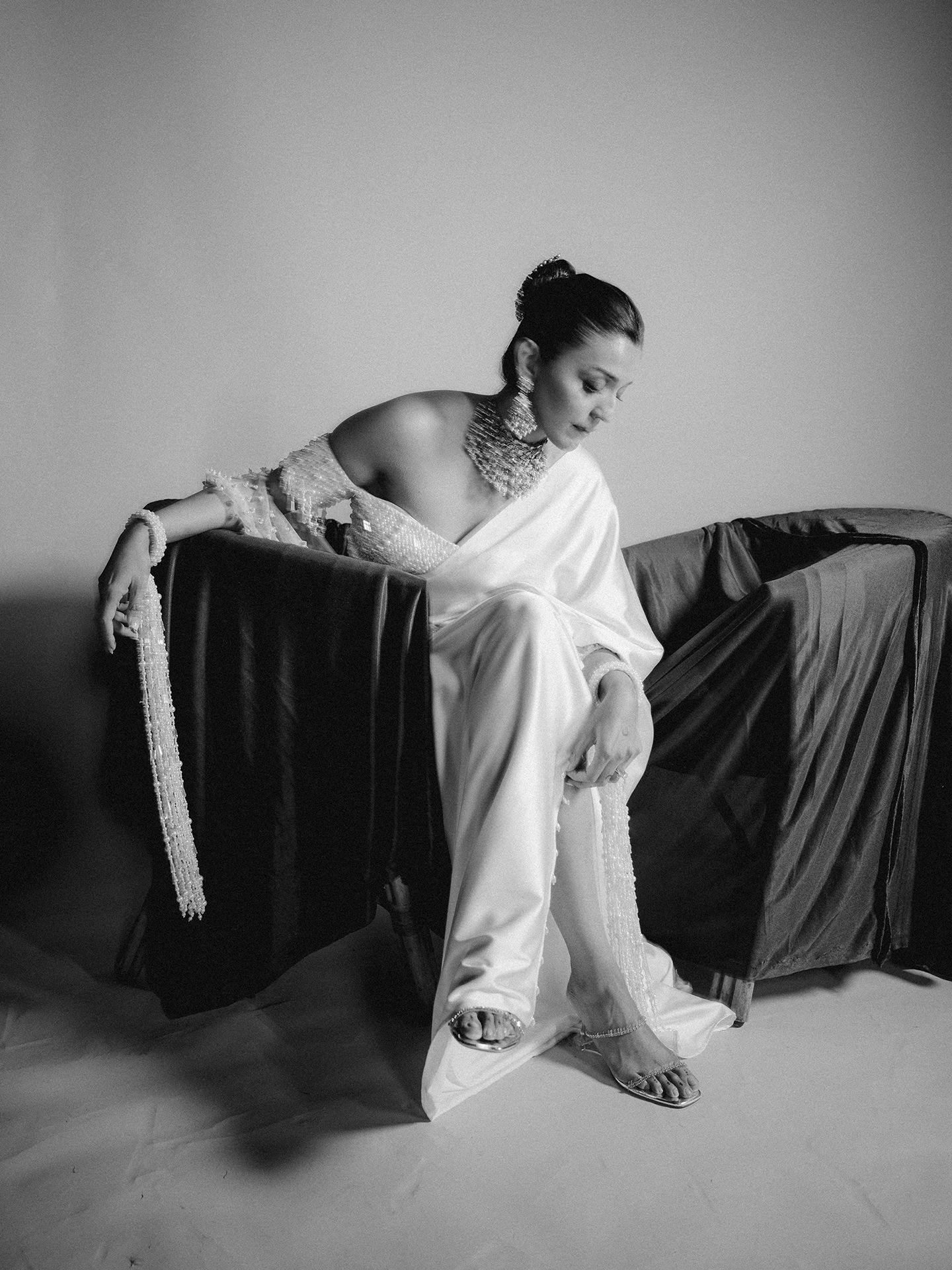
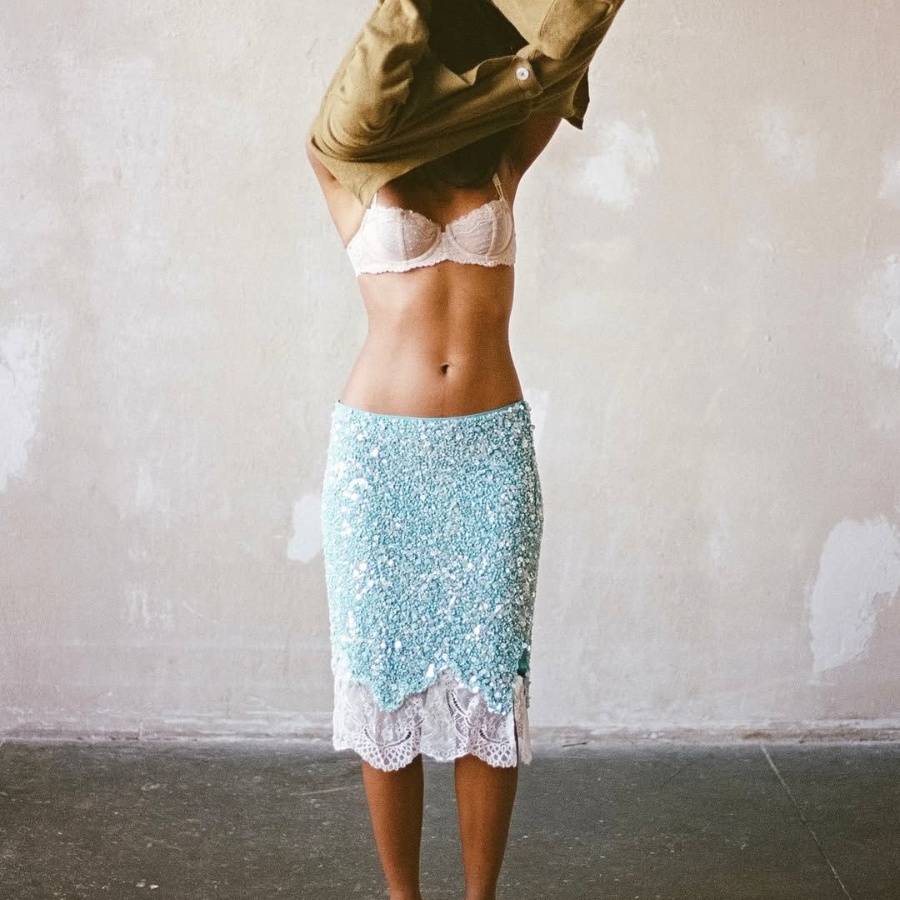
What’s notable is what Kapur and her team chose not to factor in. “We didn’t really look at the cultural significance of colours so much because I felt like our bride wanted to step away from the controlled narrative and make her own statement,” she says. Think a sculpted peplum jacket in ivory paired with fluid palazzos that pool at the feet (a look reminiscent of Bianca Jagger’s iconic YSL moment) or a fully embellished antique bronze skirt, a sheer white organza cape hand-embroidered with pearls, and a white pre-draped sari paired with a sequinned off-shoulder bronze blouse. The palette remains neutral throughout, with white at the centre and silver and bronze accents providing contrast.
But the restraint extends beyond colour. While planning her own wedding, Kapur was overwhelmed with the excessiveness of it all. “There was just too much,” she says. “Too many things, too much clutter, and it was getting to me. So, I thought: let’s just strip away the excess, trim the fat, do away with everything that’s not needed.” That instinct translated directly to the clothes. There’s no can-can, no exaggerated volume. “As a team we decided to let go and see what happens. So, in the draped pieces the fabric just falls in a very fluid manner—almost free falling from the shoulder or the waistband,” she explains.
The drama comes from precise tailoring, elegant draping, and strategic ornamentation. As Kapur puts it, it’s for the bride who commands attention but doesn’t crave it: “She walks into a room and heads turn, but she doesn’t really care if people are looking at her. She has that sense of confidence.”
ADVERTISEMENT
The Shwe set
The Taara jacket
The Kyra set
There is, however, one deliberate contradiction in the collection: Taara, a maxi coat hand-embroidered with scallops that weighs roughly six kilograms. “It was the anchor piece—the first piece we created for the collection. We came from that conditioning too—if it’s bridal, it should be heavy,” explains Kapur. “But when we made it, we realised it doesn’t really feel very 431-88. Anyone can do this.” So, instead of building outward from that maximalism, the team started pulling it apart and creating pieces under it and around it. Kapur sees the coat as an opening act, imagining someone entering the room in this grand moment and then taking it off to reveal a plain white slip dress underneath. “As a designer, that contrast feels really interesting to me. You’re at the same function, in the same outfit, yet it looks so different.”
The collection has already found an audience: professional women looking to invest in a wedding wardrobe they can actually re-wear, NRIs looking for something that can “blend into their environment but still have an Indian element”, and unfussy brides who just want something refreshingly free of symbolism for their big day. “It’s not for everyone,” Kapur says, “and we’re okay with that.”