





There’s a particular kind of dread that comes with preparing for an interview when you, yourself, are the subject. I’m a reporter. My job is to ask the questions, stay neutral, hold the line. So, when I signed up to try a 9D Breathwork session with Delhi-based root cause practitioner Neha Guptta, I spent more time than I’d like to admit deciding what I was and wasn’t willing to say out loud.
What even is 9D Breathwork?
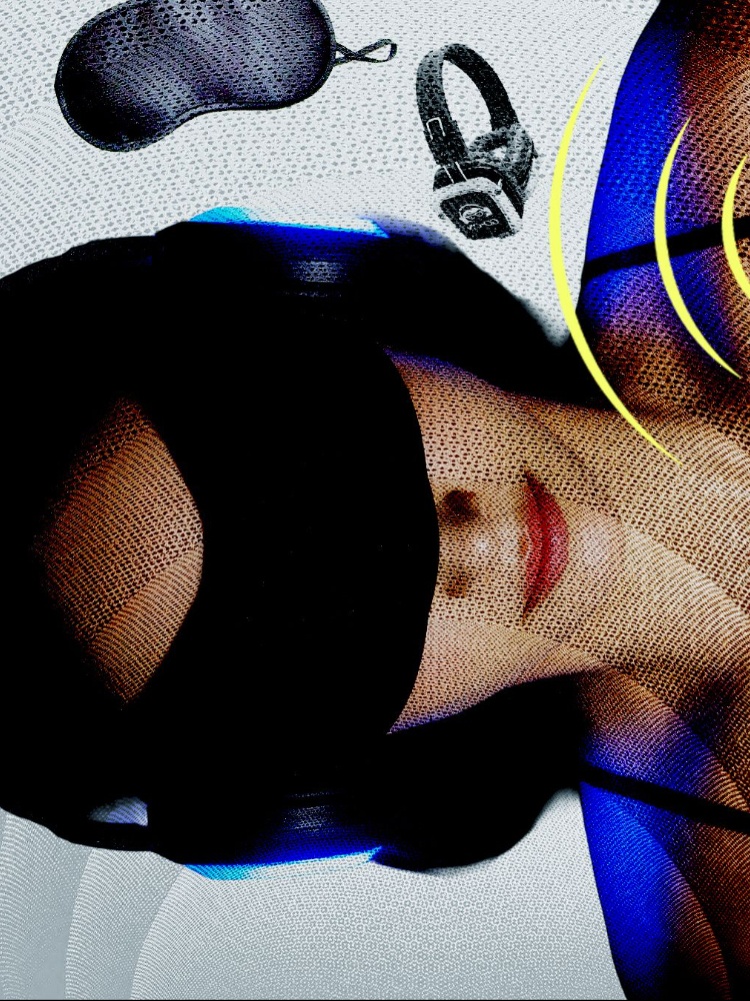
Think of it as conscious connected breathing—the kind that’s been part of yoga and somatic healing traditions for centuries—but rebuilt from the ground up with sound engineering layered on top. The “9D” here refers to nine dimensions of audio technology, like binaural beats, 432Hz healing frequencies, isochronic tones, subliminal coaching, and guided visualisation, stacked into each session. You lie down, put on noise-cancelling headphones, and breathe (usually through the mouth, in rhythmic cycles) while a carefully produced soundscape moves through you.
Guptta, who describes herself as India’s first certified 9D Breathwork facilitator, calls it “an immersive, cinematic audio journey” designed to access the subconscious mind and “break overthinking”. The idea is that the combination of breath and sound bypasses the analytical brain, the one that makes lists and second-guesses everything, and goes somewhere older and quieter.
The internet, predictably, is divided. On one side are people who say it felt like months of therapy compressed into an hour. On the other hand, there is healthy scepticism about the lack of large-scale clinical data. Both responses are fair. But the practice is no longer purely niche.
In 2025, the BBC reported that a programme built on the technique was piloted across five schools in Essex to support students’ mental health. Meanwhile, David Beckham has spoken publicly about how breathwork helped him manage OCD-related behaviours, and Gisele Bündchen does it every morning before most of us have opened our eyes. The wider breathwork category is having a mainstream moment—and 9D is its most technologically ambitious iteration, now present across dozens of countries with a fast-growing community of certified facilitators globally.
In India, it’s still early days. But Guptta is building something here, and the timing makes sense. The country’s wellness conversation has been shifting away from green juices and step counts toward nervous system regulation and emotional processing. Which is, essentially, 9D’s entire proposition.
The session
Before we began, Guptta asked what I struggled with the most. I ran through my long internal list, and then said something honest. I told her about the recent breakdown of a long, meaningful relationship. She didn’t flinch. “This is a judgement-free space,” she said. She built our session around the theme of letting go.
We started with journalling. Eyes closed, one palm over my heart, I breathed slowly as music expanded in the background. Guptta asked questions—the kind you don’t usually get asked. What apology are you waiting for? Some of my answers surprised me. A few of them surprised me enough that I’d rather not repeat them here, which is its own kind of data.
Then came the breathwork. I lay on the floor. The pre-recorded audio took over—a voice encouraging release and manifestation, layered under the soundscape. The breathwork itself is physical: short, sharp inhales and exhales through the mouth in quick succession. I fumbled the tempo at first. Then I found it and felt something shift, a kind of expansion in the chest, a loosening. “You feel like electric currents are roaming around your body and things are releasing,” Guptta had told me beforehand. She wasn’t wrong. She also mentioned that some people weep or scream. (I didn’t, for the record. But I understood the impulse.)
The after
When the session ended, I felt... Lighter isn’t quite the right word. More like less defended. What 9D did, more than anything, was push me to sit with thoughts I had been efficiently routing around. And somewhere between the binaural beats and the breathing pattern that I’d finally figured out, I stopped wanting to censor myself.
Whether that’s the breath, the sound science, the structure of being guided through something difficult, or simply the rare experience of being asked the right question, I can’t say for certain. The science on 9D specifically is still thin. But so is my urge to overthink it. What I know is this: long after the headphones came off, I was still answering the questions.
Neha Guptta conducts online and in-person 9D Breathwork sessions at her studio Sukoon and Sage in Delhi, and hosts classes in Mumbai