



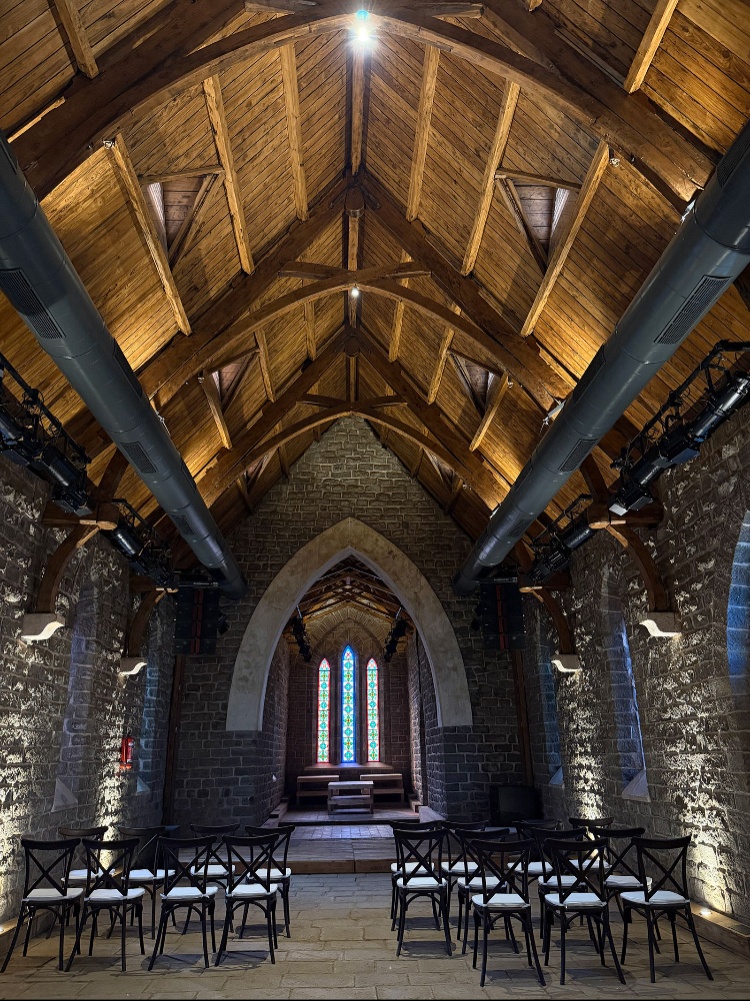

I’m a firm believer in the idea that spaces hold unspoken feelings. A room either welcomes you or leaves you unsettled, and it’s often unexplainable. What do you notice first? Is it the way the light pours through the windows or the way silence settles into skin? It’s evident as I leave behind the chaos of increasingly concrete Mumbai and enter a 200-year-old gothic abbey in the midst of the Sahyadri hills.
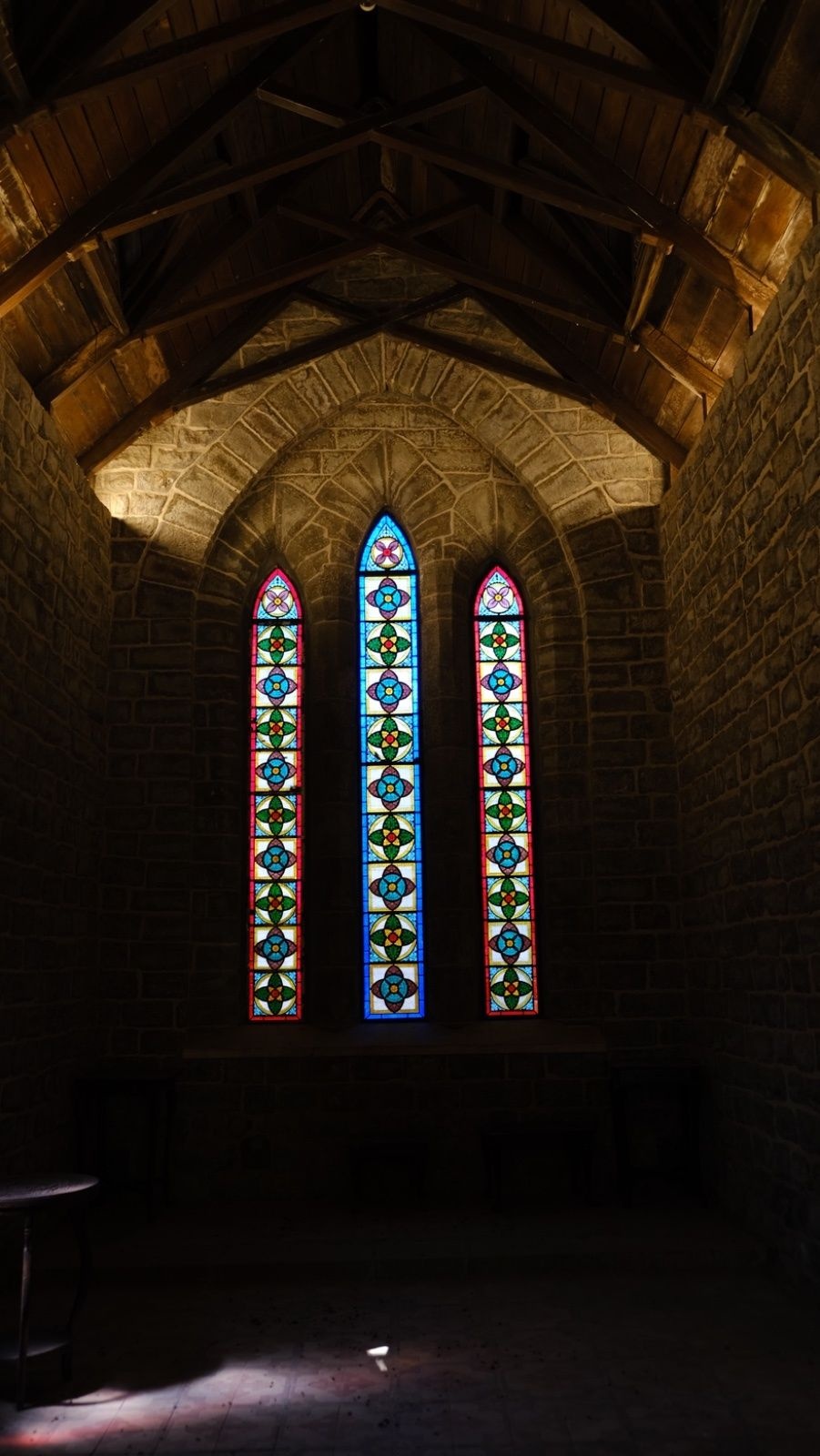
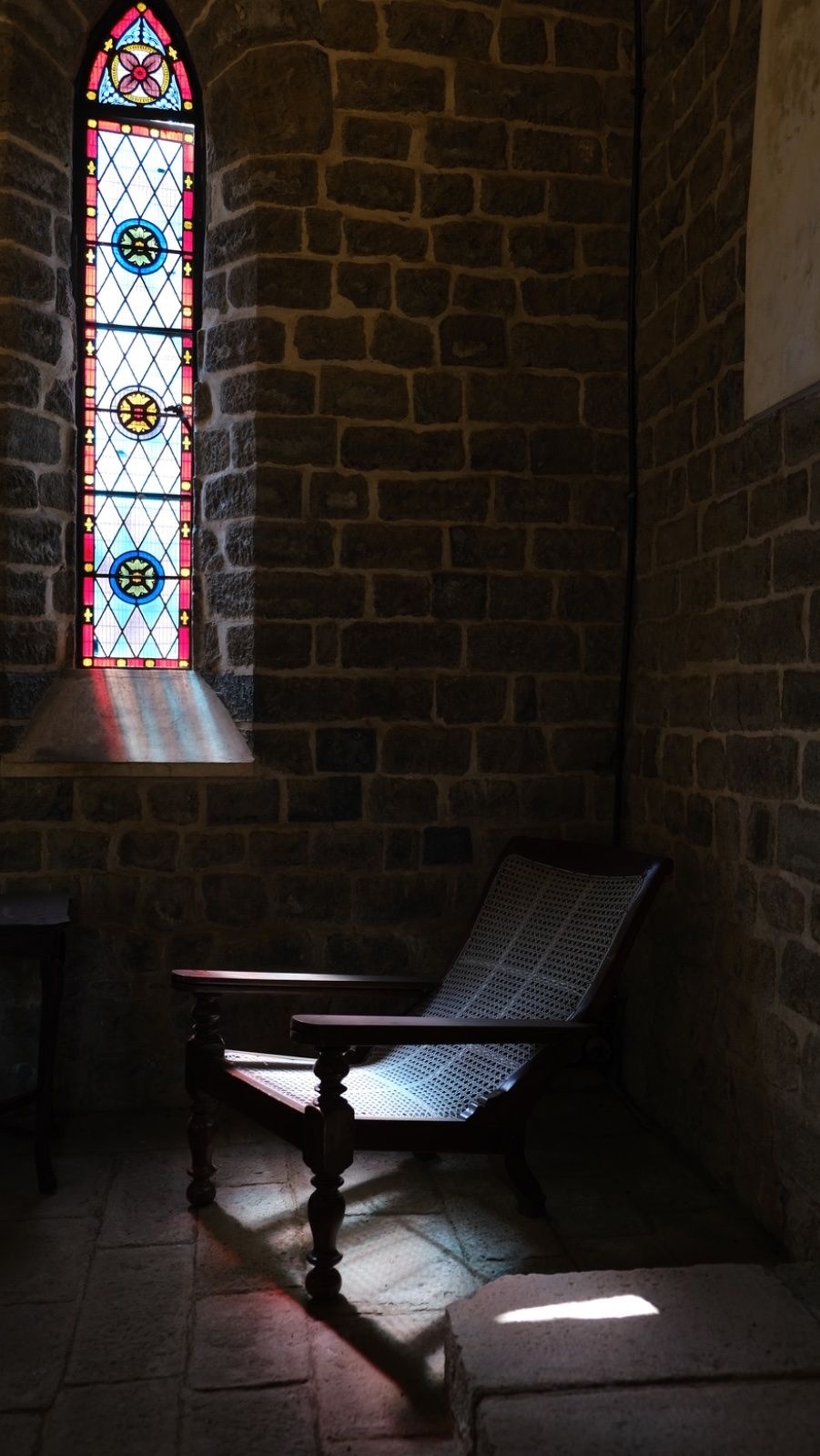
Suddenly, the frequency of the sound has reduced, and I can almost hear the stone breathing. Red, yellow, and blue light moves along its ancient walls, streaming in through the stained-glass windows in the intimate structure. It’s interesting that these walls will soon resound with music, theatre, spoken word, comedy, and exhibits by artists, as the former chapel between Mumbai and Pune is now being converted into a centre for the arts. Named after the area’s postal code, Abbey 301 has been held by the Kotak family for over six decades and is now sensitively restored under the stewardship of owner and head of strategic vision, Kamini Kotak, and architect Adil Dholakia of Five Cross Architects.
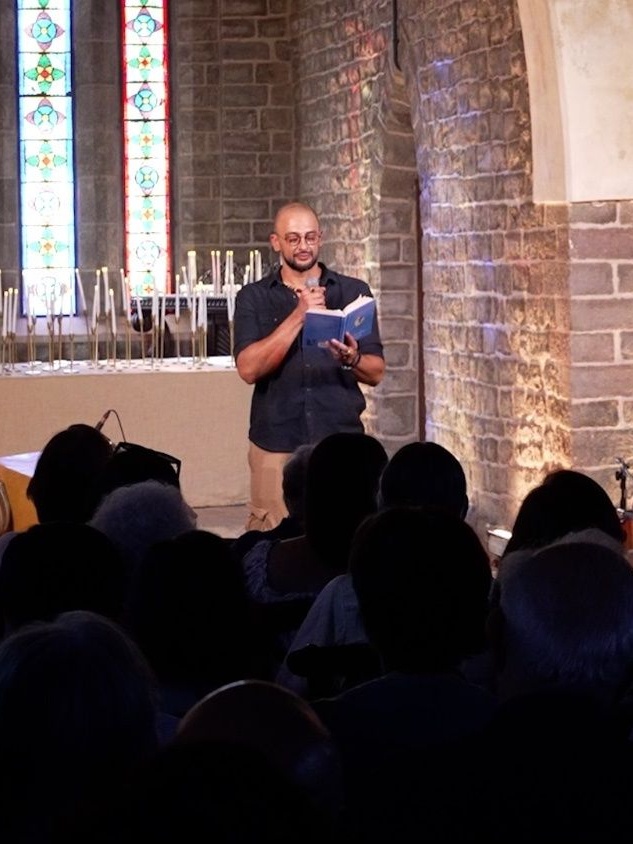
The opening weekend, which runs through January 31 and February 1, will see four artists perform in rather diverse styles. It begins with reflection, conversation, and poetry by Kausar Munir, juxtaposed with readings from classic works by actress Shanaya Rafaat, moving into a performance by singer-songwriter Nikhil D’Souza, followed by jazz with the Sanjay Divecha Trio, and ending with morning ragas on the bansuri by maestro Rakesh Chaurasia.
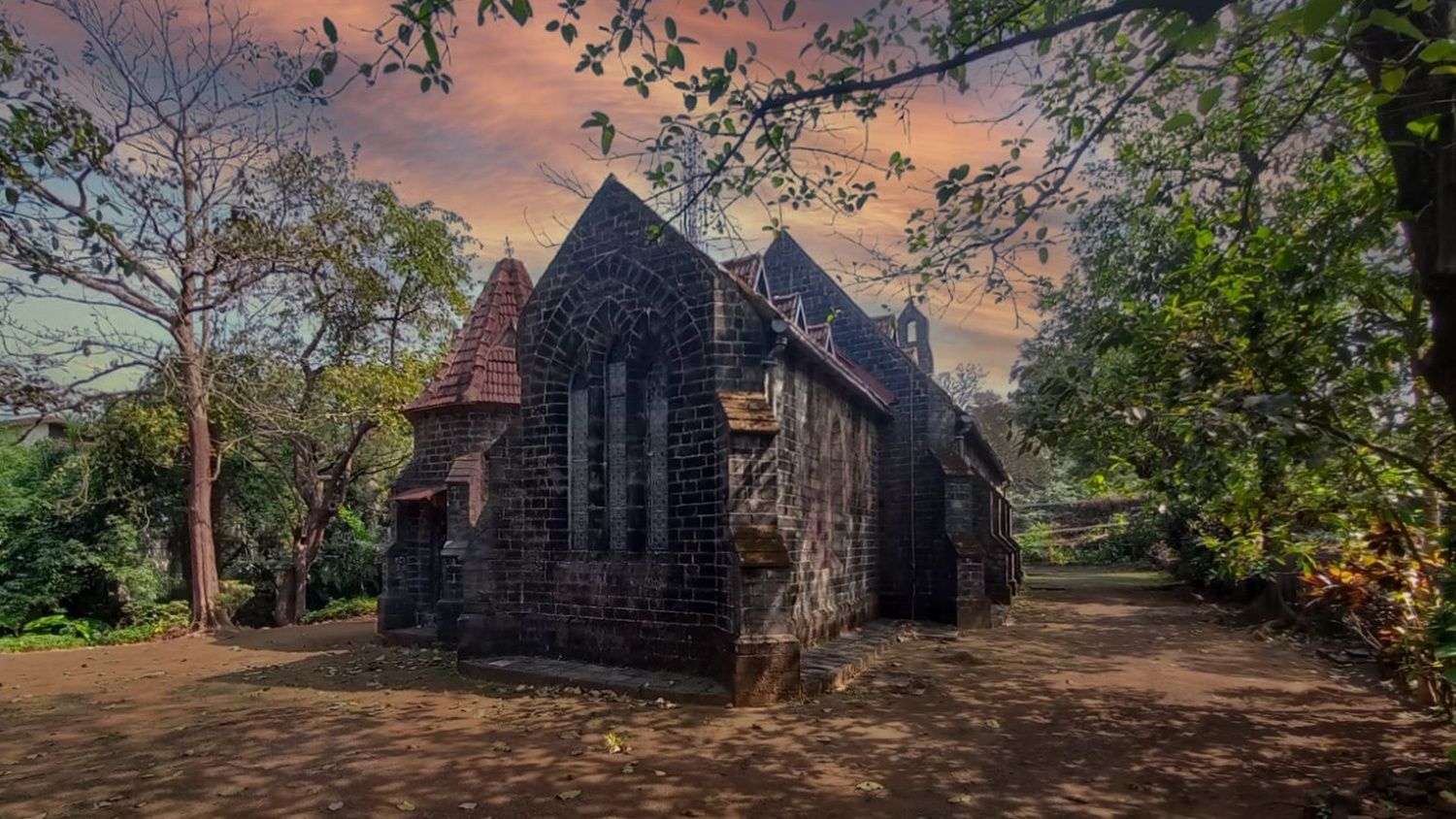
Abbey 301 is named after the area’s postal code
Since the space invites a quieter sort of engagement and has a maximum capacity of 100 people, the creative direction led by Pushan Kripalani and Xerxes Unvala aims to lean more towards active presence than spectacle. While performance art is slated for two weekends a month, visual arts will be a more ongoing occurrence. In programmes to look forward to, comedian Anuvab Pal takes the stage end of February, and a recital by cellist Raman Ramakrishnan with pianist Stephen Prutsman is slated for March.
The structure is likely to take you back to scenes from Enid Blyton novels that were full of enchantment and wonder. Large branches peppered with tiny leaves shimmer in the afternoon sun, and the sound of children playing can be heard in the distance. The courtyard will soon also be home to an exhibition of 32 ceramic sculptures by contemporary artist G Reghu and pique a different kind of curiosity for the local or the traveller who is here to experience it. “When the team began conversing, we often wondered if people would travel to Abbey 301 from Mumbai and Pune, but what about the people here? In Lonavala? This is for them, too,” says Kripalani.
Alongside public performances, the space will host rehearsals, residencies, and closed-door cultural conversations. In the sanctity of a structure that was once built for community and gathering, new voices will lead the way for creative collaboration.