





“Hey Meta, what’s the weather like today in Khetri?” someone asked, adjusting their Ray-Ban Meta glasses. Watching them speak into the void was a peculiar sight, but an expression of contentment washed over them, seemingly satisfied with the answer to their enquiry.
At Abheygarh Khetri, where the late-winter sun glazed the golden façade of the palace hotel, Magnetic Fields held its inaugural edition of Nomads 2026 from February 13 to 15. The three-day music and arts festival celebrated an eclectic mix of folk, classical, electronic, and experimental genres, featuring both Indian and international artists, against the hills of Rajasthan’s Shekhawati region.
Choosing immersion over spectacle, Nomads 2026 sought to encourage discovery, slowing down, and returning to community. And Ray-Ban stepped in to curate the experience with two dedicated listening spaces—Ray-Ban Easy Picnic and Ray-Ban Puqaar—along with the Ray-Ban Hub, which invited people to settle down, listen with intention, and linger into the night. Moving beyond staged performances, the aim was to create shared spaces for cultural participation, and their latest collections ensured we looked good while we were at it! So, among carved balconies, extended sets, analogue printmaking, Ray-Ban Meta glasses, and more, here’s what caught The Nod’s eyes (and ears) at Ray-Ban’s spaces at Nomads 2026.
Sun-kissed sessions at Ray-Ban Easy Picnic
You’d think a music festival would be louder in every way, but Ray-Ban Easy Picnic quickly challenged our expectations. Think charpais laid out on the grass, sunny afternoon vinyl sessions, conversations in between tracks—no rush, no high-chasing beat drops. On day one, we caught Delhi-based Antariksh Daddy’s opening vinyl-only set of immersive dance music that stretched over six hours. The next day, Jogita shifted the tempo with her sonic storytelling. Through rare groove-led soundscapes carrying both instinct and emotion, her music collapsed timelines through a blend of deep cuts and contemporary releases.
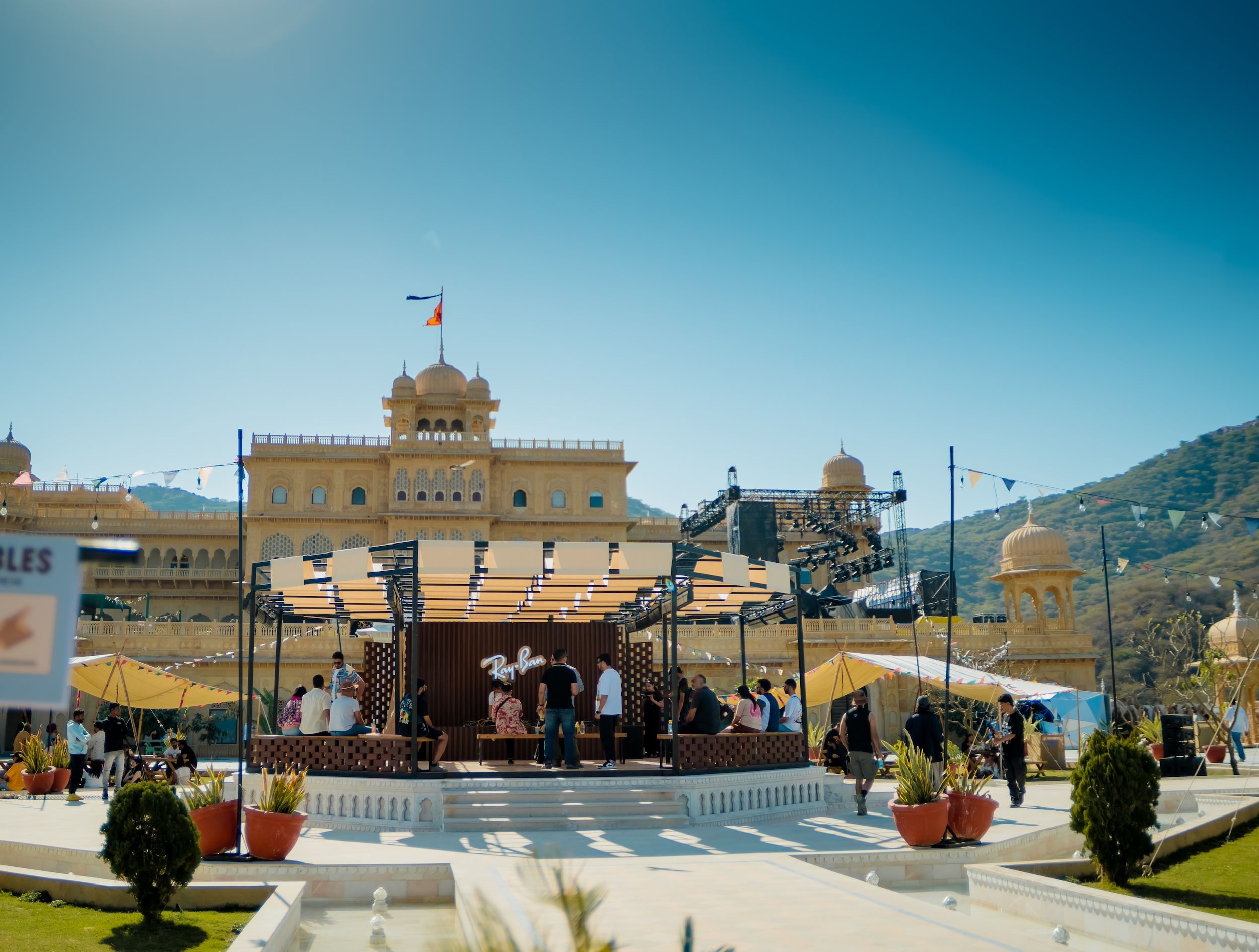
Meanwhile, Berlin-based DJ George Patrick (aka No Plastic) followed suit, moving fluidly across dub, dancehall, disco, street soul, and jukebox classics. On day three, we drifted towards the space once again, this time for a Girls Night Out afternoon of house, disco, acid, soca, and Balearic beats. And when London-based DJ Mafalda played her golden-hour set, Ray-Ban’s Easy Picnic made perfect sense.
Listening as ritual at Ray-Ban Puqaar
On the first evening, we arrived at the newly unveiled Ray-Ban Puqaar stage and instantly sensed a shift in energy from the other venue. Ambient strains of folk, qawwali, and electronic music wrapped our ears, carrying a quiet introspective mysticism. There was a ritualistic harmony between the stage design and the music that flowed through. Multilingual spiritual folk group Sahaja opened with a performance intermingling instrumentation with Hindi, Punjabi, and Urdu poetry to convey their message: “Har Bashar da Rab hai aitthe” (“God resides in every human”).
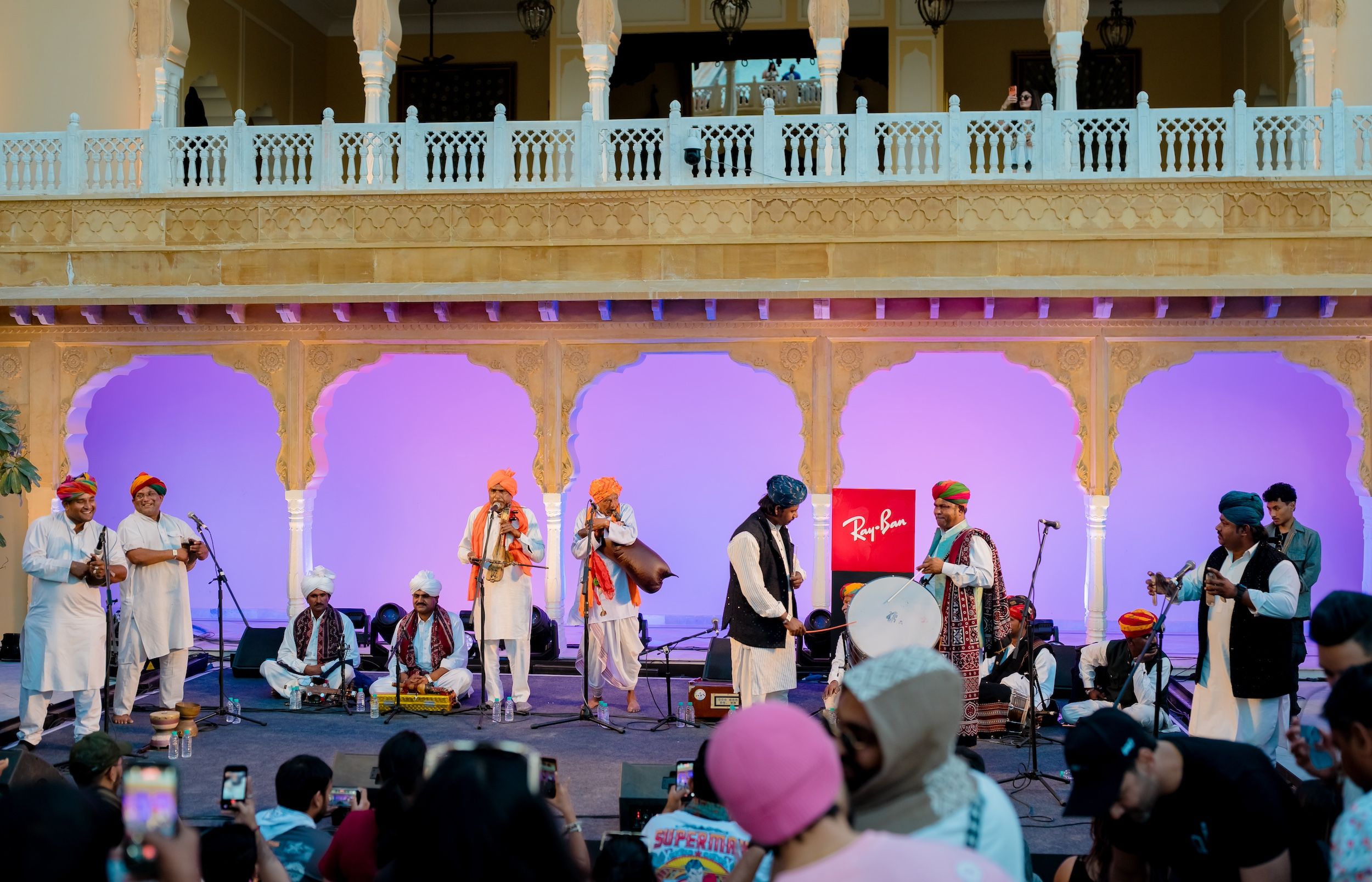
Missing the much-loved Kutle Khan’s performance would have been unthinkable, so you can bet we were there! The multi-instrumentalist Rajasthani folk musician was accompanied by quite the ensemble: Sawai Khan on the kamaicha, Alser Khan on the surinda, Rahees Khan on the khartal, Sabit Khan on the morchang, Yusuf and Mahmood Khan on the bhapang, Ram Swaroop on the bakri ki masak, and Ram Autan on the chikara. Together, they built an expansive cadence under the night sky.
As the festival edged towards its conclusion, we gravitated back to the Ray-Ban Puqaar stage for Yakh Basta’s standout performance, which was at once unhurried and deeply reflective, carrying us into the early hours of dawn.
Hands-on and hands-free at Ray-Ban Hub
But you know what had the strongest magnetic field? The bold red container of the Ray-Ban Hub we frequented between sets and performances. Here, we screen-printed our own tote bags and lost ourselves in the mirrored installations—which also made for a great selfie spot, because if you didn’t take a picture, did it even happen? However, the main character at the Ray-Ban Hub was the Meta glasses, which we used to capture moments—and fit checks—completely hands-free. We’re often caught between feeling the constant need to document every moment on our phones and wanting to root ourselves in the present. Turned out, with the Ray-Ban Meta glasses, we could do both seamlessly, without interrupting the flow of the experience. And with the voice activation feature, we could ask Meta questions to plan our days and find our way around the festival.
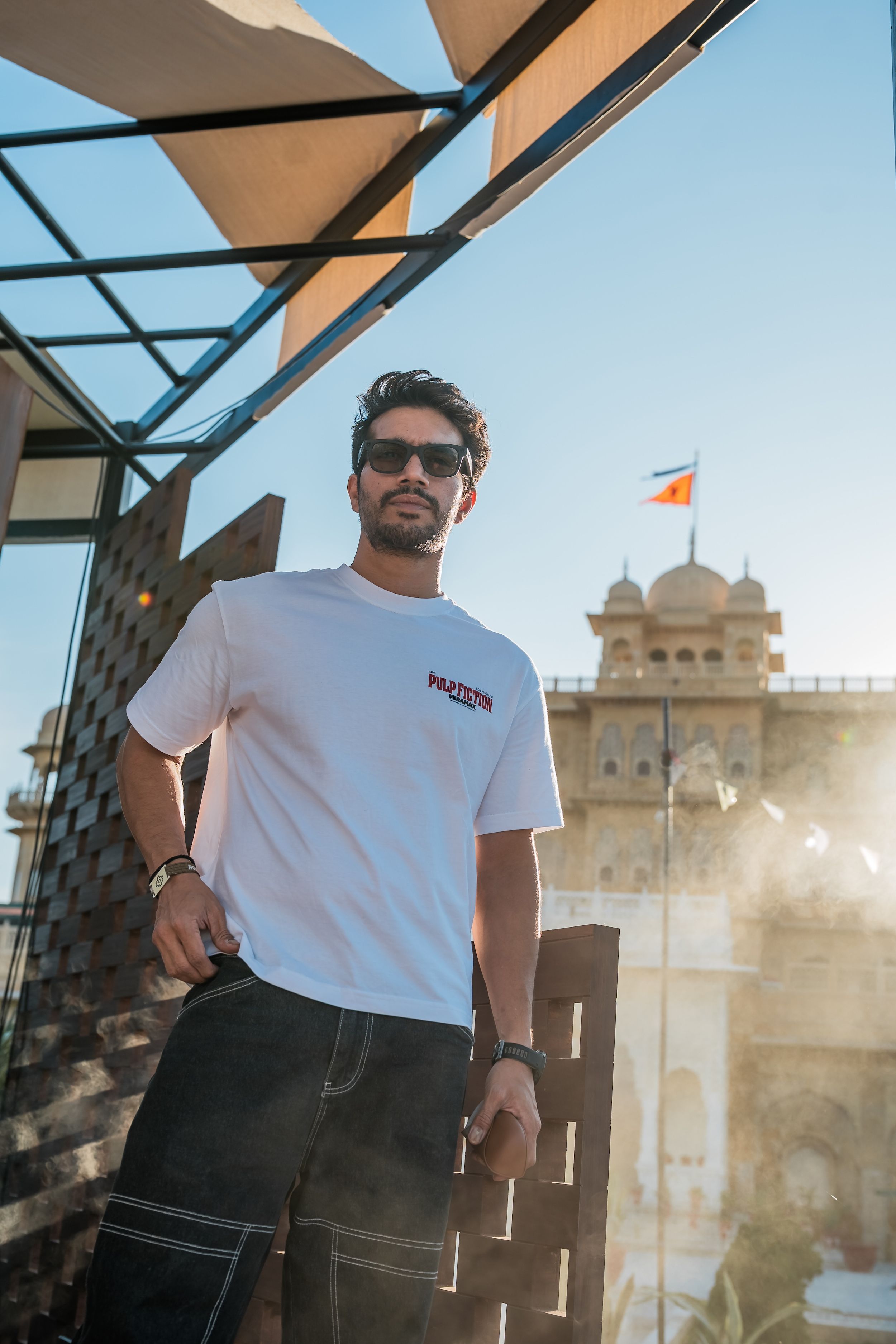
So we ask: “Hey Meta, what was the coolest Ray-Ban experience at Nomads 2026?” We have a few guesses!