



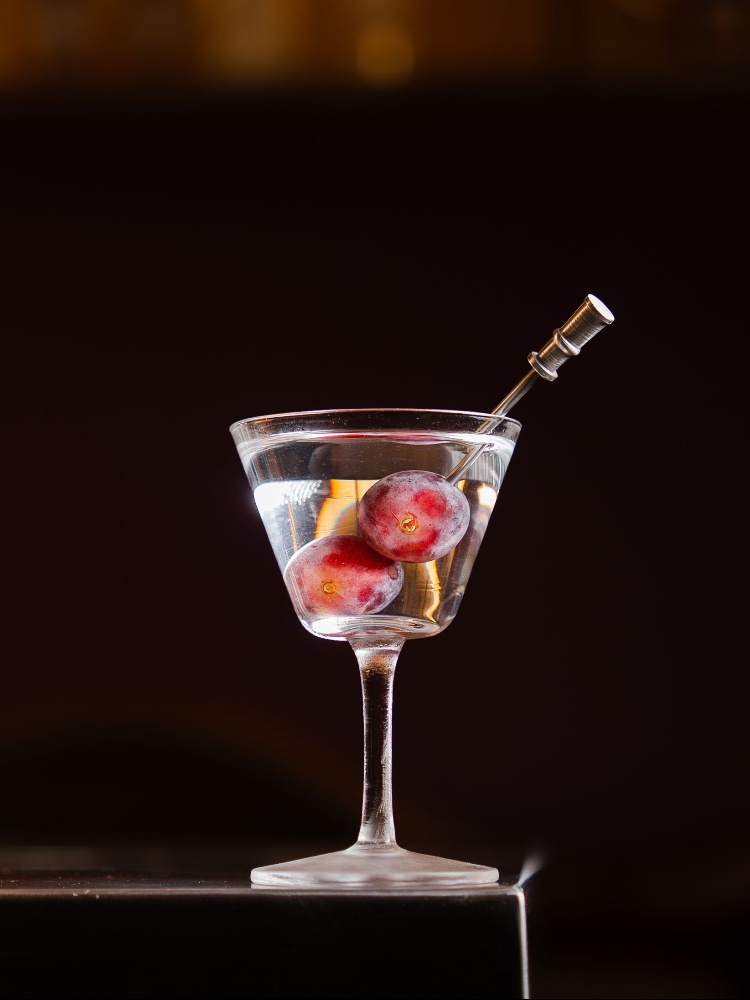

At some of the country’s newer cocktail bars, there are backstories, tinctures, and menus so chunky, they compete with novellas. Even so, the simple question of whether you want another round doesn’t get a vehement yes.
At first, Adam & Eve, beneath HOM near Union Park in Khar, Mumbai, appears to belong firmly to the same school. It is also, by most accounts, among Mumbai’s first basement bars. We enter through a discreet elevator opposite HOM’s open-fire chef’s table at street level. When the doors slowly slide open downstairs, it feels like all of Mumbai disappears.
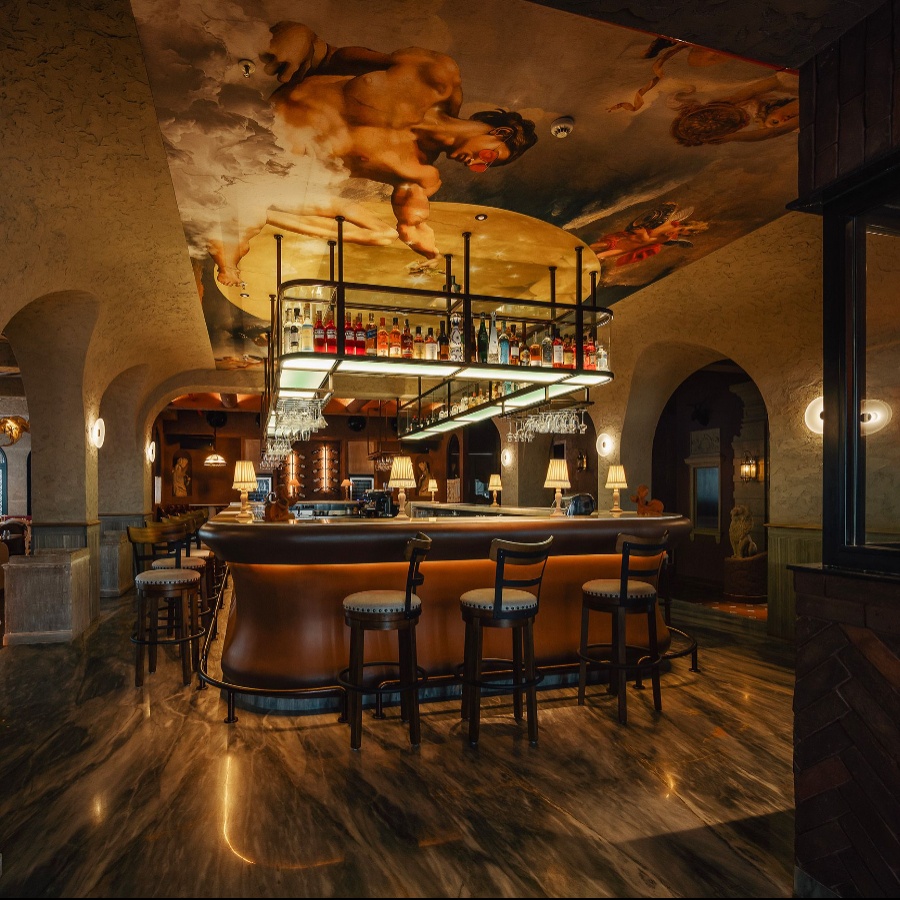
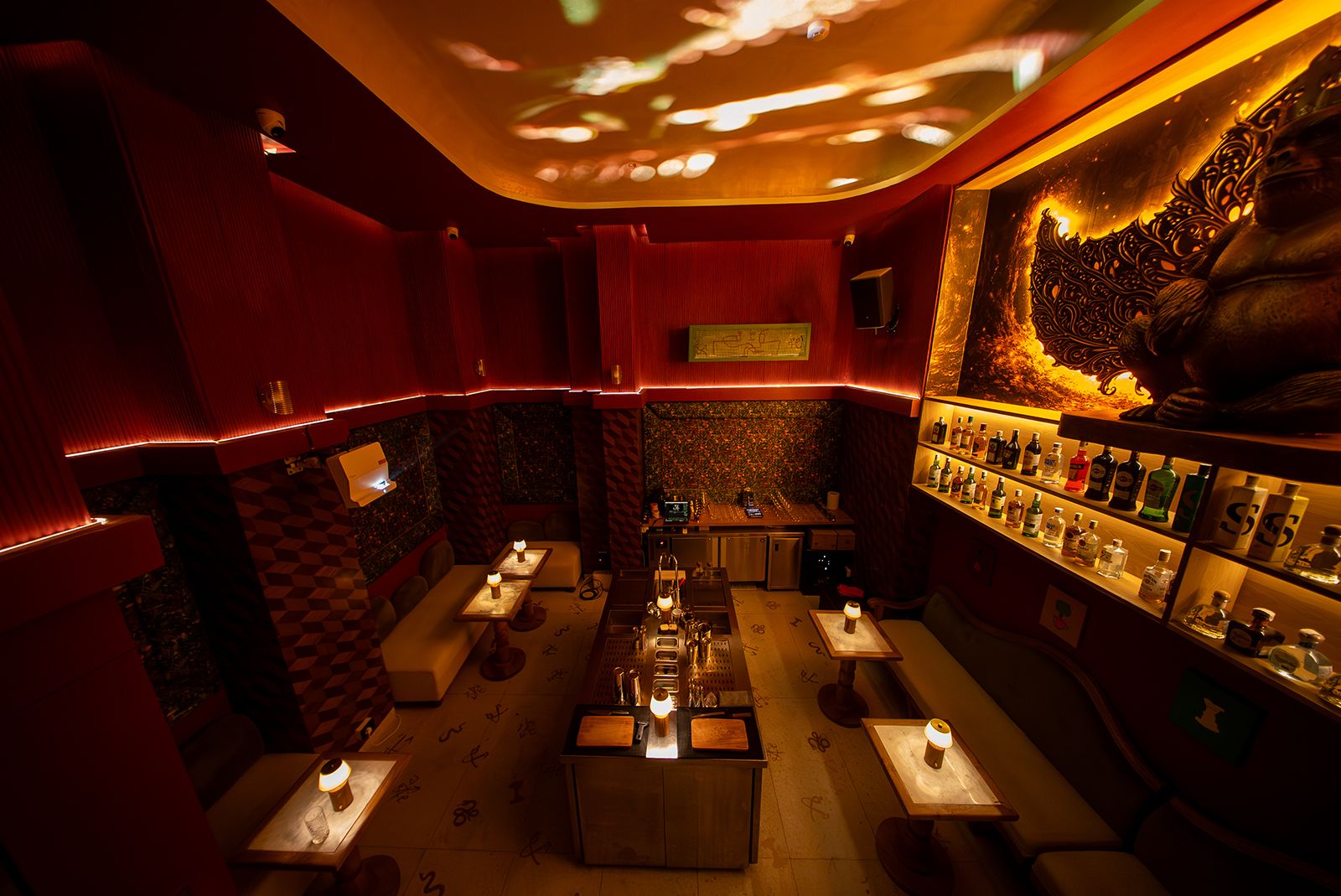
What greets us is a compact 25-seater room soaked in deep shellacked crimson. This is not your typical bar red. It’s a bit like a Tokyo listening room set created for a Kubrick movie. The projection-mapped ceiling loops 117 visuals; we are told it plays for seven to eight hours without repeating. A winged, crowned gorilla sculpture sourced from Rajasthan presides above bottles along the wall. Two banquettes for two have green fabric frames on the wall above them, densely patterned with a tropical print custom-made by designer Sabyasachi Mukherjee. Because the ceiling is high—especially for a basement—the room’s more fantastical design elements stay at the edge of your vision until your gaze wanders to them involuntarily. It’s all somehow both primal and stylish.
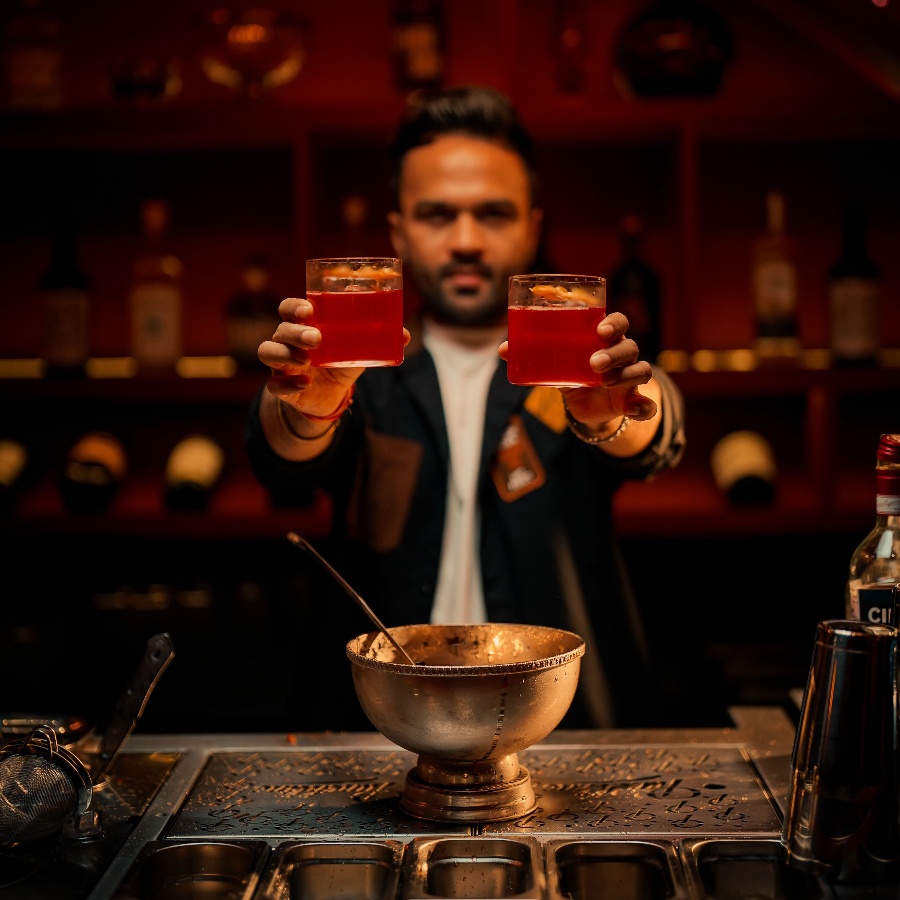
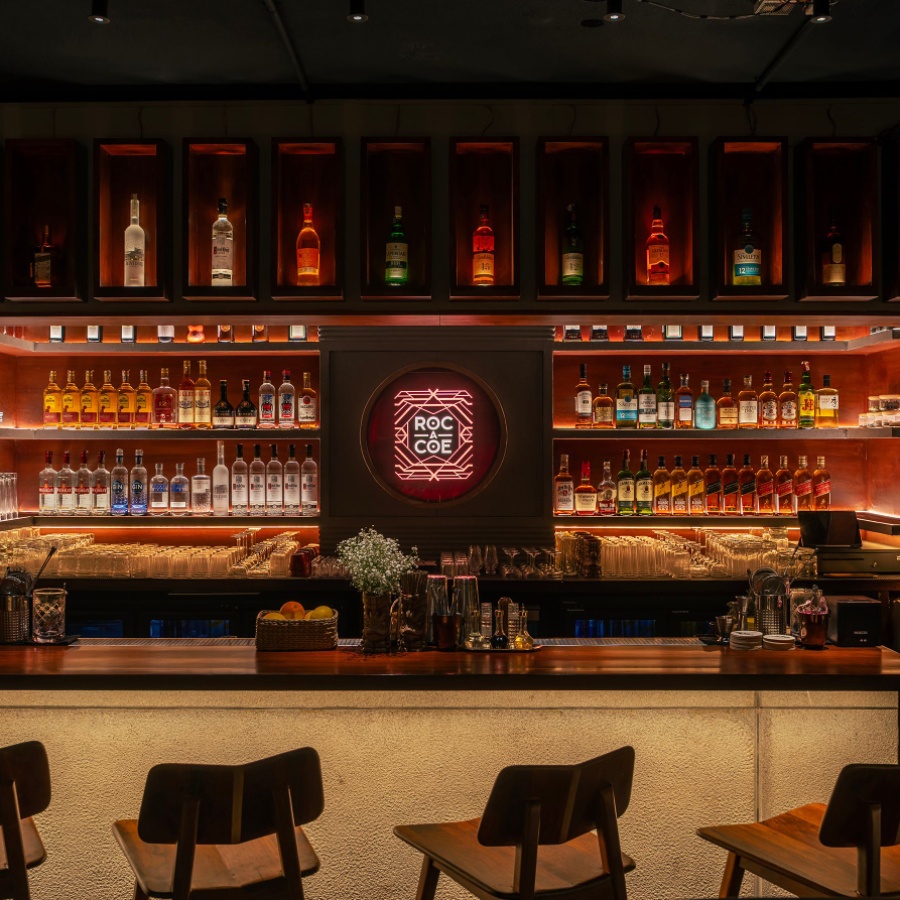
And still, for what is clearly an ambitious bar, Adam & Eve feels like it has a degree of restraint. The bar unit itself is a waist-high, stainless-steel island at the centre of the room, fitted with sinks, garnish trays, cutting boards, and a small amber lamp among the shakers. It looks less like a bar counter and more like a bartender’s workshop. There is no wall of bottles to gawp at (that lies below the aforementioned gorilla), no backlit shrine to spirits, no team showing off their shaker moves. The bartender works the island in full view of the room, and the drinks arrive at the table. Every table has its own amber lamp with a dial for customisable brightness; on a weeknight, you can sense other guests along the perimeter, each tucked away in the shadows around their own pool of light.
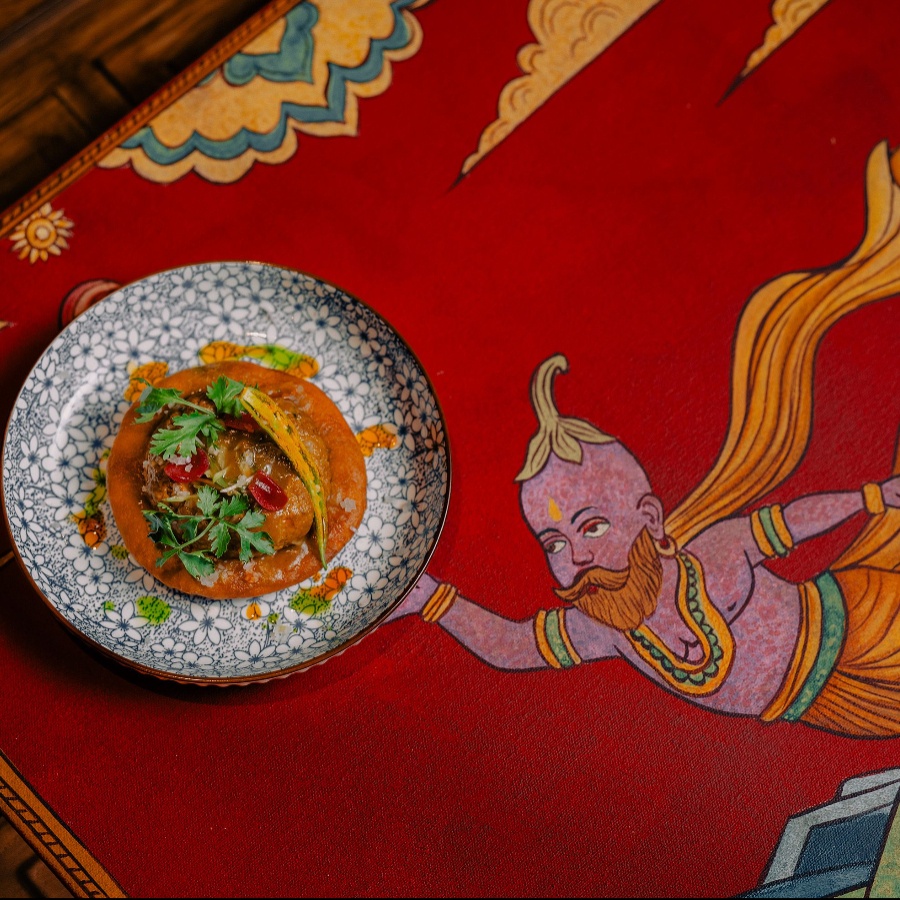
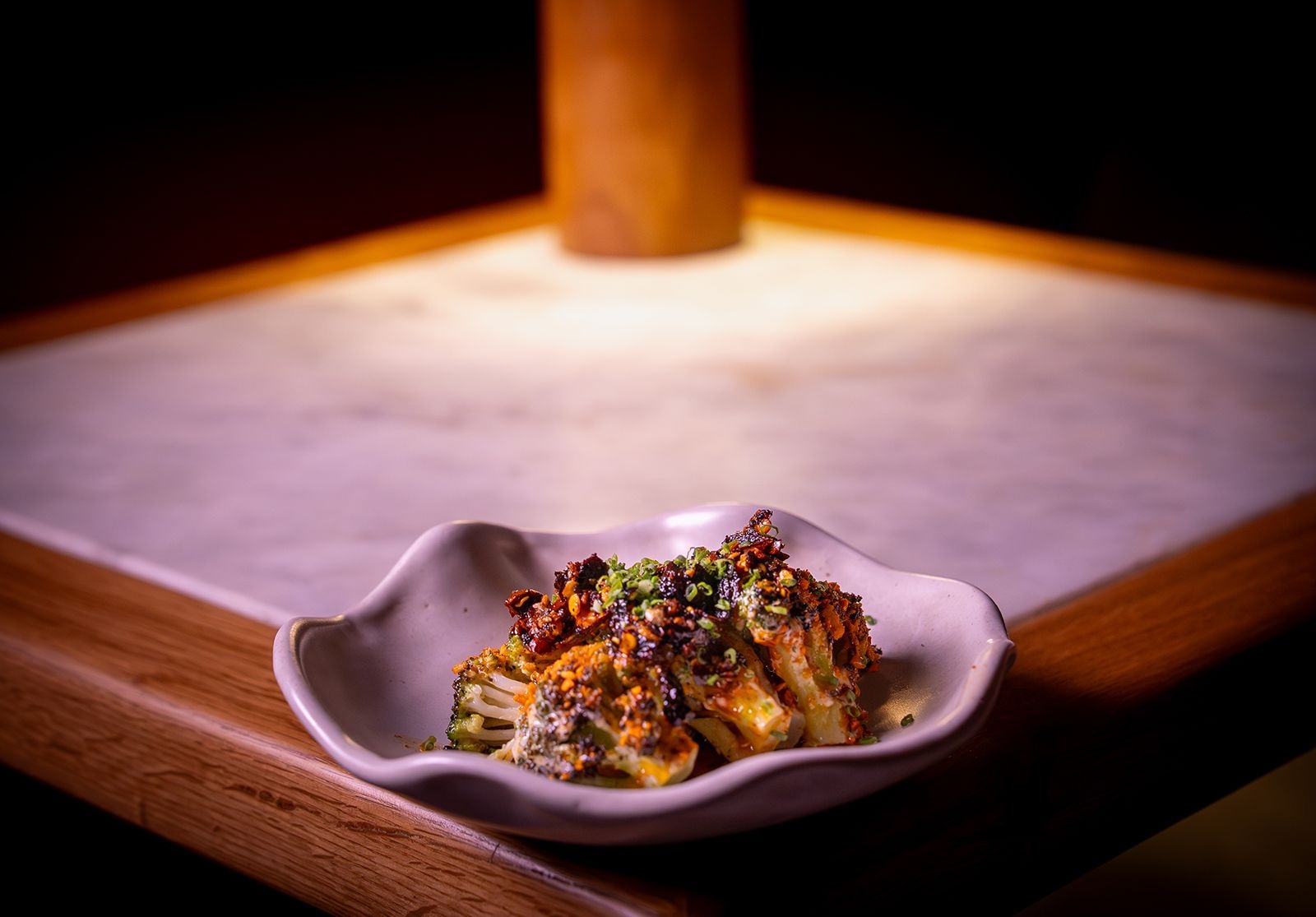
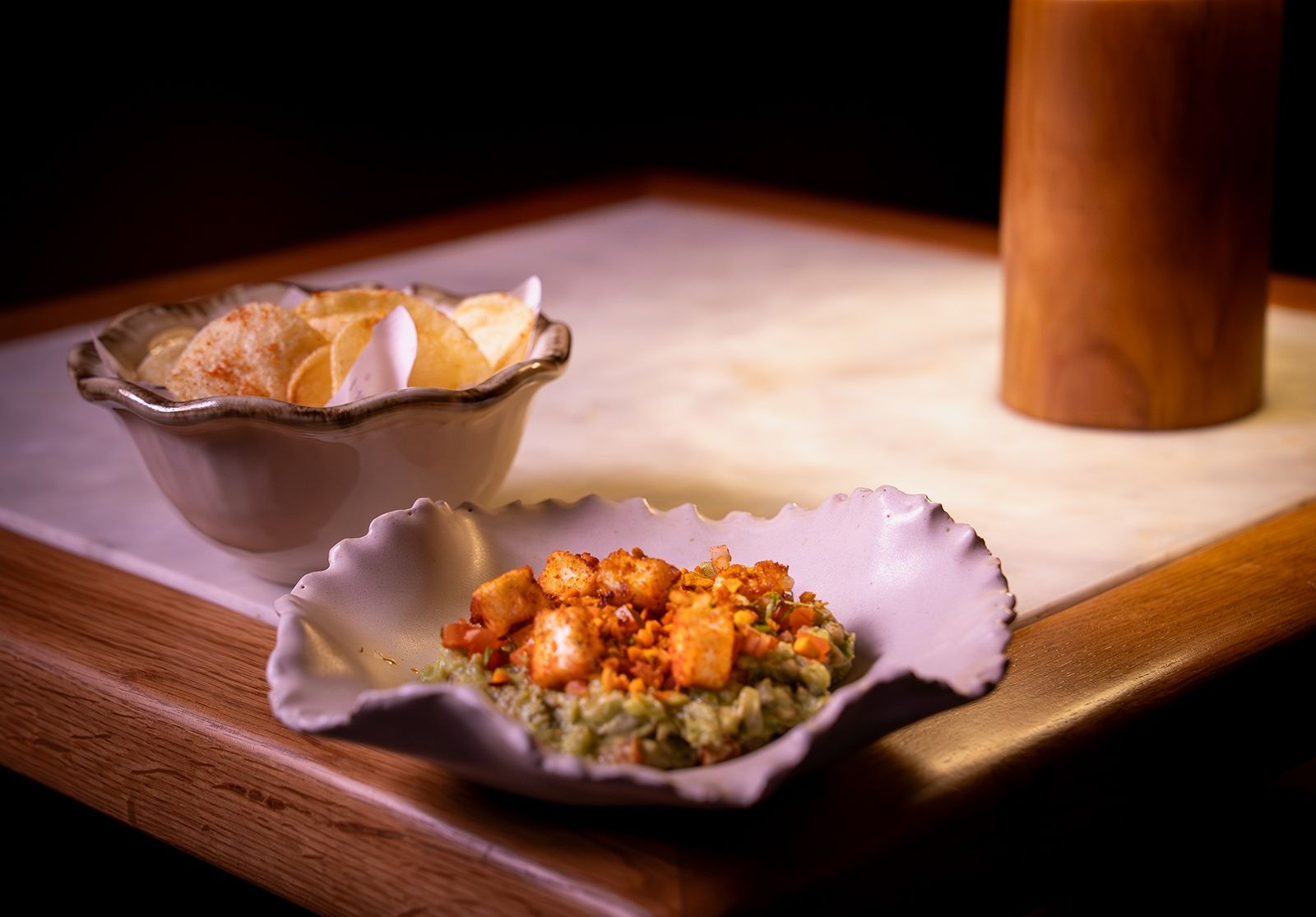
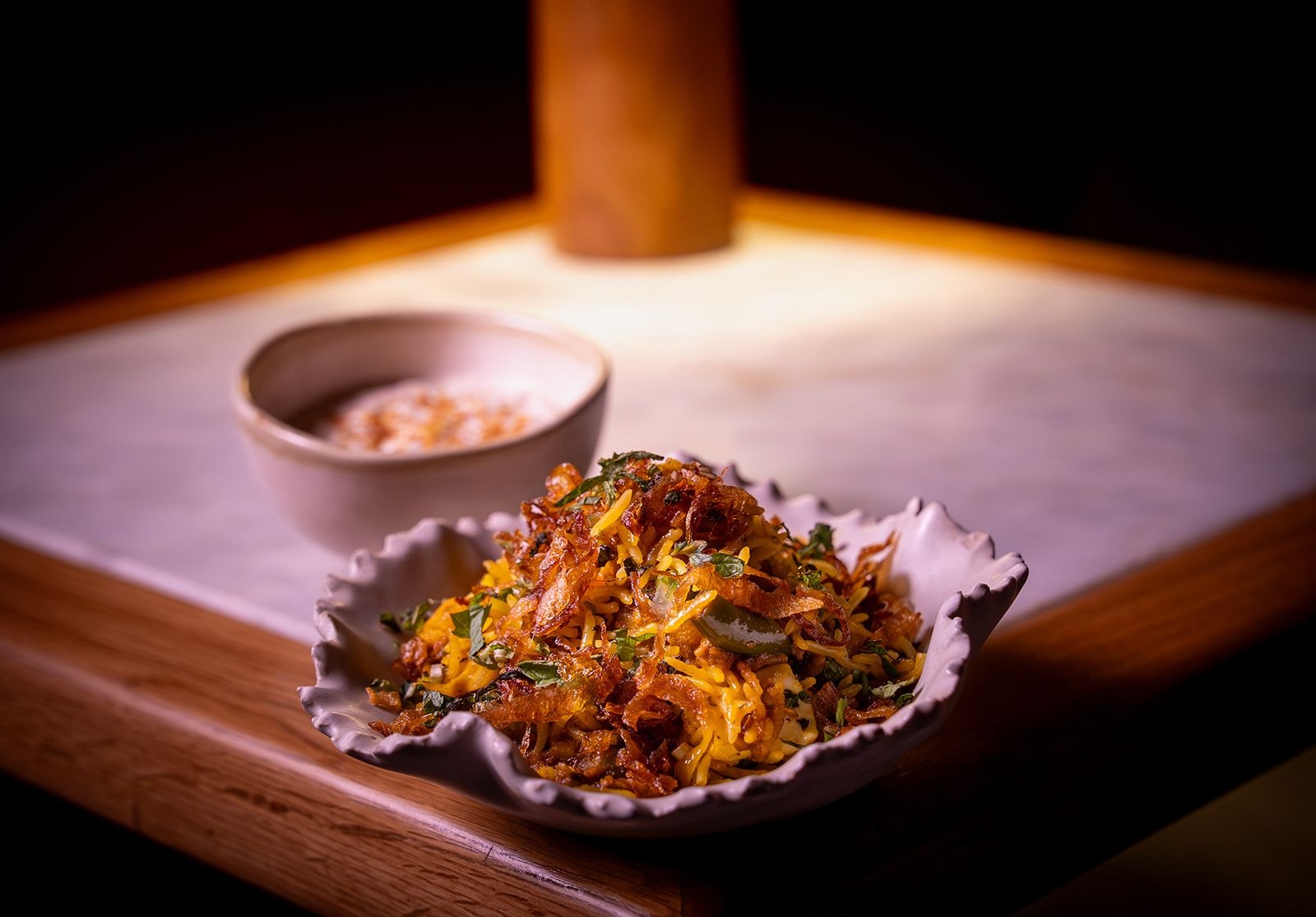
Designers Parzan Daruwalla and Natasha Chawla of Studio 6158 have created a space that feels thoughtfully composed, not just pieced together from a Pinterest board. Water comes in wobbly-edged, shallow glasses; food in ceramic bowls that have uneven rims; a hand-drawn menu with small sketches of produce in its margins is pulled from a glossy red envelope on the table, addressed in silver marker to the guest who books the table. Then there is the music: boy bands, Michael Jackson, Neil Diamond, picks from the Grease soundtrack, the ‘Rigga-Ding-Dong’ song. It’s resolutely, cheerfully populist, a millennial soundtrack now adopted by Gen Z, and a counterpoint to the serious cocktail work that’s happening at that steel counter.
“Cities like Delhi and Bengaluru have really seen the rise of bars where people go out specifically for good cocktails and a strong overall experience,” says Pratik Gaba, who conceived Adam & Eve and the eight-month-old HOM above. “We felt Mumbai was ready for more spaces like that, too.” The bar’s name comes from Eden’s curious fugitives, he says, because he wanted it to be a place of discovery. Indeed, that is largely what happens.
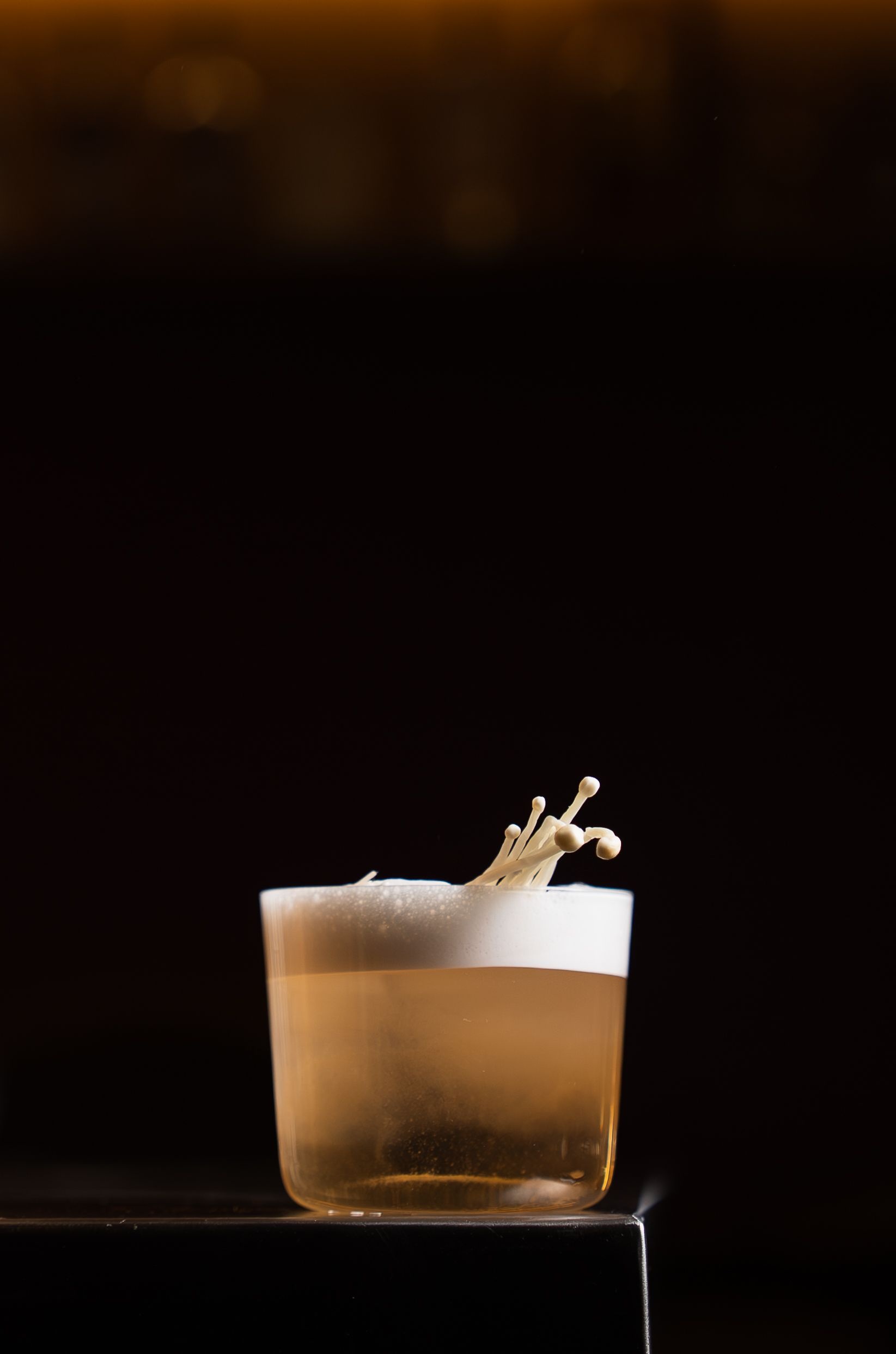
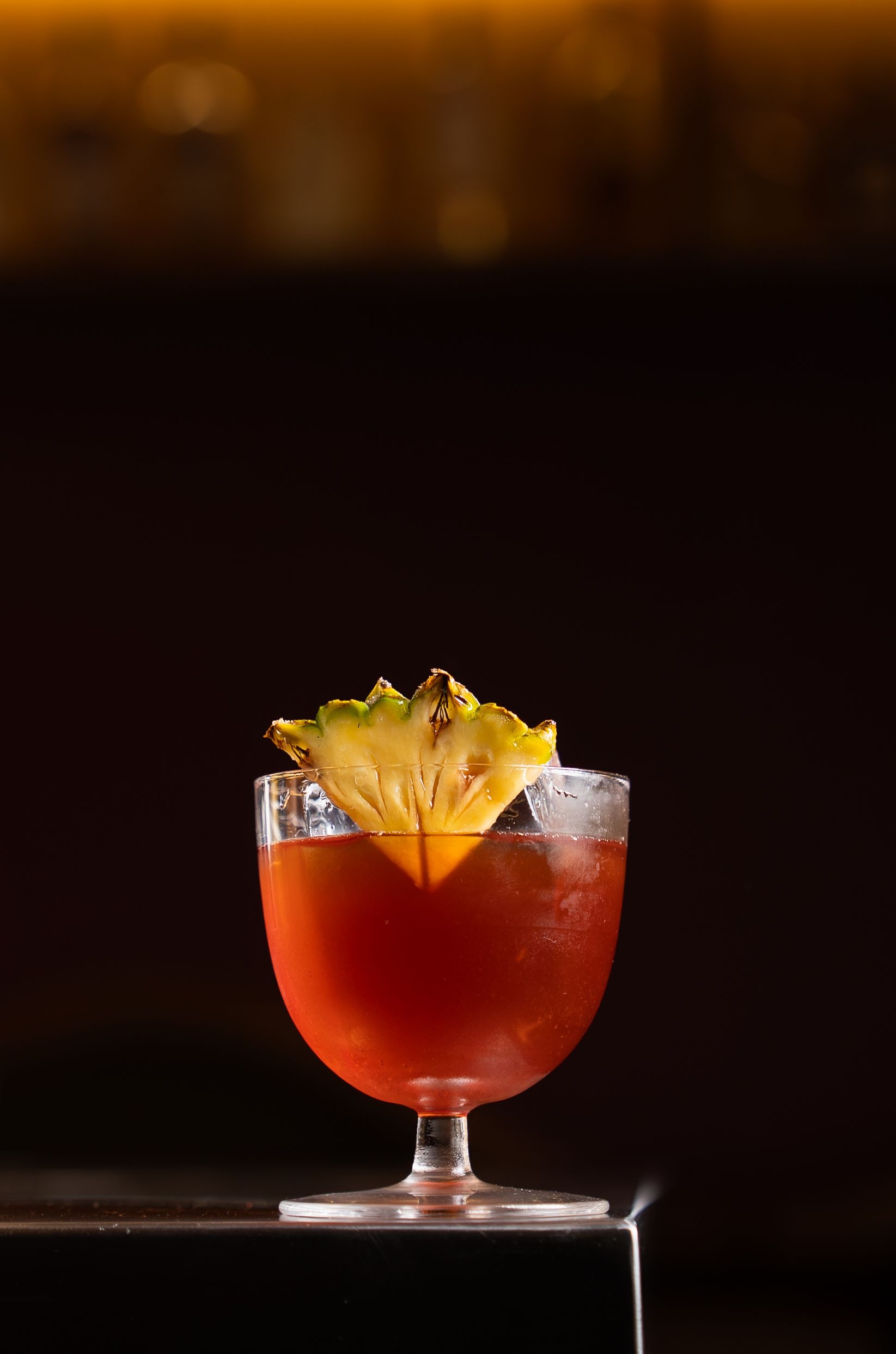
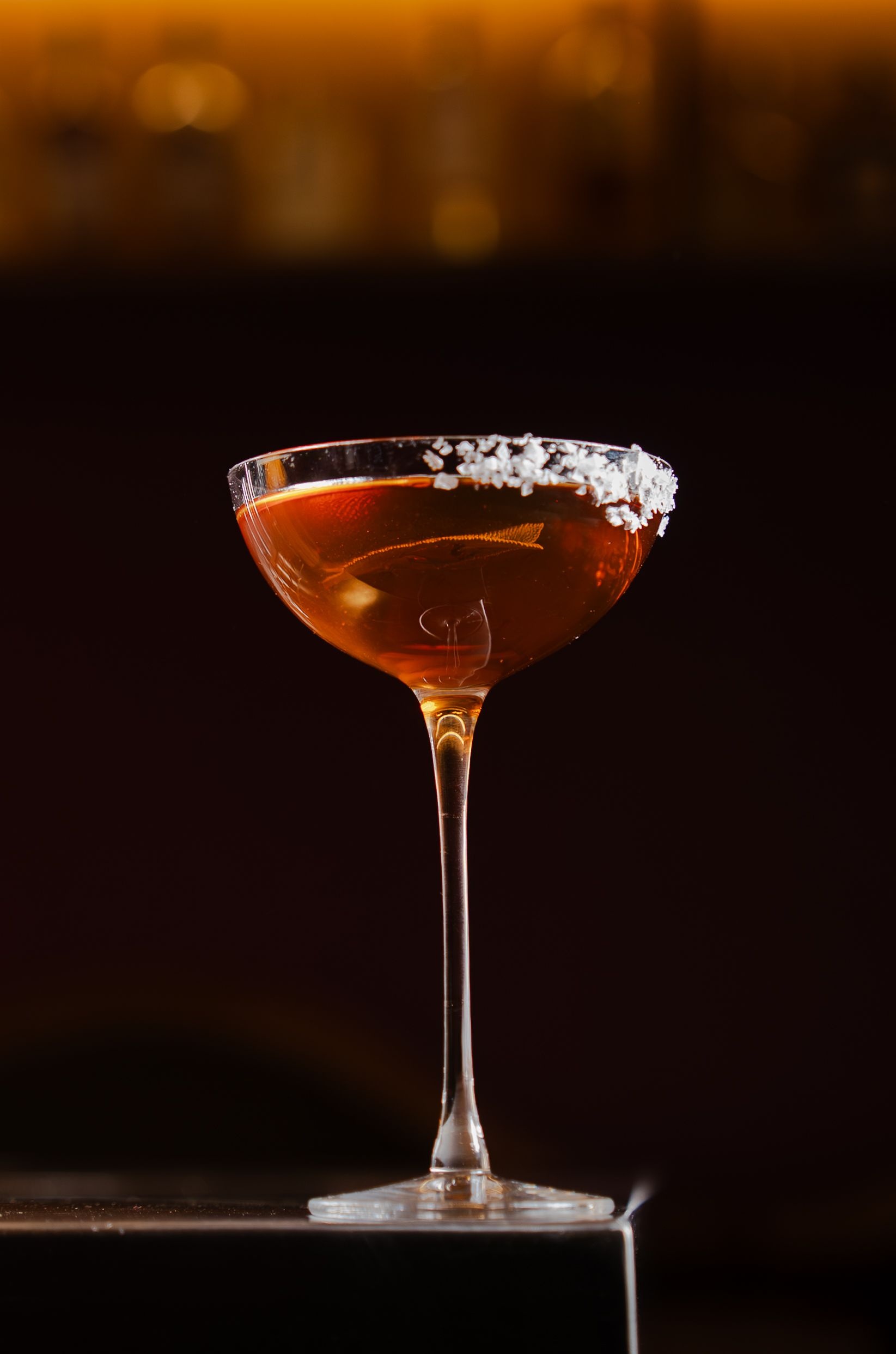
The cocktail programme is by Pankaj Balachandran, one of India’s more thoughtful mixologists, and its one-page menu is organised around single ingredients, many of which are otherwise uncommon in drinks. Each ‘foraged cocktail’ is named after a flavour in its foreground: Beeswax, Enoki, Brie, Ponzu, Gula Melaka, and so on. “Discovery was the central pillar,” Balachandran says. “Every cocktail becomes an opportunity to discover new flavours, produce, combinations…while remaining approachable.” Beverage head Ashish Tamta guides guests through the menu with great ease. One week in, he seems to have clearly made peace with being asked what beeswax tastes like several times a night.