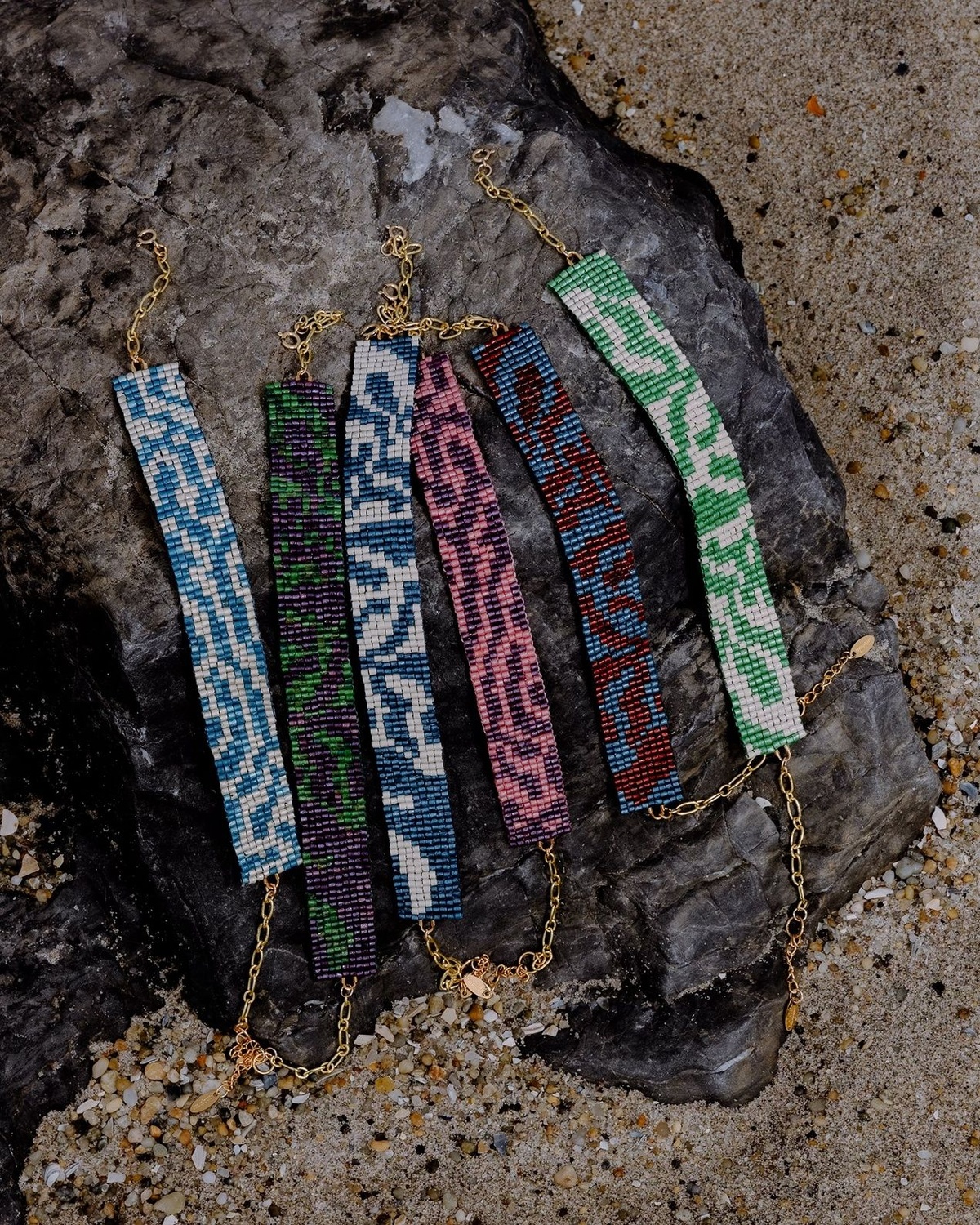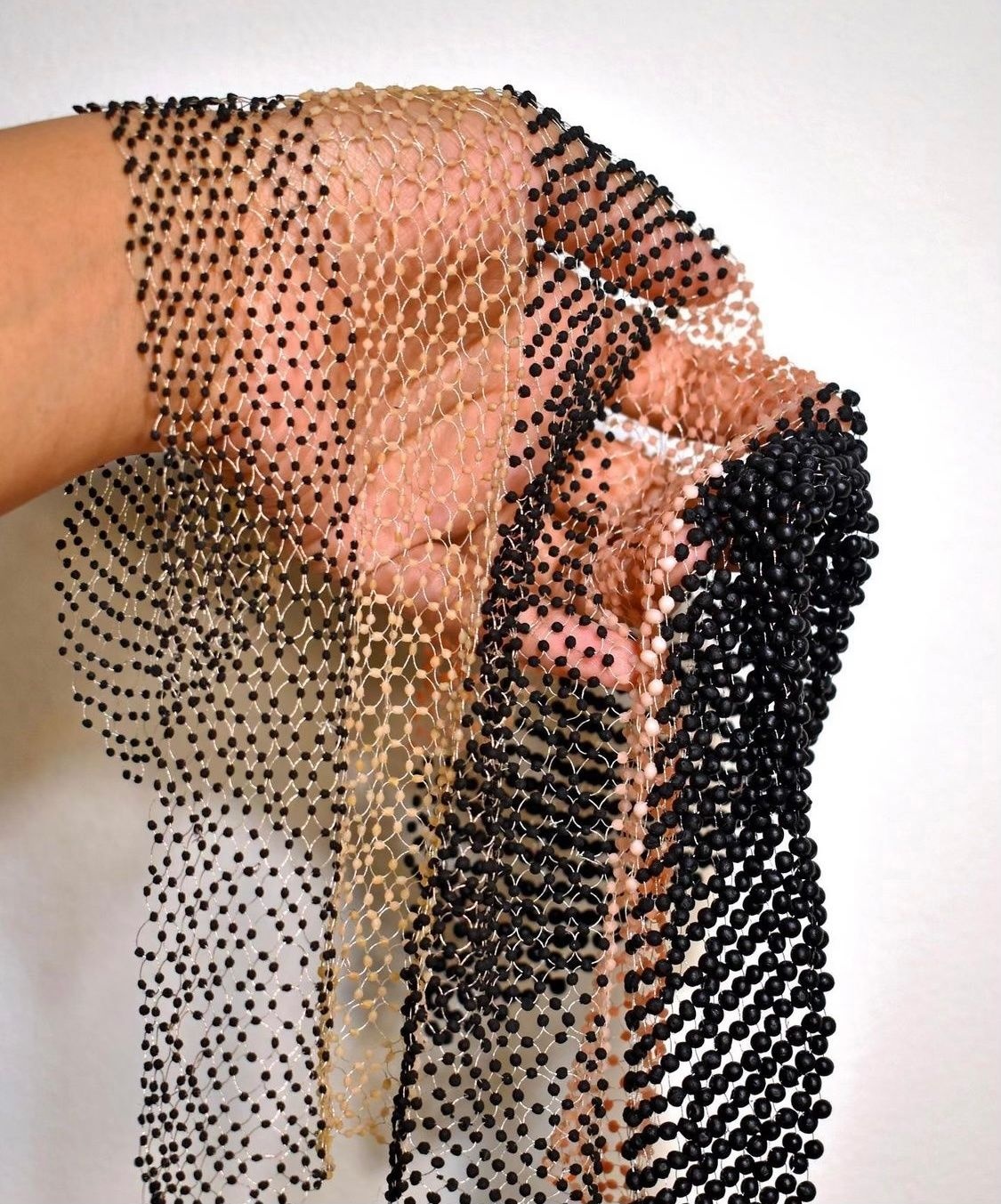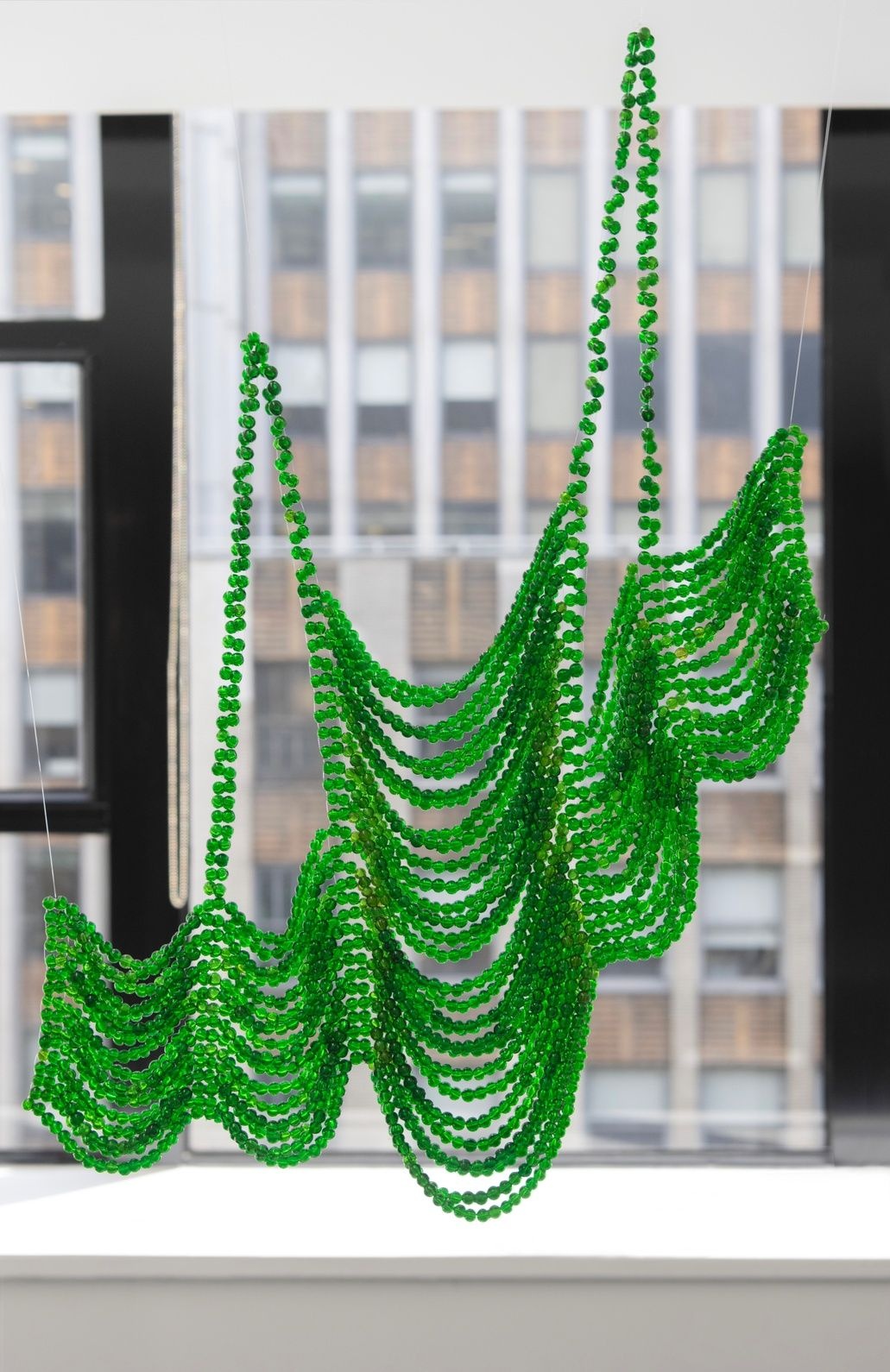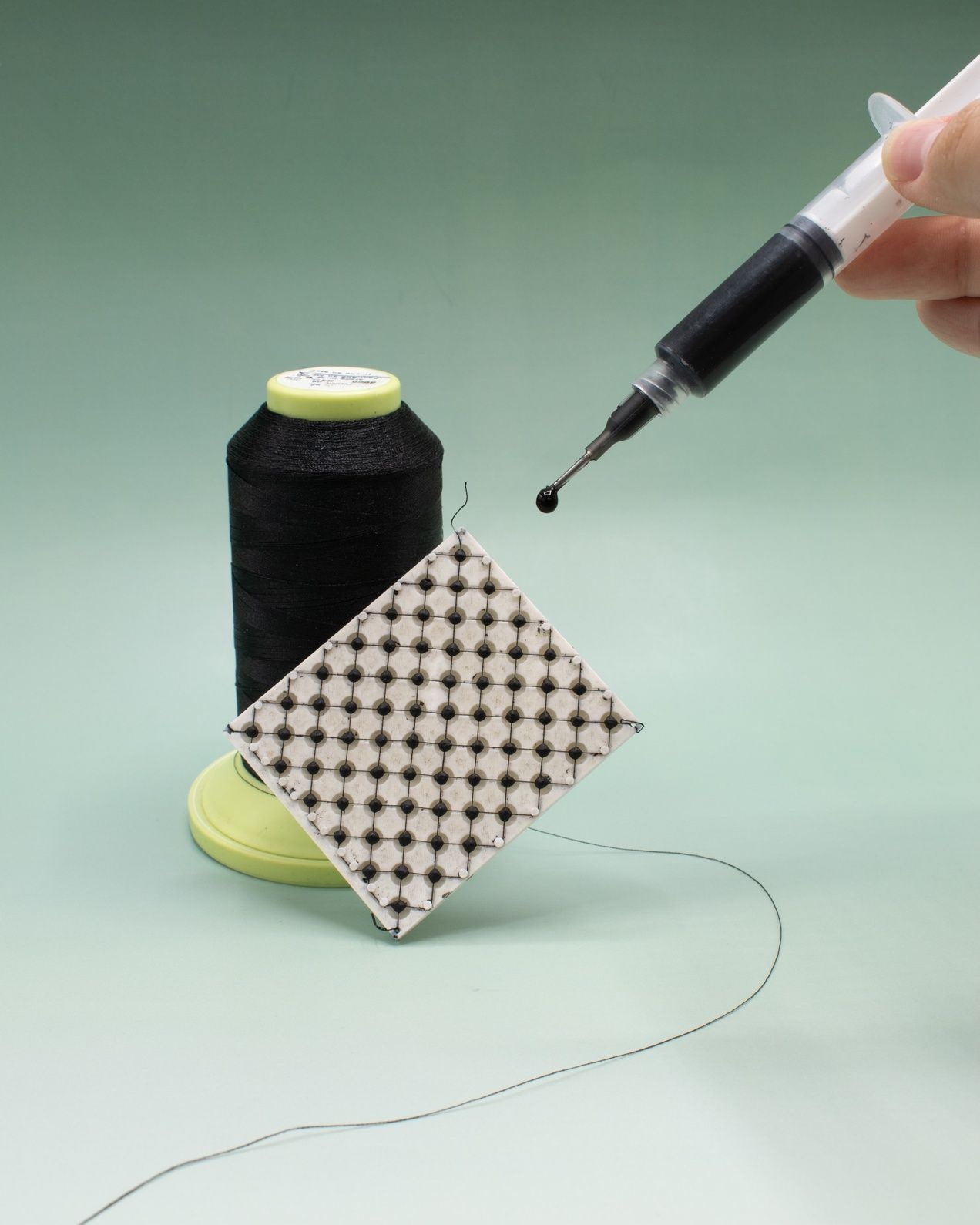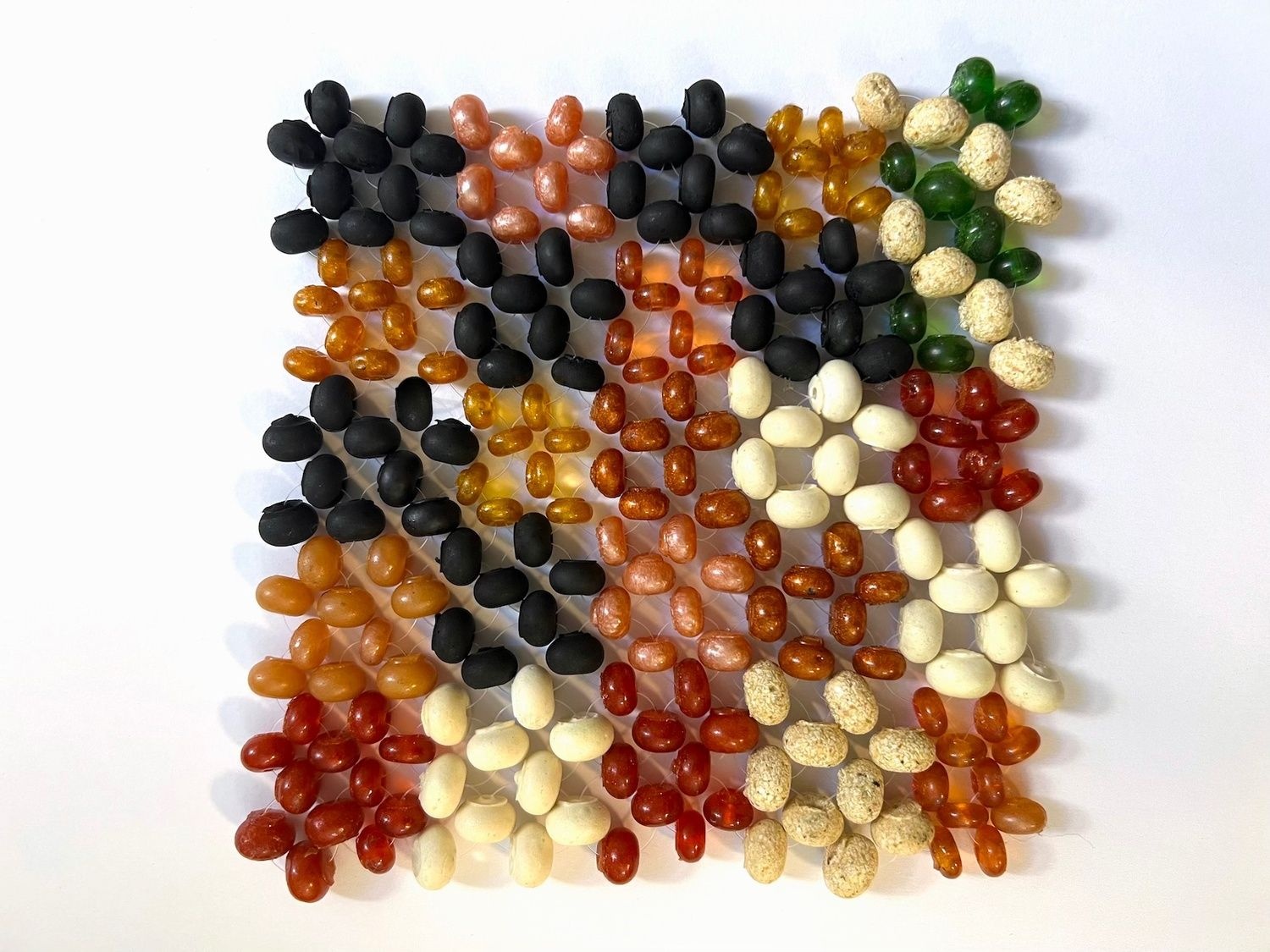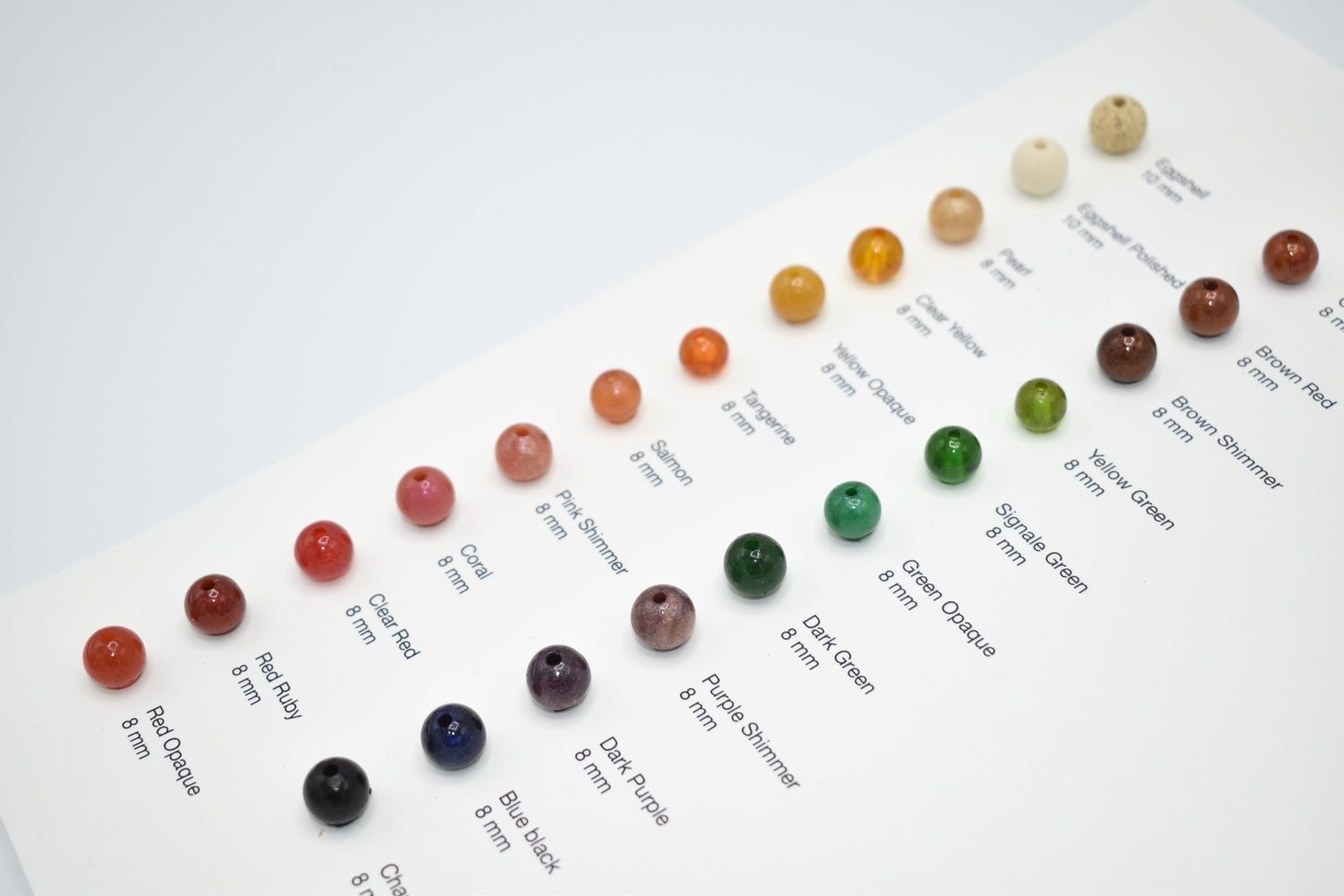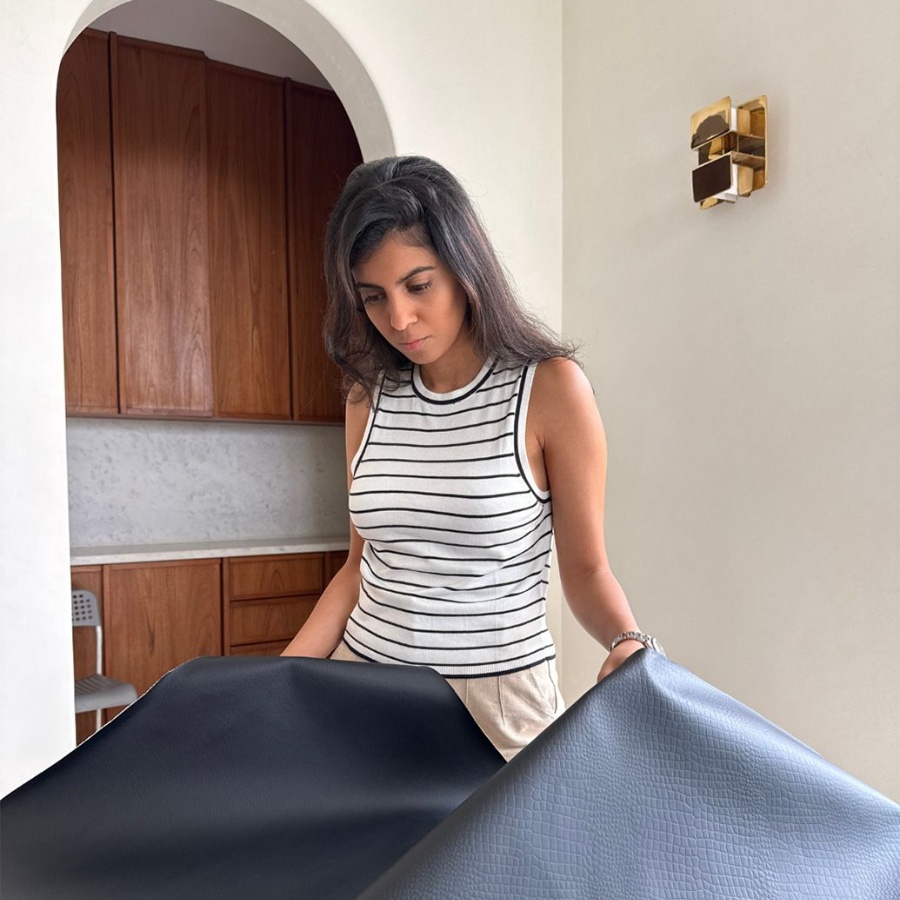




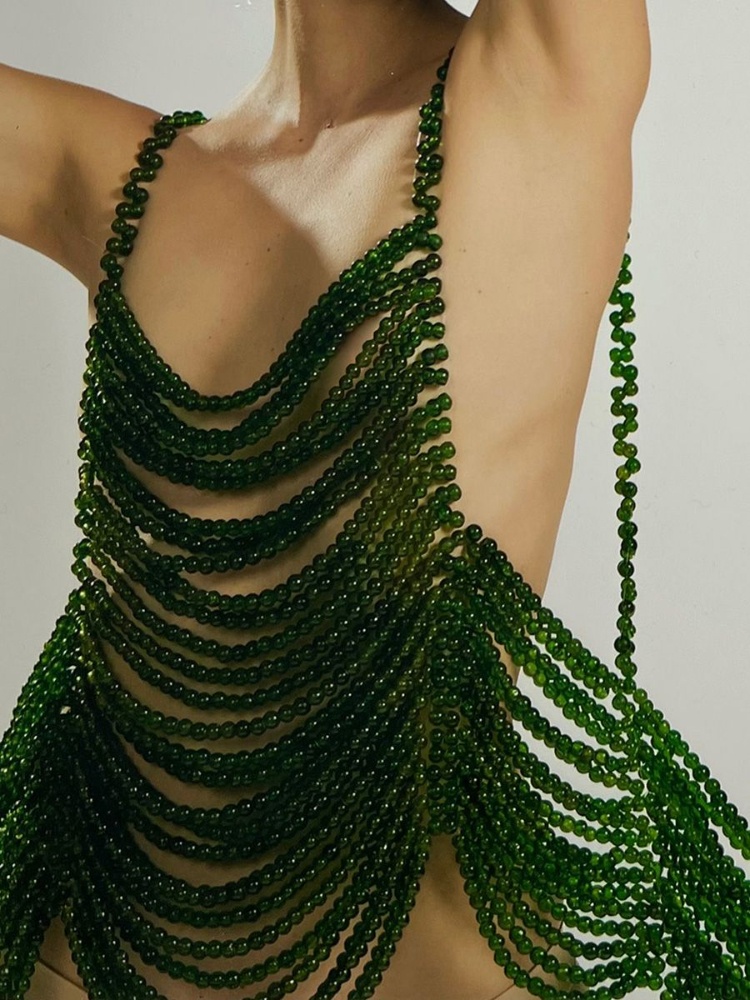

Have you ever considered the impact of the teeny-tiny beads that decorate your clothes or are strung together to make a necklace? These beads are often made of non-compostable plastic and coated with toxic lead or solvent-based dyes that are harmful for you and the environment. Luckily, Parsons School of Design graduate Aradhita Parasrampuria is thinking of these kinds of micro-details with Cellsense Bio, her materials brand that’s turning algae and regenerated cellulose drawn from textile waste into beads and embellishments that replace plastic across fashion, jewellery, and beauty.
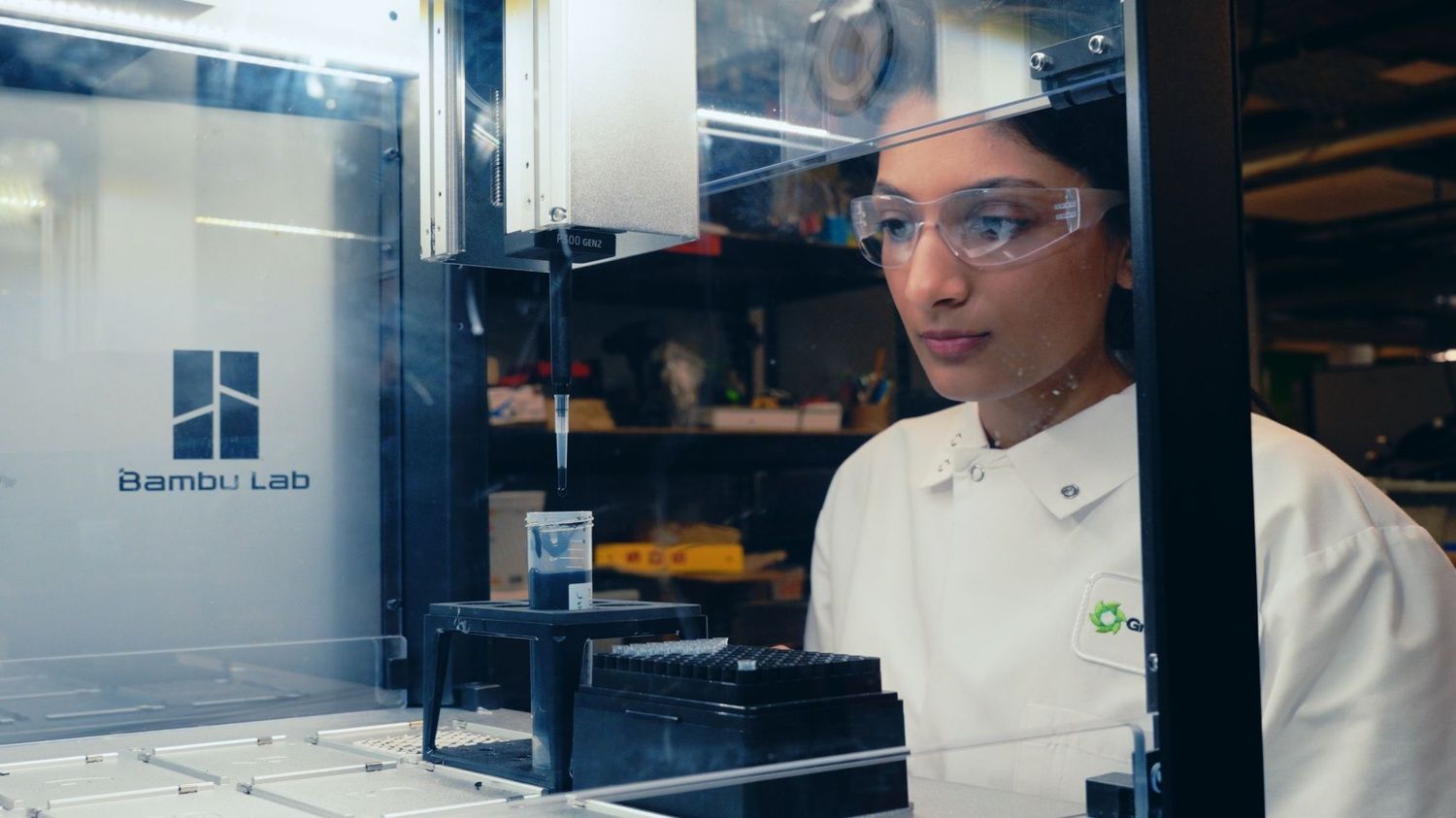
The 26-year-old Parasrampuria trained as an embellishment designer at Tory Burch, where she realised the potential for creative, sustainable materials that move beyond the regular options like hemp or plastic made from recycled bottles. While living in New York, the Textile Design graduate spent nights and weekends in community biolabs learning synthetic biology and biochemistry. “The turning point came when I brought some early algae-based bead samples to the design team and asked for honest feedback. They were enthusiastic because it addressed a problem they had been struggling with, but they were also clear that sustainability alone would not be enough. The material had to be genuinely desirable in terms of colour, clarity, and hand feel.” That gap—between what designers wanted and what the supply chain could deliver—felt like her ‘aha’ moment and crystallised into Cellsense Bio.
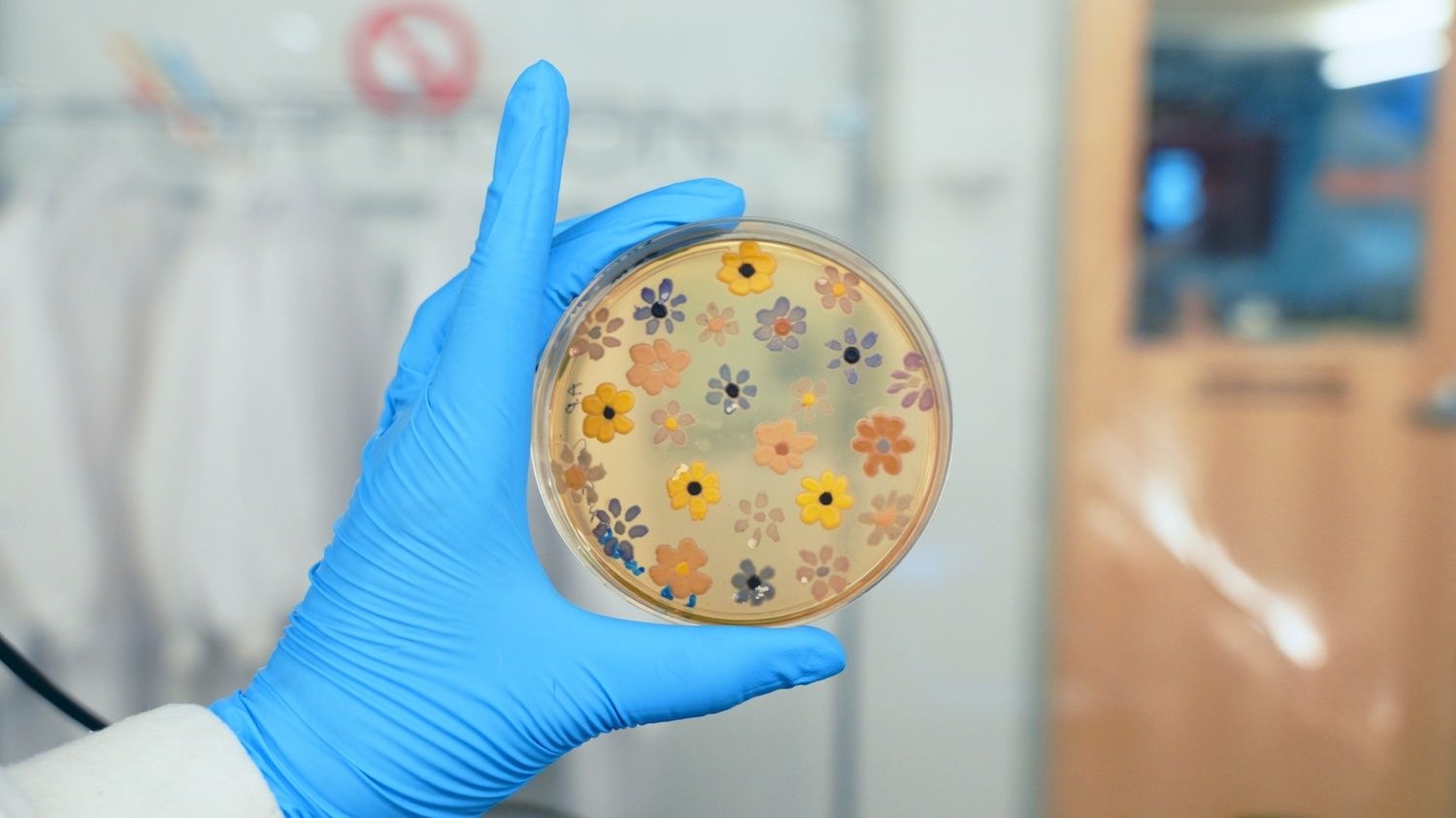
“It’s one of the fastest growing and most abundantly available raw materials on the planet,” she says of algae. It absorbs carbon, doesn’t need fresh water, and brings unexpected performance benefits, like anti-microbial and hydrophobic properties. At a material level, Cellsense Bio’s beads are biocomposites made from algal polysaccharides and cellulose regenerated from post-industrial and post-consumer textile streams. The algae is sourced from partners focused on responsible cultivation. Cellsense Bio’s beads behave like familiar embellishments in wear and feel, but their life cycle ends differently. Compostability here is intentional, not conceptual. “People often think durability and biodegradability are mutually exclusive,” Parasrampuria explains. “But many familiar materials, like wood and wool, are both.”
The beads are crosslinked using naturally derived components to allow endurance in use and breakdown later. “In compost or landfill-like environments, they gradually biodegrade over roughly 10 to 15 weeks, depending on size and thickness.”