





By the time this year’s Toronto International Film Festival (TIFF) drew to a close, director Theja Rio was on a high. While writing the screenplay for his debut feature film, Angh, Rio had the soundtrack of Lee Chang-dong’s Burning on repeat. Angh had then premiered at TIFF, where it was the only Indian film in the festival’s competition section. In a full-circle moment, Rio had also been able to meet Lee at TIFF. As far as Rio was concerned, his festival experience couldn’t get better.
He was wrong. The best was yet to come.
On September 20, TIFF announced Angh had won the prestigious Platform Prize. Made in Nagaland on a shoestring budget, with a cast of mostly non-actors, and dialogues in Konyak (a language spoken by less than 2,40,000 people across Nagaland and Myanmar), Angh has made history. It is the first Indian film to win the Platform Prize, which makes Angh eligible for Best International Feature Film at next year’s Oscars. (As of this year, top-prize winners from the Toronto, Busan, Venice, Sundance, Berlin, and Cannes film festivals qualify for the Oscar race.)
“The whole thing...it’s been like a fever dream,” said Rio, speaking to The Nod a day after winning the Platform Prize. “It’s been overwhelming. I’m just trying to comprehend what’s going on.”
As an Angami, Rio doesn’t belong to the Konyak community, but he’s keenly conscious of their collective memory as Nagas. “We, Nagas, share a similar history,” he said. “Even now, we’re dealing with the hangover of the very quick transition we’ve made. When I was growing up, we were only allowed to speak English [in school]. These are little experiences we all have. Like, we’ll sometimes wear our shawls and do something that is [traditionally] cultural, but at the same time we’re so modern. That’s the conflict that is prevalent in our everyday lives.” Such indigenous stories and experiences have rarely found space in Indian culture, least of all in films.
When 31-year-old Rio was growing up in Kohima, there were no cinemas in Nagaland. His introduction to movies came from television channels like Star Movies. Among his early favourites was Baby’s Day Out. When he was nine, Rio saw The Lord of the Rings: The Return of the King in a cinema. “I was in Delhi with my mom, on vacation,” he remembered. “We went to PVR Priya in Vasant Vihar and we watched The Return of the King. It really blew my mind.”
At the time, Rio wanted to be a rapper, and in preparation for his musical career he was writing his own songs. In his early teens, he began writing short stories and later moved on to screenplays. “Once I started writing scripts, I became possessive of what I was writing and didn’t want someone else to translate my vision to the screen,” said Rio, who is an alumnus of the National Film and Television School (NFTS) in the UK.
Guided by producer Nancy Nisa Beso, who was also a family friend, Rio attended a few film labs in Europe between 2015 and 2019 before attending the NFTS. “The mistakes I made, I wanted to make sure he doesn’t make the same mistakes,” said Beso, whose credits include The Fable by Raam Reddy and Shonali Bose’s The Sky is Pink. She has produced all of Rio’s work so far, beginning with the short-film version of Angh, which came out in 2021. “When we made the short film, we knew it had to be made into a feature,” said Beso.
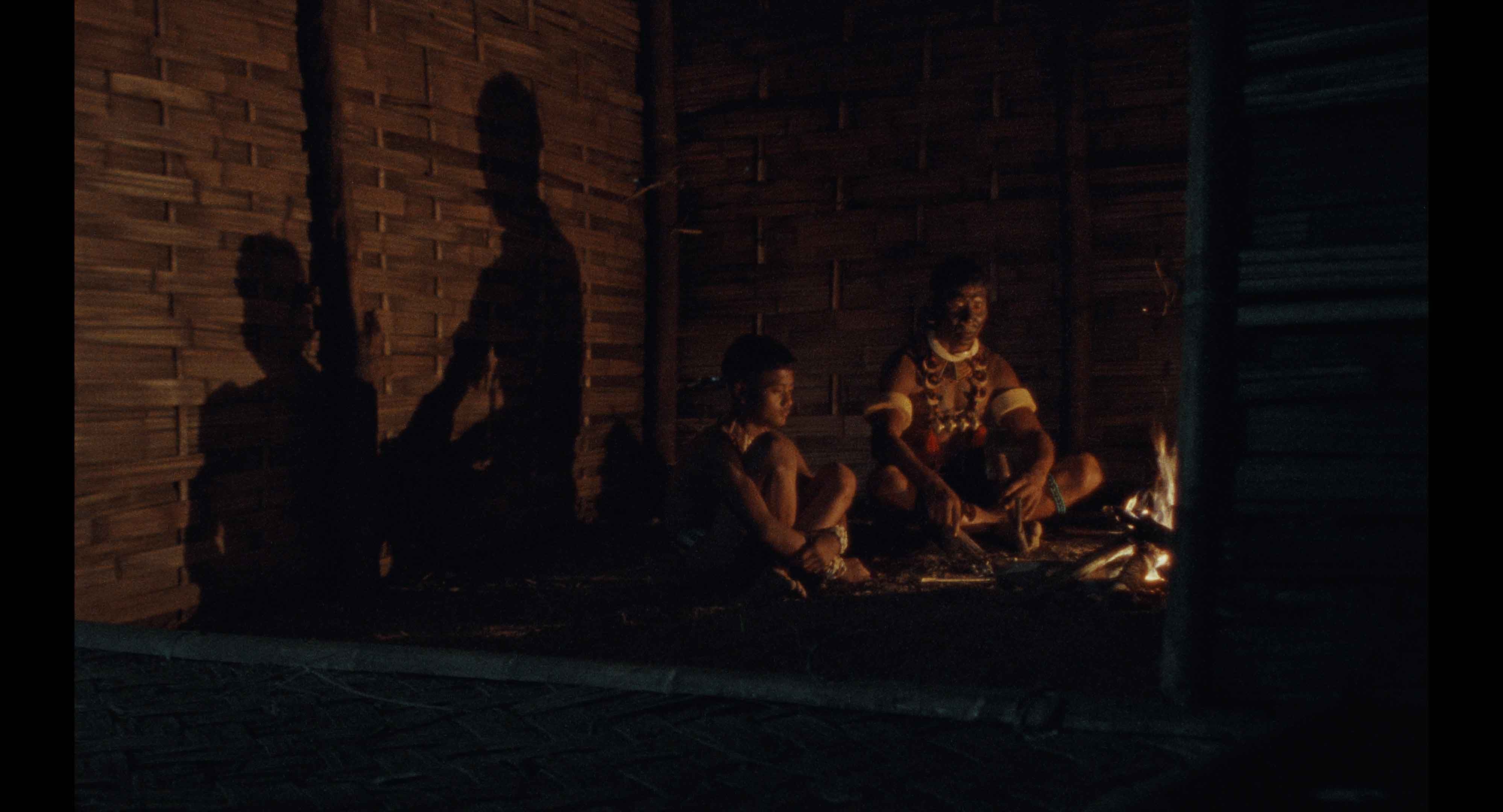
Set in 1962, in a remote village in the Mon district of Nagaland, Angh is about a Konyak chief and his son who have not converted to Christianity despite the rest of their tribe having embraced the faith. Moving between forest and village, the duo become witnesses to a vanishing world as ancient traditions come up against modernity. While Anghba (Anghlong Konyak) fiercely holds on to the old ways, his son Amao (Sobino Rengma) is drawn to the new village, where the Christian priest (Douglas Henshall) has gadgets like the radio, where food is plentiful, and where boys wear T-shirts and play football. It’s a hauntingly beautiful film about loss, rupture, and progress.
Proudly rooted in indigenous culture and rich with sophisticated artistry, Angh is one of the most self-assured debuts we’ve seen in Indian cinema. Making the film felt like an adventure for the crew, which was made up of technicians from all over the world. Since there is no film industry in Nagaland, much of the crew came from Mumbai. Angh’s production designer, Margarida Caetano Dias, studied with Rio at the NFTS, as did cinematographer Adam Pietkiewicz and co-writer James Davis. For Rio and Beso, local became international.
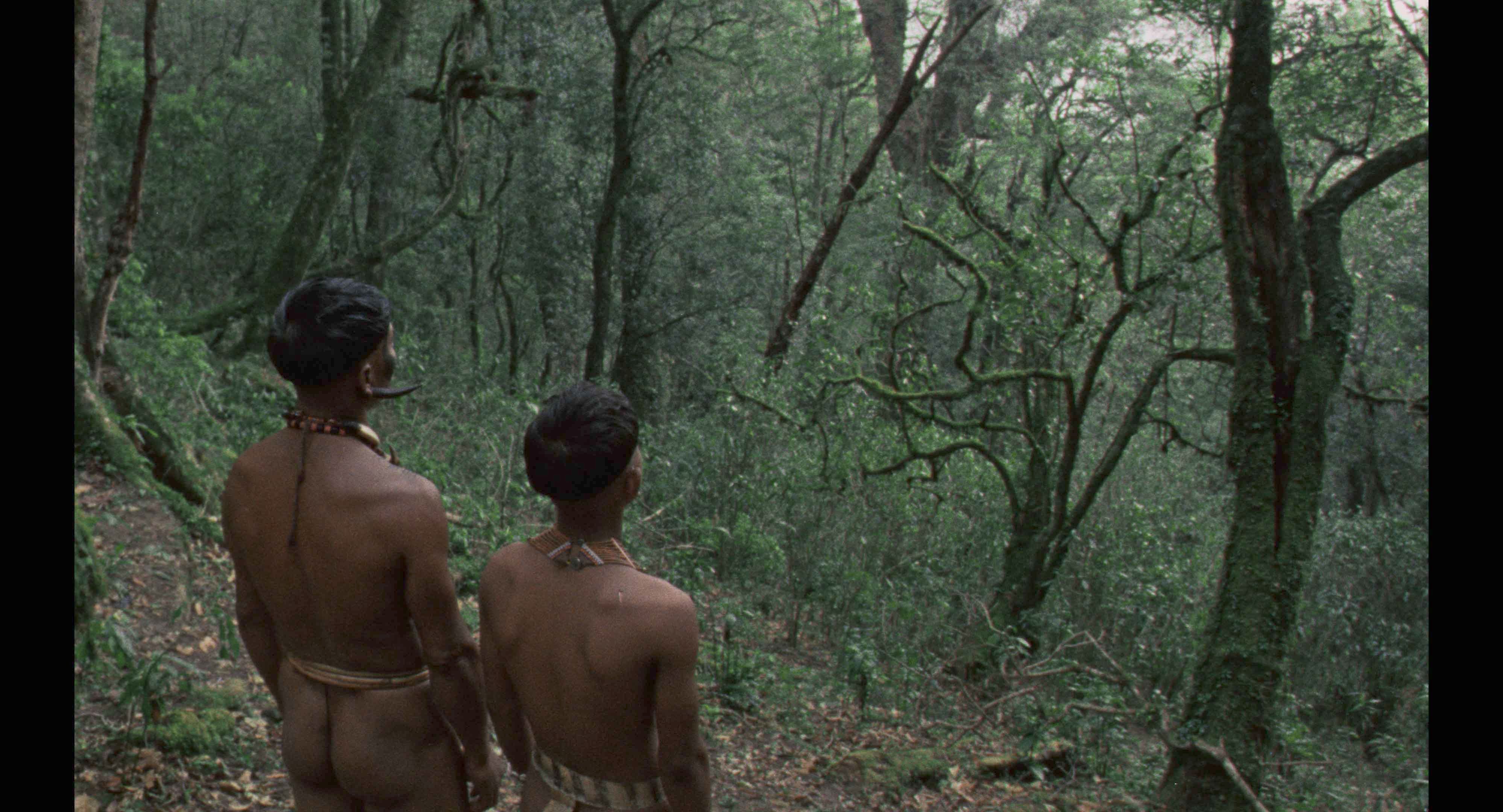
The Angh crew built two villages for the film. “If you go to the [existing] villages, a lot of them now have concrete buildings,” said Rio. “Very few structures belong to the older times. So, we had to do a decent amount of research and have people from the community come and then build the village,” said Rio. In the middle of their 23-day shoot, forest fires started raging around the hill where they’d constructed the Konyak village. Locals helped the crew by guiding the fires away from the set. There were times when the crew discovered that their route to the set had been in the path of a forest fire, which locals had tackled during the previous night.
For the film’s nature scenes, Rio wanted a forest that looked untouched by modernity (rampant deforestation has meant most forests in Nagaland have young trees). “The forest is such an inherent part of that world—how deep that forest is, how old that forest is. The slow decay of that forest is inherent to the themes of the film,” said Rio. Ultimately, they found a reserve forest that felt adequately “old and seasoned”.
Much to Beso’s frustration, Rio wanted to shoot on 16 mm film. “Angh is almost a tribute to the archive footage we have of American missionaries coming into the region,” he said. “We wanted to capture the same atmosphere. I also think there’s something strange in us—we see in digital, but we remember in film for some reason. I don’t know if it comes from the photo albums, but there’s a certain graininess in our memories as well.”
The problem with 16 mm film is that there is only one lab in India that can process it, and that lab is in Mumbai. Air travel wasn’t an option, because they couldn’t risk putting the exposed film through scanners. “So, there was a guy whose job was to travel with the cans from Mumbai to Nagaland by train, which took over four and a half days,” said Beso. “Only mad people will do such things.”
Another complicated aspect was the casting, which took several rounds of workshopping, since Rio was working with non-actors. “The beautiful thing about casting non-actors is that most of the time you cast someone who already embodies the character, someone who already shares that cultural background. You have a three-dimensional character with you even after you’ve called cut,” he said.
Anghba, who carries the bulk of the film on his shoulders, took time to cast. Eventually, Rio found Anghlong Konyak by chance, while looking through YouTube. “He’s a stand-up comedian in a very local setting,” said Rio. “He had never been to a film set, barely watched any films.” The challenge was as much for the director as the actor. “I can’t tell him, ‘You need to be quiet like Ryan Gosling in Drive,’” said Rio, laughing. Ultimately, Anghlong inhabited Anghba’s skin seamlessly and delivered an outstanding performance as the proud and beleaguered chief.
Thanks to the Platform Prize, Angh is now competing with the likes of Cristian Mungiu’s Fjord, which won the Palme d’Or at the Cannes Film Festival; TIFF’s People’s Choice Award winner and Spain’s official entry, La Bola Negra; and Lee Chang-dong’s Possible Love, which is South Korea’s submission for the Oscars. To belong to this elite group is a victory in itself, irrespective of whether or not Angh makes the final cut. “We set out to make a film back home [in Nagaland], about stories we care about,” said Rio. “Now that has come out and it’s in a race for the Oscars. It’s a bit intimidating, because this was not what we expected.”
Unusually, there will be two Indian films in the Oscar race this time since the Film Federation of India selected the Marathi film Gondhal as India’s official entry. For Beso, two Indian films in the running is a source of pride. “It’s a great year for Indian independent cinema,” she said. “I’m excited for India and the fact that we will have two films. We are definitely making noises in the right places.”
Out of more than 100 films submitted for the Best International Feature Film category at the Oscars, a shortlist will be drawn up of 15 films, which will then be whittled down to five nominations. “It’s going to be very tough,” said Gaurav Dhingra of Jungle Book Studios, who is handling distribution and sales for Angh. “Basically, all members [of the Academy of Motion Picture Arts and Sciences] have to see the film. You have to find a way of showing it to them. There are chances, very good chances, but it’s going to be a tough journey.”
Say a prayer for Anghba and Amao.