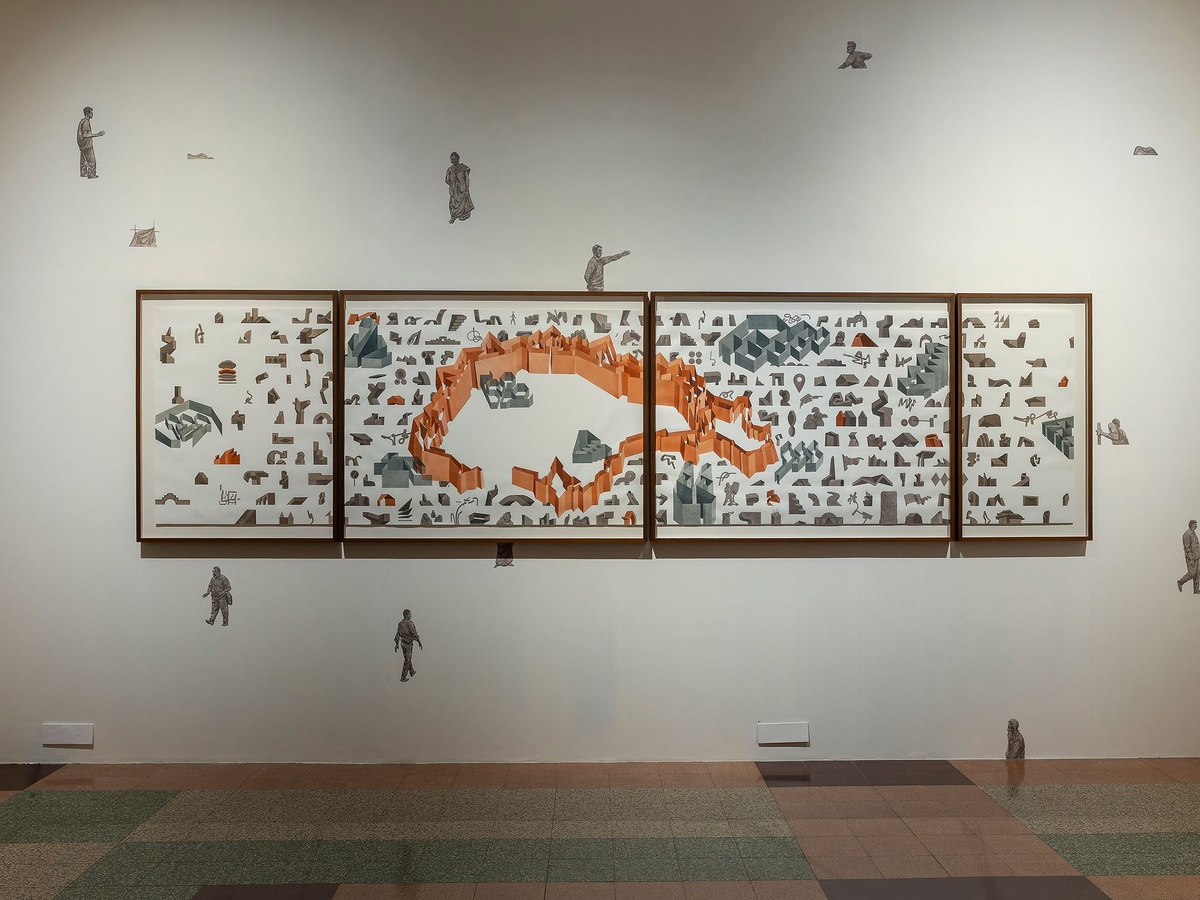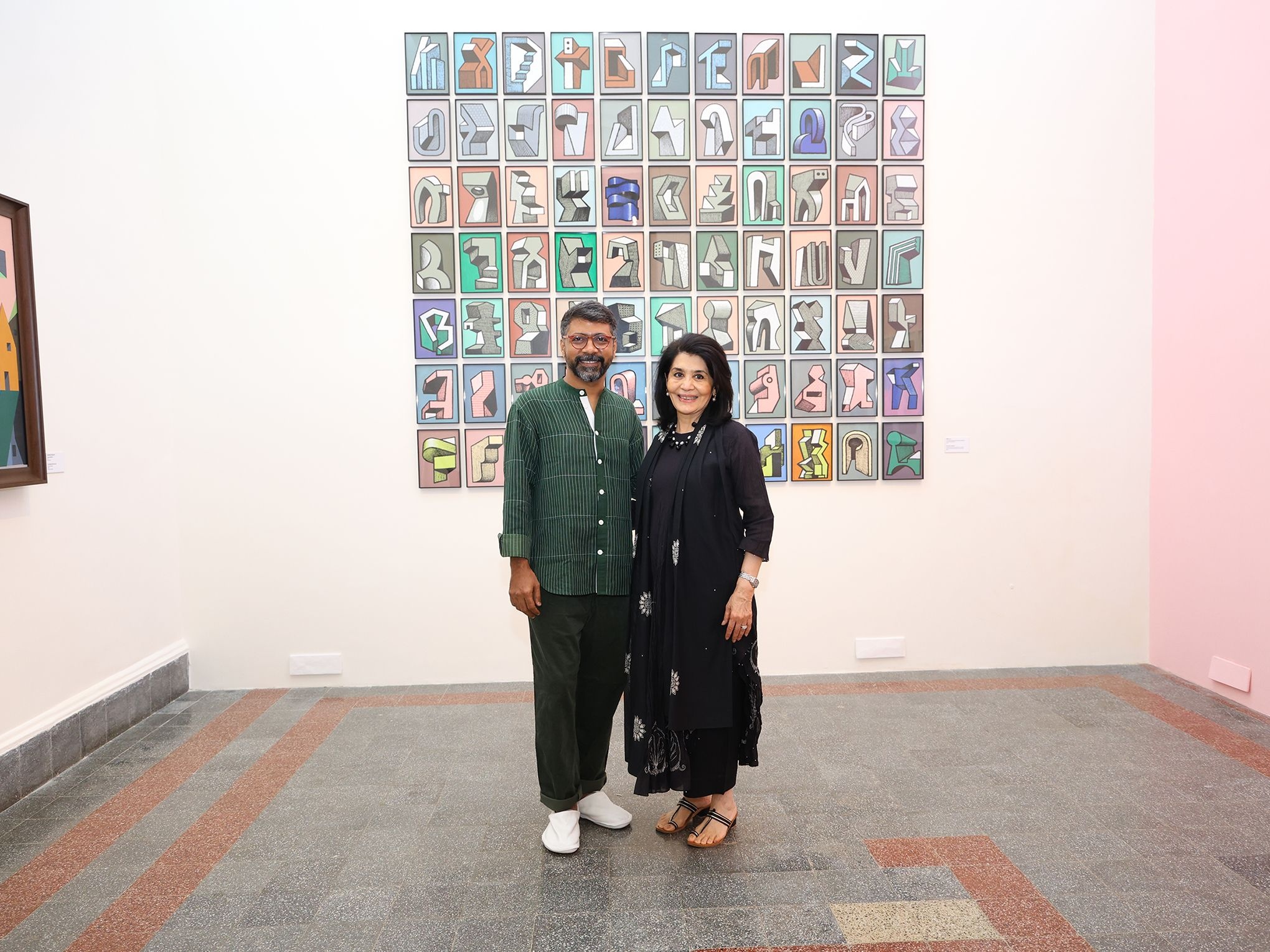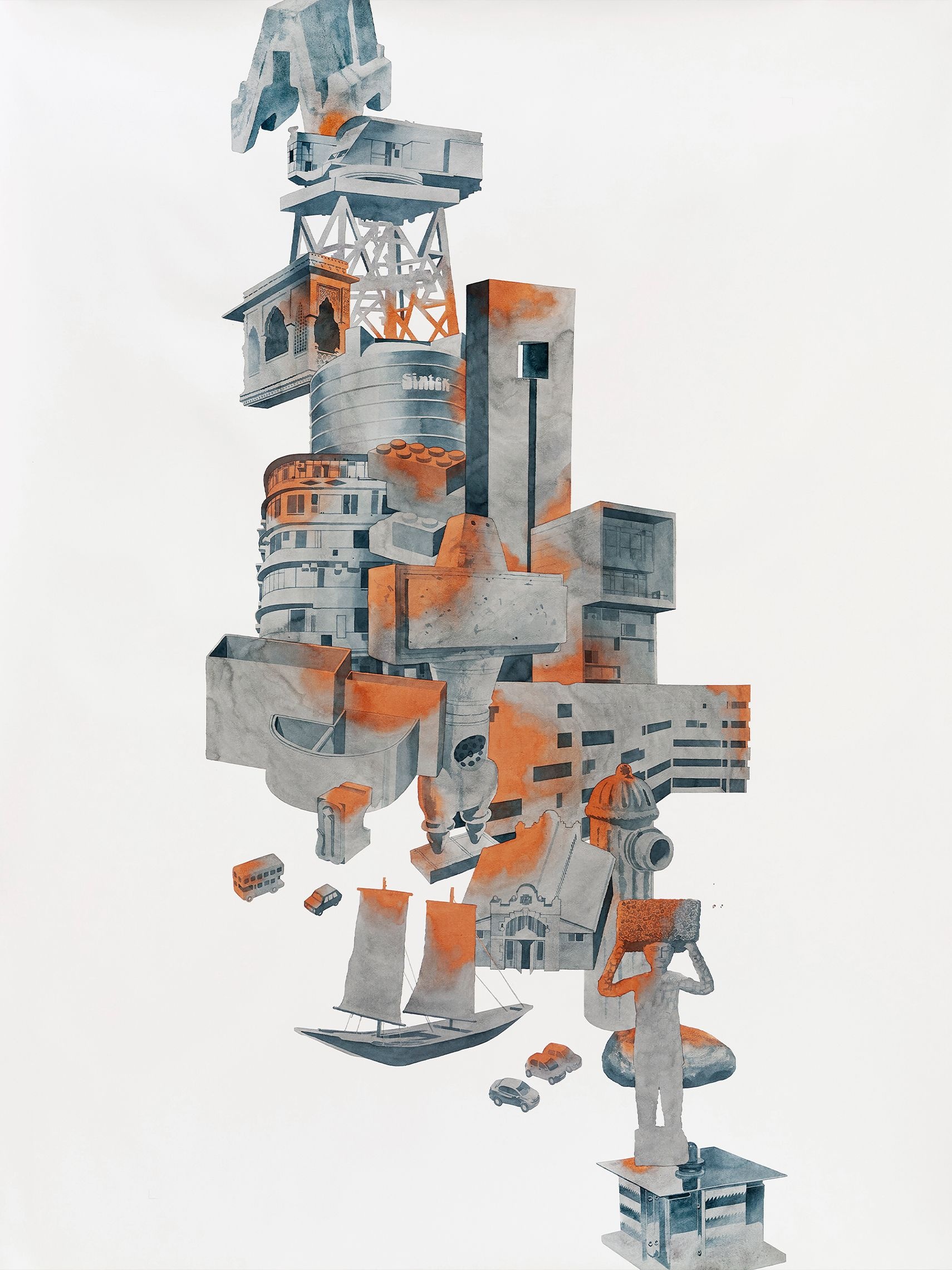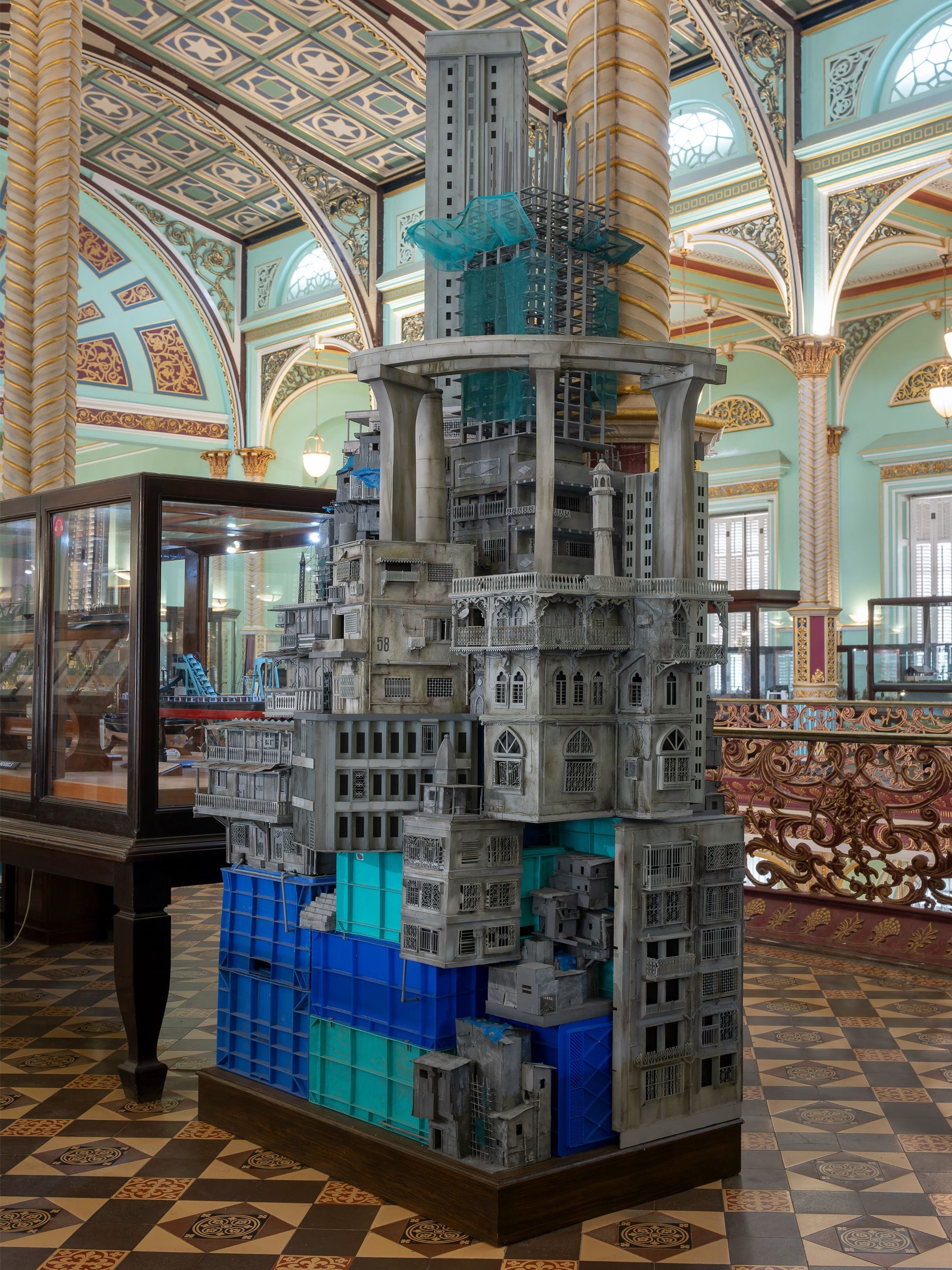





A simple stone marker that once showed where the Bombay Fort ended is the jumping-off point for Sameer Kulavoor’s new show, Limits of the Town…, which is now on view at Mumbai’s Dr. Bhau Daji Lad Museum. The title comes from the stone that delineated the city’s limits after the fort was demolished in the 1860s.
Kulavoor remembers seeing the stone on the grounds of the museum back in 2018, and it stuck with him. That’s not surprising for those familiar with his work, in fact Kulavoor has made his name observing people and the built environment. Through his output, the artist forces viewers to take stock of their surroundings. His zine, for example, is centered on the ubiquitous blue tarp that protects all aspects of the city from the rains, while his canvases feature everything from imagined structures to mundane snippets of daily life —be it the unnamed labourers or variations in building design that catch his eye.
He notes, “[The Dr Bhau Daji Lad Museum] invites you to look at their archives and then respond to that.” For Kulavoor, this presented a new way of working and it sparked ideas that he then adapted to his practice.
Tasneem Zakaria Mehta, managing trustee and director of the Dr Bhau Daji Lad Museum, who also curated the show, says, “Inviting artists into the Museum’s archives is an invitation to rethink the intellectual foundations on which this institution once stood. The Dr Bhau Daji Lad Museum or the erstwhile Victoria and Albert Museum, Bombay, was shaped by the epistemologies of British India, where Indian artists rarely took centre stage and where identities were framed through a colonial gaze. After the museum’s UNESCO award-winning restoration in 2008, the curatorial approach shifted intentionally toward subverting this established canon and opening the collection and the museum’s history to new forms of dialogue.”
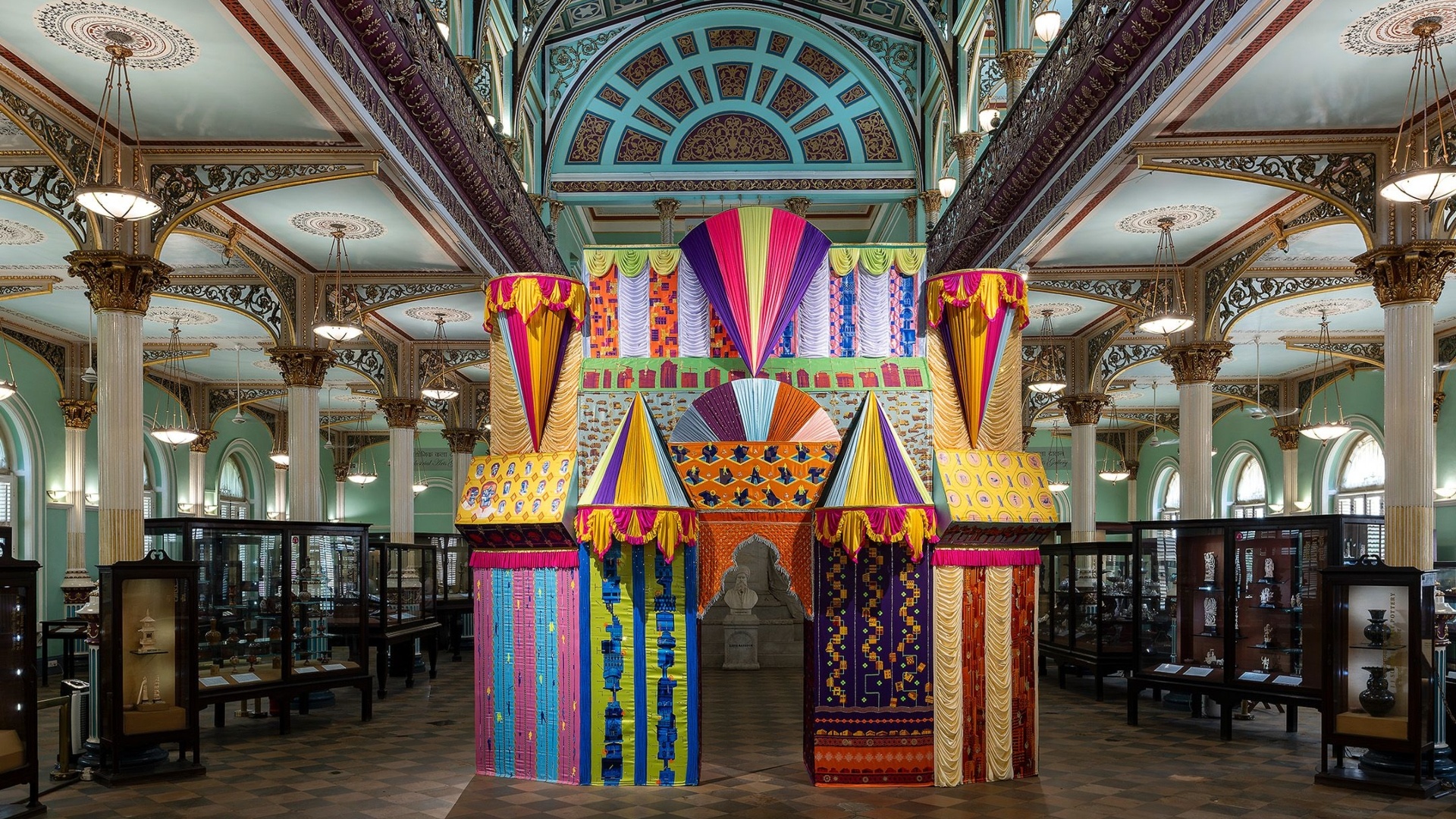
Part of Limits of the Town... is ‘State of Celebration’, a site-specific mandap pulled from various strands of thought, including The Textile Manufactures and the Costumes of the People of India, a book by Dr John Forbes Watson, which is in the museum archive. Kulavoor notes, “Each book has actual samples and swatches—from Madurai, from Mangalore, from all over India— with his notes, and it’s quite interesting.” Drawing on the city’s position as a former textile capital, Kulavoor’s mandap is made up of custom-printed fabrics that feature everything from geometric patterns to Tetris-inspired embroidery while synthesising Art Deco’s love of asymmetry and Memphis design’s playful nature.