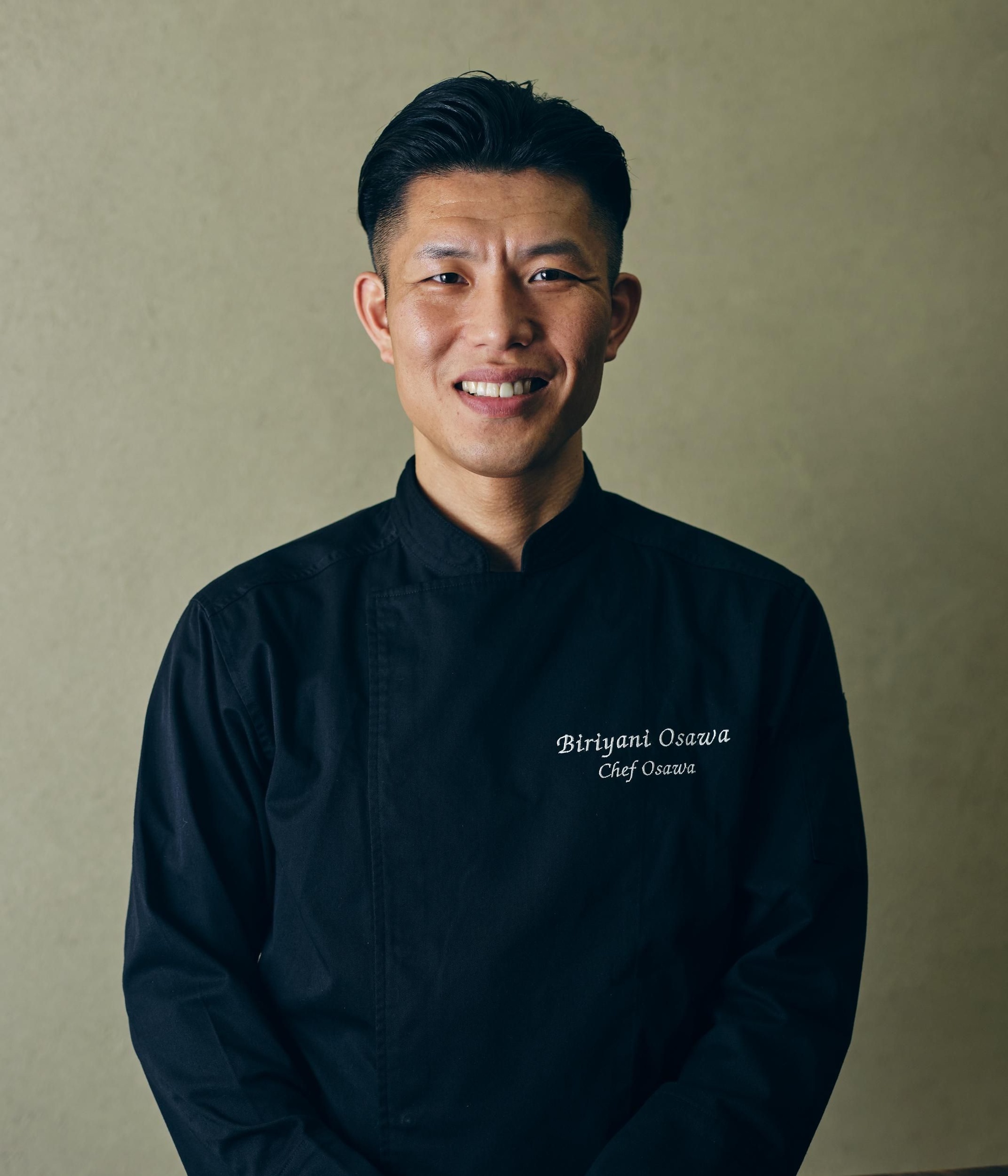
Ask Osawa enough questions, and it becomes obvious that his is no mere eccentricity or obsession. Ahead of his two-day Mumbai pop-up at Indian Accent (July 31st and August 1st) with Conosh, The Nod interviewed the man who spent nearly two decades trying to answer one question: what makes biryani biryani?
Below, chef Osawa talks about the science behind biryani, why years of “daily insults” from his housemates were an essential part of his culinary education and the one biryani he’d never make.
What happened in India in 2009 that made one dish take over your life?
I ordered it without even knowing what it was, at a tiny local restaurant in Coimbatore. One bite, and I knew: this was my favourite dish in the world. After that, I tried the same dish at every place I could find, and that feeling turned into conviction.
Back in Japan, I couldn’t find biryani anywhere, so I had no choice but to cook it myself. And I discovered something: the taste changed every single time I made it. It’s an incredibly difficult dish, but sometimes beginner’s luck gives you something ridiculously delicious. The harder you work, the better it gets. I wanted to touch the very depths of that deliciousness. I still do.
You spent 15 years going in and out of kitchens across India, Pakistan, and Bangladesh, without the language, learning by senses. What did that teach you?
That there is no secret. The ways of making biryani are endlessly diverse, but the ingredients are almost disappointingly simple. There’s no secret recipe, no magic ingredient. What I learned is that otherworldly deliciousness appears only when everything stands in perfect balance—like a house of cards. Touch one element carelessly, and it collapses. And one more thing: freshly cooked biryani has overwhelming destructive power. The moment it’s no longer fresh off the dum, it drops from “so good you could die” to just “pretty good”. That gap is everything.
At one point you rented a house with friends and cooked them biryani every single day. What did daily feedback from the same eaters do to your cooking?
I believe you improve not by making rare things or adding steps, but by making the same thing every day. If you run a restaurant, the only feedback you get is “It was delicious!”—which is really just a polite way of saying goodbye—or Google reviews about service and prices. But 10 years of cooking biryani in that share house gave me something priceless: fixed-point observation. Change one variable, measure the impact. I accumulated data every single day.
You approach biryani like a scientist. What’s one thing that took you years to crack?
The aroma. What is the biryani-ness of biryani’s fragrance? I could make delicious biryani, but understanding which part is essential, what makes biryani biryani, took me many, many years.
The other one is rice starch. Starch crystals have a complex three-dimensional structure, and observing their transformation and gelatinisation through the senses alone—essentially, by eating—took countless trials and measurements. Building a theory that lets me cook perfect rice, stable in any environment, took about 14 years. And I should say these aren’t solved problems. I’m still in the middle of the research.
Your restaurant serves exactly one dish, once per sitting, and still can’t meet demand. How do you feel about that?
My mission is to convey the deliciousness of biryani. My job is to make that deliciousness manifest. And there’s only one way to know whether I’ve succeeded: serve that single plate, alone. If it’s truly delicious, one dish makes the restaurant impossible to book. If it’s merely decent, a restaurant like that deserves to go under.
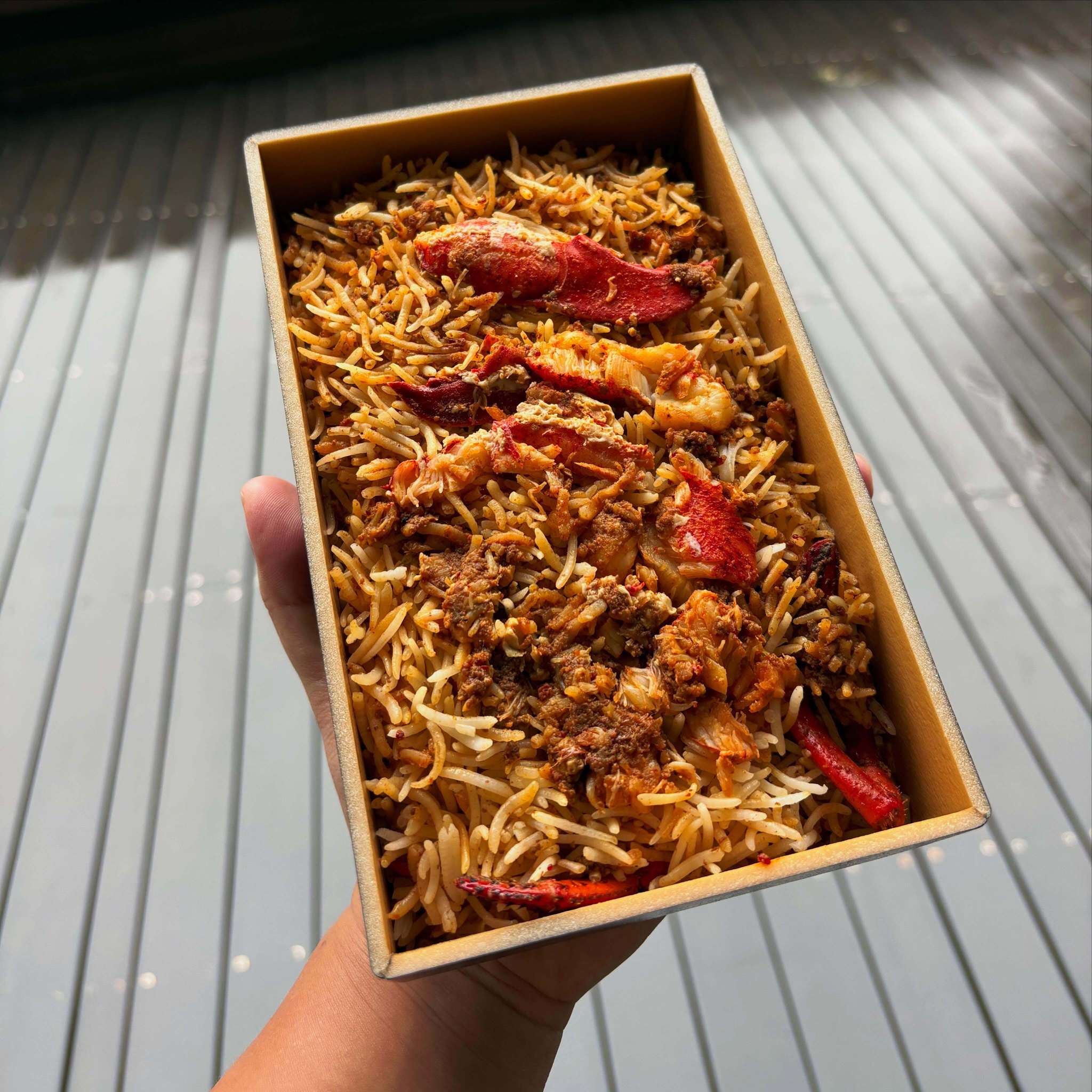
Mutton is the classic, but you’ve made oyster, hairy crab, and lobster biryani. Which experiment surprised you the most? And what will you never experiment with?
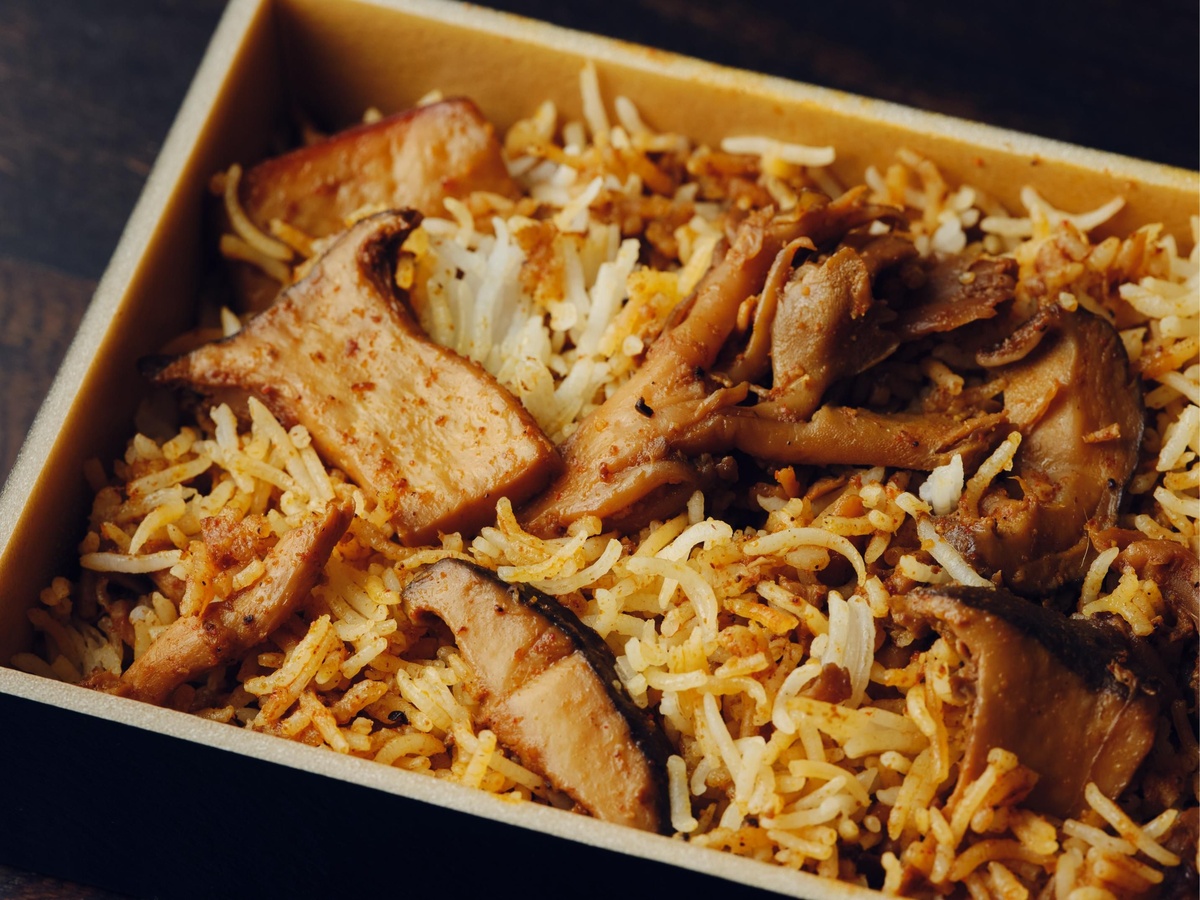
Recently, koshiabura—a wild mountain vegetable we call the “queen of sansei” in Japan. In recent years I’ve come to a realisation: biryani is fundamentally a dish of exceptional aroma. If the fragrance is extraordinary, and the rice is cooked perfectly, you have a great biryani. Koshiabura has one of the most remarkable aromas of any mountain vegetable, and when you cook it with birista oil and yoghurt, the result is astonishing.
What I’ll never do is pork biryani. And I will never, ever call curry-mixed rice or fried rice “biryani” if it isn’t dum biryani. That’s out of respect for the dish itself.
Indian diners can be fiercely protective of biryani. What do you hope they taste in a biryani made by a chef from Tokyo?
First, delicious is the baseline. If you’re hungry and you eat rice, of course it’s delicious. And biryani is an absurdly delicious dish to begin with. What I want them to taste, beyond that, is what Japanese cooks have spent lifetimes polishing: the rice cookery, the purity of the spice aroma, the clarity of the meat’s flavour.
What are the three words you hope they’ll say afterwards?
Aroma. Texture. Flavour. The fragrance, the grain of the rice, and the taste of the mutton or the shiitake.
What’s one opinion you have about biryani that will start a fight in both Tokyo and Hyderabad?
If it isn’t freshly cooked dum biryani, it isn’t biryani. It’s a different dish.
Is there a Japanese sensibility that has made its way into your biryani?
I always aim for the minimum-construction biryani—the fewest possible ingredients, every non-essential step removed. And if deliciousness is maximised under those conditions, that’s when biryani’s true potential is fully revealed. I strip away garnish too, everything except the essential. My favourite plating shows nothing but the beauty of rice, like a karesansui rock garden, with the meat buried within it. Perhaps that’s wabi-sabi at work. It’s why I don’t even top with birista or roasted nuts—birista is delicious, but it is not an inseparable element of biryani’s deliciousness.