



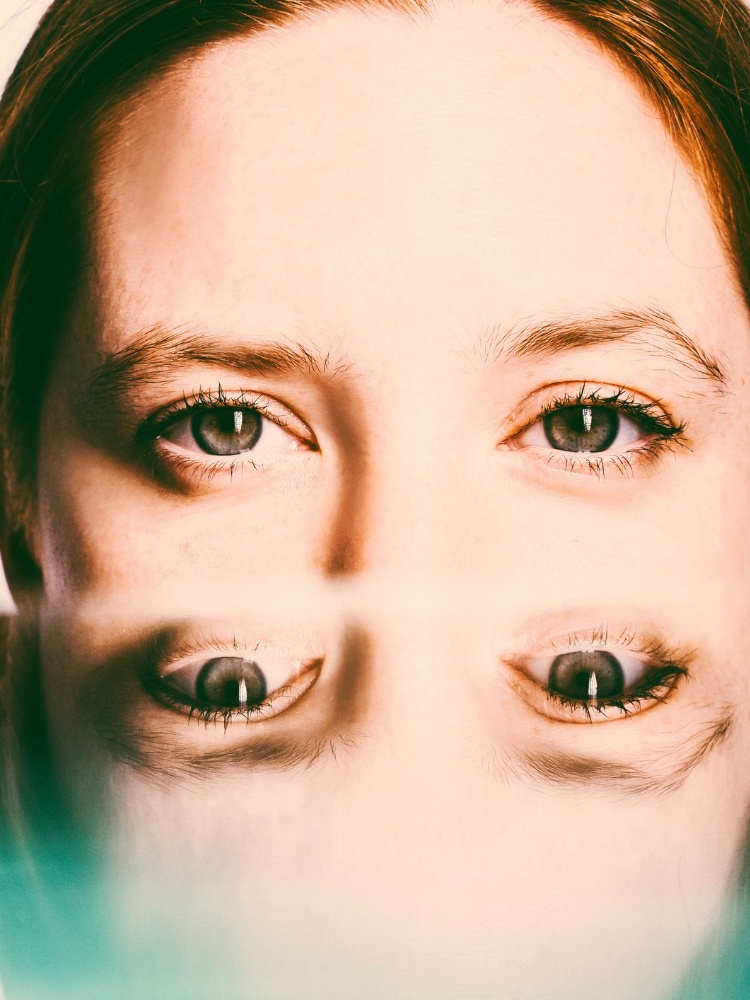

If you’ve been on Instagram Reels any time in the last two years, you’ve seen it: Taylor Swift’s eye area up for academic debate in the comments, Jennifer Lawrence’s lids being analysed with the kind of attention saved for reading a bank statement, Bradley Cooper’s eye shape getting the commentary usually reserved for breaking news. The obsession hit plastic surgeons’ DMs hard, and suddenly blepharoplasty became the procedure everyone’s asking for.
It isn’t new, not by a long shot. Eyelid skin excision dates back to 1st Century Rome, when physician Aulus Cornelius Celsus used it to describe excess skin removal to treat functional hooding. By the 10th and 11th Century, Arabian physicians were doing the same to improve patients’ vision. The word ‘blepharoplasty’ itself was coined by German surgeon Karl Ferdinand von Graefe to refer to a procedure done for reconstructive purposes. We have, in other words, been cutting eyelid skin for roughly 2,000 years. What’s new is social media making it aspirational.
Plastic surgeon Dr Devyani Barve has closely witnessed this phenomenon unfold. “Periocular rejuvenation has become a much more commonly requested procedure in the last two to three years. I see at least one request a day for some form of periocular treatment—fillers, Botox, threads, wrinkle correction, surgery. On average, our numbers have doubled in the last two years.” Here’s the catch, though: what people think they're asking for and what they actually need are often two very different things.
What your hooded eyes are trying to tell you
Hooded eyes don’t pose the same problem to everyone. “Younger patients complain they can’t apply a thicker layer of eyeliner. Patients in their forties to sixties often feel a weight on their eyelids by the end of the day. Elderly patients come in with visual symptoms—an obstructed field of vision,” explains Dr Barve.
A 25-year-old frustrated with eyeliner placement is not the same as a 55-year-old whose lids feel heavy by 6 pm. There’s dermatochalasis, overgrowth, and thickening of eyelid skin, which can appear in younger patients and is a legitimate indication for the need for upper blepharoplasty. And there’s also ptosis, which is muscle drooping and needs muscle repair (blepharoplasty can’t fix that). Ectropion refers to outward-turning eyelids, which is often a complication of blepharoplasty itself. Distinct problems, same solution.
There’s another crucial aspect that most people miss: some patients asking for upper eyelid surgery may benefit more from a brow lift. Roughly 70 to 80 per cent of people pursuing blepharoplasty may need it—hooding is the most common reason and is almost always medically necessary.
The benchmark the medical profession uses is the Jacobs Classification System, which divides severity into four categories. Land in C or D, and you qualify for surgery. Below that, and you’re in cosmetic territory. Then there’s everyone else—younger patients, Instagram scrollers. "These are often people for whom surgery may not give the desired results, because the requests are influenced by heavily Photoshopped images or ones with a lot of makeup and contouring,” says Dr Barve.
Before you book anything, here’s what makeup can do
If surgery feels like a leap, but you still want a bit of lift, makeup artist Sandhya Shekhar is the person to consult—and she’ll be straight with you about what’s achievable. “What I’ve mostly done is play with shadow placement and liner, because in both cases the placement is everything. The degree of the angle, the linear placement—it all varies depending on how heavy or hooded the eyes are.”
It’s fiddly. Drawing liner with your eye open, for instance, sounds straightforward until you try it on a hooded lid. Shekhar learnt from an experienced source: the makeup artist who works with Oprah, who has hooded eyes. The lesson was about how liner placement alone could reshape the appearance of the lid, no scalpel required.
Beyond liner, the principles are consistent. Darker shadow lifts. Two shades used strategically—lighter toward the inner corner, deeper at the outer edge—create dimension and the impression of more lid space. It’s all about the illusion. Structural change is a different conversation entirely. “The heavier the lid or the hood, the more challenging it becomes to address with makeup,” Shekhar says.
The Korean beauty standard that quietly became everyone’s standard
Geography and genetics change this picture considerably. “Indian skin is generally thicker and has better collagen structure compared to Caucasian, south-east Asian or east Asian skin," says Dr Barve. “So, the incidence of blepharoplasty is lower among the Indian population. That said, people from north-eastern India tend to develop ptosis slightly earlier because of their genetic makeup.”
In east Asia, meanwhile, this is practically a rite of passage. “In Korea and China, getting a lift in your teenage years is taken for granted—eight out of 10 people get them. In India, it would be more like two out of 10,” says Shekhar. What’s changed isn’t the frequency, she adds; it’s the awareness. Instagram made everyone fluent in their own facial features. Which means the discourse you’re absorbing is largely built around a population with a very different genetic baseline.
In India, hooded eyes affect roughly 20 per cent of people. And yet about 30 per cent of younger Indian patients arrive at Dr Barve’s clinic with celebrity references. “What looks good on one person may not look good on somebody else because each face and its anatomy are different,” she says.
Not ready for surgery? Here’s what else actually works
Before the scalpel, there are options worth knowing. Face massage and fascia therapy work—targeting the muscles of the neck, face, and jaw—can yield real results with consistency, according to Shekhar. It’s unglamorous and labour-intensive, but she’s seen it make a difference.
On the non-surgical procedure side, Botox and threads can offer subtle improvement in early cases. “They’re less invasive, but they require repeat treatments. The proportion of patients who benefit from this route alone is usually around 20 to 25 per cent, typically those with aesthetic rather than medical concerns,” says Dr Barve.
For those considering surgery, here’s what it actually involves. Upper blepharoplasty takes one to two hours, with a recovery period of seven to 10 days. Indian skin carries a slight risk of pigmentation changes, but scarring is rarely an issue as the incision hides in the natural eyelid crease when your eyes are open. The main risk is over-excision of skin, which is why pre-surgical assessment and marking matter so much. One distinction worth knowing: upper blepharoplasty is most commonly performed for medical reasons—actual hooding, obstructed vision. Lower blepharoplasty is more often cosmetic, typically for under-eye bags, and has fewer medical indications.
Two thousand years of surgery, and the hardest part is still knowing whether you actually need it.