



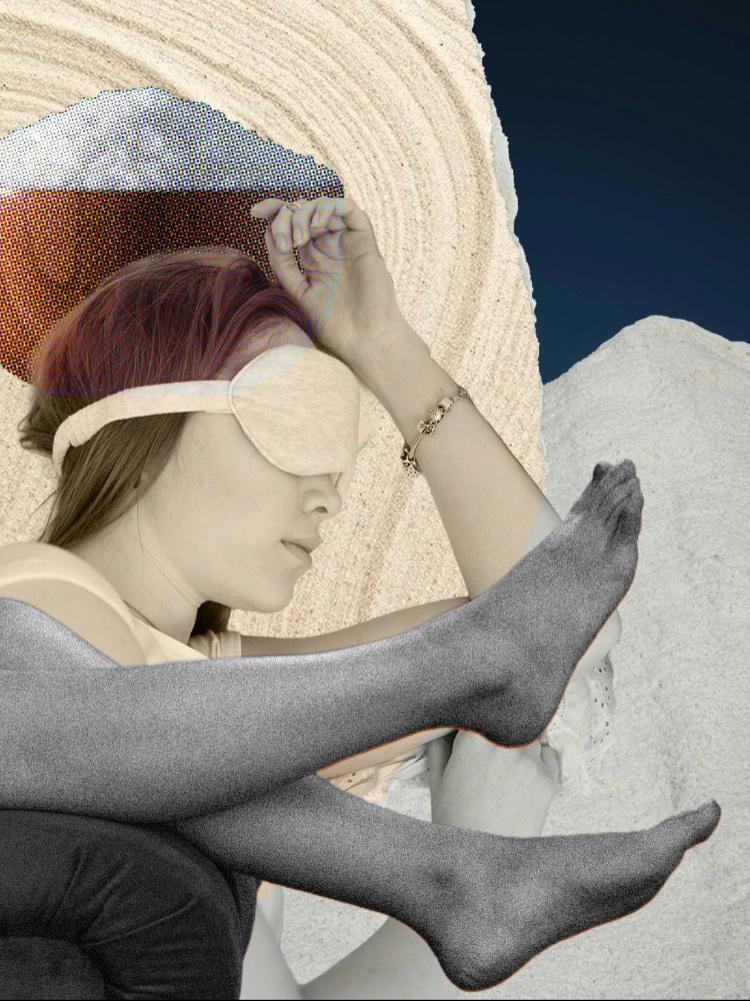
A year ago, if someone had told me they were pouring a kilo of salt into a baking tray before bed, I’d have assumed dinner had gone spectacularly wrong. In 2026? They’re probably salt stomping. The latest wellness ritual taking over social media is exactly what it sounds like. Pour a layer of coarse sea salt or Himalayan pink salt into a tray, stand on it barefoot for five to 10 minutes, and gently shift your weight.
If the ritual feels oddly familiar, that’s because it borrows from wellness practices already in circulation. And, like most viral wellness hacks, it doesn’t have one clear origin story. Instead, it appears to have gained traction on TikTok as a mash-up of ideas like earthing, reflexology, Epsom salt baths, and nervous system reset rituals. They’re all separate practices with varying levels of scientific evidence, but together they make salt stomping feel intuitively plausible.
Depending on who you ask, it can do everything from helping you unwind after a long day to transforming the quality of your sleep. Which raises the obvious question: is this actually doing anything, or are we collectively standing in seasoning?
Beyond the buzz
“There’s very little scientific evidence that standing on dry salt can lower cortisol, regulate the nervous system, improve circulation or help you sleep better,” says Dr (Major) Rajesh Bhardwaj, sleep expert at Delhi’s MedFirst ENT Centre.
Another popular claim is that your feet absorb minerals from the salt. But experts say that’s unlikely too. The skin on the soles of our feet is designed to protect us, and it doesn’t absorb minerals from dry salt in amounts that would make a meaningful difference.
“That doesn’t mean salt has no health benefits. It’s an essential mineral that helps with muscle function, fluid balance, and nerve signalling. Warm Epsom salt baths can help soothe sore muscles, and Himalayan pink salt contains trace minerals, including magnesium. But that’s very different from standing on dry salt for a few minutes,” he explains.
So why does it feel so good?
That may have less to do with salt and more to do with the ritual itself. “We’ve forgotten how to pause,” says Anshuka Parwani, celebrity yoga and wellness expert and founder of Anshuka Yoga. “Our nervous systems are constantly overstimulated. We’re naturally drawn to rituals that help us slow down and reconnect with ourselves. Whether it’s salt stomping, breathwork, or simply going for a walk, it’s often the pause that makes us feel better.”
That probably explains why the trend has taken off. Wellness has quietly shifted from doing more to doing less. A few years ago, it was all about 5 am wake-up calls, supplement stacks and tracking every metric imaginable. Now, some of the biggest trends—magnesium mocktails, tart cherry juice before bed, sleepmaxxing, journalling, breathwork, and getting morning sunlight—have one thing in common: they’re simple, low-effort rituals that encourage us to slow down.
Then there’s the placebo effect—which isn’t quite the same as something being “all in your head”. “When we expect something to make us feel calmer or sleep better, our brain can influence how we experience it,” says Neha Ranglani, integrative nutritionist and functional medicine practitioner. “That doesn’t mean the claims are scientifically proven, but it does show how closely the mind and body are connected. Sometimes, it’s not the salt that makes the difference. It’s finally giving yourself five quiet minutes.”
So, no, salt stomping probably isn’t secretly resetting your nervous system. But if standing barefoot on a tray of salt gets you off your phone, helps you unwind, and creates a small moment of calm before bed, that part might actually be doing more work than the salt itself.