




At some point in the last decade, getting fit became another thing to be anxious about. The 5 am bootcamp, the reformer class, the cold plunge, the protein macros, the HRV score on your Whoop at 7 am telling you today’s readiness is a 43. We built entire lives around the performance of wellness, and produced, in the process, an entire generation of people who are exhausted, tense, and completely out of ideas. Enter somatic movement. It is slow, it is strange, and it asks almost nothing of you physically. It is not even a workout in the literal sense, in fact it might be opposite of one, and yet, according to a growing number of practitioners and the clients quietly finding their way to them, it is the only practice that actually addresses what’s wrong.
In the water and on the mat
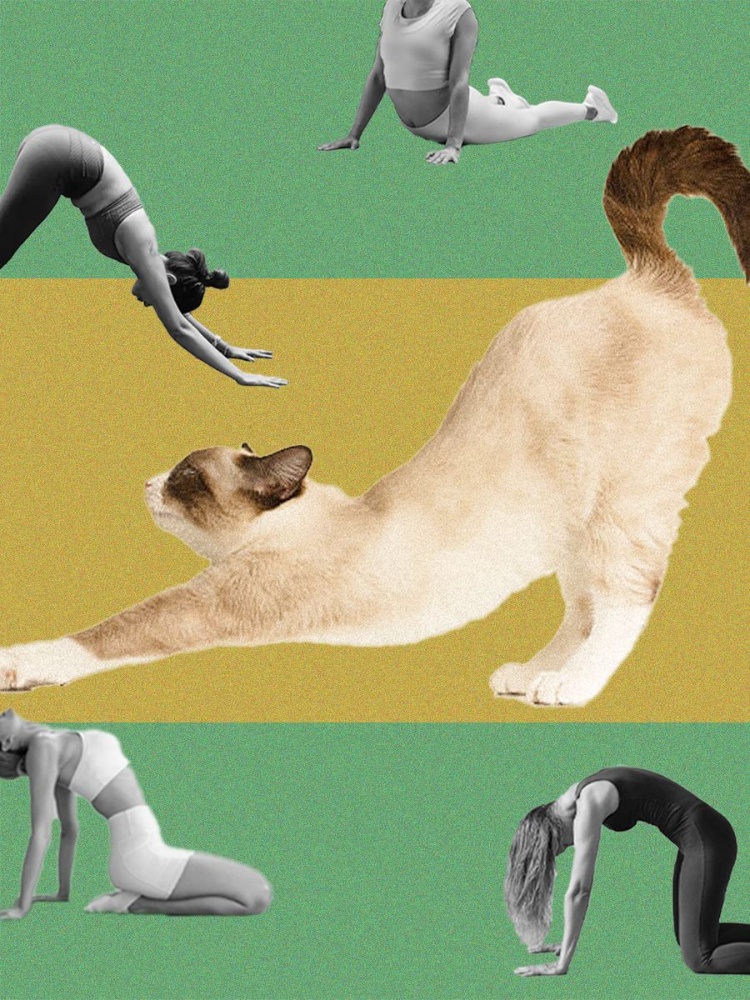
Somatic movement takes many forms. On land, it involves slow, small, movements that look like almost nothing but work like neurological reprogramming, recalibrating the relationship between brain and muscle. The key technique is pandiculation: a deliberate contraction of a tense muscle before a very slow, intentional release—like the stretch a cat makes on waking from sleep. Unlike regular stretching, which forces a muscle to lengthen against a contraction signal it hasn’t been asked to stop sending, pandiculation communicates with the nervous system directly. The contract, release, relax cycle tells the muscles it’s ok to let go. It is safe to let go.
There is also a version of somatic work happening in Mumbai’s pools, and it is, perhaps predictably, even harder to explain at a dinner party. Watsu, a form of somatic therapy conducted in warm water, works on the same neurological principle: use the environment to create the conditions where the nervous system feels safe enough to release what it’s been holding. Pooja Gautam, a Mumbai-based Watsu practitioner and somatic healer, describes it simply: “We begin by simply floating in warm water and synchronising our breathing. That helps with co-regulation—our nervous systems naturally respond to the calm presence of another person.”
The water, she says, does things that are genuinely difficult to replicate on land. “Buoyancy supports your weight, so your muscles don’t have to work to hold you up. That allows a much deeper level of relaxation and movement. Warm water also has a naturally calming effect on the nervous system. Many people breathe more deeply, their heart rate slows, and they feel safe enough to release tension they’ve been holding onto, sometimes without even realising it.”
What people feel afterwards, she says, is almost always the same: lighter, quieter, slower. Sometimes, considerably more than that. She’s had clients who’ve let go of grief in the water. One, she says, picked up their bags and left the city and started a new life soon after.
The word you keep hearing, and what it actually means
Somatic comes from the Greek soma, meaning the body. Not the body as a machine to be optimised or a problem to be solved—the body as a felt experience, from the inside out. Zia Nath, a trauma-informed therapist and founder of Quanta Health Care Solutions in Mumbai, puts it plainly: “At its core, somatic practice is about turning our attention inward. It is the act of being present with the body as a whole, rather than focusing on its isolated parts.”
The practice has roots that go back further than the wellness industrial complex would have you believe. Twenty-five centuries ago, Hippocrates observed that the body could self-regulate if you cooperated with its natural forces rather than overriding them. In the 1970s, American philosopher and movement educator Thomas Hanna formalised this into a framework, coining the term sensory motor amnesia to describe what happens when the nervous system has been under stress for so long it forgets how to release the muscles it’s been holding tight. Not an injury. Not a structural problem. Just a body that has been on guard long enough to mistake tension for its natural state.
The fix, in Hanna’s framework, isn’t to stretch that tension out or power through it. It’s to work at the level where the problem actually lives: the nervous system itself.
Why 2026 is the perfect storm
“Nervous system regulation has become something of a wellness buzzword,” acknowledges Canada-based mental health therapist and psychologist Miloni Ruparelia, “but its popularity also reflects a very real experience. Many people have been feeling dysregulated without necessarily having the language to identify or describe what is happening to them.”
The language has arrived now, partly because the experience has become impossible to ignore. Economic uncertainty, digital overload, the always-on performance culture that makes even rest feel like something to be optimised—all of it contributes to a body that is chronically stressed in the way that accumulates in the jaw, shoulders, hip flexors and lower back in a way that no amount of stretching quite fixes.
What’s interesting is the shift this has triggered. “For years, fitness culture celebrated the idea that harder was always better,” says Ruparelia. “But now we see the tide changing. People are realising that while high-intensity exercise has many benefits, it isn’t the only path to well-being. What we need in today’s world is a space to slow down rather than entering a space with loud music and equipment.” So while there is space for the Hyrox of it all, we are finally beginning to understand, as Ruparelia puts it, that “slower practices help us notice when the body is tired, tense or in need of recovery before those signs develop into injury or burnout.”
What the science says, and what to be sceptical of
Somatic movement has had a moment on social media that its practitioners have watched with a mixture of gratitude and mild horror. Claims circulate, “heals trauma”, “resets the nervous system”, “unlocks the body”—with a confidence that the science doesn’t quite support, at least not in the way the captions suggest.
Ruparelia is measured on this: “Somatic movement alone is unlikely to heal trauma, which is far more complex. It can, however, help reduce stress, improve emotional regulation and help a person reconnect with their body after a traumatic experience.”
What the science does support is the mind-body connection that somatic work rests on. “When we train in a state of dissociation—no pain, no gain—we miss the body’s cues. When we train with somatic presence, we move with intelligence.” By fine-tuning what she calls interoceptive perception—the ability to sense breath, heart rhythm, joint alignment, muscle activity—somatic practice becomes a safeguard against the two things that end fitness journeys prematurely: injury and burnout. Ruparelia adds the mental health layer: “Slowing down teaches us something that high-performance culture often overlooks: how to listen to the body rather than constantly pushing past its signals. That doesn’t mean avoiding challenges. It means knowing when to push and when to recover.”
Two centimetres of movement, a warm pool, a breath. It is the opposite of every fitness trend that preceded it. Which is, perhaps, exactly the point.