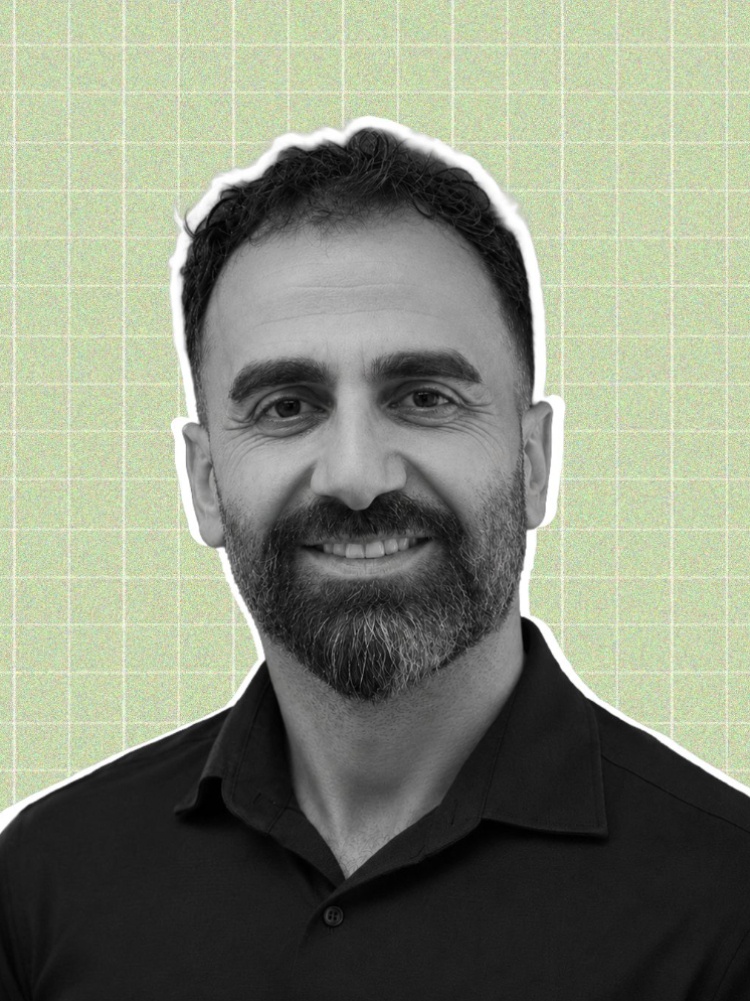

“I call you the Messi of hair colour,” says a woman in a hairdresser’s chair. “Make me beautiful,” asks another. “I feel like an Iranian princess,” says a third with a wink. These women are stars in the before-and-after videos posted by Taj Hair Studio, a London-based salon founded by hairdresser Tarik Aljohari, and they’re praising his mastery of grey blending, a buzzy hair colour trend.
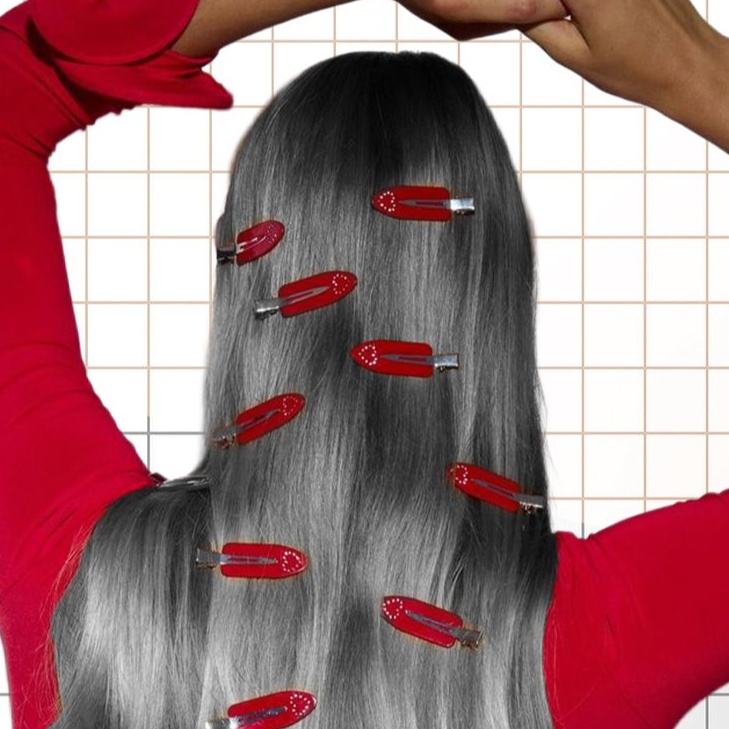
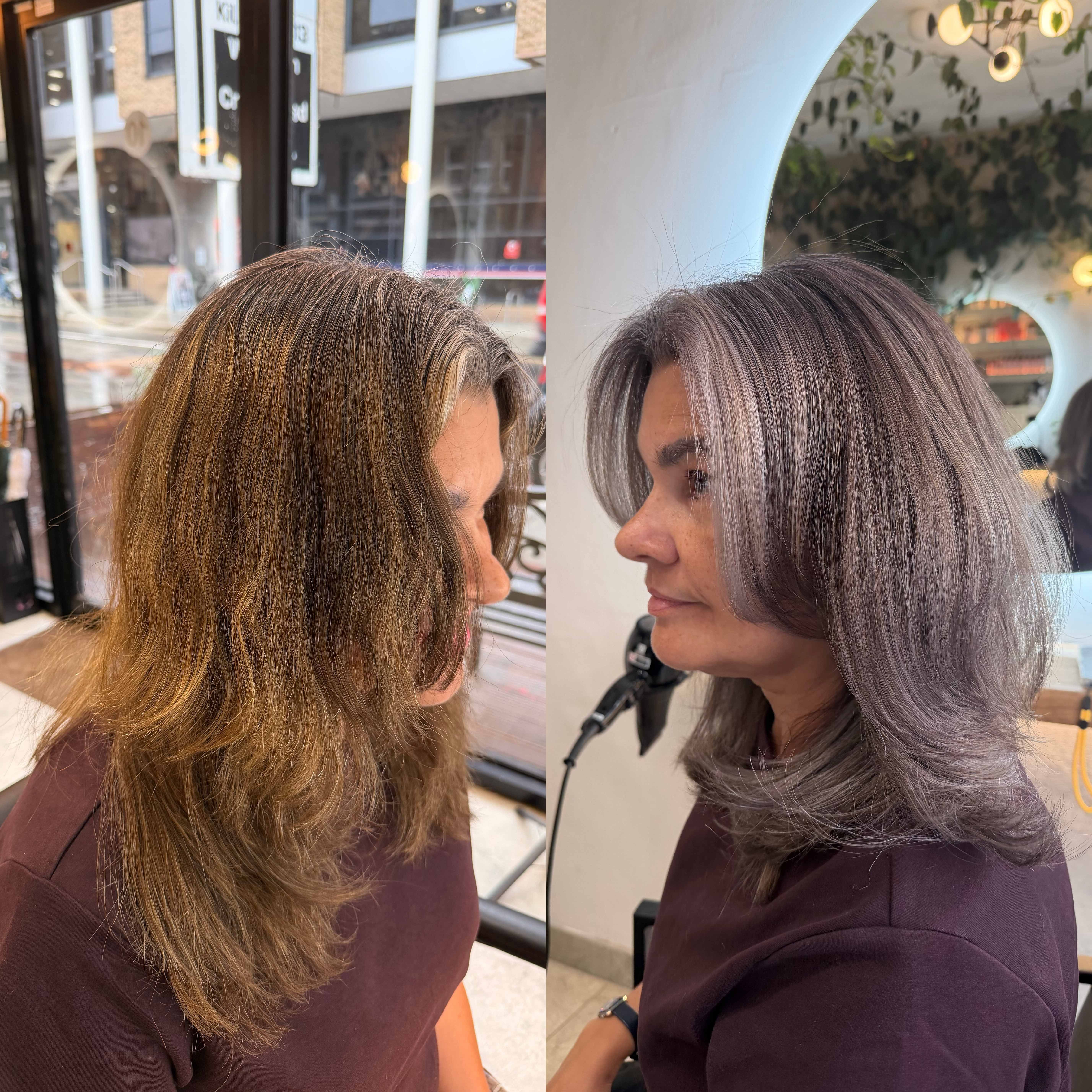
Aljohari’s videos get anywhere between 500k to 5 million views, and along with the happy clients the comments are full of viewers delighting in this more natural, gentle approach to colour that works with your hair rather than against it. “When you have naturally dark hair, the contrast between grey and black or brown can be very jarring,” says Aljohari, explaining the technique over a video call. “What I’m trying to do is balance the two by introducing colours—ashy mushroom, silver, other smoky tones—that are in the middle of that spectrum.”
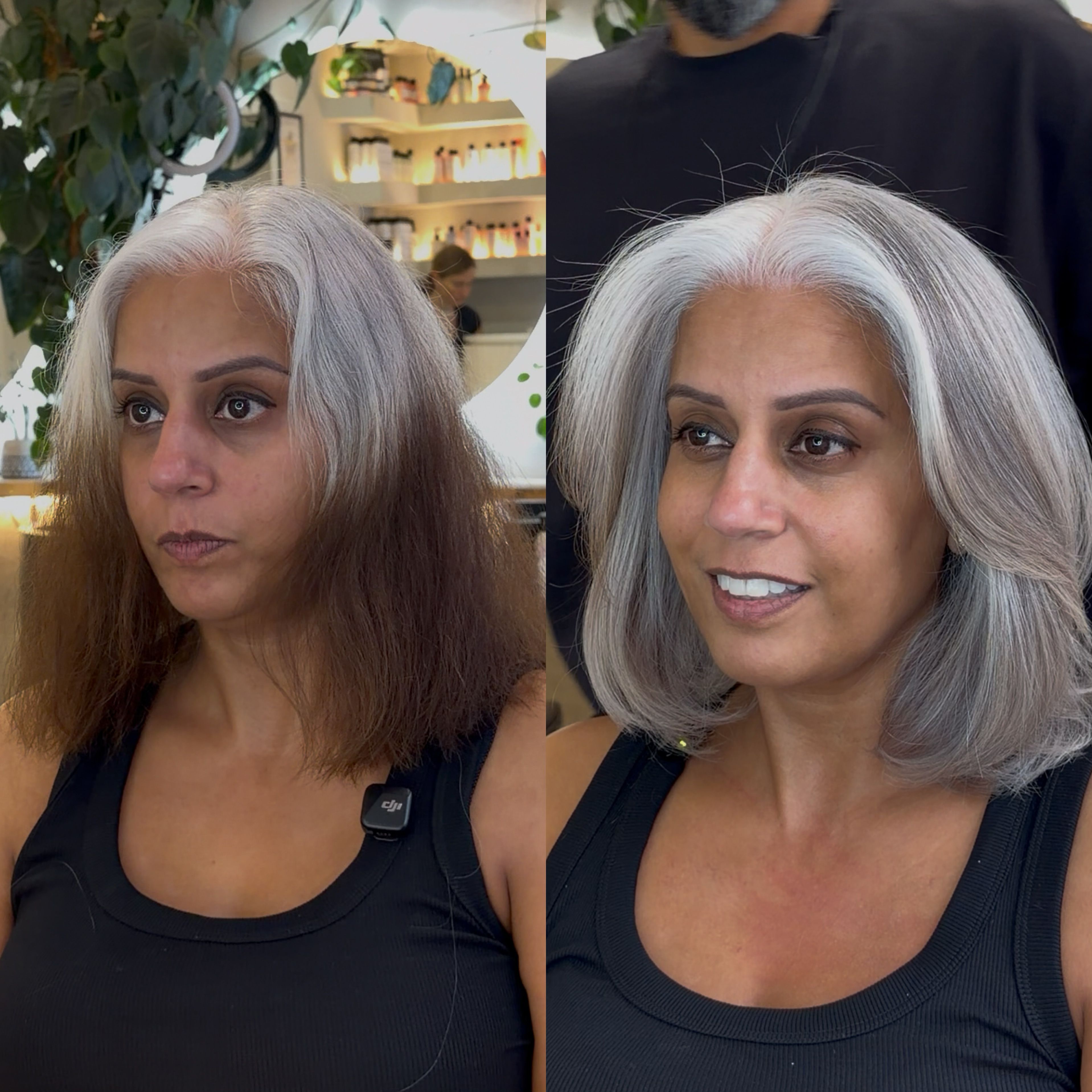
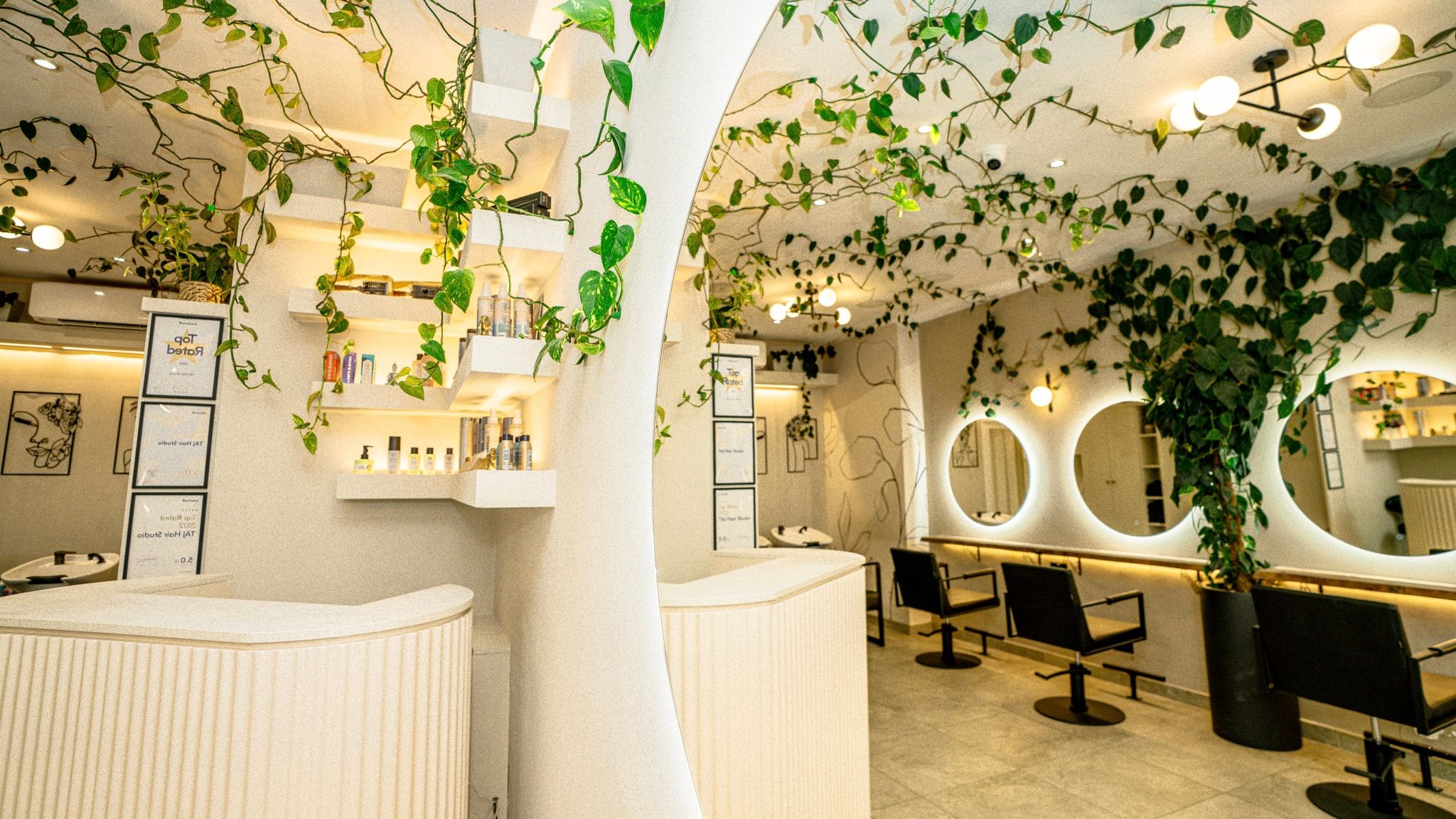
All the videos are recorded in Johari’s bright, light, plant-filled salon northwest of London. Over the sound of the hair dryer, Aljohari genially chats with his largely south Asian clientele who come in from as far as Tanzania or Manchester with stripes of frizzy grey and orange hair—greys that they’re growing out from the roots, halos of old dye jobs layered over new ones. The look is usually more Friar Tuck than Rosalía. Most of them talk about how they’re tired of dyeing their hair, tired of having to touch up their roots every three weeks. A quick transition reveals the new look, often a mix of cool-toned ash or smoky grey-brown that merges with the natural white hair that’s become the new normal.
While he can’t remember the exact number, Aljohari says he receives countless DMs a day from both clients looking to try grey blending and hairstylists hoping to learn the technique. “There’s no one technique, though. Of course, it’s like highlighting your hair, but whereas when you do highlights you kind of slice the colour in, here we need to acknowledge almost every hair,” he adds. He does distinguish between a full blend and a half blend. The former is for those with completely white or grey roots. “For that person I need to bleach all the hair from the bottom and then I add on darker elements, what we call lowlights. This creates a salt-and-pepper look that’s more layered, less flat than a full head of white hair.” The half blend is for those roots are a mix of white and their natural colour, while the bottom is usually leftover dyed hair. “Here I bleach half the hair and then the other half I colour it back close to their natural brown hair.” He adds with a laugh, “I’m giving you all my secrets!”
At some point, most women (and men) will be faced with the question: to dye or not to dye, particularly when their hair starts to grey. Over the last year, greyness has become something to celebrate in popular culture. From Olivia Colman’s pewter curls during the Wicker press tour to Sarah Jessica Parker’s blonde-grey balayage-type highlights and Zeenat Aman’s sleek silver bob, it’s been refreshing to see our fashion and beauty icons embracing what ageing can look like. A deep dive on Google Search reveals a sharp spike in searches for the term ‘grey blending’ from November 2025 onwards. Perhaps coincidently, this was soon after Parker made an appearance at the Victoria’s Secret fashion show in 2025 with her blonde hair in a half-up, half-down ponytail, her natural grey roots framing her face. Since then, it’s consistently remained a popular search query, hitting another peak this year around the time Colman was declared a ‘Silver Hair Muse’ by Vogue.
Aljohari reached internet fame around the same time as the videos starring his south Asian clientele revealed the possibilities of grey blending. Apart from the bouncy, glossy results what makes the videos appealing is the unfiltered joy in his customers’ faces upon reveal, Aljohari’s gently philosophical theories about self-worth and ageing, and his ability to help them discover a beauty within that he seems to see as soon as they sit in his chair.
Aljohari was born in the southern Syrian town of Sweida. He grew up doing his mother’s hair, studied tailoring, and was one of only two boys in a class full of girls, before moving to London when he was 18 years old. “I always preferred having conversations with women,” he says. He didn’t speak any English when he arrived in the UK, and the first years were tough, but Aljohari eventually found a mentor in the Lebanese hairdresser Alex Toko, who gave him a job at his salon. After working as a hairdresser and then a hairstylist for commercial shoots and television, Aljohari went on to buy that same salon in 2021, soon after the Covid-19 pandemic. “I had, like, £500 on me and the first thing I bought for the place were six plants. The salon is like a jungle now and Alex is my business partner. His blow-dry is a masterpiece.”
I ask if the choice to work largely with south Asian women was deliberate. “In a way, yes. I believe that Indian or Asian hair is one of the best to work with—the texture, the thickness that result from genetics. South Asian people also really look after their hair. You apply oil, hair packs, all this good stuff,” he says. Aljohari adds that at one point during the pandemic he was preparing to visit India. “I wanted to stay at an ashram, meditate, and just divine my true self,” he recalls. That was around the time he bought the salon, which cut those plans short.
Five years later, Aljohari says he accepts around three out of 10 client requests and that the process can take months, even a year in some cases. He’s clear that “If you’ve been box dyeing your hair for 20 years with a permanent colour we can’t simply switch you over”. The first step is to, of course, stop dyeing your hair, the longest and most painful part of the process. That’s followed by a treatment called CPR, which helps remove some of the artificial colour without harming the integrity of the hair. “What we’re trying to do is remove all the unwanted tones of red, orange or yellow before we add cooler silver colours that can blend with your existing greys.”
Aljohari is vehement that grey blending isn’t a magical solution to all your greying woes. “There is a lot of maintenance here too. You have to commit to using a toner, to looking after your hair at home, to treat it lovingly.” For Aljohari, the technique is above all about acceptance: of your hair, of course, but also yourself. “When a client comes in and she is happy with her greys, confident about them, ready to embrace them, then everything looks amazing on her.”