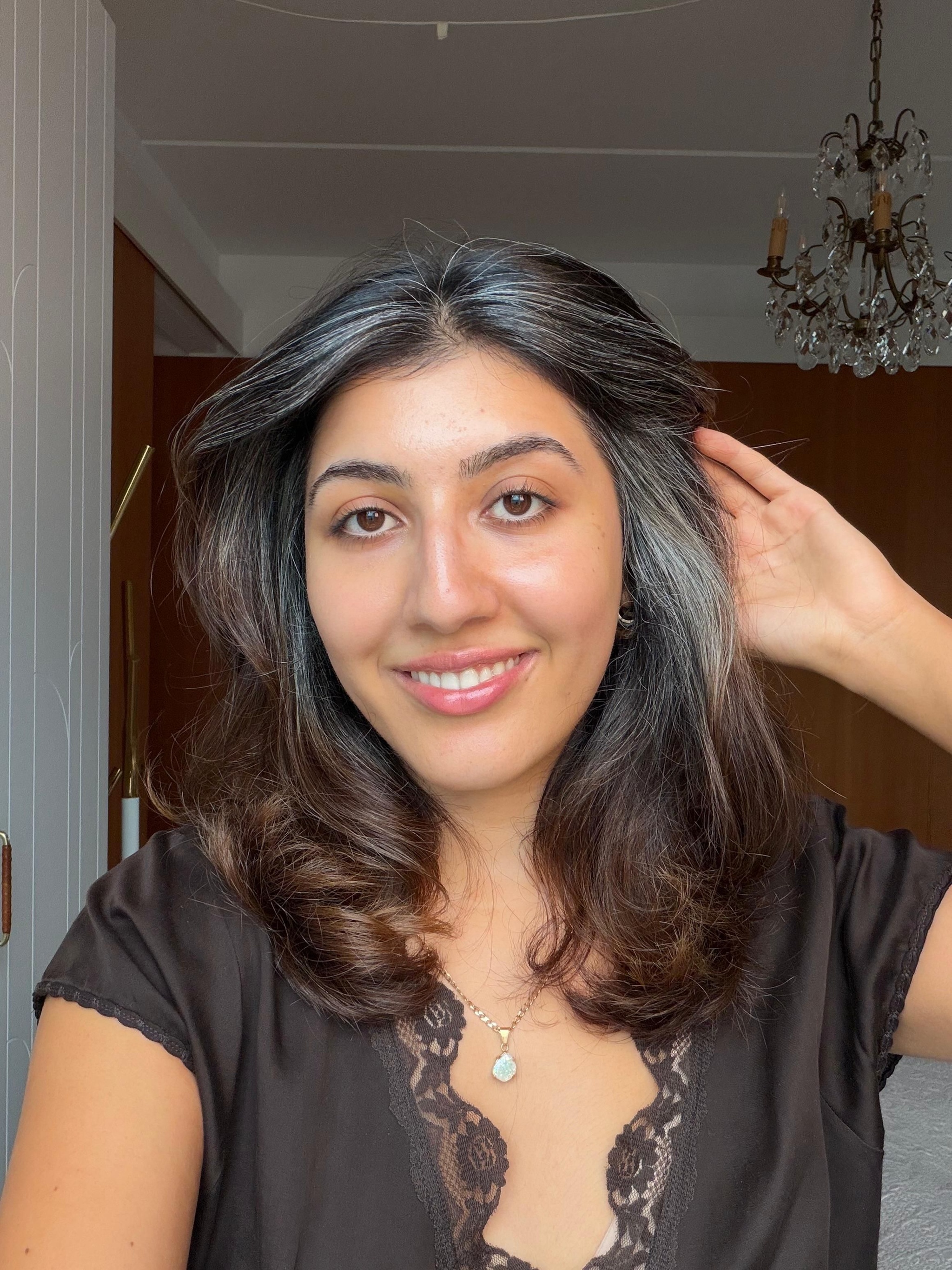




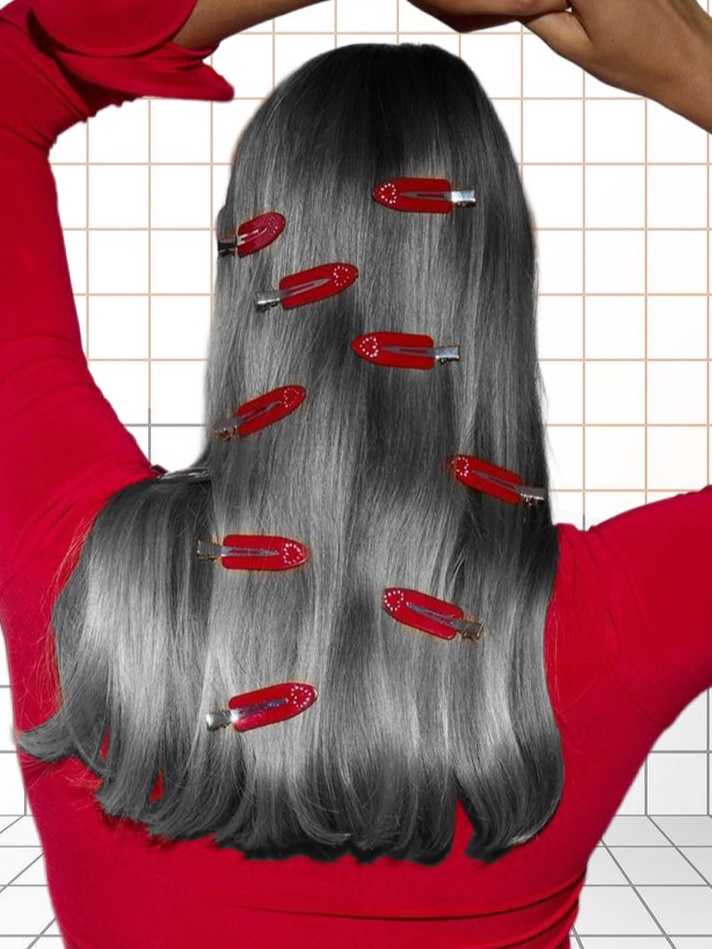

Carolina Suresh, 22, found her first grey strand in her second year of college in Bengaluru and did the one thing nobody expected: nothing. Her sister religiously dyes her hair every few weeks and can’t understand why she doesn’t want to join in, while her mother says she looks “old from a distance”. After trying multivitamins briefly, mostly to keep the peace, Suresh stopped doing anything entirely. “It’s going to grow out whether you colour it not, so there’s no way out," she shrugs, holding out instead for the platinum look she’s always envied on women decades older.
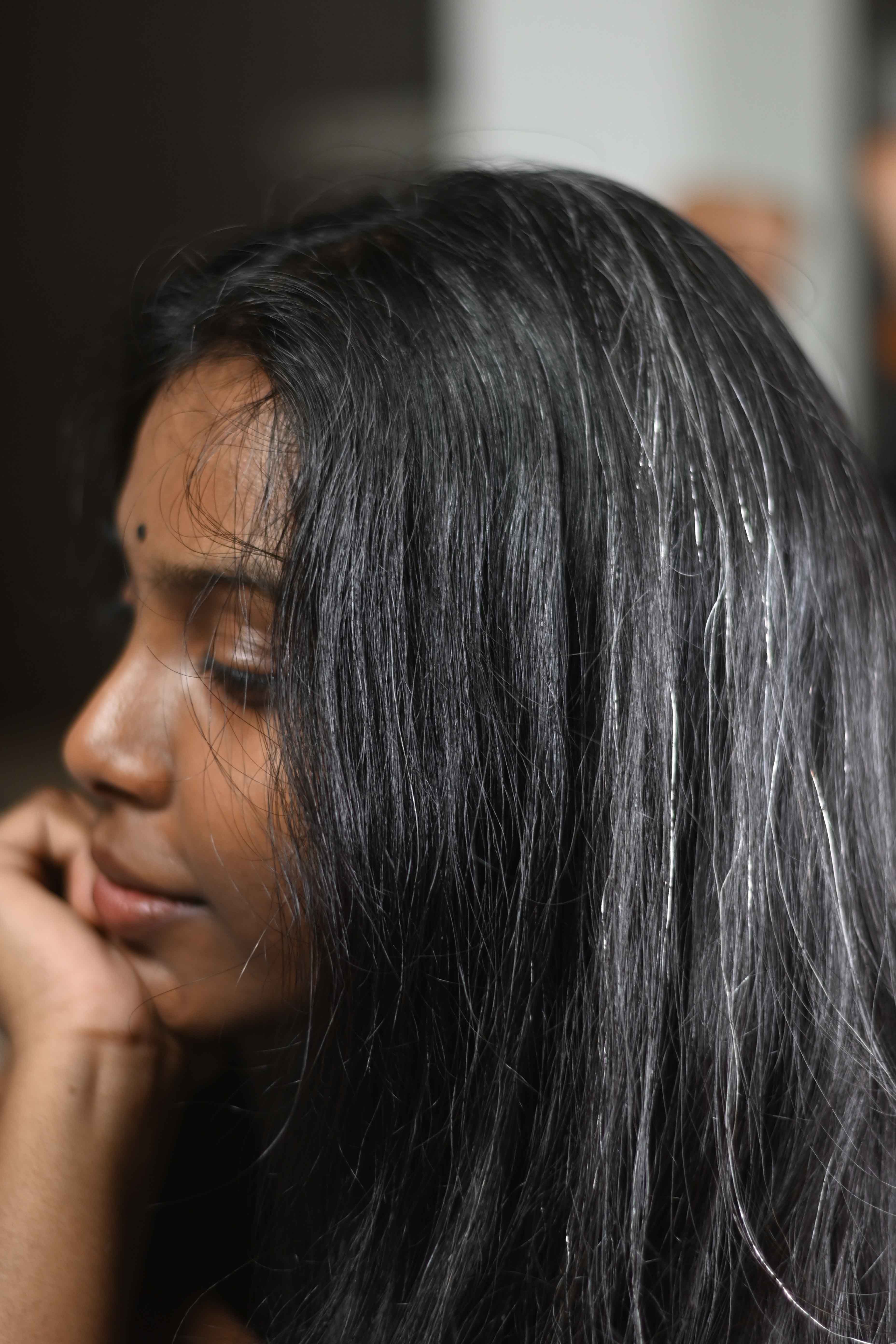
Suresh is not alone. Hard as it is, a growing number of twenty-somethings are resisting the instinct to hit the bottle dye and are letting their prematurely silver locks loose in all their glory. In an age of biohacking, baby Botox and red-light therapy, where everyone seems obsessed with hiding any signs of ageing, it’s a surprisingly refreshing approach to an age-old problem. Gen Z, in particular, is inundated with plenty of reasons to go grey: entrance exams, the anxiety of getting a foot in the job market, and entry-level salaries that stay that way no matter how many years you put in. Stress is a big culprit but so is genetics—a 2017 retrospective study in the Indian Journal of Dermatology, examining 71 patients under 25 at a Gurugram skin clinic, found over 90 per cent had a parent or sibling who’d also greyed early, putting genetics firmly in the driver’s seat.
Streak of nature
When asked to sum up premature greying in one line, Dr Madhuri Agarwal, a Mumbai-based dermatologist, doesn’t touch biology at all: “Honestly, it is an aesthetic problem more than a health problem,” she says. This might be the real thread connecting Gen Zers and others choosing to embrace salt-and-pepper. It’s not that they cracked some code; they just stopped treating a cosmetic detail like a medical emergency.
Awan Misbah, for one, never even got the choice to frame it that way. Misbah, 22, was born with a natural white-grey streak, which made her a target at her international school in Hong Kong. Classmates called her ‘buddhi’ (old lady) long before she knew what it meant. After hiding her hair under a hijab for a year, she realised she was wearing it more to camouflage and less for its original purpose. The scissors came out, and she cut off the white patch in frustration. What broke the cycle wasn’t a romantic epiphany of acceptance. It was exhaustion and one blunt realisation: “The grey hair isn’t actually a problem,” she says now. “The problem is me; it’s the perspective.” These days, relatives in Pakistan still push henna on her, but Misbah has built thicker skin to bounce off the pressure and she’s determined not to give in.
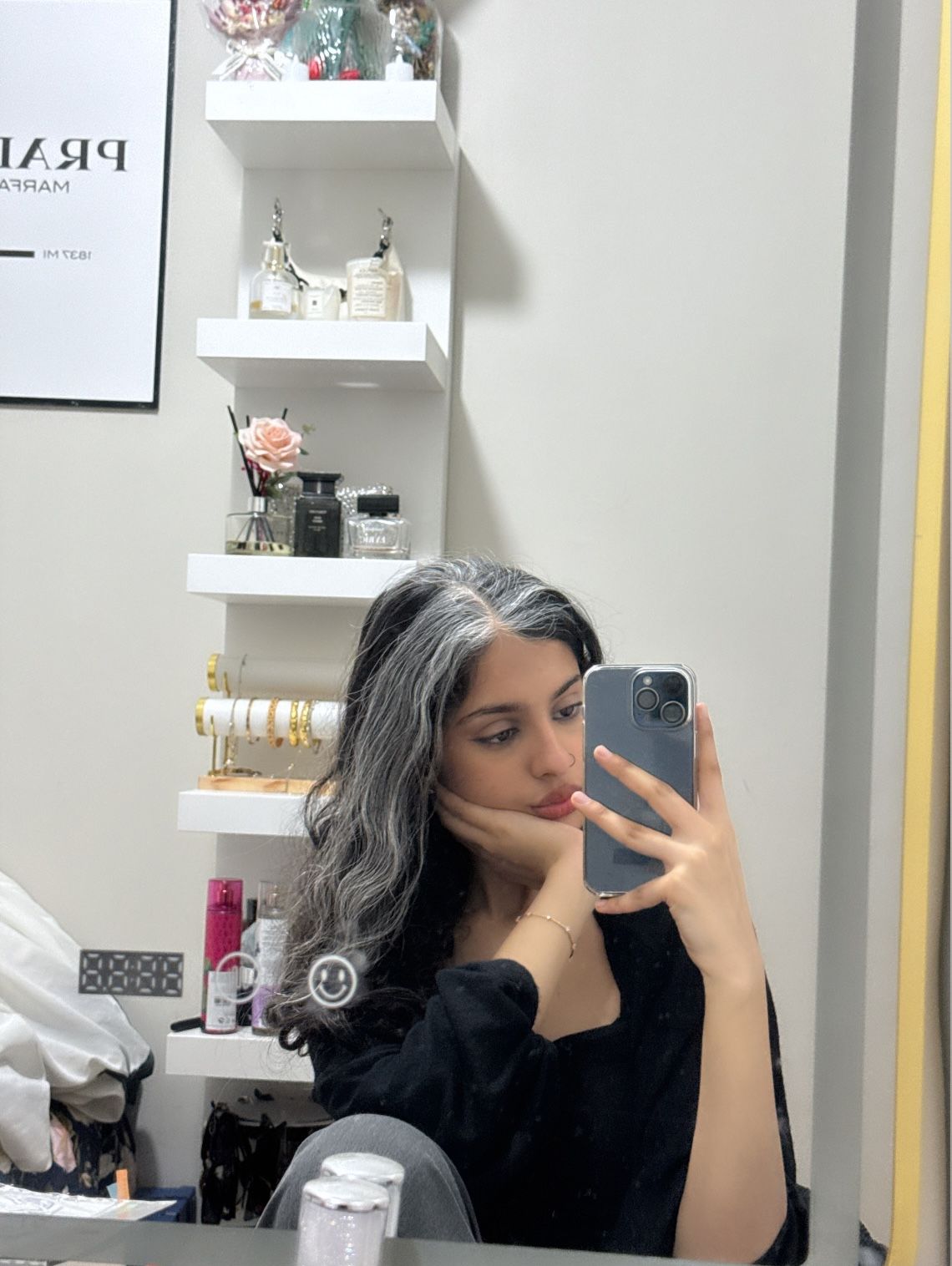
Meanwhile, for Stockholm-based Darya, 28, an allergic reaction to a dye job, which left her scalp raw for days, was what ultimately tipped her over the edge, “That was the last straw,” she tells me. Although not a full-time influencer by trade, she documented her decision to go grey on Instagram and the aftermath surprised her; women 20 to 30 years older are messaging and occasionally stopping her in person, to say her decision talked them out of their own dye bottles too.
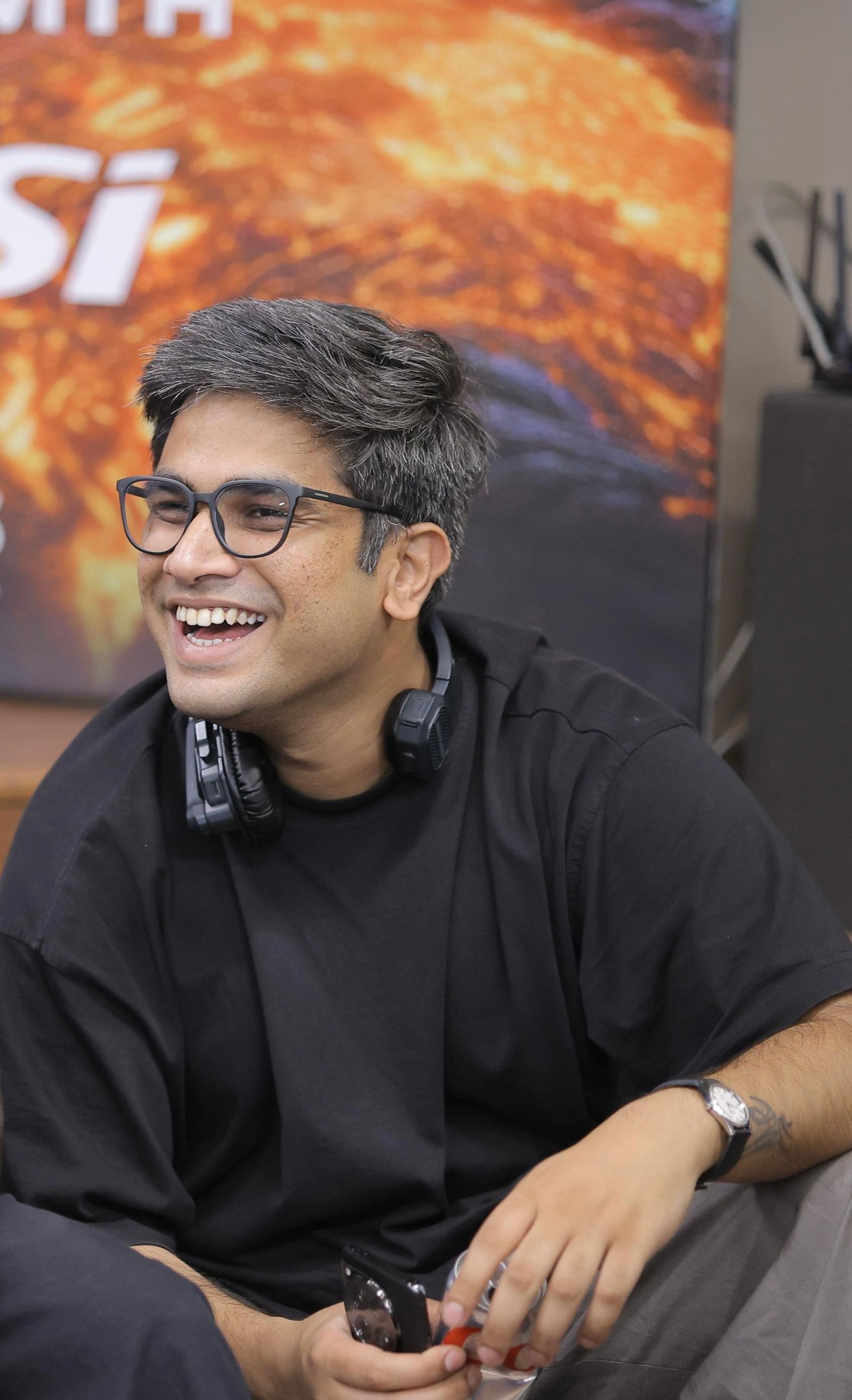
Prateek Khatri, 30, who grew up in Raebareli and now lives in Gurugram, took the long way round. Teased for “looking old” in 10th grade, he tried henna in a panic, only for it to turn his hair a jarring gold. It kept him indoors for weeks. The actual shift happened in his early twenties, at a campus radio gig in Lucknow, where people started responding to his voice instead of his roots. “People weren’t talking about my hair or looks anymore. I found some confidence because of my work,” he says. The greys went from being a liability to being insignificant, something people now assume he pays for.