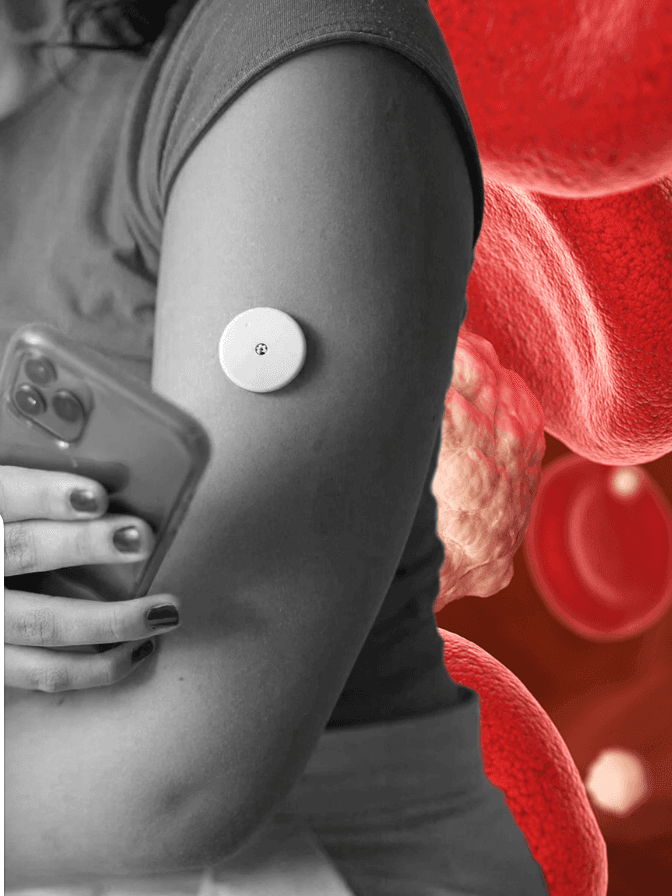

When I was pregnant, I wore a continuous glucose monitor (CGM)—small wearable sensors that track your glucose (sugar) levels in real time—as an exercise in caution because of a family history of diabetes. Seeing my blood sugar rise and fall in real time after every meal was weirdly fascinating (albeit a little overwhelming).
That feeling is largely why CGMs have now crossed over into mainstream wellness. Across urban India, metabolically healthy people are slapping on 14-day patches and posting screenshots of their post-lunch glucose graphs on IG like Strava stats, treating every upward squiggle after a plate of pasta like a personal failing. Creators like Rohan Sehgal are documenting their own experiments with the device, turning it into a full-fledged lifestyle series called the ‘Sugar Spike Show’ that comes with a disclaimer: “*Why I’m doing this if I’m not a diabetic*: Prevention is the best medicine! Research today shows that lower and fewer sugar spikes in a day reduce the risk of obesity, diabetes, heart disease & PCOS.”
In this weird reality, aloo paratha with and without butter is being visualised as a series of data points instead of a drool-worthy photo. But if you don’t have diabetes, what are you actually learning from watching your glucose rise after a good breakfast?
Know thy carbs (and thy bedtime)
For Mishal Thakkar, a 41-year-old wealth manager in Mumbai, who started using a CGM after noticing borderline-elevated sugar levels, the appeal was practical: it beat pricking his finger after every meal. What surprised him wasn’t just food but how late nights and alcohol sent his numbers climbing while he slept. More practically, it settled an age-old Indian dinner-table debate for him. “I saw how roti used to affect me a lot more than rice,” he says. “Now, if I’m going to indulge, I gravitate toward a dish with rice rather than bread, roti, or pasta.”
For others, the motivation is reproductive health. Mumbai-based Rinali Jhaveri, 32, wore a CGM for four weeks—split into two-week stints with a break between—while trying to conceive after seeing posts on Instagram claiming that low glucose spikes supports better egg quality. She no longer wears the sensor, having mapped out what works for her body and what doesn’t, though the experiment left a lingering hesitation around high-spiking foods like carrots. “Trying to conceive is stress-inducing anyway and tracking my food and graphs is just a part of it,” she says.
What goes up must come down
Aditi Dalal, an IIN-certified health coach, tried a CGM out of professional curiosity to see how her body reacted beyond what a weighing scale or routine blood panel could show. Eating rice, bread, or fruit on their own triggered noticeable spikes—but pairing bread with eggs and cheese, rice with paneer or tofu, or fruit with Greek yoghurt and seeds flattened the curve significantly. For her, the 15-day experiment was a lesson in context: sleep, stress, meal order, and a quick walk after eating mattered just as much as what was on the plate. “I considered it an educational experience rather than something healthy individuals need to monitor continuously,” she says.
The catch is that seeing a spike without knowing how to read it can easily tip into food anxiety. According to clinical nutritionist Sophia Kohli, the biggest misconception among her non-diabetic clients is treating every post-meal rise like an emergency. “Glucose spikes aren’t a bad thing. It’s physiology,” she says. “In a metabolically healthy person, blood glucose rises after meals and gradually returns towards baseline.”
When clients bring Kohli their graphs, she ignores isolated blips and looks at trends over two to four weeks: how high the glucose climbs, how quickly it comes back down, and what the person’s baseline looks like. A plain dosa made of rice and dal will naturally cause a pronounced rise, she explains, while pairing it with coconut chutney for fat and a generous bowl of sambar for fibre and protein softens the curve. Even mangoes don’t need to be banished—eating them after eggs or folded into chia pudding changes how the body processes the sugar.
Too much of a good metric
Where Kohli draws the line is when tracking erodes a healthy relationship with eating. “There is a fine line between CGM data empowering an individual’s food choices and becoming a pathway to obsessive tracking and food-elimination behaviours,” she notes. Dalal echoes the concern: in a culture already obsessed with counting steps and tracking sleep and calories, micromanaging blood sugar can disconnect people from basic hunger cues—or make them feel guilty over a festive meal. “Food is not just fuel,” Dalal says. “It is also pleasure, culture, celebration, and connection.”
For athletes dialing in performance fuelling, or adults navigating prediabetes and insulin resistance, a short stint with a CGM under professional guidance can offer genuinely useful feedback. For everyone else, the takeaway from weeks of wearable data usually circles back to something far less high-tech: stop panicking, because your blood sugar did exactly what it was designed to do after lunch.