Food11 Jan 20268 MIN

Three iconic communities altered Mumbai’s food and dining scene forever

But there are only a handful of places where you can sample their most authentic fare

Image

Photography by Sidharth Vaishnav

Mumbai’s OG inhabitants, the Kolis are have been fishing off its coast since before recorded history. The Gaud Saraswat Brahmins arrived in the city about 150 years ago and built, among other things, Udupi restaurants and the Saraswat Bank. The Iranis arrived around the same time, and continued to come in until a century ago. With their corner cafes, they forever altered Mumbai’s commensality.

And yet, while Mumbai has some pretty fine food from around the world—ramen, pasta, bibimbap, burgers— as well as grub from the rest of the country, it wasn’t, until recently, that we had proper restaurants serving the food of these three historical, deeply significant communities that contributed in crucial ways to our city.

Thankfully, that’s changed in the last five years. Keen and curious Mumbai diners can now try spicy fried fish made by Koli fisherfolk while sitting by the sea. In Worli Naka, you can have Saraswat-spiced, trifal-scented seafood curries in the heart of the city. And off Linking Road, you will find a spot to dine on mast-o-musier, ash-e-reshteh, and barbari bread in a properly Persian restaurant.

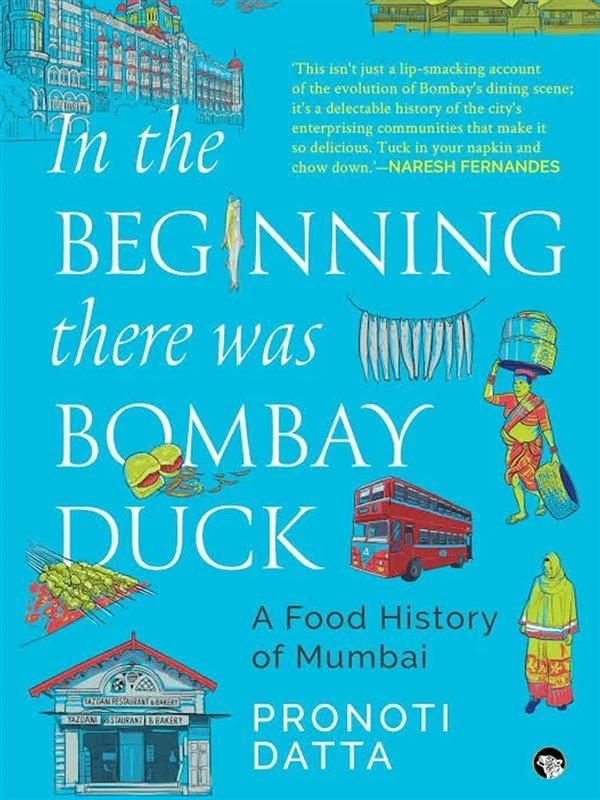
Author Pronoti Datta’s recently published In The Beginning There Was Bombay Duck: A Food History of Mumbai is the first comprehensive book written about the history of food and dining in Mumbai, starting with the Kolis, then talking about its early settlers like the Pathare Prabhus, and migrants such as the Parsis and Sindhis. Below, Datta offers a concise history of these three communities in Mumbai and the best places to sample their food.

The Koli feast of fish and bhakri

The Kolis may be Mumbai’s oldest inhabitants but their food has rarely entered the public sphere. In the past ten years or so, there have been some initiatives, like pop-ups in Versova and the Koli villages in Bandra, but nothing sustained long-term.

More recently, restaurants serving Agri-Koli food have cropped up just outside Mumbai, in Kalyan, on the road to Alibaug. There are many answers to why the food of the Koli community hasn’t caught on: The Kolis are not a particularly prosperous community economically, so there’s a lack of capital. The community doesn’t think that food is worth investing in, or they are not entrepreneurial. Some communities trade in food, but they don’t open restaurants. So you just don’t get their food outside of a home.

What we see now at these Agri-Koli dhabas coincides with our social-media-driven general hyperinterest in community-specific food. In 2024, we got this initiative at Mahim Koliwada, where they have this seafood plaza run by women’s self-help groups. It’s a really nice place, because it has a seating arrangement that overlooks the sea. There are lots of stalls to choose from, and they are entirely built on seafood—fried or cooked with masala, complete with bhakri and solkadi.

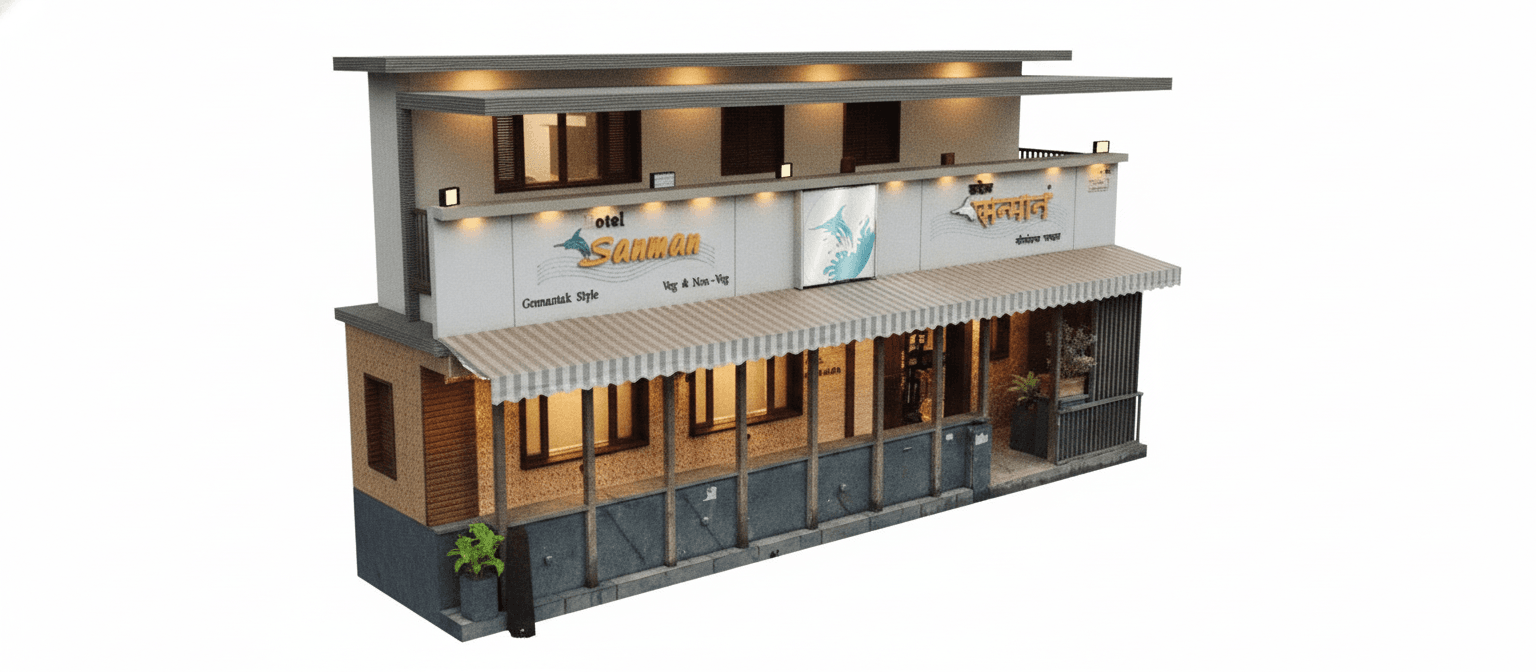
Hotel Sanman

Alibaug's Sanman offers authentic Koli seafood

But it’s also a simple cuisine. The traditional division of labour in the community means that men go out and fish, and then they bring the catch back, and the women sell it in the markets. Because the women also have to work, they have to cook meals very quickly, so they have their Koli masalas for the entire year ready. They just throw things into the kadhai and rustle up a quick meal. It’s a very no-nonsense cuisine, not elaborate at all.

To get a real sense of what else Kolis eat, you either have to go to their homes—or to rely on YouTube. There are so many home cooks there… it’s an amazing repository of recipes. There are also blogs. For example, Anjali Koli Cooper has this great blog called AnnaParabrahma. Then there is Instagram. Veera Almeida and her daughter Natasha run a page called Jevayla Ya. They also sell dried fish via WhatsApp orders and have pop-ups serving East Indian Koli food.

While writing the book, a dish I discovered was popti: vegetables layered in a pot, with chicken and eggs, all covered with a particular leaf called bhamburdi, and fired to get a dish of smoky mixed veg and chicken. In monsoon months, when fishing is stopped, Kolis eat a lot of dried fish. They put it in everything, and not just shrimp, but also baby shark and ribbon fish.

An interesting thing Cooper told me is that the level of spice in Koli food is a marker of economic status. If you are not very well off, you can’t afford certain good-quality ingredients. You mask that by adding a lot of spice. Whereas if you’re a slightly upper-class Koli, then you might not eat such spicy food.

Mahim Seafood Plaza Mahim Koliwada, Mahim West, Mahim, Mumbai. From 7:30pm to midnight, Wednesday to Sunday.

Sanman, Alibaug Ground Floor, Ganesh Krup Building, Israil Lane, opposite Chirag Executive, Alibaug. Call +91 90110 72000. Daily 11am to 4pm, 7:30pm to 10pm.

Also, keep a lookout for pop-ups by Koli groups in Versova and Bandra.

The homestyle non-vegetarian of the Gaud Saraswat Brahmins

The story of the Gaud Saraswat Brahmins of Bombay starts in the early 20th century, when migrants from Karnataka—many very poor Brahmins and non-Brahmins—came to the city. Among them were young boys, 12 or 14 years old, who took on odd jobs to make a living. Some started idli-dosa joints, or rice plate eateries like King Circle’s A Rama Nayak.

As Brahmins, many of them were familiar with temple culture and cooking in temples. So Matunga’s early restaurants had temple social structures in their kitchens—everyone who cooked was Brahmin, as was the waitstaff. The food was cooked according to Brahmin customs, which they believed maintained a certain purity in the kitchen.

Meanwhile Bombay was expanding. Towards the mid 20th century, places like Dadar and Matunga were coming up. Before that, they were just paddy fields. After the plague in 1896, the Bombay City Improvements Trust was set up and tasked with laying out the city, such as building wide roads for good air circulation. Reinforced concrete brought Art Deco apartment living, all within reach of an emerging middle class.

A lot of people came to Bombay from the south, from Tamil Nadu, and took clerical jobs in the colonial government. These English-speaking, well-educated folk would go to Matunga because it was developing as a hub of South Indian culture, with temples, sabhas, and restaurants run by GSBs. Many bought houses in the area, so they could bring their families, not to chawls, but flats. 

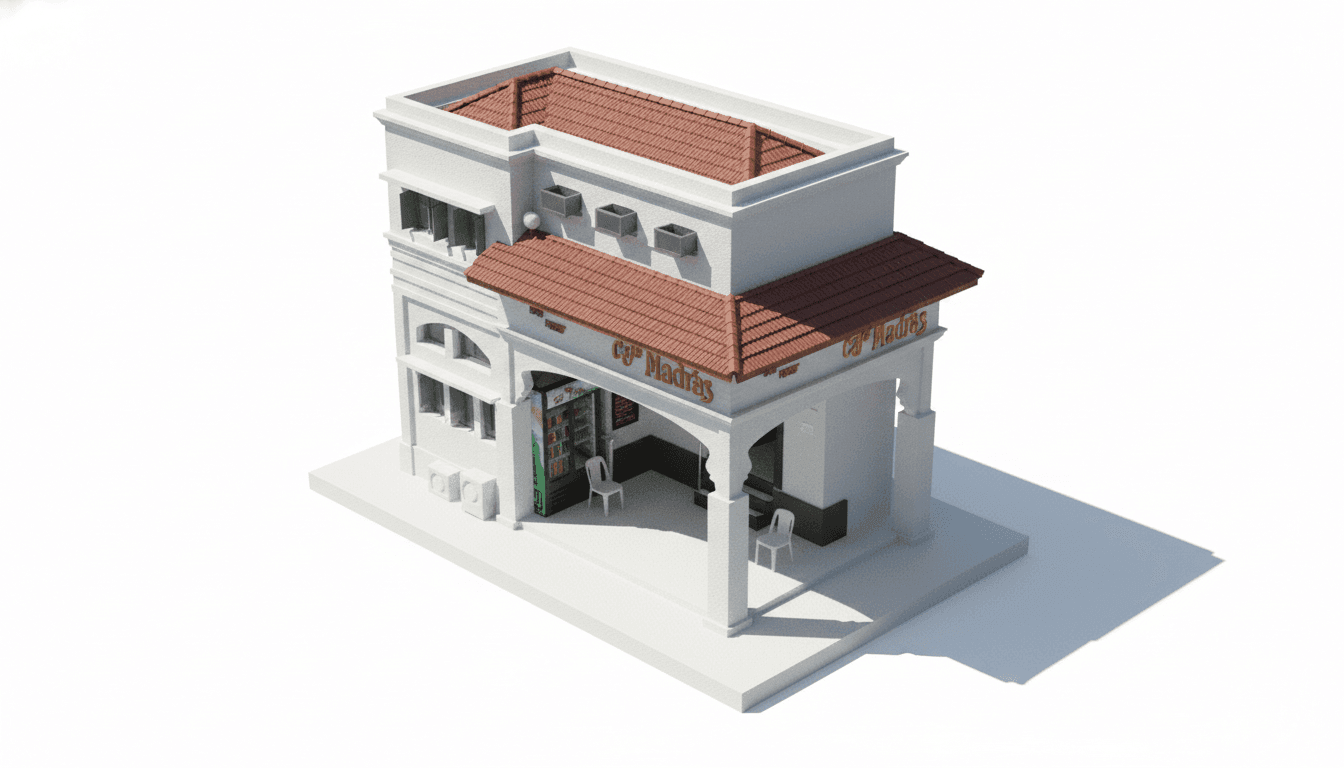
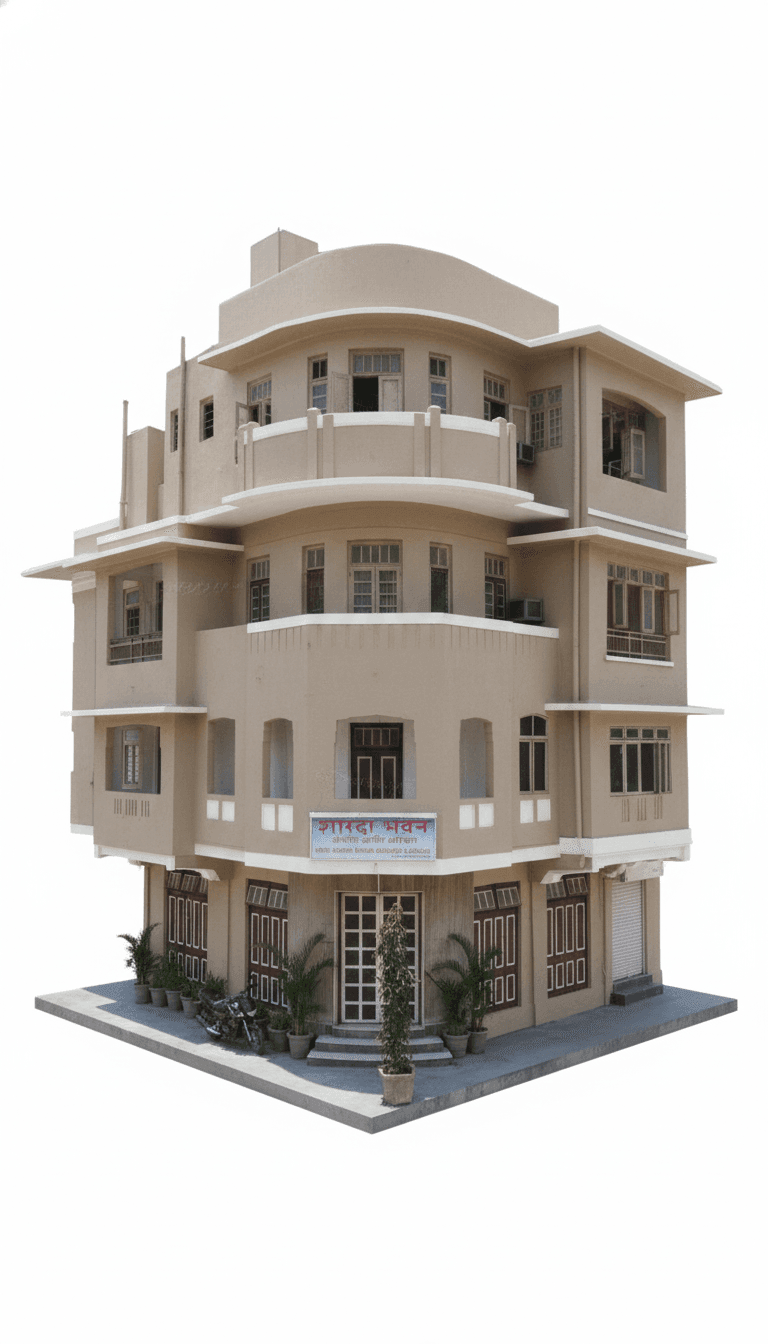
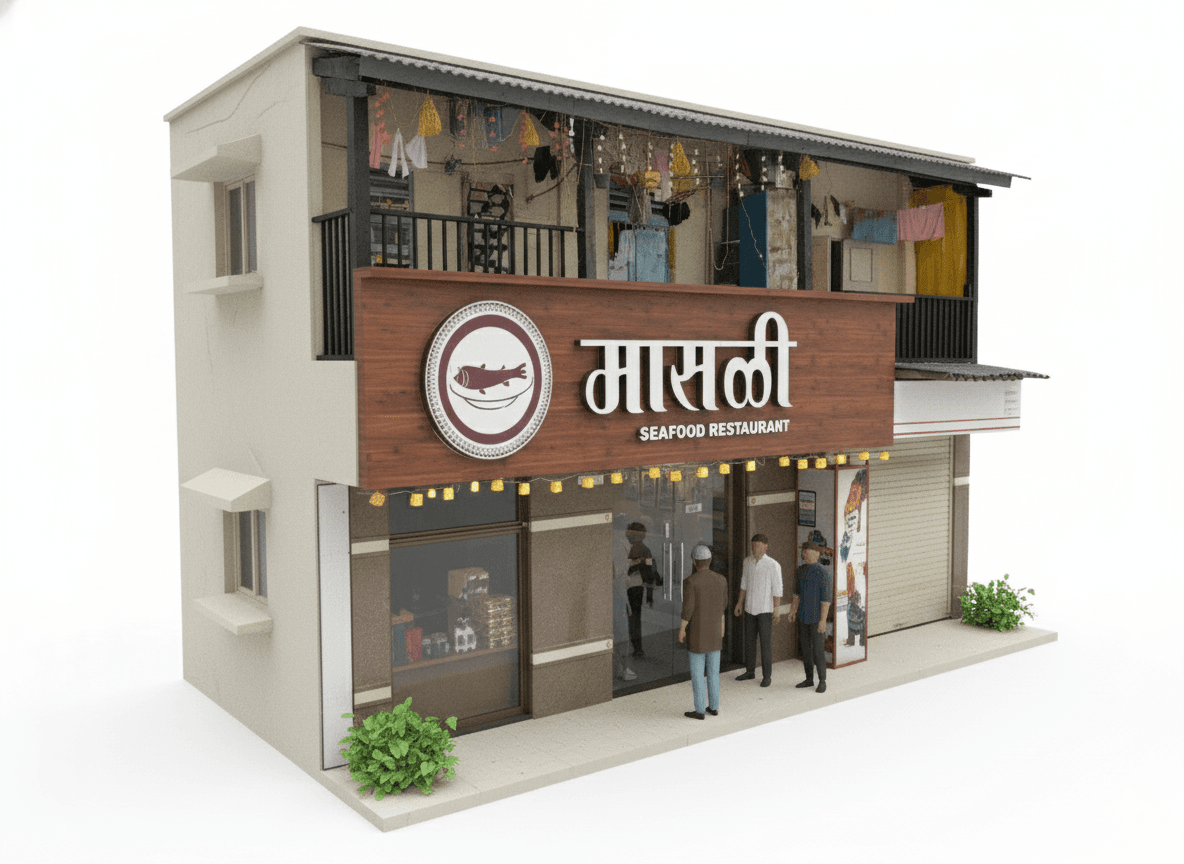
The iconic idli-dosa institutions of Matunga—Madras Cafe, Cafe Mysore, Sharada Bhavan, Amba Bhavan, and A Rama Nayak—are all GSB-owned, with some exceptions. And yes, while these Matunga eatery owners only serve vegetarian food, Saraswat Brahmins eat meat and fish at home. Even so, until now, we only had access to GSB vegetarian fare, until Maaslli opened in Worli Naka.

According to Prasad Naik, Maaslli’s owner, the GSBs grew out of the food profession. They got degrees and became doctors and lawyers. Their children were not interested in running restaurants. Maaslli is one of the first Mumbai restaurants serving full-bodied non-veg GSB meals.

MaaslliSeafoodRestaurant_TheNodMag.png
Maaslli is one of the first Mumbai restaurants to serve non-vegetarian GSB meals

All Konkan cuisines use similar ingredients—coconut, a souring agent, and curry leaves. But differences depend on key masalas and their proportions. Naik will not tell you how he prepares his food, apart from talking about the liberal use of tirfal (teppal/Indian Sichuan pepper). The GSB ghee roast is different from the Mangalorean one. And Naik’s has a secret recipe, and it’s a fantastic one. 

Maaslli Saraswat and GSB Speciality 31A, Ambalal Chawl, Dr Annie Besant Rd, Worli Naka, Mumbai. Call +91 82828 26121. Daily noon to 4pm and 7:30pm to 11:30pm.

Maaslli Seafood Restaurant Nirmal Nivas 2, August Kranti Road, Kemps Corner, Mumbai. Call +91 88899 91978.

The subtly spiced, hearty stews of the Iranis

Iranis arrived in Bombay in large numbers in the 19th century, both Zoroastrian as well as Muslims. The Muslim Iranis were generally better off than the Zoroastrians, who were dirt poor, travelling-on-donkey-back poor. A lot of Parsi associations helped them move to Bombay.

After the plague, we had all this new real estate on new streets. The corner buildings, which the Hindus didn’t want, were snapped up by the Iranis. Here, they started Irani cafes. A guy called Khodadad Oshtori is thought to have started the first Irani cafe, getting a space after selling chai on the street. 

Irani cafes in Mumbai often started in partnership. There would be five or six Iranis, many of them relatives, who would start a partnership. Which is why even today, you’ll find, for example, that the owner of Universal has a stake in Leopold. Before it became a popular pub, they used to serve simply bun maska, omelette, kheema pao. It was not Irani food; it was Parsi food, because it was expedient and familiar. These guys were good businessmen. It was also a way of building social mobility because the Parsis were better assimilated. 

CafeMommyJoon_TheNodMag.png
Cafe Mommyjoon is one of the few places in Mumbai that offers a full Iranian spread

At home as well, Iranis would eat some Parsi food, but also properly Persian/Iranian preparations like gormeh sabzi, the soupy stew called ash, and dolma, which is rice and mint stuffed into leaves. But you absolutely did not get this kind of food in Bombay. 

Then we got Cafe Mommyjoon, which opened four years ago. The owner is Iranian. Her name is Seema Sadiquien, and her family owns Lucky Restaurant and Lucky Biryani. Sadiquien said they go to Iran once a year and get ingredients. They use things like pomegranate molasses. The food is very mild, so you can taste the meat. So now, Mommyjoon offers the first full-length Iranian spread available in Bombay.

Cafe Mommyjoon Plot 458, Sunrise Building, near St Theresas Church, Linking Road, Bandra West, Mumbai. Call +91 89286 38522. Daily noon to 00:30am.

Pronoti Datta’s In The Beginning There Was Bombay Duck: A Food History of Mumbai (Speaking Tiger); ₹699

The Nod Newsletter

We're making your inbox interesting. Enter your email to get our best reads and exclusive insights from our editors delivered directly to you.