




To me, Jacob’s Brew House sounded like yet another cafe in Jaipur that’ll have the city’s Instagram junkies and coffee freaks spamming your feed with the mandatory ‘I was here before you’ stories for two weeks straight, before the fad fades and everybody retreats to their go-to spots. I was mistaken.
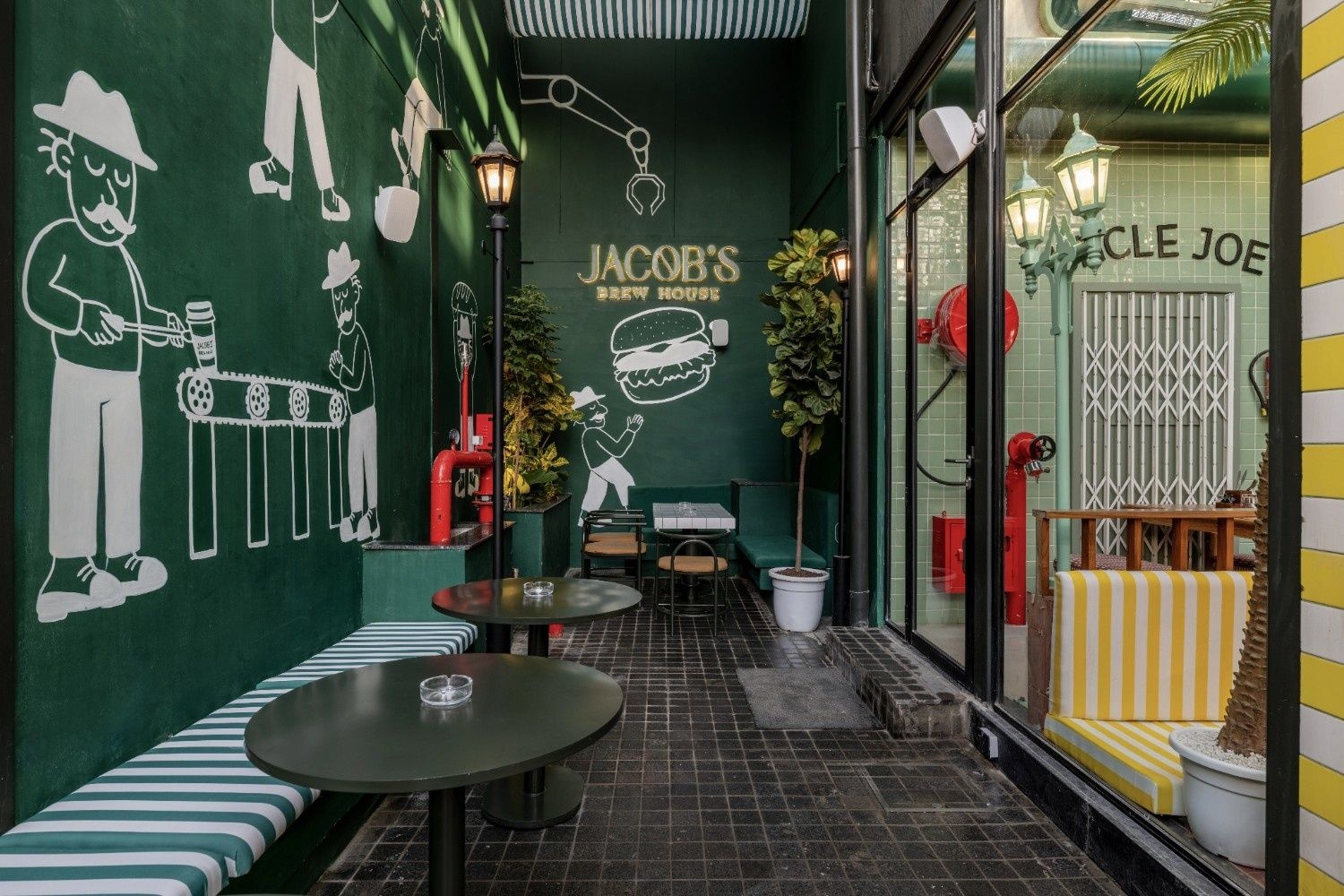
Squeezed between the newly opened Café Nola, Coffee Sutra, and Tao Asian Kitchen on the buzzing JLN Marg, Jacob’s is a big, bold, banging space conceived as a rustic garage that was chock-full at 3 pm on a random Wednesday I visited.
Launched by the guys behind The Swinton House—one of Jaipur’s most hip drink destinations—Jacob’s is as far apart from Swinton as any coffee house could be from a bar, yet both draw a part of their DNA from architect Samuel Swinton Jacob, who gave Jaipur some of its hallmark design elements. While The Swinton House retains the arches, columns, furnishings, and courtyards from the Indo-Saracenic style popularised by the architect in 1893, Jacob’s Brew House owes merely its name to him.
The rest is all founder Sagar Nagpal’s doing. While he is working on establishing a factory-unit-inspired eatery in Jalandhar and a medical clinic-lookalike restaurant in Chandigarh, he wanted to give Jaipur something that went beyond the boring-dressed-as-minimalist template. “My brief was simple—I wanted the place to look unlike any other, like somebody’s garage. No pastels, ample funk, and drenched in natural light.”
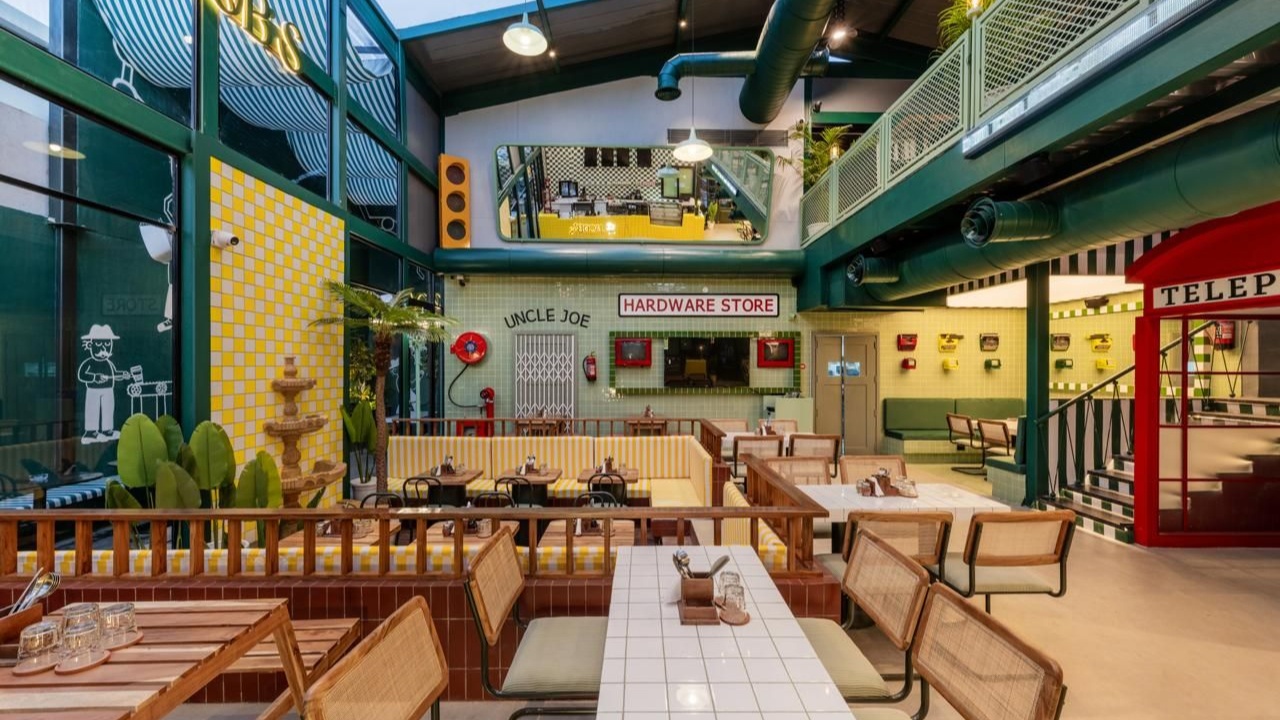
And so came about Jacob’s Brew House—a cafe themed on an early 2000s garage cum hardware store. The 150-cover space opens into a gallery seating flanked with greens and featuring scooter-esque seats, a hippy painting lit up with trippy LEDs, and a mirror emblazoned with “F*ck normal, I want magic”.
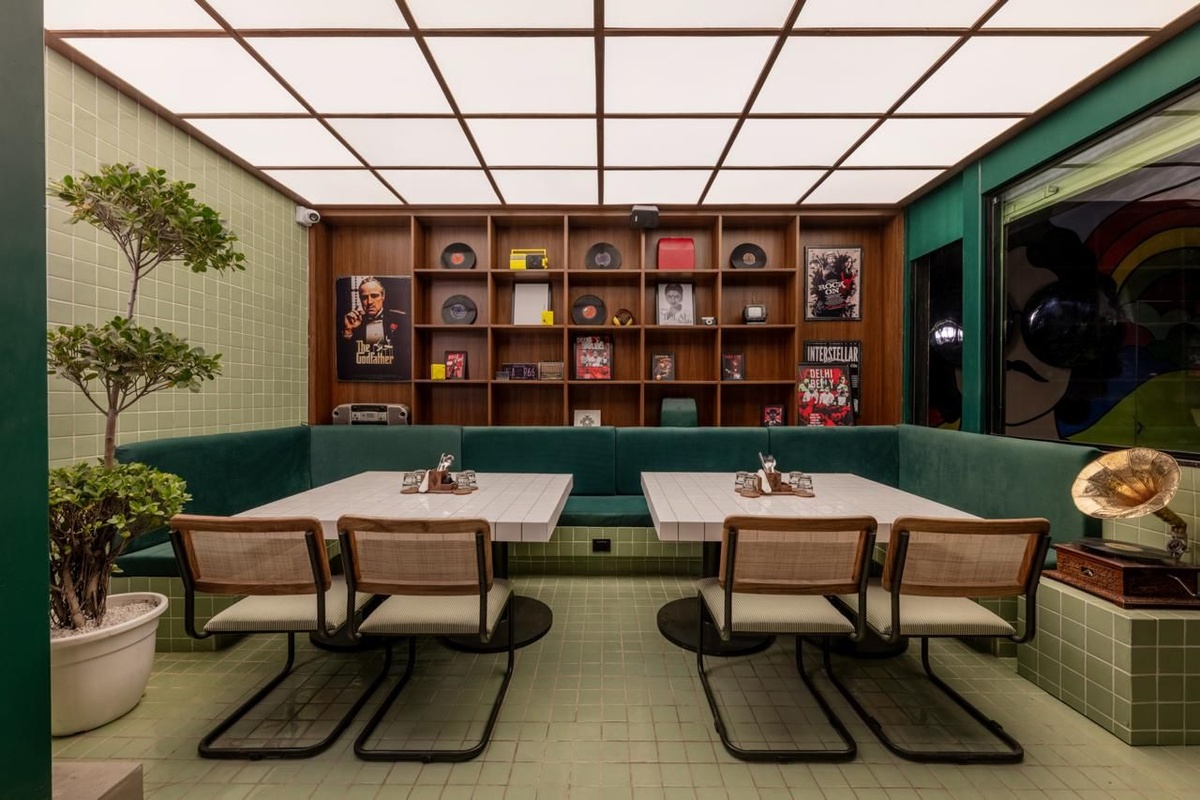
Step inside, and to your right is a wooden wall bedecked with vinyl records, gramophones, posters, cassettes, and radios that set the tone for the maximalist madness about to ensconce you. Digital signboards reading ‘Jacob’s Brew House’ on loop, sage-green ceramic tiles, colourful typewriters scouted from Delhi’s local bazaars, a mock-up jukebox from Ahmedabad, landlines, open ducts overhead, a huge convex mirror, and tiny TV sets screwed into the walls lend the place a loud, lived-in character.