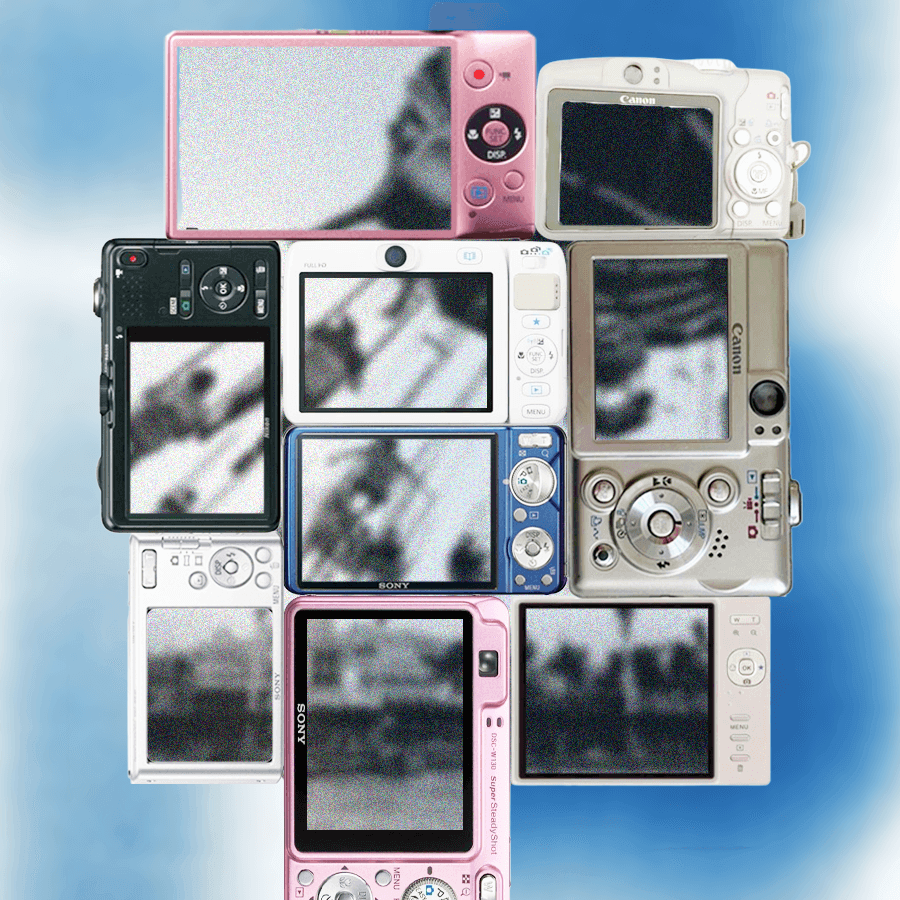





The internet is currently going through what can only be described as a Y2K tech relapse. People are carrying digital cameras again, willingly untangling wired earphones, and romanticising translucent gadgets like it is 1999. And nobody is falling for minimalism again. After years of silver laptops and identical black phones, even brands like Nothing are bringing back transparent tech with visible screws and translucent shells because apparently people miss the time when electronics looked fun enough to be mistaken for toys.
Growing up, tech felt fun. Back then, Paris Hilton carried bedazzled flip phones dripping with charms. Nintendo DSes came in translucent pinks and purples that looked like melted candy. MP3 players arrived in glossy colours. Half of us spent our childhoods sticking questionable stickers all over family laptops in an attempt to make them look cooler. They were chunky, colourful, mildly impractical, and looked like they belonged in the same universe as Elle Woods’s iconic orange iMac from Legally Blonde, which, honestly, shaped an entire generation’s taste in tech.
Somewhere in the middle of this nostalgia-fuelled tech revival sits cyberdecking, which is basically the internet’s coolest anti-AI rebellion right now. Instead of buying another identical grey gadget from a tech giant, people are building tiny custom computers out of clutches, compact mirrors, and random objects that spark joy. Women, especially, seem to be leading the movement, turning cyberdecks into chaotic little art projects with charms, visible wires, miniature keyboards, and cases that look straight out of Totally Spies!. One NYC-based creator built a cyberdeck inside a pearly mermaid purse, while another turned a Dunkin’ Donuts box into a tiny gaming device.
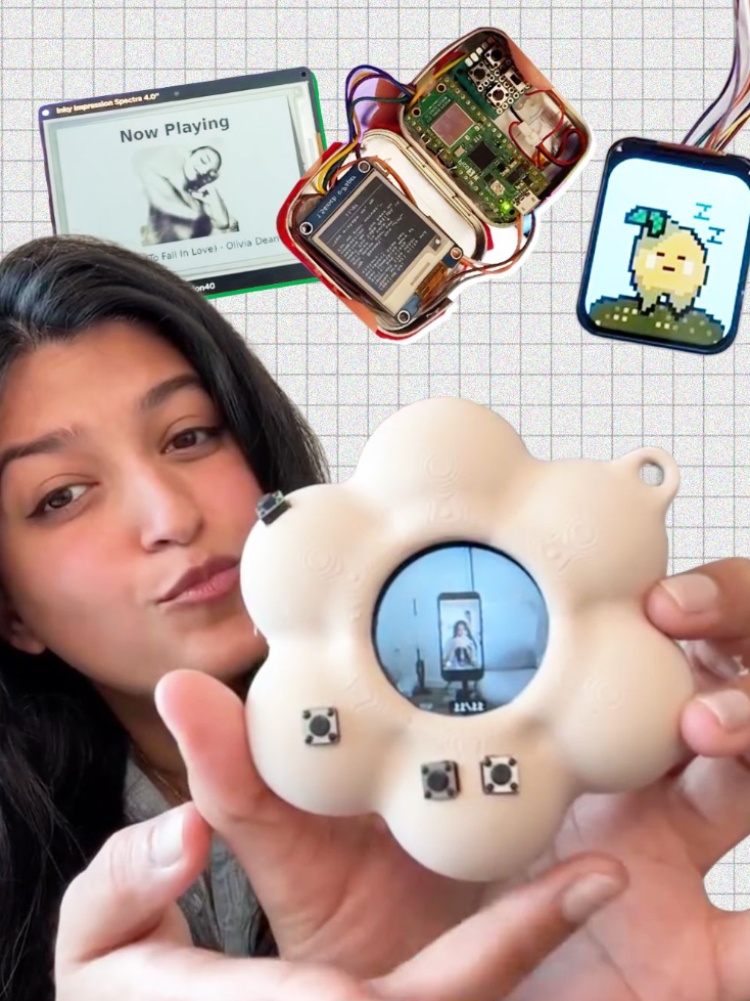
One of the people making cyberdecking look impossibly cool right now is Trushitha Narla. The 30-year-old Hyderabad-born creator, who goes by Tru Narla online, is based in New York and has over 375k followers on Instagram. Through her feed you know that she builds tiny gadgets that somehow feel futuristic and nostalgic at the same time. I first came across Narla because of a Tamagotchi-inspired device she built for her plant. The gadget monitors soil moisture levels while a tiny animated character dances around on the screen.
Scroll further down her page and things get even more delightful. There is a flower-shaped digital camera keychain inspired by old digicams. An MP3 player built inside a little metal box that looks exactly like the kind of gadget someone from iCarly would dramatically pull in a scene. “I’ll literally see something and be like, wait, can I put a screen in that?” Narla says, laughing. Her gadgets feel wonderfully whimsical in a way modern tech rarely does anymore, which honestly tracks because Pinterest already predicted 2026 would be the year maximalism and playful design take over again. None of these look like products that should logically exist, and yet every single time one appears on screen my immediate reaction is, unfortunately, the same: I need this immediately.
Watching Narla build things scratches the same part of the brain that DIY renovation videos or Lego-building videos do. There is something deeply satisfying about watching someone casually create objects that previously existed only inside their imagination. When we finally get on a Zoom call after weeks of trying to coordinate schedules, she is in the middle of moving into a new apartment in New York while simultaneously preparing for a trip to China to explore manufacturing possibilities for some of her projects. “I’m super hyped,” she says about the trip, which feels fitting because after spending five minutes on her page it becomes obvious that the internet does not just want to watch Narla build these gadgets anymore. People want to own them too.
Her page may now look like a futuristic arts-and-crafts laboratory, but her path into cyberdecking began in a much more familiar place: corporate burnout. After studying computer science at Brown University, she worked as a software engineer, which included a stint at Discord. Older videos on her page feature funny skits about office culture, awkward meetings, and the deeply bizarre world of corporate productivity. “I hated working in tech,” she tells me, “I wanted to do my own thing.”
Ironically, leaving corporate life did not immediately make things easier. “When I first left, it was bad. I was depressed all the time,” she admits. For a while, she struggled to figure out what exactly she wanted to create until she started experimenting with electronics sometime last year. “I started learning electronics and stuff and then I really loved it,” she says. “Now I want to eventually launch a hardware company.”
Interestingly, the thing that pushed her into cyberdecking was not some grand tech vision. It was journaling. Narla had been trying to follow Julia Cameron’s The Artist’s Way, which encourages people to write “morning pages” daily, but handwriting made her hand cramp badly. She wanted something portable and distraction-free where she could type instead. “I wanted to build basically like a journal thing that I can take everywhere,” she says. That one project slowly spiralled into an entire universe of tiny gadgets.
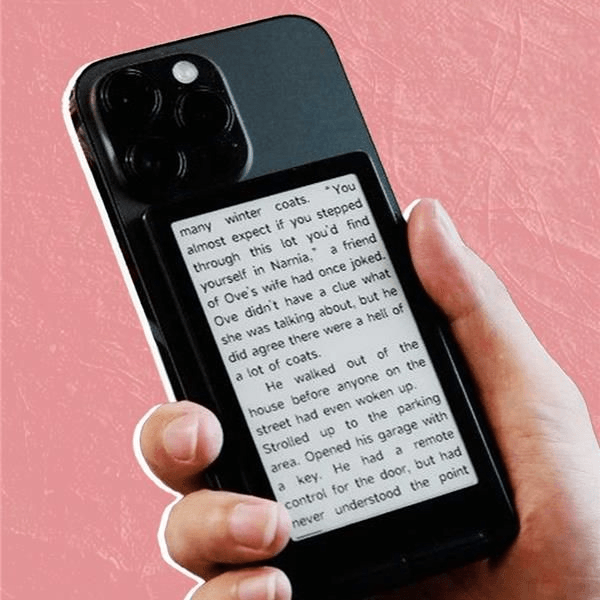
From there, Narla’s projects started getting increasingly more ambitious—and wonderfully strange. She built a tiny pocket Kindle hidden inside an Altoids tin because she thought “it’d be cute if it was like a little book”. She made a plant Tamagotchi because she wanted technology to feel more playful. Then came miniature MP3 players, experimental devices, and even a talking Build-A-Bear billboard that features her fiancé’s voice.
The learning process itself sounds mildly terrifying. Her first major project took over 100 hours because she had to teach herself soldering, coding, wiring, and 3D modelling almost entirely through YouTube tutorials, Googling things obsessively, and messaging friends what she describes as “literally the stupidest questions”. “Even now some things don’t work and I’m like, I don’t know what to do,” she says.
Personally, I found this entire world deeply intimidating because I abandoned STEM at the earliest opportunity possible. Before speaking to Narla, I spent an embarrassing amount of time trying to understand cyberdecking before realising I genuinely do not know my Raspberry Pi from my motherboard. Meanwhile, Narla casually builds functioning miniature computers in the same way other people crochet scarves.
Thankfully, she insists the barrier to entry is lower than people assume. “I don’t think you need a super strong STEM background,” she says. Much of her own learning came through experimentation. “It was just watching videos, talking to people, Googling stuff online,” she explains. Her relationship with technology actually began long before cyberdecking entered the picture.
Growing up, she spent hours playing Pokémon, Nintendogs, and Call of Duty zombies with friends, while her parents, both from technical backgrounds, nudged her toward STEM even though she initially wanted to pursue art. “I made this really elaborate HTML website with all my drawings for a Microsoft competition and ended up winning an Xbox 360,” she shares, laughing. “That’s when I realised I could put art into computer science.” That philosophy now sits at the centre of everything Narla creates.
“I sometimes wish I never was a content creator,” she admits. “Virality is very up, down, up, down, and that is so bad for someone’s brain, because I’m always expecting something to hit and sometimes it just doesn’t.” Still, content creation gave her the freedom to move away from corporate tech and build something of her own, even if she eventually wants that “something” to exist beyond videos and sponsorships. “My goal with the hardware company is to stop doing sponsorships and make money in that,” she says. “Or if I do sponsorships, it’s stuff that I actually care about.”
Maybe that is why Narla’s audience feels so broad. Under her videos, hardcore electronics enthusiasts discuss processors and wiring, while those who have never touched a soldering iron suddenly want to build tiny computers and digital journals of their own. At a time when everyone is trying to pick up hobbies and reconnect with their nerdy obsessions again, cyberdecking feels perfectly timed. Silicon Valley may still be busy pushing AI-everything, but Narla is building tiny whimsical computers inside breath-mint tins instead. Forget Book Girl Summer. This might just be Tech Girl Summer.