



Entertainment05 Jan 202610 MIN

How Harmanpreet Kaur gave us the moon landing of women’s cricket in India

Ahead of the Women’s Premier League, the formidable captain who steered the Indian women’s cricket team to their first World Cup victory discusses fitness (and cheat meals), female solidarity, and the value of tears

Image

Photographs by Bikramjit Bose. Styling by Samar Rajput

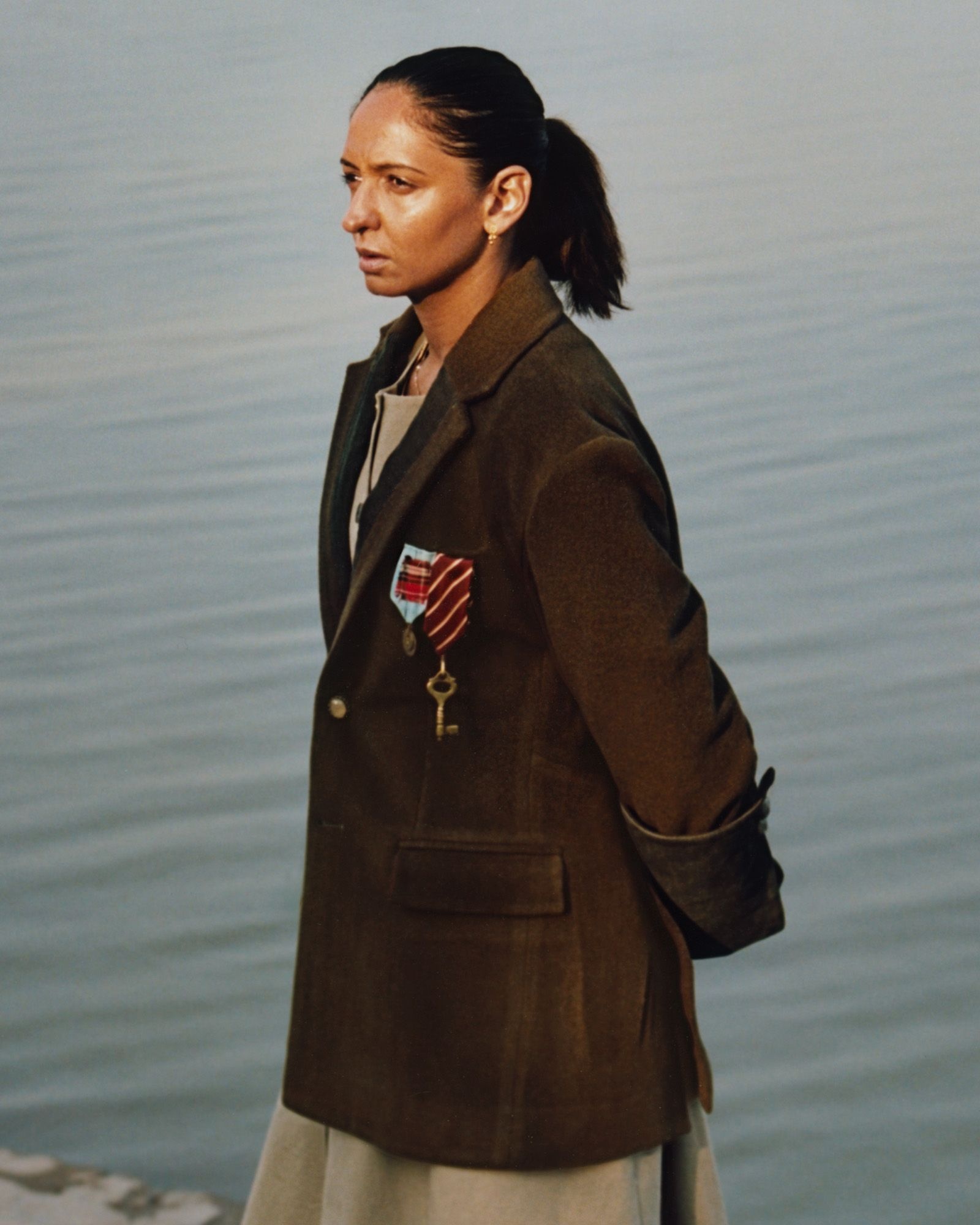
Winter settles over Chandigarh like an empress reclaiming her kingdom. Le Corbusier-style homes warm up to the sizzle and hiss of fireplaces even as the romance of sarson and makki is rekindled. Kids in hoodies push scooters in kachnaar-pink public parks. Meanwhile, the air in a hotel suite is thick with anticipation. All await Harmanpreet Kaur, reigning empress of world cricket and pride of Punjab.

When she finally walks into the Radisson with best friend and manager Nupurr Kashyap, the security stationed outside, Harmanpreet looks serious, almost severe, silencing a room noisy with caffeinated talk just a moment earlier. I bravely present my battered copy of The Laws of Cricket; she has, after all, rewritten the rules of what can no longer be called just a “gentleman’s game”.

“Where’s this from?” she asks, twinkly eyed. 
“Lord’s,” I reply. 
“You can have it if you like,” I add, willing to offer my entire library if it pleases the kaptaan. 
“No, no,” she smiles, signing the inner cover.

What played out right after midnight on November 2, 2025, can never be fully explained. 

The World Cup-winning moment. It felt like the moon landing of women’s cricket in India, if you’re looking for scale. A comprehensive shattering of the grass ceiling, if you’re game for a pun. It’s noteworthy that Central contracts were awarded to women cricketers only in 2015, and the Women’s Premier League (WPL) came into being only in 2023. Even now, money still flows largely into the men’s game. I remember Harmanpreet’s famous words after winning the first-ever World Cup for women’s cricket in India: “Without [the trophy], the revolution, the change we want won’t come.”

The impact the win has had on the collective psyche of a male-dominated nation is incredible. And Harmanpreet Kaur, known for her fearless brand of cricket, has played a key role in this gradual, and then sudden, shift in attitudes towards women in sports. Her match-winning 171* off 115 balls in the semi-final of the 2017 World Cup against Australia forced the nation to take notice. In the WPL, she led the Mumbai Indians to victory in 2023 and 2025. And in the 2025 World Cup, her team went through three consecutive defeats in the league stage only to come back with a thumping semi-final win against Australia; she played a captain’s knock of 89 off 88 balls in that game. In the final, it was only fitting that Harmanpreet would seal the victory against South Africa with a catch at midnight announcing the revolution.

I cry a lot and very easily. I tell the girls they must do the same whenever they need to. If you don’t express your emotions, they gather inside and create trouble. You need to let it out and move on”

Yet sitting across from me is an unassuming athlete going through the rituals of a photo shoot with stoicism. “Bas karo, bhaiyya,” she pleads as an eyelash curler does its thing. “Let the tear fall, no problem,” HMU pro Mitesh Rajani says in his endearingly flamboyant way. I ask Harry di—as her team calls her—about tears; there were many on display during the tournament. “I cry a lot and very easily. I tell the girls they must do the same whenever they need to. If you don’t express your emotions, they gather inside and create trouble. You need to let it out and move on.”

Not what ambitious women are usually advised to do in public. Was she a rulebreaker right from her childhood days in Punjab’s Moga district?

“Growing up, I was never stopped from doing what I wanted. I played cricket constantly with the boys in the gully. Hearing other girls complain about restrictions placed on them made me realise that my upbringing was not the norm,” she says, lauding her supportive parents. It couldn’t have been easy. Her father, Harmandar Singh Bhullar, worked as a clerk in the district court; the family’s modest income was supplemented by farming activities. Harmanpreet’s friend Hartaj’s older brother, Yadwinder Singh Sodhi, was her early coach. I can’t resist asking if her backlift was glorious even in those days. “Yes, I always did that well. But I have had to work on my cover drive and other offside shots,” she concedes.

For a girl in rural India, with two younger siblings to look out for, escaping the pressures of societal expectations is rare. But Harmanpreet assures me there was no stress on that front. “In fact, even my mother [Satwinder Kaur] learned to cook properly late in life. And my dadi always wanted me to join the police force.” Harmanpreet currently enjoys the prestigious title of DSP in the Punjab Police, earned via the sports route. But when she moved to Mumbai in 2014, it was as a junior employee of Indian Railways, championed by former India captain Diana Edulji.
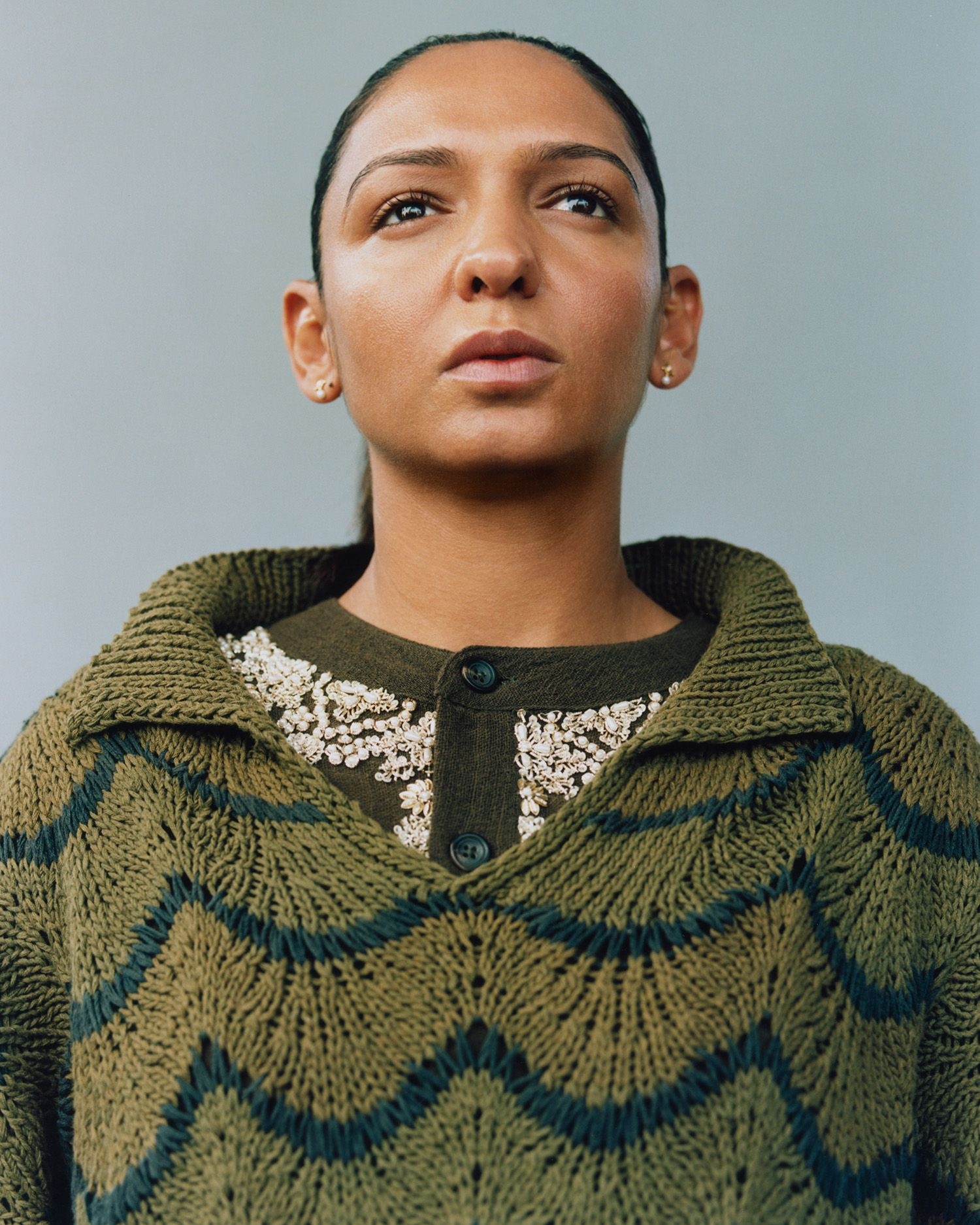
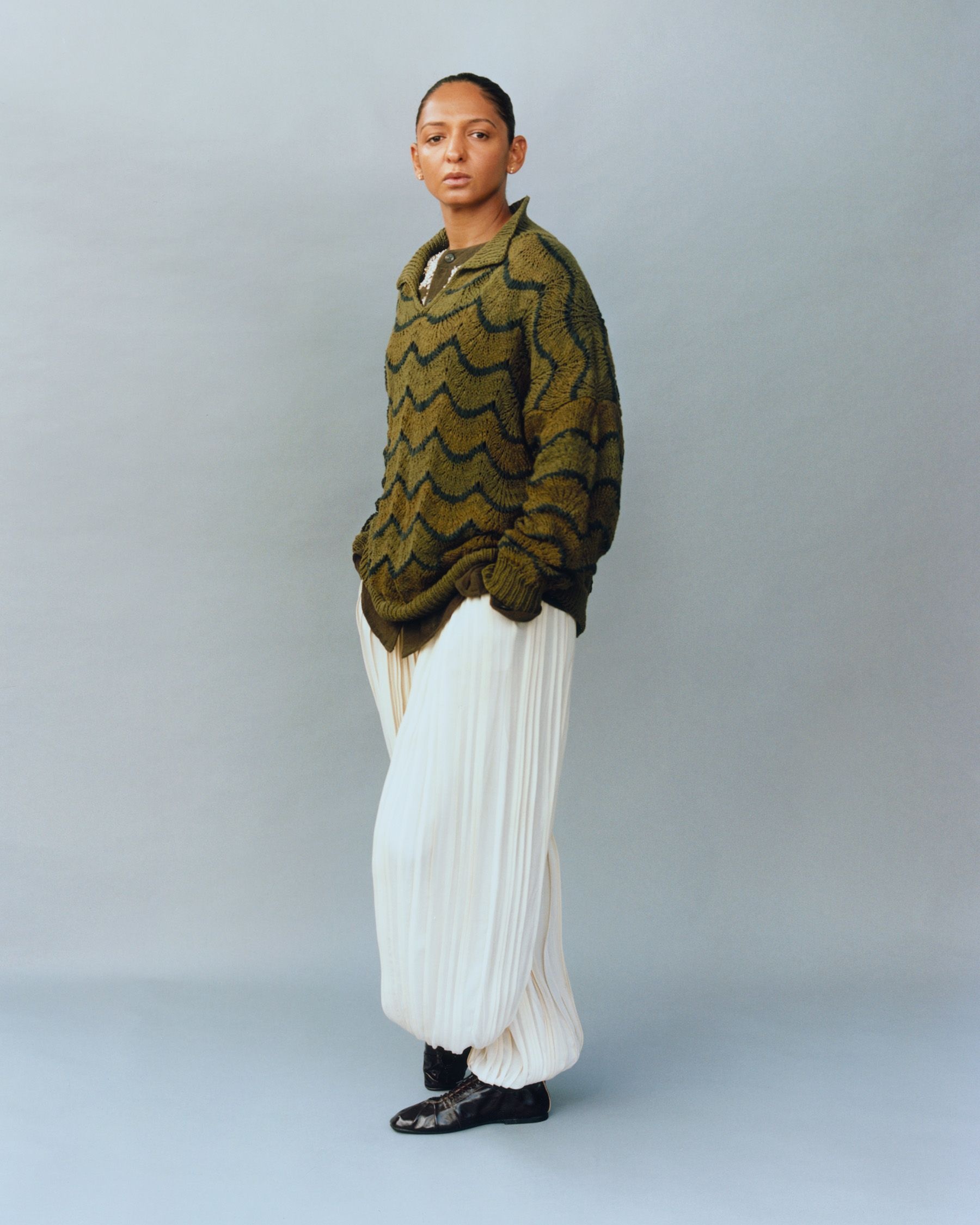
Those punishing years of juggling office responsibilities, train commutes, and practice sessions are now in the distant past. Since the World Cup win, Harmanpreet has been deluged with media engagements and brand assignments. She’s made a convocation address (“I was very nervous!” she confesses) and been a star participant at Barkha Dutt’s ‘We the Women’ festival. She was appointed Punjab National Bank’s first female brand ambassador and promotes Omaxe New Chandigarh, a luxury real-estate project where she now owns a home. Her soaring cultural cachet and three-million-strong social media reach only hint at the surge in women’s sports, driven by the team’s brilliant performance and the fans’ growing appetite and viewership.

“There have been no Sundays. But Harmanpreet’s not one to complain. She speaks to herself in the mirror, boosting her own confidence. She does cry it out when things are hard, but positivity comes naturally to her. More importantly, she doesn’t think her problems are exceptional. They’re part of everyone’s life,” explains Kashyap, who is also the founder of a fitness centre in Patiala and manager for Harmanpreet as well as cricketer Harleen Deol.

I ask the self-motivated Harman if she submits to a higher force, and she says yes, she has faith in God and prayer. No platitudes on offer; just old-school values in practice. Sample this: an assistant bends forward to moisturise Harmanpreet’s feet for a shot. Harmanpreet stops her immediately, settling on the ground to rub the lotion herself with endearing thoroughness. On such tiny gestures does the legend of greatness rest.

Harmanpreet and Kashyap are an impressive unit, and the success of this talent-manager partnership is evident in how it goes beyond their set roles into a bond of female solidarity. “I keep to myself. I have only two close friends. One I’ve had from my school days—[Punjab cricketer] Parveen Khan. The other is Nupurr, for the past many years.”

One of the most uplifting images following the 2025 World Cup final was of the joyous team embracing their predecessors—Anjum Chopra, Jhulan Goswami, and Mithali Raj. “I’ve spent most of my life out there in the middle, waiting for a historic result for my country. To walk out now, with the World Cup in my hands, and place it on the plinth before it was to be lifted by Harman, was an honour I’m still struggling to put into words. Pride doesn’t quite cover it. Gratitude comes close, but even that feels insufficient,” recalls Raj of the victory.

But transitions are never easy, and there was a time when Harmanpreet took over a team once helmed by Raj. “You need to win the trust of your teammates, and we got there in time. Now we all keep pushing each other to succeed. When someone is going through a rough patch, we make a special effort to make them feel better.” It’s how she’s built this sort of sporting sisterhood. “The atmosphere in the dressing room is good. We could imagine ourselves winning the trophy,” she says. Kashyap identifies this trait as “manifestation”.

So much is made of the difference in cricketing cultures across the world, and Harmanpreet has had a ringside seat. She reminisces about the Women’s Big Bash League in Australia—in 2016, she became the first Indian woman cricketer to be invited to play for an international T20 franchise. “I was always a good runner, but their fitness drills were very different from what I was used to, so the coach initially put me in the slow cohort. Soon, I was doing the drills with ease and was promoted to the stronger cohort. When I returned home two months later, I was muscular. The girls in the [Indian] team now are used to such fitness routines.”

It’s chilly outdoors and Harmanpreet puts on an old-school cricket cardigan offered by the stylist. “I can’t wait to get back on the field to practice,” she tells me. But, like everyone else, I’m curious about what the skipper, known for her aggressive batting and strong leadership, is like off the field. By now, the story about Harmanpreet’s prescient father getting her an oversized shirt with the words ‘Good Batting’ printed on it the day she was born is well known. Between wardrobe changes, I ask Harmanpreet about her own fashion philosophy.

“It’s zero!” she laughs, but Kashyap does not allow the captain to get out for a duck. “She’s actually very happy shopping and wears the clothes she has just bought when she walks out of the store.”

“It’s better than storing unworn clothes in the cupboard for years!” Harmanpreet counters, bat firmly forward in defence.

Sportspersons’ diets are about as entertaining as the Wisden Cricketers’ Almanack, so we cut straight to Harman’s favourite cheat meal. “Chholey-bhature,” she declares. “I’m not fussy about food; I could eat anything. But I get obsessed with certain dishes and repeat those meals for days.”

I love the film 83; I must have seen it some seven or eight times. Kapil Dev motivating the boys during the 1983 World Cup was special. I’d never watched him play, but I Iearned a lot from the film

A question about her favourite movie leads us to another pioneering kaptaan who set the bar high. “I love the film 83; I must have seen it some seven or eight times. Kapil Dev motivating the boys during the 1983 World Cup was special. I’d never watched him play, but I Iearned a lot from the film. It was made with such love and effort. And ‘Lehra Do’ has become such an anthem.”

And what about TV shows? “I can watch thrillers in any language, but it makes me sad to see true-crime shows. I prefer fiction.” As far as music goes, the mood is always upbeat. “I like pop music, Punjabi and otherwise. I enjoy watching music videos on YouTube, even while working out. But I don’t think there’s a single song saved on my phone.”

Which brings us to the murky opinions constantly relayed to us by our insolent phones. When the team suffered a string of losses in the World Cup, the trolls were out viciously. “I had deleted Instagram,” Harmanpreet tells me with a wry smile. “And there is no talk of the outside world in the dressing room. We just focus on what we have to do together as a team. We used to be criticised for our fielding, for instance. But we changed that around during the World Cup. We back each other fully. When Renuka [Singh Thakur] comes in to bowl, the team expects a wicket. When Smriti [Mandhana] and I are batting together, the girls expect a big stand.”

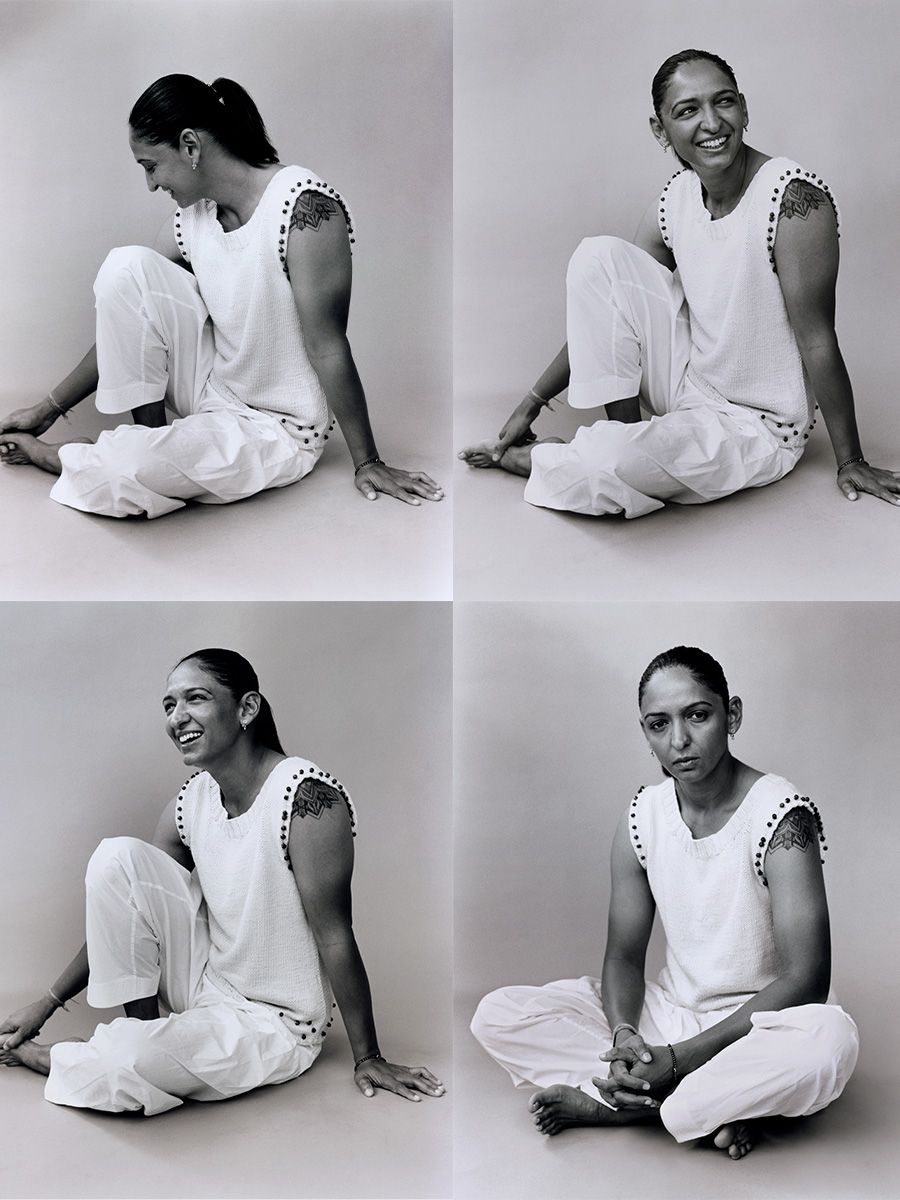
Between lens changes and touch-ups, Rajani, standing in the slips, lightens the mood. At one point, he breaks into a gidda, and Harmanpreet breaks into peals of nose-crinkling laughter.

Harmanpreet Kaur
Knitted tank top, Taarini Anand. Trousers, Rajesh Pratap Singh. Earrings, Amrapali Jewels

Now that the big, gleaming trophy has been won, fans have temporarily suspended any thoughts about the future. But for Harmanpreet, the road ahead is clear. “This is just the beginning. First, there’s the Women’s Premier League [starting January 9]. Then there’s the Women’s T20 World Cup in June-July 2026 [to be held in England],” she says.

With so much travel on her schedule, what is her idea of a vacation? “Anywhere there’s water! Like Goa—but I prefer south Goa.”

“She’s mostly experienced north Goa,” Kashyap interjects. There is a lively debate between the two on the subject. And then it’s time for the crew to head to Sukhna Lake, Chandigarh’s iconic water body, for the final shots of the day.

Harmanpreet arrives well after the crew, driving an SUV. She steps out of the car with Kashyap, but they’re not alone. Their team of two has now grown to four: Fluffy and Jelly, two furry Shih Tzus, trot out on their leashes. “Harmanpreet’s home was on the way here,” Kashyap tells me, “so we stopped to give the dogs their buttermilk. Then we decided to bring them along for a walk.”

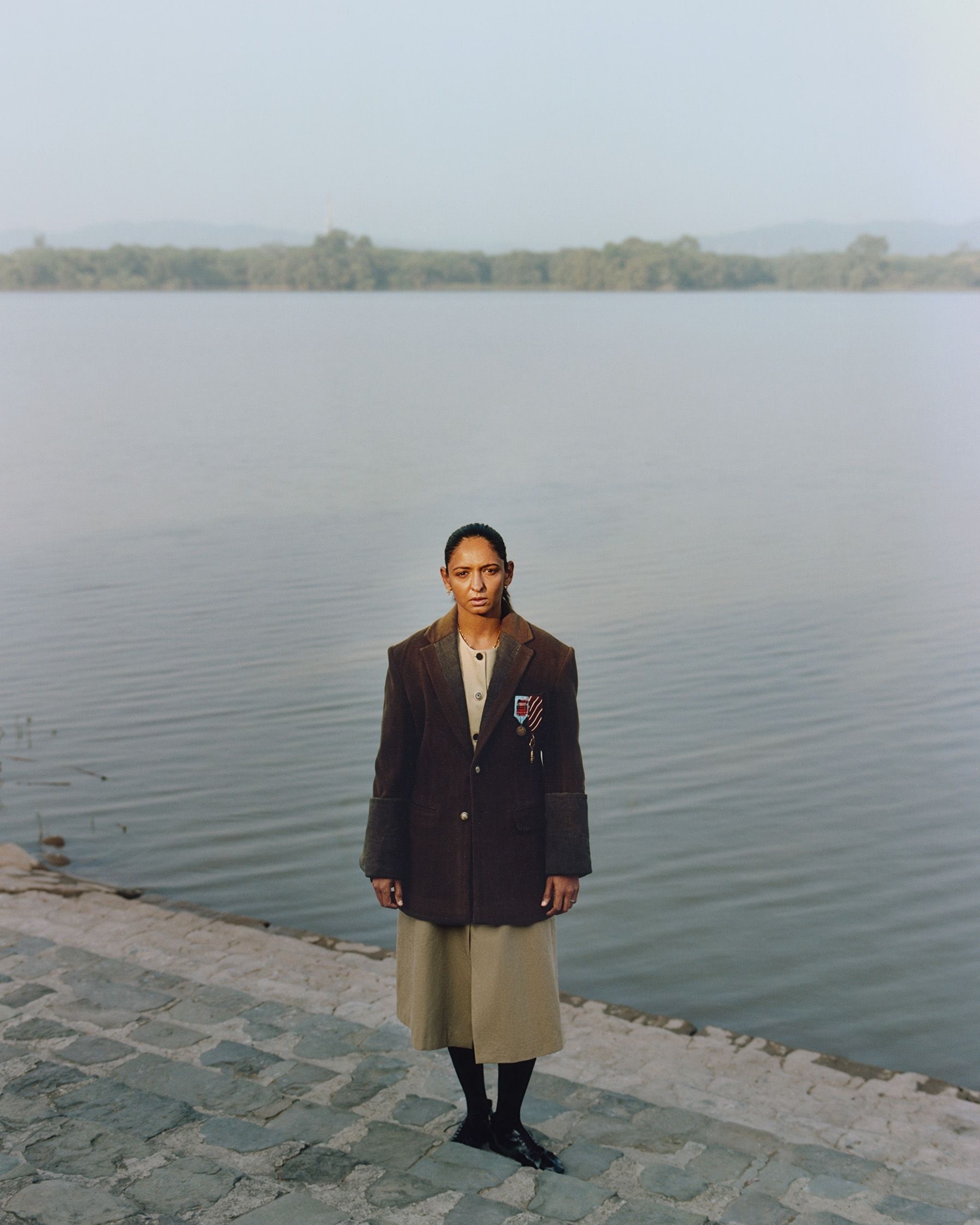
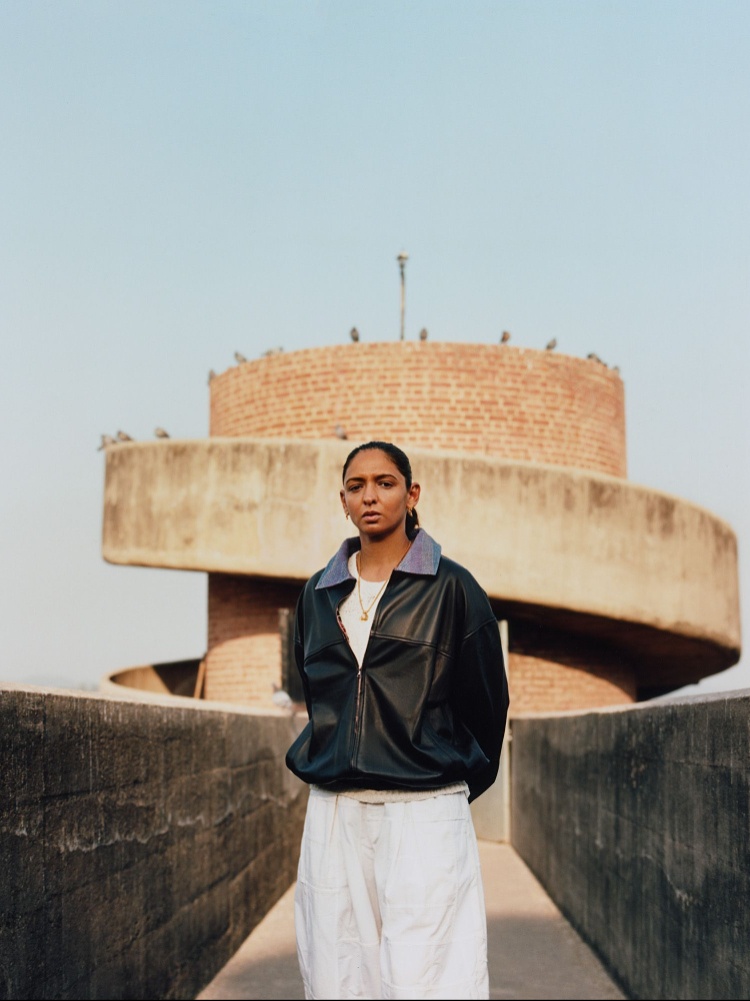
The lake is serene, except for when a lapwing or cormorant takes off or lands. Harmanpreet walks towards the modernist pump house designed by Pierre Jeanneret, cousin and collaborator of Le Corbusier, and accessed by a bridge. I watch the closing shot: Having ushered in a brave new era in women’s cricket, Harmanpreet’s feet, snug in spiffy sneakers, still seem firmly on the ground.

Editorial Direction: Megha Mahindru, Ridhima Sapre. Photography: Bikramjit Bose. Director: Gorkey Patwal. Stylist: Samar Rajput. Visual Direction: Jay Modi. Art Direction: Harry Iyer. Bookings Editor: Nikita Moses. Hair and Makeup: Mitesh Rajani. DOP: Harsh Pancham. Multimedia Designer: Mehak Jindal. Social Media Editor: Diya Parakh. Visual Editor: Ria Rawat. Styling Assistant: Aditya Singh (Style), Rishita Hindocha. (HMU) Production: Imran Khatri Production, Radhika Chemburkar.

The Nod Newsletter

We're making your inbox interesting. Enter your email to get our best reads and exclusive insights from our editors delivered directly to you.