Your no-fuss guide to the Indian art trail at Venice Biennale 2026
From Sumakshi Singh’s thread-built bungalow to Nalini Malani’s immersive worlds and Paresh Maity out in the gardens, here are the works by Indian artists that demand lingering at the art world’s biggest gathering
Fresh off the chaos of Milan Design Week, if you are still in the mood to keep the cultural marathon going, the 61st International Art Exhibition of La Biennale di Venezia is where everyone is headed next. It is part treasure hunt, part stamina test, and slightly overwhelming if you do not know where to begin. If you are tracking Indian artists, though, you are in luck this year, because they are showing up across the map and we’ve tracked the ones you just cannot miss.
Held at the Giardini and the Arsenale, along with other venues across the city, like the Piazzale del Cinema and Sala Giardino, the event will run from May 9 to 22, so there is plenty of time to plot your route and take it all in, even as off-site conversations around representation and geopolitics ripple through this year’s opening.
Start with the main exhibition In Minor Keys by the late Koyo Kouoh, where Himali Singh Soin (with David Soin Tappeser) and Sohrab Hura are part of the lineup, each presenting their work within the central show. Framed around the idea of the “minor key” in music, the exhibition looks at quieter, more introspective modes of expression.
Then there is the India pavilion itself, and just when you think you are done, the collateral circuit kicks in. From Nalini Malani’s immersive installation to Dayanita Singh’s archival deep dive, there is a lot to keep up with. Consider this your slightly opinionated cheat sheet so you can spend less time figuring things out and more time actually wandering into the good stuff.
National Pavilion of India
ADVERTISEMENT
Artwork by Asim Waqif
Artwork by Ranjani Shettar
Artwork by Alwar Balasubramaniam
Artwork by Sumakshi Singh
After a seven-year gap, India’s pavilion at the Venice Biennale taps into a feeling most of us know a little too well: Cities changing faster than we can keep up, neighbourhoods disappearing overnight, that one building you grew up around suddenly gone. Titled Geographies of Distance: Remembering Home and curated by Amin Jaffer, the show leans into this constant reshaping of space and memory, bringing together artists Sumakshi Singh, Alwar Balasubramaniam, Ranjani Shettar, Asim Waqif, and Skarma Sonam Tashi. The materials feel familiar right away. Thread, soil, bamboo, things that belong to everyday life but carry entire histories with them.
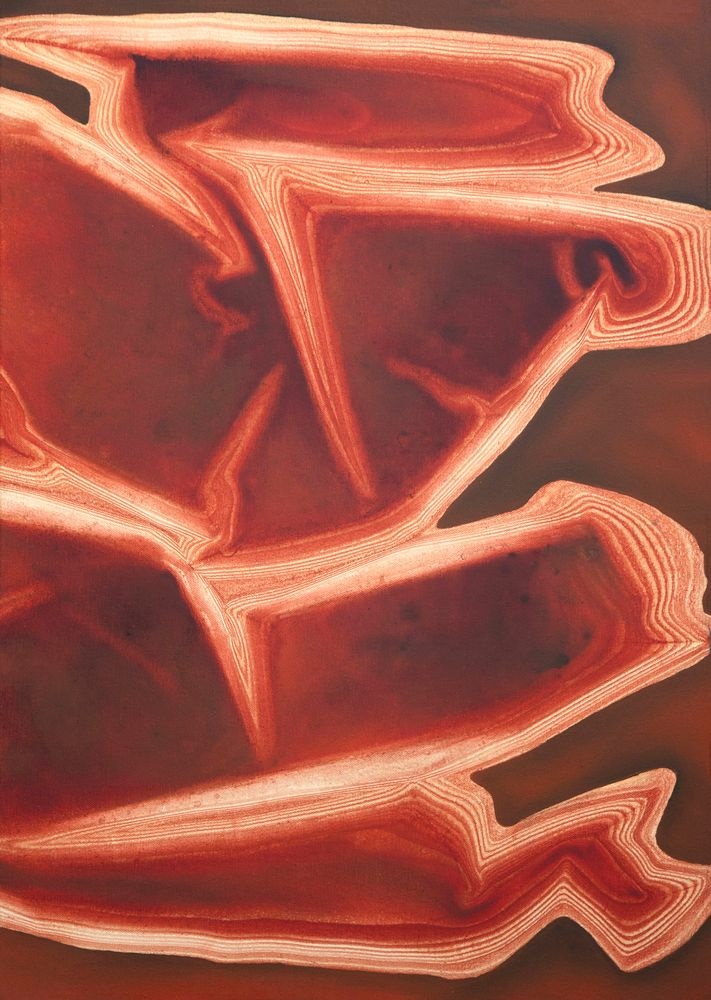
Then the details start pulling you in. Singh’s installation begins with her grandparents’ Delhi home, built in 1952 and later demolished, which she mapped obsessively before recreating it in fine white thread, so you end up walking through a memory that refuses to disappear. Balasubramaniam works with soil from his studio near Tirunelveli in Tamil Nadu, letting it crack into surfaces that look like maps or palm lines you instinctively try to read. Shettar suspends a dreamy installation overhead made of materials like cotton fabric, steel, and lacquer.
Waqif’s bamboo structures and Tashi’s Ladakh-inspired works bring it back to the present, where building, rebuilding, and holding on all happen at once. Nothing here feels fixed, which is kind of the point. You walk in thinking you will do a quick round and leave, and then find yourself lingering, wondering about the version of “home” you are still trying to hold on to.
Alongside these artworks, there is also a layer of programming tied to the pavilion, presented with the Serendipity Arts, which spills into the city through performances like Many Waters Have Flown and Keeping Time, featuring artists such as Bickram Ghosh.
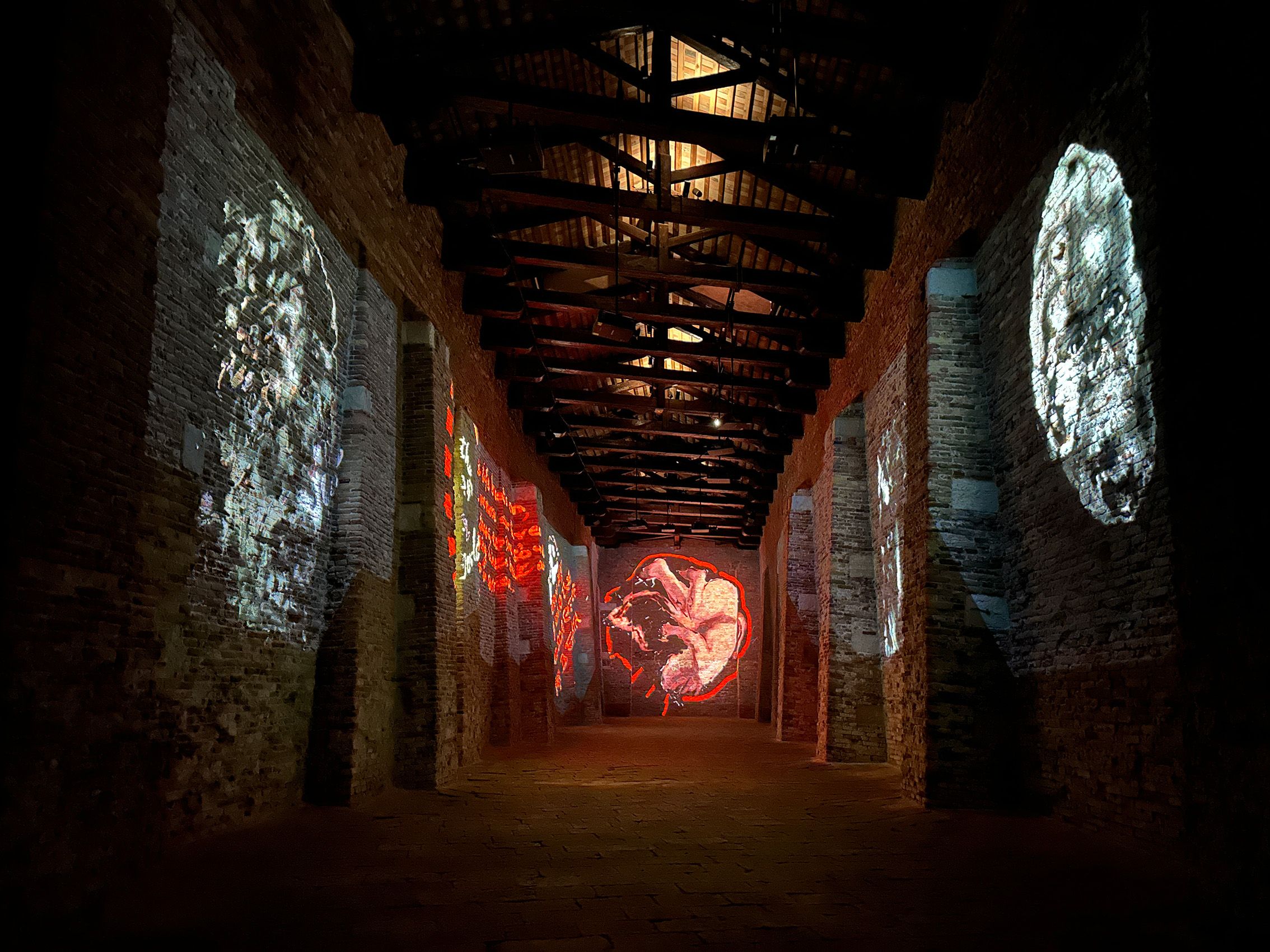
You know those slightly unhinged Greek myths you vaguely remember from school, full of revenge, gods, and very questionable decisions? Artist Nalini Malani takes that energy and drops you right into it with ‘Of Woman Born’. Presented by the Kiran Nadar Museum of Art at the Magazzini del Sale as part of the Venice Biennale collateral lineup, the work builds on her Animation Chamber and turns the space into a constantly shifting, slightly overwhelming environment. It pulls from the Greek myth of Orestes, who murders his mother and still escapes punishment, and then connects that unsettling logic to the present, where women are often left dealing with the consequences of violence and conflict.
The space does not sit still for a second. Thousands of hand-drawn images flicker across the walls, voices overlap, and figures appear and vanish before you can fully register them. You are turning your head, trying to follow one scene before another interrupts. It feels intense, a little disorienting, and weirdly addictive to stay in.
Dayanita Singh’s ‘Archivio’
ADVERTISEMENT
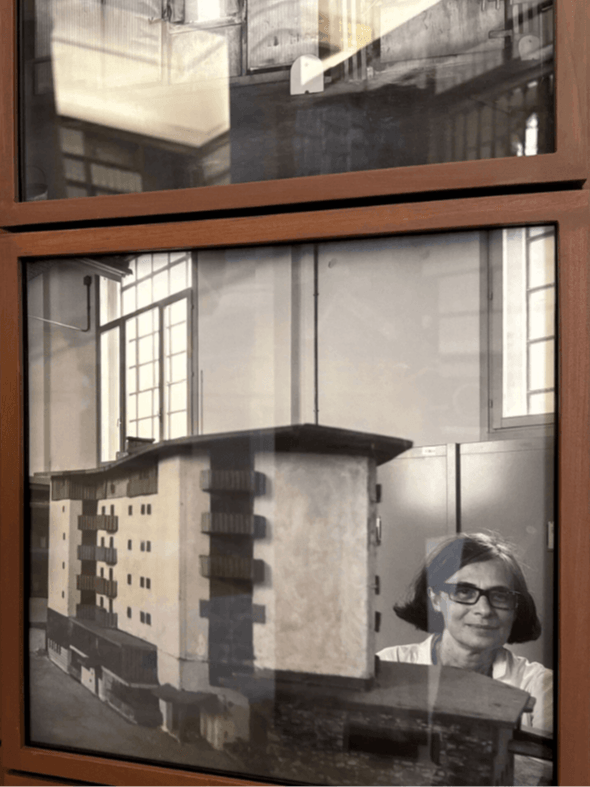
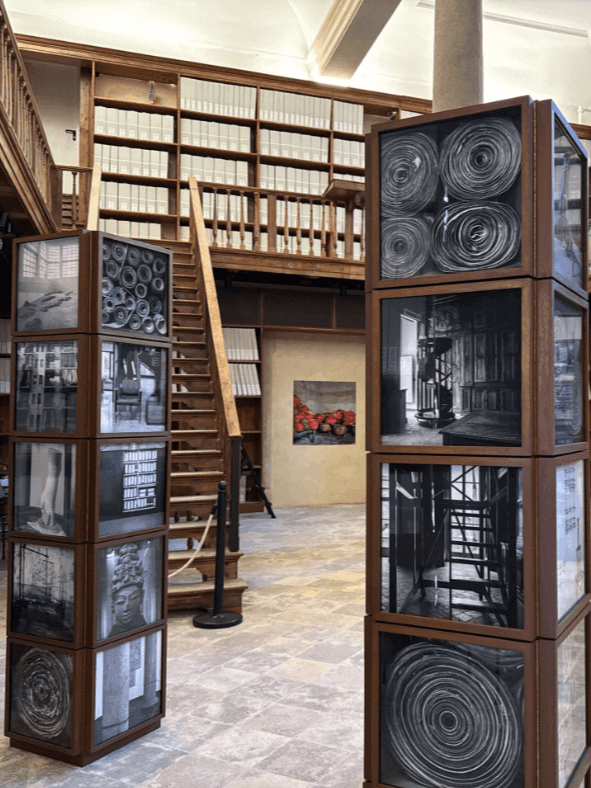
Think of your most overachieving LinkedIn network. Now make it poetic and actually meaningful. That is photographer Dayanita Singh’s Archivio. Hosted at the Archivio di Stato di Venezia, which is opening its doors as an exhibition venue for the first time, the show traces Singh’s 25-year relationship with Italy through around 300 photographs, many centred on institutional archives but also on the people who led her to them.
Built on what she calls a “friendship economy”, the exhibition unfolds through wooden movable structures that keep shifting like the network behind them. Part archive, part living map of connections, here networks unfold as friends introduce friends, and suddenly you’re inside an entire world that would not exist without that chain.
Pooja Singhal’s ‘From India, to Venice’
ADVERTISEMENT
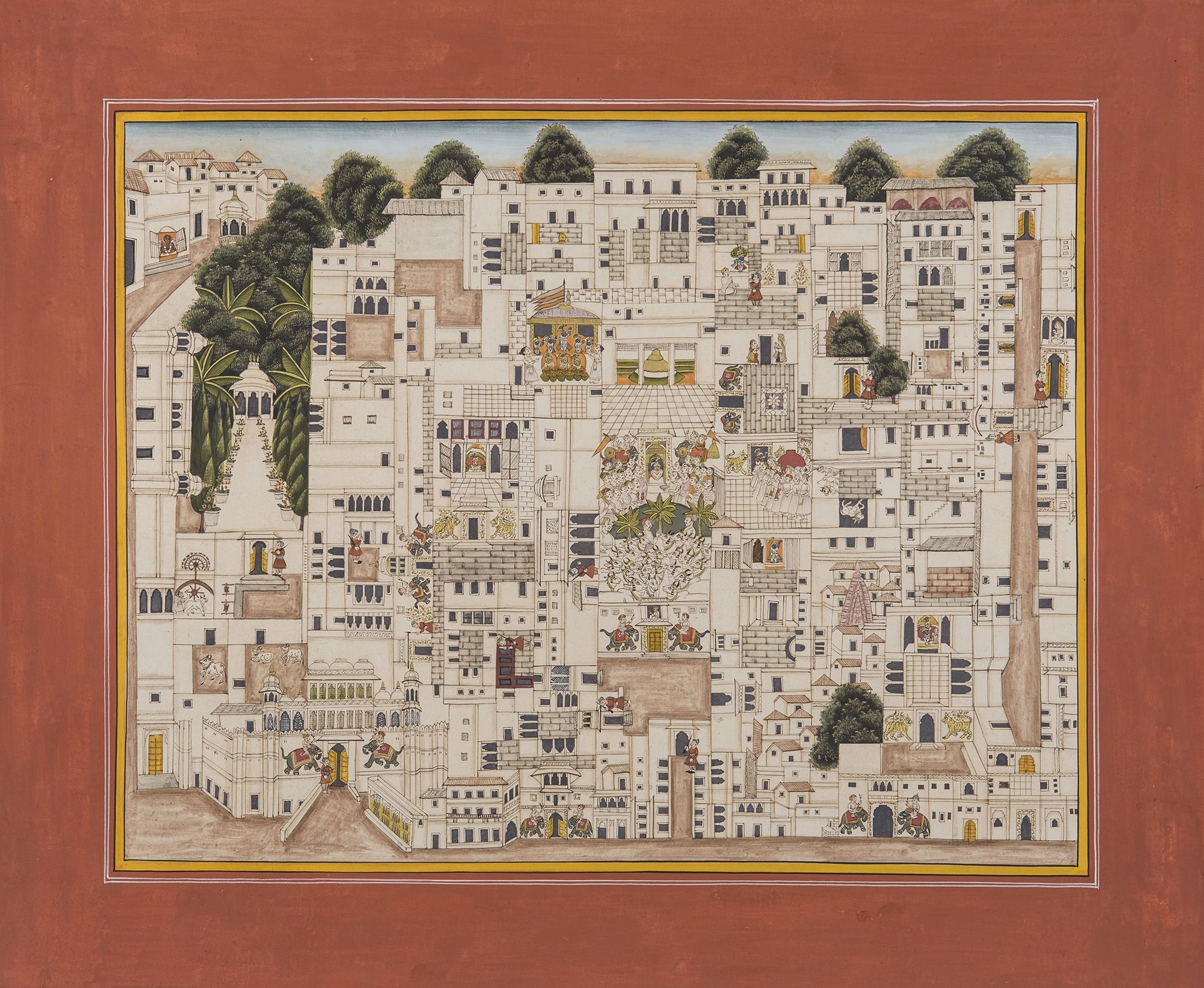
Haveli of Shrinathji, Nathdwara
At Palazzio Barbaro, 'From India, to Venice', a collateral exhibition of the Venice Biennale, takes the four-century-old pichwai tradition out of Nathdwara temples and drops it straight into the lagoons of Venice
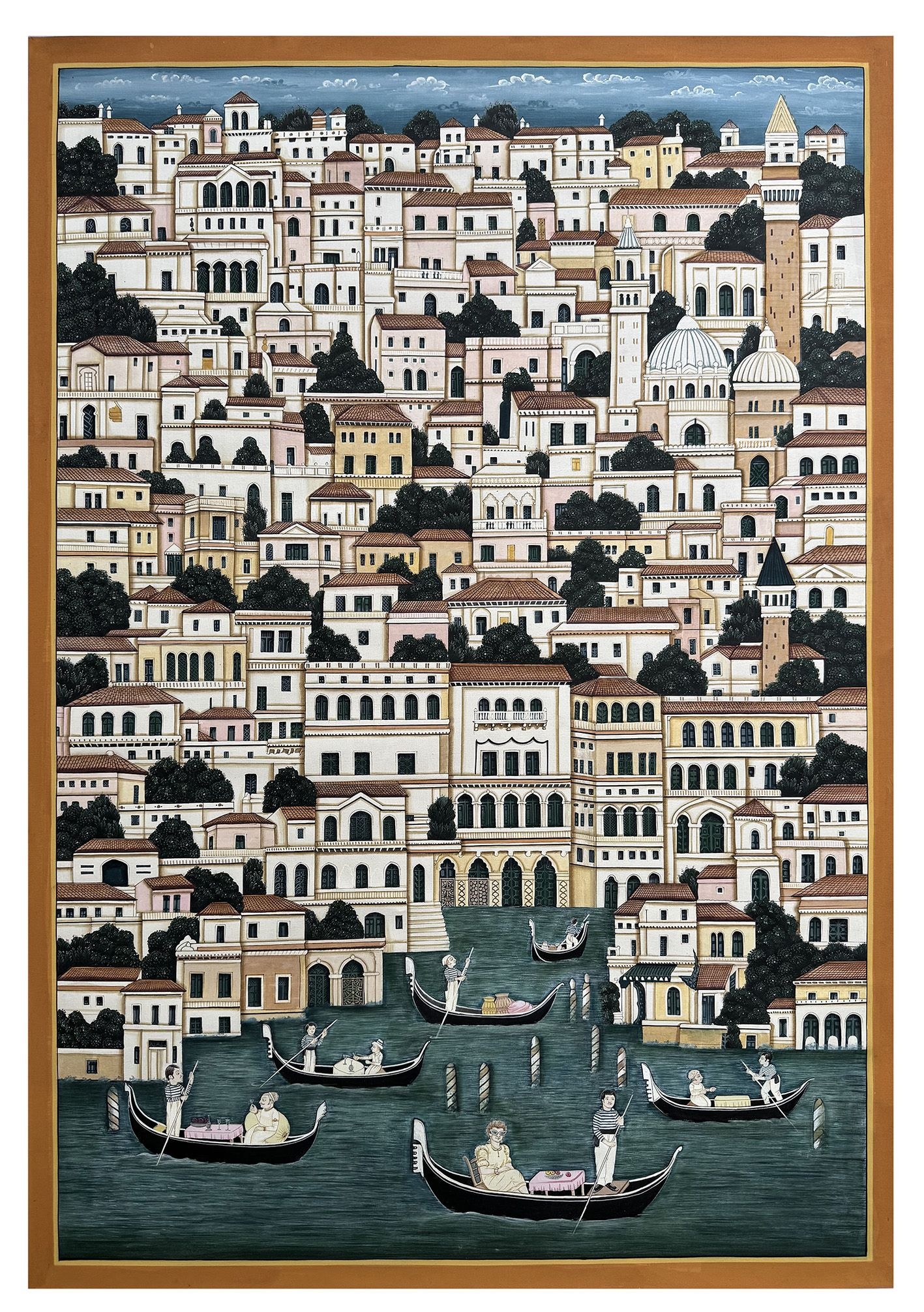
If you thought Venice could not get any more theatrical, Pooja Singhal, the founder of atelier Pichvai Tradition and Beyond, has other plans. At Palazzo Barbaro, From India, to Venice, a collateral of the Venice Biennale, takes the four-century-old pichwai tradition out of Nathdwara temples and drops it straight into the lagoon, turning the city into something you have not quite seen before.
The standout is a sprawling temple-map-style Venice, where canals and campaniles transform into intricate miniature compositions, with gondolas drifting through like they were always meant to be there. But there is more to linger on, from sharply detailed khakha drawings that reveal the discipline behind the craft to a lush textile inspired by Venetian Carnival. And then, just when you think you have the hang of it, Peggy Guggenheim shows up in a gondola like a Rajput royal. It is layered, playful, and just the right amount of unexpected.
Amar Kanwar at Palazzo Grassi
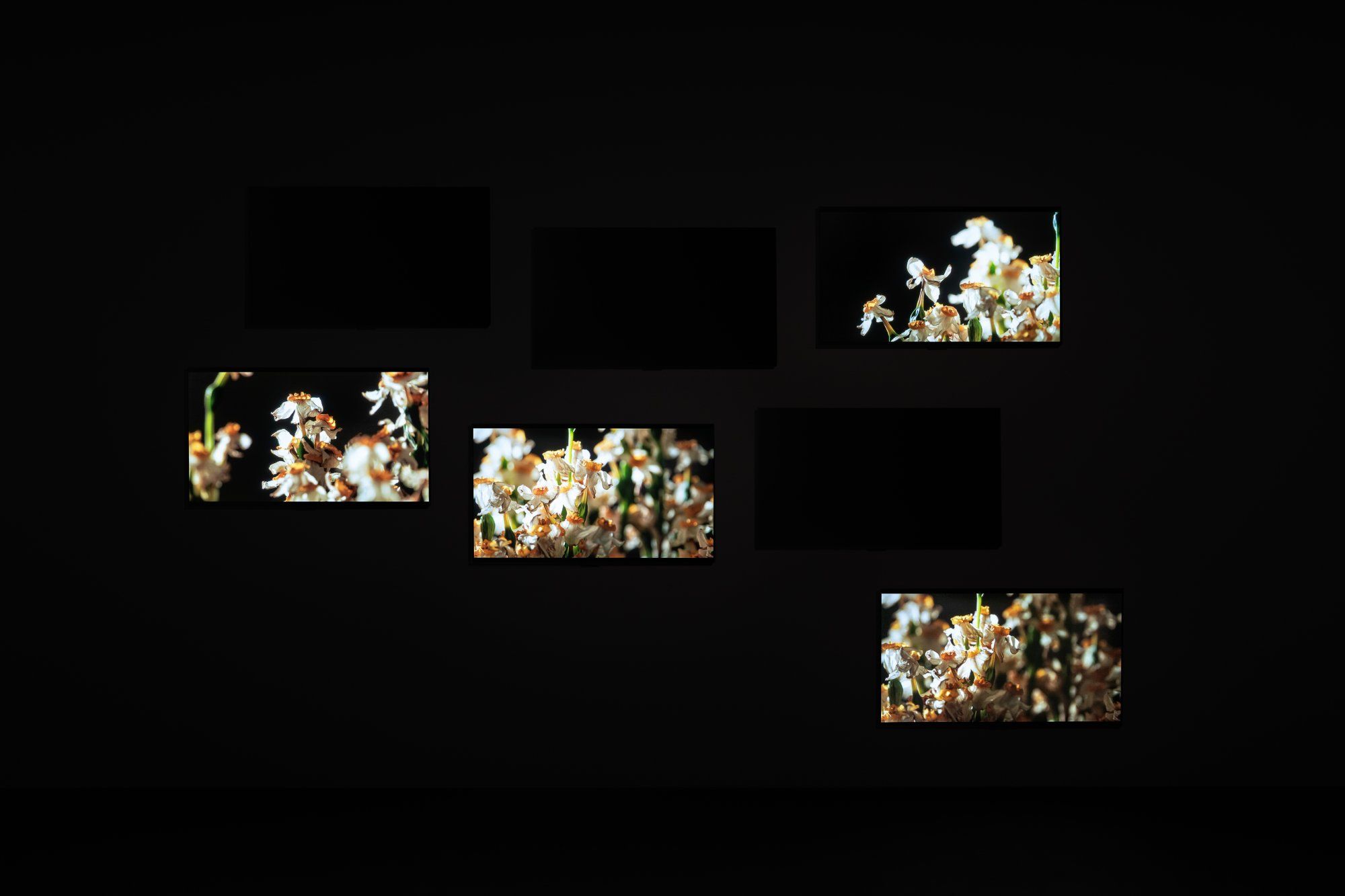
If you are ready to slow the pace, Indian filmmaker and artist Amar Kanwar, whose works often explore the politics of power, violence, and justice, will be exhibiting his works at Palazzo Grassi. Presented by the Pinault Collection, the exhibition is split into two very distinct experiences on the second floor. In one set of rooms, The Torn First Pages (2004–2008) unfolds through printed documents, books, and video. It draws from Kanwar’s research into Myanmar’s pro-democracy movement, including the act of protest where booksellers tore out the first page mandated by the regime. You move through it like an archive, piecing together fragments of resistance, memory, and censorship.
Then you enter a dark, almost theatrical central space for The Peacock’s Graveyard (2023). Here, seven suspended screens carry shifting text and abstract imagery, set to a raga by Utsav Lal. Across five short fable-like stories, figures appear through words rather than actors, letting the narrative play out in your head. It is slower, more immersive, and quietly disorienting in the best way.
Paresh Maity’s ‘Equilibrium’
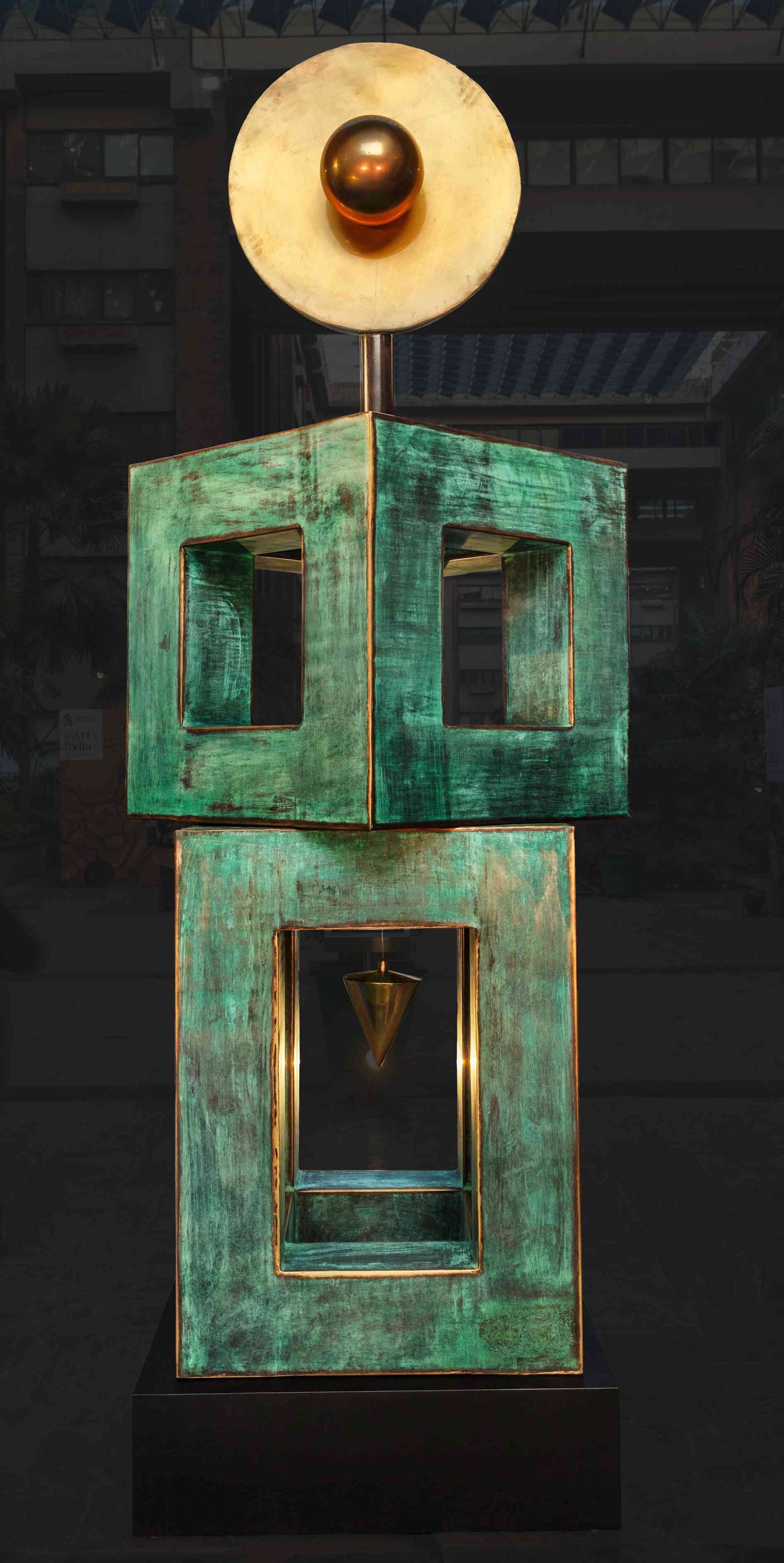
Paresh Maity is back in Venice this year after his 2024 showcase, and he is doing what he does best, going big. His new work ‘Equilibrium’, part of Personal Structures: Confluences, sits at Marinaressa Gardens, so you do not even have to step inside a pavilion to catch it. Perfectly positioned at the waterfront walkway, it is a large, freestanding geometric brass sculpture. The installation is structured around the four cardinal directions and their cosmic counterparts, translating ideas of balance and universal order into clean lines and intersecting planes. It is striking in its simplicity, with the brass surface reflecting light while holding a strong, grounded presence in the open space.
ADVERTISEMENT
The Nod Newsletter
We're making your inbox interesting. Enter your email to get our best reads and exclusive insights from our editors delivered directly to you.