




The tradwife corner of the internet has been thriving long enough to feel like a fully formed genre. You’ve seen it, you’ve paused on it, you’ve probably had opinions about it. The soft-focus kitchens, the linen everything, the children who appear eerily well-behaved. It’s the world where Nara Smith can casually make chewing gum from scratch, where Ballerina Farm turns country life into a beautifully lit brand extension. You scroll, you judge, you get weirdly invested for the moment, and then you scroll again.
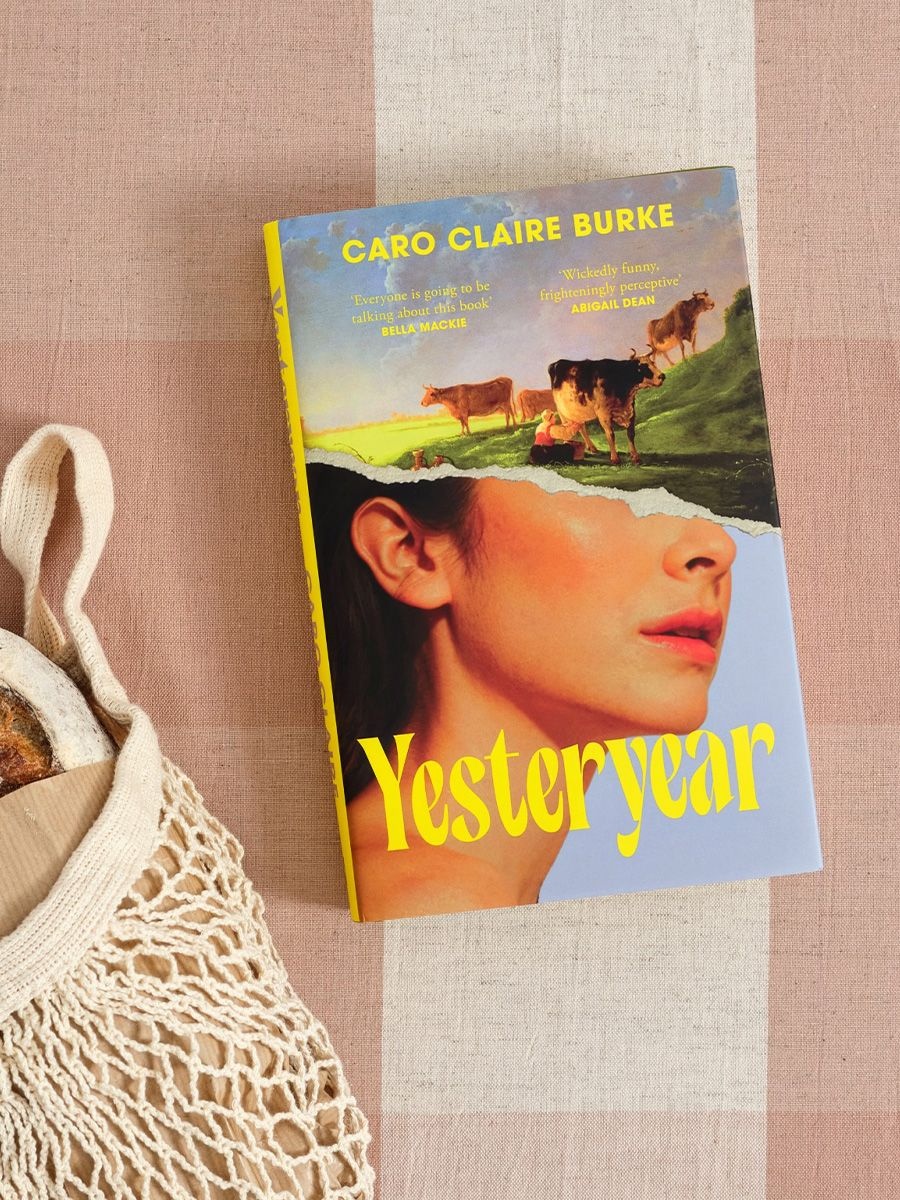
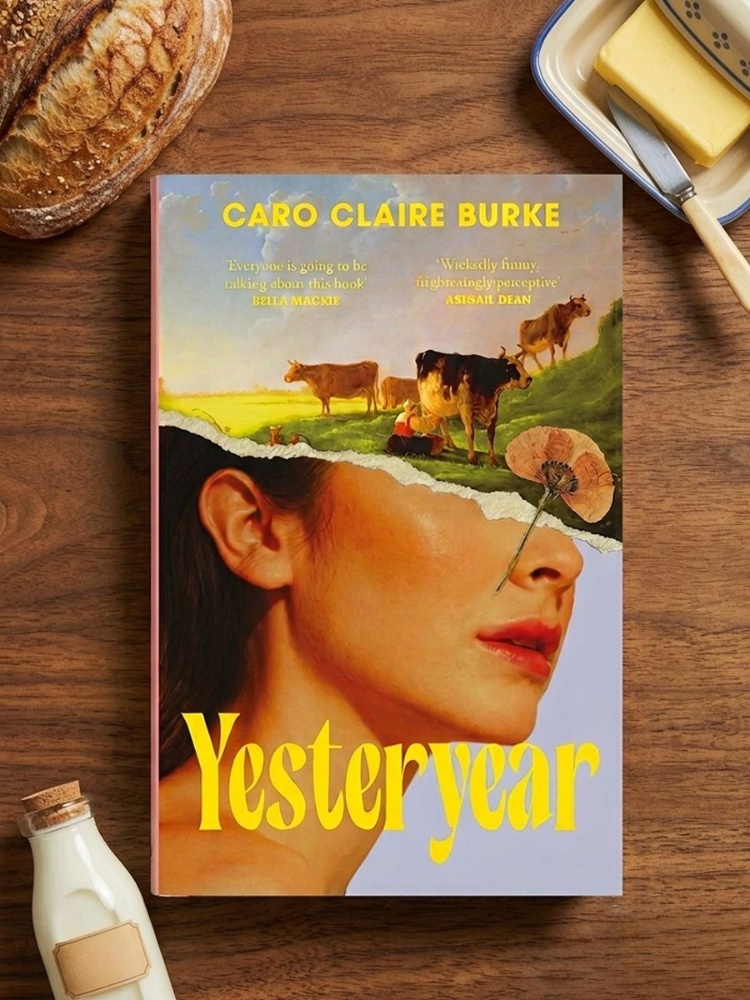
Which is why Yesteryear feels instantly recognisable. Caro Claire Burke’s 400-page debut leans into that familiarity and sharpens it. It’s already buzzy, already everywhere, and with Anne Hathaway picking up the adaptation rights almost immediately, it has the energy of something that’s about to be consumed as aggressively as Frieda McFadden’s The Housemaid.
At the centre of Yesteryear is Natalie Heller Mills, who would like you to believe she has cracked the code on life. We follow her steady rise on social media. Online, she is the woman people save to mood boards titled ‘slow living’. Five children, a farm, a marriage that looks idyllic. She wakes up early, cooks everything from scratch, speaks in calm, reassuring tones, and makes domestic labour look like a calling. Pull the curtains, and you get to see the cogs of offline machinery. There are nannies doing the actual heavy lifting, a producer making sure the lighting behaves, and Natalie doing multiple takes to greet her chickens, calling them “the ladies” with just the right amount of warmth before casually acknowledging they’ll be slaughtered soon.
Her marriage doesn’t help sell the fantasy either. Natalie is a Harvard dropout who marries into a political family, proceeding to build an entire lifestyle brand out of “simple Christian living”. Caleb, who is supposed to be the masculine centre of this universe, turns out to be less commanding presence and more overgrown boy with a farm hobby. She essentially constructs this entire life to give him something to do, only to realise she’s built a playground for a manchild. Caleb is oddly disinterested in intimacy, which leaves Natalie in the deeply unglamorous position of trying to produce heirs with someone who would rather be elsewhere, leading to moments that are equal parts bleak and bizarre.
Soon, we find that Caleb isn't just vaguely traditional, he is actively plugged into manosphere forums that shape his views on how the household runs. It shows up in unsettling, almost absurd ways, like his approach to homeschooling, where he insists on teaching mathematics through the principles of the Ten Commandments instead of, you know, actual math. It would be funny if it weren’t also slightly alarming. Natalie may be the one running the domestic empire, but the ideological spine of that world isn’t entirely hers. And through all of this, she keeps circling back to Reena, her independent, financially stable college roommate, just to remind herself that this is absolutely, definitely the life she wanted.
The book is at its most entertaining when it leans into Natalie’s voice, which is funny in a way that occasionally makes you pause. She talks about managing motherhood, marriage, and influencing like “breastfeeding three babies simultaneously”. She has a name for her critics too, the “Angry Women,” the ones in her comments who question everything she does. She dismisses them as jealous, bitter, slightly unhinged, but she reads every word. She responds indirectly, shapes her content around them, builds an entire counter-narrative just to stay ahead. Even her children get pulled into this performance, expected to exist within a version of life that is always being watched.