




We’re no strangers to the divorce novel, memoir, or “thinly disguised novel”. The master of the latter, of course, is Nora Ephron’s Heartburn, the funny-sad-bitter sort-of novel where Ephron throws in a recipe for the perfect four-minute egg from her summer of cooking while “Mark” was conducting his affair by pretending to be at the dentist. The marriage might have flopped, but her vinaigrette is bullet-proof. Last year there was Katie Yee’s Maggie: Or, a Man and a Woman Walk into a Bar, where the protagonist makes three dismal discoveries in quick succession: her children don’t think she’s funny, her husband is having an affair with a woman named Maggie (a revelation that takes place in a restaurant and competes with the offerings of an all-you-can-eat buffet), and she has cancer. Way to kick someone when they’re down, Katie! In the slim but wonderful Dept. of Speculation, Jenny Offill’s protagonist deals with the ups and downs of her marriage while dealing with a bed bug infestation and wishing she was an art monster (“Nabokov didn’t even fold his own umbrella”). The work that brought Tayari Jones worldwide recognition was her fourth novel, An American Marriage, an epistolary work that details the breakdown of a marriage stretched to the limit following the husband’s incarceration.
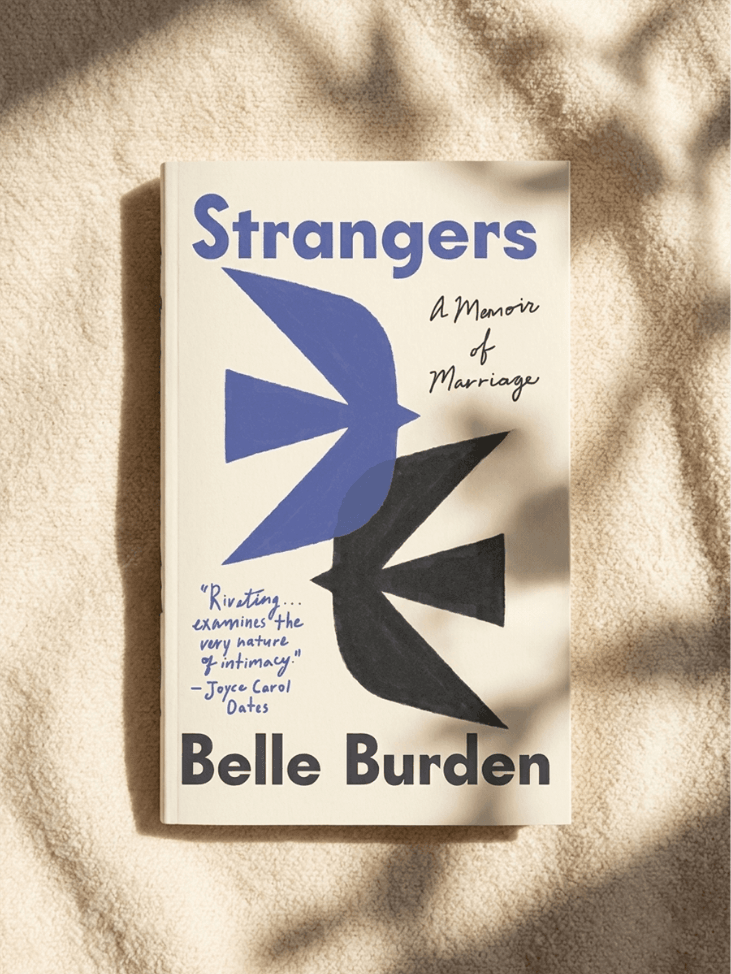
With the exception of Jones’s novel, some of the most compelling reads in the genre have been ones that have turned to levity to deal with the absurd situation of being left high and dry, the simultaneous emotions of private grief and public embarrassment, and the logistical nightmare of splitting the pots and pans. The latter becomes a crucial aspect of Belle Burden’s buzzy new “memoir of marriage”, Strangers.
The book, which came out of a piece Burden wrote for The New York Times’ Modern Love series, released in January (it officially releases in India this month), and immediately achieved bestseller status. Belle Burden, a wealthy New York heiress working at a law firm, meets and falls in love with James—WASP-ey, efficient, dependable, popular attorney who works at the same firm. Hers is a storied family. Her mom’s ancestors include the first chief justice of the Supreme Court, her father descended from the Vanderbilts. Her grandmother was the famous model and socialite Babe Paley, who got featured in Vogue regularly. Irving Penn photographed her mother, Andy Warhol sketched her father. James left behind a troubled crisis-ridden childhood and rose up the ranks in his career. It’s a loving courtship, where they send each other faxes and scribble sweet nothings with a mechanical pencil in a little diary they trade back and forth.
They have a small and tasteful wedding (the bride wore Calvin Klein) and have three children over their 20-year marriage. Then, in March 2020, right when the world was in the grip of the Covid-19 pandemic and their family hunkered down in their home in Martha’s Vineyard, Belle finds out James has been having an affair. The next day, James packs his tote and leaves.
While divorce novel/memoirs tend to be accounts of one spouse’s bad behaviour, what has got readers talking is how the book serves as a cautionary tale for women when it comes to the joint finances that scaffold a marriage and a shared life.
While Burden, a Harvard-educated lawyer, withdraws from her career to focus on childcare, serving on school boards and working with a non-profit and taking on pro bono juvenile immigration cases to keep her law license valid, James stomps ahead in his career, moving on from a law firm to an investment firm to a hedge fund. When the couple decide to buy a home in Tribeca, and later one in Martha’s Vineyard, Burden dips into her trust fund to buy each of them—but adds James’s name as the joint owner in the property deeds for both.
Even before the marriage, Burden goes against legal advice and tweaks a clause in their prenup. Where earlier any asset brought individually to the marriage would remain the property of the said individual, not subject to division, and anything in joint name would be split if we divorced, the amendment stipulates that only assets that had been put in joint name would be split.
What it translates to is: While both their homes, which Burden purchased, could now be split between the two, she’d have no right to any of the assets James acquired during the course of their marriage while she stayed at home and raised their children. (Presenting “I don’t do bath, bed or homework” as one example of male douchiness.)
The prenup conversation, where James argues that it had him “feel like an outsider”, feels like the only red flag in an otherwise lovely relationship. After all he’s the guy who lovingly irons the skirt of her suit while she’s wearing it, chops three kinds of wood and builds “gorgeous fires”, runs four blocks to get to her when the Twin Towers fall, is so sweetly and quirkily interested in the fate of the ospreys who’ve built a nest in their Vineyard property. Bad things happen to other people.
Till they don’t.
It’s only when he ups and leaves his family, months after planting blueberry and raspberry bushes on the edge of their Vineyard property (“plants that take several years to bear fruit”), that Burden’s precarious financial position poses a major problem.
Online discourse has largely centered on the financial ramifications of the divorce. Burden’s is obviously not the first marriage where a woman is left wondering why she didn’t take stock of their finances during her coupledom; often, women stay in bad marriages because of economic insecurity. But in Strangers, the sheer magnitude of what Burden stood to lose has become a beacon for women everywhere. Sure, she’s worried about moving into a smaller home, and losing access to the country club. But here, extreme privilege also amplifies the scale of what can be lost.
“Belle Burden’s divorce memoir made me question every financial decision in my marriage” seems to sum up much of the conversation on Instagram. There’s a Reel titled “An estate planning attorney reacts to Strangers by Belle Burden”. One content creator who describes herself as a “crunchy SAHM” (@chloewbrewster), speaking on the subject of ‘Why you should have access to the money’, says the book is “a good reminder for me, and for other women, especially if the other person controls your finances, [that] the person you marry is not the same person who divorces you or you divorce...”
Oprah has spoken about it, as has Molly Sims on her podcast Lipstick on the Rim.
Burden is aware of the conversation around her book. Speaking with @financialteapodcast, Burden said: “Part of my story is a financial story—what I agreed before we got married, what I went through during my divorce to keep what was mine, and how I rebuilt my own financial autonomy after my divorce. It’s hard to be a cautionary tale, but I’m also happy to be a cautionary tale.”
Publisher Chiki Sarkar, in an Instagram post, wrote: “…was really struck by it. In fact it’s made me think of how I and Alex communicate out finances to each other—ie, barely!”
When I speak to Sarkar later, she elaborates, “I was stuck on a flight in a really uncomfortable seat and this book distracted me in one fell swoop. Alex [my partner] and I know about each other’s finances, and we split our household expenses. We’ve never had money issues and it’s always been harmonious. But if anything horrible were to happen to him I won’t know anything. The book inspired me to write my will. I now have all my bank account details in one place. I’ve made an inventory of all my assets.” She turned to AI to help her make a will. “I don’t have a lot of nice things. A few paintings that are special. And I have textiles. I inventoried them all and put them on a will.”
Sarkar has recommended Strangers to several of her friends. “Of course, there are many aspects to the book, but the finances were never discussed. Money was not a story in the story. I’m not sure if the novel will resonate with you if you’re in your twenties or thirties. But if you’re in your late thirties or forties, you realise you do many things on autopilot.”
So, do you know where you stand if/when your worst-case scenario unfolds?