




Sisterhood, whether defined by familial or emotional bonds, provides some of the most compelling narratives in fiction. There’s love, inside jokes, tension, estrangement, shared trauma, perceived betrayals, the knowledge of being fully known despite an inevitable fork in the path ahead… Most recently there was Jonas Hassan Khemiri’s The Sisters and Madeline Cash’s Lost Lambs. Long before that there was Elena Ferrante’s Neapolitan quartet… And even before that Jane Austen and Louisa May Alcott with Pride and Prejudice and Little Women, respectively, both great fodder for cinematic adaptation.
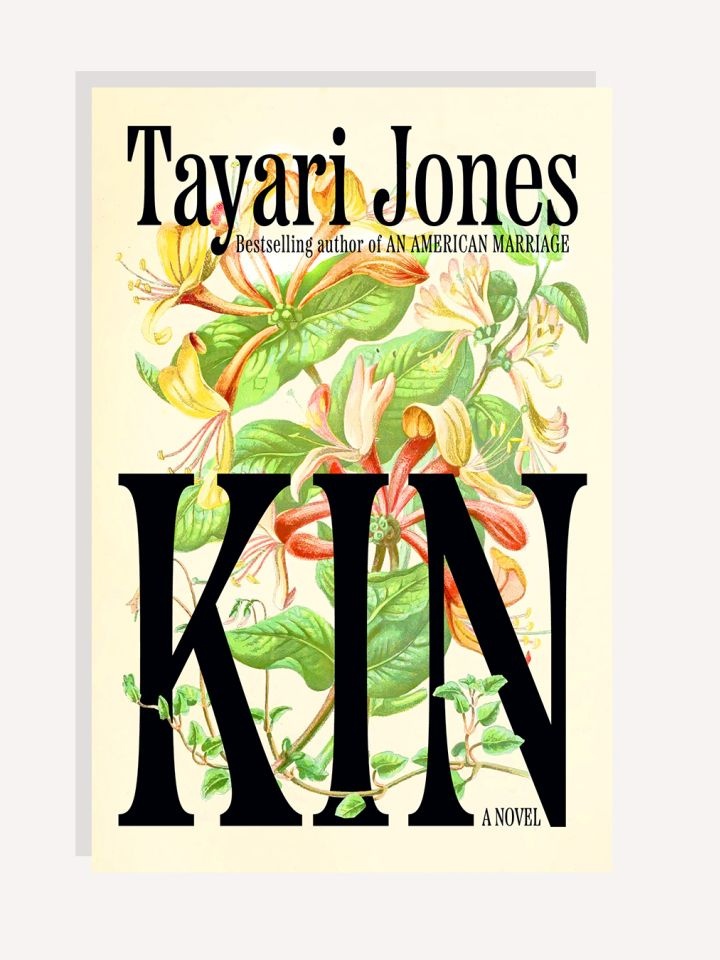
We’ve been waiting for Tayari Jones’s Kin; it’s her first novel since her 2018 bestseller An American Marriage, about an African American couple put through the wringer when the husband, Ray, is accused of murder, told in an epistolary format.
Kin, her fifth novel, released last month and was already deemed Oprah’s book club pick. The book is about Annie and Vernice, two “cradle friends” who grow up motherless in the 1940s in a town called Honeysuckle, USA. Annie is being raised by her grandmother after being abandoned by her mother, Hattie Lee, as an infant. Vernice lives with Aunt Irene, who reluctantly moves back home and ends up having to take care of her niece after her sister (Vernice’s mom) is murdered by her husband before he turns the gun on himself. Annie and Vernice are friends before they utter their first words.
From early on, it’s impressed upon Annie and Vernice that their destinies are different. Annie can only hope to somehow earn a respectable living, while Vernice will be heading to Spelman College and leaving Honeysuckle behind. “Stop acting like me and you knit with the same needles,” Annie once tells Vernice, a version of something her grandmother has repeated to her often. Vernice, meanwhile, cleverly chooses to omit telling Annie how many suitcases she’s packing for college.
When their paths ultimately diverge as expected, they remain in touch through letters.
The title of the novel applies as much to what Annie and Vernice are to each other as to the community that is invested in their plight. In the absence of mothers, Annie and Vernice find their own mother figures (though you get a sense they’d bristle if you called them that). Chosen family, here, supplements real family. And Kin resides not just in plot but in the wit and humour of its cast of tough, wonderful women who don’t always have the luxury of manners.
People around Annie voice their frustration with her endless search for her mother. “Stop trying to climb back in her womb,” stresses Lulabelle in a letter. Lulabelle is the proprietress of a “whorehouse”, who gives Annie and her friends refuge on their way to Memphis, and takes a liking to Annie and makes her read the Bible aloud to her. “Tell it to me colored,” she orders sometimes, and Annie obliges (“so after Hagar was pregnant for Abraham, she got a real attitude with Sarah…”).
There’s Babydoll, Annie’s accidental friend, who pats her head and tells her she’s “just damaged”, not crazy. There are Honeysuckle’s elderly lesbians, Mrs Ola Mae and Miss Jemison, who drive Vernice to college when her attempt to take a bus ends up with her being luggage-less on the side of the road and a palm print on her cheek.
“Oh shit. I am no good with children,” laments Aunt Irene after she doles out a piece of particularly tough love to Vernice. (The realisation, however, doesn’t work as a future deterrent.)
There’s Mrs McHenry, who wants Vernice for her youngest son. She admires Vernice for where she comes from (she herself hails from another town named after a flower, Sunflower) but would admire her still for the distance Vernice can put between herself and her roots as she educates her about the right crockery (“No husband wants to eat out of a pink plate”) and how to whack the dust out of the couch cushions. Naturally, Vernice’s bond with Annie bothers her.
The chapters alternate between Vernice’s and Annie’s perspectives, so you witness each girl’s life through her own lived experience and the other’s distant (and relative) objectivity.
Jones has a way of adding physical details that stick. Annie observes that her grandmother sounds different with her dentures in, likening it to “listening to someone try to talk left-handed”. Seeing Clyde, the bar owner’s nephew, Annie thinks: “It was like he opened up his mouth and God tossed in a handful of teeth, not caring what went where.” At the church before her wedding to Franklin, Vernice notes that “Marylinda is built like a cello, Annie like a graceful egg” and her former roommate, Joette, “was neat and functional like a lightning rod”.
All this transpires against the backdrop of the American civil rights movement, but the ability to be political, too, often presents itself as a privilege.
When tragedy strikes—there’s too much desperation and longing for it to not—it is this world of wonderful women with their gruff affection you return to. My e-book has too many of the lines highlighted. It’s that rare book you want to pick up right after you put it down.
Kin is published by Oneworld Publications; ₹496