




Anyone who is lucky to have a seat at a Christmas table will tell you it feels like being folded briefly into someone else’s rhythm. Plates appear without asking. Seconds are assumed. Someone is always watching to see if you have eaten enough, and someone else insists you try just a little more of something you did not know you needed. The table is rarely quiet. It fills slowly with conversation, interruptions, laughter, instructions shouted from the kitchen, reminders about how something should be eaten, what it pairs best with, why it tastes the way it does. This is not a meal meant to be rushed or documented. It is meant to be shared, returned to, spoken over, and carried forward, often through leftovers that taste even better the next day.
India is home to many Christmases, each community bringing its own special flavours to the table. But in every home, one dish remains immovable—the main event of the day, the one for which anticipation and appetites have been building for days. This dish must exist. Without it, the day would feel incomplete. From a Syrian Christian essential to an East Indian staple, we’ve rounded up a few Christmas meals worth the wait.
In a Syrian Catholic feast, pork roast and fries
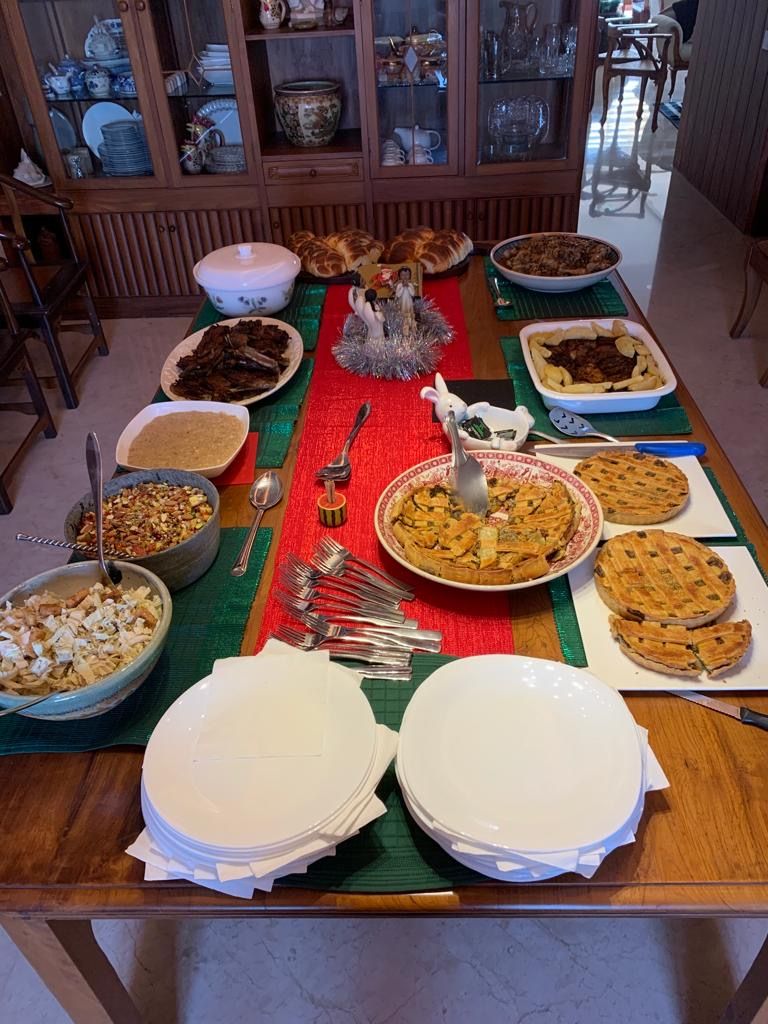
“I come from a Syrian Catholic home,” says Annah Chakola, a Kochi-based designer and curator, recalling a Christmas lunch that was defined by scale and patience. One dish that stayed with her was the pork roast. “Pork roast is an essential part of the Syrian Catholic table, where we’d have every meat available to man over a Christmas meal.” In her memory, hers always arrived surrounded by homemade French fries. “That is a big core memory for me because French fries were my favourite.”
“It’s a very Latin Christian preparation,” Chakola explains, “The spices are a little different. Not spicy as typical Indian masala.” She remembers how her mother used to make it in the morning and keep it in the oven, and she would keep going at it through the day.
Another constant on her table was her grandmother’s ginger pudding. “She started the process of candying the ginger a few months earlier. My cousin still has the pan that she used to do her pudding in.”
Goan Bebinca on Christmas afternoon
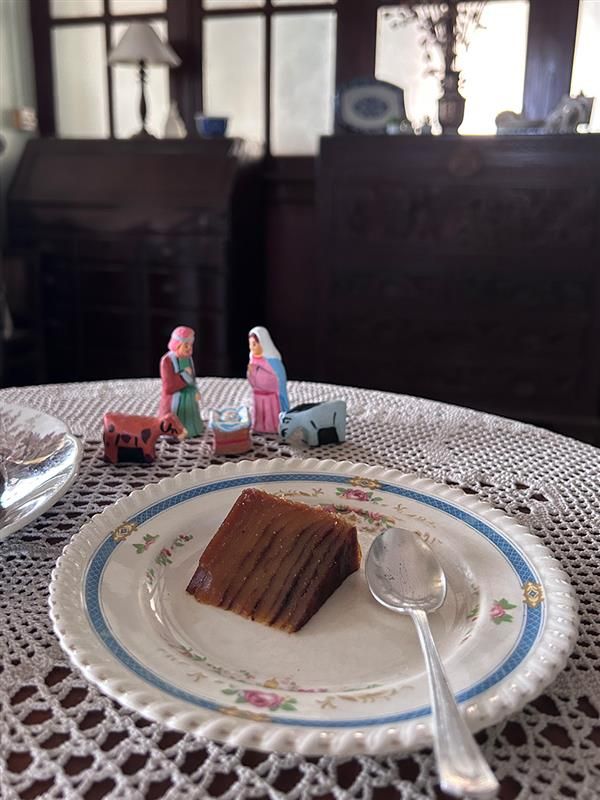
“The one dessert that’s always made it to our Christmas lunch is the Goan Portuguese bebinca,” says Sacha Mendes, owner of Sacha’s Shop in Panjim. In her family, it was never optional. “It’s a multilayered pudding that is unique to Goa. Back in the day, my mother’s aunt prided herself on perfecting the dessert.”
The aunt enjoyed a formidable reputation as far as the sweet was concerned. “Everyone in the village knew Tia Yvette made the best bebinca, because it’s no easy feat. The layers were thin and many...each layer has to be baked tediously, one at a time,” which made it “smooth, soft, and buttery in texture, and almost caramel-like in taste.”
For Mendes, this memory will soon manifest into something meaningful. “This December, I’m launching my clothing label named after the dessert,” adds Mendes, “because bebinca has always felt warm, layered, familiar, and comforting to me.”
The East Indian sorpotel on the table
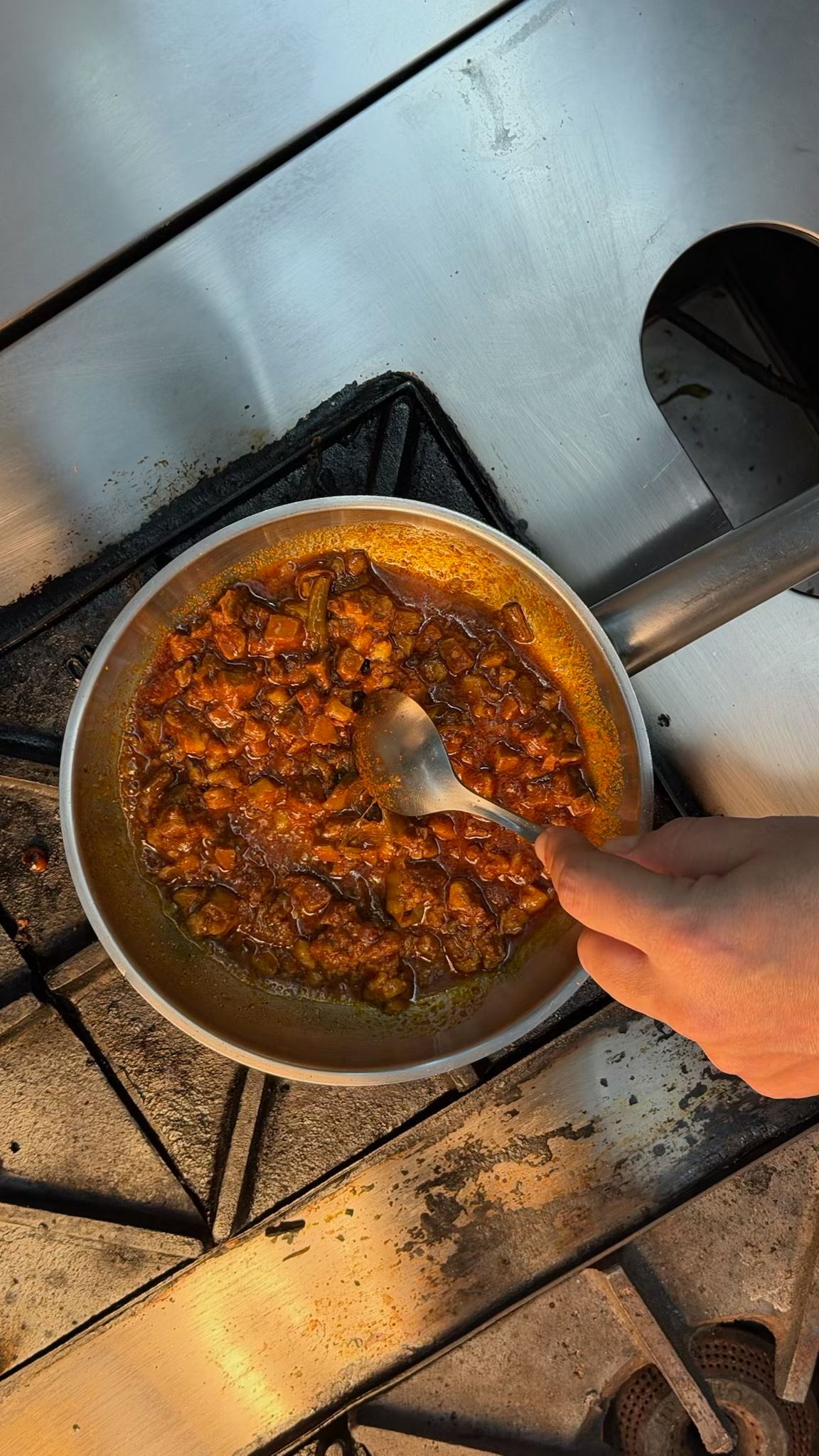
“One dish without which Christmas never feels complete is sorpotel,” says Varun Pereira, head chef at Comal in Bengaluru. At his home, it arrived with its own rules. “Being part East Indian, our version is slightly different from what most people are used to. Less gravy, more vinegar, heavily spiced, but not chilli-spicy at all.”
His earliest memory of this dish? “Having my grandmother’s sorpotel when I was a child.” She cooked it the traditional way, he recalls, “using pig’s blood, liver, vinegar, and meat”.
Taste for it, he admits, came with time. “I wasn’t the biggest fan at first, but over the years I grew very attached to it.” Eventually, it became unavoidable. “It became a staple at every celebration. Honestly, we just needed an excuse to eat it.”
Since his grandmother passed, his aunts have kept the tradition alive. As the recipe changed hands, the flavour has too, but he adds, “The taste has never left my palate or my heart.”
Mangalorean Catholic Christmas at Nappy’s house
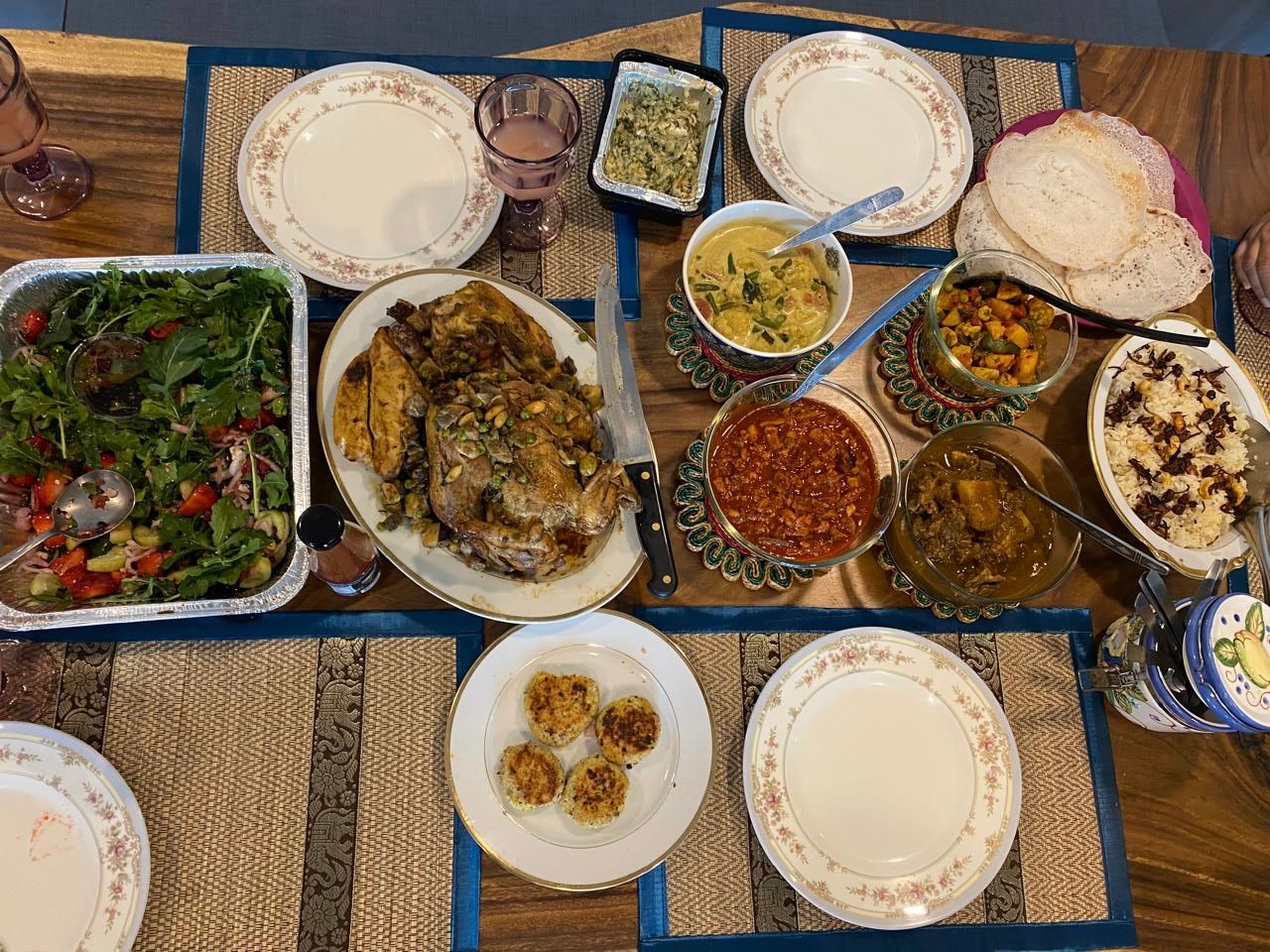
“For as long as I can remember, my grandmother, whom I fondly call Nappy, has been at the centre of every Christmas celebration in our family,” says podcaster Janice Sequeira. “Year after year, her home has become the place for us, for our friends, and for anyone who wants to celebrate Christmas to feel like they belong.”
People arrive for her presence, but the food stays with them. “They can’t stop talking about it for days after,” she says of the wide spread, which includes “variations of sweets, snacks, cutlets, chutney, chicken, mutton, pork, sannas, and appams.”
Still, one dish anchors the day. “The humble sweet pulao.” The description sounds simple— “garnished with fried onions and dry fruits: soft, sweet, and aromatic.”
Attempts to recreate it, though, fall short. “Others have tried,” Sequeira says, “but nothing comes close to the one made lovingly by my Nappy.”
Roman Catholic recipes that refused to leave
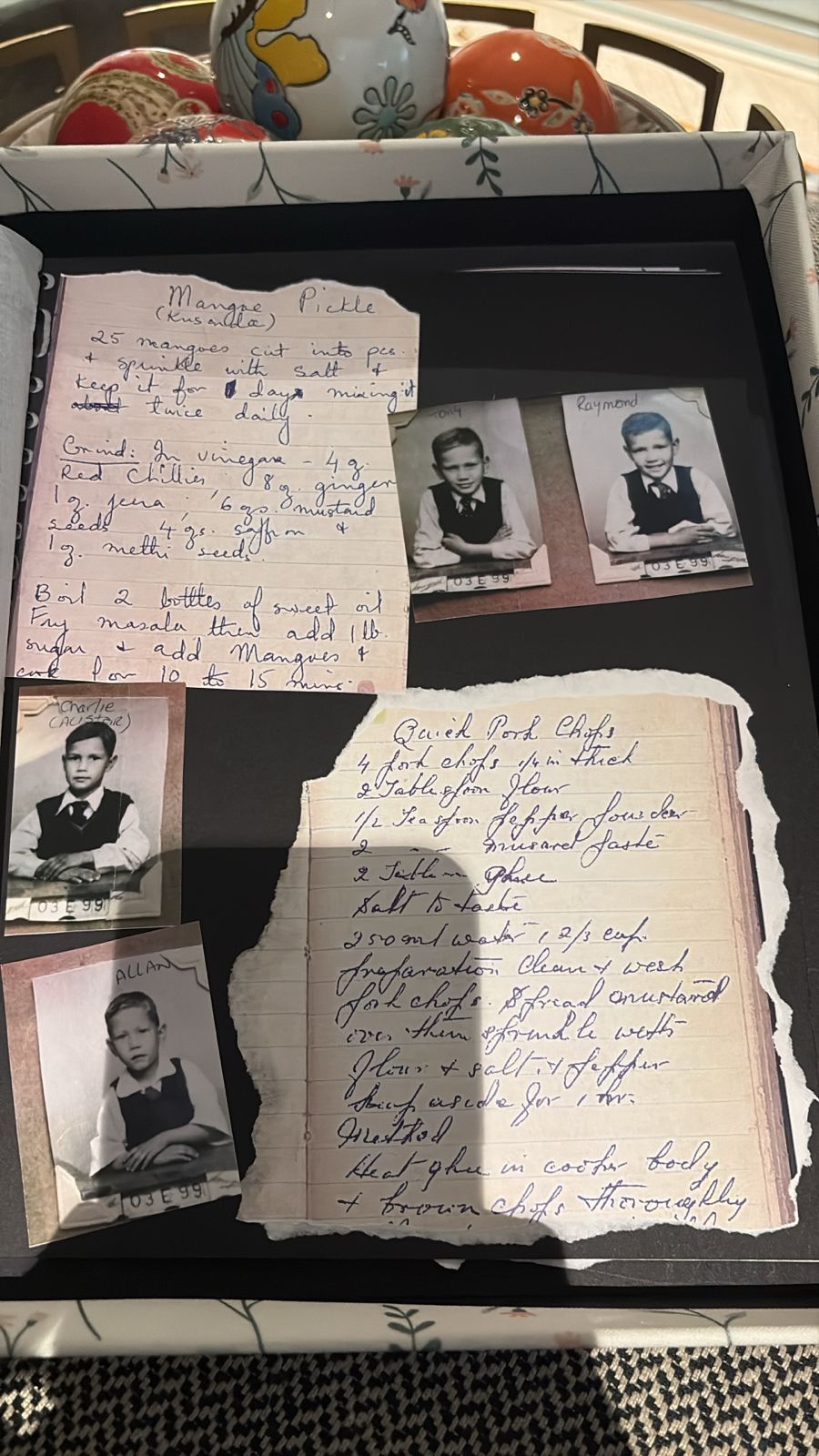
“We’ve had this traditional Christmas every year for as long as I can remember, since my grandmother was around,” says wellness expert Deanne Panday. “My grandparents are not alive anymore. My mom is very old now, so we kind of carry on the tradition with everything that we do.”
As children, they learned early. “We used to help my grandmother make all the Christmas sweets a month before Christmas. The staple every year was always the chicken roast. But the vindaloo was a very important part [as well].”
What about the sides? “The foogeys are what you call an East Indian round bread. It’s very sweet, everybody eats it with the vindaloo.” A good potato dish is a must, and her grandmother’s special mince and potato chops were a hit with everyone, she remembers.
What remains most tangible is the record. “This recipe [pictured above] is actually in my grandmother’s handwriting,” says Panday. “The book got handed down to my mother and her sisters, and then to us.”