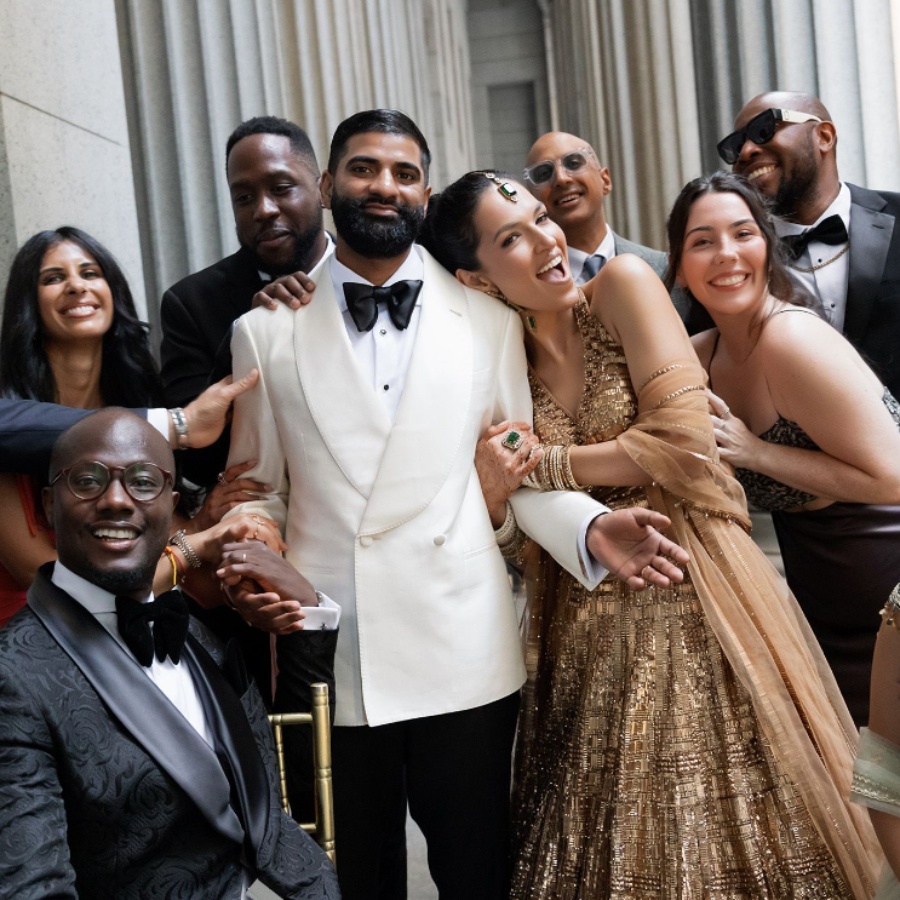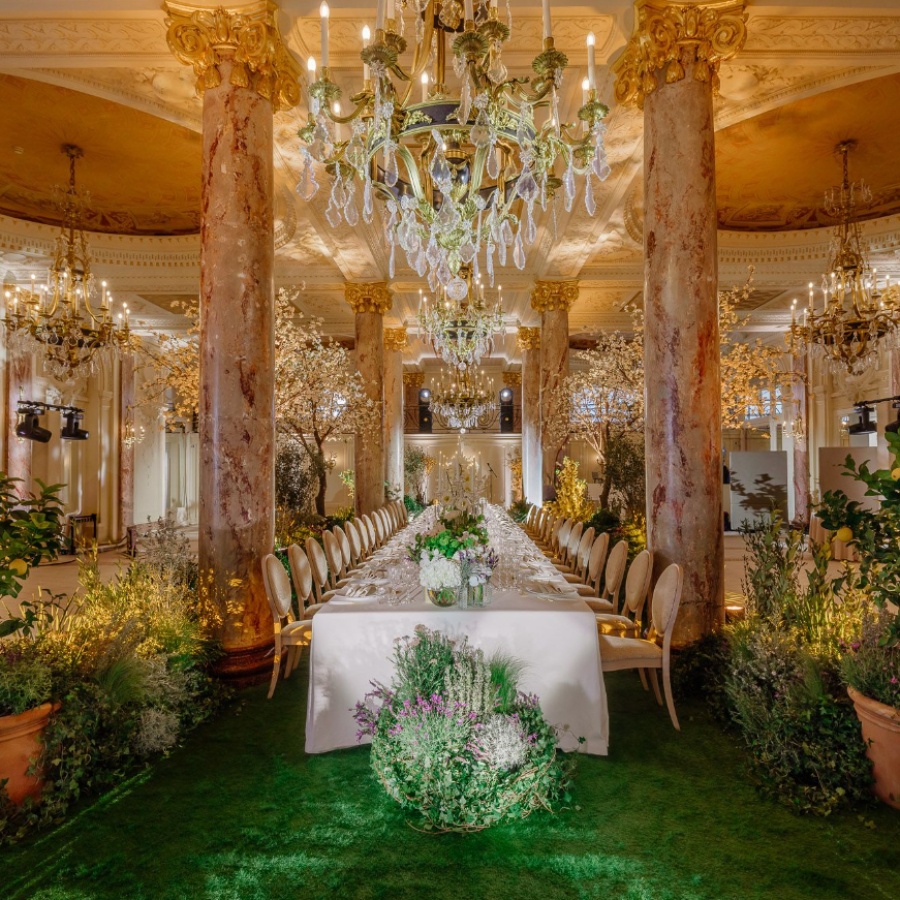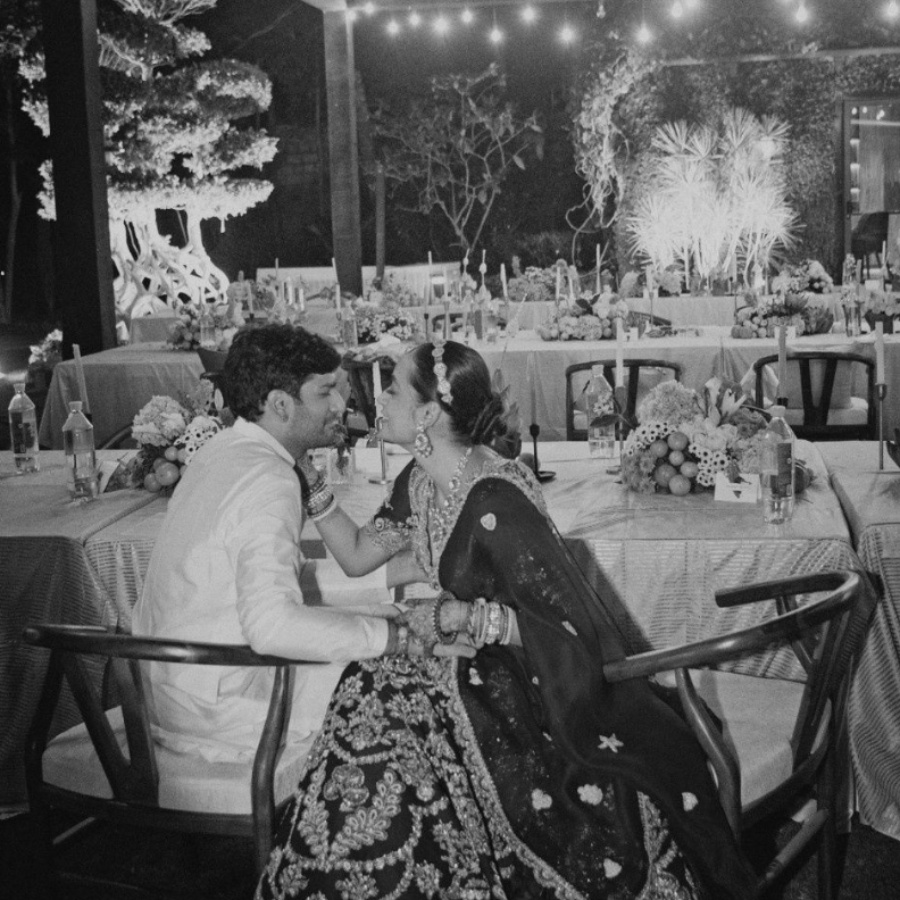




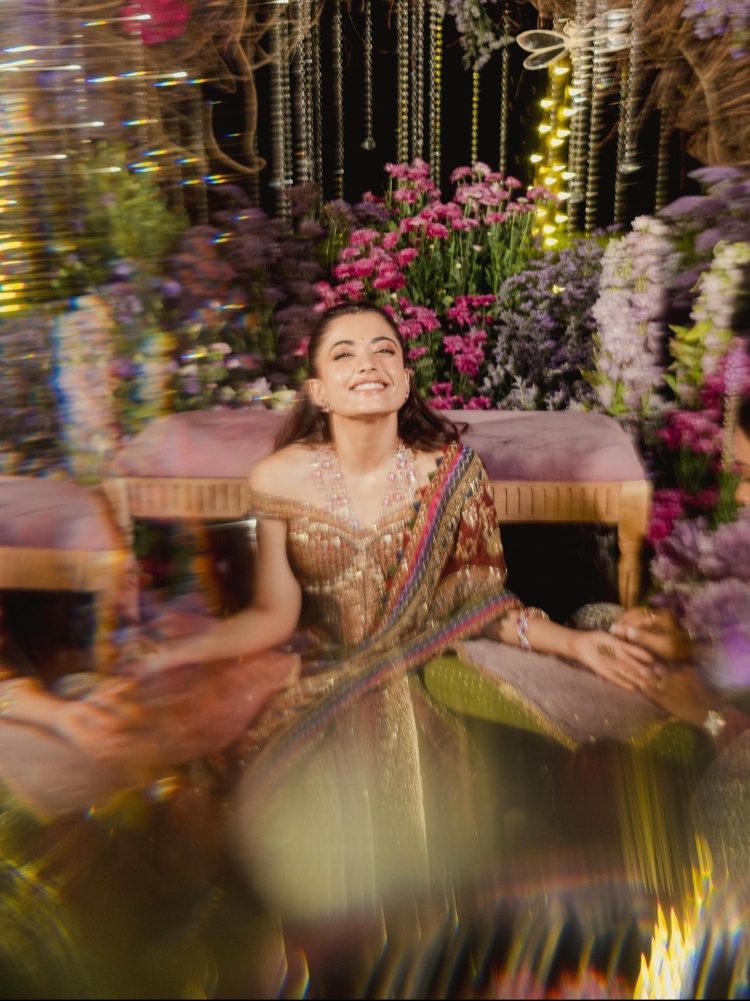

What do weddings look like in the time of social media? For Surat-based couple Ariva and Piyush, for example, it meant that along with hiring a wedding planner, mehendi artists, and florist, they also hired The Wedding Gram, a company dedicated to creating Insta-worthy content from your wedding. The result was a couple’s page (a dedicated platform for curated moments from their wedding) that had 33.5k followers, and at the end of it a viral Reel that captured Ariva’s vidai ceremony, scored to Jasleen Royal’s ‘Din Shagna Da’, which garnered a staggering 6.8 million views.
Nikita Kabra and Simone Zaveir Khan, co-founders of the agency, worked on this project with the intention of documenting moments from the wedding that a photographer or videographer might miss. “We have a very candid approach to our work,” explains Kabra. “We capture in-between moments and behind-the-scenes interactions. [This format] is one of our most popular Reels because we think it is a simple transition-based edit that captures the bittersweet experience of getting married, making the bride and groom appear more vulnerable than any regular photograph or film.”
But Ariva and Piyush are not the only bride and groom to see internet virality as one of the measures of a successful wedding. For Amsterdam-based Menahil Asim and Sher Shah Sultan, a Reel made by The Wedding Journal showcasing the Pakistani bride dancing with her brothers and cousins at her sangeet to a Bollywood track has—wait for it—22.5 million views. Evidently, gone are the days of watching VCD recordings of your parents’ wedding, replete with poppy-field pop-ups and sunset animations, as an annual ritual within your tight-knit family-and-friends circle.
From choreographed entries to teary-eyed farewells, outfit transitions and more, all cut to trending audio, the modern wedding is increasingly being conceived as an experience intentionally designed to be watched, shared, and—ideally—go viral. And of course, as is the case with the modern wedding economy (worth a whopping $130 billion in India alone), couples are increasingly outsourcing this responsibility to vendors who tailor content for the algorithm.
Content creators have entered the wedding group chat
Four years ago, Ankit Singh, founder of Shaadi BTS, was a Delhi-based social media manager creating and curating digital content for a wide range of lifestyle brands, when an unexpected phone call came his way. “One of my school friends reached out to me and said, ‘Why don’t you handle the social media for my wedding?’” Singh recalls. The result? “Everything—from transition videos of the bride detailing her different outfits for the ceremonies to videos of the groomsmen sparring with the bridesmaids over audio clips from Bollywood dramas like Kuch Kuch Hota Hai (1998) and Kabhi Khushi Kabhie Gham (2001)—raked in more than 100k views. Prospective clients also began reaching out to us and asking us to oversee the social media content for their special day.”
Before The Wedding Gram, Kabra and Khan were pursuing widely divergent career paths as a lawyer and marketing executive respectively when they met at a mutual friend’s wedding. “By then, we had already individually started freelancing on social media content for couples and wedding planners, but we had no idea that we were actually competitors,” recounts Kabra with a laugh.
The demand, Singh observes, stems from what traditional wedding documentation lacks. The wedding film itself—which takes around five to six months to complete—is an immense exercise in patience in today’s plummeting attention economy, Singh notes. “People want to see everything live, and having a real-time social media documentation process also allows people who are unable to attend the wedding to keep up with the proceedings without feeling like they are missing out,” he says. “Additionally, a wedding is a compilation of many smaller moments—a tear here, a laugh there—which is nearly impossible to completely encapsulate in a long-format wedding film. Creating short-form content allows us to keep an archive of these stolen moments, which would otherwise only exist in people’s memories.”
Dear (digital) diary
Kabra and Khan compare this idea to building a “digital diary” that keeps an audio-visual record of the couple’s big day. Their approach to capturing moments highlights what traditional videography teams often miss. For example, a simple edit of a bride and groom setting eyes on each other for the first time (scored to AR Rahman’s ‘In Lamhon Ke Daaman Mein’ from Jodhaa Akbar) that got 160k views, or a behind-the-scenes video of the bride’s sister tearing up backstage during her sister’s haldi ceremony (edited to the 1971 song ‘Phoolon Ka Taaron Ka’), with 175k views. The result is a content format built around short, immediate, and endlessly rewatchable moments.
The duo also builds and manages the couple pages, which are activated as early as six months before the wedding day. “The idea of having a dedicated page for a couple’s journey is not new, but most often these pages would go inactive. So, we began pitching ideas,” Kabra explains. Deliverables are discussed in terms of the different aspects of the couple’s story—how they met, fell in love, and built their relationship—is shared in detail. While dedicated highlights are curated for each ceremony (“We leave out reposts and tags to avoid overcrowding the page,” Khan explains), location reveals are always prioritised for stories over the grid, Singh notes.
While trends pertaining to viral audio tracks (“Justin Bieber’s unexpected voice modulation act at Coachella will be a major trend this wedding season,” Kabra notes) or video formats (think vlogging videos at 0.5x speed or reenactments of iconic scenes from cult Hindi films) are divided equally between friends and family. In the case of Kabra and Khan, a Reel for an interracial couple showing an edit of the couple’s non-south Asian London- and Dubai-based friends set to Rani Mukerji’s iconic “Yeh angrezi gaali apne paas rakhna” monologue raked in a record 4.1 million views, with even Costa Coffee India’s page suggesting ideas for future reenactments.
This is just the beginning
Despite the generation’s obsessive pursuit of virality, both companies resist the idea that it can be engineered through spectacle alone, although having your sangeet in front of the pyramids of Giza or creating a Baahubali-inspired set for your wedding mandap might do the trick and get you anywhere between 170k to 560k views. Despite these numbers, and several couples’ insistence on incorporating gimmicky elements into their weddings in the hope of virality (two words: gorilla mascots), Kabra insists that the focus remains on relatability. “If it is relatable to the masses, then it goes viral. We play around with what is trending and also tap into emotions.”
This means working with trending audio, captions, and formats but grounding them in real moments. Following established trends and formats also helps, Kabra explains, referring to a format revealing the groom’s sister via a line-up of cousins and friends with the header ‘Mere bhai ki shaadi hai’—a format that the duo popularised and which has consistently attracted high engagement.
This complexity, however, comes at a price. For Shaadi BTS, packages typically range from “₹1.5 to 2 lakhs, depending on the wedding and season”. Deliverables include videos, real-time stories, and ongoing posting. At The Wedding Gram, pricing is higher, reflecting a broader scope: “For a three-day wedding, it ranges from ₹2.5 to 4.5 lakhs—managing the page, Reels, stories, and reposting tagged content.”
Additional services—like pre-wedding page management or media outreach strategies to get one’s story featured in international legacy titles for high-net-worth clients—can cost anywhere between ₹50,000 and ₹1 lakh a month, and usually involves some sort of sustained campaign planning rather than a one-off service.
If anything, the trend is accelerating into a launchpad for those eyeing an entry point into the content-creator economy. “Couples today view their social media presence on wedding channels like ours as a way to leverage future brand partnerships,” explains Singh. Today, it is no longer enough to simply get featured in a legacy media publication for the extravagance of your festivities. Instead, brides are using this opportunity to put on the entrepreneurial hat and become full-fledged brand ambassadors and influencers in the wake of their special day.
Singh cites the example of Sonali Singh, a Delhi-based homemaker with 116k followers on Instagram, who turned to full-time content creation after her wedding. For Sonali, a large part of her current content includes videos from her wedding ceremonies, including a Reel with 4.2 million views that outlines, through recorded on-ground audio, the chaos that surrounds a bride while getting ready for her wedding. What began as collaboration posts with her hair and makeup artists and trousseau designers has now turned into a full-blown entrepreneurial venture that sees Sonali creating content around lifestyle brands and collaborating regularly with her go-to designers. Says Singh, “It is a fascinating phenomenon, and while initially it felt nice to know that we were a small part of a very special day in the lives of so many strangers, now it feels even greater to know that our job might be helping people kickstart an alternative career path.”